From Calling for $150 to Liquidating HYPE in Just Three Days, How Much Credibility Does Arthur Hayes Have Left?

Odaily星球日报Publicado a 2026-06-09Actualizado a 2026-06-09

Resumen

Arthur Hayes, co-founder of BitMEX and a prominent crypto figure, is facing scrutiny over his market credibility. Recent on-chain data and public criticism, notably from detective ZachXBT, question whether he uses his influence to create exit liquidity for his followers. Hayes has executed several abrupt sell-offs, including publicly advocating for HYPE to reach $150 before completely selling his holdings just three days later, after which the price dropped sharply. He similarly promoted WLD with a $10 target, only to sell his entire position three days afterward, citing vague concerns about SpaceX's pre-IPO activity and causing a significant price decline. Hayes justifies these moves with detailed macroeconomic analyses, such as a recent essay citing energy costs and AI market risks, explaining his shift into energy stocks and core cryptocurrencies BTC and ETH. However, his pattern of bullish public statements followed by unannounced sell-offs—previously seen with tokens like ETHFI and ENA—has led many investors to adopt a strategy of ignoring his commentary but closely monitoring his on-chain actions for sell signals. Analysts warn that this "cry wolf" pattern risks eroding his market trust, with Hayes himself admitting in a recent article, "I remain an unapologetic gambler."

Original |Odaily Planet Daily(@OdailyChina)

Author|Golem(@web3_golem)
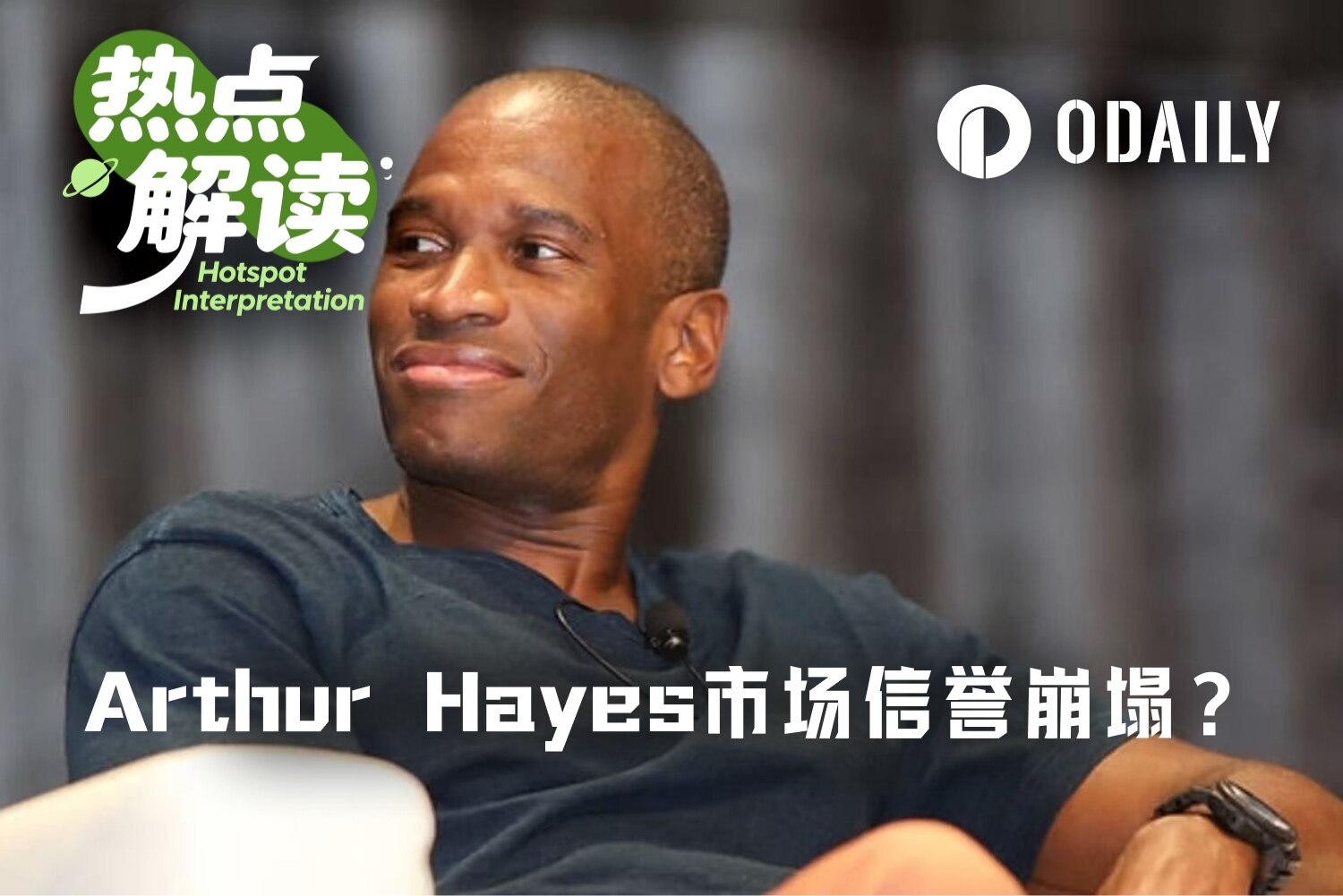
How much market credibility does Arthur Hayes have left? Recently, "the father of crypto perpetual contracts" and BitMEX co-founder Arthur Hayes has faced public criticism. On-chain detective ZachXBT has also publicly questioned how much exit liquidity he has created using his followers.

Liquidating HYPE, NEAR, WLD

Starting last week, Arthur Hayes performed several unexpected sell-offs to exit at the top.

Arthur Hayes had repeatedly stated publicly that HYPE would rise to $150 in this cycle. On June 1, Arthur Hayes passionately clashed with former Multicoin Capital co-founder Kyle Samani, who had disparaged Hyperliquid, and even made a $100,000 bet with him. However, just 3 days later, Arthur Hayes announced he had completely liquidated his HYPE and NEAR holdings. HYPE fell over 13.6% that day. His sell-off indeed allowed him to exit at the peak. HYPE reached a new high of $75.5 on June 4 before starting a continuous decline, currently trading around $62-64.

Besides HYPE and NEAR, Arthur Hayes also liquidated ZEC and WLD. Liquidating ZEC due to the Orchard Pool attack might be somewhat understandable. However, his sell-off of WLD resembles a classic "KOL dumping on retail" operation involving pre-positioning, public shilling, and finally pumping and dumping.

Because from publicly shilling WLD to liquidating it, Arthur Hayes only "pretended" for 3 days. On June 3, the day before selling HYPE, Arthur Hayes publicly shilled WLD with a $10 target, suggesting WLD would become an alternative for investors who couldn't directly participate in SpaceX equity trades. After the news spread, WLD rose over 35% that day. But by June 6, Arthur Hayes changed his tune, stating he had liquidated WLD because SpaceX's pre-IPO price action was "abnormal." This flimsy explanation caused WLD to drop over 20% that day.

The difference between Arthur Hayes and "third-rate KOLs" is that he writes lengthy posts, often justifying his actions from macroeconomic and top-level design perspectives.

On June 9, Arthur Hayes published a long article titled "Reality Test" (requiring about 20 minutes to read fully) explaining his recent moves. He believes three factors will burst the AI bubble: rising energy costs due to restricted traffic in the Strait of Hormuz, the IPOs of three major AI stocks (SpaceX, Anthropic, OpenAI), and Trump turning against AI for the midterm elections.

Therefore, his family office Maelstrom holds significant positions in U.S.-listed energy producers and has sold AI-related stocks and non-core crypto assets, holding only BTC and ETH.

Don't Listen to Arthur Hayes's Words, But Watch His Actions

Arthur Hayes's articles not only skillfully use extensive economic data and charts to argue his points but sometimes also overlay political and historical perspectives, which can be quite impressive. But when you take his words seriously and invest real money following his moves, he might announce a liquidation and turn bearish the very next day, seemingly forgetting what he said the day before, while your portfolio takes a simultaneous hit.

Such operations are not uncommon. As early as 2025, Arthur Hayes repeatedly performed the "bullish one day, liquidate the next" routine. The most classic example remains HYPE. In August 2025, Arthur Hayes promoted HYPE during a speech at Japan WebX, claiming the token still had up to 126x upside potential (Odaily note: the price was $45.9 that day). Yet just one month later, he announced liquidating HYPE, profiting millions, citing the need to avoid token unlock risks.

Arthur Hayes's sell-off then occurred precisely at the peak of HYPE's previous bull run, after which HYPE fluctuated downward. It wasn't until mid-January 2026 that Arthur Hayes again made large-scale purchases of HYPE. Judging from the price chart, his entry point for HYPE was again at the low point of this current cycle.

Similar examples include ETHFI and ENA, where he publicly expressed bullish views, then sold off without warning, achieving precise exits at the top. (Related reading:You Ran First Again! A Record of Arthur Hayes's Top Exits)

Long-term followers of Arthur Hayes have summarized a methodology: don't listen to Arthur Hayes's words, but you must watch his actions; follow his entries cautiously, and decisively liquidate when he sells.

However, if Arthur Hayes continues such performances, especially cases like manipulating WLD price volatility this time, no matter how reasonable the excuses are disguised, his market credibility will be threatened. This is like a crypto version of "The Boy Who Cried Wolf." In the end, Arthur Hayes will surely face backlash.

He said one thing right in his latest article—"I remain an unapologetic gambler," and gamblers usually don't end well.


Criptos en tendencia

Preguntas relacionadas

QWho is Arthur Hayes and why is his market credibility being questioned?

AArthur Hayes is the co-founder of BitMEX, often called the 'father of crypto perpetual contracts.' His market credibility is being questioned due to recent actions where he publicly promoted certain cryptocurrencies like HYPE and WLD, only to sell his holdings shortly after, which critics label as a classic 'pump and dump' strategy, manipulating exit liquidity from his followers.

QWhat specific cryptocurrencies did Arthur Hayes recently sell, and what were the consequences?

AArthur Hayes recently sold his holdings in HYPE, NEAR, ZEC, and WLD. For example, after publicly stating HYPE would reach $150, he sold it three days later, causing its price to drop over 13.6%. He also sold WLD just three days after promoting it, leading to a price drop of over 20%.

QWhat reasons did Arthur Hayes give in his article 'Reality Test' for selling his AI-related crypto assets?

AIn his article 'Reality Test,' Arthur Hayes cited three main reasons for selling AI-related crypto assets: 1) Rising energy costs due to restricted traffic in the Strait of Hormuz, 2) The potential IPO of major AI companies (SpaceX, Anthropic, OpenAI) bursting an AI bubble, and 3) His belief that former President Trump would oppose AI to aid midterm elections. Therefore, his family office shifted to holding energy stocks and core cryptocurrencies like BTC and ETH.

QAccording to the article, what is the suggested strategy for investors regarding Arthur Hayes's actions?

AThe article suggests that investors should not blindly follow Arthur Hayes's public statements but should closely monitor his actual on-chain transactions. The recommended strategy is to be cautious when he buys ('建仓谨慎跟随') and to decisively sell when he sells ('卖出果断清仓').

QWhat historical example does the article provide to show a pattern in Arthur Hayes's behavior?

AThe article provides the example of HYPE from August 2025. Arthur Hayes publicly promoted HYPE at the Japan WebX conference, claiming it had 126x growth potential. Just one month later, he sold all his HYPE holdings near the peak of that price cycle, citing token unlock risks, and re-entered the market at a low point in early 2026.

Lecturas Relacionadas

Bitcoin Mining Farms Are Becoming AI Factories

Bitcoin mines are transforming into AI factories. This shift is driven by the convergence of three key assets from the previous crypto cycle: infrastructure, talent, and capital. Crypto mining companies like Crusoe, CoreWeave, and Bitdeer are repurposing their core competency—securing power, land, and grid connections in remote locations—to build data centers for AI clients. These firms are signing multi-billion dollar, long-term contracts with companies like Anthropic, AWS, and Microsoft, as AI's demand for reliable, high-capacity compute surpasses the profitability of Bitcoin mining. Simultaneously, crypto entrepreneurs and engineers are applying their skills to new AI ventures. Examples include OpenSea's co-founder launching OpenRouter (an AI model aggregator), and former Coinbase engineers building Fal.ai (a generative media infrastructure platform). Their experience in building scalable, global software networks translates effectively to the AI space. Furthermore, capital accumulated during the crypto boom is now fueling AI. Figures like Jed McCaleb (co-founder of Ripple) funded Voltage Park, a large-scale GPU cloud provider. Notably, some crypto investments, like FTX's early bets on Anthropic and Cursor, have generated astronomical paper returns, demonstrating how high-risk crypto capital flowed into AI before it became mainstream. The transition is not just about repurposing hardware, but about redirecting critical resources—power infrastructure, distributed systems expertise, and venture funding—to the next technological frontier: artificial intelligence.

链捕手Hace 9 min(s)

Bitcoin Mining Farms Are Becoming AI Factories

链捕手Hace 9 min(s)

Morpho Launches Fixed-Rate Product Midnight: Lenders and Borrowers Set Their Own Rates, Ending the Era of Interest Rate Models

Morpho Launches Fixed-Rate Product Midnight: Lenders and Borrowers Set Their Own Rates, Ending the Era of Algorithmic Interest Models On-chain lending has grown to $60 billion but remains minuscule compared to traditional finance's $200 trillion annual credit volume. Morpho identifies the lack of fixed rates and maturity dates as key bottlenecks. Institutions need predictability, not the passive floating rates set by algorithmic models. Midnight allows lenders and borrowers to directly quote rates, set terms, and become price makers, not takers. Fixed-rate lending is now viable due to cheaper, faster blockchains and the entry of institutions demanding control and certainty over returns, costs, and duration. Morpho Blue previously gave users control over risk; Midnight adds control over interest rates. Past attempts at on-chain fixed-rate lending failed primarily because they were built on top of floating-rate pools (creating unpredictability) or lacked sufficient active participants. Midnight avoids these pitfalls as a standalone primitive with fixed rates at its core, built upon Morpho Blue's existing large and active user base. Midnight offers distinct value: institutions gain predictable term structures and full control; fintech companies can offer tailored fixed-rate products; lenders/borrowers achieve predictability and efficiency; and curators can now differentiate by configuring both risk and interest rates. Morpho Midnight is not a replacement for Morpho Blue. The Morpho network will now feature two complementary market structures: floating-rate/open-term (Blue) for flexibility and fixed-rate/fixed-term (Midnight) for predictability. Liquidity can flow between them. The launch will be gradual, prioritizing security. Initially, it will support direct lending on Base network with one trading pair (cbBTC/USDC) and limited maturity dates. Advanced features like auto-rollovers will be introduced later.

marsbitHace 9 min(s)

Morpho Launches Fixed-Rate Product Midnight: Lenders and Borrowers Set Their Own Rates, Ending the Era of Interest Rate Models

marsbitHace 9 min(s)

human.tech Launches Clean SDK for Privacy-First Web3 Apps

human.tech has launched the Clean SDK, a toolkit enabling developers to build privacy-first Web3 applications with transparent accountability. Released alongside Aztec's version 5, the SDK provides components for integrating zero-knowledge identity verification, sanctions screening, and private transactions, without developers handling sensitive user data or building compliance infrastructure from scratch. It uses zero-knowledge proofs and programmable verification to allow apps to confirm user legitimacy and sanctions compliance while keeping identities confidential. The first application built on the SDK, Shield, a privacy bridge to Aztec, also launched. It allows users to transfer assets privately while proving a unique human is behind each transfer and that funds have passed sanctions checks, as verified by a May 2026 audit. The SDK offers three core verification techniques: Proof of Innocence (sanctions screening against 23 sources), Proof of Personhood (simpler verification via Human Passport), and Proof of Clean Hands (higher-assurance zero-knowledge government ID checks). This allows apps to authenticate users and transactions without exposing personal data. Designed for Aztec builders, the SDK lets developers add programmable privacy to decentralized apps, eliminating the need to create their own verification and ZK infrastructure. Shield demonstrates its practical use for private bridges, but the SDK aims to enable a wider ecosystem of private, accountable financial apps and services. The launch addresses growing demand for infrastructure that balances privacy and accountability. The SDK avoids traditional identity databases, storing encrypted data off-chain, screening at both entry and exit points, and including a gated disclosure mechanism for legal requests. human.tech's products, including the Clean SDK, focus on using zero-knowledge technology to enable verifiable personhood and privacy in digital systems.

TheNewsCryptoHace 46 min(s)

human.tech Launches Clean SDK for Privacy-First Web3 Apps

TheNewsCryptoHace 46 min(s)

Unlocking $100 Million in Liquidity? Pump.fun's New Policy Tests the 5-Minute Pump Technique

Pump.fun, a popular meme coin launchpad, has introduced a new standard mechanism called BOOST. It aims to address a significant capital efficiency issue: when a newly launched token graduates from its initial bonding curve to a liquidity pool (LP), roughly 20% of its liquidity becomes permanently locked as "dead liquidity," estimated to waste over $100 million annually. Instead of locking these funds permanently, BOOST repurposes them. Upon a token's migration, approximately 20% of the settlement funds (e.g., 17.6 SOL or ~$2516 USDC) are used to buy back the token on the open market over a 5-minute period via a Time-Weighted Average Price (TWAP) mechanism. All purchased tokens are immediately burned. This creates a brief, systematic buy pressure immediately after migration, potentially generating a short-term price surge ("pump") while permanently reducing the token's circulating supply. The goal is to enhance the immediate post-launch trading experience, potentially increasing trader retention and sustainable protocol revenue, which funds ongoing token buybacks. However, concerns exist that this artificial 5-minute boost could lower the barrier for launching low-quality tokens and lead to steeper price crashes once the buy pressure stops, if followed by large sell-offs. The feature automatically applies to tokens migrating after July 21, 2024, but not to previously migrated tokens or those launched via the Mayhem AI Agent lab.

marsbitHace 53 min(s)

Unlocking $100 Million in Liquidity? Pump.fun's New Policy Tests the 5-Minute Pump Technique

marsbitHace 53 min(s)

Trading

Spot

Artículos destacados

Cómo comprar HYPE

¡Bienvenido a HTX.com! Hemos hecho que comprar Hyperliquid (HYPE) sea simple y conveniente. Sigue nuestra guía paso a paso para iniciar tu viaje de criptos.Paso 1: crea tu cuenta HTXUtiliza tu correo electrónico o número de teléfono para registrarte y obtener una cuenta gratuita en HTX. Experimenta un proceso de registro sin complicaciones y desbloquea todas las funciones.Obtener mi cuentaPaso 2: ve a Comprar cripto y elige tu método de pagoTarjeta de crédito/débito: usa tu Visa o Mastercard para comprar Hyperliquid (HYPE) al instante.Saldo: utiliza fondos del saldo de tu cuenta HTX para tradear sin problemas.Terceros: hemos agregado métodos de pago populares como Google Pay y Apple Pay para mejorar la comodidad.P2P: tradear directamente con otros usuarios en HTX.Over-the-Counter (OTC): ofrecemos servicios personalizados y tipos de cambio competitivos para los traders.Paso 3: guarda tu Hyperliquid (HYPE)Después de comprar tu Hyperliquid (HYPE), guárdalo en tu cuenta HTX. Alternativamente, puedes enviarlo a otro lugar mediante transferencia blockchain o utilizarlo para tradear otras criptomonedas.Paso 4: tradear Hyperliquid (HYPE)Tradear fácilmente con Hyperliquid (HYPE) en HTX's mercado spot. Simplemente accede a tu cuenta, selecciona tu par de trading, ejecuta tus trades y monitorea en tiempo real. Ofrecemos una experiencia fácil de usar tanto para principiantes como para traders experimentados.

252 Vistas totalesPublicado en 2024.12.11Actualizado en 2026.06.02

Cómo comprar HYPE

Discusiones

Bienvenido a la comunidad de HTX. Aquí puedes mantenerte informado sobre los últimos desarrollos de la plataforma y acceder a análisis profesionales del mercado. A continuación se presentan las opiniones de los usuarios sobre el precio de HYPE (HYPE).

活动图片