From $5 Billion Market Cap to the Brink of Delisting: Canan, the 'Blockchain Stock', Can No Longer Sell Its 'Shovels'?

marsbitPublicado a 2026-01-28Actualizado a 2026-01-28

Resumen

JiaNan Technology, once hailed as the "first blockchain stock," faces potential delisting from Nasdaq after receiving a notice on January 14, 2026, due to its stock trading below $1 for 30 consecutive days. The company has 180 days to regain compliance, possibly through a reverse stock split. This marks the second such warning in a year. As a major Bitcoin mining machine manufacturer, JiaNan’s market position has weakened amid intense competition, with its share dropping to 10-15% as MicroBT gained traction. From 2021 to 2024, its net profit plummeted from over $300 million to a loss of nearly $250 million, driven by inventory devaluation, high R&D costs, and shrinking demand. Despite an early move into AI chips—launching its first model in 2018—JiaNan struggled to compete with giants like NVIDIA, generating only $900,000 in AI revenue in 2024. The company shut down its non-core AI division in mid-2025 after failing to find a buyer. While JiaNan secured a large mining equipment order and $72 million in funding in late 2025, the broader market shift from cryptocurrency to AI investment continues to challenge its business model. The company’s story reflects wider struggles in the crypto hardware sector, where stagnant growth and fierce competition have led to declining valuations.

On January 16, 2026, Canan Technology announced that it had received a notice from the Nasdaq exchange on January 14. The notice indicated that Canan's stock price had been below $1 for the past 30 consecutive trading days, resulting in a warning. According to Nasdaq listing rules, if Canan cannot bring its stock price back to $1 or above within 180 days (by July 13, 2026), it may face delisting.

Canan Technology stated that, if necessary, the company will implement a reverse stock split to meet the requirement. A reverse stock split is an operation that reduces the total number of outstanding shares by consolidating existing shares, thereby increasing the price per share. The author contacted Canan Technology regarding the warning, but had not received a response by the time of publication.

This is the second delisting warning Canan has received in the past year. The first was in May 2025, after which the stock price rose above $1 due to an increase in Bitcoin's price, temporarily averting the crisis. However, the overall downturn in the cryptocurrency market in recent months has caused Canan's stock price to fall nearly 30% over the past 30 trading days.

On December 13, 2025, Bitcoin treasury company Kindly MD received a warning for the same reason, while BNB treasury company Windtree Therapeutics was delisted in August 2025. Unlike cryptocurrency treasury companies, as one of the leading players in the Bitcoin mining machine manufacturing sector, Canan's current situation is somewhat lamentable.

Canan Technology went public on the Nasdaq in November 2019, becoming the world's first pure blockchain concept company to complete an IPO. After listing, Canan's stock price remained below its IPO price for over a year. However, with the arrival of the cryptocurrency bull market, its stock price began to recover steadily from the end of 2020, reaching a historical high of nearly $40 in March 2021, with a market capitalization exceeding $5 billion.
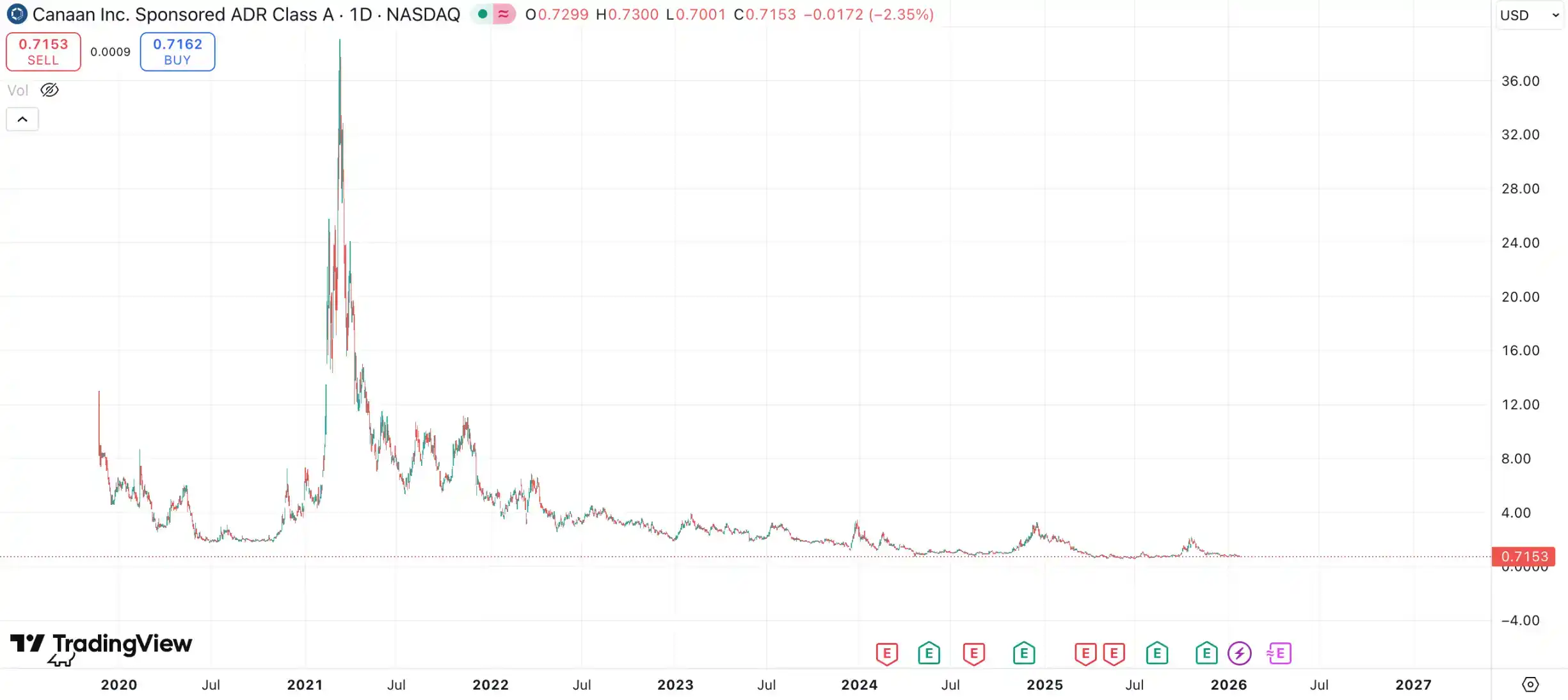
The good times did not last long. With the issuance of China's mining ban and the bear market that persisted throughout 2022, Canan's stock price continued to decline, returning to pre-bull market levels. In the current cycle, although Bitcoin's price reached new highs, even nearly double its 2021 peak at one point, Canan's stock price did not rise but instead fell, dropping below $1 for the first time in April 2024.

Aside from objective market conditions, the industry and Canan itself are also contributing factors to its poor performance in the capital markets.

In the Bitcoin mining machine market, Bitmain is the absolute leader. Canan consistently held the second position until 2021, when MicroBT rapidly rose to prominence with higher power efficiency, pushing Canan to third place. According to a report released by Intel Market Research in December 2025, MicroBT holds a market share of 15% to 20%, while Canan holds 10% to 15%.
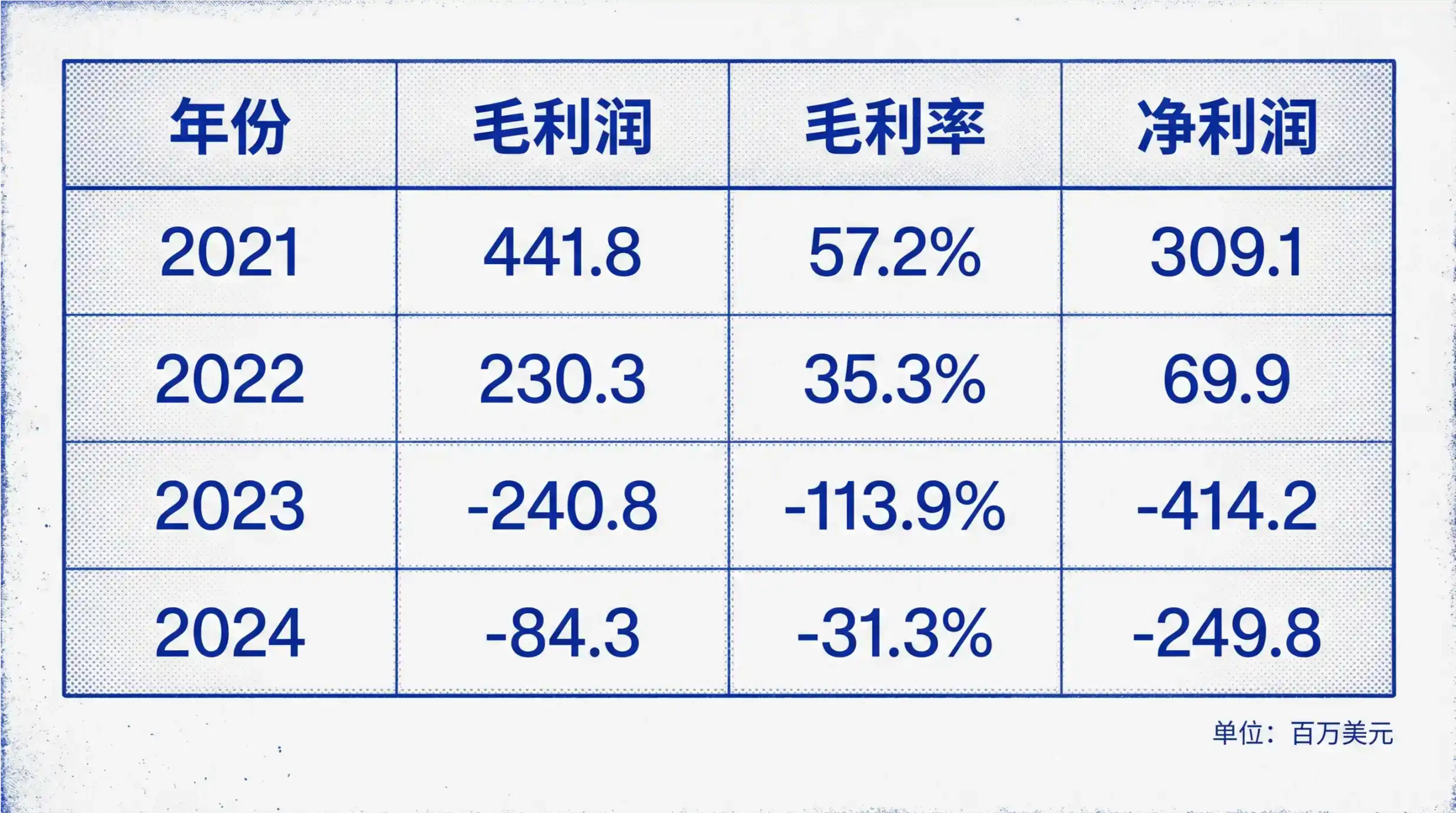
Canan's annual reports from 2021 to 2024 show a continuous decline in net profit over the four years, from earning over $300 million in 2021 to a loss of nearly $250 million in 2024. The reasons include inventory write-downs due to the 2022 bear market, which impacted profits, and fierce competition that kept R&D expenses and operating costs high without effectively increasing market share.

Amid these multiple challenges, a sharp drop in demand became the final straw. According to analysis by MSX researcher Frank, the overhyped expectations of Bitcoin mining narratives and visibly intensifying competition have led many Bitcoin mining companies to transition to AI computing infrastructure. Although "selling shovels" has always been a solid business model, in the current capital market, the Bitcoin story clearly lacks the certainty of AI, and capital has naturally voted with its feet, shifting toward AI-related companies.

In fact, Canan began developing AI chips nearly a decade ago. In 2018, it launched its first commercial edge AI chip based on the RISC-V architecture, the Kendryte K210, designed for edge computing and supporting AI vision and audio processing. Over the next six years, Canan released three more chips, each with significant innovations built on the previous generation.
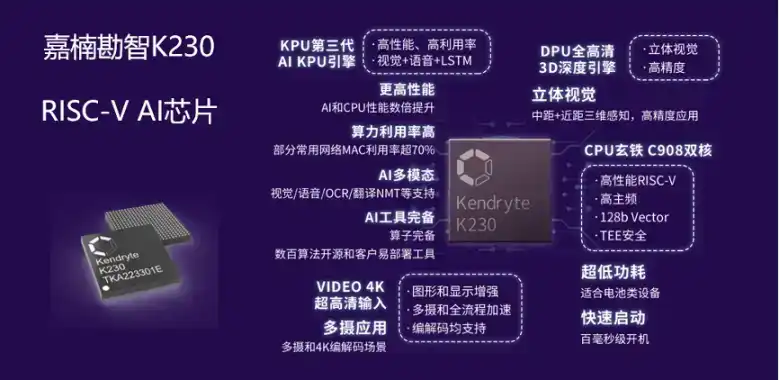
Although Canan's chips had technical highlights and an early start, they lacked the ecosystem support and large-scale demand compared to giants like NVIDIA and Intel. In 2024, its AI-related business revenue was only about $900,000, while operating expenses accounted for 15% of the entire company. In June 2025, Canan announced it would discontinue non-core AI semiconductor operations and shut down its AI chip division. The related announcement stated that the company had been exploring the sale of its AI business since March 2022 but failed to find a buyer, ultimately deciding to abandon it to focus on crypto mining machines and the North American market.

Canan Technology is a microcosm of the实体业务 (physical business) in the Web3 industry. Another listed Bitcoin mining machine manufacturer, Ebang International, has seen its stock price fall from nearly $450 at its 2020 peak to around $3, a drop of over 99%. For hardware manufacturers, there is a mature and fixed valuation model. If the industry they are in shows no clear growth prospects, it is easy to fall into a vicious cycle.

On a positive note, in late 2025, Canan first signed a large order for 4.5 MV in October, followed by completing a $72 million financing round in November. Clearly, there are still those in the market who believe that the former "Pumpkin Zhang" can overcome its difficulties. But to break free from its predicament, Canan Technology may need a new story.


Preguntas relacionadas

QWhy did Canaan Creative receive a delisting warning from Nasdaq in January 2026?

ACanaan Creative received a delisting warning because its stock price had been below $1 for 30 consecutive trading days, violating Nasdaq's listing rules.

QWhat was Canaan Creative's peak market capitalization, and how does it compare to its current situation?

ACanaan Creative's market capitalization peaked at over $5 billion in March 2021 when its stock price reached nearly $40. Currently, it faces potential delisting due to its stock trading below $1.

QWhat are the main reasons for Canaan Creative's financial decline from 2021 to 2024?

ACanaan's financial decline was due to the 2022 bear market causing inventory write-downs, intense competition leading to high R&D and operational costs without market share growth, and a sharp drop in demand.

QWhy did Canaan Creative decide to shut down its AI chip business in 2025?

ACanaan shut down its non-core AI semiconductor business due to a lack of ecosystem support, insufficient large-scale demand (only $900,000 in AI revenue in 2024), and high operational costs, after failing to find a buyer for the division.

QWhat recent developments indicate that some investors still have faith in Canaan Creative's future?

AIn late 2025, Canaan secured a large order for 4.5 megavolts of mining equipment and completed a $72 million financing round, showing that some investors believe the company can overcome its challenges.

Lecturas Relacionadas

Must-Watch Events Next Week|CLARITY Act Could Face Senate Vote; SpaceX, Circle to Report Earnings (8.3-8.9)

**Summary: Key Events and Developments to Watch (August 3-9)** The upcoming week is marked by significant financial disclosures, key legislative deadlines, and notable product updates. **Major Financial Events:** Several companies are scheduled to release their Q2 2026 earnings. American Bitcoin (ABTC) will report on August 3, followed by SpaceX and Hut 8 Mining Corp. on August 4, and Circle on August 5. Notably, a significant portion of SpaceX shares (up to 12% of total shares) will be unlocked on August 6 following their earnings release. **Key Legislative Deadline:** The U.S. Senate faces an August 7 deadline to secure 60 votes for the CLARITY Act, a bipartisan bill aiming to establish a federal regulatory framework for cryptocurrencies. The Senate may hold a full vote on the bill during the week. **Economic Data:** The U.S. July Non-Farm Payrolls report will be released on August 7, providing crucial labor market data. **Technology & Product Updates:** * **Shutdowns:** DeFi portfolio tracker Zapper and wallet app Ctrl Wallet will cease operations on August 3. * **Upgrades:** LayerZero will deprecate its v1 relayers on August 3. XRP Ledger's new version 3.3.0, featuring five new functions, is expected next week. * **AI:** Elon Musk announced that the advanced Grok 4.6 AI model is set for release around August 7. * **Bitcoin:** The BIP-110 forced signaling for a potential Bitcoin network change is scheduled to begin around August 8. **Other Notable Events:** Chinese robotics firm Unitree Tech has set its preliminary price inquiry for its IPO for August 5. South Korean exchange Upbit will delist AQT and AERGO tokens on August 3.

marsbitHace 1 hora(s)

Must-Watch Events Next Week|CLARITY Act Could Face Senate Vote; SpaceX, Circle to Report Earnings (8.3-8.9)

marsbitHace 1 hora(s)

Stocks Are Plummeting More Sharply Than Cryptocurrencies. Where Has the Money Gone?

Stock Markets Plunge Deeper Than Cryptocurrencies: Where Did the Money Go? In late July, Seoul's Kospi index triggered circuit breakers for two consecutive days, plummeting over 40% from its June high. The collapse was led by heavyweight stocks like SK Hynix, whose record profits still disappointed investors, and devastating leveraged ETFs, with one major product losing over 83% of its value. This signaled a global, forced deleveraging targeting the most crowded trades. Interestingly, while stocks exhibited extreme volatility akin to crypto markets, Bitcoin rose nearly 15% in July after a prior steep drop. Analysis shows the money fleeing equities did not flow into Bitcoin. Instead, Bitcoin had already absorbed its sell-off in May-June, when U.S. spot Bitcoin ETFs saw historic outflows. The true safe-haven beneficiary was gold, whose price rose over 20% year-on-year, highlighting a decoupling between Bitcoin and gold as "digital gold." The sell-off was a targeted unwinding of leveraged positions in tech and semiconductors, accelerated by broker-dealer risk management and shifts in the AI narrative, including new competition from Chinese memory chipmakers. The retreat path was clear: from high-valuation tech stocks to cash and U.S. Treasuries, then to gold. For Bitcoin to attract sustained institutional inflows, conditions like eased global liquidity pressure, a "soft-landing" Fed rate cut, and U.S. regulatory clarity via legislation like the stalled CLARITY Act are needed. Currently, Bitcoin is not a safe haven but an already-cleared asset. Its low correlation with tech stocks, however, makes it a potential diversification play for institutional portfolios once the storm passes. The money isn't here yet, but the positioning is underway.

marsbitHace 1 hora(s)

Stocks Are Plummeting More Sharply Than Cryptocurrencies. Where Has the Money Gone?

marsbitHace 1 hora(s)

In Conversation with Ray Dalio: We Are Currently in an AI Bubble, with 1% of My Portfolio in Bitcoin

Ray Dalio, founder of Bridgewater Associates, warns in an interview that the current AI boom shows classic bubble characteristics, which could lead to significant economic downturns as seen in past cycles like 1929 or 2000. He explains that speculative enthusiasm, fueled by debt and overvaluation, often precedes a crash when rising rates or taxation force asset sales, causing widespread losses and recession. Dalio also outlines his "Big Cycle" theory, describing an approximate 80-year pattern where widening wealth gaps, massive government deficits, and shifting geopolitical power (like China's rise) create internal conflict and global instability. He emphasizes that we are in a late-cycle, transitional phase where traditional powers like the US and UK face decline. For personal wealth protection, Dalio advises diversification beyond cash into assets like stocks, bonds, real estate, and particularly gold, which he prefers over Bitcoin. While he holds about 1% of his portfolio in Bitcoin as a non-printable hard asset, he views gold as more secure from technological or governmental threats. Regarding AI's impact, Dalio believes it will disproportionately benefit capital owners, worsening inequality by replacing both physical and cognitive labor. He suggests that human intuition and emotional intelligence, combined with AI, will be key for future workers. On taxation, Dalio argues that wealth taxes are impractical and risk triggering asset sell-offs, reducing productive investment. He points to the UK as a cautionary example of debt, low productivity, and political strife. Geopolitically, Dalio foresees a more regionalized world, with the US showing weakness in prolonged conflicts like with Iran, akin to past imperial declines. The ideal outcome, he suggests, is coexisting powerful blocs (e.g., Americas, China-Asia Pacific) without major war.

marsbitHace 5 hora(s)

In Conversation with Ray Dalio: We Are Currently in an AI Bubble, with 1% of My Portfolio in Bitcoin

marsbitHace 5 hora(s)

Trading

Spot
活动图片




