Franklin Templeton to Include Tokenized Assets BENJI in ETF and Mutual Fund Lineups

cryptonews.ruPublicado a 2026-08-25Actualizado a 2026-08-25

Resumen

Franklin Templeton is preparing to incorporate tokenized assets into its traditional investment funds, marking a deeper integration of blockchain into mainstream asset management. According to reports, the firm plans to use its Franklin Onchain U.S. Government Money Fund (BENJI) as an asset or collateral within its exchange-traded funds (ETFs) and mutual funds, pending board approvals. The SEC has cleared this structure, permitting the use of this natively digital money market product for cash management and collateral purposes—a first-of-its-kind approval. This move goes beyond simply issuing blockchain versions of existing securities. Franklin already distributes tokenized funds via digital wallets but now aims to use these assets within conventional portfolios to enhance liquidity management and improve the efficiency of idle cash. The firm manages over 130 ETFs globally with around $82 billion in assets and approximately $790 billion in mutual fund assets. Its tokenized money market funds currently manage about $2.6 billion. This step occurs as tokenized real-world assets gain traction on Wall Street, with the total market value exceeding $38 billion. Other major firms like Blackrock and BNY are also expanding blockchain-based fund and settlement initiatives. Tokenization offers benefits like faster settlements, 24/7 transfers, and more efficient collateral use. Franklin's approach integrates these assets seamlessly into traditional fund operations, signaling an evoluti...

Franklin Templeton is preparing to place tokenized assets in traditional investment funds, further embedding blockchain into the mainstream asset management infrastructure.

According to a Bloomberg report, the company plans to use its Franklin Onchain U.S. Government Money Fund, known as BENJI, as portfolio assets or collateral within exchange-traded funds (ETFs) and mutual funds. Implementation of this strategy could begin as early as the fourth quarter, pending approval by the boards of directors of the individual funds.

The Securities and Exchange Commission (SEC) approved this structure by issuing a no-action letter, which allows Franklin's funds to use the tokenized money market product for cash management and as collateral.

"This is the first time the SEC has stated that a product natively created in a digital format can be used in traditional financial products," said Sandy Kaul, Head of Digital Asset and Industry Advisory Services at Franklin.

Tokenization Enters the Fund Management Market

This shift goes beyond issuing blockchain versions of existing securities.

Franklin has already been distributing tokenized funds through digital wallets. Now the company intends to use these assets within traditional portfolios to improve liquidity management and enhance the efficiency of deploying idle cash.

The funds could begin holding BENJI tokens immediately after product implementation, though board approval will still be required.

The potential reach is significant. Franklin manages over 130 ETFs globally with approximately $82 billion in assets, and its mutual funds hold about $790 billion. Its tokenized money market funds manage around $2.6 billion in assets.

Wall Street's Tokenization Push Expands

This move comes as tokenized real-world assets are gaining popularity in the traditional financial sector.

According to RWA.xyz, the market value of tokenized assets has surpassed $38 billion. Companies like BlackRock and BNY have also expanded their blockchain-based fund and settlement initiatives.
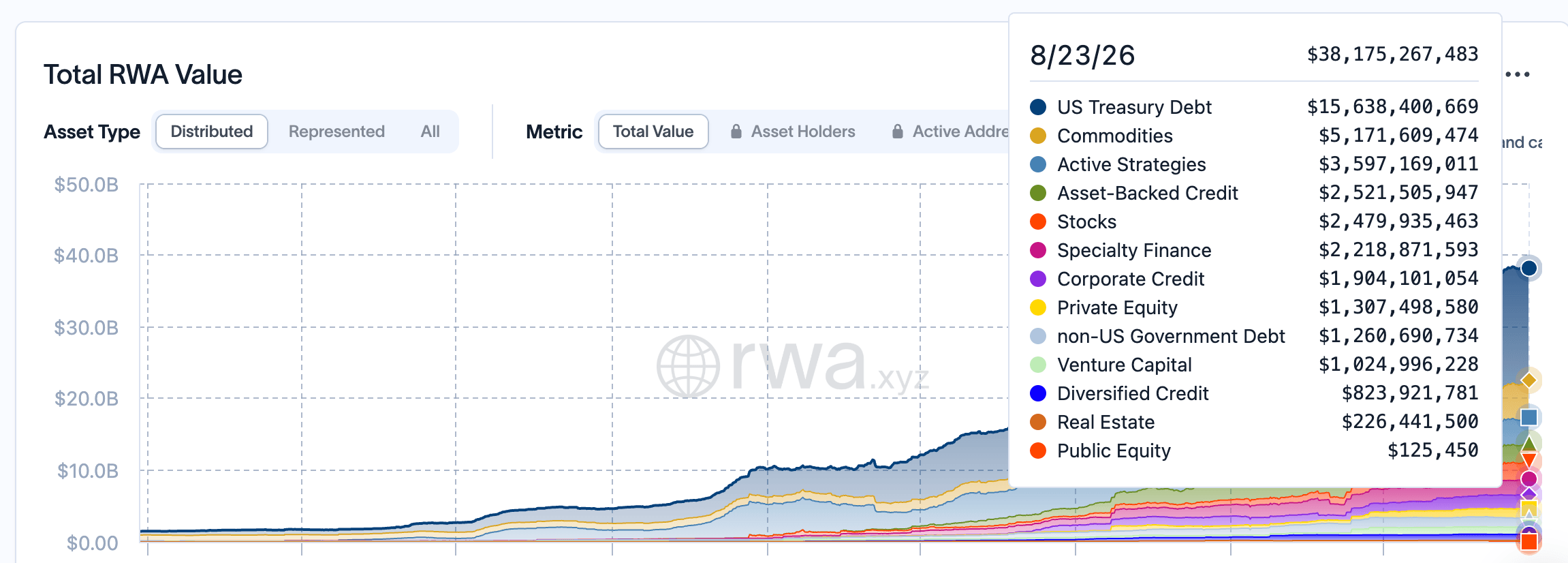
Source: rwa.xyz

The appeal of this approach is clear: tokenized assets enable faster settlement, 24/7 transfers, and more efficient collateral use.

Franklin's approach adds another layer. Instead of asking investors to seek out tokenized products themselves, the company can seamlessly integrate them within traditional funds as part of daily portfolio management.

Franklin also plans to launch additional tokenized products that could eventually serve as cash or collateral in more funds across its lineup. This marks a significant evolution in tokenization. The technology is transforming from a "wrapper" around an investment into the underlying mechanism itself.

end-content
Preguntas relacionadas

QWhat is the main announcement made by Franklin Templeton in the article?

AFranklin Templeton is preparing to include tokenized assets from its BENJI fund (the Franklin Onchain U.S. Government Money Fund) in the composition of its ETFs and mutual funds.

QWhat was the SEC's role regarding Franklin Templeton's new strategy?

AThe SEC approved the structure by issuing a no-action relief, allowing Franklin's funds to use the tokenized money market product for cash management and as collateral.

QAccording to Sandy Kaul from Franklin Templeton, what is significant about the SEC's decision?

AShe stated it is the first time the SEC has said a product originally created in a digital format can be used in traditional financial products.

QWhat is one of the key operational benefits of using tokenized assets mentioned in the article?

ATokenized assets enable faster settlement, 24/7 transfers, and more efficient use of collateral.

QHow does Franklin Templeton's approach to using BENJI differ from simply offering tokenized funds to investors?

AInstead of requiring investors to seek out tokenized products themselves, Franklin can seamlessly integrate these assets within traditional funds as part of routine portfolio management, improving liquidity management and cash efficiency.

Lecturas Relacionadas

Goldman Sachs Bullish on Crypto Brokerage Trading Platforms: Can Prediction Markets Fuel a New Cycle?

Goldman Sachs remains cautiously optimistic about the prospects for crypto and brokerage platforms, forecasting potential for a new cycle driven by structural growth in traditional brokerage and prediction markets, rather than a broad crypto trading recovery alone. While retail stock trading cooled seasonally in July and August, Goldman notes that absolute volumes remain high, and adjusted for account growth, per-account activity is still below the 2021 peak, suggesting room for further expansion. Seasonal recovery and record equity issuance are expected to boost traditional brokerage commissions and trading volumes starting in September. Prediction markets show significant potential for autumn growth, with trading volume up approximately 1160% annually since 2024. Driven by sports, crypto, and political contracts, this segment could see a more pronounced rebound as major US sports seasons resume and election activity increases. The crypto market presents a more cautious picture. Trading volume has declined for about 10 months, exceeding historical median downturns. Although total market cap recently rose ~21%, a sustained price level is needed to drive a meaningful recovery in trading activity. Regulatory progress continues through agency actions, but comprehensive legislation is still seen as key for large-scale institutional adoption. To navigate the crypto trading slump, platforms are diversifying revenues and controlling costs. Goldman's top picks are FIGR (leveraging HELOC growth), HOOD (driven by account growth and business diversification including prediction markets), and IBKR (benefiting from global expansion). COIN is viewed as a play on direct crypto market recovery, given its exposure but also its growing subscription and service revenues. The report's thesis hinges on validating an autumn trading rebound and the sustainability of new revenue streams like prediction markets, rather than assuming a crypto bull market has already resumed.

marsbitHace 4 min(s)

Goldman Sachs Bullish on Crypto Brokerage Trading Platforms: Can Prediction Markets Fuel a New Cycle?

marsbitHace 4 min(s)

Trading

Spot
活动图片