Four Months to Ring the Bell: Crypto Custody Pioneer BitGo Showcases Financial Engineering in IPO

marsbitPublicado a 2026-01-24Actualizado a 2026-01-24

Resumen

BitGo, a leading cryptocurrency custody provider, has successfully completed its initial public offering (IPO) on January 22, 2026, marking the first major crypto IPO of the year. The listing was celebrated with a high-profile lights show in Manhattan and the donation of a framed Bitcoin whitepaper to the NYSE. The company priced its shares at $18, above the initial target range, raising approximately $213 million. Despite an initial 35% surge on the first trading day, the stock later fell below the offering price, with a market cap briefly exceeding $2.8 billion. BitGo also introduced tokenized shares in partnership with Ondo Global Markets, enabling trading on multiple blockchains. Founded in 2013 by Mike Belshe, BitGo pioneered multi-signature wallets and regulated custody services. It has since expanded into a comprehensive financial platform offering trading, lending, and prime brokerage services. The company currently safeguards over $82 billion in assets for more than 5,100 institutional clients globally. While BitGo reported substantial revenue growth—$10 billion in the first nine months of 2025, up from $1.9 billion a year earlier—its net profit margin remained thin at just 0.35%. Critics, including Primitive Ventures’ Dovey Wan, argue that the revenue is largely inflated by GAAP accounting from client trading volume, with real earnings being significantly lower. Key risks include high client concentration in its lending book. Despite mixed analyst views, BitGo’s...

Author: Nancy, PANews

"This morning, we took over Wall Street; tonight, we take over the sky." On January 22, crypto custody giant BitGo officially listed, firing the first shot of the 2026 crypto IPO wave.

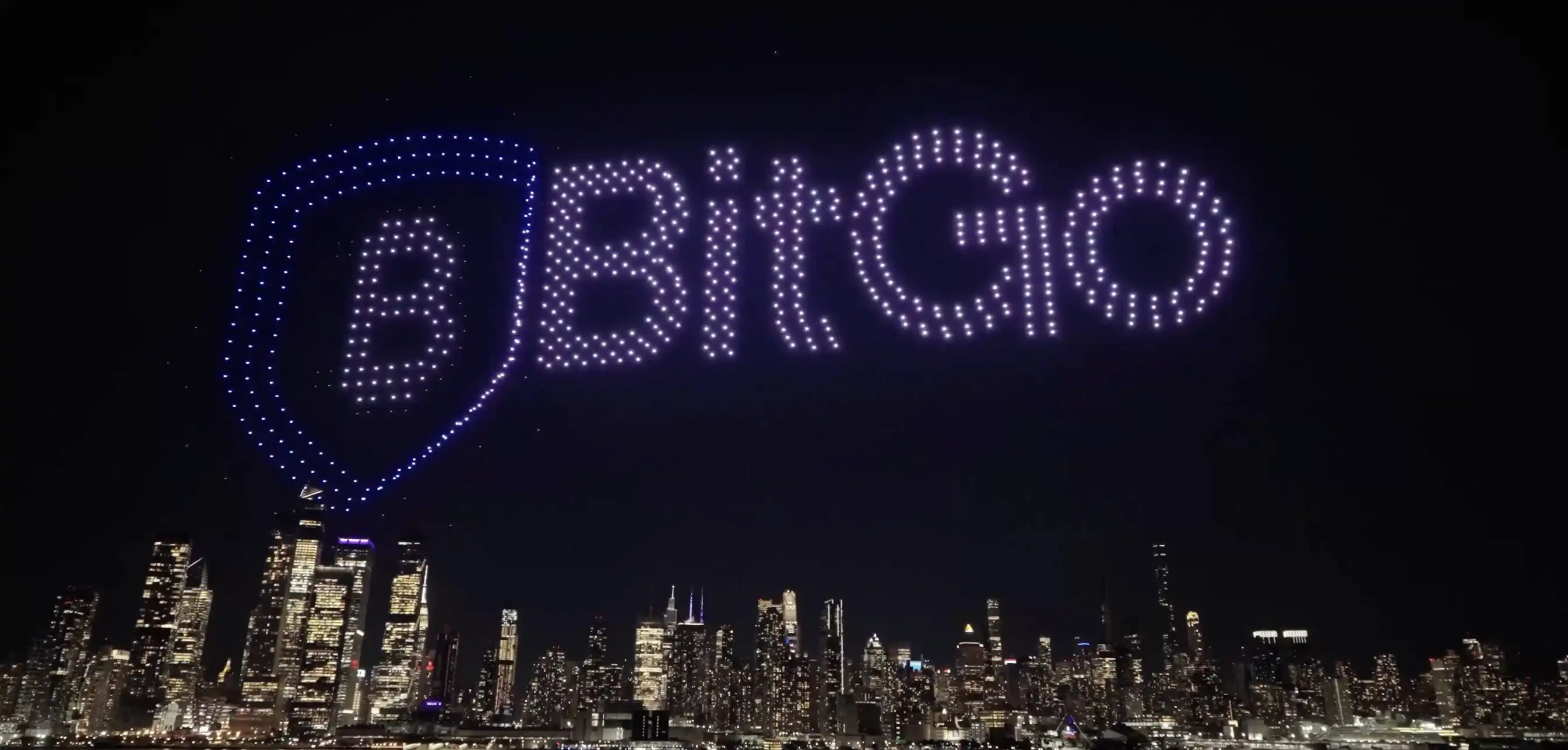
To commemorate this milestone, BitGo donated a framed copy of the Bitcoin whitepaper to the NYSE, which was hung on the trading floor wall. That evening, a light show featuring the BitGo logo lit up the sky over Manhattan, New York, showcasing its prominence.
Ringing the Bell in Four Months, Limited Returns for Subscribing Institutions

It took BitGo just four months from filing its prospectus with the U.S. SEC to complete the sprint from application to bell-ringing.

Looking at its performance on the first day of trading, January 22, BitGo's stock price rose by about 35% at one point, with an intraday high corresponding to a market cap of over $2.8 billion, before giving back some of those gains. The next day, BitGo fell below its issue price, closing at $14.5. Compared to other crypto companies that have gone public in the past year, this valuation is not particularly high.

Additionally, as a crypto-native company, BitGo introduced an innovative tokenized play after its listing. Through a partnership with Ondo Global Markets, it tokenized its stock, allowing investors to trade it on Ethereum, Solana, and BNB Chain.

In fact, as early as February of last year, BitGo was rumored to be considering an IPO. It then submitted its IPO application to the U.S. SEC in September, planning to issue 11.8 million shares at a price range of $15 to $17 per share, aiming to raise up to approximately $200 million, with Goldman Sachs Group and Citigroup acting as joint lead underwriters. Ultimately, BitGo set the issue price at $18 per share, higher than the previously indicated range, raising about $213 million.

According to informed sources, BitGo's IPO issuance was several times oversubscribed. For example, YZi Labs announced its participation as a strategic investor. Based on the current market cap, the returns for these subscribing parties are limited for now.

In terms of shareholding structure, after the IPO completion, BitGo's founder and CEO Mike Belshe will retain control of the company, holding about 56% of the voting rights; Valor Equity Partners and Redpoint Ventures hold 4.6% and 3.9% of the voting rights, respectively.

Among them, Redpoint Ventures led BitGo's $12 million Series A funding round in 2014 and continued to invest subsequently; Valor Equity Partners led the approximately $42.5 million Series B round in 2017. Its founder, Antonio Gracias (a board member of Tesla and SpaceX), is also a member of BitGo's board.

In addition, BitGo's investors include Craft Ventures (founded by the first U.S. "AI and Crypto Czar" David Sacks), Goldman Sachs, Galaxy Digital, DRW, and many other institutions. However, as most funding rounds did not disclose specific valuations, the return rates for these institutions are difficult to calculate. Only in 2023, when BitGo completed its $100 million Series C funding round, its valuation was approximately $1.75 billion. Compared to the current listed market cap, the premium space is not substantial.

$10 Billion Revenue Accused of "Financial Engineering"

Having been established for over a decade, BitGo can be considered the "founding father" of the crypto custody business.

As early as 2013, Mike Belshe, an early member of the Google Chrome team and one of the main contributors to the HTTP/2 specification, co-founded BitGo. At its inception, the company launched the industry's first commercially viable multi-signature wallet, requiring users to complete at least two to three confirmations when initiating transactions, significantly improving the security standard for Bitcoin asset storage. Since then, BitGo has continuously iterated its wallet technology and API interfaces and was among the first to enter the compliant custody track, becoming one of the earliest crypto companies to offer regulated qualified custody services.

In 2020, BitGo launched the BitGo Prime platform, beginning its transformation from a single custody provider to a comprehensive institutional financial platform, offering trading, lending, custody, and financing liquidity services to institutional clients. In the following years, BitGo also obtained a trust license from the New York State Department of Financial Services (NYDFS) and several international regulatory approvals, and in 2025, it was approved to transform into a banking institution, further deepening its compliance layout.

It is worth mentioning that Galaxy Digital once planned to acquire BitGo for $1.2 billion, a deal that was poised to become the largest M&A transaction in the crypto industry at the time. However, due to failure to meet closing conditions, Galaxy Digital unilaterally terminated the agreement, leading to litigation between the two parties. BitGo sought $100 million in compensation, but the court ultimately ruled in favor of Galaxy Digital, and the deal fell through.

To date, BitGo's assets under management exceed $82 billion, serving over 5,100 institutional clients in more than 100 countries, including hedge funds, exchanges, mining companies, and traditional financial institutions.

The continuous expansion of its business scale has driven BitGo's rapid revenue growth, making it one of the few crypto companies able to maintain stable profitability. According to its prospectus, in the first nine months of 2025, BitGo achieved revenue of approximately $10 billion, a significant increase from $1.9 billion in the same period of 2024. This growth primarily came from the development of businesses such as digital asset sales, staking, subscription fees, settlement services, and high-frequency trading. However, despite the huge revenue, the net profit was extremely low. The net profit for the first three quarters of last year was about $35.3 million, which, although an increase from the same period in 2024 ($5.1 million), accounted for only about 0.35% of the total revenue.

Behind the rapid numerical growth is BitGo's transformation from a pure custodian to a broker. As a broker, the amount of client trading can be included in revenue, while the actual profit is only the fees paid by clients.

In this regard, Dovey Wan, founding partner of Primitive Ventures, analyzed that, judging from the quality and growth structure of its income, BitGo is not a high-quality target. Its disclosed core revenue is almost entirely GAAP rev (Generally Accepted Accounting Principles revenue), with the real revenue being pitifully small.

She stated that, based on real revenue performance, it was $146.4 million in 2023, dropped to $131.9 million in 2024, and was $100.5 million in the first half of 2025. Considering that data is often inflated before an IPO, this figure still needs to be viewed with caution. The client trading business, which contributes the majority of GAAP revenue, actually has a gross margin of only about 0.3%. In the first half of 2025, this part of the revenue was as high as $58.8 million, compared to only $500,000 in the same period last year. Staking revenue is accounting-type revenue and can be considered zero. The only segment that reflects growth potential—subscription and service business—has instead seen a significant decline. This revenue was $136.8 million in 2023, dropped to $71.7 million in 2024; and was $40.1 million in the first half of 2025, only a slight increase from $38.3 million in the same period last year. Moreover, BitGo's lending book risk is highly concentrated, with the top three clients accounting for over 50%.

Dovey also revealed that last October, investment banks had hinted that BitGo's IPO valuation was expected to be between $2.75 billion and $3 billion, planning to raise about $300 million, but low market interest led to the fundraising target being lowered to about $200 million.

However, Matthew Sigel, Head of Digital Assets Research at VanEck, is optimistic about BitGo's upside potential. He stated that BitGo is the first listed company to provide investors with pure crypto custody business and is one of the few listed crypto companies expected to achieve revenue growth of over 50% in 2025. Benefiting from the growth of tokenization business and the institutionalization of digital assets, as well as a relaxing regulatory environment, BitGo, as a quality custodian with zero hacking incidents, has huge upside potential.

Furthermore, BitGo has demonstrated strong operational momentum. According to Matthew Sigel's predictions, BitGo is expected to maintain a 26% revenue growth before 2028, achieving over $400 million in revenue and more than $120 million in EBITDA, corresponding to a reasonable market cap of over $3 billion.

BitGo has rung the bell for this year's crypto institution listings. After it, many other crypto institutions are waiting to go public. Industry giants such as Kraken, ConsenSys, Ledger, Animoca Brands, Upbit, and Bithumb have plans or have already submitted applications.

Although the market sentiment is somewhat tepid, the crypto bells on Wall Street are destined to ring continuously this year.

Preguntas relacionadas

QWhat was the significance of BitGo's IPO in the context of the 2026 crypto market?

ABitGo's IPO on January 22, 2026, marked the first crypto IPO of the year, signaling a new wave of public listings for crypto companies.

QHow did BitGo's stock perform on its first day of trading and what was its subsequent price movement?

AOn its first day, BitGo's stock price rose by about 35%, reaching a market cap of over $2.8 billion, but it later gave back some of those gains. The following day, it fell below its IPO price, closing at $14.5 per share.

QWhat innovative method did BitGo use to make its stock available to a broader range of investors after going public?

ABitGo partnered with Ondo Global Markets to tokenize its stock, allowing it to trade on the Ethereum, Solana, and BNB Chain blockchains.

QAccording to the analysis by Dovey Wan, what were the main criticisms regarding the quality of BitGo's reported revenue?

ADovey Wan criticized that BitGo's massive GAAP revenue was largely from principal trading (acting as a broker), which has a very low gross margin of about 0.3%, while its more sustainable subscription and service revenue had actually declined significantly.

QWhich major acquisition deal involving BitGo fell through and what was the outcome?

AGalaxy Digital had planned to acquire BitGo for $1.2 billion, but the deal was terminated by Galaxy Digital for failure to meet closing conditions. BitGo sued for a $100 million termination fee, but the court ruled in Galaxy Digital's favor.

Lecturas Relacionadas

Understanding CPO (Co-Packaged Optics) in One Article: Why Nvidia Is Willing to Spend $3.2 Billion on a Fiber?

NVIDIA and Corning announced a multi-year strategic partnership on May 6, 2026, with NVIDIA committing up to $3.2 billion to support Corning's U.S. expansion. This investment will triple Corning's manufacturing plants and significantly boost its optical fiber and communications production capacity. The core driver behind this massive investment is the fundamental shift from copper to optical interconnect technology within AI data centers. As GPU clusters scale, copper wires face critical limitations: severe signal attenuation over distance, high energy consumption for signal integrity, and excessive heat generation. Optical fiber, transmitting light instead of electrical signals, solves these issues with minimal loss, near-light speed, and lower power needs. The article outlines a three-stage evolution of data center interconnect: 1. **Traditional Copper Interconnects:** The mainstream solution of the 2010s, now being phased out due to scaling bottlenecks. 2. **Pluggable Optical Modules:** The current mainstream, where modules convert electrical signals to light externally. This process still introduces energy loss and latency. 3. **CPO (Co-Packaged Optics):** The next-generation technology where the optical engine is integrated directly with the GPU chip package. This drastically reduces the electrical signal travel distance to mere millimeters, slashing power consumption and latency while boosting data density. NVIDIA CEO Jensen Huang has identified CPO as an essential core technology for AI infrastructure. NVIDIA's investment signifies a strategic shift from being a buyer to actively controlling its supply chain for critical components. With demand for specialized optical fiber far outstripping supply—evidenced by soaring prices—securing long-term manufacturing capacity has become a competitive necessity. While Corning's expansion may pressure some suppliers, a projected global fiber supply gap of 5-15% over the next few years creates a significant opportunity window, particularly for Chinese manufacturers competitive in optical preforms, chips, and modules. Ultimately, NVIDIA's move is not about chasing a trend but an engineering imperative. The transition to light-based interconnects like CPO is driven by the physical limits of copper, marking a definitive step in the ongoing AI computing revolution.

marsbitHace 7 min(s)

Understanding CPO (Co-Packaged Optics) in One Article: Why Nvidia Is Willing to Spend $3.2 Billion on a Fiber?

marsbitHace 7 min(s)

KOL's Perspective: Why Is SOL Set to Rise from This Point?

**Summary: Why SOL is Positioned for Growth at This Level** The article argues that SOL is poised for an upward move from its current price point, citing several key factors. Primarily, SOL has just broken out of a 4-month consolidation phase. This breakout signals a return of risk appetite to the broader crypto market, as SOL is seen as a key indicator of overall crypto health. The token's ownership has reportedly shifted from short-term traders and tourists to long-term accumulators, leading to low volume. Any meaningful increase in trading activity could thus trigger significant upward momentum. Fundamental strengths include strong institutional adoption, integration with DeFi and RWAs (Real-World Assets), and the potential benefits from the Clarity Act. Despite its high volatility—having dropped 70% from its all-time high but still up 12x from its bear market low—SOL is highlighted as one of the few tokens from the last cycle to reach new highs. It boasts a robust ecosystem of applications, users, and protocols. Future catalysts include the expected influx of AI developers following the Miami Accelerate conference, which focused on AI on Solana. Furthermore, Solana is positioned as the premier chain for memecoin activity, a trend expected to continue and drive network usage and fees. The article concludes that recent price action reflects a healthy transfer to long-term holders, setting the stage for growth.

marsbitHace 57 min(s)

KOL's Perspective: Why Is SOL Set to Rise from This Point?

marsbitHace 57 min(s)

Those Pre-Bitcoin PoW Protocols Have Recently Been Reimplemented

This article details a recent surge in replicating pre-Bitcoin Proof-of-Work (PoW) protocols, specifically focusing on Hal Finney's 2004 RPOW (Reusable Proofs of Work). Within five days in May 2026, multiple independent builders in the Bitcoin/cypherpunk community launched projects inspired by this early electronic cash proposal. The initiative began with Fred Krueger's `rpow2.com`, a centralized but auditable system that replaced RPOW's original IBM 4758 hardware with Ed25519 signatures. Initially a faithful replica, it later adopted Bitcoin-like features (21M supply cap, difficulty adjustment) and a controversial 5.24% founder allocation. This sparked rapid forks, including `rpow4.com` which incorporated full Bitcoin parameters, a prediction market (`rpowmarket.com`), and a DEX (`rpow2swap.com`). Concurrently, Mike In Space created a prototype of Wei Dai's 1998 b-money proposal (`b-money.replit.app`), pushing the historical exploration even further back. The article contrasts these centralized, server-dependent experiments with Bitcoin's core innovation of decentralized, trustless consensus. It also highlights a parallel development: the `HASH` project on Ethereum, which uses smart contract hooks to enable a purely fair-launch, browser-mineable PoW token with 0% allocations to team or VCs. The collective activity is framed as a meme-driven, educational exploration of cypherpunk history rather than a serious financial movement, with all projects heavily disclaiming any investment value.

marsbitHace 1 hora(s)

Those Pre-Bitcoin PoW Protocols Have Recently Been Reimplemented

marsbitHace 1 hora(s)

South Korean Exchanges 'Battle' Regulators, Challenging the Boundaries of Enforcement and Legislation

South Korea's cryptocurrency industry is engaged in a rare, direct confrontation with regulators. The Financial Intelligence Unit (FIU), the primary anti-money laundering (AML) watchdog, has recently imposed heavy penalties on major exchanges like Upbit and Bithumb for alleged violations involving unregistered overseas VASPs and AML procedures. However, exchanges are now actively challenging these actions in court and through industry associations. In a significant shift, the Seoul Administrative Court ruled in favor of Upbit's operator, Dunamu, overturning part of an FIU-ordered business suspension. The court found the FIU's penalty criteria and justification insufficiently clear. Similarly, the court suspended the enforcement of a six-month business suspension against Bithumb pending a final ruling, citing potential irreversible harm to the exchange. Beyond legal battles, the industry is contesting proposed legislative amendments. The Digital Asset eXchange Alliance (DAXA) strongly opposes a draft rule that would mandate Suspicious Transaction Reports (STRs) for all crypto transfers over 10 million KRW (~$6,800). DAXA argues this "poison pill" clause violates legal principles and would overwhelm the STR system, increasing reports from 63,000 to an estimated 5.45 million annually for major exchanges, thereby crippling effective AML monitoring. This conflict highlights a structural tension in South Korea's crypto governance: comprehensive digital asset laws are still developing, while regulators rely heavily on AML enforcement. The industry's move from passive compliance to active legal and legislative challenges signifies a new phase, pressing for clearer rules and more proportionate enforcement. While short-term disputes may intensify, this clash could ultimately lead to a more mature and sustainable regulatory framework for South Korea's vibrant crypto market.

marsbitHace 1 hora(s)

South Korean Exchanges 'Battle' Regulators, Challenging the Boundaries of Enforcement and Legislation

marsbitHace 1 hora(s)

Trading

Spot
Futuros
活动图片