Four-Dimensional Resonance: Hong Kong Web3 Carnival Sub-Forum Co-Creates Blueprint for Global Financial New Infrastructure

marsbitPublicado a 2026-04-23Actualizado a 2026-04-23

Resumen

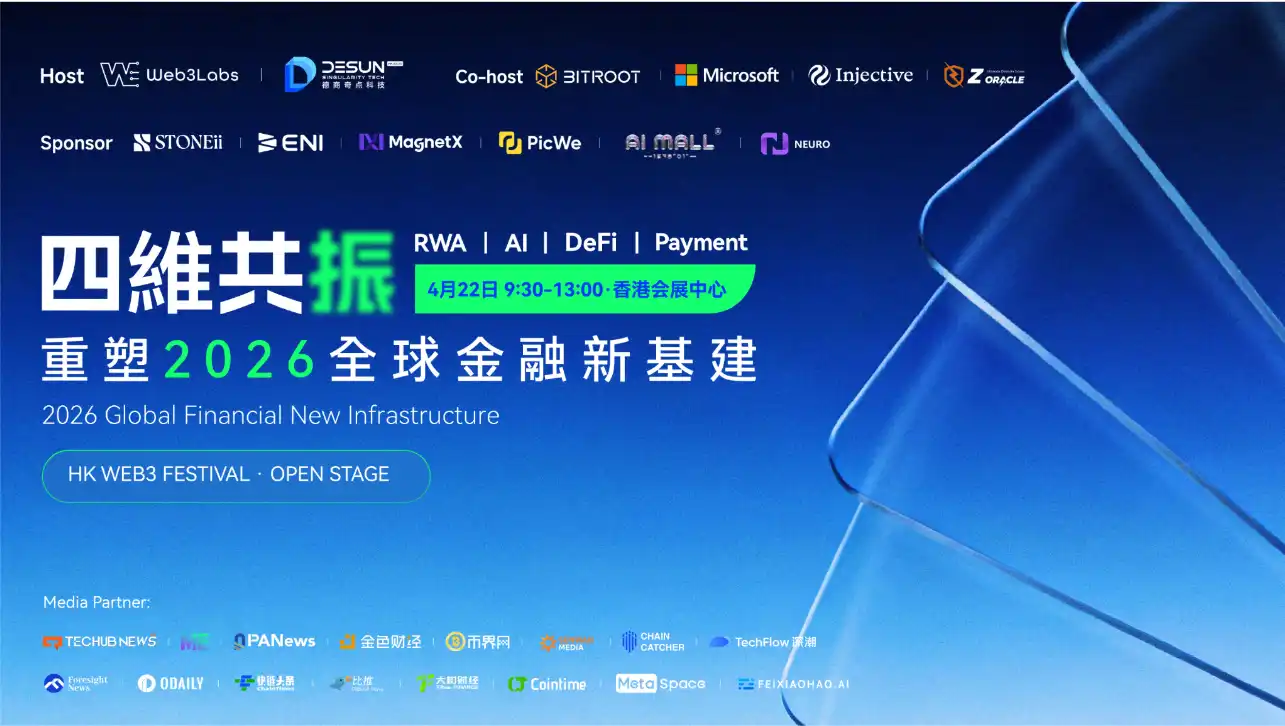
The "Four-Dimensional Resonance: 2026 Global Financial New Infrastructure" forum, a core event of the Hong Kong Web3 Festival, was successfully held at the Hong Kong Convention and Exhibition Centre. Co-hosted by Web3Labs and DeShang Singularity Tech, with joint support from Bitroot, Injective, Microsoft, and Z Oracle, the event gathered policymakers, industry leaders, and investors to explore the integration and innovation of global financial infrastructure, focusing on RWA, AI, DeFi, and compliant payments. Policy speakers, including Hong Kong Legislative Council Member Mr. Wu Jiezhuang, South Korean National Assembly Member Mr. Min Byung-duk, and ACED Chairman Mr. Yun Seok-hun, emphasized the importance of cross-border regulatory collaboration and an open policy environment for fintech innovation. Web3Labs CEO Caspar and DeShang Singularity Tech CEO Chang Shuai highlighted Hong Kong’s role as a financial innovation center and the approaching "singularity moment" for global financial infrastructure. Technical insights were shared by MagnetX, Bitroot, Microsoft, and Injective on topics including AI Agent economies, the evolution of public blockchains, and AI’s transformative role in finance. Key partnerships and initiatives were launched: - GWDC 2026 Korea collaboration between Hong Kong and South Korea. - A strategic agreement between Web3Labs and Microsoft. - The launch of a public anti-fraud alliance by Z Oracle and partners. - The "Injective Rising Star" program to s...

As one of the core sub-forums of the Hong Kong Web3 Carnival, the "Four-Dimensional Resonance: 2026 Global Financial New Infrastructure" forum was successfully held today at the OpenStage of the Hong Kong Convention and Exhibition Centre. The forum was jointly hosted by Web3Labs and DeShang Singularity Technology, co-hosted by Bitroot, Injective, Microsoft, and Z Oracle, and received strong support from Stoneii, ENI Network, MagnetX, Picwe, AI Mall, and NeuroLabs. The event gathered heavyweight guests from the political, industrial, and investment sectors, focusing on four core areas: RWA (Real World Assets), AI (Artificial Intelligence), DeFi (Decentralized Finance), and compliant payments, to jointly explore the integrated innovation and implementation paths of global financial infrastructure.

Policy Leadership: Cross-Border Collaboration to Build an Inclusive Innovation Environment

The forum specially invited Wu Jiezhuang, Member of the National Committee of the Chinese People's Political Consultative Conference and Chairman of the Hong Kong Legislative Council's Commerce and Innovation Technology Committee, South Korean National Assembly Member Min Byung-deok, and Asia Economic Development Committee Chairman Yoon Seok-hoon to deliver speeches. The three policy guests unanimously emphasized that cross-border regulatory collaboration and policy inclusivity are key to the development of financial technology, calling for the establishment of a more open international financial innovation ecosystem to provide institutional guarantees for the new financial infrastructure in Asia and globally.

Technology-Driven: Outlining the New Blueprint for Financial Infrastructure

Web3Labs CEO Caspar pointed out in the opening speech that Hong Kong, as an international financial innovation hub, needs to drive the synergy of industry, capital, and policy to accelerate the digital upgrade of financial infrastructure. DeShang Singularity Technology CEO Chang Shuai, with the theme "Consensus·Resonance·Symbiosis," proposed that the global financial new infrastructure is ushering in a "singularity moment."

In the keynote speech session, MagnetX Vice President Jerry Yu analyzed the infrastructure construction of the AI Agent economy, pointing out that intelligent agents will become the underlying support for financial operations; Bitroot CEO Juan proposed the "Third Public Chain Revolution of Web3," believing that the evolution of public chain technology will drive financial infrastructure toward a more efficient and trustworthy stage. Microsoft Strategic Technology Lead Jerry Lu and Injective representative Vincent Jin shared insights on "AI's Restructuring from Tool to Operational Layer" and "The New Era of Finance Under the AI Wave," respectively, jointly outlining a new technology-driven vision for financial infrastructure.

Ecosystem Co-Construction: Four Major Cooperation Outcomes Inject New Momentum for Development

The forum featured multiple important launch and signing ceremonies, injecting substantive momentum into the global financial new infrastructure:

· GWDC 2026 Korea Launch: Representatives from Hong Kong and South Korea jointly announced cooperation, marking the beginning of in-depth collaboration between the two regions in the fields of AI and Web3 to accelerate the internationalization process of Asia's financial new infrastructure.

· Web3Labs and Microsoft Strategic Cooperation Signing: The two parties will engage in deep collaboration in cloud computing, AI technology integration, and industrial resource alignment, achieving a powerful combination of tech giants and the Web3 ecosystem.

· Launch of the Civil Anti-Fraud Alliance Platform: Promoted by Z Oracle, the Blockchain Compliance Professionals Association, and SlowMist, among other institutions, the platform aims to build an industry security defense line and create a trustworthy financial ecosystem.

· Injective Rising Star Program Launch: Injective, in collaboration with Web3Labs and Microsoft, officially launched the program. The three parties will engage in deep cooperation in infrastructure, cloud computing, and resource incubation, providing targeted support for global developers working on AI and Web3 integration projects with industrial-level potential.

In-Depth Dialogue: Promoting the Global Layout of Asia's Financial Technology Ecosystem

In the panel discussion session, the forum delved into three core topics: "Web3×AI×Payment," "Institutional-Grade RWA," and "RWA×DeFi." Participants engaged in multi-dimensional discussions on AI-driven payment scenario intelligence, compliant paths for cross-border transactions, and the challenges faced by RWA in institutional applications, such as trust building and liquidity enhancement. There was a consensus that the deep integration of RWA and DeFi will become the core driving force of financial infrastructure, promoting a revolutionary shift from physical to digital paradigms. Through multi-dimensional resonance in policy leadership, technical discussions, and ecosystem co-construction, this forum provided a clear path for the development of global financial new infrastructure. As an international financial and innovation hub, Hong Kong continues to play a bridging role, promoting the global layout and sustainable development of Asia's financial technology ecosystem.


Preguntas relacionadas

QWhat was the main focus of the 'Four-Dimensional Resonance: 2026 Global Financial New Infrastructure' forum at the Hong Kong Web3 Festival?

AThe forum focused on four core areas: RWA (Real World Assets), AI (Artificial Intelligence), DeFi (Decentralized Finance), and compliant payments, exploring the integrated innovation and implementation paths of global financial infrastructure.

QWhich policy figures delivered speeches at the forum, and what key point did they emphasize?

AThe policy figures were Wu Jiezhuang (Member of the National Committee of the Chinese People's Political Consultative Conference and Chairman of the Hong Kong Legislative Council's Commerce and Innovation Technology Committee), South Korean National Assembly Member Min Byung-duk, and Asian Economic Development Committee Chairman Yoon Seok-hoon. They emphasized that cross-border regulatory collaboration and policy inclusivity are crucial for fintech development.

QWhat significant collaborations or initiatives were announced during the forum?

AKey announcements included the launch of GWDC 2026 Korea (a collaboration between Hong Kong and South Korea in AI and Web3), a strategic partnership between Web3Labs and Microsoft, the launch of the Civil Anti-Fraud Alliance Platform, and the initiation of the Injective Rising Star Program.

QHow did speakers like Jerry Yu and Juan contribute to the forum's discussion on technology-driven financial infrastructure?

AJerry Yu, Vice President of MagnetX, analyzed AI Agent economy infrastructure, stating that intelligent agents will become the underlying support for financial operations. Juan, CEO of Bitroot, proposed the 'Third Public Chain Revolution in Web3,' arguing that public chain technology evolution will drive financial infrastructure towards greater efficiency and trust.

QWhat were the core topics of the panel discussions, and what consensus was reached regarding RWA and DeFi?

AThe panel discussions centered on 'Web3 × AI × Payment,' 'Institutional-Grade RWA,' and 'RWA × DeFi.' Participants agreed that the deep integration of RWA and DeFi will be a core driver of financial infrastructure, facilitating a revolutionary shift from physical to digital finance paradigms.

Lecturas Relacionadas

The Shutdown of Claude Mythos Revealed the True Cost of Renting AI to Me

The sudden shutdown of Claude Mythos this week starkly highlights a critical, often overlooked risk for founders: when your core capability relies entirely on someone else's platform, your fate is not in your own hands. The key question becomes: who truly owns the intelligence your product depends on? For years, the debate around open-source models focused on cost. Now, the evidence is clear: fine-tuned open-source models can achieve frontier-level quality for specific, mission-critical tasks at a fraction of the cost. However, the deeper issue is control. Relying on a third-party API is like renting; it works until the landlord changes the rules, raises the rent, or asks you to leave—as Mythos experienced. The lesson is not to stop using frontier models—they are incredible infrastructure. The goal is ownership. Ownership means starting with a powerful open-source model and shaping it around what makes your company unique: your data, workflows, domain expertise, and definition of "good." Over time, the model becomes less generic and more reflective of your business, creating durable value. The optimistic conclusion is that AI's future doesn't hinge on one superior model. There is no single frontier. The frontier includes proprietary models, models fine-tuned on company-specific knowledge, specialized models for narrow problems, and intelligent routers orchestrating model ensembles. The most interesting development is not models getting smarter, but intelligence becoming increasingly customizable. The winning companies will be those that transform intelligence into a unique, owned asset. Looking ahead, the vision is not one model dominating all, but many teams owning the part of the frontier that matters most to them.

marsbitHace 1 min(s)

The Shutdown of Claude Mythos Revealed the True Cost of Renting AI to Me

marsbitHace 1 min(s)

Tiger Research: U.S. Strategic Bitcoin Reserve - Should the Market Be Happy or Disappointed?

Tiger Research analyzes the evolution of U.S. legislative efforts regarding a strategic Bitcoin reserve, concluding the market impact is limited in the short term but potentially positive long-term. The core event was a March 2025 executive order by former President Trump, which designated confiscated Bitcoin as a strategic reserve and promised not to sell existing holdings (approx. 190k BTC). As it contained no mandate to purchase new Bitcoin, the market reacted negatively, with prices dropping 5.7%. Legislative history shows a significant retreat from initial ambitions. The 2024 "BITCOIN Act" proposed mandatory purchases of 1 million BTC over five years. Reintroduced in 2025, it stalled due to high fiscal costs, concerns over dollar hegemony, and opposition from the Treasury Secretary. The current frontrunner, the 2026 "American Retirement and Monetary Advancement (ARMA) Act," is a compromise. It lacks any purchase requirement, instead focusing on consolidating existing government-held Bitcoin and legally prohibiting its sale for at least 20 years. While ARMA has higher passage odds due to bipartisan support and no purchase mandate, its immediate market effect is neutral. It eliminates potential government selling pressure but creates no new demand. The long-term significance is that formally establishing Bitcoin as a national reserve asset in law could later reignite debates on mandatory purchases. Therefore, the path to a government buyer is longer than initially priced by the market, but the directional narrative remains intact.

marsbitHace 4 min(s)

Tiger Research: U.S. Strategic Bitcoin Reserve - Should the Market Be Happy or Disappointed?

marsbitHace 4 min(s)

US Stock Market Trend (June 16): SpaceX Rises 42% in Two Days, New Fed Chairman Takes Office Today

**U.S. Stocks Trend (June 16): SpaceX Soars 42% in Two Days, New Fed Chair Takes Office Today** Markets surged on Monday following former President Trump's social media announcement of a completed U.S.-Iran deal to reopen the Strait of Hormuz, pending a June 19 signing. The news triggered a broad risk-on rally: oil prices crashed, tech stocks soared, bond yields fell, and defensive sectors lagged. **Market Performance:** The Nasdaq jumped 3.07%, led by semiconductor stocks like Micron (+9.2%). The S&P 500 gained 1.65%, and the Dow rose 0.92% to a record high. However, the Russell 2000 small-cap index underperformed (+0.72%). SpaceX continued its hot streak, rising another 5% pre-market after disclosures of large buys by an Australian billionaire and Cathie Wood's ARK. Boeing also rallied on the transportation optimism. Conversely, energy stocks like Chevron fell over 3% on the oil price plunge, with other defensive sectors also selling off. The day's action showed a clear rotation of funds from energy/defensive plays into AI and tech narratives. **Macro & Outlook:** The VIX fear index fell 8.37%. Treasury yields declined, and WTI crude dropped over 5%. Attention now shifts to a packed schedule: the Bank of Japan is widely expected to hike rates to 1.0% on Tuesday. The Fed's June meeting concludes Wednesday, marking new Chair Wash's debut. While rates are expected to hold, his tone on stubborn inflation and the "dot plot" will be crucial for gauging the 2024 rate path. The formal Iran deal signing is set for Friday. **Trend Perspective:** While the peace deal is a genuine positive, Monday's explosive rally may have gotten ahead of itself, pricing in a swift resolution to inflation concerns. The shortened trading week faces a triple test: BoJ tightening, the Fed's policy stance, and deal implementation details. Tech and semiconductors, which led the surge, remain vulnerable to any disappointment from these key events. The real price discovery begins with the central banks' communications this week.

marsbitHace 25 min(s)

US Stock Market Trend (June 16): SpaceX Rises 42% in Two Days, New Fed Chairman Takes Office Today

marsbitHace 25 min(s)

Xiaohongshu's Second Great Voyage, This Time Sailing Towards AI

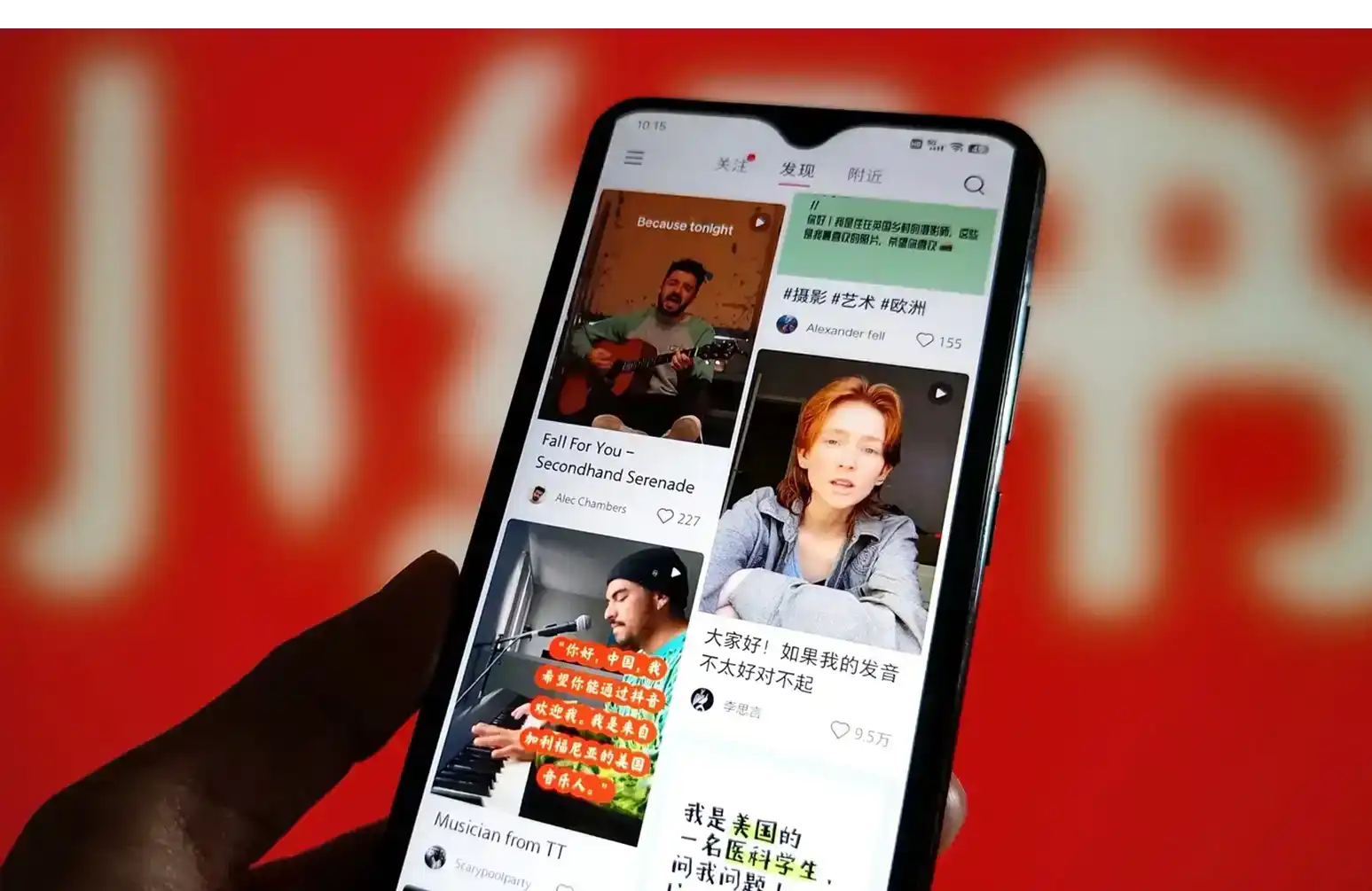
Xiaohongshu's Second Voyage: Navigating Towards AI Since ChatGPT's emergence, Xiaohongshu's founder Mao Wenchao has been acutely aware of AI's potential threat, recognizing that the life advice people seek from chatbots overlaps directly with his platform's core business. Founded in 2013 as a PDF shopping guide for Chinese tourists, Xiaohongshu evolved into a massive community where millions share authentic, personal experiences—from product reviews to travel tips. This vast repository of "I've tried this" human judgment became its most valuable asset. However, the rise of AI, which delivers instant answers, challenges the very need for users to sift through numerous personal notes. Fearing its treasure trove of lived experience could become mere training data for others, Xiaohongshu is proactively adapting. In 2026, it established a dedicated AI division (Dots), launched RED Skill to turn user experiences into usable AI tools, and acquired the AI search product "Diandian." Its investments now extend to AI firms like MiniMax and hardware startups, moving upstream to address needs before they even become search queries. The platform's commercialization strategy is also evolving. With a newly acquired payment license and tools like the AIPS model to track consumer decision journeys, Xiaohongshu aims to seamlessly integrate recommendations with transactions, embedding commerce within AI-generated answers. Yet, a critical tension remains. While building smarter machines to organize and leverage its human experiences, Xiaohongshu must prevent AI from drowning out the authentic, flawed, and trustworthy "I've tried this" voices that built its community. Its core challenge is to harness AI's power without letting the map—the machine's perfect, synthesized answer—replace the territory of genuine human experience. This balance between technological advancement and preserving human trust defines its current journey and its future.

marsbitHace 57 min(s)

Xiaohongshu's Second Great Voyage, This Time Sailing Towards AI

marsbitHace 57 min(s)

Trading

Spot
Futuros

Artículos destacados

Cómo comprar CORE

¡Bienvenido a HTX.com! Hemos hecho que comprar CORE (CORE) sea simple y conveniente. Sigue nuestra guía paso a paso para iniciar tu viaje de criptos.Paso 1: crea tu cuenta HTXUtiliza tu correo electrónico o número de teléfono para registrarte y obtener una cuenta gratuita en HTX. Experimenta un proceso de registro sin complicaciones y desbloquea todas las funciones.Obtener mi cuentaPaso 2: ve a Comprar cripto y elige tu método de pagoTarjeta de crédito/débito: usa tu Visa o Mastercard para comprar CORE (CORE) al instante.Saldo: utiliza fondos del saldo de tu cuenta HTX para tradear sin problemas.Terceros: hemos agregado métodos de pago populares como Google Pay y Apple Pay para mejorar la comodidad.P2P: tradear directamente con otros usuarios en HTX.Over-the-Counter (OTC): ofrecemos servicios personalizados y tipos de cambio competitivos para los traders.Paso 3: guarda tu CORE (CORE)Después de comprar tu CORE (CORE), guárdalo en tu cuenta HTX. Alternativamente, puedes enviarlo a otro lugar mediante transferencia blockchain o utilizarlo para tradear otras criptomonedas.Paso 4: tradear CORE (CORE)Tradear fácilmente con CORE (CORE) en HTX's mercado spot. Simplemente accede a tu cuenta, selecciona tu par de trading, ejecuta tus trades y monitorea en tiempo real. Ofrecemos una experiencia fácil de usar tanto para principiantes como para traders experimentados.

239 Vistas totalesPublicado en 2024.12.13Actualizado en 2026.06.02

Cómo comprar CORE

Discusiones

Bienvenido a la comunidad de HTX. Aquí puedes mantenerte informado sobre los últimos desarrollos de la plataforma y acceder a análisis profesionales del mercado. A continuación se presentan las opiniones de los usuarios sobre el precio de CORE (CORE).

活动图片