Former Bankless Member Lucas: Why I Still Bullish on Ethereum

foresightnews_apiPublicado a 2026-06-05Actualizado a 2026-06-05

Resumen

Former Bankless member Lucas explains why he remains bullish on Ethereum despite widespread pessimism. He acknowledges ETH's poor price performance over the past five years compared to Bitcoin and traditional markets, but draws parallels to historical multi-year consolidations seen in tech giants like Amazon and NVIDIA before major breakouts. Fundamentally, Ethereum is stronger than ever: record-high daily transactions (2.27 million in May 2026), significantly lower average gas fees ($0.27), over 400 million total addresses, and more than 32% of ETH staked, securing the network. Lucas's core thesis remains unchanged: all valuable assets will eventually be tokenized, Ethereum will become the primary settlement layer for these assets, and ETH will capture the resulting value. This transition is already underway. Stablecoins, the first proven tokenized real-world asset (RWA), have a $300+ billion market cap, with 54% settled on Ethereum. The broader RWA sector has surpassed $30 billion, with over 53% deployed on Ethereum. He compares the current RWA adoption phase to early DeFi in 2019-20, suggesting immense growth potential. Key catalysts like the potential passage of the U.S. CLARITY Act in 2026 could accelerate institutional adoption. While other blockchains will share the market, Lucas argues that traditional finance prioritizes Ethereum's security, stability, and established ecosystem for trillion-dollar asset tokenization. He concludes that as global assets migrate on-c...


Author:Lucas, former Bankless member

Compiled by:Saoirse, Foresight News


Core Summary:


  • All assets will be tokenized in the future;
  • Ethereum becomes the settlement layer for various tokenized assets;
  • ETH is used for network security staking, capturing all value generated by settlement business;
  • The global financial system is transitioning towards asset tokenization;
  • Relying on security, stability, and long-accumulated ecosystem barriers, Ethereum will capture a significant market share in the tokenization track.


The ‘Ethereum is Dead’ Narrative is Rampant


Currently on crypto social platforms, market pessimism towards Ethereum has hit a historical low. Many colleagues I've worked with for years have gradually faded from the Ethereum scene, some have even left the crypto industry entirely, and the vast majority no longer hold significant ETH positions. The core reason is they no longer recognize its investment value. This is not targeting any individual or circle, but a common phenomenon I've personally witnessed within the industry.


The large-scale capital outflow is partly because cryptocurrency is no longer cutting-edge hot technology, with AI, robotics, and longevity research taking over as capital darlings; but the poor returns from ETH's weak price action are the key driver for market bearishness. To put it bluntly, holding ETH over the past few years has been a terrible experience.


However, I remain steadfastly bullish on Ethereum and ETH, with even more confidence than at any previous stage, and I recommend readers to be bullish together. In fact, Ethereum is entering the most promising adoption and growth cycle in its own history.


Talking About the Poor Price Performance


First, let's address the most obvious issue: the price performance of ETH has been quite poor over the past nearly five years. Investors who entered and held positions in 2021 are, at best, breaking even, with most being deeply underwater. Even with the recent market correction, Bitcoin's current price still stands firm above the 2021 bull market high, with its 2025 peak directly doubling that high; in contrast, ETH's current price has plummeted about 60% from its previous all-time high, failed to set a new all-time high in 2025, and couldn't even break through the $5,000 mark.


During the same period, the S&P 500 index almost hit new all-time highs daily, with hot Wall Street sectors like AI, semiconductors, and energy seeing stocks surge across the board, making ETH's performance even more embarrassing in comparison.


The good news, however, is that when looking at a longer cycle, ETH's chart is merely stuck in a multi-year range-bound consolidation. Ethereum's current market cap exceeds $200 billion, with its price holding the $2,000 level for years, firmly placing it among the top 100 global assets by market cap. Looking at the development patterns of capital markets, it's quite normal for high-quality growth assets to experience years of sideways consolidation and bottom grinding before launching a long bull run.
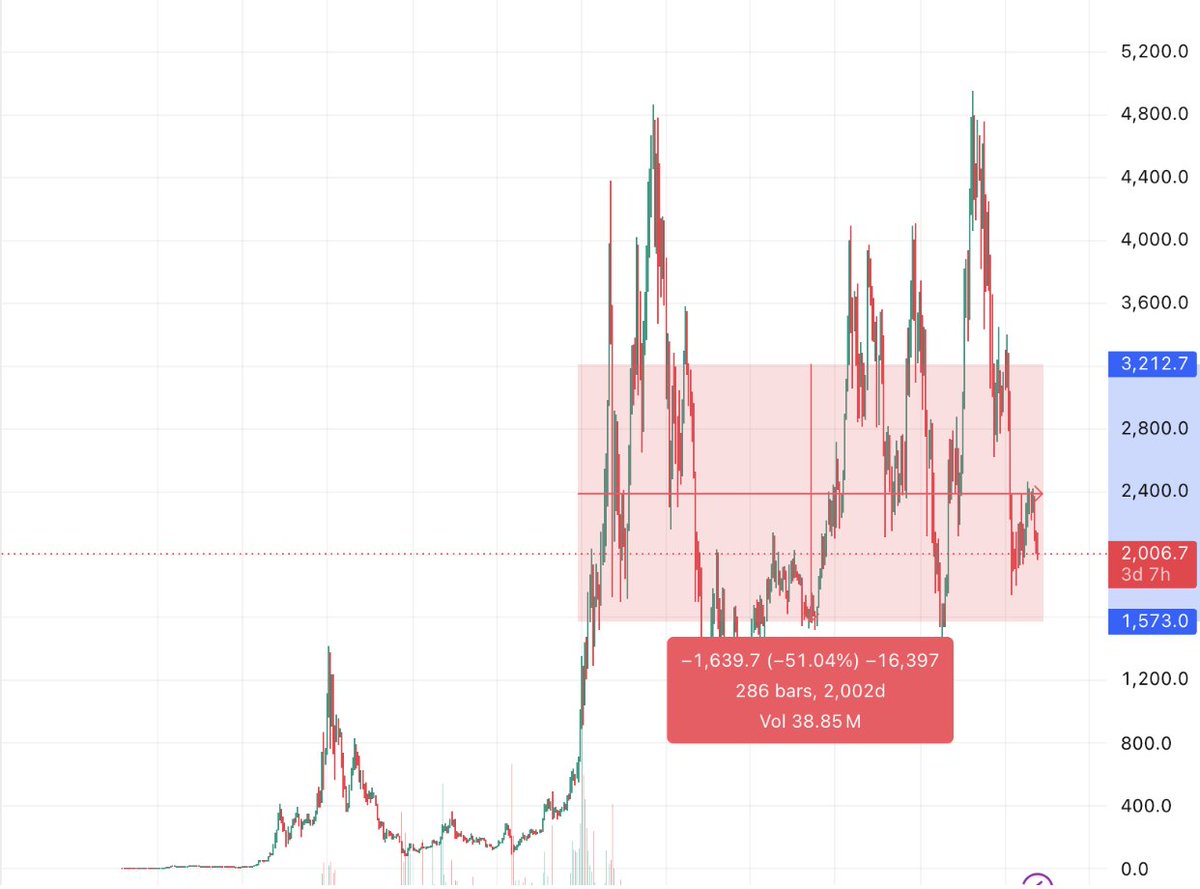

Ignore the percentage change values; focus mainly on measuring the length of time the price stayed within that range.


Global giants like Amazon, NVIDIA, Apple, and Microsoft have all walked the same path:


  • Amazon: Led by Bezos, the company consolidated sideways for nearly a decade in the 2000s after the dot-com bubble burst, weathered the industry winter, and grew into a global top-tier enterprise;
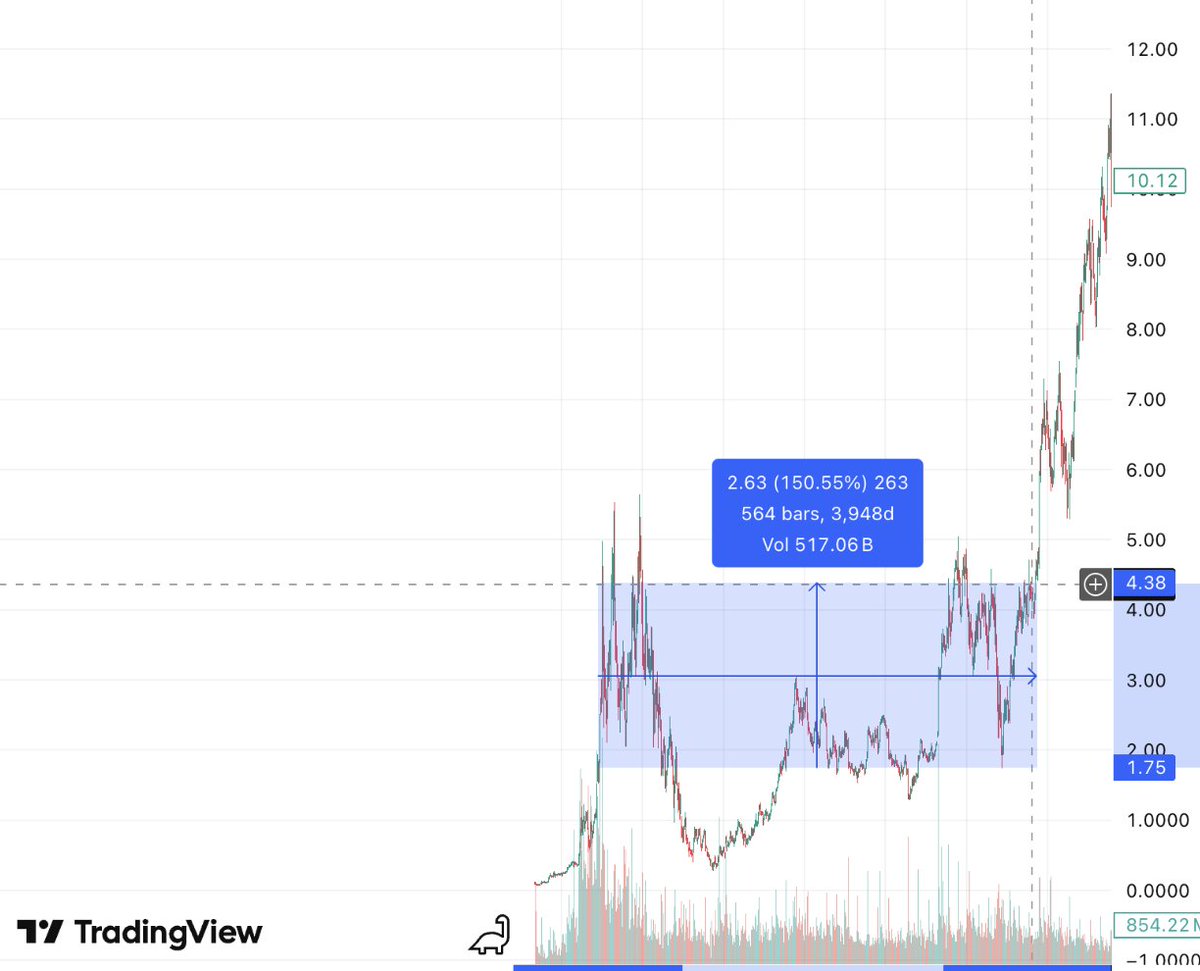


  • NVIDIA: Experienced seven long years of consolidation in the 2010s, then saw an epic stock price surge riding the AI wave, joining the global top tier by market cap;
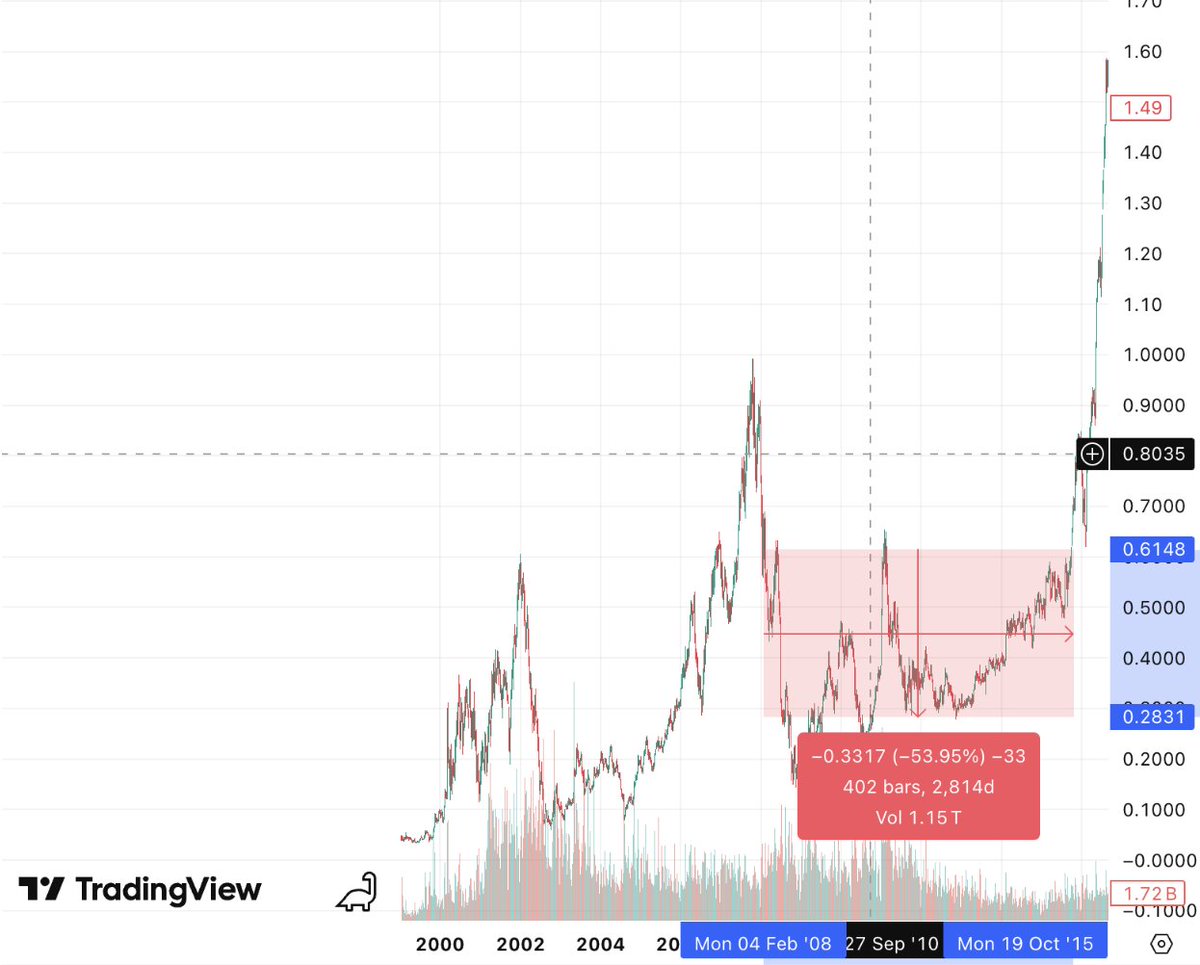


  • Apple: Was in long-term迷茫 (confusion/consolidation) throughout the 80s and 90s, only taking off after Jobs returned to the company in 1997;
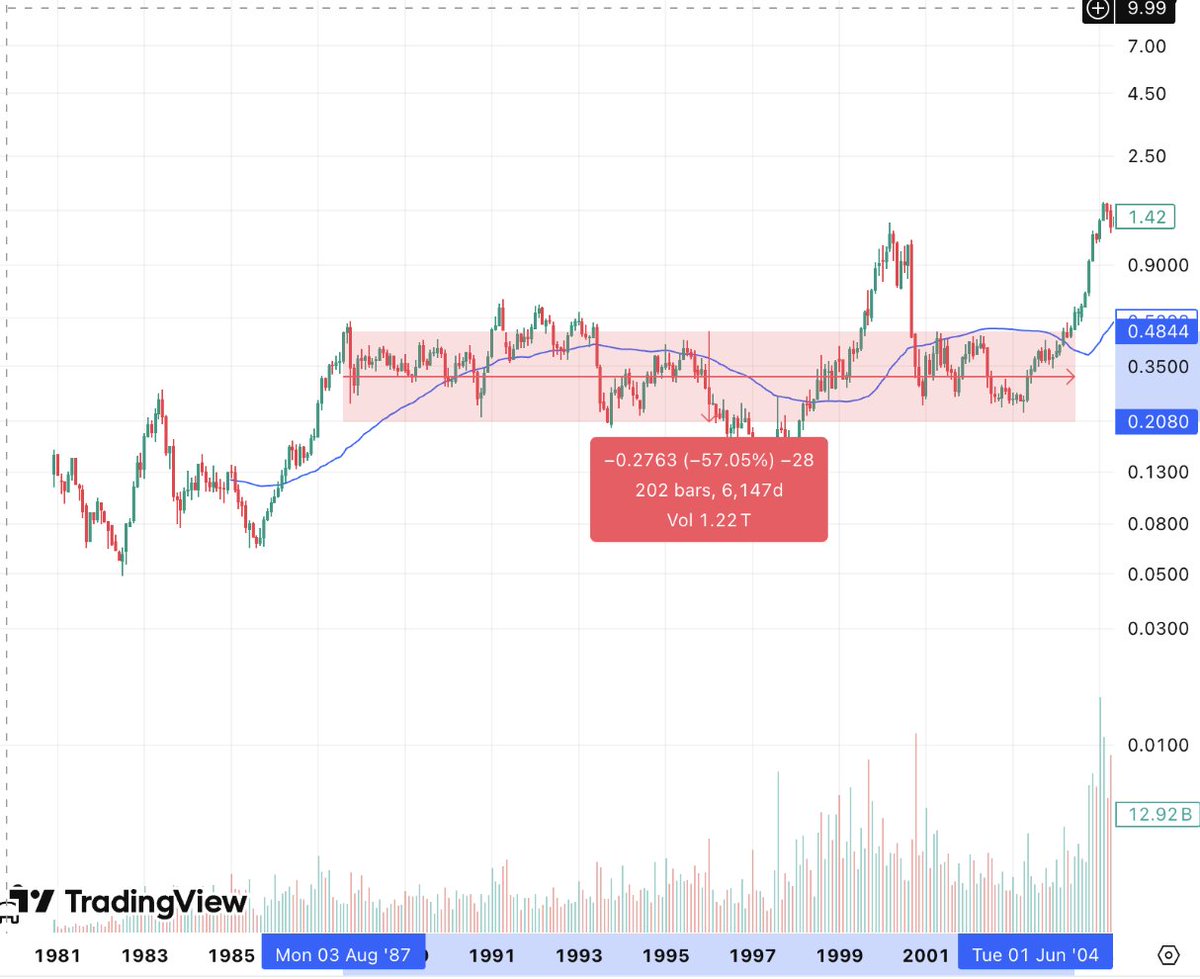


  • Microsoft: Its stock price consolidated sideways for about 15 years after 2000; investors who entered in 2000 didn't break even until 2015, and now it's the world's second-largest company by market cap.
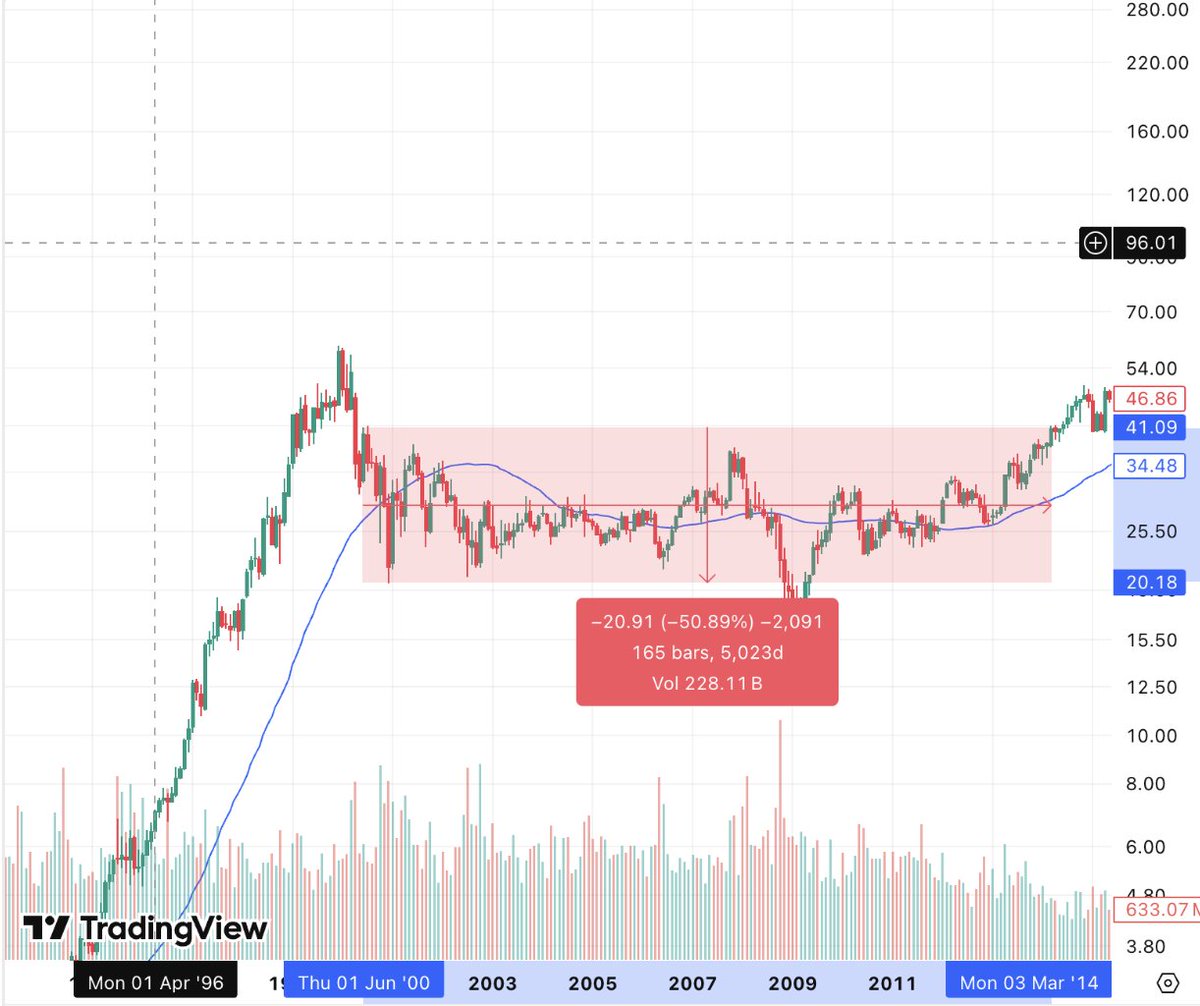


It's not hard to summarize the pattern: most of the world's top-tier assets undergo long, boring consolidation periods. Some assets briefly spike to new highs before pulling back again, then wait for industry catalysts to start a new bull cycle. Moreover, during the consolidation/bottom-grinding phases of these companies, the broader US stock market was often still making new highs. Within this logic, ETH's weak performance over the past five years is not abnormal in financial history.


Setting aside the chart price, Ethereum's current fundamentals are actually at their historical best.


On-Chain Ecosystem Data Continues to Improve


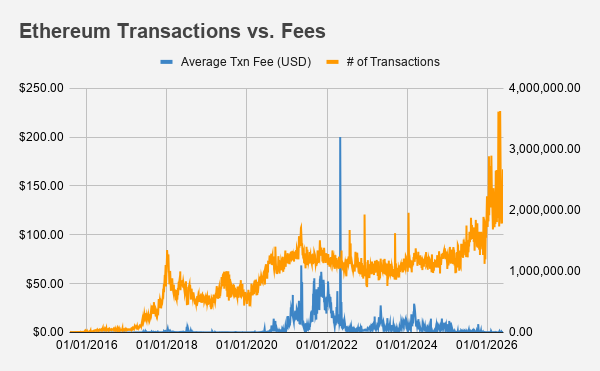
According to the market's bearish narrative, weak price action must be accompanied by a decline in on-chain activity: decreasing transaction volume, high fees, and stalled practical applications. However, the actual data is completely opposite. Ethereum's on-chain transaction volume is steadily climbing, fees are hitting new lows, and the pace of asset tokenization is continuously accelerating.

Data source: Etherscan


Based on Etherscan data: In May 2026, Ethereum's average daily transaction count reached 2.27 million, setting a new historical peak for the network. During the same period, the average transaction fee per transaction was only $0.27. Compared to the high gas fees of $50~$100 during the 2021 bull market, costs have significantly decreased despite transaction volume doubling.


The total number of on-chain addresses has exceeded 400 million, with a daily growth rate of about 0.08% in 2026. Daily active users on-chain have stabilized above 1 million in recent months. At the current growth rate, without major industry catalysts, Ethereum's total address count may break 1 billion around mid-2029.
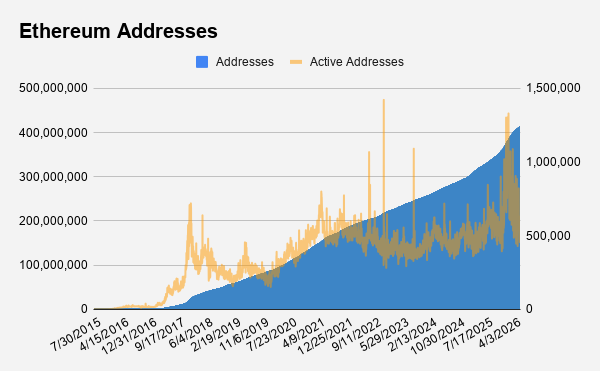


Staking is also continuously setting new records: over 32% of ETH supply is staked and locked, continuously underpinning network security.
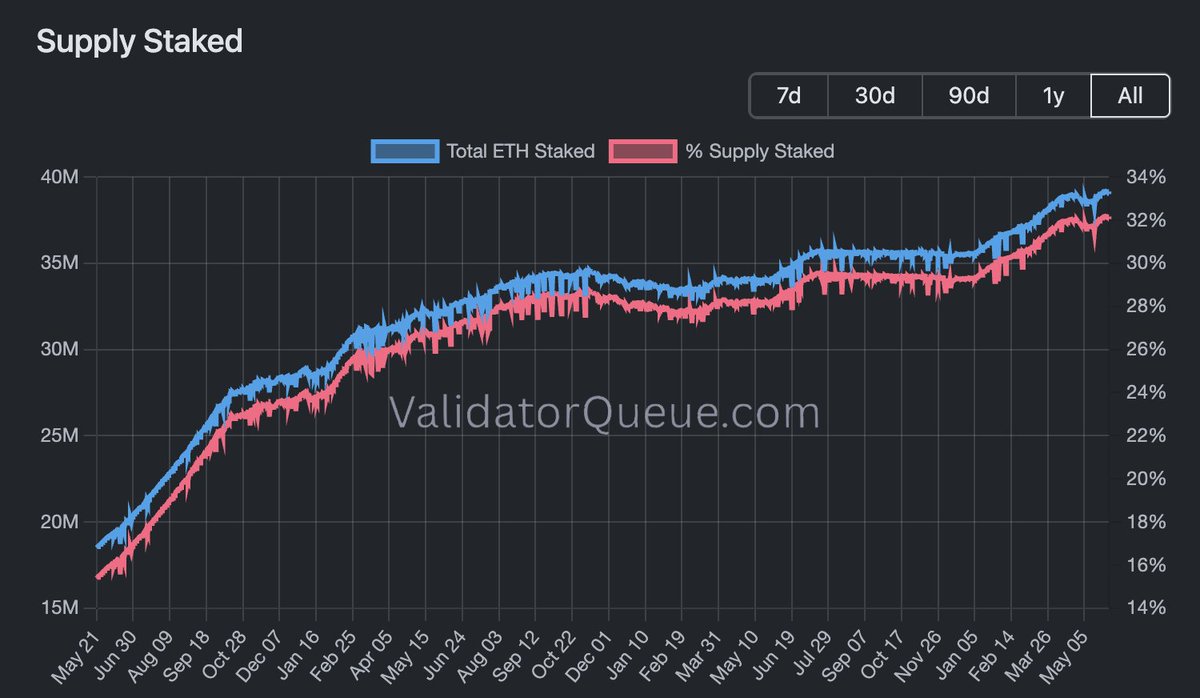

Data source: validatorqueue.com


In summary, Ethereum has completed its scaling iteration while maintaining the bottom line of decentralization and security. It has never experienced a full network outage in over a decade of operation. Relying on its extremely neutral, secure, and programmable block space, it has secured the core chips to compete as the underlying infrastructure for global finance, which is also a prerequisite for subsequently hosting the massive tokenization of traditional assets.


Becoming the Underlying Infrastructure of the Global Financial System


Since entering the industry in 2017, my long-term logic for Ethereum has never changed:


  • Eventually, all valuable assets in the world will be tokenized;
  • Ethereum becomes the unified settlement layer for all types of tokenized assets;
  • ETH captures the entire value increment brought by the settlement layer's business.


In its first decade, Ethereum primarily served as a testing ground for crypto-native assets, with sectors like DeFi, NFTs, and meme coins born and developed on it, solidifying its foundational ecosystem. In the upcoming development phase, Ethereum will embark on a new journey towards a trillion-dollar market cap.


For veteran crypto-native players, traditional finance going on-chain might seem somewhat dull, but it is an indispensable step for blockchain to go mainstream, worthy of the entire industry's promotion. In the future, the vast majority of the world's $700 trillion worth of traditional physical assets will ultimately be tokenized on-chain, and Ethereum will become the preferred hosting network.


Many counter: Ethereum's scaling capacity is insufficient to handle massive assets; other public chains will carve up the market. But current implementation data already disproves this view: traditional financial institutions are onboarding the Ethereum ecosystem in large batches.


A series of news headlines from the past ~2 years, notice they have one thing in common.


The core demand of institutions entering is certainty: for banks, asset managers, and clearinghouses, choosing a blockchain to custody trillions in assets is a major strategic decision. They need to capture the tokenization红利 (dividend/benefit) while avoiding career risks from decision-making mistakes.


Of course, public chains like Hyperliquid and Solana can also get a piece of the pie. The tokenization track is large enough to accommodate multiple public chains developing together; it cannot be monopolized by one. However, traditional institutions pursuing stability will prioritize Ethereum when implementing RWA.


Implementation data supports the view: Stablecoins are the first tokenized real-world asset to achieve product-market fit, with a total circulating market cap exceeding $300 billion. Tom Lee called stablecoins the "ChatGPT moment" for the crypto industry, with Ethereum holding a 54% market share of the total stablecoin market cap.
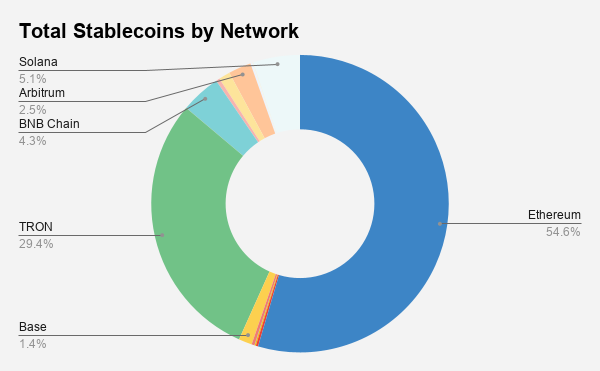

Data source: rwa.xyz


As of June 1, 2026, the total scale of all-category Real-World Asset (RWA) tokenization has exceeded $30 billion, with the growth curve steeply rising; over 53% of these RWA assets are deployed on the Ethereum chain. Even if other public chains start from scratch to compete for non-stablecoin RWA份额 (market share), Ethereum still firmly holds the dominant position.
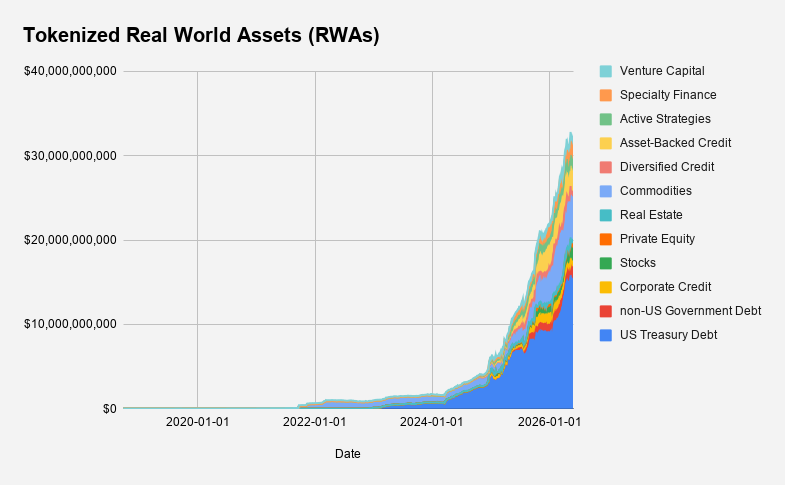
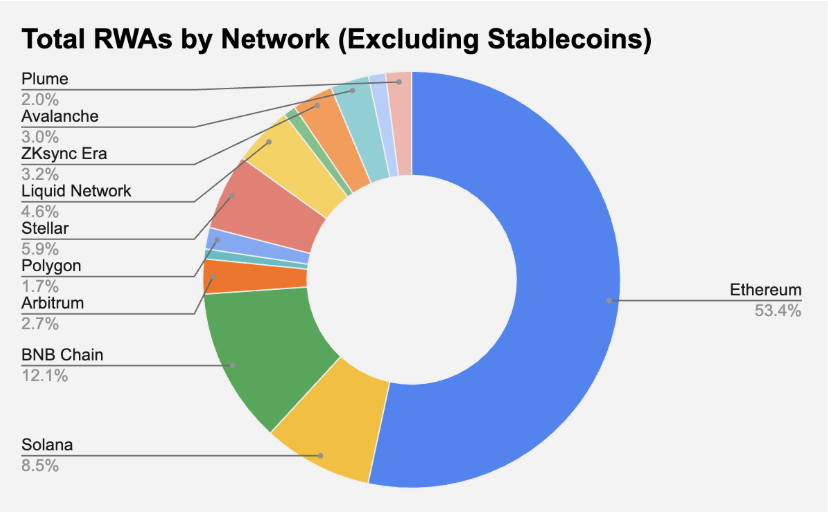

Data source: rwa.xyz


The current development stage of the RWA track is comparable to DeFi in its萌芽期 (germination/early stage) of 2019~2020: the logic of the new track is clear, and early data is steadily rising. Looking back at DefiLlama's past data, DeFi's total value locked (TVL) saw exponential growth in the first half of 2020, while ETH's chart was also in long-term sideways consolidation at that time.
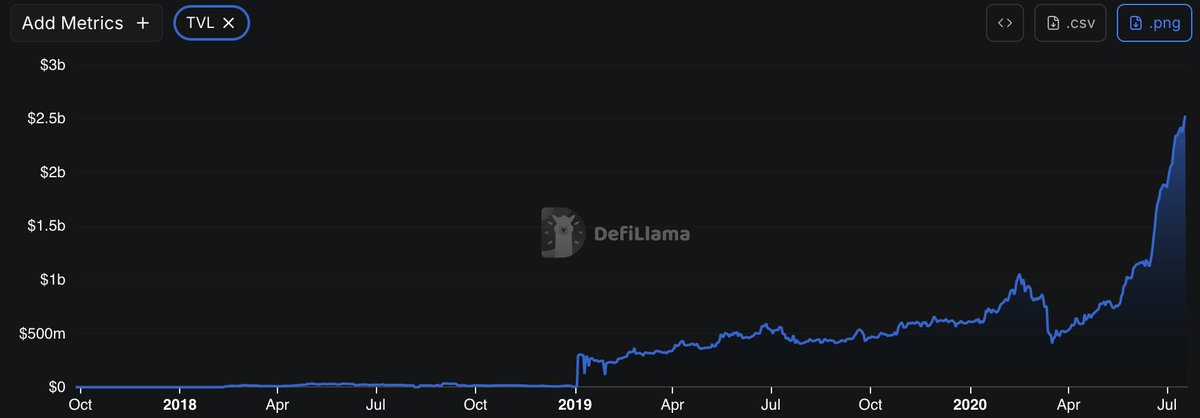


When the DeFi bull market fully erupted and liquidity mining swept the network, ETH, dragged down by the Covid行情 (market situation), had a market cap of only $20~25 billion, ten times smaller than its current $230 billion market cap. Meanwhile, the newly born BNB Chain once threatened Ethereum's position with its advantage of low fees. It wasn't until the DeFi asset scale reached about 20% of Ethereum's total market cap that ETH launched from $300 to $4000 by year-end, experiencing a super bull run.


Comparing to the present: Excluding stablecoins, the total scale of non-stablecoin RWA on Ethereum is about $16 billion, accounting for only 7% of ETH's total market cap, positioning it similarly to DeFi's early germination stage, but with an overall scale ten times larger than back then: early DeFi started at $3 billion, now RWA starts at $30 billion; early ETH bottom at $200, now ETH bottom at $2,000; early competitor was BNB Chain, now the competitor is Hyperliquid.


Additional note: Early DeFi催生 (spawned/generated)大量 (a large amount of) ETH buy pressure through抵押需求 (collateral demand), and NFTs further strengthened the "ETH as Digital Gold" narrative. However, Ethereum had not yet implemented Proof-of-Stake (PoS) staking and the EIP-1559 burn mechanism at that time. Now both rules are fully implemented, and every on-chain transaction can directly bring deflation and value support to ETH.


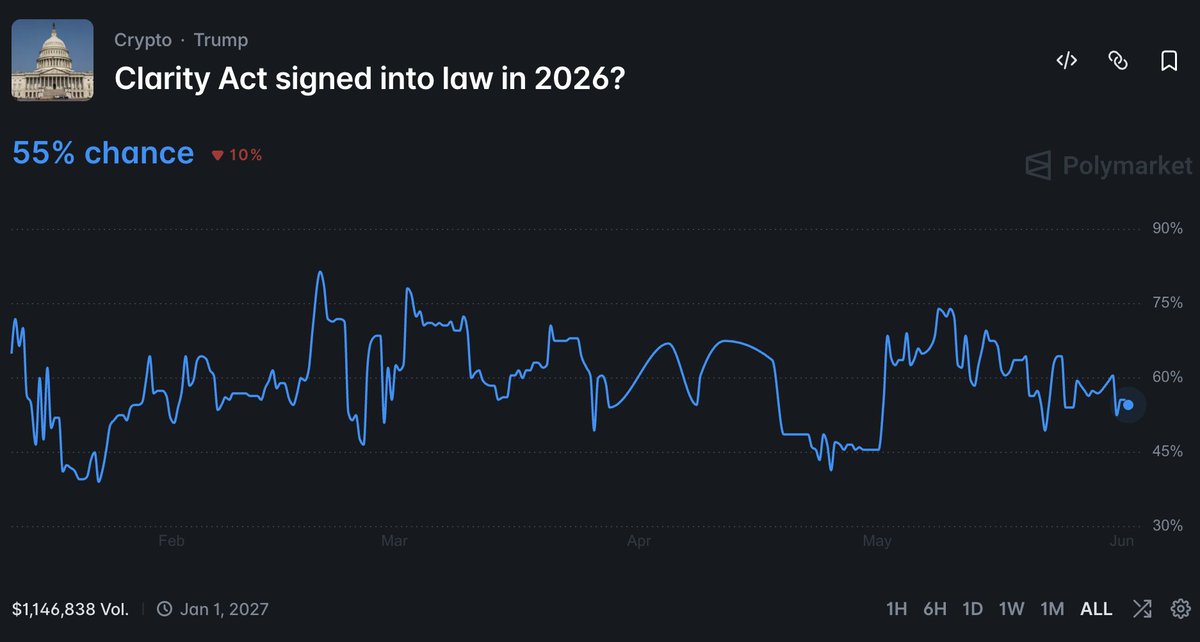
Projecting with a ten-fold space, the overall RWA (excluding stablecoins) scale in this cycle is expected to突破 (break through) $1 trillion. The U.S. "CLARITY Act" becomes a key catalyst. According to Polymarket data, the probability of the法案 (bill/act) being signed into law within 2026 is about 55%. Its passage will open channels for compliant on-chain listing of all U.S. financial assets, becoming a超级利好 (super positive catalyst) for Ethereum.


Ethereum's Vitality Remains Strong


Stocks, bonds, commodities, real estate, art, intellectual property—everything of value will ultimately move towards tokenization. This is the next major innovation in the global financial sector.


The first twenty years of the crypto industry focused on the issuance and innovation of crypto-native assets; the next twenty years will shift the industry's focus towards bringing traditional physical assets on-chain.


Even though the current crypto舆论圈 (discourse/opinion circle) is generally bearish on Ethereum, I am still convinced: Ethereum will become the承载底层 (hosting base layer) for the vast majority of the world's tokenized assets. Relying on its accumulated security, reliability, and liquidity barriers over the years, Ethereum's advantages cannot be短期复刻 (short-term replicated). Once massive global assets land on Ethereum, the market will finally reprice ETH, replicating the past valuation surge行情 (market trend).


Preguntas relacionadas

QWhat is Lucas's core thesis regarding Ethereum's future role in finance?

ALucas's core thesis is that all assets will eventually be tokenized, Ethereum will become the universal settlement layer for all tokenized assets, and ETH will capture all the value generated by this settlement activity by securing the network through staking.

QWhat does Lucas cite as the main reason for the market's bearish sentiment towards Ethereum in recent years?

ALucas cites ETH's poor price performance over the past five years, where it has failed to meaningfully surpass its 2021 all-time high, as the main reason for the market's widespread bearish sentiment and loss of conviction in its investment value.

QWhat positive on-chain data points does Lucas highlight to counter the bearish narrative about Ethereum's fundamentals?

ALucas highlights that Ethereum's daily transactions hit a new all-time high of 2.27 million in May 2026, average transaction fees have dropped significantly to $0.27, total addresses are growing (over 400 million), daily active users are consistently over 1 million, and over 32% of ETH is staked.

QAccording to the article, why do traditional financial institutions prefer to build tokenized asset (RWA) projects on Ethereum?

ATraditional financial institutions prefer Ethereum because they prioritize certainty and security for their trillion-dollar decisions. Ethereum offers proven, long-term stability, security, and reliability, which helps institutions mitigate career risk associated with strategic decisions on newer or less established chains.

QHow does Lucas compare the current stage of the RWA (Real World Asset) sector to the early days of DeFi, and what potential does he see?

ALucas compares the current RWA stage to the early DeFi phase of 2019-2020. He notes that non-stablecoin RWA on Ethereum has a $16 billion market cap (7% of ETH's market cap), similar to DeFi's early scale relative to ETH. He projects this sector could grow tenfold to over $1 trillion, potentially catalyzed by legislation like the US CLARITY Act.

Lecturas Relacionadas

Bitcoin's 'Rally Ends,' Officially Entering the Later Stage of a Bear Market?

Bitcoin prices declined 13% this week, reversing the recent rebound and signaling a likely transition into the later stages of a bear market. Key on-chain metrics deteriorated, with the short-term holder cost basis falling below the Realized Price—a pattern last seen in early 2022, characteristic of bear market maturity. The rally to ~$82k proved to be a bear market bounce, as evidenced by the 90-day realized profit/loss ratio failing to sustain above the bullish threshold of 2. Daily realized losses surged to $1.35B, including significant selling from long-term holders who accumulated near cycle tops, indicating ongoing supply redistribution. Price was rejected almost precisely at the aggregate US spot ETF cost basis of ~$83k, turning that level into resistance and leaving the average ETF investor underwater again. Spot market selling pressure intensified, with the 7-day volume delta turning significantly negative to its weakest level since February. While a major long liquidation event cleared over $400M in leverage, spot demand has not yet stepped in to absorb the resulting supply. Options markets continue pricing in higher future volatility (elevated volatility risk premium) and maintain a skew toward put options, reflecting persistent demand for downside protection, though not yet panic. Overall, market structure remains fragile. Sustained recovery likely requires a reclaim of the ETF cost basis, a shift back to positive spot demand, and a slowdown in realized loss-taking. Until then, the market risks further downside or extended consolidation within the broader bear trend.

Foresight NewsHace 1 hora(s)

Bitcoin's 'Rally Ends,' Officially Entering the Later Stage of a Bear Market?

Foresight NewsHace 1 hora(s)

How Risky is the "Death Spiral" of MSTR and STRC?

Summary: This article explores the perceived "death spiral" risk between MicroStrategy (MSTR), its Bitcoin holdings, and its perpetual preferred stock (STRC), drawing comparisons to the LUNA-UST collapse. While both systems feature price anchors, high yields for holders, and potential feedback loops, their core mechanisms differ fundamentally. The MSTR-STRC structure relies on continuous financing to sustain its high dividend payouts, primarily through stock ATM offerings. A negative feedback cycle could occur: falling MSTR stock price makes raising equity capital harder, increasing pressure to sell Bitcoin, which undermines STRC confidence and further depresses MSTR. However, unlike LUNA-UST's automated, direct linkage, the MSTR-STRC loop is weaker and has brakes: STRC dividends can be deferred or rates lowered, and STRC holders have a $100/share liquidation preference in bankruptcy, providing a price floor. The company's sustainability hinges on its ability to continue financing. Its current ~$900 million USD reserves cover only about 6.3 months of its ~$1.71 billion annual interest/dividend burden. The next six months are critical, aligning with both the potential bottom in Bitcoin's four-year cycle and the depletion timeline of its reserves. While a LUNA-style catastrophic collapse is deemed highly unlikely due to structural differences, the key question is whether MicroStrategy can navigate this period through healthy deleveraging to restart its capital engine.

Foresight NewsHace 1 hora(s)

How Risky is the "Death Spiral" of MSTR and STRC?

Foresight NewsHace 1 hora(s)

Trading

Spot
Futuros

Artículos destacados

Qué es ETH 2.0

ETH 2.0: Una Nueva Era para Ethereum Introducción ETH 2.0, conocido ampliamente como Ethereum 2.0, marca una actualización monumental para la blockchain de Ethereum. Esta transición no es solo una mejora superficial; busca mejorar fundamentalmente la escalabilidad, seguridad y sostenibilidad de la red. Con un cambio del mecanismo de consenso intensivo en energía Prueba de Trabajo (PoW) a una Prueba de Participación (PoS) más eficiente, ETH 2.0 promete un enfoque transformador para el ecosistema blockchain. ¿Qué es ETH 2.0? ETH 2.0 es un conjunto de actualizaciones interconectadas y distintivas centradas en optimizar las capacidades y el rendimiento de Ethereum. La reestructuración está diseñada para abordar desafíos críticos que el mecanismo actual de Ethereum ha enfrentado, particularmente en lo que respecta a la velocidad de transacción y la congestión de la red. Objetivos de ETH 2.0 Los objetivos principales de ETH 2.0 giran en torno a mejorar tres aspectos clave: Escalabilidad: Con el objetivo de aumentar significativamente el número de transacciones que la red puede manejar por segundo, ETH 2.0 busca superar la limitación actual de aproximadamente 15 transacciones por segundo, potencialmente alcanzando miles. Seguridad: Las medidas de seguridad mejoradas son fundamentales para ETH 2.0, particularmente a través de una mejor resistencia contra ciberataques y la preservación del ethos descentralizado de Ethereum. Sostenibilidad: El nuevo mecanismo PoS está diseñado no solo para mejorar la eficiencia, sino también para reducir drásticamente el consumo de energía, alineando el marco operativo de Ethereum con consideraciones ambientales. ¿Quién es el Creador de ETH 2.0? La creación de ETH 2.0 se puede atribuir a la Fundación Ethereum. Esta organización sin fines de lucro, que desempeña un papel crucial en el apoyo al desarrollo de Ethereum, es liderada por el notable cofundador Vitalik Buterin. Su visión de un Ethereum más escalable y sostenible ha sido la fuerza motriz detrás de esta actualización, involucrando contribuciones de una comunidad global de desarrolladores y entusiastas dedicados a mejorar el protocolo. ¿Quiénes son los Inversores de ETH 2.0? Si bien los detalles sobre los inversores de ETH 2.0 no se han hecho públicos, se sabe que la Fundación Ethereum recibe apoyo de varias organizaciones e individuos en el ámbito de blockchain y tecnología. Estos socios incluyen firmas de capital de riesgo, compañías tecnológicas y organizaciones filantrópicas que comparten un interés mutuo en apoyar el desarrollo de tecnologías descentralizadas e infraestructura blockchain. ¿Cómo Funciona ETH 2.0? ETH 2.0 se distingue por introducir una serie de características clave que lo diferencian de su predecesor. Prueba de Participación (PoS) La transición a un mecanismo de consenso PoS es uno de los cambios más destacados de ETH 2.0. A diferencia de PoW, que se basa en la minería intensiva en energía para la verificación de transacciones, PoS permite a los usuarios validar transacciones y crear nuevos bloques de acuerdo con la cantidad de ETH que apuestan en la red. Esto conduce a una mayor eficiencia energética, reduciendo el consumo en aproximadamente un 99.95%, convirtiendo a Ethereum 2.0 en una alternativa considerablemente más verde. Cadenas Shard Las cadenas shard son otra innovación crítica de ETH 2.0. Estas cadenas más pequeñas operan en paralelo con la cadena principal de Ethereum, lo que permite que múltiples transacciones sean procesadas simultáneamente. Este enfoque mejora la capacidad general de la red, abordando las preocupaciones de escalabilidad que han afectado a Ethereum. Cadena Beacon En el núcleo de ETH 2.0 se encuentra la Cadena Beacon, que coordina la red y gestiona el protocolo PoS. Funciona como un organizador de cierta manera: supervisa a los validadores, asegura que los shards permanezcan conectados a la red y monitorea la salud general del ecosistema blockchain. Cronología de ETH 2.0 El viaje de ETH 2.0 ha estado marcado por varios hitos clave que trazan la evolución de esta importante actualización: Diciembre 2020: El lanzamiento de la Cadena Beacon marcó la introducción de PoS, preparándose para la migración hacia ETH 2.0. Septiembre 2022: La finalización de “La Fusión” representa un momento crucial en el que la red Ethereum se trasladó exitosamente de un marco PoW a uno PoS, anunciando una nueva era para Ethereum. 2023: El lanzamiento esperado de cadenas shard tiene como objetivo mejorar aún más la escalabilidad de la red Ethereum, consolidando a ETH 2.0 como una plataforma robusta para aplicaciones y servicios descentralizados. Características Clave y Beneficios Escalabilidad Mejorada Una de las ventajas más significativas de ETH 2.0 es su escalabilidad mejorada. La combinación de PoS y cadenas shard permite que la red expanda su capacidad, permitiendo acomodar un volumen mucho mayor de transacciones en comparación con el sistema heredado. Eficiencia Energética La implementación de PoS representa un gran paso hacia la eficiencia energética en la tecnología blockchain. Al reducir drásticamente el consumo de energía, ETH 2.0 no solo disminuye los costos operativos, sino que también se alinea más estrechamente con los objetivos de sostenibilidad global. Seguridad Mejorada Los mecanismos actualizados de ETH 2.0 contribuyen a mejorar la seguridad en toda la red. El despliegue de PoS, junto con las medidas de control innovadoras establecidas a través de cadenas shard y la Cadena Beacon, asegura un mayor grado de protección contra posibles amenazas. Costos Más Bajos para los Usuarios A medida que la escalabilidad mejora, los efectos sobre los costos de transacción también serán evidentes. Se espera que una mayor capacidad y una menor congestión se traduzcan en tarifas más bajas para los usuarios, haciendo que Ethereum sea más accesible para transacciones cotidianas. Conclusión ETH 2.0 marca una evolución significativa en el ecosistema blockchain de Ethereum. A medida que aborda problemas fundamentales como la escalabilidad, el consumo de energía, la eficiencia en las transacciones y la seguridad general, la importancia de esta actualización no puede ser subestimada. La transición a la Prueba de Participación, la introducción de cadenas shard y el trabajo fundamental de la Cadena Beacon son indicativos de un futuro donde Ethereum puede satisfacer las crecientes demandas del mercado descentralizado. En una industria impulsada por la innovación y el progreso, ETH 2.0 se erige como un testimonio de las capacidades de la tecnología blockchain para allanar el camino hacia una economía digital más sostenible y eficiente.

166 Vistas totalesPublicado en 2024.04.04Actualizado en 2024.12.03

Qué es ETH 2.0

Qué es ETH 3.0

ETH3.0 y $eth 3.0: Un Examen Profundo del Futuro de Ethereum Introducción En el paisaje en rápida evolución de las criptomonedas y la tecnología blockchain, ETH3.0, a menudo denotado como $eth 3.0, ha surgido como un tema de considerable interés y especulación. El término abarca dos conceptos principales que merecen aclaración: Ethereum 3.0: Esto representa una posible actualización futura destinada a aumentar las capacidades de la blockchain existente de Ethereum, enfocándose particularmente en mejorar la escalabilidad y el rendimiento. ETH3.0 Meme Token: Este proyecto de criptomoneda distinto busca aprovechar la blockchain de Ethereum para crear un ecosistema centrado en memes, promoviendo la participación dentro de la comunidad de criptomonedas. Comprender estos aspectos de ETH3.0 es esencial no solo para los entusiastas de las criptomonedas, sino también para aquellos que observan tendencias tecnológicas más amplias en el espacio digital. ¿Qué es ETH3.0? Ethereum 3.0 Ethereum 3.0 se presenta como una actualización propuesta para la red de Ethereum ya establecida, que ha sido la columna vertebral de muchas aplicaciones descentralizadas (dApps) y contratos inteligentes desde su inicio. Las mejoras previstas se concentran principalmente en la escalabilidad, integrando tecnologías avanzadas como sharding y pruebas de conocimiento cero (zk-proofs). Estas innovaciones tecnológicas tienen como objetivo facilitar un número sin precedentes de transacciones por segundo (TPS), potencialmente alcanzando millones, abordando así una de las limitaciones más significativas que enfrenta la tecnología blockchain actual. La mejora no es meramente técnica, sino también estratégica; está destinada a preparar la red de Ethereum para su adopción generalizada y utilidad en un futuro marcado por una mayor demanda de soluciones descentralizadas. ETH3.0 Meme Token En contraste con Ethereum 3.0, el ETH3.0 Meme Token se aventura en un ámbito más ligero y juguetón al combinar la cultura de memes de internet con la dinámica de las criptomonedas. Este proyecto permite a los usuarios comprar, vender e intercambiar memes en la blockchain de Ethereum, proporcionando una plataforma que fomenta la participación comunitaria a través de la creatividad y los intereses compartidos. El ETH3.0 Meme Token tiene como objetivo demostrar cómo la tecnología blockchain puede intersectarse con la cultura digital, creando casos de uso que son tanto entretenidos como financieramente viables. ¿Quién es el Creador de ETH3.0? Ethereum 3.0 La iniciativa hacia Ethereum 3.0 es impulsada principalmente por un consorcio de desarrolladores e investigadores dentro de la comunidad de Ethereum, incluyendo notablemente a Justin Drake. Conocido por sus ideas y contribuciones a la evolución de Ethereum, Drake ha sido una figura prominente en las discusiones sobre la transición de Ethereum a una nueva capa de consenso, denominada “Beam Chain.” Este enfoque colaborativo para el desarrollo significa que Ethereum 3.0 no es el producto de un creador singular, sino más bien una manifestación de ingenio colectivo centrado en avanzar la tecnología blockchain. ETH3.0 Meme Token Los detalles sobre el creador del ETH3.0 Meme Token son actualmente inidentificables. La naturaleza de los tokens de memes a menudo conduce a una estructura más descentralizada y dirigida por la comunidad, lo que podría explicar la falta de atribución específica. Esto se alinea con la ética de la comunidad cripto más amplia, donde la innovación a menudo surge de esfuerzos colaborativos en lugar de individuales. ¿Quiénes son los Inversores de ETH3.0? Ethereum 3.0 El apoyo a Ethereum 3.0 proviene principalmente de la Fundación Ethereum junto con una entusiasta comunidad de desarrolladores e inversores. Esta asociación fundamental proporciona un grado significativo de legitimidad y mejora la perspectiva de una implementación exitosa, ya que aprovecha la confianza y credibilidad construidas a lo largo de años de operaciones en la red. En el clima cambiando rápidamente de las criptomonedas, el apoyo de la comunidad juega un papel crucial en impulsar el desarrollo y la adopción, posicionando a Ethereum 3.0 como un contendiente serio para futuros avances en blockchain. ETH3.0 Meme Token Si bien las fuentes actualmente disponibles no proporcionan información explícita sobre las fundaciones o organizaciones de inversión que respaldan el ETH3.0 Meme Token, es indicativo del modelo de financiamiento típico para tokens de memes, que a menudo depende del apoyo de base y la participación comunitaria. Los inversores en tales proyectos suelen consistir en individuos motivados por el potencial de innovación impulsada por la comunidad y el espíritu de cooperación que se encuentra dentro de la comunidad cripto. ¿Cómo Funciona ETH3.0? Ethereum 3.0 Las características distintivas de Ethereum 3.0 radican en su implementación propuesta de sharding y tecnología zk-proof. Sharding es un método de particionamiento de la blockchain en piezas más pequeñas y manejables o “shards,” que pueden procesar transacciones de manera concurrente en lugar de secuencial. Esta descentralización del procesamiento ayuda a prevenir la congestión y asegura que la red permanezca receptiva incluso bajo una carga pesada. La tecnología de prueba de conocimiento cero (zk-proof) contribuye con otra capa de sofisticación al permitir la validación de transacciones sin revelar los datos subyacentes involucrados. Este aspecto no solo mejora la privacidad, sino que también aumenta la eficiencia general de la red. También se habla de incorporar una Máquina Virtual de Ethereum de conocimiento cero (zkEVM) en esta actualización, amplificando aún más las capacidades y utilidad de la red. ETH3.0 Meme Token El ETH3.0 Meme Token se distingue al capitalizar la popularidad de la cultura de memes. Establece un mercado para que los usuarios participen en el comercio de memes, no solo por entretenimiento sino también por el posible beneficio económico. Al integrar características como staking, provisión de liquidez y mecanismos de gobernanza, el proyecto fomenta un entorno que incentiva la interacción y participación de la comunidad. Al ofrecer una mezcla única de entretenimiento y oportunidad económica, el ETH3.0 Meme Token tiene como objetivo atraer a una audiencia diversa, que abarca desde entusiastas de las criptomonedas hasta conocedores casuales de memes. Línea de Tiempo de ETH3.0 Ethereum 3.0 11 de noviembre de 2024: Justin Drake insinúa la próxima actualización de ETH 3.0, centrada en mejoras de escalabilidad. Este anuncio significa el comienzo de las discusiones formales sobre la futura arquitectura de Ethereum. 12 de noviembre de 2024: Se espera que la propuesta anticipada para Ethereum 3.0 se desvele en Devcon en Bangkok, preparando el escenario para una mayor retroalimentación de la comunidad y posibles próximos pasos en el desarrollo. ETH3.0 Meme Token 21 de marzo de 2024: El ETH3.0 Meme Token se lista oficialmente en CoinMarketCap, marcando su incursión en el dominio público de las criptomonedas y mejorando la visibilidad de su ecosistema basado en memes. Puntos Clave En conclusión, Ethereum 3.0 representa una evolución significativa dentro de la red de Ethereum, enfocándose en superar las limitaciones en términos de escalabilidad y rendimiento a través de tecnologías avanzadas. Sus actualizaciones propuestas reflejan un enfoque proactivo hacia las demandas y la usabilidad futura. Por otro lado, el ETH3.0 Meme Token encapsula la esencia de la cultura impulsada por la comunidad en el espacio de las criptomonedas, aprovechando la cultura de memes para crear plataformas atractivas que fomentan la creatividad y participación del usuario. Comprender los distintos propósitos y funcionalidades de ETH3.0 y $eth 3.0 es fundamental para cualquiera interesado en los desarrollos en curso dentro del espacio cripto. Con ambas iniciativas abriendo caminos únicos, subrayan colectivamente la naturaleza dinámica y multifacética de la innovación en blockchain.

178 Vistas totalesPublicado en 2024.04.04Actualizado en 2024.12.03

Qué es ETH 3.0

Cómo comprar ETH

¡Bienvenido a HTX.com! Hemos hecho que comprar Ethereum (ETH) sea simple y conveniente. Sigue nuestra guía paso a paso para iniciar tu viaje de criptos.Paso 1: crea tu cuenta HTXUtiliza tu correo electrónico o número de teléfono para registrarte y obtener una cuenta gratuita en HTX. Experimenta un proceso de registro sin complicaciones y desbloquea todas las funciones.Obtener mi cuentaPaso 2: ve a Comprar cripto y elige tu método de pagoTarjeta de crédito/débito: usa tu Visa o Mastercard para comprar Ethereum (ETH) al instante.Saldo: utiliza fondos del saldo de tu cuenta HTX para tradear sin problemas.Terceros: hemos agregado métodos de pago populares como Google Pay y Apple Pay para mejorar la comodidad.P2P: tradear directamente con otros usuarios en HTX.Over-the-Counter (OTC): ofrecemos servicios personalizados y tipos de cambio competitivos para los traders.Paso 3: guarda tu Ethereum (ETH)Después de comprar tu Ethereum (ETH), guárdalo en tu cuenta HTX. Alternativamente, puedes enviarlo a otro lugar mediante transferencia blockchain o utilizarlo para tradear otras criptomonedas.Paso 4: tradear Ethereum (ETH)Tradear fácilmente con Ethereum (ETH) en HTX's mercado spot. Simplemente accede a tu cuenta, selecciona tu par de trading, ejecuta tus trades y monitorea en tiempo real. Ofrecemos una experiencia fácil de usar tanto para principiantes como para traders experimentados.

4.2k Vistas totalesPublicado en 2024.12.10Actualizado en 2026.06.02

Cómo comprar ETH

Discusiones

Bienvenido a la comunidad de HTX. Aquí puedes mantenerte informado sobre los últimos desarrollos de la plataforma y acceder a análisis profesionales del mercado. A continuación se presentan las opiniones de los usuarios sobre el precio de ETH (ETH).

活动图片