Forbes 30 Under 30 in Trouble Again: Fintech CEO Accused of Fraud

marsbitPublicado a 2026-02-04Actualizado a 2026-02-04

Resumen

Forbes 30 Under 30 honoree Gökçe Güven, the 26-year-old founder and CEO of fintech startup Kalder, has been charged by the U.S. Department of Justice with securities fraud, wire fraud, visa fraud, and aggravated identity theft. The Turkish entrepreneur, who was featured on last year’s list, is accused of misleading investors during a $7 million seed funding round in April 2024. Prosecutors allege that Güven presented a business plan containing false claims, including that 26 brands were using Kalder’s services—though many had no agreement with the company—and that the startup had reached $1.2 million in annual recurring revenue. The government also claims she maintained two sets of financial records and used fraudulent documents to obtain a U.S. visa. This case adds to the growing number of Forbes 30 Under 30 alumni facing legal troubles, including figures like Sam Bankman-Fried and Charlie Javice.

Author: Lucas Ropek

Compiled by: Deep Tide TechFLow

Deep Tide Introduction: The Forbes 30 Under 30 list has added another "black mark" to its history. Gökçe Güven, a 26-year-old Turkish founder and CEO of the fintech startup Kalder, has been charged by the U.S. Department of Justice with securities fraud, wire fraud, visa fraud, and aggravated identity theft. Prosecutors allege that during a $7 million seed funding round in April 2024, she provided investors with a business plan filled with false information—claiming that 26 brands were using Kalder, when in fact many companies had no agreement with Kalder whatsoever.

This is not the first time the list has "derailed"; notable figures like SBF and Charlie Javice have also previously been on the list.

Full Text Below:

Today, the Forbes 30 Under 30 list has become notorious for the number of its honorees who have later been accused of fraud. Prominent "alumni" include FTX founder Sam Bankman-Fried, Frank CEO Charlie Javice, AI startup AllHere Education founder Joanna Smith-Griffin, and "pharma villain" Martin Shkreli. Now, another member of the list has been indicted by the federal government.

Gökçe Güven, a 26-year-old Turkish entrepreneur and founder and CEO of the fintech startup Kalder, was charged last week with securities fraud, wire fraud, visa fraud, and aggravated identity theft.

The New York-based fintech startup, which uses the slogan "Turn your rewards into a revenue engine," claimed to help businesses create and monetize personalized reward programs. Founded in 2022, the company offered participating enterprises the opportunity to earn a continuous revenue stream through partner affiliate sales, as previously reported by Axios.

Güven was featured on last year's Forbes 30 Under 30 list. The magazine's profile noted that Güven's clients included major chocolate manufacturer Godiva and the International Air Transport Association (IATA)—a trade organization representing most of the world's airlines. Kalder also claimed support from several well-known venture capital firms.

The U.S. Department of Justice alleges that during Kalder's seed funding round in April 2024, Güven successfully raised $7 million from more than a dozen investors by presenting a business plan filled with false information.

According to the authorities, Kalder's business plan claimed that 26 brands were "using Kalder," with an additional 53 brands in a "freemium model." However, officials stated that in many cases, Kalder had only offered these companies heavily discounted pilot programs. Other brands had "no agreement with Kalder at all—not even for free services," officials said in a press release announcing the indictment. The business plan also "falsely reported that Kalder's recurring revenue had steadily increased month-over-month since February 2023, and that by March 2024, Kalder had reached $1.2 million in annual recurring revenue."

The government also accused Güven of maintaining two separate sets of financial books. One set contained "false and inflated numbers" presented to investors or potential investors to conceal "the company's true financial condition," the government claimed. The Justice Department also alleged that Güven used lies about Kalder and forged documents to obtain a visa category reserved for individuals of "extraordinary ability," allowing her to live and work in the United States.

TechCrunch contacted Güven through her personal website. The CEO stated that she would issue a statement regarding the charges on Tuesday.


Preguntas relacionadas

QWhat is Gökçe Güven, the CEO of fintech startup Kalder, accused of by the U.S. Department of Justice?

AGökçe Güven is accused of securities fraud, wire fraud, visa fraud, and aggravated identity theft.

QHow much funding did Kalder raise in its April 2024 seed round through allegedly fraudulent means?

AKalder raised $7 million in its April 2024 seed round through allegedly fraudulent means.

QWhich prestigious list did Gökçe Güven appear on prior to these charges?

AGökçe Güven appeared on the Forbes 30 Under 30 list.

QWhat specific false claim did Kalder's business plan make about its client base to attract investors?

AThe business plan falsely claimed that 26 brands were 'using Kalder' and that 53 were in a 'freemium mode,' while many had no agreement with the company at all.

QName two other notable individuals previously featured on the Forbes 30 Under 30 list who have also faced fraud allegations.

ATwo other notable individuals are FTX founder Sam Bankman-Fried and Frank CEO Charlie Javice.

Lecturas Relacionadas

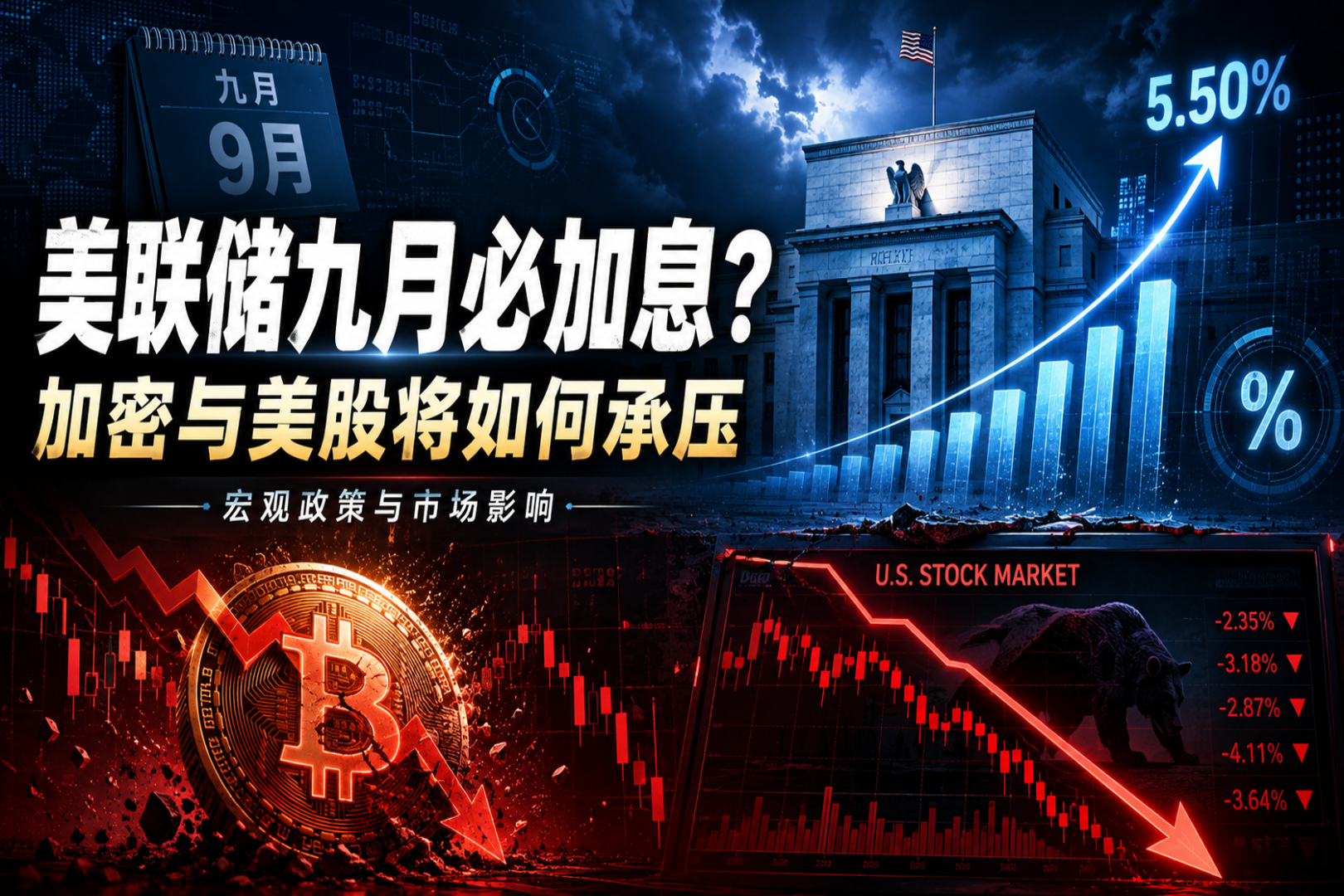
Will the Fed Definitely Raise Interest Rates in September? How Will Crypto and U.S. Stocks Withstand the Pressure?

The market's expectation for a September Fed rate hike surged dramatically in early August, jumping from under 50% to over 80% within a week. This shift followed a contentious July FOMC meeting, where a 9-3 vote to hold rates revealed growing dissent from hawkish members advocating for an immediate hike to combat persistent inflation. The primary catalyst for this repricing is rising oil prices, driven by renewed geopolitical tensions around the Strait of Hormuz, which threaten global supply. Energy costs directly influence inflation metrics, making the upcoming July CPI report (due August 12th) a critical data point. If it shows inflation reaccelerating, the probability of a September hike will solidify. For Bitcoin and crypto assets, this is typically bearish news. Bitcoin continues to behave as a high-beta, liquidity-sensitive risk asset. A rate hike raises the opportunity cost of holding non-yielding assets and could drive capital toward money markets, pressuring crypto prices in the short term. However, historical patterns suggest that if a hike is perceived as the end of a tightening cycle rather than the start, any negative price impact may be brief. U.S. stocks, particularly crypto-linked equities like Coinbase and growth-oriented tech stocks, are also vulnerable. Higher rates increase discount rates in valuation models, putting pressure on high-multiple companies. This coincides with a pivotal tech earnings season where investor focus has shifted from massive AI capital expenditure to tangible revenue and cash flow generation. Companies with negative cash flow and weak growth narratives could face heightened volatility if borrowing costs rise in September. In summary, a September Fed hike has evolved into a mainstream market scenario. Key factors to watch are oil prices, the July CPI report, and Fed communications, which will determine the final decision and its impact on volatile crypto and equity markets.

marsbitHace 9 min(s)

Will the Fed Definitely Raise Interest Rates in September? How Will Crypto and U.S. Stocks Withstand the Pressure?

marsbitHace 9 min(s)

A 'Overlooked' Market Event: Joint US-Japan-South Korea Intervention, Rare US Treasury Involvement, and Bessent's Quiet 'Market Rescue'?

Summary: The United States, Japan, and South Korea executed their largest coordinated foreign exchange intervention in nearly 30 years. The action targeted depreciation pressure on the Japanese yen and South Korean won. This move is seen as a significant effort by the US to stabilize the financial markets of its key allies and prevent the spillover of risks. Key details: * Japan reportedly intervened on July 30 using approximately 8.45 trillion yen (about $52.8 billion). South Korean authorities also intervened that day, selling dollars to support the won. * Notably, the US Treasury Department intervened directly in yen markets for the first time in roughly 30 years. The New York Fed, reportedly acting on behalf of the Treasury, sold euros to buy yen via Goldman Sachs and Morgan Stanley on July 31. Analysts view the use of the euro-yen pair as a way to alleviate yen pressure without adding selling pressure to the US dollar. * Prior to the action, the New York Fed conducted "rate checks" on both USD/JPY and EUR/JPY, a newer signaling tool that falls between verbal and physical intervention. The intervention is interpreted as going beyond traditional currency stabilization. Analysts, such as Michael Hartnett of Bank of America, suggest it resembles a "Price Keeping Operation" for the AI era. The core US objectives are perceived to be: 1. Preventing rapid yen depreciation from triggering a sharp rise in Japanese government bond yields. 2. Containing financial stress from spreading across Asian markets like South Korea and Japan. 3. Reducing the risk of disorderly capital flows impacting the US bond market. This coordinated action underscores the importance of Japan and South Korea as critical partners in the US semiconductor and AI supply chain. Stabilizing their financial markets is seen as vital to mitigating risks to the broader tech industry and the US market itself. The intervention coincides with market pressures, including the KOSDAQ index hitting a low since October 2022. While seen as a move to control volatility, some analysts caution it may not fundamentally reverse existing market trends.

marsbitHace 13 min(s)

A 'Overlooked' Market Event: Joint US-Japan-South Korea Intervention, Rare US Treasury Involvement, and Bessent's Quiet 'Market Rescue'?

marsbitHace 13 min(s)

Will the Federal Reserve Definitely Raise Interest Rates in September? How Will Cryptocurrencies and US Stocks Bear the Pressure?

In early August 2024, market expectations for a September Federal Reserve rate hike surged dramatically, from below 50% to over 80%, driven by renewed inflation concerns. This shift followed a contentious July FOMC meeting where a 9-3 vote to hold rates revealed a growing hawkish faction advocating for an immediate hike, citing prolonged above-target inflation. The key catalyst is escalating conflict near the Strait of Hormuz, which has pushed oil prices up approximately 20% in July, threatening to reignite inflation. The next critical data point is the July CPI report on August 12th; a hot reading could solidify hike expectations. For crypto assets, particularly Bitcoin, this represents near-term pressure. Bitcoin continues to exhibit high-beta, risk-on characteristics, making it sensitive to tightening liquidity and higher opportunity costs. However, historical precedent suggests that if a hike is perceived as the cycle's end rather than its start, the negative impact may be brief, with markets quickly pivoting to anticipate future rate cuts. U.S. stocks, especially crypto-linked equities like Coinbase and high-valuation tech stocks, face amplified volatility. Higher rates increase discount rates in valuation models, pressuring growth stocks. This coincides with a pivotal tech earnings season where investor focus has shifted from massive AI capital expenditures to demonstrable revenue and cash flow generation. Companies with negative cash flows and weak growth narratives could see severe pressure if a September hike materializes, as financing costs would rise. Key indicators to watch include oil prices, upcoming inflation data, and Fed commentary at events like the Jackson Hole symposium.

Odaily星球日报Hace 13 min(s)

Will the Federal Reserve Definitely Raise Interest Rates in September? How Will Cryptocurrencies and US Stocks Bear the Pressure?

Odaily星球日报Hace 13 min(s)

Trading

Spot
活动图片