By: Bootly
How popular is Fomo right now? In a word: In on-chain social trading, it's the one that broke through this summer.
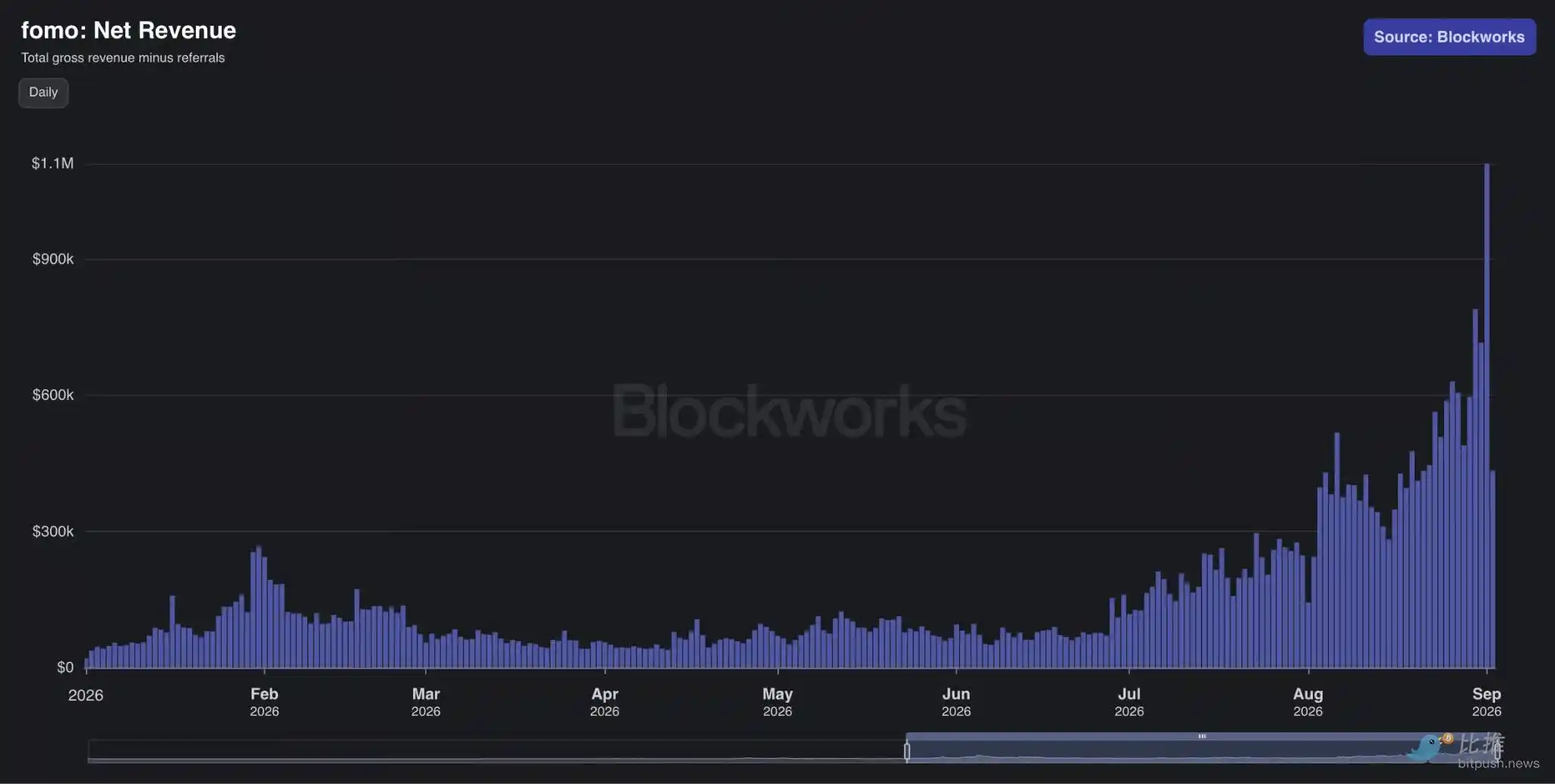
Millions of users, single-day revenue exceeding one million dollars, once squeezing into the top three on the US Finance app chart, and now being propelled forward by the meme frenzy on Robinhood Chain. It's not the next Cash App, but it has already become the first real 'trade with one tap' crypto entry point for many people.
Last month, many were still only saying it was 'going mainstream.' In the three weeks since, Fomo's growth momentum has not only not slowed but has accelerated further.
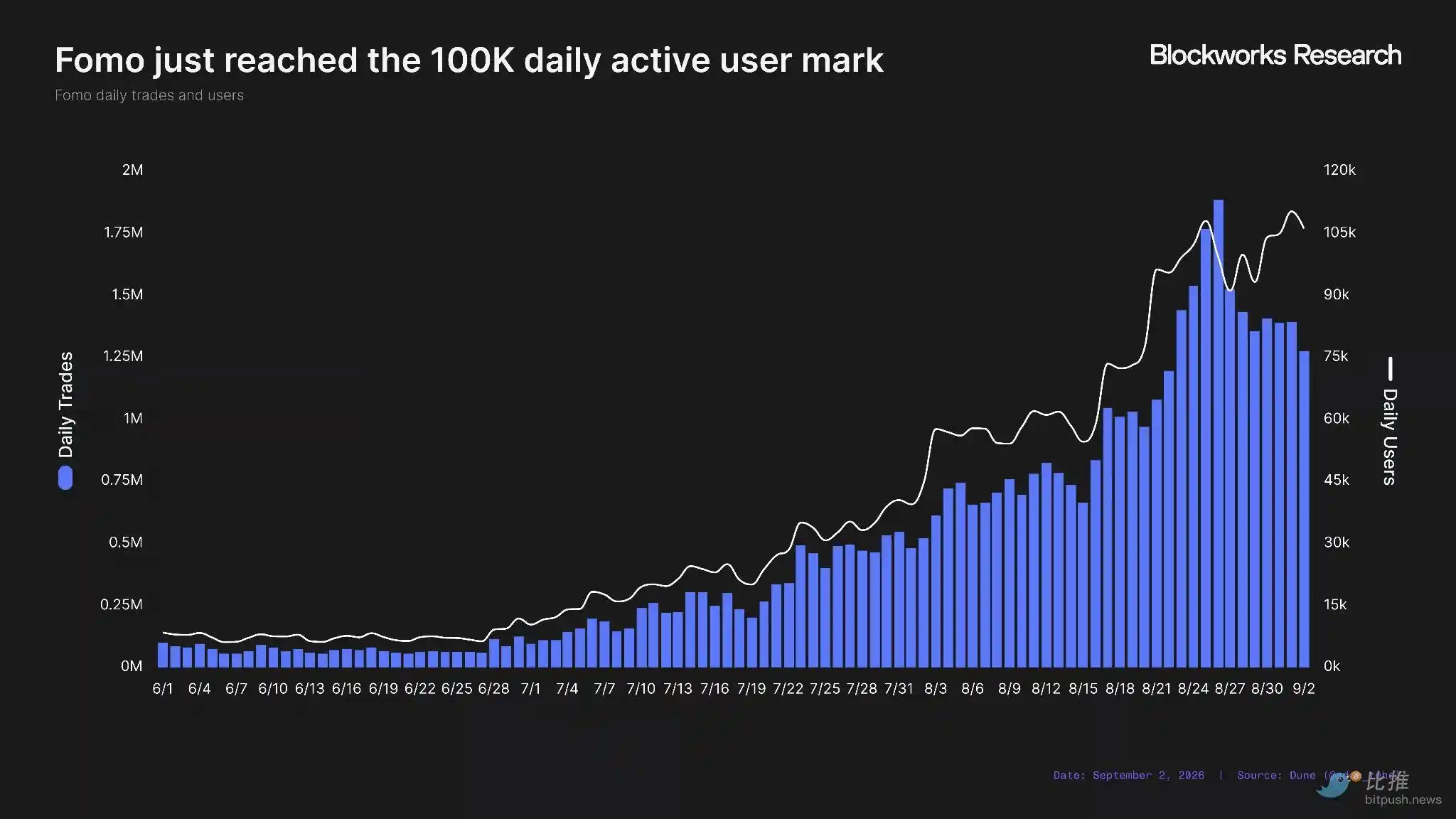
More notably, this explosive growth is not propped up by a few 'whales' but by a rush of new users. In June, Fomo had only 7,500 daily active users; by the most recent week, that number had soared to 101,000. With the surge in users, its ranking in the US App Store's Finance category rose to number 15, indicating Fomo is genuinely bringing 'new blood from outside the circle' into the crypto world.
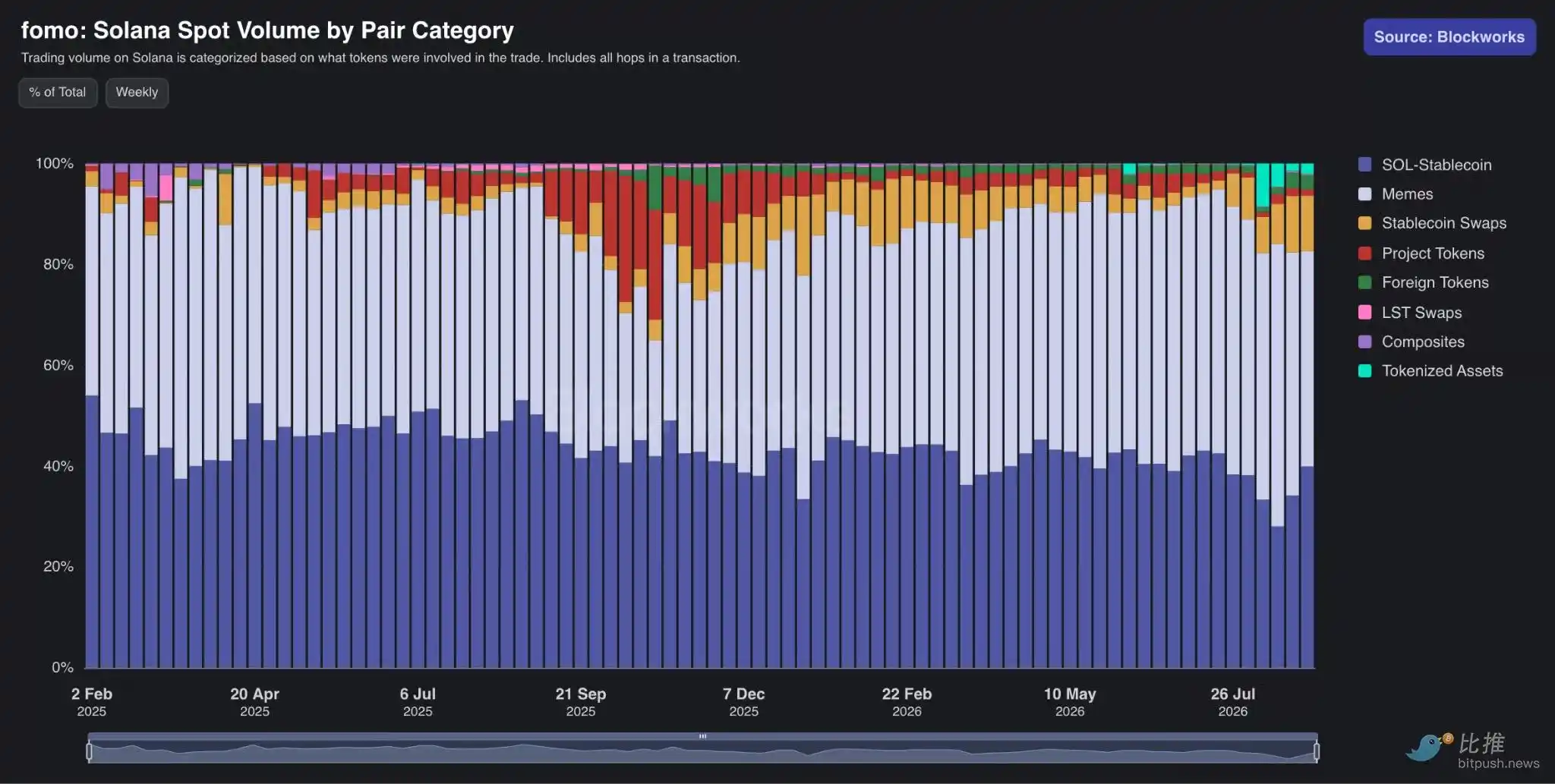
As before, what's attracting newcomers are meme coins. Looking at Fomo's Solana spot trading pair data, meme coin trading pairs consistently account for 40% to 60%, while SOL-stablecoin pairs also occupy a similar proportion. Since Fomo is priced in stablecoins, the SOL-stablecoin pairs actually largely represent meme trading behind the scenes — each time someone buys a meme coin, the capital flow is USDC→SOL→meme coin.
Because of this, many sneer, thinking Fomo is just another meme casino.
But signs show users are not satisfied with just trading memes. Earlier this year, Fomo integrated Hyperliquid's builder code, allowing non-US users to trade on Hyperliquid through it. The initial reaction was lukewarm, but activity exploded in August, with nominal trading volume reaching $1.3 billion for the month, compared to only $448.5 million in July.
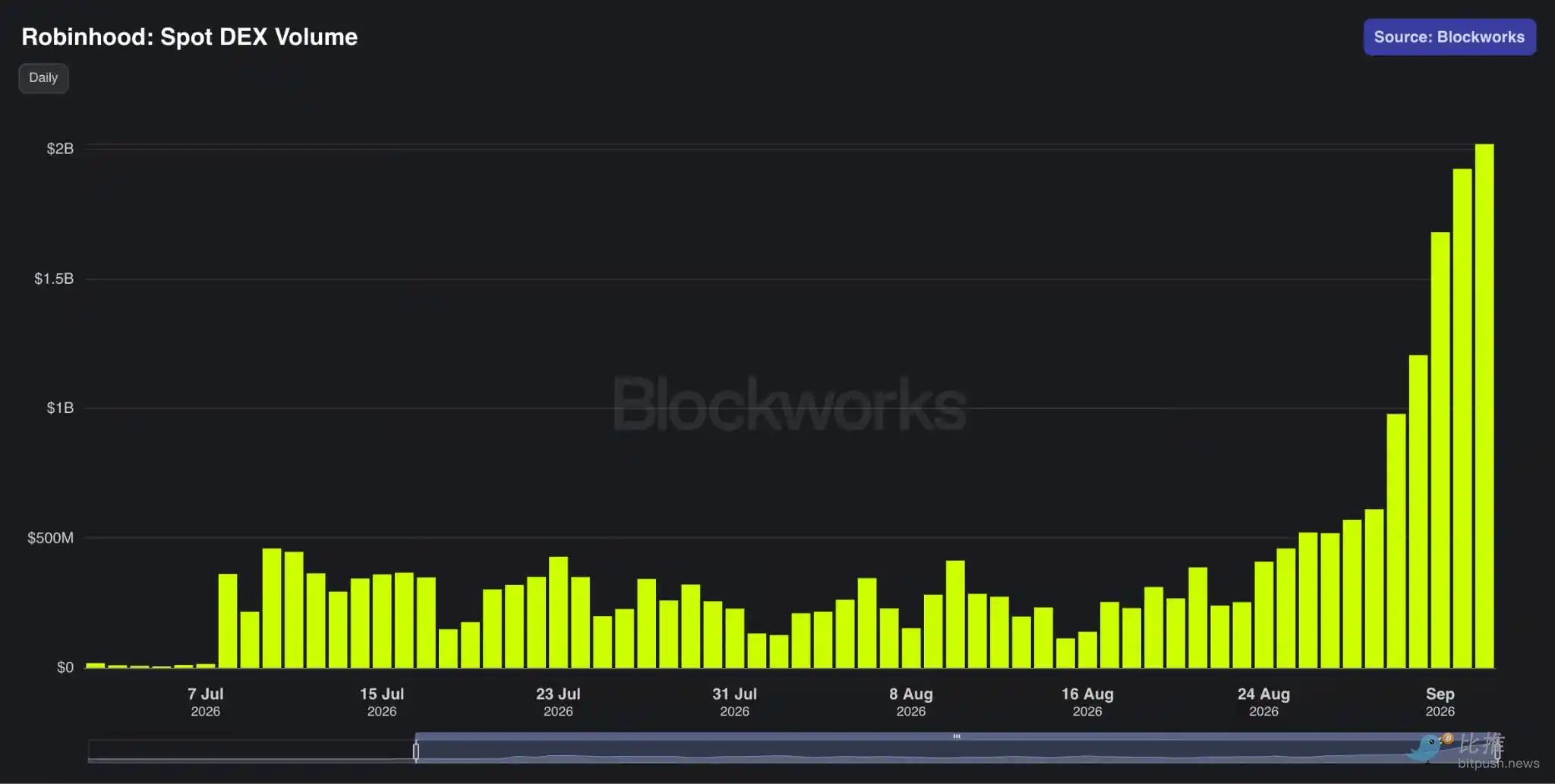
The biggest recent growth driver has undoubtedly been Robinhood Chain — its daily spot DEX trading volume broke $2 billion for the first time, with meme coins contributing significantly. Fomo恰好恰巧恰巧acts as the 'front-end entry point' for Robinhood Chain, naturally reaping the benefits.
For Fomo, this is undoubtedly a moment in the spotlight, and there are currently no signs of cooling off.
But a sobering question is: Have retail investors made money in this app?
An app being hot doesn't mean most people are making money.
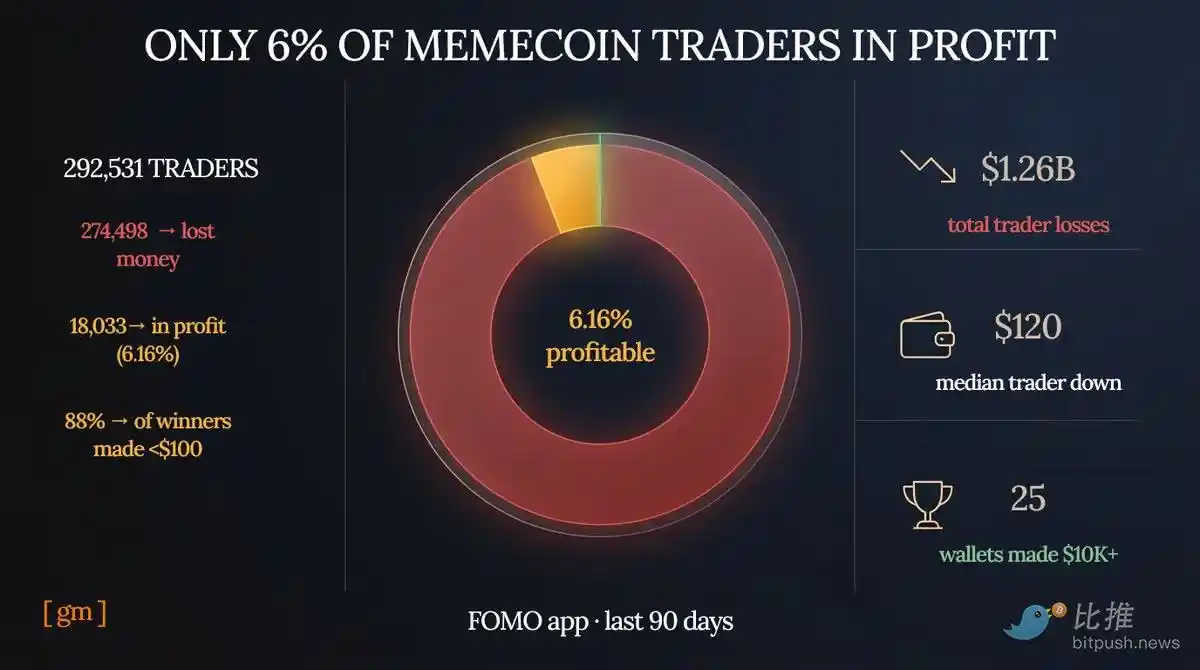
In mid-August, analyst MidCurveMortal used Fomo's fee routing for a public Dune query: Over the past 90 days, out of approximately 293,000 wallets that traded through the app, only 18,000 recorded positive profits, a profit rate of about 6.16%. The group collectively lost about $126 million, with the median trader losing roughly $120. Among that 6% of profitable wallets, about 88% had profits of less than $100; at the time, only about 25 wallets had profits exceeding $10,000.
A comparison was made with a gambling platform charging about a 1% commission, where user profit rates were about 37%. Later, broader sample analysis yielded similar conclusions — the loss side absolutely dominates, while the profit side is highly concentrated in small, positive returns.
Yet the official leaderboard tells a different story: At the end of August, the platform stated that on the top profit list for the past 30 days, 25 traders had paper gains exceeding $1 million, with about 26 people accumulating over a million in total; monitoring in early September showed the top trader added another approximately $9.8 million in a single month.
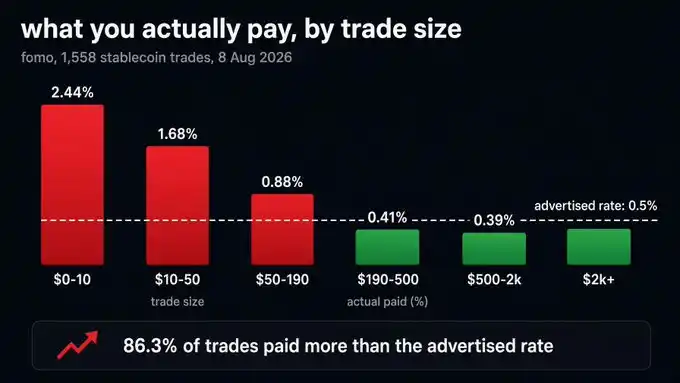
The copy-trading narrative is also being questioned — those being copied can sell at the peak when the copy-trading flow rushes in, leaving retail investors as exit liquidity. Meanwhile, Fomo itself earns transaction fees, with August revenue already at the tens of millions level. Users' expected profits did not double along with the DAU.
The conclusion is straightforward and harsh: Most people are losing money; only the platform and large players are steadily making money.