Five New Key Features Coming to XRP! Ripple Representative Announces

cryptonews.ruPublicado a 2026-08-01Actualizado a 2026-08-01

Resumen

Ripple's Head of Product, Jazzy Cooper, has announced five major upcoming upgrades to the XRP Ledger (XRPL) aimed at boosting its use in institutional finance and tokenized asset markets. The features are scheduled for release in version 3.3.0 next week, pending validator approval. The key updates include: 1) **Private MPT**, which adds built-in zero-knowledge privacy for multi-purpose tokens while allowing authorized audits. 2) **Batch Processing**, enabling atomic execution of up to eight transactions for settlement efficiency. 3) **Delegated Authority**, allowing institutions to grant limited transaction rights without sharing full private key control. 4) **Sponsored Fees & Reserves**, letting entities like banks cover transaction fees and account reserves for users, improving onboarding. 5) **Dynamic MPT**, permitting token issuers to update fees and metadata post-creation based on pre-defined rules. Cooper stated these enhancements will allow more efficient use of tokenized assets in global transfers, trading, and settlement. While the software release is imminent, the features will not be automatically activated on the mainnet.

Ripple's Head of Product, Jazzi Cooper, has announced five new updates that could significantly expand the use of the $XRP Ledger in institutional finance and tokenized asset markets. The release of these features is scheduled for next week in xrpld version 3.3.0.

Cooper stated that XRPL has already proven its ability to support tokenized assets at scale, and the next step will be to more efficiently utilize these assets in global transfers, trading, collateral, and settlement operations.

The first change to be included in the new version, "Confidential MPT," will provide built-in privacy features for Multi-Purpose Tokens on XRPL using zero-knowledge proofs and elliptic curve cryptography. This system will allow token balances and transaction amounts to be kept private within the public ledger. However, authorized parties, such as auditors or regulators, will be able to verify transaction details if needed.

The "Batch Processing" feature will allow up to eight transactions between different accounts to be executed atomically within a single ledger entry. All transactions will either succeed or none will occur. This structure is expected to simplify the operation of applications in corporate finance, particularly those involving delivery-versus-payment and atomic reconciliation.

The "Delegated Authority" mechanism will enable institutions to define limited rights for executing transactions without transferring full control over private keys. This means treasury units will retain control over asset issuance keys, while trading desks or operational teams can perform specific transactions within set limits.

The "Sponsored Fees and Reserves" feature will allow banks, token issuers, or platforms to cover transaction fees in $XRP and account reserves for other users. Users will retain ownership of their accounts and private keys, eliminating the need to purchase and manage $XRP before joining the network. Ripple believes this feature will improve the user experience in both corporate and consumer applications.

Finally, the "Dynamic MPT" regulation will allow token issuers to update fee structures, metadata, and other specific characteristics after a token's creation. Under the existing system, such changes might require issuing a new token and migrating users to the new asset. With the new feature, issuers will be able to pre-define which characteristics can be modified in the future at the token creation stage.

Cooper added that xrpld version 3.3.0 is expected to be released next week, but these changes will not be activated automatically. The updates must be validated by network validators before they can be activated on the $XRP Ledger.

*This is not investment advice.

Preguntas relacionadas

QWhat are the five new features announced for the XRP Ledger, according to Ripple's Product Head?

AThe five new features are: 1) Confidential MPT, which provides built-in privacy for multi-purpose tokens using zero-knowledge proofs and elliptic curve cryptography. 2) Batch Processing, enabling atomic execution of up to eight transactions in a single ledger entry. 3) Delegated Authority, allowing institutions to define limited transaction permissions. 4) Sponsored Fees and Reserves, enabling third parties to cover transaction fees and account reserves for users. 5) Dynamic MPT, which lets token issuers update fees, metadata, and other characteristics after token creation.

QHow does the Confidential MPT feature aim to improve privacy on the XRPL, and what is the exception to this privacy?

AThe Confidential MPT feature improves privacy by allowing token balances and transaction amounts to be kept confidential on the public ledger using zero-knowledge proofs and elliptic curve cryptography. The exception is that authorized parties, such as auditors or regulators, can still inspect transaction details when necessary.

QWhich specific user challenge does the Sponsored Fees and Reserves feature address, and how does it solve it?

AThe Sponsored Fees and Reserves feature addresses the challenge for new users who need to acquire and manage XRP to pay for transaction fees and account reserves before joining the network. It solves this by allowing banks, token issuers, or platforms to cover these fees and reserves for users, while users retain ownership of their accounts and private keys.

QWhat practical business application is the Batch Processing feature expected to simplify?

AThe Batch Processing feature is expected to simplify applications in corporate finance, particularly those related to Delivery-vs-Payment (DvP) and atomic settlement, by allowing multiple transactions to be executed atomically (all succeed or none occur).

QWhen are these features planned for release, and what must happen before they become active on the XRP Ledger?

AThe features are planned for release in the xrpld version 3.3.0, expected the following week. However, they will not be activated automatically. The updates must first be validated and voted on by the network validators before they can be activated on the XRP Ledger.

Lecturas Relacionadas

Once-Popular Web3 Enters Wave of Layoffs

The once-hot Web3 industry is experiencing a severe wave of layoffs. While many companies attribute job cuts to AI-driven restructuring, the primary reason is often financial pressure. The Web3 sector, at the intersection of tech and finance, has been hit particularly hard. Employees at major cryptocurrency exchanges report sudden, impersonal layoffs—often with system access revoked overnight—and minimal or no severance. Common tactics include setting impossible performance targets or terminating employees for minor policy violations. The working atmosphere has become toxic, marked by intense monitoring, excessive meetings, and management obsessed with control and internal politics rather than product innovation. The industry's core business model is collapsing. Exchange revenue from trading fees and listing charges has plummeted due to a decline in quality projects and retail investor exodus. Events like the massive forced liquidation on October 10th further shattered confidence. Competition from on-chain derivatives platforms and prediction markets is intensifying the downturn. As layoffs continue, displaced workers struggle to find new opportunities. Many transition to the AI sector, but face significant bias from traditional finance and even some AI firms, which view crypto industry experience with suspicion. The current downturn appears more structural than cyclical, driven by unsustainable practices, internal strife, and a failure to innovate, raising questions about the industry's future trajectory.

marsbitHace 45 min(s)

Once-Popular Web3 Enters Wave of Layoffs

marsbitHace 45 min(s)

Sales Drop 26% But Prices Rise? Xiaomi's Dilemma

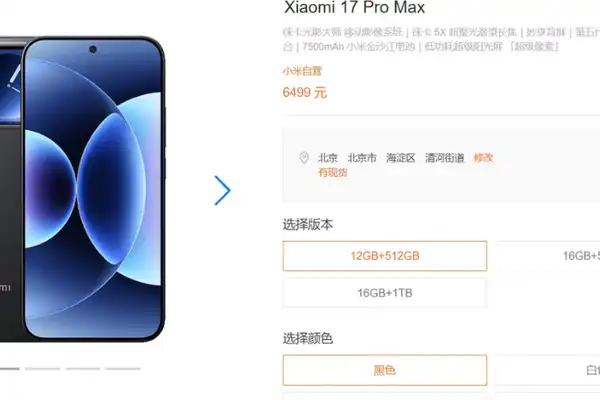
Xiaomi, facing a significant 26.3% year-on-year decline in global smartphone shipments in Q2 2026, has implemented its third price hike of the year. On August 2nd, prices were raised for nine models, including the flagship Mi 17 series (up 400-500 yuan) and Redmi K90/Turbo 5 series (up 300 yuan). This move completes a pattern where cost pressure, originating from surging memory chip prices, has climbed from entry-level to mid-range and now flagship products. The primary driver is a severe supply squeeze on consumer-grade DRAM and NAND flash memory, as major manufacturers like Samsung shift advanced capacity to more profitable HBM for AI applications. According to Xiaomi President Lu Weibing, memory prices for the same configuration have skyrocketed nearly fourfold since Q1 2025, adding roughly 1500 yuan to the cost of a mainstream 12GB+512GB phone. IDC estimates consumer memory costs have risen nearly 300% year-on-year. While the price increases hurt demand and contributed to the sales slump, Xiaomi's strategy of reducing entry-level models and upgrading its product mix also played a role. Domestically, its market share in China fell to 12% (5th place), while leaders Huawei and Apple saw shipments grow over 24%. To mitigate future risks, Xiaomi is accelerating its in-house "Surge" chip development and optimizing memory configurations across its lineup. Xiaomi is not alone; major brands like OPPO, vivo, and Apple have already raised prices in 2026, with industry insiders predicting another round of increases (200-800 yuan) in the second half. A full-scale industry-wide涨价 cycle is underway, forcing both manufacturers and consumers to recalibrate their strategies and purchasing decisions amid sustained cost pressures.

marsbitHace 56 min(s)

Sales Drop 26% But Prices Rise? Xiaomi's Dilemma

marsbitHace 56 min(s)

Trading

Spot
活动图片