Facepalm! A Roundup of "Flipped" Institutional Crypto Predictions for 2025

比推Publicado a 2025-12-27Actualizado a 2025-12-27

Resumen

As 2025 year-end approaches, the cryptocurrency market has failed to deliver the spectacular rallies many institutions had forecasted, instead exposing the inaccuracy of numerous high-profile price predictions. Bitcoin is trading around $87,423 and Ethereum near $2,926, far below the ambitious targets set during the 2023-2024 bull market. Major institutions and analysts, including Michael Saylor (predicting $100,000), Mark Yusko ($150,000), Tom Lee ($250,000), and Tim Draper ($250,000), collectively anticipated Bitcoin reaching six figures, driven by ETF approvals, macro liquidity, and political shifts. Standard Chartered and AllianceBernstein projected $200,000, with the latter even specifying a September 2025 target. However, these forecasts largely underestimated market complexities, such as structural changes from ETFs—which provided a higher floor rather than exponential peaks—and persistent volatility from policy and geopolitical uncertainty. Ethereum predictions also fell short. Deltec Bank expected prices between $9,000-$10,000, while Standard Chartered initially targeted $14,000 before revising down to $7,500. Analysts’ average prediction was $6,105, yet ETH remained below $3,000. The consensus was that upgrades and ETF inflows would propel prices, but the market refused to align with these narratives. The 2025 outcome underscores the declining relevance of historical models, like the four-year cycle thesis, in a new era of institutional involvement and macro pr...

As 2025 draws to a close, the crypto market hasn't produced any miraculous rallies; instead, it has brought the exaggerated price predictions from the past couple of years back down to earth.

First, let's look at the current prices: As of 8:00 AM Beijing Time on December 27th, Bitcoin ≈ $87,423, Ethereum ≈ $2,926.

With the numbers right before our eyes, those earlier predictions of "Bitcoin hitting $200,000" and "Ethereum breaking $10,000" seem a bit awkward now. Market volatility, policy swings, international situations... each one reminds us: predictions are predictions, but the market moves on its own.

Below, let's review those "expert predictions" we once追捧ed (chased after/admired) that have already been "slapped in the face" by reality.

BTC: Mainstream Institutions Bullish En Masse

In 2023–2024, following ETF approvals, a shift in US political winds, and improved macro liquidity, almost all heavyweight institutions and opinion leaders publicly offered specific BTC price targets for 2025.

In hindsight, these targets formed a highly concentrated "prediction cluster."

Michael Saylor (MicroStrategy): Reach Six Figures by 2025, Eventually Reach $1 Million

  • Prediction:

    • BTC $100,000 (2025)

    • Long-term target: $1,000,000

Saylor's judgment wasn't merely a price prediction but an entire long-term narrative of "Bitcoin as a digital capital network." Before 2025, he repeatedly emphasized that BTC would not fall back below sixty thousand.

BTC did indeed maintain a high range for most of 2025, but the $100k mark as a "certain outcome" did not materialize as expected.

Mark Yusko (Morgan Creek CEO): 2025 $150k

  • Prediction: BTC $150,000 (2025)

  • Rationale: Network effects / FOMO driving / New capital inflows
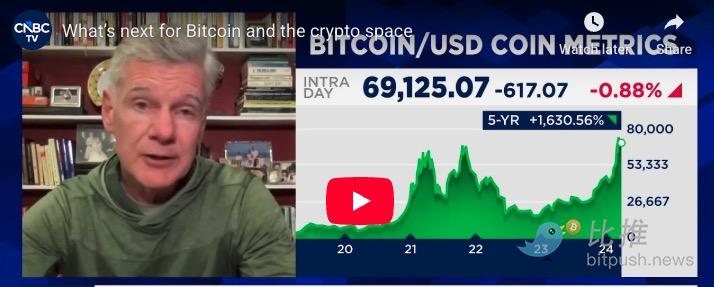
This is a typical "cycle top pricing model", assuming this bull run would completely replicate historical amplitudes.

However, the problem is that ETFs brought about a "structural change," not simply a "leveraged amplification of the cycle."

Tom Lee (Fundstrat Co-founder): $250,000

  • Prediction: BTC $250,000 (2025)

  • Key Catalyst: He believed changes in the US political landscape and potential government Bitcoin holdings were key catalysts. He stated these developments indicate Bitcoin is becoming a legitimate alternative to traditional stores of value like gold.

Tom Lee's prediction was highly influential in 2024 but also heavily reliant on the premise of "policy + sentiment + capital moving in sync."

It's worth noting that Tom Lee revised his prediction downward multiple times in 2025 but still emphasized near-term potential for new highs as the year ended. Just last week, Sean Farrell, Head of Digital Asset Strategy at his firm Fundstrat, predicted in an internal report that BTC could fall to $60,000-65,000 in the first half of 2026 (under a base case). This contrasts with Tom Lee's public optimism, with the company explaining it as a difference in time frames.

Standard Chartered: Close to $200,000

  • Prediction: BTC $200,000 (2025)

  • Rationale/Comparison: Historical price increases following Gold ETF listings. The bank expected significant inflows into Bitcoin spot ETFs to drive this growth, similar to gold's 4x price increase after its first ETF launched.

But unlike gold, Bitcoin did not enter a one-way trend post-ETF; instead, it experienced more frequent pullbacks and repricing.

AllianceBernstein: $200,000

  • Prediction Timeline: September 2025

  • Additional Forecasts:

    • $500k by 2029

    • $1M+ by 2033

This was one of the few institutional predictions offering a specific monthly target. Reality shows: timing targets are the easiest part of any prediction to get wrong.

InvestingHaven: $115,200 (Bull) / $75,000 (Bear)

  • Method: Scenario analysis

This was one of the few models that provided both bull and bear case ranges.

Even so, its bull target was not fully realized in 2025, while the bear case range was validated by the market multiple times.

Tim Draper (VC): $250,000 (Revised)
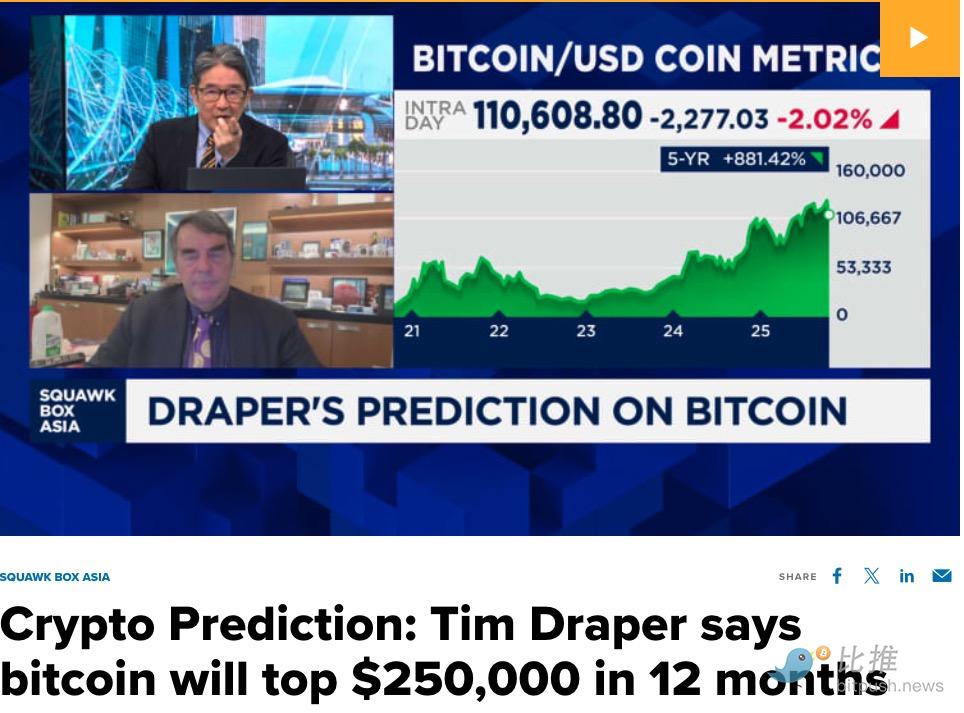
An early investor in Tesla, Skype, Baidu, and Twitch, among others. Draper previously predicted Bitcoin would reach this price in 2022, later revising the timeline to 2025.

Matthew Sigel (VanEck Head of Research): $180,000

  • Prediction: BTC $180,000+ in 2025

  • Rationale:

    • ETF inflows

    • US political cycle changes

But the reality is: ETFs provided more of a floor lift than a ceiling explosion.

Sminston With (Crypto Researcher, PhD): $275,000
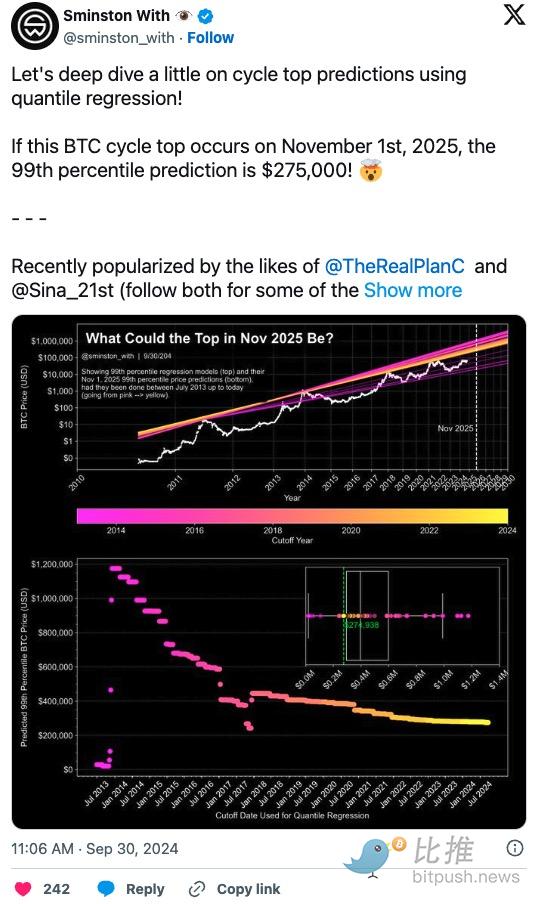
Bitcoin researcher Sminston With used quantile regression to predict the cycle top, estimating it would arrive on November 1, 2025, with Bitcoin reaching $275,000.

By the end of 2025, this prediction was clearly off the mark (had clearly failed).

Cathie Wood (ARK Invest): $1,000,000

  • Prediction:

    • Base case: $650,000 (2030)

    • Optimistic: $1,000,000+

Strictly speaking, this prediction hasn't been "slapped" yet, but it represents the long-term version of the same logic.

ETH: Predictors Bet on "Upgrade Delivery"

In 2025, ETH's fundamental narrative didn't fail, but the price refused to pay for the narrative.

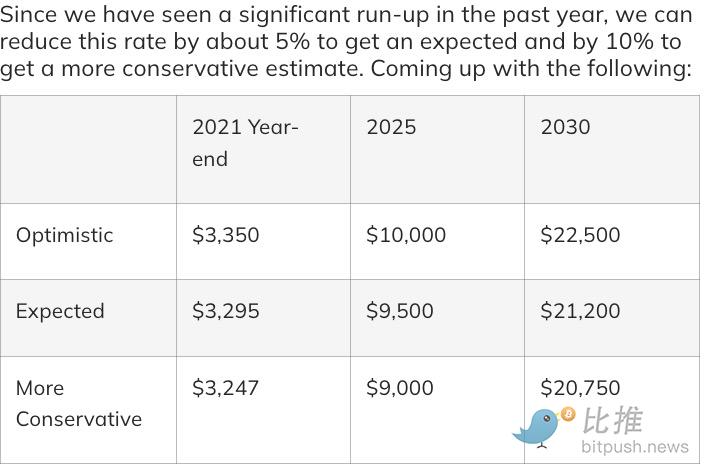
Deltec Bank:

    • 2025: Optimistic $10,000 / Expected $9,500 / Conservative $9,000.
Standard Chartered: The "ETF+Upgrade" Path to $14,000

  • Standard Chartered suggested in 2024 that ETH could reach $14,000 (2025), with ETFs being a core catalyst. But by 2025, Standard Chartered revised its year-end ETH prediction up to $7,500.
Finder Analysts: In February 2024, the average prediction from 50 analysts was ETH $6,105 (2025).

VanEck predicted Ethereum would reach $11,800 by 2030, citing network growth and adoption.

Bitwise: Predicted end-2024 that Ethereum would reach $7,000 in 2025, alongside new highs for BTC and SOL.

Bankless: Believed that after Ethereum realizes its potential in 2025, the pessimistic price would be $10,000, and the reasonable price would be $15,000.

Summary

The 2025 market cycle has given us pause for reflection – trying to predict the future based solely on past experience is becoming less effective in the crypto market. The once-popular "four-year cycle theory" has lost much of its explanatory power under the impact of massive ETF fund flows and a complex macro environment.

Market predictions are essentially about finding anchors amidst uncertainty. But when the anchors themselves are drifting, who can guarantee accuracy every time? Facing 2026, perhaps what we need is not to rush to find the next "prophet," but to maintain patience and flexibility – the market will always chart its own course, and our job is to prepare to respond, not stubbornly guess.

It should be noted that this article is not meant to negate the value of professional institutional analysis. Rigorous research remains precious in an information-cluttered market. But ultimately, the market always provides the answer, and what we need to do is learn to coexist with predictions while maintaining independent thinking. After all, in this field, there can be many opinions, but the true answer is always only one – the market itself.

Author: Seed.eth


Twitter:https://twitter.com/BitpushNewsCN

Bitpush TG Discussion Group:https://t.me/BitPushCommunity

Bitpush TG Subscription: https://t.me/bitpush

Original link:https://www.bitpush.news/articles/7598563

Criptos en tendencia

Preguntas relacionadas

QWhat was the actual price of Bitcoin and Ethereum at the end of 2025, according to the article?

AAs of 8:00 AM Beijing Time on December 27th, 2025, Bitcoin was approximately $87,423 and Ethereum was approximately $2,926.

QWhich CEO predicted Bitcoin price would reach $150,000 in 2025, and what was their reasoning?

AMark Yusko, CEO of Morgan Creek, predicted Bitcoin would reach $150,000 in 2025. His logical basis was network effects, FOMO (Fear Of Missing Out) driving the market, and new capital entering.

QWhat was the key difference between the actual market effect of Bitcoin ETFs and the predictions, as highlighted in the article?

AThe article states that unlike predictions which expected a massive price surge, ETFs brought about a 'structural change' that resulted in more frequent market retracements and repricing, leading to a 'bottom lift' rather than a 'top explosion' in price.

QWhich institution gave a specific month for its Bitcoin price prediction, and what was that prediction?

AAllianceBernstein predicted that Bitcoin would reach $200,000 by September 2025.

QWhat is the article's overall conclusion about the reliability of price predictions in the crypto market?

AThe article concludes that predicting the future based on past experience is increasingly unreliable in the crypto market. It suggests that instead of seeking the next 'prophet,' investors should maintain patience and flexibility, preparing to respond to the market's actual movements rather than being fixated on predictions.

Lecturas Relacionadas

Gate Research Institute: The 'Wall Street-ization' Wave of Crypto Financial Products – Competition or Integration?

The article titled "Gate Research Institute: Are Crypto Financial Products Sparking a 'Wall Street' Wave—Competition or Convergence?" explores the evolving relationship between the crypto ecosystem and traditional finance (TradFi). The piece begins by reflecting on Bitcoin's original 2009 vision of decentralization, disintermediation, and moving away from banks. It then contrasts this with the 2024 landscape, where key crypto assets like Bitcoin are increasingly held through Wall Street products like ETFs issued by giants like BlackRock. The article questions whether this signifies that TradFi is systematically taking over the rights to issue, price, custody, and distribute crypto financial assets. The core argument is that this is not a zero-sum takeover but rather a bidirectional convergence where each side addresses the other's weaknesses. Crypto offers 24/7 global markets, programmable settlement, and open access but lacks compliant channels, institutional-grade custody, deep fiat liquidity, and mainstream distribution. TradFi possesses these but is constrained by legacy systems, limited operating hours, and slow settlement. Two primary convergence paths are highlighted: * **Path A (CEX to TradFi):** Exemplified by Gate, which has progressed from offering tokenized stocks and CFDs to providing direct, real stock trading (US, Hong Kong, South Korea) within its platform, using USDT. * **Path B (TradFi to Crypto):** Exemplified by Robinhood, which has integrated crypto trading, acquired exchanges like Bitstamp, and is moving traditional assets like stocks onto the blockchain via tokenization and its own Layer 2. Both paths are ultimately competing to become the next-generation, unified financial account—a "super account" where users can seamlessly trade cryptocurrencies, stocks, ETFs, RWA (Real World Assets), and tokenized treasury products in one interface. The growth of RWA and tokenized treasuries (e.g., BlackRock's BUIDL) is presented as the asset-layer fusion, providing stable, yield-bearing assets on-chain and acting as a bridge between the two worlds. In conclusion, the "Wall Street-ization" of crypto is framed as a mutual transformation. Decentralized ideals persist in the protocol layer, while at the application layer, a more efficient, global, and accessible unified capital market is emerging from this convergence. The future competition lies not between crypto exchanges and stockbrokers, but between platforms vying to offer the most comprehensive asset coverage, liquidity, and user experience within a single account.

marsbitHace 2 min(s)

Gate Research Institute: The 'Wall Street-ization' Wave of Crypto Financial Products – Competition or Integration?

marsbitHace 2 min(s)

Claude's Major New Feature: Screen Recording + Voice, Distilling Your Skills into AI Tasks in One Click

Claude has introduced a major new feature called "Record a Skill," available for Pro, Max, and Team users. This function, found in the Claude desktop app's CoWork menu, allows users to create reusable AI skills simply by recording their screen and providing voice narration while performing a task. Claude then automatically analyzes the recording and generates a functional Skill. A hands-on test confirmed the feature works seamlessly. Users start recording via the Skills manager, perform their workflow while verbally explaining the steps and logic, and avoid including sensitive information. After recording, Claude processes the content and creates the Skill, which can be saved and later invoked with a slash command (/). This eliminates the need for manual adjustments or writing complex instruction files. The innovation goes beyond mere efficiency. Previously, creating a Skill required writing a detailed SKILL.md file in Markdown—a significant barrier for non-technical users. "Record a Skill" bypasses this by directly capturing both actions and the implicit reasoning shared in the narration. This lowers the barrier to knowledge transfer and automation, addressing a core challenge in corporate knowledge management: the difficulty of getting experts to write and maintain documentation. However, the feature also highlights a shift in the nature of work. A case study from March 2026 showed a freelancer whose five-year client relationship was effectively replaced by a hand-coded Claude Skill automating their content workflow. With the even lower barrier of screen recording, the ability to distill personal expertise into automatable skills accelerates this trend. The "moat" for work is moving from simply knowing how to do a task to mastering tasks that are difficult or impossible to automate.

marsbitHace 7 min(s)

Claude's Major New Feature: Screen Recording + Voice, Distilling Your Skills into AI Tasks in One Click

marsbitHace 7 min(s)

Feeding AI "Noise" Can Also Boost Scores, This Work Enables Positive Transfer with Noise

Feeding "Noise" to AI Can Improve Performance: A Method Enables Positive Transfer from Noise This work, Semi-Supervised Noise Adaptation (SSNA), introduces a Noise Adaptation Framework (NAF) that challenges traditional transfer learning. Instead of requiring a labeled source domain of real data (e.g., images, text), NAF uses randomly generated Gaussian noise as the source. For a target task with C classes, it constructs C noise clusters by sampling from Gaussian distributions. Although this synthetic noise contains no semantic meaning, NAF trains it to form a discriminative class structure in a shared representation space—clustering same-class noise and separating different classes. The key is aligning this learned structure from the noise domain to the real, sparsely labeled target domain. A small number of target labels are still essential to establish the correspondence between noise clusters and actual classes. The training objective combines: 1) supervised loss on the few labeled target samples, 2) classification loss for the noise to build its structure, and 3) a distribution alignment loss (using Negative Domain Similarity) to minimize the gap between the noise and target domains in the shared space. Experiments show significant gains in few-label settings. With just 4 labels per class, NAF with a ResNet-18 backbone improves accuracy over a standard supervised baseline (ERM) by +12.35% on CIFAR-10, +7.61% on CIFAR-100, +4.38% on DTD-47, and +2.74% on Caltech-101. It also benefits fine-grained datasets and scales to ImageNet-1K (with 100 labels/class) and text classification (AG News). NAF can be integrated into existing semi-supervised methods like FixMatch for further gains. Ablation studies confirm the transferred benefit comes from the discriminative structure of the noise, not randomness itself. Collapsing all noise into a single point causes negative transfer, while increasing separation between noise cluster centers improves performance. The amount of noise per class is less critical once a basic structure forms. In conclusion, this work demonstrates that for positive transfer, the semantic content of source data may not be necessary. What can be effectively transferred is the *organizational structure* of categories within a representation space. This offers a promising alternative for scenarios where real source data is unavailable due to privacy, copyright, or procurement constraints.

marsbitHace 8 min(s)

Feeding AI "Noise" Can Also Boost Scores, This Work Enables Positive Transfer with Noise

marsbitHace 8 min(s)

Trading

Spot

Artículos destacados

Cómo comprar O

¡Bienvenido a HTX.com! Hemos hecho que comprar O1 exchange (O) sea simple y conveniente. Sigue nuestra guía paso a paso para iniciar tu viaje de criptos.Paso 1: crea tu cuenta HTXUtiliza tu correo electrónico o número de teléfono para registrarte y obtener una cuenta gratuita en HTX. Experimenta un proceso de registro sin complicaciones y desbloquea todas las funciones.Obtener mi cuentaPaso 2: ve a Comprar cripto y elige tu método de pagoTarjeta de crédito/débito: usa tu Visa o Mastercard para comprar O1 exchange (O) al instante.Saldo: utiliza fondos del saldo de tu cuenta HTX para tradear sin problemas.Terceros: hemos agregado métodos de pago populares como Google Pay y Apple Pay para mejorar la comodidad.P2P: tradear directamente con otros usuarios en HTX.Over-the-Counter (OTC): ofrecemos servicios personalizados y tipos de cambio competitivos para los traders.Paso 3: guarda tu O1 exchange (O)Después de comprar tu O1 exchange (O), guárdalo en tu cuenta HTX. Alternativamente, puedes enviarlo a otro lugar mediante transferencia blockchain o utilizarlo para tradear otras criptomonedas.Paso 4: tradear O1 exchange (O)Tradear fácilmente con O1 exchange (O) en HTX's mercado spot. Simplemente accede a tu cuenta, selecciona tu par de trading, ejecuta tus trades y monitorea en tiempo real. Ofrecemos una experiencia fácil de usar tanto para principiantes como para traders experimentados.

128 Vistas totalesPublicado en 2026.06.19Actualizado en 2026.06.29

Cómo comprar O

Cómo comprar PROS

¡Bienvenido a HTX.com! Hemos hecho que comprar Pharos (PROS) sea simple y conveniente. Sigue nuestra guía paso a paso para iniciar tu viaje de criptos.Paso 1: crea tu cuenta HTXUtiliza tu correo electrónico o número de teléfono para registrarte y obtener una cuenta gratuita en HTX. Experimenta un proceso de registro sin complicaciones y desbloquea todas las funciones.Obtener mi cuentaPaso 2: ve a Comprar cripto y elige tu método de pagoTarjeta de crédito/débito: usa tu Visa o Mastercard para comprar Pharos (PROS) al instante.Saldo: utiliza fondos del saldo de tu cuenta HTX para tradear sin problemas.Terceros: hemos agregado métodos de pago populares como Google Pay y Apple Pay para mejorar la comodidad.P2P: tradear directamente con otros usuarios en HTX.Over-the-Counter (OTC): ofrecemos servicios personalizados y tipos de cambio competitivos para los traders.Paso 3: guarda tu Pharos (PROS)Después de comprar tu Pharos (PROS), guárdalo en tu cuenta HTX. Alternativamente, puedes enviarlo a otro lugar mediante transferencia blockchain o utilizarlo para tradear otras criptomonedas.Paso 4: tradear Pharos (PROS)Tradear fácilmente con Pharos (PROS) en HTX's mercado spot. Simplemente accede a tu cuenta, selecciona tu par de trading, ejecuta tus trades y monitorea en tiempo real. Ofrecemos una experiencia fácil de usar tanto para principiantes como para traders experimentados.

146 Vistas totalesPublicado en 2026.06.22Actualizado en 2026.06.29

Cómo comprar PROS

Qué es VERONA

I. Introducción al Proyecto VERONA es una blockchain construida para todos, en todas partes a través de la abstracción de cadenas. Utilizando su capa de Abstracción Generalizada, VERONA se distingue por integrar funcionalidades complejas de blockchain, como cuentas, firmas e interoperabilidad, directamente a nivel de protocolo. Este enfoque permite interactuar con aplicaciones de blockchain sin necesidad de entender las tecnologías subyacentes.1) Información Básica Nombre: VERONA (VERONA)III. Enlaces Relacionados Enlace al sitio web oficial: https://xion.burnt.com/ Libro Blanco: https://xion.burnt.com/whitepaper.pdf Exploradores: https://explorer.burnt.com/ Redes Sociales: https://x.com/burnt_xion Nota: La introducción del proyecto proviene de los materiales publicados o proporcionados por el equipo oficial del proyecto, que es solo para referencia y no constituye asesoramiento de inversión. HTX no se hace responsable de ninguna pérdida directa o indirecta resultante.

171 Vistas totalesPublicado en 2026.06.22Actualizado en 2026.06.22

Qué es VERONA

Discusiones

Bienvenido a la comunidad de HTX. Aquí puedes mantenerte informado sobre los últimos desarrollos de la plataforma y acceder a análisis profesionales del mercado. A continuación se presentan las opiniones de los usuarios sobre el precio de A (A).

活动图片