Ethereum Overlooked by Wall Street

marsbitPublicado a 2026-01-02Actualizado a 2026-01-02

Resumen

Ethereum experienced a significant "fundamental vs. price divergence" in 2025. Despite achieving major technical upgrades like Pectra and Fusaka, which enhanced scalability, and seeing explosive Layer 2 growth with Base chain's success, ETH's price dropped nearly 40% from its all-time high of $4900 to around $2900. A key reason was the Dencun upgrade (EIP-4844), which drastically reduced L2 transaction costs but collapsed fee revenue and ETH burning. This ended Ethereum's deflationary "ultrasound money" narrative, turning it into a mildly inflationary asset. While L2s like Base generated substantial revenue, they were seen as both a threat to L1 value capture and a source of long-term monetary premium for ETH. Ethereum faced intense competition, losing ground in areas like PayFi and DePIN to Solana, but maintained dominance in RWA (e.g., BlackRock's $2B BUIDL fund) and stablecoins. Wall Street remained cautious, with ETH ETF inflows ($9.8B) lagging behind Bitcoin's ($21.8B) due to the exclusion of staking rewards, making it less attractive as a yield-bearing asset. Potential catalysts for a turnaround include: the approval of staking-enabled ETFs, RWA expansion, a future surge in Blob demand, improved L2 interoperability, and upcoming upgrades like Glamsterdam and Verkle Trees aimed at enhancing scalability and decentralization. Ethereum is undergoing a painful transition from a retail-friendly platform to global financial infrastructure, sacrificing short-term gains for...

Author | Clow Plain Talk Blockchain

In 2025, Ethereum experienced a classic case of "fundamentals diverging from price".

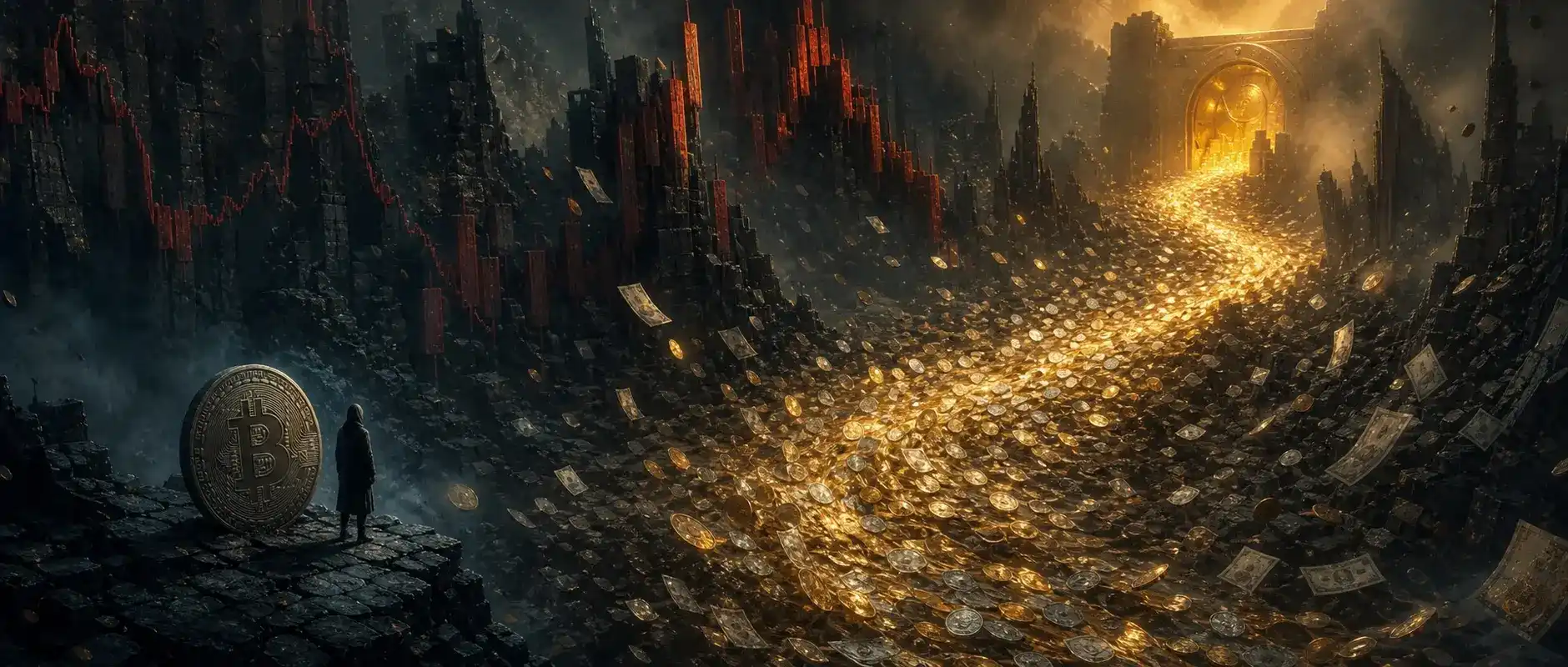
In August, the price of ETH broke through its previous all-time high from 2021, reaching above $4,900, setting a new record. Market sentiment hit "extreme greed," and discussions about "Ethereum surpassing Bitcoin" were rampant once again.

However, the good times didn't last. By the end, the ETH price had fallen back to around $2,900, a drop of nearly 40% from its peak. Looking at the data over the past 365 days, the decline was 13.92%, with a volatility as high as 141%.

The paradox is that Ethereum actually delivered a stellar technical performance this year: it successfully implemented two milestone upgrades, Pectra and Fusaka, completely revamping the network's scaling capabilities; the Layer 2 ecosystem experienced explosive growth, with Base chain's annual revenue surpassing that of many public chains; giants like BlackRock established Ethereum's position as the preferred settlement layer for real-world assets (RWA) through the BUIDL fund, which grew to over $2 billion in size.

Technology was advancing, the ecosystem was thriving, but the price was falling.

What exactly happened behind this "divergence between fundamentals and price"?

The Demise of the Deflation Narrative

To understand this divergence, one must start with the Dencun upgrade.

The Dencun upgrade on March 13, 2024, was the direct trigger that led to the collapse of Ethereum's deflation narrative.

The core of this upgrade was the introduction of EIP-4844, providing L2s with a dedicated data availability layer through Blob transactions. Technologically, this upgrade was nearly perfect – L2 transaction costs plummeted by over 90%, significantly improving the user experience on networks like Arbitrum and Optimism. But in terms of tokenomics, it caused severe turbulence.

Under the EIP-1559 mechanism, the amount of ETH burned (the deflationary force) is directly tied to the congestion level of block space. Dencun significantly increased the supply of data availability, but demand did not keep pace – although L2 transaction volume grew, Blob space was oversupplied, causing Blob fees to linger near zero.

The data speaks volumes. Before the upgrade, Ethereum could burn thousands of ETH per day during peak periods; after the Dencun upgrade, due to plummeting Blob fees, the overall burn rate dropped sharply. More critically, ETH issuance (about 1800 ETH/day per block) began to exceed the burn rate, and Ethereum shifted from deflation back to inflation.

According to ultrasound.money data, Ethereum's annual inflation rate turned from negative pre-upgrade to positive in 2024, meaning the total supply of ETH was no longer decreasing but increasing net each day. This completely颠覆了 the narrative foundation of "Ultra Sound Money".

Dencun effectively, temporarily, "killed" Ethereum's deflation story. ETH transformed from a scarce asset that "becomes rarer with use" back into a mildly inflationary asset. This sudden shift in monetary policy disappointed many who had invested in ETH based on the "ultrasound money" theory and led them to exit. A long-term holder wrote on social media: "I bought ETH because of deflation. Now that logic is gone, why should I still hold it?"

A technological upgrade, meant to be a positive, became a short-term price killer. This is Ethereum's biggest paradox right now: the more successful L2s are, the weaker the value capture for the mainnet; the better the user experience, the more ETH holders suffer.

L2's Double-Edged Sword: Vampire or Moat?

In 2025, the debate over the relationship between Layer 2 and Layer 1 reached its peak.

From a financial statement perspective, the state of Ethereum L1 is indeed concerning. The Base chain, developed by Coinbase, generated over $75 million in revenue in 2025, capturing nearly 60% of the profit share in the entire L2 sector. In contrast, although Ethereum L1 was active in August, its protocol revenue was only $39.2 million, less than Base's quarterly figure.

If Ethereum were a company, its revenue would have dropped significantly while its market cap remained high, making it seem "expensive" in the eyes of traditional value investors.

"L2s are parasites, sucking Ethereum dry." This is a mainstream view in the market.

But a deeper analysis reveals the situation is far more complex.

All economic activity on L2s is ultimately denominated in ETH. Users pay Gas on Arbitrum or Base in ETH, and the core collateral in DeFi protocols is ETH. The more prosperous L2s are, the stronger the liquidity of ETH as "money".

This monetary premium cannot be measured by L1 Gas revenue alone.

Ethereum is transitioning from "serving users directly" to "serving L2 networks". The Blob fees L2s pay to L1 are essentially payments for Ethereum's security and data availability. Although Blob fees are currently low, as the number of L2s explodes, this B2B revenue model could be more sustainable than a B2C model reliant solely on retail users.

An analogy is: Ethereum is no longer a retailer but is in the wholesale business. Although the profit per transaction is lower, the economies of scale could be greater.

The problem is that the market has not yet understood this shift in business model.

Competitive Landscape: Pressure from Multiple Sides

One cannot fully discuss Ethereum's困境 without talking about its rivals.

According to Electric Capital's 2025 annual report, Ethereum remains the undisputed king of developers, with 31,869 active developers throughout the year, and its number of full-time developers is unmatched by any other ecosystem.
But in the battle for new developers, Ethereum is losing its advantage. Solana's active developers reached 17,708, an 83% year-on-year increase, and it performed strongly among newcomers.

More importantly is the赛道 differentiation.

In the PayFi (Payment Finance) field, Solana has established a leadership position with its high TPS and low fees. The issuance of PayPal USD (PYUSD) on Solana surged, and institutions like Visa also began testing large-scale commercial payments on Solana.

In the DePIN (Decentralized Physical Infrastructure)赛道, Ethereum suffered a major setback. Due to fragmentation between L1 and L2 and Gas fee volatility, the star project Render Network migrated to Solana in November 2023. Leading DePIN projects like Helium and Hivemapper also chose Solana.

But Ethereum is not in全面溃败.

In the RWA (Real World Assets) and institutional finance领域, Ethereum maintains absolute dominance. BlackRock's BUIDL fund, with its $2 billion size, runs mostly on Ethereum. This proves that when it comes to settling large-scale assets, traditional financial institutions trust Ethereum's security more.

In the stablecoin market, Ethereum holds a 54% share, about $170 billion,仍然是 the main carrier of "Internet dollars".

Ethereum has the most experienced architects and researchers, suitable for building complex DeFi and financial infrastructure; while competitors attract a large number of application-layer developers transitioning from Web2, suitable for building consumer-facing Apps.

These are two different ecological positioning, which also determine the future direction of competition.

Wall Street's "Ambivalent" Attitude

"It seems it hasn't received strong recognition from mainstream Wall Street financial institutions."

This feeling is not错觉.The Block data shows that as of year-end, Ethereum ETF net inflows were about $9.8 billion, while Bitcoin ETF inflows reached a high of $21.8 billion.

Why are institutions so "cool" towards Ethereum?

The core reason is: Due to regulatory restrictions, the spot ETFs上市 in 2025 stripped out staking functionality.

Wall Street values cash flow above all. Ethereum's native 3-4% staking yield was its core competitiveness against US Treasuries. However, for clients of BlackRock or Fidelity, holding a "zero-yield" risky asset (ETH in an ETF) is far less attractive than holding US Treasuries or high-dividend stocks directly.

This directly led to a "ceiling" effect on institutional fund inflows.

A deeper issue is模糊 positioning. In the 2021 cycle, institutions viewed ETH as the "tech stock index" of the crypto market – a high-beta asset: when the market is good, ETH should rise more than BTC.

But in 2025, this logic no longer holds. If seeking stability, institutions choose BTC; if pursuing high risk and high return, they turn to other high-performance public chains or AI-related tokens. ETH's "alpha"收益 is no longer clear.

However, institutions have not completely abandoned Ethereum either.

BlackRock's $2 billion BUIDL fund is entirely on Ethereum, sending a clear signal: When handling asset settlements worth hundreds of millions of dollars, traditional financial institutions only trust Ethereum's security and legal certainty.

The institutional attitude towards Ethereum is more like "strategic recognition, but tactical观望".

Five Potential Paths to a Comeback

Facing the current slump, what could Ethereum rely on for a future comeback?

First, the breakthrough of staking ETFs.

The 2025 ETFs were only "semi-finished products"; institutions holding ETH could not earn staking rewards. Once ETFs with staking functionality are approved, ETH would instantly become a dollar-denominated asset with a 3-4% annual yield.

For global pension funds and sovereign wealth funds, this type of asset,兼具科技成长性 (price appreciation) and fixed income (staking returns), would become a standard配置 in their asset allocation tables.

Second, the explosion of RWA.

Ethereum is becoming Wall Street's new backend. BlackRock's BUIDL fund reached $2 billion in size, and although it has since expanded to multi-chain, Ethereum remains a primary chain.

In 2026, as more government bonds, real estate, and private equity funds go on-chain, Ethereum will carry trillions of dollars in assets. These assets may not generate high Gas fees, but they will lock up massive amounts of ETH for liquidity and collateral, significantly reducing the circulating supply.

Third, a reversal in the Blob market supply and demand.

The deflation failure caused by Fusaka is only a temporary supply-demand mismatch. Currently, Blob space utilization is only 20%-30%. As killer apps emerge on L2s (like Web3 games, SocialFi), Blob space will be filled.

Once the Blob market saturates, its fees will rise exponentially. Liquid Capital analysis suggests that with the growth of L2 transaction volume, by 2026, Blob fees could contribute 30%-50% of ETH's total burn. At that point, ETH will return to the deflationary track of "ultrasound money".

Fourth, breakthroughs in L2 interoperability.

The current fragmentation of the L2 ecosystem (split liquidity, poor user experience) is a major obstacle to mass adoption. Optimism's Superchain and Polygon's AggLayer are building unified liquidity layers.

More importantly is the technology of L1-based shared sequencers. It will allow all L2s to share the same decentralized sequencer pool, not only solving the problem of cross-chain atomic swaps but also allowing L1 to recapture value (sequencers need to stake ETH).

When users can switch between Base, Arbitrum, and Optimism as smoothly as switching mini-programs within WeChat, the network effects of the Ethereum ecosystem will explode exponentially.

Fifth, the 2026 technical roadmap.

Ethereum's evolution has not stopped. Glamsterdam (H1 2026) will focus on optimizing the execution layer, significantly improving smart contract development efficiency and security, reducing Gas costs, and paving the way for complex institutional-grade DeFi applications.

Hegota (H2 2026) and Verkle Trees are key to the final battle. Verkle Trees will enable stateless client operation, meaning users can verify the Ethereum network on their phones or even browsers without downloading terabytes of data.

This will give Ethereum a遥遥领先 lead in decentralization over all competitors.

Summary

Ethereum's performance in 2025 looked "ugly" not because it failed, but because it is undergoing a painful metamorphosis from a "retail speculation platform" to "global financial infrastructure".

It sacrificed short-term L1 revenue in exchange for L2's infinite scalability.

It sacrificed short-term token price explosiveness in exchange for the compliance and security moat of institutional-grade assets (RWA).

This is a fundamental shift in business model: from B2C to B2B, from earning transaction fees to being the global settlement layer.

For investors, the current Ethereum is like Microsoft in the mid-2010s transitioning to cloud services – although the stock price was temporarily depressed and it faced challenges from emerging rivals, the deep network effects and moat it was building were accumulating strength for the next phase.

The question is not whether Ethereum can rise, but when the market will understand the value of this transformation.


Preguntas relacionadas

QWhat was the main reason for the breakdown of Ethereum's deflationary narrative in 2025?

AThe Dencun upgrade, specifically the introduction of EIP-4844 (Blob transactions), was the direct cause. It drastically increased the supply of data availability (Blob space), leading to Blob fees plummeting to near zero. This caused the daily ETH issuance to exceed the burn rate, shifting Ethereum from a deflationary back to an inflationary monetary policy.

QHow did Layer 2 solutions like Base impact Ethereum's L1 revenue, and what is the counter-argument to them being 'parasites'?

ABase, a Layer 2, generated over $75 million in revenue in 2025, significantly more than Ethereum L1's protocol revenue of $39.2 million in a single month. While this makes L1 revenue appear weak, the counter-argument is that L2s strengthen Ethereum's role as a monetary base. All L2 economic activity is denominated in ETH, increasing its liquidity. Ethereum is shifting from a B2C model (direct user fees) to a B2B model (selling security and data availability to L2s), which could be more scalable in the long term.

QWhat are the key competitive challenges Ethereum faced from other blockchains like Solana in 2025?

AEthereum faced significant competition in specific sectors. Solana gained dominance in PayFi (payment finance) due to its high TPS and low fees, attracting projects like PayPal USD (PYUSD) and Visa. In the DePIN (Decentralized Physical Infrastructure) sector, projects like Render Network, Helium, and Hivemapper migrated to Solana, citing fragmentation between Ethereum L1 and L2 and gas fee volatility as reasons.

QWhy were Wall Street and institutional investors relatively 'cool' towards Ethereum compared to Bitcoin in 2025?

AA primary reason was that the approved spot Ethereum ETFs did not include staking functionality due to regulatory restrictions. This meant institutional investors could not earn the native 3-4% yield, making a zero-yield, risky ETH ETF less attractive compared to US Treasuries or dividend stocks. Furthermore, ETH's value proposition became模糊; for stability, institutions chose BTC, and for high returns, they looked to other altcoins, leaving ETH's 'alpha' unclear.

QWhat are the five potential catalysts identified for an Ethereum comeback?

AThe five potential catalysts are: 1) The approval of staking-enabled ETFs, turning ETH into a yield-bearing asset for institutions. 2) The explosion of the RWA (Real World Asset) market, locking up vast amounts of ETH as collateral. 3) A supply-demand reversal in the Blob market as L2 activity increases, potentially restoring deflation. 4) A breakthrough in L2 interoperability (e.g., Superchain, AggLayer, shared sequencers) to unify the ecosystem. 5) The execution of the 2026 technical roadmap (Glamsterdam and Hegota upgrades) focusing on scalability and decentralization.

Lecturas Relacionadas

Trading

Spot
Futuros

Artículos destacados

Qué es ETH 2.0

ETH 2.0: Una Nueva Era para Ethereum Introducción ETH 2.0, conocido ampliamente como Ethereum 2.0, marca una actualización monumental para la blockchain de Ethereum. Esta transición no es solo una mejora superficial; busca mejorar fundamentalmente la escalabilidad, seguridad y sostenibilidad de la red. Con un cambio del mecanismo de consenso intensivo en energía Prueba de Trabajo (PoW) a una Prueba de Participación (PoS) más eficiente, ETH 2.0 promete un enfoque transformador para el ecosistema blockchain. ¿Qué es ETH 2.0? ETH 2.0 es un conjunto de actualizaciones interconectadas y distintivas centradas en optimizar las capacidades y el rendimiento de Ethereum. La reestructuración está diseñada para abordar desafíos críticos que el mecanismo actual de Ethereum ha enfrentado, particularmente en lo que respecta a la velocidad de transacción y la congestión de la red. Objetivos de ETH 2.0 Los objetivos principales de ETH 2.0 giran en torno a mejorar tres aspectos clave: Escalabilidad: Con el objetivo de aumentar significativamente el número de transacciones que la red puede manejar por segundo, ETH 2.0 busca superar la limitación actual de aproximadamente 15 transacciones por segundo, potencialmente alcanzando miles. Seguridad: Las medidas de seguridad mejoradas son fundamentales para ETH 2.0, particularmente a través de una mejor resistencia contra ciberataques y la preservación del ethos descentralizado de Ethereum. Sostenibilidad: El nuevo mecanismo PoS está diseñado no solo para mejorar la eficiencia, sino también para reducir drásticamente el consumo de energía, alineando el marco operativo de Ethereum con consideraciones ambientales. ¿Quién es el Creador de ETH 2.0? La creación de ETH 2.0 se puede atribuir a la Fundación Ethereum. Esta organización sin fines de lucro, que desempeña un papel crucial en el apoyo al desarrollo de Ethereum, es liderada por el notable cofundador Vitalik Buterin. Su visión de un Ethereum más escalable y sostenible ha sido la fuerza motriz detrás de esta actualización, involucrando contribuciones de una comunidad global de desarrolladores y entusiastas dedicados a mejorar el protocolo. ¿Quiénes son los Inversores de ETH 2.0? Si bien los detalles sobre los inversores de ETH 2.0 no se han hecho públicos, se sabe que la Fundación Ethereum recibe apoyo de varias organizaciones e individuos en el ámbito de blockchain y tecnología. Estos socios incluyen firmas de capital de riesgo, compañías tecnológicas y organizaciones filantrópicas que comparten un interés mutuo en apoyar el desarrollo de tecnologías descentralizadas e infraestructura blockchain. ¿Cómo Funciona ETH 2.0? ETH 2.0 se distingue por introducir una serie de características clave que lo diferencian de su predecesor. Prueba de Participación (PoS) La transición a un mecanismo de consenso PoS es uno de los cambios más destacados de ETH 2.0. A diferencia de PoW, que se basa en la minería intensiva en energía para la verificación de transacciones, PoS permite a los usuarios validar transacciones y crear nuevos bloques de acuerdo con la cantidad de ETH que apuestan en la red. Esto conduce a una mayor eficiencia energética, reduciendo el consumo en aproximadamente un 99.95%, convirtiendo a Ethereum 2.0 en una alternativa considerablemente más verde. Cadenas Shard Las cadenas shard son otra innovación crítica de ETH 2.0. Estas cadenas más pequeñas operan en paralelo con la cadena principal de Ethereum, lo que permite que múltiples transacciones sean procesadas simultáneamente. Este enfoque mejora la capacidad general de la red, abordando las preocupaciones de escalabilidad que han afectado a Ethereum. Cadena Beacon En el núcleo de ETH 2.0 se encuentra la Cadena Beacon, que coordina la red y gestiona el protocolo PoS. Funciona como un organizador de cierta manera: supervisa a los validadores, asegura que los shards permanezcan conectados a la red y monitorea la salud general del ecosistema blockchain. Cronología de ETH 2.0 El viaje de ETH 2.0 ha estado marcado por varios hitos clave que trazan la evolución de esta importante actualización: Diciembre 2020: El lanzamiento de la Cadena Beacon marcó la introducción de PoS, preparándose para la migración hacia ETH 2.0. Septiembre 2022: La finalización de “La Fusión” representa un momento crucial en el que la red Ethereum se trasladó exitosamente de un marco PoW a uno PoS, anunciando una nueva era para Ethereum. 2023: El lanzamiento esperado de cadenas shard tiene como objetivo mejorar aún más la escalabilidad de la red Ethereum, consolidando a ETH 2.0 como una plataforma robusta para aplicaciones y servicios descentralizados. Características Clave y Beneficios Escalabilidad Mejorada Una de las ventajas más significativas de ETH 2.0 es su escalabilidad mejorada. La combinación de PoS y cadenas shard permite que la red expanda su capacidad, permitiendo acomodar un volumen mucho mayor de transacciones en comparación con el sistema heredado. Eficiencia Energética La implementación de PoS representa un gran paso hacia la eficiencia energética en la tecnología blockchain. Al reducir drásticamente el consumo de energía, ETH 2.0 no solo disminuye los costos operativos, sino que también se alinea más estrechamente con los objetivos de sostenibilidad global. Seguridad Mejorada Los mecanismos actualizados de ETH 2.0 contribuyen a mejorar la seguridad en toda la red. El despliegue de PoS, junto con las medidas de control innovadoras establecidas a través de cadenas shard y la Cadena Beacon, asegura un mayor grado de protección contra posibles amenazas. Costos Más Bajos para los Usuarios A medida que la escalabilidad mejora, los efectos sobre los costos de transacción también serán evidentes. Se espera que una mayor capacidad y una menor congestión se traduzcan en tarifas más bajas para los usuarios, haciendo que Ethereum sea más accesible para transacciones cotidianas. Conclusión ETH 2.0 marca una evolución significativa en el ecosistema blockchain de Ethereum. A medida que aborda problemas fundamentales como la escalabilidad, el consumo de energía, la eficiencia en las transacciones y la seguridad general, la importancia de esta actualización no puede ser subestimada. La transición a la Prueba de Participación, la introducción de cadenas shard y el trabajo fundamental de la Cadena Beacon son indicativos de un futuro donde Ethereum puede satisfacer las crecientes demandas del mercado descentralizado. En una industria impulsada por la innovación y el progreso, ETH 2.0 se erige como un testimonio de las capacidades de la tecnología blockchain para allanar el camino hacia una economía digital más sostenible y eficiente.

166 Vistas totalesPublicado en 2024.04.04Actualizado en 2024.12.03

Qué es ETH 2.0

Qué es ETH 3.0

ETH3.0 y $eth 3.0: Un Examen Profundo del Futuro de Ethereum Introducción En el paisaje en rápida evolución de las criptomonedas y la tecnología blockchain, ETH3.0, a menudo denotado como $eth 3.0, ha surgido como un tema de considerable interés y especulación. El término abarca dos conceptos principales que merecen aclaración: Ethereum 3.0: Esto representa una posible actualización futura destinada a aumentar las capacidades de la blockchain existente de Ethereum, enfocándose particularmente en mejorar la escalabilidad y el rendimiento. ETH3.0 Meme Token: Este proyecto de criptomoneda distinto busca aprovechar la blockchain de Ethereum para crear un ecosistema centrado en memes, promoviendo la participación dentro de la comunidad de criptomonedas. Comprender estos aspectos de ETH3.0 es esencial no solo para los entusiastas de las criptomonedas, sino también para aquellos que observan tendencias tecnológicas más amplias en el espacio digital. ¿Qué es ETH3.0? Ethereum 3.0 Ethereum 3.0 se presenta como una actualización propuesta para la red de Ethereum ya establecida, que ha sido la columna vertebral de muchas aplicaciones descentralizadas (dApps) y contratos inteligentes desde su inicio. Las mejoras previstas se concentran principalmente en la escalabilidad, integrando tecnologías avanzadas como sharding y pruebas de conocimiento cero (zk-proofs). Estas innovaciones tecnológicas tienen como objetivo facilitar un número sin precedentes de transacciones por segundo (TPS), potencialmente alcanzando millones, abordando así una de las limitaciones más significativas que enfrenta la tecnología blockchain actual. La mejora no es meramente técnica, sino también estratégica; está destinada a preparar la red de Ethereum para su adopción generalizada y utilidad en un futuro marcado por una mayor demanda de soluciones descentralizadas. ETH3.0 Meme Token En contraste con Ethereum 3.0, el ETH3.0 Meme Token se aventura en un ámbito más ligero y juguetón al combinar la cultura de memes de internet con la dinámica de las criptomonedas. Este proyecto permite a los usuarios comprar, vender e intercambiar memes en la blockchain de Ethereum, proporcionando una plataforma que fomenta la participación comunitaria a través de la creatividad y los intereses compartidos. El ETH3.0 Meme Token tiene como objetivo demostrar cómo la tecnología blockchain puede intersectarse con la cultura digital, creando casos de uso que son tanto entretenidos como financieramente viables. ¿Quién es el Creador de ETH3.0? Ethereum 3.0 La iniciativa hacia Ethereum 3.0 es impulsada principalmente por un consorcio de desarrolladores e investigadores dentro de la comunidad de Ethereum, incluyendo notablemente a Justin Drake. Conocido por sus ideas y contribuciones a la evolución de Ethereum, Drake ha sido una figura prominente en las discusiones sobre la transición de Ethereum a una nueva capa de consenso, denominada “Beam Chain.” Este enfoque colaborativo para el desarrollo significa que Ethereum 3.0 no es el producto de un creador singular, sino más bien una manifestación de ingenio colectivo centrado en avanzar la tecnología blockchain. ETH3.0 Meme Token Los detalles sobre el creador del ETH3.0 Meme Token son actualmente inidentificables. La naturaleza de los tokens de memes a menudo conduce a una estructura más descentralizada y dirigida por la comunidad, lo que podría explicar la falta de atribución específica. Esto se alinea con la ética de la comunidad cripto más amplia, donde la innovación a menudo surge de esfuerzos colaborativos en lugar de individuales. ¿Quiénes son los Inversores de ETH3.0? Ethereum 3.0 El apoyo a Ethereum 3.0 proviene principalmente de la Fundación Ethereum junto con una entusiasta comunidad de desarrolladores e inversores. Esta asociación fundamental proporciona un grado significativo de legitimidad y mejora la perspectiva de una implementación exitosa, ya que aprovecha la confianza y credibilidad construidas a lo largo de años de operaciones en la red. En el clima cambiando rápidamente de las criptomonedas, el apoyo de la comunidad juega un papel crucial en impulsar el desarrollo y la adopción, posicionando a Ethereum 3.0 como un contendiente serio para futuros avances en blockchain. ETH3.0 Meme Token Si bien las fuentes actualmente disponibles no proporcionan información explícita sobre las fundaciones o organizaciones de inversión que respaldan el ETH3.0 Meme Token, es indicativo del modelo de financiamiento típico para tokens de memes, que a menudo depende del apoyo de base y la participación comunitaria. Los inversores en tales proyectos suelen consistir en individuos motivados por el potencial de innovación impulsada por la comunidad y el espíritu de cooperación que se encuentra dentro de la comunidad cripto. ¿Cómo Funciona ETH3.0? Ethereum 3.0 Las características distintivas de Ethereum 3.0 radican en su implementación propuesta de sharding y tecnología zk-proof. Sharding es un método de particionamiento de la blockchain en piezas más pequeñas y manejables o “shards,” que pueden procesar transacciones de manera concurrente en lugar de secuencial. Esta descentralización del procesamiento ayuda a prevenir la congestión y asegura que la red permanezca receptiva incluso bajo una carga pesada. La tecnología de prueba de conocimiento cero (zk-proof) contribuye con otra capa de sofisticación al permitir la validación de transacciones sin revelar los datos subyacentes involucrados. Este aspecto no solo mejora la privacidad, sino que también aumenta la eficiencia general de la red. También se habla de incorporar una Máquina Virtual de Ethereum de conocimiento cero (zkEVM) en esta actualización, amplificando aún más las capacidades y utilidad de la red. ETH3.0 Meme Token El ETH3.0 Meme Token se distingue al capitalizar la popularidad de la cultura de memes. Establece un mercado para que los usuarios participen en el comercio de memes, no solo por entretenimiento sino también por el posible beneficio económico. Al integrar características como staking, provisión de liquidez y mecanismos de gobernanza, el proyecto fomenta un entorno que incentiva la interacción y participación de la comunidad. Al ofrecer una mezcla única de entretenimiento y oportunidad económica, el ETH3.0 Meme Token tiene como objetivo atraer a una audiencia diversa, que abarca desde entusiastas de las criptomonedas hasta conocedores casuales de memes. Línea de Tiempo de ETH3.0 Ethereum 3.0 11 de noviembre de 2024: Justin Drake insinúa la próxima actualización de ETH 3.0, centrada en mejoras de escalabilidad. Este anuncio significa el comienzo de las discusiones formales sobre la futura arquitectura de Ethereum. 12 de noviembre de 2024: Se espera que la propuesta anticipada para Ethereum 3.0 se desvele en Devcon en Bangkok, preparando el escenario para una mayor retroalimentación de la comunidad y posibles próximos pasos en el desarrollo. ETH3.0 Meme Token 21 de marzo de 2024: El ETH3.0 Meme Token se lista oficialmente en CoinMarketCap, marcando su incursión en el dominio público de las criptomonedas y mejorando la visibilidad de su ecosistema basado en memes. Puntos Clave En conclusión, Ethereum 3.0 representa una evolución significativa dentro de la red de Ethereum, enfocándose en superar las limitaciones en términos de escalabilidad y rendimiento a través de tecnologías avanzadas. Sus actualizaciones propuestas reflejan un enfoque proactivo hacia las demandas y la usabilidad futura. Por otro lado, el ETH3.0 Meme Token encapsula la esencia de la cultura impulsada por la comunidad en el espacio de las criptomonedas, aprovechando la cultura de memes para crear plataformas atractivas que fomentan la creatividad y participación del usuario. Comprender los distintos propósitos y funcionalidades de ETH3.0 y $eth 3.0 es fundamental para cualquiera interesado en los desarrollos en curso dentro del espacio cripto. Con ambas iniciativas abriendo caminos únicos, subrayan colectivamente la naturaleza dinámica y multifacética de la innovación en blockchain.

178 Vistas totalesPublicado en 2024.04.04Actualizado en 2024.12.03

Qué es ETH 3.0

Cómo comprar ETH

¡Bienvenido a HTX.com! Hemos hecho que comprar Ethereum (ETH) sea simple y conveniente. Sigue nuestra guía paso a paso para iniciar tu viaje de criptos.Paso 1: crea tu cuenta HTXUtiliza tu correo electrónico o número de teléfono para registrarte y obtener una cuenta gratuita en HTX. Experimenta un proceso de registro sin complicaciones y desbloquea todas las funciones.Obtener mi cuentaPaso 2: ve a Comprar cripto y elige tu método de pagoTarjeta de crédito/débito: usa tu Visa o Mastercard para comprar Ethereum (ETH) al instante.Saldo: utiliza fondos del saldo de tu cuenta HTX para tradear sin problemas.Terceros: hemos agregado métodos de pago populares como Google Pay y Apple Pay para mejorar la comodidad.P2P: tradear directamente con otros usuarios en HTX.Over-the-Counter (OTC): ofrecemos servicios personalizados y tipos de cambio competitivos para los traders.Paso 3: guarda tu Ethereum (ETH)Después de comprar tu Ethereum (ETH), guárdalo en tu cuenta HTX. Alternativamente, puedes enviarlo a otro lugar mediante transferencia blockchain o utilizarlo para tradear otras criptomonedas.Paso 4: tradear Ethereum (ETH)Tradear fácilmente con Ethereum (ETH) en HTX's mercado spot. Simplemente accede a tu cuenta, selecciona tu par de trading, ejecuta tus trades y monitorea en tiempo real. Ofrecemos una experiencia fácil de usar tanto para principiantes como para traders experimentados.

3.9k Vistas totalesPublicado en 2024.12.10Actualizado en 2025.03.21

Cómo comprar ETH

Discusiones

Bienvenido a la comunidad de HTX. Aquí puedes mantenerte informado sobre los últimos desarrollos de la plataforma y acceder a análisis profesionales del mercado. A continuación se presentan las opiniones de los usuarios sobre el precio de ETH (ETH).

活动图片