Ether Faces Key Hurdles as Three Indicators Hold Back Break Above $2,400

TheNewsCryptoPublicado a 2026-03-27Actualizado a 2026-03-27

Resumen

Ether is struggling to break above $2,400 due to three key bearish indicators. Persistent outflows from U.S. spot Ether ETFs reflect weak institutional sentiment and regulatory uncertainty. On-chain activity shows declining DEX volumes, signaling reduced demand and engagement in Ethereum’s ecosystem. ETH futures premiums remain below neutral, indicating a lack of conviction among leveraged traders. Broader macro risks, including geopolitical tensions and U.S. regulatory concerns, add further pressure. Sustained recovery will require improved ETF inflows, stronger on-chain activity, and a healthier futures market, alongside more favorable macro conditions.

Ether maintains war in a risk-off environment, with price action reflecting susceptible demand and broader macro uncertainty. Despite attempts to stabilize near key stages, the asset has lagged behind the wider crypto market, leaving buyers targeted on precise indicators that might decide whether or not ETH can reclaim momentum and push in the direction of the $2,400 mark.

ETF Outflows Weigh on Confidence

Institutional sentiment stays a main situation for Ethereum. US-listed spot Ether ETFs have recorded steady net outflows in latest sessions, highlighting a decline in large-scale investor participation. These outflows recommend that establishments are either decreasing publicity or waiting for a clearer market course earlier than committing additional capital.

Even though newer ETF structures include staking features, the relatively modest yield has n’t enticed sustained inflows. Regulatory uncertainty in the United States has in addition complex the outlook, making institutions cautious. Until ETF flows turn positive again, Ether is likely to stand problems constructing robust upward momentum.

DEX Activity Signals Weak Demand

On-chain information exhibits a noticeable slowdown in decentralized exchange activity across Ethereum’s ecosystem. Weekly DEX volumes have dropped considerably as compared to past due 2025 stages, reflecting reduced engagement from traders and decentralized finance users. This decline factors to weaker demand for ETH, as the token is heavily used for transaction expenses and DeFi interactions.

Lower pastime also indicates that fewer customers are collaborating in key blockchain programs, which directly impacts network price. Without a restoration in DEX volumes, Ether may additionally struggle to maintain better price ranges. A revival in decentralized trading interest could be a critical signal of renewed demand and ecosystem strength.

Futures Premium Highlights Lack of Conviction

The ETH futures market is presently displaying limited bullish sentiment, with premiums sitting below the impartial range. Under normal market situations, futures contracts exchange at a top rate of 4% to 8%, reflecting confidence in future price appreciation. However, the cutting-edge decrease in top rate suggests that traders are reluctant to take on leveraged long positions.

This loss of conviction shows that market individuals are uncertain about short-term price routes. Until futures rates go back to more healthy levels, bearish stress might also persist. An upward push in this metric could sign developing self assurance among professional traders and will act as a catalyst for price recovery.

Macro Uncertainty Adds Pressure

Global macroeconomic conditions continue to weigh heavily on crypto markets, with geopolitical tensions playing a key role. The ongoing conflict involving Iran has contributed to volatility across financial markets, pushing investors toward safer assets and reducing appetite for riskier investments like cryptocurrencies.

Additionally, regulatory developments in the United States have added another layer of uncertainty. Concerns over stablecoin regulations and tighter oversight have kept sentiment cautious. For Ether to break above $2,400, improvements in macro conditions alongside stronger on-chain and institutional signals will be essential to support a sustained bullish move.


TagsETHEthereum (ETH)

Criptos en tendencia

Preguntas relacionadas

QWhat are the three main indicators currently holding back Ether's price from breaking above $2,400?

AThe three main indicators are persistent outflows from US-listed spot Ether ETFs, a significant slowdown in decentralized exchange (DEX) activity, and a lack of bullish conviction in the ETH futures market with premiums below the neutral range.

QHow have the US-listed spot Ether ETFs performed recently and what does this indicate?

AUS-listed spot Ether ETFs have recorded steady net outflows in recent sessions. This indicates a decline in large-scale institutional investor participation and suggests that institutions are either reducing their exposure or waiting for a clearer market direction before committing more capital.

QWhat does the decline in DEX activity on Ethereum's ecosystem signal?

AThe decline in weekly DEX volumes signals weaker demand for ETH, as the token is heavily used for transaction fees and DeFi interactions. It also indicates reduced engagement from traders and DeFi users, which directly impacts the network's value.

QWhat does the current state of the ETH futures market premium reveal about trader sentiment?

AThe ETH futures market premium is currently sitting below the neutral range (normally 4% to 8%), which reveals a lack of bullish conviction. It shows that traders are reluctant to take on leveraged long positions and are uncertain about short-term price directions.

QBesides on-chain and institutional factors, what other type of pressure is contributing to Ether's struggle?

AGlobal macroeconomic uncertainty and geopolitical tensions, particularly the ongoing conflict involving Iran, are adding pressure. This pushes investors toward safer assets and reduces appetite for riskier investments like cryptocurrencies. Regulatory uncertainty in the US also contributes to cautious sentiment.

Lecturas Relacionadas

The Truth Behind Digital Banking: The Fragile Ecosystem Supporting 1.46 Billion Users

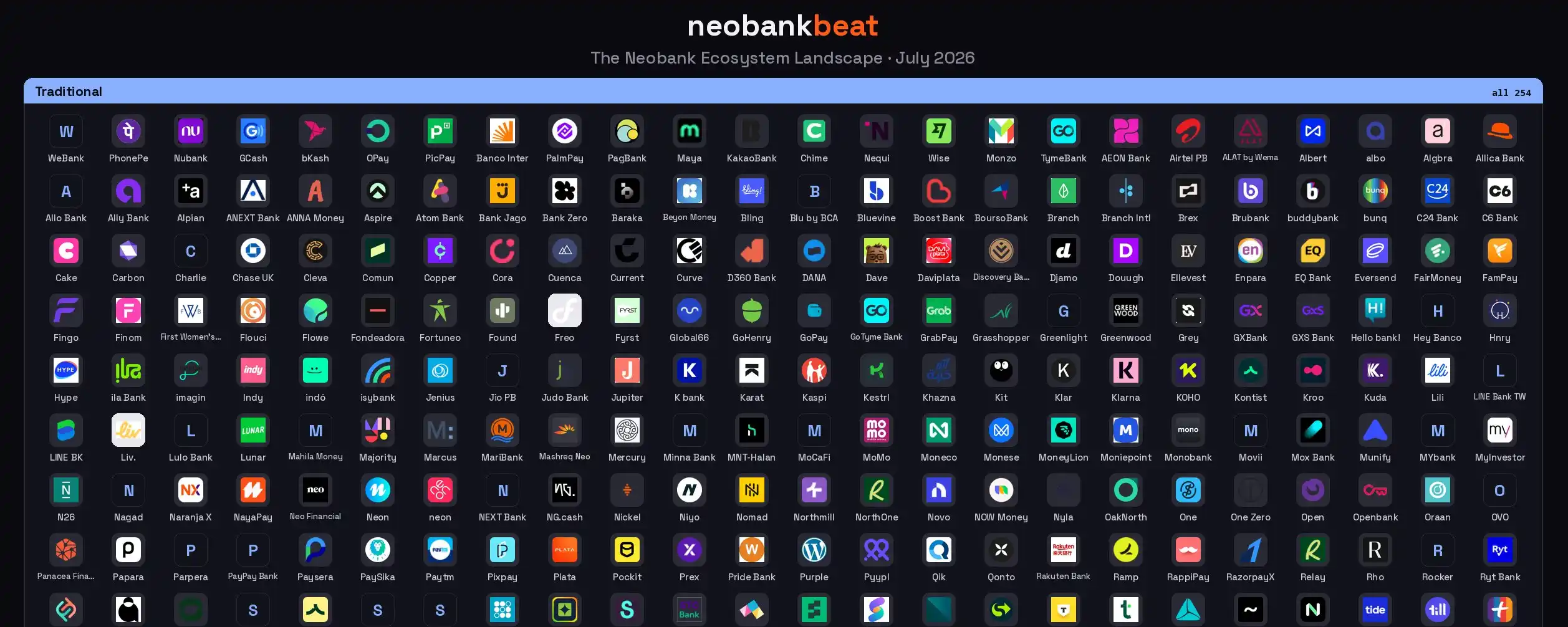
The article "The Truth About Digital Banks: The Fragile Ecosystem Behind 1.46 Billion Users" provides a data-driven analysis of the digital banking sector based on a verified list of 368 active neobanks as of July 2026. While these platforms collectively serve 1.46 billion users, with Asia (817 million users) and institutions like WeBank and Nubank dominating the landscape, the sector faces significant structural vulnerabilities. A key finding is that only 127 of the 368 neobanks hold full banking licenses. The majority operate atop third-party infrastructure providers like Banking-as-a-Service (BaaS) platforms, creating systemic risk where the failure of a single provider, as seen in past cases like Wirecard and Synapse, can jeopardize multiple consumer brands. Furthermore, the industry experiences a steady, quiet stream of failures, mergers, and shutdowns that often go unreported. The analysis also examines the adoption of artificial intelligence (AI), finding only 67 platforms (18%) have deployed AI at scale, with many innovators based in emerging markets like Nigeria and the Philippines. The infrastructure layer is highly concentrated, with 106 providers supporting the entire ecosystem of 368 consumer-facing brands. The article concludes with three predictions: the unlicensed gap will close through acquisitions or exits; an AI credit model is likely to fail in the next economic downturn; and a nascent but significant trend is the emergence of financial services designed for AI agents rather than humans.

marsbitHace 15 min(s)

The Truth Behind Digital Banking: The Fragile Ecosystem Supporting 1.46 Billion Users

marsbitHace 15 min(s)

Digital Asset Trading Platform Uphold Cuts 17% of Global Workforce Amid 'Crypto Winter'

Cryptocurrency trading platform Uphold has laid off approximately 17% of its global workforce, affecting 85 full-time employees and contractors. The cuts are part of a strategic shift to reallocate resources towards its rapidly growing corporate services business, as retail cryptocurrency trading activity has declined amid the ongoing market downturn. CEO Simon McLaughlin stated the company is restructuring after years of significant growth and remains confident in the long-term prospects of digital assets and blockchain technology. Founded in 2015, Uphold offers trading and custody services for cryptocurrencies, fiat, stocks, and precious metals. It has recently expanded to provide infrastructure for banks, fintech firms, and broker-dealers to integrate crypto services. The layoffs occur against a backdrop of a prolonged crypto market slump, with total market capitalization falling to around $2.1 trillion by Q2 2024. Factors include weakened trading volumes, reduced retail participation, interest rate hikes, geopolitical uncertainty, and net outflows from U.S. spot Bitcoin ETFs. Uphold clarified it is not shutting down its UK operations or any international offices. The company highlighted strong growth in its corporate platform and announced plans to evolve its consumer app into a broader blockchain-based financial assistant by 2026, offering U.S. stocks, tokenized securities, lending, credit cards, and DeFi yield opportunities.

cryptonews.ruHace 15 min(s)

Digital Asset Trading Platform Uphold Cuts 17% of Global Workforce Amid 'Crypto Winter'

cryptonews.ruHace 15 min(s)

Has the Crypto Utopia Collapsed? The Industry Reaches an Inflection Point After the Frenzy Subsides

Has the crypto utopia collapsed? The industry is at an inflection point as the hype fades. The prevailing view is that crypto has become an outlet for excess liquidity, with many participants leaving as financial returns have fallen short of past-decade expectations. The 2021 boom has been revealed as an illusion, placing the industry in the "trough of disillusionment" on Gartner's Hype Cycle. This forces a return to first principles: re-evaluating token value, securing DeFi protocols, and finding real-world applications. The core failure is a repetitive cycle of reflexive speculation, driven by the premature liquidity of tokens. The industry's incentives prioritized short-term gains over genuine innovation. While curiosity drives invention, recent DeFi hacks signal a need for engineering and iteration, including token models. The culture is shifting; the industry is no longer in its early stages. Positioned at a turning point on the technology adoption curve, crypto faces the immense challenge of rebuilding finance from scratch, a process of inevitable iteration and failure. Regarding crypto VC, claims of its death are overstated. The exceptional returns of 2016-2021 were an anomaly. The initial crypto-anarchist ethos has largely been co-opted by Wall Street and regulators. The utopian vision is over; the industry is being assimilated into the existing system, becoming a business. Current viable project categories include stablecoins, prediction markets, tokenized assets/RWA, perpetual contracts, and AI/agent integration. Crypto is converging with fintech, far from the envisioned DeFi revolution, and must find killer apps within regulatory boundaries. A reconciliation is possible: cryptocurrency may change value storage and transfer in subtle, imperceptible ways that integrate into existing systems, rather than through revolutionary fanfare. True creativity often emerges from adversity. There remains much to build for those driven by genuine curiosity.

marsbitHace 29 min(s)

Has the Crypto Utopia Collapsed? The Industry Reaches an Inflection Point After the Frenzy Subsides

marsbitHace 29 min(s)

Trading

Spot

Artículos destacados

Cómo comprar WAR

¡Bienvenido a HTX.com! Hemos hecho que comprar WAR (WAR) sea simple y conveniente. Sigue nuestra guía paso a paso para iniciar tu viaje de criptos.Paso 1: crea tu cuenta HTXUtiliza tu correo electrónico o número de teléfono para registrarte y obtener una cuenta gratuita en HTX. Experimenta un proceso de registro sin complicaciones y desbloquea todas las funciones.Obtener mi cuentaPaso 2: ve a Comprar cripto y elige tu método de pagoTarjeta de crédito/débito: usa tu Visa o Mastercard para comprar WAR (WAR) al instante.Saldo: utiliza fondos del saldo de tu cuenta HTX para tradear sin problemas.Terceros: hemos agregado métodos de pago populares como Google Pay y Apple Pay para mejorar la comodidad.P2P: tradear directamente con otros usuarios en HTX.Over-the-Counter (OTC): ofrecemos servicios personalizados y tipos de cambio competitivos para los traders.Paso 3: guarda tu WAR (WAR)Después de comprar tu WAR (WAR), guárdalo en tu cuenta HTX. Alternativamente, puedes enviarlo a otro lugar mediante transferencia blockchain o utilizarlo para tradear otras criptomonedas.Paso 4: tradear WAR (WAR)Tradear fácilmente con WAR (WAR) en HTX's mercado spot. Simplemente accede a tu cuenta, selecciona tu par de trading, ejecuta tus trades y monitorea en tiempo real. Ofrecemos una experiencia fácil de usar tanto para principiantes como para traders experimentados.

225 Vistas totalesPublicado en 2024.12.11Actualizado en 2026.06.02

Cómo comprar WAR

Discusiones

Bienvenido a la comunidad de HTX. Aquí puedes mantenerte informado sobre los últimos desarrollos de la plataforma y acceder a análisis profesionales del mercado. A continuación se presentan las opiniones de los usuarios sobre el precio de WAR (WAR).

活动图片