ETH Soars Nearly 28% in a Week, Approaching $2,500: After Supply Tightens, Is $3,000 the Next Stop?

Publicado a 2026-08-27Actualizado a 2026-08-27

Resumen

ETH has risen by approximately 28% in a week and returned above the 200-day moving average. The levels of $2546 and $2750 represent two key resistance points on the path to $3000; if it falls below $2139, the bullish thesis would be invalidated.

A Surge of About 28% in a Week with Three Catalysts Emerging Simultaneously

As of August 24, Ethereum is trading at $2,472, up 0.38% intraday and accumulating a gain of approximately 28% over the past seven trading days, marking its strongest weekly performance this year. The U.S. Treasury Department announced an increase in its long-term bond repurchase scale from about $2 billion to at least $4 billion, pushing down long-end yields; the U.S. Securities and Exchange Commission released a new framework for cryptocurrency project financing; meanwhile, the U.S. Congress will advance a procedural vote on the Clarity Act in September.

Market positioning prior to this was completely opposite to the news. Over $3 billion in leveraged crypto positions were liquidated within 24 hours, with short positions accounting for about 92%, amounting to approximately $2.77 billion. ETH rapidly surged from below $1,950 to around $2,546, with short squeezing being a key fuel for the vertical rise.

Institutional capital did not immediately retreat after the short squeeze. Spot Ethereum ETFs saw a single-day inflow of $71.47 million, with a 30-day cumulative inflow of $524.3 million. The fundamental backdrop has indeed improved compared to three weeks ago, but the price increase of about 29% in a short period has also pushed technical indicators into a significantly overbought state.

$3,000 Target Requires Three Steps

The first resistance is at $2,546, the high on August 22. Only a daily close above this level would reopen the upside potential. The second resistance is at $2,750, the last significant supply zone before the spring decline, where trapped sellers may concentrate their selling. Only a volume-backed breakout above $2,750 would transform the $3,000 theoretical target into a tradable one.

Calculating from the high of around $4,950 in August 2025 to the low of $1,512 in June 2026, the 0.382 Fibonacci retracement level is approximately $2,825, and the 0.5 level is around $3,231. $3,000 sits right in the middle of this standard recovery range. However, achieving this target requires continued favorable regulatory votes in September alongside stable ETF inflows.

The $2,139 Level Determines If the Bullish Structure Remains Valid

The first short-term support lies at $2,430. A break below would signal that the breakout is being sold into. $2,200 represents a normal pullback zone, and a retreat here would help digest the overbought condition indicated by the daily RSI reading of 79.3. The level that truly determines the trend is around $2,139, near the 200-day Exponential Moving Average. ETH had previously spent four consecutive months below this moving average. If it loses this level again, the August rally would look more like a liquidation-driven spike rather than a trend reversal, bringing $1,900 back into view.

The article's base case scenario is for ETH to consolidate first between $2,400 and $2,550, then challenge $2,750; the bullish scenario involves a volume-backed breakout above $2,546 and $2,750, touching $3,000 in Q4; the bearish scenario entails losing $2,430 and retesting $2,200, with the reversal logic being invalidated if $2,139 is subsequently breached.

Lecturas Relacionadas

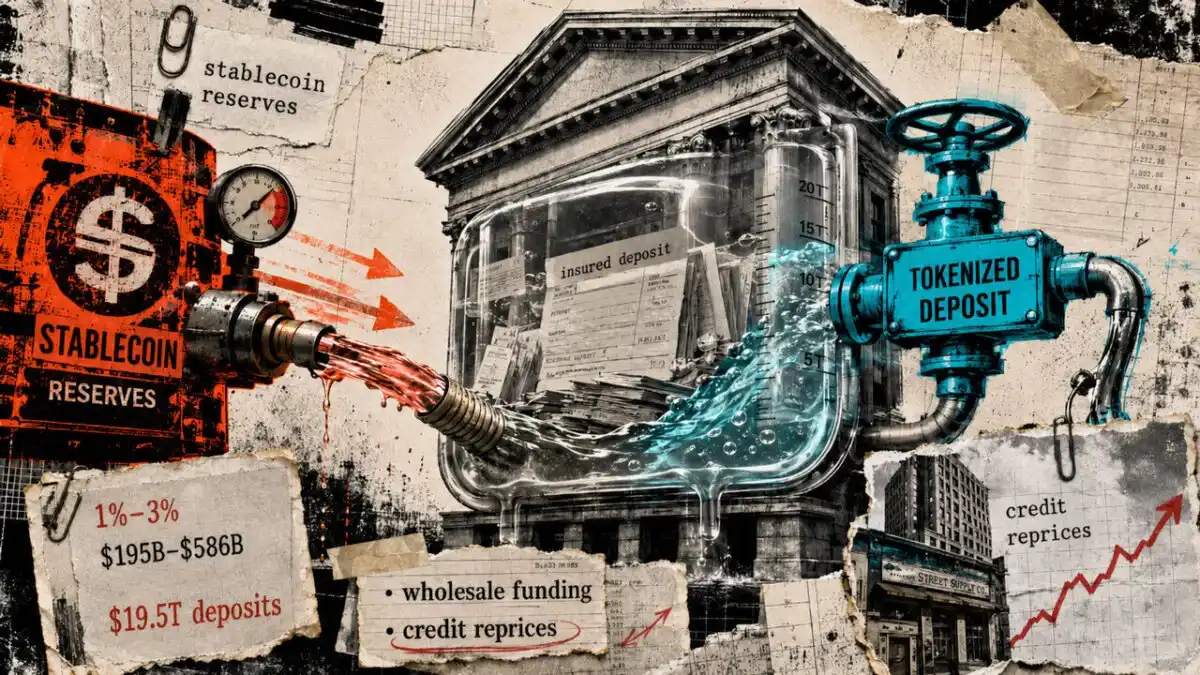
Tokenized Deposits Could Raise US Lending Costs: Dallas Fed Economists

Tokenized deposits could increase U.S. lending costs and make bank funding less stable, according to an analysis by Dallas Fed economists. Rosy Leigh and Sreeni Ramaswamy note that instant settlement capabilities, programmable deposit tokens, and AI could allow depositors chasing higher yields to move funds faster between banks, reducing deposit tenures and increasing their sensitivity to interest rates. The economists estimate that a 10% increase in deposit rate sensitivity could reduce banks' capacity to hold long-term loans by around $700 billion over a ten‑year equivalent. A 10% reduction in deposit tenures could lower capacity by about $580 billion. These scenarios do not imply a direct, proportional cut in lending but highlight potential pressures. U.S. banks are developing blockchain networks for moving tokenized deposits around‑the‑clock while keeping funds within the regulated banking system. Thirty‑nine state banking associations recently formed the BankChain alliance to build a nationwide network, while The Clearing House is developing a separate network with major banks. Institutions like Standard Chartered and HSBC have also tested cross‑border tokenized deposit transactions via blockchain. Banks may respond to more volatile deposits by holding more liquid assets (like reserves and Treasuries) or relying more on wholesale debt—which would likely raise borrowing costs for consumers and businesses. The authors cite Brazil's Pix instant payment system as a comparative example, where increased use raised bank liquidity holdings and reduced credit intermediation.

cryptonews.ruHace 2 min(s)

Tokenized Deposits Could Raise US Lending Costs: Dallas Fed Economists

cryptonews.ruHace 2 min(s)

SEC to Relax Crypto Regulations: Projects Don't Need Full Decentralization, 'Functional' is Enough

The U.S. Securities and Exchange Commission (SEC), led by Commissioner Hester Peirce, has proposed a new regulatory safe harbor for crypto assets. This rule, part of the "Regulation of Crypto Assets," would allow tokens to exit the securities law framework once the underlying project becomes "functional" or decentralized, rather than requiring full decentralization from the start. Currently, tokens are often deemed securities due to the central managerial efforts needed during early development. The proposal addresses this "catch-22" where projects need to distribute tokens to grow but face securities regulations for doing so. The safe harbor grants developers up to four years of temporary exemption from certain securities laws while they build their networks. A key shift is the exit criteria: tokens cease to be investment contracts when the network matures into either a "decentralized" or "functional" state, no longer reliant on a single entity for essential managerial or entrepreneurial efforts. The term "functional" is not strictly defined but appears to be a pragmatic version of decentralization, emphasizing broad community involvement over perfect, Bitcoin-like decentralization. Crucially, the rule permits developers to continue maintaining and improving the network even after achieving this status, as such activities are not considered "essential managerial efforts." This offers a clearer, more feasible compliance path for token issuers. The proposal places the onus on projects to self-certify when they meet the exit criteria, which may incentivize more realistic promises and potentially foster greater genuine decentralization—a core principle the crypto industry has long advocated but often failed to implement.

marsbitHace 8 min(s)

SEC to Relax Crypto Regulations: Projects Don't Need Full Decentralization, 'Functional' is Enough

marsbitHace 8 min(s)

Trading

Spot
活动图片