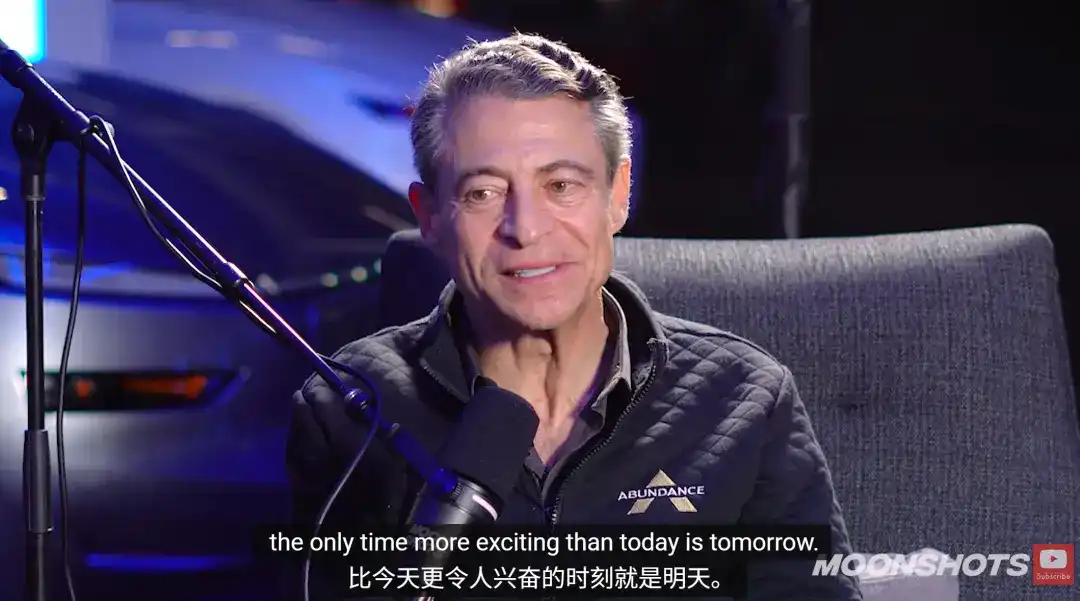
Elon Musk's First Interview in 2026: Discussing the Impact of AI, Robotics, Energy, and US-China Competition on the Near Future

marsbitPublicado a 2026-01-13Actualizado a 2026-01-13

Resumen

In a January 2026 interview, Elon Musk discussed the profound impact of AI, robotics, energy, and global competition on the near future. He declared 2026 as the "Year of Singularity," asserting that AI progress is exponential, with AGI achievable by 2026 and AI intelligence surpassing all humans combined by 2030. Musk predicted that Optimus robots would outperform human surgeons within three years, making high-quality healthcare essentially free due to AI, chip performance, and robotic dexterity advancing exponentially. He argued that pursuing medical degrees would become pointless unless for social reasons. On global AI competition, Musk stated China would dominate in computing power, citing its massive electricity production (3 times the U.S. by 2026), reduced chip advantage gaps, and exceptional execution capabilities. He envisioned the AI landscape led by XAI, Google, and China. For energy, Musk emphasized solar power as the ultimate solution, proposing a three-phase plan: doubling grid efficiency with battery storage, deploying space-based solar satellites, and eventually building satellite factories on the Moon. He described energy as the future currency. Economically, Musk suggested that money might become irrelevant in 10-20 years due to AI and robotics driving abundance, leading to "Universal High Income" (UHI) instead of UBI. He warned of a turbulent 3-7 year transition period. He also noted that work would become optional within two decades, expressed concern ...

Video: Moonshots

Compiled by: Model English

On January 6, 2026, Tesla founder Elon Musk was interviewed by renowned futurist and Singularity University founder Peter Diamandis and investor Dave Blundin.

In this podcast titled "Moonshots #220," the three engaged in a deep three-hour conversation. Musk clearly stated that 2026 is the "Year of Singularity" and elaborated on the industrial, technological, and economic foundations supporting this argument, painting a picture of a future reshaped by technological transformation.
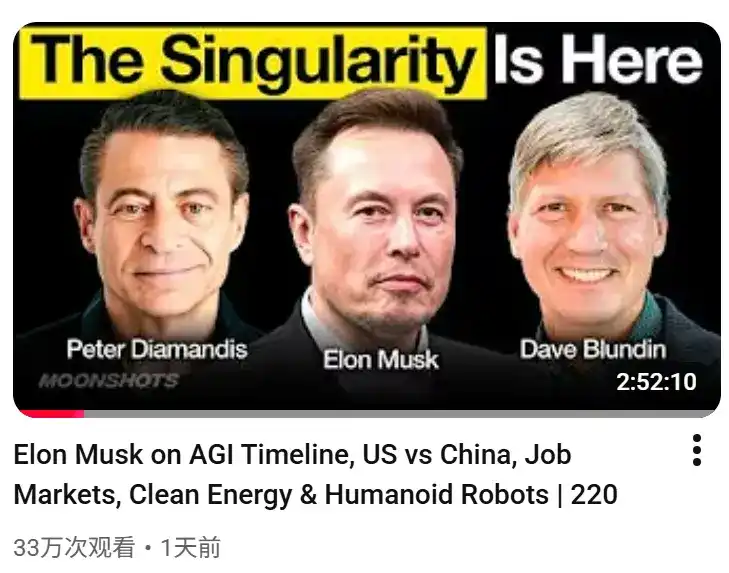
The conversation covered nearly 10 themes, including artificial intelligence, labor and social change, energy development, education and talent, health and longevity, space exploration, and innovation and entrepreneurship, totaling over 85,600 words. Many of the insights were extremely profound and forward-thinking.

To help everyone quickly grasp the core points of the interview, we have compiled and summarized the highlights to share with you all!

1. AI Exceeds Imagination; Intelligence Level to Surpass All Humanity Combined by 2030

Host Peter asked Musk, "Why are you so optimistic?"

Musk did not answer directly but instead offered a more shocking observation: "We are not moving towards the singularity; we are already living in it."
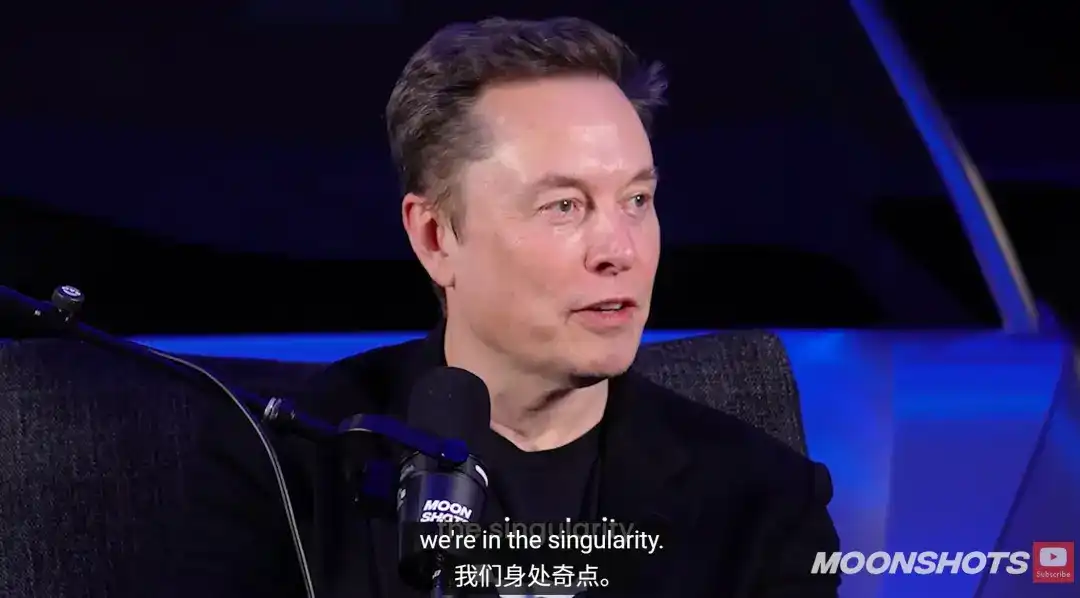
He explained that the pace of AI progress is so rapid that he himself is astonished several times a week—just as he finds one breakthrough amazing, a new shock arrives two days later. This is the power of exponential growth.

Musk predicted that AGI (Artificial General Intelligence) will be achieved in 2026, and by 2030, AI's intelligence level will surpass the sum total of all humanity.

2. Disruption in the Medical Field; Attending Medical School Will Be Meaningless

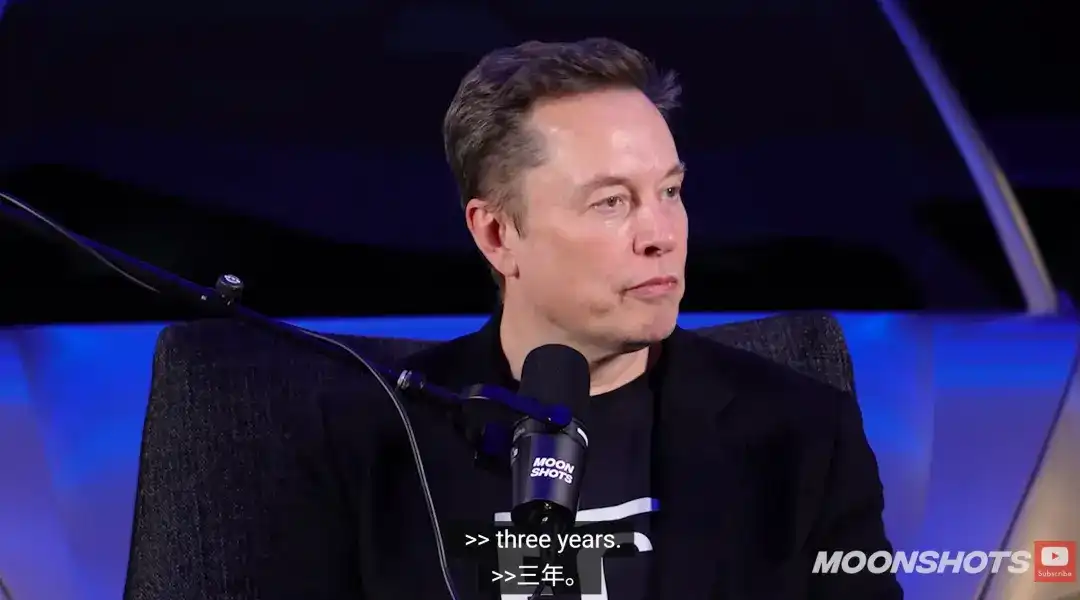
Addressing the current shortage of doctors and skilled surgeons, Musk predicted that within three years, the Optimus robot will become a better surgeon than any human, and this will be applied "at scale."

"In the future, the best medical care will basically be free," Musk stated.

Why so fast?

Musk pointed to the triple exponential growth advantages of robotic doctors:

  • First, exponential growth in AI capabilities;
  • Second, exponential growth in chip performance;
  • Third, exponential growth in electromechanical dexterity.

Multiplying these three exponential curves results in a rocket-like explosion of speed.
Musk added that more importantly, robots have a "recursive effect," meaning a robot's experience can accumulate, and all robots share the same knowledge base.

Ten thousand robotic doctors performing surgeries means each one can possess the experience of ten thousand operations. Different patients, different emergencies, different complications, even every detail under full spectrum light including infrared, ultraviolet, and X-ray—they can master it all precisely. Moreover, they won't get distracted because they argued with their family the night before, nor will their hands tremble from fatigue after four hours of continuous surgery.

Musk believes that (attending medical school in the future) is "meaningless. Unless it's for social reasons."
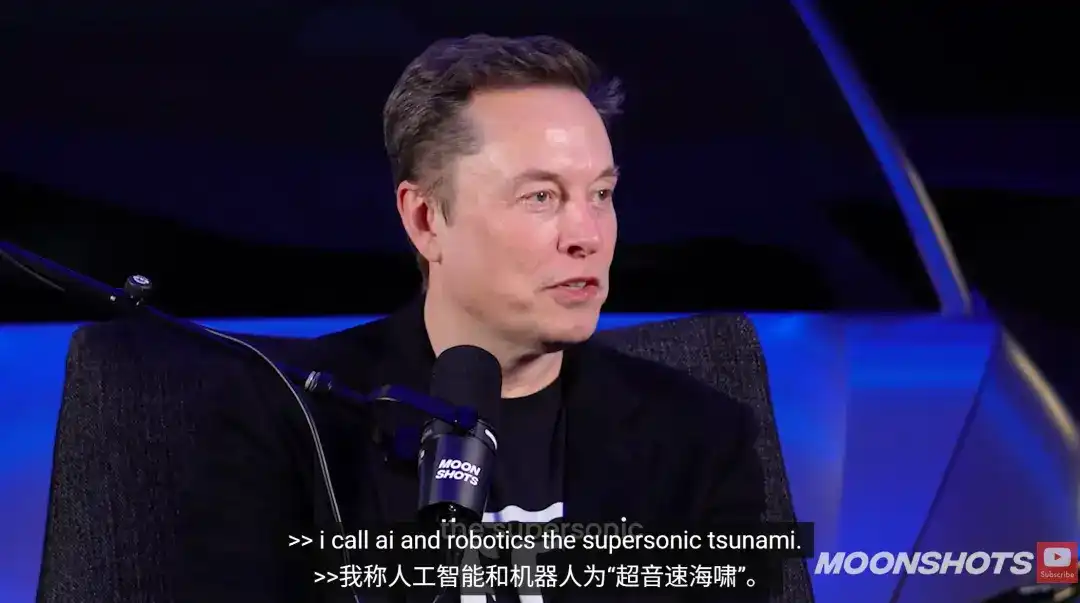
3. US-China AI Competition; China's Computing Power Will Far Exceed Other Regions

Regarding the current AI competition landscape, Musk asserted with great certainty: Based on current trends, China will far exceed the rest of the world in AI computing power.
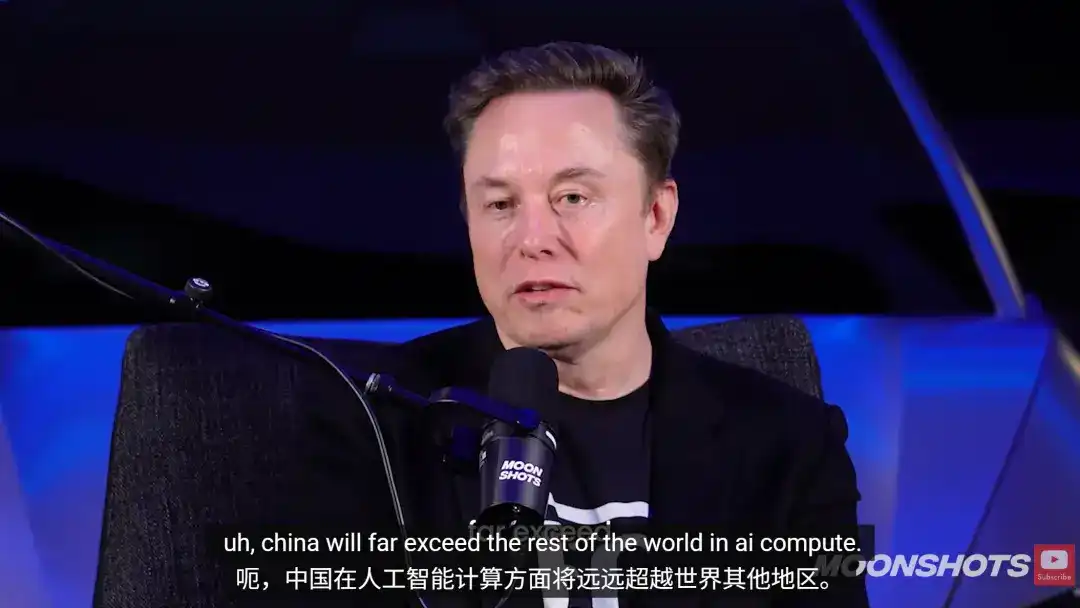
He provided three key reasons:

1) Overwhelming Power Advantage

China's power generation in 2026 will be three times that of the United States. Last year, China added 500 terawatt-hours of electricity, 70% of which came from solar power. Musk couldn't help but remark, "It's like they listen to everything I say and then immediately put it into action."

2) Chip Generation Gap Narrows; Moore's Law is Dead

From 3nm to 2nm, chip performance only improved by 10%, meaning Moore's Law has失效 (shīxiào - become invalid). The US chip advantage is continuously diminishing, making it easier for China to catch up.

3) Unmatched Execution Capability

Musk stated frankly: "I've met too many Chinese engineers. When the requirements are clear, their speed and scale of execution are unimaginable."

He predicted that the final world AI competition landscape will consist of XAI, Google, and China.
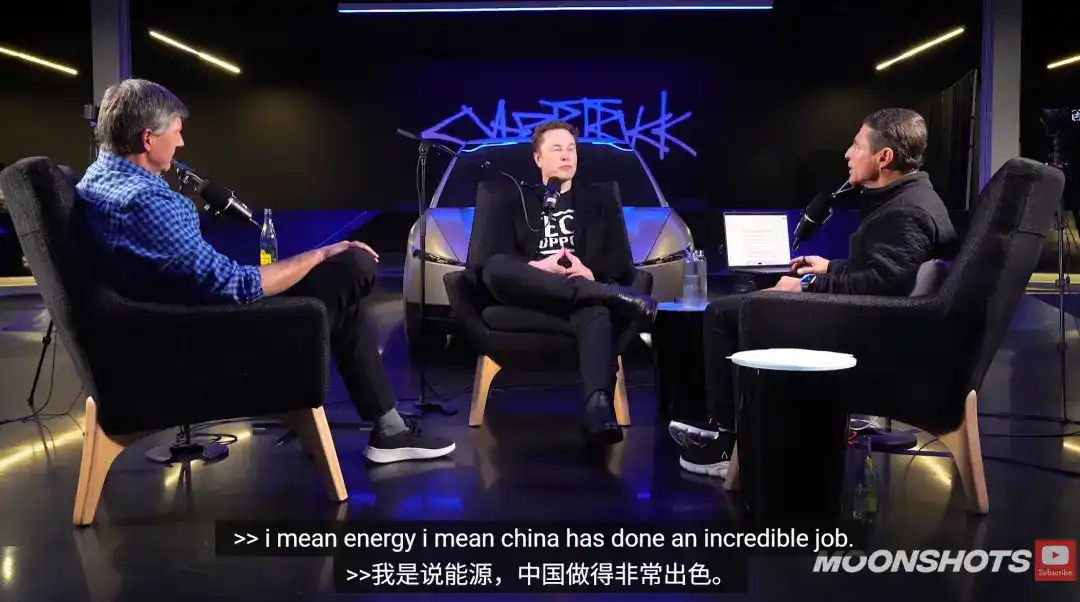
4. Energy Revolution; Solar is the Only Answer

Regarding the prospects of solar energy, Musk's attitude is exceptionally firm:

"The sun accounts for 99.8% of the mass of the solar system. Doing nuclear fusion on Earth is like making ice in Antarctica—we have a free giant nuclear reactor 93 million miles above our heads, so why build a small one on Earth?"

He proposed a three-step plan for solar energy development:

Step 1: Double the Efficiency of the Existing Power Grid

Power plants have大量 (dàliàng - a large amount of) idle capacity at night, but not enough during peak daytime hours. The solution is to use Tesla's Mega Pack batteries to store idle electricity at night and release it during peak daytime hours. This doubles energy throughput without building any new power plants.

Step 2: Launch Solar Power into Space

The environment where AI satellites are located in space has daylight 24 hours a day, maximizing solar energy utilization. Deploying these satellites would take about 8,000 launches, one launch per hour持续 (chíxù -持续 for) a full year.

Step 3: Build Satellite Factories on the Moon

To capture solar energy on a larger scale, we cannot rely solely on launching satellites from Earth. Musk's ultimate plan is to build factories on the Moon, using local materials to manufacture satellites and then sending them directly into orbit from the Moon.

Musk emphasized: "The currency of the future is essentially energy—with energy, you can power AI, manufacture anything, and change the physical world."

5. Economy and Currency; Money Might Not Matter in 10-20 Years

This is one of the most颠覆 (diānfù -颠覆颠覆颠覆颠覆颠覆颠覆颠覆颠覆颠覆颠覆颠覆颠覆颠覆颠覆颠覆颠覆颠覆颠覆颠覆颠覆颠覆颠覆颠覆颠覆颠覆颠覆颠覆颠覆颠覆颠覆颠覆颠覆颠覆颠覆颠覆颠覆颠覆颠覆颠覆颠覆颠覆颠覆颠覆颠覆颠覆颠覆颠覆颠覆颠覆颠覆颠覆颠覆颠覆颠覆颠覆颠覆颠覆颠覆颠覆颠覆颠覆颠覆颠覆颠覆颠覆颠覆颠覆颠覆颠覆颠覆颠覆颠覆颠覆颠覆颠覆颠覆颠覆颠覆颠覆颠覆颠覆颠覆颠覆颠覆颠覆颠覆颠覆颠覆颠覆颠覆颠覆颠覆颠覆颠覆颠覆颠覆颠覆颠覆颠覆颠覆颠覆颠覆颠覆颠覆颠覆颠覆颠覆颠覆颠覆颠覆颠覆颠覆颠覆颠覆颠覆颠覆颠覆颠覆颠覆颠覆颠覆颠覆颠覆颠覆颠覆颠覆颠覆颠覆颠覆颠覆颠覆颠覆颠覆颠覆颠覆颠覆颠覆颠覆颠覆颠覆颠覆颠覆颠覆颠覆颠覆颠覆颠覆颠覆颠覆颠覆颠覆颠覆颠覆颠覆颠覆颠覆颠覆颠覆颠覆颠覆颠覆颠覆颠覆颠覆颠覆颠覆颠覆颠覆颠覆颠覆颠覆颠覆颠覆颠覆颠覆颠覆颠覆颠覆颠覆颠覆颠覆颠覆颠覆颠覆颠覆颠覆颠覆颠覆颠覆颠覆颠覆颠覆颠覆颠覆颠覆颠覆颠覆颠覆颠覆颠覆颠覆颠覆颠覆颠覆颠覆颠覆颠覆颠覆颠覆颠覆颠覆颠覆颠覆颠覆颠覆颠覆颠覆颠覆颠覆颠覆颠覆颠覆颠覆颠覆颠覆颠覆颠覆颠覆颠覆颠覆颠覆颠覆颠覆颠覆颠覆颠覆颠覆颠覆颠覆颠覆颠覆颠覆颠覆颠覆颠覆颠覆颠覆颠覆颠覆颠覆颠覆颠覆颠覆颠覆颠覆颠覆颠覆颠覆颠覆颠覆颠覆颠覆颠覆颠覆颠覆颠覆颠覆颠覆颠覆颠覆颠覆颠覆颠覆颠覆颠覆颠覆颠覆颠覆颠覆颠覆颠覆颠覆颠覆颠覆颠覆颠覆颠覆颠覆颠覆颠覆颠覆颠覆颠覆颠覆颠覆颠覆颠覆颠覆颠覆颠覆颠覆颠覆颠覆颠覆颠覆颠覆颠覆颠覆颠覆颠覆颠覆颠覆颠覆颠覆颠覆颠覆颠覆颠覆颠覆颠覆颠覆颠覆颠覆颠覆颠覆颠覆颠覆颠覆颠覆颠覆颠覆颠覆颠覆颠覆颠覆颠覆颠覆颠覆颠覆颠覆颠覆颠覆颠覆颠覆颠覆颠覆颠覆颠覆颠覆颠覆颠覆颠覆颠覆颠覆颠覆颠覆颠覆颠覆颠覆颠覆颠覆颠覆颠覆颠覆颠覆颠覆颠覆颠覆颠覆颠覆颠覆颠覆颠覆颠覆颠覆颠覆颠覆颠覆颠覆颠覆颠覆颠覆颠覆颠覆颠覆颠覆颠覆颠覆颠覆颠覆颠覆颠覆颠覆颠覆颠覆颠覆颠覆颠覆颠覆颠覆颠覆颠覆颠覆颠覆颠覆颠覆颠覆颠覆颠覆颠覆颠覆颠覆颠覆颠覆颠覆颠覆颠覆颠覆颠覆颠覆颠覆颠覆颠覆颠覆颠覆颠覆颠覆颠覆颠覆颠覆颠覆颠覆颠覆颠覆颠覆颠覆颠覆颠覆颠覆颠覆颠覆颠覆颠覆颠覆颠覆颠覆颠覆颠覆颠覆颠覆颠覆颠覆颠覆颠覆颠覆颠覆颠覆颠覆颠覆颠覆颠覆颠覆颠覆颠覆颠覆颠覆颠覆颠覆颠覆颠覆颠覆颠覆颠覆颠覆颠覆颠覆颠覆颠覆颠覆颠覆颠覆颠覆颠覆颠覆颠覆颠覆颠覆颠覆颠覆颠覆颠覆颠覆颠覆颠覆颠覆颠覆颠覆颠覆颠覆颠覆颠覆颠覆颠覆颠覆颠覆颠覆颠覆颠覆颠覆颠覆颠覆颠覆颠覆颠覆颠覆颠覆颠覆颠覆颠覆颠覆颠覆颠覆颠覆颠覆颠覆颠覆颠覆颠覆颠覆颠覆颠覆颠覆颠覆颠覆颠覆颠覆颠覆颠覆颠覆颠覆颠覆颠覆颠覆颠覆颠覆颠覆颠覆颠覆颠覆颠覆颠覆颠覆颠覆颠覆颠覆颠覆颠覆颠覆颠覆颠覆颠覆颠覆颠覆颠覆颠覆颠覆颠覆颠覆颠覆颠覆颠覆颠覆颠覆颠覆颠覆颠覆颠覆颠覆颠覆颠覆颠覆颠覆颠覆颠覆颠覆颠覆颠覆颠覆颠覆颠覆颠覆颠覆颠覆颠覆颠覆颠覆颠覆颠覆颠覆颠覆颠覆颠覆颠覆颠覆颠覆颠覆颠覆颠覆颠覆颠覆颠覆颠覆颠覆颠覆颠覆颠覆颠覆颠覆颠覆颠覆颠覆颠覆颠覆颠覆颠覆颠覆颠覆颠覆颠覆颠覆颠覆颠覆颠覆颠覆颠覆颠覆颠覆颠覆颠覆颠覆颠覆颠覆颠覆颠覆颠覆颠覆颠覆颠覆颠覆颠覆颠覆颠覆颠覆颠覆颠覆颠覆颠覆颠覆颠覆颠覆颠覆颠覆颠覆颠覆颠覆颠覆颠覆颠覆颠覆颠覆颠覆颠覆颠覆颠覆颠覆颠覆颠覆颠覆颠覆颠覆颠覆颠覆颠覆颠覆颠覆颠覆颠覆颠覆颠覆颠覆颠覆颠覆颠覆颠覆颠覆颠覆颠覆颠覆颠覆颠覆颠覆颠覆颠覆颠覆颠覆颠覆颠覆颠覆颠覆颠覆颠覆颠覆颠覆颠覆颠覆颠覆颠覆颠覆颠覆颠覆颠覆颠覆颠覆颠覆颠覆颠覆颠覆颠覆颠覆颠覆颠覆颠覆颠覆颠覆颠覆颠覆颠覆颠覆颠覆颠覆颠覆颠覆颠覆颠覆颠覆颠覆颠覆颠覆颠覆颠覆颠覆颠覆颠覆颠覆颠覆颠覆颠覆颠覆颠覆颠覆颠覆颠覆颠覆颠覆颠覆颠覆颠覆颠覆颠覆颠覆颠覆颠覆颠覆颠覆颠覆颠覆颠覆颠覆颠覆颠覆颠覆颠覆颠覆颠覆颠覆颠覆颠覆颠覆颠覆颠覆颠覆颠覆颠覆颠覆颠覆颠覆颠覆颠覆颠覆颠覆颠覆颠覆颠覆颠覆颠覆颠覆颠覆颠覆颠覆颠覆颠覆颠覆颠覆颠覆颠覆颠覆颠覆颠覆颠覆颠覆颠覆颠覆颠覆颠覆颠覆颠覆颠覆颠覆颠覆颠覆颠覆颠覆颠覆颠覆颠覆颠覆颠覆颠覆颠覆颠覆颠覆颠覆颠覆颠覆颠覆颠覆颠覆颠覆颠覆颠覆颠覆颠覆颠覆颠覆颠覆颠覆颠覆颠覆颠覆颠覆颠覆颠覆颠覆颠覆颠覆颠覆颠覆颠覆颠覆颠覆颠覆颠覆颠覆颠覆颠覆颠覆颠覆颠覆颠覆颠覆颠覆颠覆颠覆颠覆颠覆颠覆颠覆颠覆颠覆颠覆颠覆颠覆颠覆颠覆颠覆颠覆颠覆颠覆颠覆颠覆颠覆颠覆颠覆颠覆颠覆颠覆颠覆颠覆颠覆颠覆颠覆颠覆颠覆颠覆颠覆颠覆颠覆颠覆颠覆颠覆颠覆颠覆颠覆颠覆颠覆颠覆颠覆颠覆颠覆颠覆颠覆颠覆颠覆颠覆颠覆颠覆颠覆颠覆颠覆颠覆颠覆颠覆颠覆颠覆颠覆颠覆颠覆颠覆颠覆颠覆颠覆颠覆颠覆颠覆颠覆颠覆颠覆颠覆颠覆颠覆颠覆颠覆颠覆颠覆颠覆颠覆颠覆颠覆颠覆颠覆颠覆颠覆颠覆颠覆颠覆颠覆颠覆颠覆颠覆颠覆颠覆颠覆颠覆颠覆颠覆颠覆颠覆颠覆颠覆颠覆颠覆颠覆颠覆颠覆颠覆颠覆颠覆颠覆颠覆颠覆颠覆颠覆颠覆颠覆颠覆颠覆颠覆颠覆颠覆颠覆颠覆颠覆颠覆颠覆颠覆颠覆颠覆颠覆颠覆颠覆颠覆颠覆颠覆颠覆颠覆颠覆颠覆颠覆颠覆颠覆颠覆颠覆颠覆颠覆颠覆颠覆颠覆颠覆颠覆颠覆颠覆颠覆颠覆颠覆颠覆颠覆颠覆颠覆颠覆颠覆颠覆颠覆颠覆颠覆颠覆颠覆颠覆颠覆颠覆颠覆颠覆颠覆颠覆颠覆颠覆颠覆颠覆颠覆颠覆颠覆颠覆颠覆颠覆颠覆颠覆颠覆颠覆颠覆颠覆颠覆颠覆颠覆颠覆颠覆颠覆颠覆颠覆颠覆颠覆颠覆颠覆颠覆颠覆颠覆颠覆颠覆颠覆颠覆颠覆颠覆颠覆颠覆颠覆颠覆颠覆颠覆颠覆颠覆颠覆颠覆颠覆颠覆颠覆颠覆颠覆颠覆颠覆颠覆颠覆颠覆颠覆颠覆颠覆颠覆颠覆颠覆颠覆颠覆颠覆颠覆颠覆颠覆颠覆颠覆颠覆颠覆颠覆颠覆颠覆颠覆颠覆颠覆颠覆颠覆颠覆颠覆颠覆颠覆颠覆颠覆颠覆颠覆颠覆颠覆颠覆颠覆颠覆颠覆颠覆颠覆颠覆颠覆颠覆颠覆颠覆颠覆颠覆颠覆颠覆颠覆颠覆颠覆颠覆颠覆极富洞察与远见。 Musk explained that in 10-20 years, either we won't exist anymore, or money will no longer be important.

Many people worry that AI will cause widespread unemployment, but Musk proposed a new concept—"Universal High Income" (UHI). This is not the government-distributed "Universal Basic Income (UBI)" but a more fundamental change in economic logic:

AI and robots will cause the output growth rate of goods and services to exceed the growth rate of the money supply, leading to plummeting prices and production costs approaching zero. When the output growth rate of goods and services exceeds the growth rate of the money supply, it causes prices to暴跌 (bàodiē - plummet).

Because物质 (wùzhì - material goods) are extremely abundant, everyone can easily obtain the goods and services they desire.

But he also warned that the next 3-7 years will be very bumpy:

We will simultaneously experience radical change, social unrest, and great prosperity; this is an inevitable transition period. And if none of this happens, it means we have encountered bigger problems—such as stalled AI development or civilizational collapse.

6. Careers and the Future; Work Will Become Optional

Musk predicted that within less than 20 years, work will become optional. AI and robots will make work a "hobby" within 10-20 years, allowing people to freely pursue their interests.

He also expressed concern about the global decline in birth rates, believing that population decline is a huge threat to civilization because "more people mean more consciousness, which helps humanity understand the universe."

7. Education and Growth; The Essence of Learning is Returning to Curiosity

Musk pointed out that the traditional education model is dead.

Due to his own poor school experience, he does not like the current education model—"I found school painful. It was boring, and in South Africa, it was also violent."

He believes that over the years, the driving force behind his continuous learning has been "curiosity about the nature of the universe. I'm just curious about the meaning of life and the reality we live in."

With the rapid development of AI, he坦言 (tǎnrán - admitted frankly) that obviously AI can be a personalized teacher. It is infinitely patient and answers all your questions. But you still need curiosity, you still need to want to learn. He has already launched an AI personalized education pilot in El Salvador.

At the end of the interview, Musk also admitted that he was once very pessimistic and even suggested slowing down AI development multiple times, but ultimately found that rather than being a pessimistic bystander, it's better to be an optimistic participant.

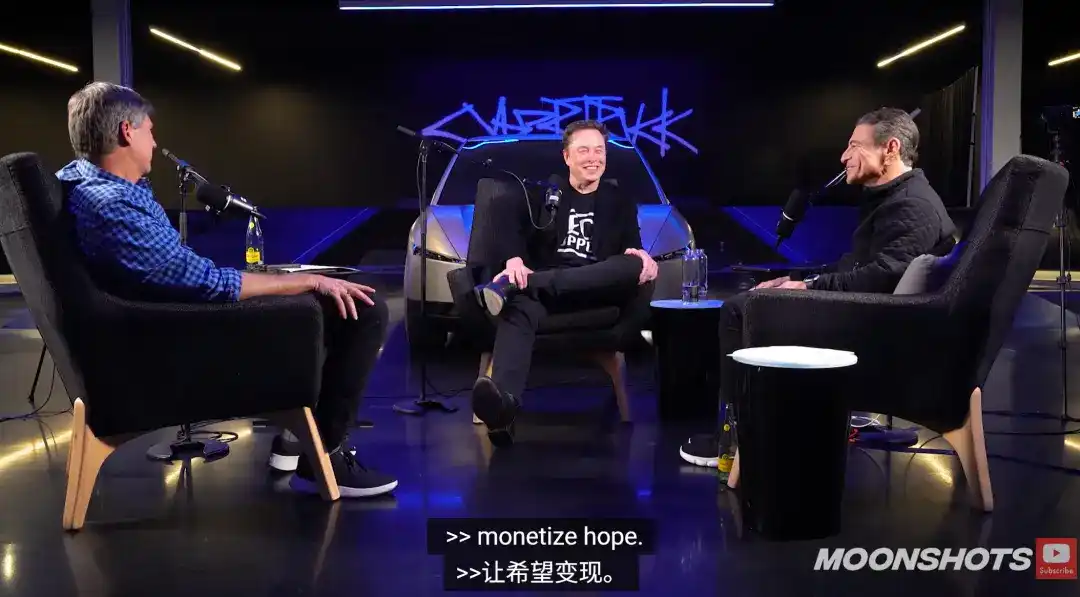
He sincerely offered everyone a piece of advice, which is—Make Hope a Reality!

Let's encourage each other!
Preguntas relacionadas

QWhat is Elon Musk's prediction about the timeline for achieving AGI and surpassing total human intelligence?

AElon Musk predicts that AGI (Artificial General Intelligence) will be achieved by 2026, and by 2030, AI's intelligence level will surpass the sum total of all human intelligence.

QHow does Musk justify his claim that going to medical school will become 'meaningless' in the near future?

AMusk claims it will be meaningless because within three years, Optimus robots will become better surgeons than any human and will be deployed at scale. This is due to the exponential growth in AI capability, chip performance, and electromechanical dexterity, combined with the 'recursive effect' where all robots share a collective knowledge base, making them more precise and reliable than human doctors.

QWhat are the three key reasons Musk gives for China's projected dominance in AI compute power?

AThe three key reasons are: 1) Power Advantage: China's electricity generation will be triple that of the US by 2026, with 70% of new capacity coming from solar. 2) Diminishing Chip Advantage: The performance gap between chip generations (e.g., 3nm to 2nm) is narrowing, making it easier for China to catch up as Moore's Law becomes less effective. 3) Unmatched Execution: Chinese engineers demonstrate incredible speed and scale of execution when goals are clearly defined.

QWhat is Musk's three-step plan for a solar energy revolution?

AMusk's three-step plan is: 1) Double the efficiency of the existing power grid by using batteries like Tesla's Mega Pack to store excess energy at night and release it during peak daytime hours. 2) Launch solar panels into space, where the sun is always shining, to achieve the highest efficiency. 3) Ultimately, build a satellite factory on the Moon to manufacture and launch satellites directly from there, using local materials.

QWhat does Musk mean by 'Universal High Income' (UHI) and how does it differ from Universal Basic Income (UBI)?

AUniversal High Income (UHI) is an economic concept where the abundance of goods and services produced by AI and robots causes prices to plummet as production costs approach zero. This allows everyone to easily obtain what they need, making money less important. It differs from government-funded Universal Basic Income (UBI) because it is a fundamental change in the economic logic of production and cost, not a redistribution of money.

Lecturas Relacionadas

While Everyone Says NFTs Are 'Dead', the Art World is Quietly Completing an 'On-Chain Renaissance'

While many declare NFTs "dead" and dismiss them as overhyped JPEGs, a significant institutional shift is quietly underway within the art world, signaling a "on-chain renaissance." Traditional art, a ~$60B market, is stagnant, aging, and highly concentrated, facing a massive $80 trillion generational wealth transfer to digital-native heirs. Contrary to the narrative, leading institutions have been building infrastructure for digital and on-chain art. Major museums like MoMA, the Centre Pompidou, LACMA, and the Guggenheim have acquired seminal NFT works into their permanent collections. Top galleries like Pace, Gagosian, and Hauser & Wirth have launched NFT platforms or accepted crypto, with Pace giving a solo show to generative artist Tyler Hobbs. Auction houses Sotheby's and Christie's operate dedicated on-chain sales platforms. This follows a historical pattern where every major art movement—from Impressionism to Pop Art—was initially mocked before institutional acceptance. NFT art, only 7-12 years old, is progressing faster. Auction data shows resilience, with works by Beeple ($69.3M), Pak (~$91M), and Dmitri Cherniak ($6.2M in a bear market) achieving high prices. A new cohort of collectors (e.g., FlamingoDAO, PleasrDAO) and "Medici" figures like Cozomo de' Medici are accumulating foundational works. The core argument is that NFTs represent not a speculative asset class but a new ownership system for digital culture, solving provenance issues through immutable, timestamped blockchain records. The medium has survived the speculative crash and is being institutionalized. The bet isn't on short-term price rallies but on the long-term cultural significance of on-chain art as the defining medium for the next generation of collectors.

marsbitHace 10 min(s)

While Everyone Says NFTs Are 'Dead', the Art World is Quietly Completing an 'On-Chain Renaissance'

marsbitHace 10 min(s)

Jensen Huang's Message to Graduates: AI Won't Replace You, But Those Who Excel at Using AI Will

NVIDIA CEO Jensen Huang, addressing 2026 graduates at Carnegie Mellon University, emphasized that AI will not replace people, but those who leverage AI effectively will have an advantage. He delivered this message during a commencement speech where he also received an honorary doctorate, his seventh. Huang reflected on his personal journey as an immigrant, starting from humble beginnings as a dishwasher to co-founding NVIDIA. He shared early struggles, including a near-bankruptcy moment saved by honesty with Sega, highlighting resilience and learning from failure. He positioned the current era as the dawn of the AI revolution, a shift as significant as past computing waves. Huang explained that AI is redefining computing from human-written software to machine learning, creating a new industry focused on manufacturing intelligence. While acknowledging fears about job displacement, he argued that AI amplifies human capabilities rather than replaces human purpose. Tasks may be automated, but the core meaning of professions remains. Huang urged graduates to embrace this transformative time with responsibility and optimism. He stated that AI should democratize technology, bridging gaps and enabling broader participation in creation and problem-solving. His final advice was to actively engage with the opportunity: "So run, don’t walk," and to put their hearts into their work.

marsbitHace 17 min(s)

Jensen Huang's Message to Graduates: AI Won't Replace You, But Those Who Excel at Using AI Will

marsbitHace 17 min(s)

Three Scenarios for BTC's Future Direction and a Duel Between Two Strong Forces | Special Invited Analysis

**Title: Three Scenarios for BTC's Future Trajectory and a Key Duel | Invited Analysis** The market remains at a critical juncture. Over the past week, Bitcoin (BTC) consolidated broadly between $79,500 and $80,600, validating previous technical analysis. The current focus is on whether this marks the start of a new uptrend or a pause within a larger correction. **BTC Multi-Cycle Analysis & Three Possible Scenarios** BTC's daily chart structure, following its peak at $126,200 in October 2025, presents three primary technical scenarios based on Elliott Wave theory: 1. **Bullish Scenario (End of Correction):** The corrective A-B-C wave from $126,200 ended at the $60,000 low in February 2026. The current price action is the start of a major Wave I uptrend. A subsequent Wave II pullback would not break below $60,000. 2. **Bearish Scenario 1 (Complex Correction):** The correction is unfolding as an A-B-C-D-E pattern. The current move from $60,000 is a D-wave rally. After its completion, a final E-wave decline could potentially breach the $60,000 level. 3. **Bearish Scenario 2 (Larger Correction):** The entire move down from $126,200 to $60,000 was a large A-wave. The current rally is a B-wave correction within a larger A-B-C structure, to be followed by a C-wave decline below $60,000. *Analysis suggests Scenario 2 is less probable due to time disproportions between waves. The battle is effectively between the Bullish Scenario (1) and Bearish Scenario (3).* **Key BTC Levels & Weekly Strategy** On the 4-hour chart, BTC trades above a crucial consolidation zone ("Central Pivot C"). * **Key Resistance:** $83,500-$84,500; $89,000-$90,500. * **Key Support:** $78,500-$79,500 (pivot upper bound); $73,500-$75,000; $69,500-$70,500. **Weekly Outlook:** The market direction hinges on BTC's ability to hold above or break below the $78,500-$79,500 support zone. * **Mid-term Strategy:** Neutral/Wait-and-see stance due to unclear direction. * **Short-term Tactics:** Two contingency plans using 30% max capital: * **Plan A (Bullish):** Look for long entries if price holds above $78,500-$79,500 with confirming signals. Initial stop-loss below $78,500. * **Plan B (Bearish):** Consider short positions if price breaks below $73,500-$75,000 with confirming signals. Initial stop-loss above $76,500. **HYPE Analysis & Strategy** HYPE's daily chart shows a seven-segment structure from its January low of $20.46, forming a "rising pivot" zone. * **Key Level to Watch:** $45.76 (previous high). A break above would confirm the bullish structure remains intact. * **Short-term Strategy:** Focus on pivot zone boundaries ($38.41 upper, $34.44 lower). * **Long:** Consider on support near $38.41 with bullish confirmation signals. * **Short:** Consider on a break below $34.44 with bearish confirmation signals. * Position size must be below 30% with strict stop-loss discipline. **Risk Management Reminder:** Always set an initial stop-loss upon entry. Move stop-loss to breakeven at +1% profit, then trail it upwards to lock in profits dynamically. All views are based on technical analysis for informational purposes only and do not constitute investment advice. The market is inherently risky.

Odaily星球日报Hace 25 min(s)

Three Scenarios for BTC's Future Direction and a Duel Between Two Strong Forces | Special Invited Analysis

Odaily星球日报Hace 25 min(s)

Sequoia Interview with Hassabis: Information is the Essence of the Universe, AI Will Open Up Entirely New Scientific Branches

Demis Hassabis, co-founder and CEO of Google DeepMind and Nobel laureate, discusses the path to AGI and its profound implications in a Sequoia Capital interview. He outlines his lifelong dedication to AI, tracing his journey from game development (e.g., *Theme Park*)—a perfect AI testing ground—to neuroscience and finally founding DeepMind in 2009. He emphasizes the critical lesson of being "5 years, not 50 years, ahead of time" for successful entrepreneurship. Hassabis reiterates DeepMind's two-step mission: first, solve intelligence by building AGI; second, use AGI to tackle other complex problems. He highlights the transformative potential of "AI for Science," particularly in biology where tools like AlphaFold have revolutionized protein folding. He envisions AI-powered simulations drastically shortening drug discovery from years to weeks and enabling personalized medicine. Furthermore, he predicts AI will spawn new scientific disciplines, such as an engineering science for understanding complex AI systems (mechanistic interpretability) and novel fields enabled by high-fidelity simulators for complex systems like economics. He posits a fundamental worldview where information, not just matter or energy, is the essence of the universe, making AI's information-processing core uniquely suited to understanding reality. He defends classical Turing machines as potentially sufficient for modeling complex phenomena, including quantum systems, as demonstrated by AlphaFold. On consciousness, Hassabis suggests first building AGI as a powerful tool, then using it to explore deep philosophical questions. He believes components like self-awareness and temporal continuity are necessary for consciousness but that defining it fully remains an open challenge. He predicts AGI could arrive around 2030 and, once achieved, would be used to probe the deepest questions of science and reality, much as envisioned in David Deutsch's *The Fabric of Reality*.

链捕手Hace 43 min(s)

Sequoia Interview with Hassabis: Information is the Essence of the Universe, AI Will Open Up Entirely New Scientific Branches

链捕手Hace 43 min(s)

Morgan Stanley 2026 Semiconductor Report: Buy Packaging, Buy Testing, Buy China Chips, Avoid Traditional Tracks

Morgan Stanley 2026 Semiconductor Report: Buy Packaging, Buy Testing, Buy Chinese Chips; Avoid Traditional Segments. The core theme is the shift in AI compute supply from NVIDIA dominance to a three-track system of GPU + ASIC + China-local chips. The key opportunity is capturing share in this expansion, while non-AI semiconductors face marginalization due to resource reallocation to AI. Key investment conclusions, in order of priority: 1. **Advanced Packaging (CoWoS/SoIC) - Highest Conviction**: TSMC is the primary beneficiary of explosive demand, driven by massive cloud capex. Its pricing power and AI revenue share are rising significantly. 2. **Test Equipment - Undervalued & High-Growth Certainty**: Chip complexity is causing test times to double generationally, structurally driving handler/socket/probe card demand. Companies like Hon Hai Precision (Foxconn), WinWay, and MPI offer compelling value. 3. **China AI Chips (GPU/ASIC) - Long-Term Irreversible Trend**: Export controls are accelerating domestic substitution. Companies like Cambricon, with firm customer orders and SMIC's 7nm capacity support, are positioned to benefit from lower TCO (30-60% vs NVIDIA) and growing local cloud demand. 4. **Avoid Non-AI Semiconductors (Consumer/Auto/Industrial)**: These segments face a weak, structurally hindered recovery due to AI's resource "crowding-out" effect on capacity and supply chains. 5. **Memory - Severe Internal Divergence**: Strongly favor HBM (Hynix primary beneficiary) and NOR Flash (Macronix). Be cautious on interpreting price rises in DDR4/NAND as true demand recovery. The report emphasizes a 2026-2027 time window, stating the AI capital expenditure cycle is far from over. Key macro variables include persistent export controls and AI's systemic "crowding-out" effect on traditional semiconductor supply chains.

marsbitHace 1 hora(s)

Morgan Stanley 2026 Semiconductor Report: Buy Packaging, Buy Testing, Buy China Chips, Avoid Traditional Tracks

marsbitHace 1 hora(s)

Trading

Spot
Futuros

Artículos destacados

Qué es $S$

Entendiendo SPERO: Una Visión General Completa Introducción a SPERO A medida que el panorama de la innovación continúa evolucionando, la aparición de tecnologías web3 y proyectos de criptomonedas juega un papel fundamental en la configuración del futuro digital. Un proyecto que ha atraído la atención en este campo dinámico es SPERO, denotado como SPERO,$$s$. Este artículo tiene como objetivo reunir y presentar información detallada sobre SPERO, para ayudar a entusiastas e inversores a comprender sus fundamentos, objetivos e innovaciones dentro de los dominios web3 y cripto. ¿Qué es SPERO,$$s$? SPERO,$$s$ es un proyecto único dentro del espacio cripto que busca aprovechar los principios de descentralización y tecnología blockchain para crear un ecosistema que promueva la participación, la utilidad y la inclusión financiera. El proyecto está diseñado para facilitar interacciones de igual a igual de nuevas maneras, proporcionando a los usuarios soluciones y servicios financieros innovadores. En su esencia, SPERO,$$s$ tiene como objetivo empoderar a los individuos al proporcionar herramientas y plataformas que mejoren la experiencia del usuario en el espacio de las criptomonedas. Esto incluye habilitar métodos de transacción más flexibles, fomentar iniciativas impulsadas por la comunidad y crear caminos para oportunidades financieras a través de aplicaciones descentralizadas (dApps). La visión subyacente de SPERO,$$s$ gira en torno a la inclusividad, buscando cerrar brechas dentro de las finanzas tradicionales mientras aprovecha los beneficios de la tecnología blockchain. ¿Quién es el Creador de SPERO,$$s$? La identidad del creador de SPERO,$$s$ sigue siendo algo oscura, ya que hay recursos públicos limitados que proporcionan información de fondo detallada sobre su(s) fundador(es). Esta falta de transparencia puede derivarse del compromiso del proyecto con la descentralización, una ética que muchos proyectos web3 comparten, priorizando las contribuciones colectivas sobre el reconocimiento individual. Al centrar las discusiones en torno a la comunidad y sus objetivos colectivos, SPERO,$$s$ encarna la esencia del empoderamiento sin señalar a individuos específicos. Como tal, comprender la ética y la misión de SPERO sigue siendo más importante que identificar a un creador singular. ¿Quiénes son los Inversores de SPERO,$$s$? SPERO,$$s$ cuenta con el apoyo de una diversa gama de inversores que van desde capitalistas de riesgo hasta inversores ángeles dedicados a fomentar la innovación en el sector cripto. El enfoque de estos inversores generalmente se alinea con la misión de SPERO, priorizando proyectos que prometen avances tecnológicos sociales, inclusión financiera y gobernanza descentralizada. Estas fundaciones de inversores suelen estar interesadas en proyectos que no solo ofrecen productos innovadores, sino que también contribuyen positivamente a la comunidad blockchain y sus ecosistemas. El respaldo de estos inversores refuerza a SPERO,$$s$ como un contendiente notable en el dominio de proyectos cripto que evoluciona rápidamente. ¿Cómo Funciona SPERO,$$s$? SPERO,$$s$ emplea un marco multifacético que lo distingue de los proyectos de criptomonedas convencionales. Aquí hay algunas de las características clave que subrayan su singularidad e innovación: Gobernanza Descentralizada: SPERO,$$s$ integra modelos de gobernanza descentralizada, empoderando a los usuarios para participar activamente en los procesos de toma de decisiones sobre el futuro del proyecto. Este enfoque fomenta un sentido de propiedad y responsabilidad entre los miembros de la comunidad. Utilidad del Token: SPERO,$$s$ utiliza su propio token de criptomoneda, diseñado para servir diversas funciones dentro del ecosistema. Estos tokens permiten transacciones, recompensas y la facilitación de servicios ofrecidos en la plataforma, mejorando la participación y la utilidad general. Arquitectura en Capas: La arquitectura técnica de SPERO,$$s$ apoya la modularidad y escalabilidad, permitiendo la integración fluida de características y aplicaciones adicionales a medida que el proyecto evoluciona. Esta adaptabilidad es fundamental para mantener la relevancia en el cambiante paisaje cripto. Participación de la Comunidad: El proyecto enfatiza iniciativas impulsadas por la comunidad, empleando mecanismos que incentivan la colaboración y la retroalimentación. Al nutrir una comunidad sólida, SPERO,$$s$ puede abordar mejor las necesidades de los usuarios y adaptarse a las tendencias del mercado. Enfoque en la Inclusión: Al ofrecer tarifas de transacción bajas e interfaces amigables para el usuario, SPERO,$$s$ busca atraer a una base de usuarios diversa, incluyendo a individuos que anteriormente pueden no haber participado en el espacio cripto. Este compromiso con la inclusión se alinea con su misión general de empoderamiento a través de la accesibilidad. Cronología de SPERO,$$s$ Entender la historia de un proyecto proporciona información crucial sobre su trayectoria de desarrollo y hitos. A continuación se presenta una cronología sugerida que mapea eventos significativos en la evolución de SPERO,$$s$: Fase de Conceptualización e Ideación: Las ideas iniciales que forman la base de SPERO,$$s$ fueron concebidas, alineándose estrechamente con los principios de descentralización y enfoque comunitario dentro de la industria blockchain. Lanzamiento del Whitepaper del Proyecto: Tras la fase conceptual, se lanzó un whitepaper completo que detalla la visión, los objetivos y la infraestructura tecnológica de SPERO,$$s$ para generar interés y retroalimentación de la comunidad. Construcción de Comunidad y Primeras Interacciones: Se realizaron esfuerzos de divulgación activa para construir una comunidad de primeros adoptantes y posibles inversores, facilitando discusiones en torno a los objetivos del proyecto y obteniendo apoyo. Evento de Generación de Tokens: SPERO,$$s$ llevó a cabo un evento de generación de tokens (TGE) para distribuir sus tokens nativos a los primeros seguidores y establecer liquidez inicial dentro del ecosistema. Lanzamiento de la dApp Inicial: La primera aplicación descentralizada (dApp) asociada con SPERO,$$s$ se puso en marcha, permitiendo a los usuarios interactuar con las funcionalidades centrales de la plataforma. Desarrollo Continuo y Alianzas: Actualizaciones y mejoras continuas a las ofertas del proyecto, incluyendo alianzas estratégicas con otros actores en el espacio blockchain, han moldeado a SPERO,$$s$ en un jugador competitivo y en evolución en el mercado cripto. Conclusión SPERO,$$s$ se erige como un testimonio del potencial de web3 y las criptomonedas para revolucionar los sistemas financieros y empoderar a los individuos. Con un compromiso con la gobernanza descentralizada, la participación comunitaria y funcionalidades diseñadas de manera innovadora, allana el camino hacia un paisaje financiero más inclusivo. Como con cualquier inversión en el espacio cripto que evoluciona rápidamente, se anima a los posibles inversores y usuarios a investigar a fondo y participar de manera reflexiva con los desarrollos en curso dentro de SPERO,$$s$. El proyecto muestra el espíritu innovador de la industria cripto, invitando a una mayor exploración de sus innumerables posibilidades. Mientras el viaje de SPERO,$$s$ aún se desarrolla, sus principios fundamentales pueden, de hecho, influir en el futuro de cómo interactuamos con la tecnología, las finanzas y entre nosotros en ecosistemas digitales interconectados.

72 Vistas totalesPublicado en 2024.12.17Actualizado en 2024.12.17

Qué es $S$

Qué es AGENT S

Agent S: El Futuro de la Interacción Autónoma en Web3 Introducción En el paisaje en constante evolución de Web3 y las criptomonedas, las innovaciones están redefiniendo constantemente cómo los individuos interactúan con las plataformas digitales. Uno de estos proyectos pioneros, Agent S, promete revolucionar la interacción humano-computadora a través de su marco agente abierto. Al allanar el camino para interacciones autónomas, Agent S busca simplificar tareas complejas, ofreciendo aplicaciones transformadoras en inteligencia artificial (IA). Esta exploración detallada profundizará en las complejidades del proyecto, sus características únicas y las implicaciones para el dominio de las criptomonedas. ¿Qué es Agent S? Agent S se presenta como un marco agente abierto innovador, diseñado específicamente para abordar tres desafíos fundamentales en la automatización de tareas informáticas: Adquisición de Conocimiento Específico del Dominio: El marco aprende inteligentemente de diversas fuentes de conocimiento externas y experiencias internas. Este enfoque dual le permite construir un rico repositorio de conocimiento específico del dominio, mejorando su rendimiento en la ejecución de tareas. Planificación a Largo Plazo de Tareas: Agent S emplea planificación jerárquica aumentada por la experiencia, un enfoque estratégico que facilita la descomposición y ejecución eficiente de tareas complejas. Esta característica mejora significativamente su capacidad para gestionar múltiples subtareas de manera eficiente y efectiva. Manejo de Interfaces Dinámicas y No Uniformes: El proyecto introduce la Interfaz Agente-Computadora (ACI), una solución innovadora que mejora la interacción entre agentes y usuarios. Utilizando Modelos de Lenguaje Multimodal de Gran Escala (MLLMs), Agent S puede navegar y manipular diversas interfaces gráficas de usuario sin problemas. A través de estas características pioneras, Agent S proporciona un marco robusto que aborda las complejidades involucradas en la automatización de la interacción humana con las máquinas, preparando el terreno para una multitud de aplicaciones en IA y más allá. ¿Quién es el Creador de Agent S? Si bien el concepto de Agent S es fundamentalmente innovador, la información específica sobre su creador sigue siendo elusiva. El creador es actualmente desconocido, lo que resalta ya sea la etapa incipiente del proyecto o la elección estratégica de mantener a los miembros fundadores en el anonimato. Independientemente de la anonimidad, el enfoque sigue siendo en las capacidades y el potencial del marco. ¿Quiénes son los Inversores de Agent S? Dado que Agent S es relativamente nuevo en el ecosistema criptográfico, la información detallada sobre sus inversores y patrocinadores financieros no está documentada explícitamente. La falta de información disponible públicamente sobre las bases de inversión u organizaciones que apoyan el proyecto plantea preguntas sobre su estructura de financiamiento y hoja de ruta de desarrollo. Comprender el respaldo es crucial para evaluar la sostenibilidad del proyecto y su posible impacto en el mercado. ¿Cómo Funciona Agent S? En el núcleo de Agent S se encuentra una tecnología de vanguardia que le permite funcionar de manera efectiva en diversos entornos. Su modelo operativo se basa en varias características clave: Interacción Humano-Computadora Similar a la Humana: El marco ofrece planificación avanzada de IA, esforzándose por hacer que las interacciones con las computadoras sean más intuitivas. Al imitar el comportamiento humano en la ejecución de tareas, promete elevar las experiencias de los usuarios. Memoria Narrativa: Empleada para aprovechar experiencias de alto nivel, Agent S utiliza memoria narrativa para hacer un seguimiento de las historias de tareas, mejorando así sus procesos de toma de decisiones. Memoria Episódica: Esta característica proporciona a los usuarios una guía paso a paso, permitiendo que el marco ofrezca apoyo contextual a medida que se desarrollan las tareas. Soporte para OpenACI: Con la capacidad de ejecutarse localmente, Agent S permite a los usuarios mantener el control sobre sus interacciones y flujos de trabajo, alineándose con la ética descentralizada de Web3. Fácil Integración con APIs Externas: Su versatilidad y compatibilidad con varias plataformas de IA aseguran que Agent S pueda encajar sin problemas en ecosistemas tecnológicos existentes, convirtiéndolo en una opción atractiva para desarrolladores y organizaciones. Estas funcionalidades contribuyen colectivamente a la posición única de Agent S dentro del espacio cripto, ya que automatiza tareas complejas y de múltiples pasos con una intervención humana mínima. A medida que el proyecto evoluciona, sus posibles aplicaciones en Web3 podrían redefinir cómo se desarrollan las interacciones digitales. Cronología de Agent S El desarrollo y los hitos de Agent S pueden encapsularse en una cronología que resalta sus eventos significativos: 27 de septiembre de 2024: El concepto de Agent S fue lanzado en un documento de investigación integral titulado “Un Marco Agente Abierto que Usa Computadoras Como un Humano”, mostrando las bases del proyecto. 10 de octubre de 2024: El documento de investigación fue puesto a disposición del público en arXiv, ofreciendo una exploración profunda del marco y su evaluación de rendimiento basada en el benchmark OSWorld. 12 de octubre de 2024: Se lanzó una presentación en video, proporcionando una visión visual de las capacidades y características de Agent S, involucrando aún más a posibles usuarios e inversores. Estos marcadores en la cronología no solo ilustran el progreso de Agent S, sino que también indican su compromiso con la transparencia y la participación comunitaria. Puntos Clave Sobre Agent S A medida que el marco Agent S continúa evolucionando, varios atributos clave destacan, subrayando su naturaleza innovadora y potencial: Marco Innovador: Diseñado para proporcionar un uso intuitivo de las computadoras similar a la interacción humana, Agent S aporta un enfoque novedoso a la automatización de tareas. Interacción Autónoma: La capacidad de interactuar de manera autónoma con las computadoras a través de GUI significa un salto hacia soluciones informáticas más inteligentes y eficientes. Automatización de Tareas Complejas: Con su metodología robusta, puede automatizar tareas complejas y de múltiples pasos, haciendo que los procesos sean más rápidos y menos propensos a errores. Mejora Continua: Los mecanismos de aprendizaje permiten a Agent S mejorar a partir de experiencias pasadas, mejorando continuamente su rendimiento y eficacia. Versatilidad: Su adaptabilidad en diferentes entornos operativos como OSWorld y WindowsAgentArena asegura que pueda servir a una amplia gama de aplicaciones. A medida que Agent S se posiciona en el paisaje de Web3 y criptomonedas, su potencial para mejorar las capacidades de interacción y automatizar procesos significa un avance significativo en las tecnologías de IA. A través de su marco innovador, Agent S ejemplifica el futuro de las interacciones digitales, prometiendo una experiencia más fluida y eficiente para los usuarios en diversas industrias. Conclusión Agent S representa un audaz avance en la unión de la IA y Web3, con la capacidad de redefinir cómo interactuamos con la tecnología. Aunque aún se encuentra en sus primeras etapas, las posibilidades para su aplicación son vastas y atractivas. A través de su marco integral que aborda desafíos críticos, Agent S busca llevar las interacciones autónomas al primer plano de la experiencia digital. A medida que nos adentramos más en los reinos de las criptomonedas y la descentralización, proyectos como Agent S sin duda desempeñarán un papel crucial en la configuración del futuro de la tecnología y la colaboración humano-computadora.

432 Vistas totalesPublicado en 2025.01.14Actualizado en 2025.01.14

Qué es AGENT S

Cómo comprar S

¡Bienvenido a HTX.com! Hemos hecho que comprar Sonic (S) sea simple y conveniente. Sigue nuestra guía paso a paso para iniciar tu viaje de criptos.Paso 1: crea tu cuenta HTXUtiliza tu correo electrónico o número de teléfono para registrarte y obtener una cuenta gratuita en HTX. Experimenta un proceso de registro sin complicaciones y desbloquea todas las funciones.Obtener mi cuentaPaso 2: ve a Comprar cripto y elige tu método de pagoTarjeta de crédito/débito: usa tu Visa o Mastercard para comprar Sonic (S) al instante.Saldo: utiliza fondos del saldo de tu cuenta HTX para tradear sin problemas.Terceros: hemos agregado métodos de pago populares como Google Pay y Apple Pay para mejorar la comodidad.P2P: tradear directamente con otros usuarios en HTX.Over-the-Counter (OTC): ofrecemos servicios personalizados y tipos de cambio competitivos para los traders.Paso 3: guarda tu Sonic (S)Después de comprar tu Sonic (S), guárdalo en tu cuenta HTX. Alternativamente, puedes enviarlo a otro lugar mediante transferencia blockchain o utilizarlo para tradear otras criptomonedas.Paso 4: tradear Sonic (S)Tradear fácilmente con Sonic (S) en HTX's mercado spot. Simplemente accede a tu cuenta, selecciona tu par de trading, ejecuta tus trades y monitorea en tiempo real. Ofrecemos una experiencia fácil de usar tanto para principiantes como para traders experimentados.

849 Vistas totalesPublicado en 2025.01.15Actualizado en 2025.03.21

Cómo comprar S

Discusiones

Bienvenido a la comunidad de HTX. Aquí puedes mantenerte informado sobre los últimos desarrollos de la plataforma y acceder a análisis profesionales del mercado. A continuación se presentan las opiniones de los usuarios sobre el precio de S (S).

活动图片