DXY posts worst run in 8 years – So why isn’t Bitcoin rocketing?

ambcryptoPublicado a 2026-01-29Actualizado a 2026-01-29

Resumen

The U.S. Dollar Index (DXY) posted its worst performance in eight years, declining 9.4% in 2025 and continuing to weaken in 2026. Historically, such dollar weakness has been a strong catalyst for Bitcoin rallies, as seen in 2017 and 2020. However, despite this favorable backdrop, Bitcoin has not surged as expected. While former President Trump supports a weaker dollar to boost exports and economic growth, and continues pushing for rate cuts, the Fed has maintained rates, emphasizing data-driven policy. Additionally, Bitcoin's Long-Term Holders (LTHs) have been offloading BTC at the fastest pace in four months, indicating skepticism toward the DXY-Bitcoin correlation. Rising inflation risks may further undermine the rate-cut narrative, leading investors to seek safer assets instead of Bitcoin.

The market is at a crossroads. Zooming out, the weakness in the U.S. dollar reflects fading investor confidence, driven by rising debt and ongoing tariff uncertainty, both of which are eroding the dollar’s yield advantage.

This is already showing up in the data. DXY fell 9.4% in 2025, its worst performance in eight years. Now, the pressure has carried into 2026, with the index still down 2.23% so far, signaling further erosion in yield support.

Historically, setups like this have favored Bitcoin [BTC]. In 2017, DXY fell below 96, and BTC rallied nearly 8×. A similar move in 2020, driven by liquidity injections, saw BTC climb roughly 7× in the months that followed.

Naturally, the question now is whether the playbook will repeat.

From U.S. President Donald Trump’s perspective, a weaker dollar is considered constructive. He has argued that a softer dollar boosts exports, keeps rates low, and supports GDP, making it a potential tailwind for the economy.

Meanwhile, his ongoing pressure on Fed Chair Powell for rate cuts only reinforces dollar weakness, suggesting the 2.23% dip could be just the start of a deeper move, forcing investors to continue rotating capital elsewhere.

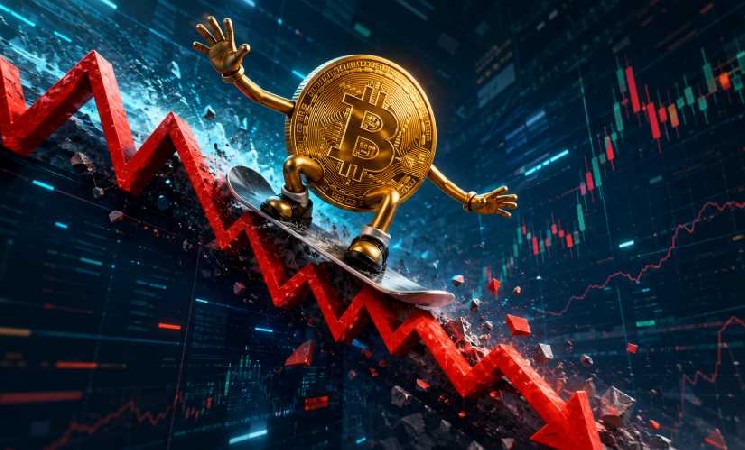
Against this backdrop, Bitcoin’s historical rallies against a falling DXY look solid, and BTC’s chop below $90k reinforces its pre-breakout pattern. Yet, the key question is whether investors will follow through on this setup.

Key Bitcoin divergences

The Fed clearly signaled its “independence” with the recent rate decision.

At the FOMC meeting, Chair Jerome Powell resisted pressure and kept rates steady, reinforcing that policy will remain data-driven. Bitcoin reacted with a modest 1.3% intraday dip but remains well supported around $85k.

However, this isn’t the only divergence putting the market at a crossroads. Bitcoin’s LTHs have offloaded 143,000 BTC over the past month, the fastest pace in four months, pushing their net position deeper into the red.

According to AMBCrypto, it suggests LTHs aren’t buying the DXY thesis.

Even with President Trump backing a softer dollar, analysts remain wary on the long-term outlook. The U.S., world’s top importer, faces inflation risk, a headwind that could undermine Trump’s rate-cut narrative.

In this environment, Bitcoin failing to follow its historical rallies against the dollar isn’t surprising. In fact, with bids weakening, investor confidence could slip further, pushing capital into safer assets even more aggressively.


Final Thoughts

  • DXY’s decline, combined with Trump’s support for a softer dollar, sets the stage for Bitcoin.
  • LTHs are offloading, and rising inflation risk may undermine the rate-cut narrative, putting investor confidence under pressure and driving capital toward safer assets.


Preguntas relacionadas

QWhat is the main reason for the recent weakness in the U.S. dollar (DXY) according to the article?

AThe weakness is driven by fading investor confidence due to rising U.S. debt and ongoing tariff uncertainty, which are eroding the dollar's yield advantage.

QHow did Bitcoin historically perform during periods when the DXY fell significantly, as mentioned in the article?

AHistorically, Bitcoin performed very well. In 2017, when DXY fell below 96, BTC rallied nearly 8 times. A similar move in 2020 saw BTC climb roughly 7 times in the following months.

QWhy are Long-Term Holders (LTHs) selling their Bitcoin, and what does this indicate?

ALTHs have offloaded 143,000 BTC at the fastest pace in four months, which suggests they are not convinced by or 'buying' the historical thesis that a falling DXY will lead to a Bitcoin rally.

QWhat conflicting factor could undermine the narrative that a weaker dollar and potential rate cuts will benefit Bitcoin?

ARising inflation risk in the U.S., the world's top importer, is a headwind that could undermine the rate-cut narrative and push investor capital toward safer assets instead of Bitcoin.

QHow did the Federal Reserve's recent decision on interest rates affect Bitcoin's price, and what did it signal?

AThe Fed kept rates steady, reinforcing its data-driven and independent policy stance. Bitcoin reacted with a modest 1.3% intraday dip but remained well supported around $85,000.

Lecturas Relacionadas

Fu Peng's First Public Speech in 2026: What Exactly Are Crypto Assets? Why Did I Join the Crypto Asset Industry?

Fu Peng, a renowned macroeconomist and now Chief Economist at New火 Group, delivered his first public speech of 2026 at the Hong Kong Web3 Festival. He explained his perspective on crypto assets and why he joined the industry, framing it within the context of macroeconomic trends and financial evolution. Fu emphasized that crypto assets are transitioning from an early, belief-driven phase to a mature, institutionally integrated asset class. He drew parallels to the 1970s-80s, when technological advances (like computing) revolutionized traditional finance, leading to the rise of FICC (Fixed Income, Currencies, and Commodities). Similarly, current advancements in AI, data, and blockchain are reshaping finance, with crypto assets becoming part of a new "FICC + C" (C for Crypto) framework. He noted that institutional capital, including traditional hedge funds, avoided early crypto due to its speculative nature but are now engaging as regulatory clarity emerges (e.g., stablecoin laws, CFTC classifying crypto as a commodity). Fu predicted that 2025-2026 marks a turning point where crypto becomes a standardized, financially viable asset for diversified portfolios, akin to commodities or derivatives in traditional finance. Fu defined Bitcoin not as "digital gold" in a simplistic sense but as a value-preserving, financially tradable asset. He highlighted that crypto's future lies in regulated, institutional adoption, moving away from retail-dominated trading. His entry into crypto signals this maturation, where traditional finance integrates crypto into mainstream asset management.

marsbitHace 3 min(s)

Fu Peng's First Public Speech in 2026: What Exactly Are Crypto Assets? Why Did I Join the Crypto Asset Industry?

marsbitHace 3 min(s)

Justin Sun Sues Trump Family: What $75 Million Bought Was Only a Blacklist

Justin Sun, founder of Tron, has filed a lawsuit in federal court against World Liberty Financial (WLF), alleging he was made the "primary target of a fraudulent scheme" after investing $75 million. Sun claims the investment secured him an advisor title and WLFI tokens, which were later frozen by WLF, causing "hundreds of millions in losses." The dispute began in late 2024 when Sun's investment helped revive WLF's struggling token sale, which ultimately raised $550 million. Shortly after, the SEC dropped its lawsuit against Sun following Donald Trump's inauguration. However, relations soured when Sun refused WLF's demands for additional funding. In August 2025, WLF added a "blacklist" function to its smart contract, allowing it to unilaterally freeze tokens. Sun's holdings, worth approximately $107 million, were frozen, and he was threatened with token destruction. The lawsuit highlights WLF's structure, which directs 75% of token sale profits to the Trump family, who had earned $1 billion by December 2025. WLF's CEO is Zach Witkoff, son of U.S. Middle East envoy Steve Witkoff. The project faces scrutiny for opaque operations, including a controversial loan arrangement on the Dolomite platform, co-founded by a WLF advisor. Despite Sun's history with the SEC, the case underscores centralization risks within DeFi, as WLF controls governance and holds powers to freeze assets arbitrarily. Sun's tokens remain frozen as legal proceedings begin.

marsbitHace 11 min(s)

Justin Sun Sues Trump Family: What $75 Million Bought Was Only a Blacklist

marsbitHace 11 min(s)

$500 to Buy OpenAI Stock: Silicon Valley's Most Respectable Liquidity Invitation

Silicon Valley's largest venture capital platform, AngelList, has launched a new fund called USVC, allowing U.S. retail investors to buy into high-profile AI companies like OpenAI, Anthropic, and xAI with a minimum investment of $500—no accredited investor status required. Promoted by AngelList co-founder Naval Ravikant, the fund is framed as an opportunity for ordinary people to access high-growth private tech investments traditionally reserved for VCs. However, critics argue it functions more like an exit vehicle for early insiders. USVC acquires shares not through primary rounds but largely via secondary transactions—purchasing stakes from early investors, VC funds, and employees looking to cash out at peak valuations. With companies like xAI heavily weighted in the portfolio, the fund effectively channels retail money into providing liquidity for insiders who entered at much lower valuations. The fund’s structure raises concerns: shares are illiquid, with no secondary market, and buybacks are limited and discretionary. The actual annual fee reaches 3.61%, far above the advertised 1% management fee. This model parallels the "low float, high fully diluted valuation" strategy seen in crypto, where early investors profit by selling to latecomers at inflated prices. The timing—alongside similar moves by platforms like Robinhood—suggests that Silicon Valley’s sudden interest in retail inclusion may be less about democratizing access and more about securing exits for insiders.

marsbitHace 42 min(s)

$500 to Buy OpenAI Stock: Silicon Valley's Most Respectable Liquidity Invitation

marsbitHace 42 min(s)

Trading

Spot
Futuros

Artículos destacados

Cómo comprar T

¡Bienvenido a HTX.com! Hemos hecho que comprar Threshold Network Token (T) sea simple y conveniente. Sigue nuestra guía paso a paso para iniciar tu viaje de criptos.Paso 1: crea tu cuenta HTXUtiliza tu correo electrónico o número de teléfono para registrarte y obtener una cuenta gratuita en HTX. Experimenta un proceso de registro sin complicaciones y desbloquea todas las funciones.Obtener mi cuentaPaso 2: ve a Comprar cripto y elige tu método de pagoTarjeta de crédito/débito: usa tu Visa o Mastercard para comprar Threshold Network Token (T) al instante.Saldo: utiliza fondos del saldo de tu cuenta HTX para tradear sin problemas.Terceros: hemos agregado métodos de pago populares como Google Pay y Apple Pay para mejorar la comodidad.P2P: tradear directamente con otros usuarios en HTX.Over-the-Counter (OTC): ofrecemos servicios personalizados y tipos de cambio competitivos para los traders.Paso 3: guarda tu Threshold Network Token (T)Después de comprar tu Threshold Network Token (T), guárdalo en tu cuenta HTX. Alternativamente, puedes enviarlo a otro lugar mediante transferencia blockchain o utilizarlo para tradear otras criptomonedas.Paso 4: tradear Threshold Network Token (T)Tradear fácilmente con Threshold Network Token (T) en HTX's mercado spot. Simplemente accede a tu cuenta, selecciona tu par de trading, ejecuta tus trades y monitorea en tiempo real. Ofrecemos una experiencia fácil de usar tanto para principiantes como para traders experimentados.

541 Vistas totalesPublicado en 2024.12.10Actualizado en 2025.03.21

Cómo comprar T

Discusiones

Bienvenido a la comunidad de HTX. Aquí puedes mantenerte informado sobre los últimos desarrollos de la plataforma y acceder a análisis profesionales del mercado. A continuación se presentan las opiniones de los usuarios sobre el precio de T (T).

活动图片