Dubai Web3 Week High-End Side Note: DID Alliance Debuts with Asia-Pacific Innovation Center, Building a New Global Hub for Capital and Commerce

深潮Publicado a 2025-12-10Actualizado a 2025-12-10

Resumen

During the Dubai Binance Blockchain Week, the "KOL GOLF After Party" was co-hosted by Klickl, Techub News, and 1783DAO, with support from BroadChain, WIS, JDI, and the DID Alliance. The event gathered global investors, industry experts, and KOLs for private, high-level discussions on digital economy trends and collaboration. A key focus was the strategic vision presented by Eugene Xiao, Chairman of the DID Alliance, who emphasized decentralized identity (DID) as a foundational trust layer for the future digital economy, enabling secure, cross-border applications in DeFi, SocialFi, and RWA. He also introduced the Asia Pacific Innovation Center (APIC) in Kuala Lumpur, positioning it as a global hub for Web3 innovation, traditional business transformation, and cross-market education—connecting Asia, the Middle East, and beyond. The event underscored DID Alliance’s expanding global strategy to bridge digital infrastructure and real-world business adoption.

As the Dubai Binance Blockchain Week (BBW) captured the global Web3 industry's attention, a series of in-depth industry exchange activities were also launched simultaneously. On December 4th, the "KOL GOLF After Party", jointly hosted by Klickl, Techub News, 1783DAO, and co-organized by BroadChain, WIS (World in Shadow), JDI, and the DID Alliance, was held in Dubai.

This event brought together representatives from global investment institutions, industry veterans, and key opinion leaders (KOLs), aiming to build an efficient and private dialogue platform to discuss the development trends and cooperation opportunities in the digital economy.
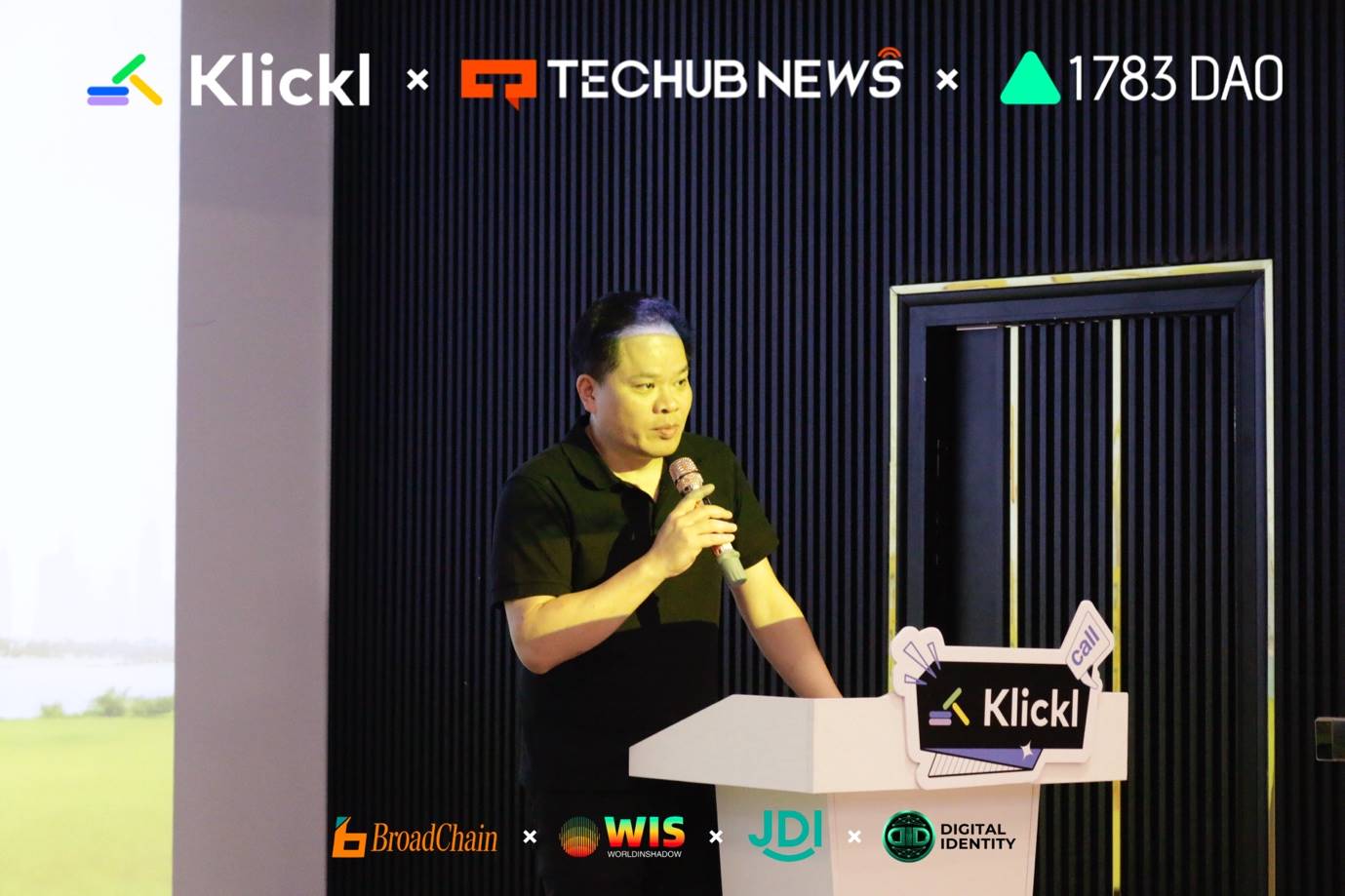
Focusing on In-Depth Industry Dialogue, Discussing the Future of Digital Trust

As one of the Side Events during the Binance BBW in Dubai, this activity used high-end indoor golf as a social vehicle, with the core purpose of providing an exchange field for industry leaders away from the exhibition hustle and focused on the collision of ideas.

In a relaxed atmosphere, participants discussed core issues in the current Web3 industry—including the application of Decentralized Identity (DID) in compliant finance, the path selection for Real World Asset (RWA) tokenization, and the evolution direction of infrastructure. This form of deep social interaction brought industry builders closer together and facilitated the reaching of multiple strategic cooperation intentions.
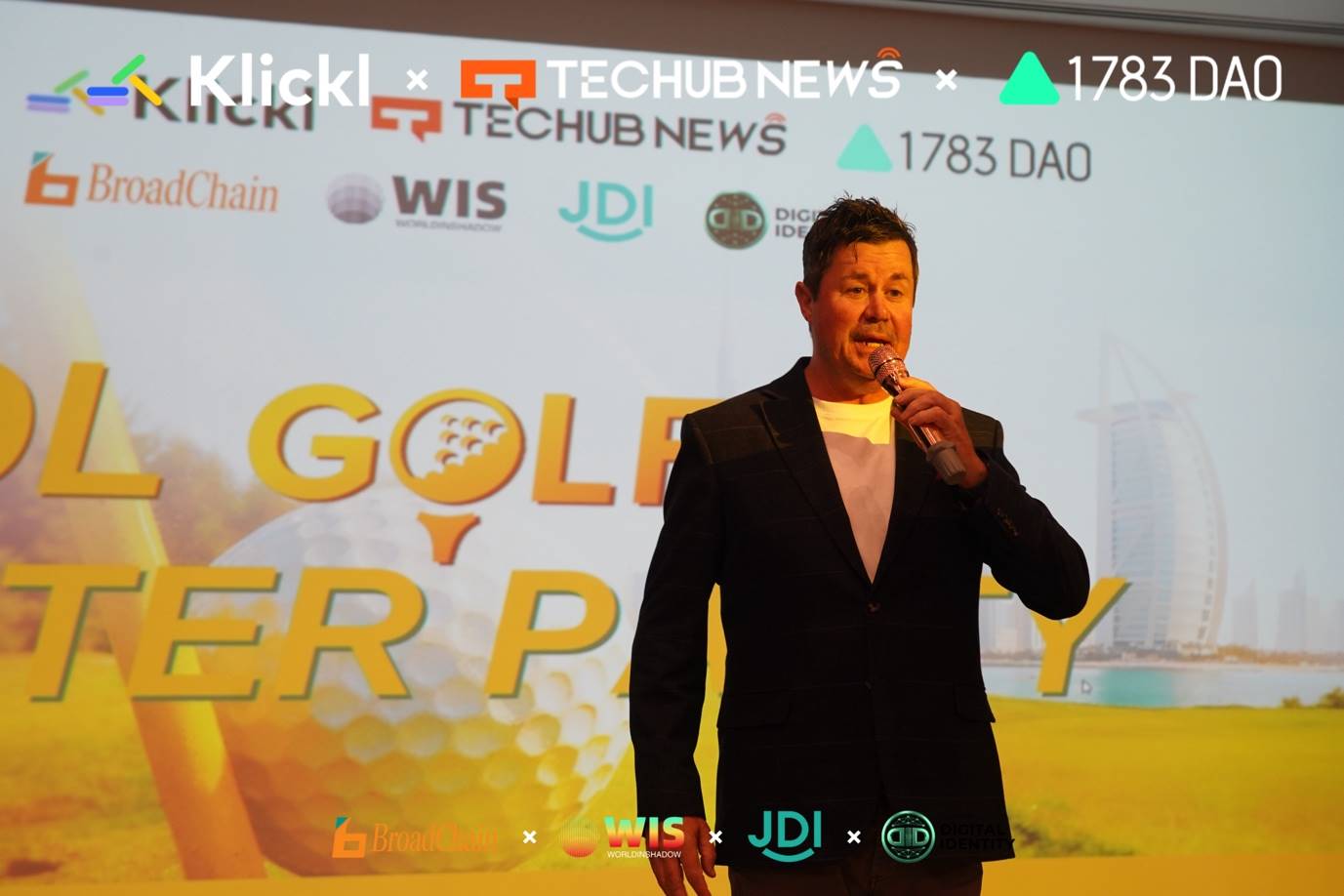
Strategic Roadshow: DID Alliance Building Web3 Digital Sovereignty Infrastructure

As one of the core organizers of this event, DID Alliance Chairman Eugene Xiao delivered a brief speech titled "Linking the Globe: From Digital Sovereignty to Business Empowerment" on site, presenting the vision and ecosystem layout of the DID Alliance to the global elite present.

Eugene first elaborated on the core mission of the DID Alliance. He pointed out that as the Web3 industry penetrates the mainstream world, traditional centralized identity systems can no longer meet the growing demands for privacy protection, data sovereignty, and cross-chain interoperability.

"DID (Decentralized Identity) is not just a technical standard; it is the cornerstone of trust for the future digital economy." Eugene stated that the DID Alliance is committed to building a decentralized, cross-sovereign, and compliant digital identity infrastructure. By returning ownership of identity to users, DID technology can effectively solve the trust issues in the development of the digital economy, providing secure and reliable underlying support for application scenarios such as DeFi, SocialFi, and RWA.

Empowering Global Business: The Strategic Positioning of the Asia-Pacific Innovation Center

After introducing the technical foundation, Eugene introduced the recently inaugurated ecological component—the Asia-Pacific Innovation Center (APIC) in Kuala Lumpur—to partners in the Middle East and globally.

Eugene defined APIC's strategic role in his speech: "APIC is not just a physical space; it is a bridge for the DID ecosystem connecting the实体商业 (entity business) and the Web3 world. It is a business accelerator and capital connector we have built for global enterprises."

He detailed the three core functions of APIC as an "independent platform for business, finance, and trade empowerment":

1. Web3 Innovation Incubation: Serving as a global expansion base for cutting-edge projects, leveraging the advantages of DID technology to provide start-ups with full-chain support from technical solutions and compliance consulting to market implementation.

2. Traditional Business Transformation: Building a bridge between Web2 and Web3, assisting traditional enterprises in using blockchain technology for digital upgrade, achieving asset tokenization and business model innovation.

3. Global Education and Overseas Expansion Empowerment: Relying on cooperative resources with top academic institutions such as MIT and UCLA Anderson School of Management, as well as Kuala Lumpur's geographical advantage as a Southeast Asian hub, helping enterprises connect with markets in China, the US, Asia-Pacific, and the Middle East, and cultivating compound talents with a global perspective.

Eugene pointed out that although APIC is headquartered in Kuala Lumpur, its vision is global. This trip to Dubai aims to extend APIC's empowerment network to the Middle East, an active capital center, promote in-depth对接 (connection) of Eastern and Western resources, and build a more open and inclusive global business ecosystem.
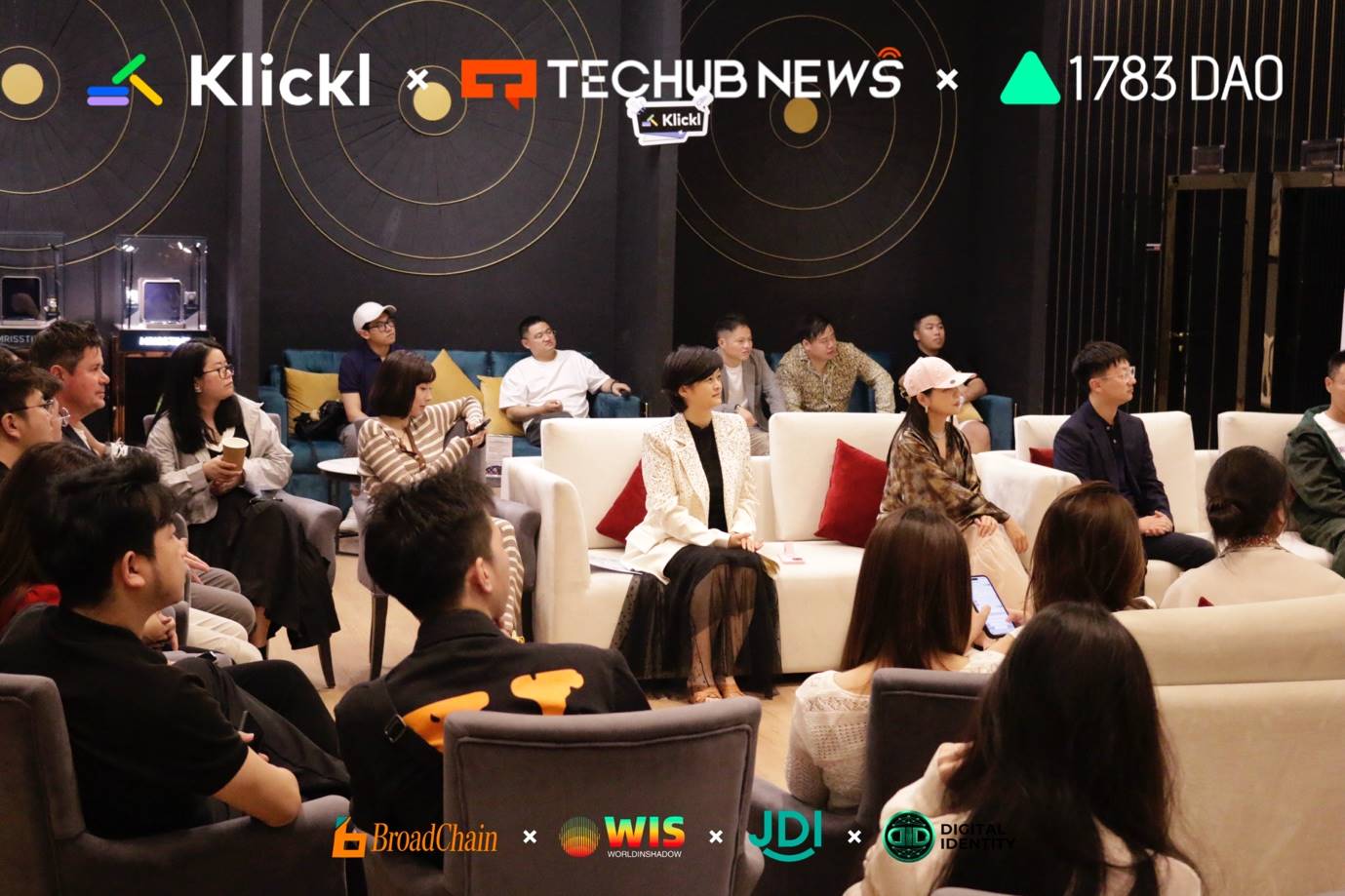
Accelerating Global Layout, Co-building a New Digital Ecosystem

This exchange event in Dubai is an important part of the DID Alliance's globalization strategy. Through joint actions with partners like Klickl, Techub News, and 1783DAO, the DID Alliance demonstrated its ecological connectivity within the industry.

With the continuous maturation of DID technology and the gradual release of the strategic functions of the Asia-Pacific Innovation Center (APIC), a global empowerment ecosystem covering the technical底层 (underlayer), capital operation, education and training, and business implementation is accelerating its formation. From the inauguration in Kuala Lumpur to the debut in Dubai, the DID Alliance is steadily advancing its global layout, committed to linking global value and reshaping the new order of digital commerce.


Criptos en tendencia

Preguntas relacionadas

QWhat was the main purpose of the 'KOL GOLF After Party' event held in Dubai Binance Blockchain Week?

AThe main purpose was to serve as a high-level, private dialogue platform for global investment institution representatives, industry veterans, and key opinion leaders (KOLs) to discuss digital economy trends and collaboration opportunities.

QWho is Eugene Xiao and what key concept did he present at the event?

AEugene Xiao is the Chairman of the DID Alliance. He presented the core mission and vision of the DID Alliance, focusing on building a decentralized, cross-sovereign, and compliant digital identity infrastructure as the trust cornerstone for the future digital economy.

QWhat are the three core functions of the Asia Pacific Innovation Center (APIC) as introduced by Eugene Xiao?

AThe three core functions are: 1) Web3 Innovation Incubation, providing full-chain support for startups; 2) Traditional Business Transformation, assisting Web2 companies with blockchain upgrades; 3) Global Education and Expansion Empowerment, connecting enterprises to major global markets and cultivating talent.

QWhich organizations were the main co-organizers of the 'KOL GOLF After Party' event?

AThe event was jointly hosted by Klickl, Techub News, and 1783DAO, and co-organized by BroadChain, WIS (World in Shadow), JDI, and the DID Alliance.

QHow does the DID Alliance view the role of Decentralized Identity (DID) technology in the Web3 ecosystem?

AThe DID Alliance views DID not just as a technical standard, but as the foundational trust cornerstone for the future digital economy. It aims to return identity ownership to users, solving trust issues and providing secure, reliable underlying support for applications like DeFi, SocialFi, and RWA.

Lecturas Relacionadas

CPU Makes a Comeback to the Table, A $170 Billion "Power Seizure" Drama Begins

A new era is dawning for the server CPU (Central Processing Unit), driven by the shift from AI model training to large-scale reasoning and the rise of Agentic AI. This article explores how the CPU is reclaiming a central role in the AI data center. For years, the focus has been on the GPU (Graphics Processing Unit) for AI training. However, as AI moves to the inference and Agent phase—where tasks involve complex, multi-step reasoning, tool calls, and data management—the workload balance is flipping. Studies show CPUs now handle over 70% of the workload in Agentic AI, up from 10-30% in training. This is because Agent tasks generate massive intermediate data (KV Cache) that exceeds GPU memory, forcing it to be offloaded to the CPU's larger, more scalable memory pools. This increased importance is translating into market changes. Major players are taking note: NVIDIA launched its first standalone CPU line, Vera, based on ARM architecture and optimized for Agent performance. AMD doubled its server CPU market forecast to over $1200 billion by 2030. Analyst reports project the total server CPU market could reach $1700 billion by 2030, with AI-driven demand being a primary driver. Furthermore, the classic ratio of CPUs to GPUs in AI servers is rapidly changing, converging from 1:8 toward 1:1 for Agent deployments. This surge in demand has led to a rare industry-wide price increase of 10-15% for server CPUs from Intel and AMD, breaking a decade-long trend of "more performance for the same price." Demand is bifurcating into high-core-count CPUs for in-rack GPU support and moderate-core CPUs for standalone Agent task orchestration. In China, this global trend presents an opportunity for domestic CPU manufacturers like Hygon (海光信息) and Huawei Kunpeng, who are bolstered by both growing AI infrastructure needs and national policies promoting technological self-reliance ("xin chuang"). The maturity of their software ecosystems is also accelerating, evidenced by faster adaptation to new AI models. In conclusion, the narrative is shifting from a GPU-centric view to one where CPU-GPU synergy is critical. The CPU is no longer a peripheral component but a performance-defining bottleneck and a key growth driver in the AI hardware stack, opening a massive new market estimated in the hundreds of billions of dollars.

marsbitHace 6 hora(s)

CPU Makes a Comeback to the Table, A $170 Billion "Power Seizure" Drama Begins

marsbitHace 6 hora(s)

TechFlow Intelligence: AMD AI Director Publicly Criticizes Claude Code for "Becoming Dumber and Lazier", Trump Claims Full Ceasefire in Hormuz But Strait Still Has 80 Unexploded Mines

TechFlow Intelligence Report: This daily digest covers key developments in AI, crypto, hardware, and geopolitics. In AI, SK Telecom faces US export control scrutiny over its partnership with Anthropic, while a Gemini user reports being misled in a scam scenario, sparking safety debates. China's Z.AI launches the GLM-5.2 model, rivaling Claude Opus without NVIDIA chips. In crypto, Bithumb lists ReProtocol, and Upbit delists KernelDAO. On the hardware front, MIT researchers build a custom OS to study chips, ASML denies US claims its advanced lithography machines are in China, and Amazon considers selling its in-house AI chips. Apple's future A21 Pro chip may use TSMC's latest N2P process. Major tech issues include 10,000 GitHub repositories distributing malware and Apple patching a critical eavesdropping flaw in Beats earbuds. US stocks rise, led by semiconductors, with Intel surging 10.6%, while SpaceX falls 3.5%. Geopolitically, despite a US-Iran deal, the Strait of Hormuz remains risky with ~80 uncleared mines, stalling 80M barrels of oil on standby tankers. Iran postpones Switzerland talks, and Trump calls the agreement an "unconditional surrender." The report highlights a contrast: temporary geopolitical calm versus the ongoing, fundamental restructuring of tech supply chains and chip independence.

marsbitHace 6 hora(s)

TechFlow Intelligence: AMD AI Director Publicly Criticizes Claude Code for "Becoming Dumber and Lazier", Trump Claims Full Ceasefire in Hormuz But Strait Still Has 80 Unexploded Mines

marsbitHace 6 hora(s)

Trading

Spot
Futuros

Artículos destacados

Qué es XAG

El contrato perpetuo XAGUSDT es el símbolo de negociación para la plata cotizada en dólares estadounidenses, representando 1 onza troy de plata.

8 Vistas totalesPublicado en 2026.06.18Actualizado en 2026.06.18

Qué es XAG

Cómo comprar XAG

¡Bienvenido a HTX.com! Hemos hecho que comprar Silver (XAG) sea simple y conveniente. Sigue nuestra guía paso a paso para iniciar tu viaje de criptos.Paso 1: crea tu cuenta HTXUtiliza tu correo electrónico o número de teléfono para registrarte y obtener una cuenta gratuita en HTX. Experimenta un proceso de registro sin complicaciones y desbloquea todas las funciones.Obtener mi cuentaPaso 2: ve a Comprar cripto y elige tu método de pagoTarjeta de crédito/débito: usa tu Visa o Mastercard para comprar Silver (XAG) al instante.Saldo: utiliza fondos del saldo de tu cuenta HTX para tradear sin problemas.Terceros: hemos agregado métodos de pago populares como Google Pay y Apple Pay para mejorar la comodidad.P2P: tradear directamente con otros usuarios en HTX.Over-the-Counter (OTC): ofrecemos servicios personalizados y tipos de cambio competitivos para los traders.Paso 3: guarda tu Silver (XAG)Después de comprar tu Silver (XAG), guárdalo en tu cuenta HTX. Alternativamente, puedes enviarlo a otro lugar mediante transferencia blockchain o utilizarlo para tradear otras criptomonedas.Paso 4: tradear Silver (XAG)Tradear fácilmente con Silver (XAG) en HTX's mercado spot. Simplemente accede a tu cuenta, selecciona tu par de trading, ejecuta tus trades y monitorea en tiempo real. Ofrecemos una experiencia fácil de usar tanto para principiantes como para traders experimentados.

5 Vistas totalesPublicado en 2026.06.18Actualizado en 2026.06.18

Cómo comprar XAG

Cómo comprar XAU

¡Bienvenido a HTX.com! Hemos hecho que comprar Gold (XAU) sea simple y conveniente. Sigue nuestra guía paso a paso para iniciar tu viaje de criptos.Paso 1: crea tu cuenta HTXUtiliza tu correo electrónico o número de teléfono para registrarte y obtener una cuenta gratuita en HTX. Experimenta un proceso de registro sin complicaciones y desbloquea todas las funciones.Obtener mi cuentaPaso 2: ve a Comprar cripto y elige tu método de pagoTarjeta de crédito/débito: usa tu Visa o Mastercard para comprar Gold (XAU) al instante.Saldo: utiliza fondos del saldo de tu cuenta HTX para tradear sin problemas.Terceros: hemos agregado métodos de pago populares como Google Pay y Apple Pay para mejorar la comodidad.P2P: tradear directamente con otros usuarios en HTX.Over-the-Counter (OTC): ofrecemos servicios personalizados y tipos de cambio competitivos para los traders.Paso 3: guarda tu Gold (XAU)Después de comprar tu Gold (XAU), guárdalo en tu cuenta HTX. Alternativamente, puedes enviarlo a otro lugar mediante transferencia blockchain o utilizarlo para tradear otras criptomonedas.Paso 4: tradear Gold (XAU)Tradear fácilmente con Gold (XAU) en HTX's mercado spot. Simplemente accede a tu cuenta, selecciona tu par de trading, ejecuta tus trades y monitorea en tiempo real. Ofrecemos una experiencia fácil de usar tanto para principiantes como para traders experimentados.

4 Vistas totalesPublicado en 2026.06.18Actualizado en 2026.06.18

Cómo comprar XAU

Discusiones

Bienvenido a la comunidad de HTX. Aquí puedes mantenerte informado sobre los últimos desarrollos de la plataforma y acceder a análisis profesionales del mercado. A continuación se presentan las opiniones de los usuarios sobre el precio de A (A).

活动图片