DOGE Year-End Review: Did Musk's Hundred-Day Reform Work?

marsbitPublicado a 2025-12-31Actualizado a 2025-12-31

Resumen

DOGE Year-End Review: Did Musk's 100-Day Reform Work? The DOGE (Department of Government Efficiency) initiative, led by Elon Musk and Vivek Ramaswamy, aimed to cut bureaucratic waste, reduce regulations, and save $2 trillion to balance the federal budget. Despite ambitious goals, Musk resigned after just 130 days, and DOGE was dissolved by November—10 months into an 18-month plan. DOGE achieved a 9% reduction in federal employees (271,000 jobs cut) and claimed $21.4–25 billion in savings through contract terminations and program closures. However, total federal spending increased from $6.75–7.135 trillion in 2024 to $7.01–7.6 trillion in 2025, a 4–6% rise. Mandatory spending (e.g., Social Security, Medicare) and interest on debt—unaffected by administrative cuts—drove this growth. Independent analyses suggested actual savings were as low as $3 billion, with potential future tax losses from weakened IRS enforcement offsetting gains. Post-Musk, DOGE’s influence waned, and service disruptions emerged. The reform highlighted the fundamental mismatch between corporate efficiency models and government operations, where statutory spending and systemic inertia limit top-down restructuring. The experiment underscored that government cannot be run like a business, as efficiency must balance fairness, stability, and public trust.

Federal employees were successfully reduced by 271,000, a decrease of 9%, setting the largest peacetime layoff record. However, at the same time, total federal expenditures did not decrease but instead increased, soaring from $6.75-7.135 trillion in 2024 to $7.01-7.6 trillion, a net increase of $248-480 billion. This phenomenon of "losing weight but gaining mass" is the core contradiction of the DOGE (Department of Government Efficiency) reform.
This "external advisor" agency, initially led by Elon Musk and Vivek Ramaswamy, promised to use commercial means to dismantle government bureaucracy, cut redundant regulations, reduce wasteful spending, and ultimately save $2 trillion to balance the federal budget. This ambitious plan was expected to last until July 2026, giving them 18 months to transform the government. However, reality proved far harsher than expected: Musk resigned hastily in May, serving only a 130-day term as a special government employee; by November, DOGE quietly dissolved, a full 8 months before the original term was set to end.

This was not an unfinished reform, but a complete abandonment. From launch to disappearance, DOGE's actual lifespan was only about 10 months. When the savings target was clearly unattainable, legal challenges ensued, and disputes with Trump became public, Musk chose to return to his business empire, leaving behind a crumbling agency and a host of unanswered questions. This rapid fall from ambition to disillusionment exposed not only missteps in reform strategy but also the essential, difficult-to-cross chasm between corporate logic and government operations.

I. The Grand Vision vs. The Harsh Reality: A Complete Divergence

DOGE's reform vision was full of Silicon Valley-style idealism. They planned to use lean management principles to terminate hundreds of billions of dollars in inefficient contracts, close redundant facilities, reduce the federal workforce from about 3.015 million to a leaner size, and replace some bureaucratic functions with AI and automation tools. This methodology has proven successful time and again in the business world—why couldn't it be used to transform the government?
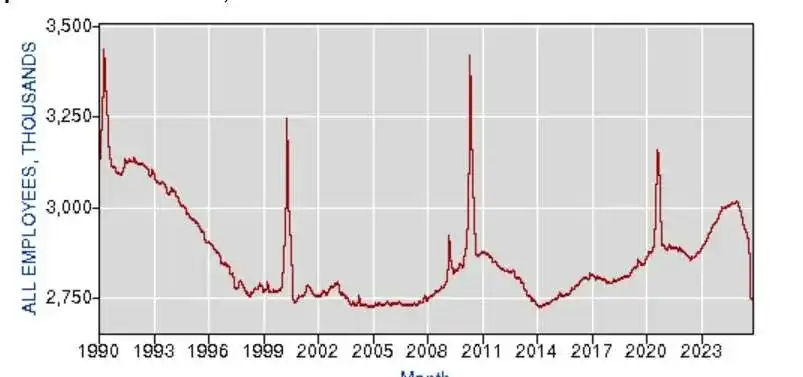
Chart: Federal Employee Count Since 1990

In January 2025, Musk joined DOGE as a special government employee, with a term set for 130 days. In Silicon Valley, 130 days is enough to launch a product prototype, complete a round of financing, or even turn around a startup's fate. In the initial months, DOGE demonstrated dazzling execution. From January to November, federal employees decreased from 3.015 million to 2.744 million, a net reduction of 271,000 positions. This was not only the largest peacetime federal layoff since WWII, but the speed of execution was also staggering. Specific actions included terminating a $290 million refugee facility contract at the Department of Health and Human Services, $190 million in IT redundancy spending at the Treasury Department, and closing hundreds of inefficient agencies and programs, cumulatively undertaking over 29,000 reduction actions. DOGE claimed these measures saved approximately $21.4-25 billion, primarily concentrated in non-defense federal mandatory spending, which decreased by 22.4% year-on-year.
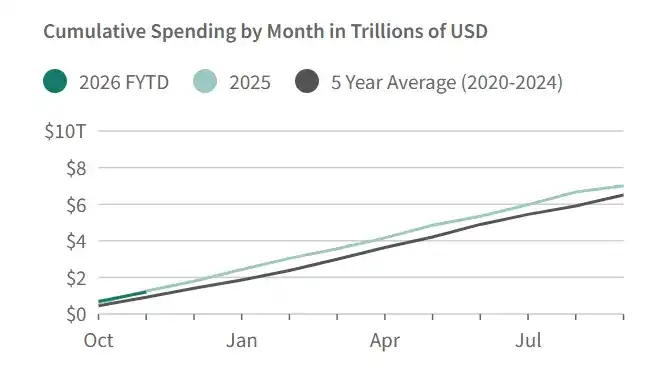
Chart: Cumulative Federal Government Expenditure

But the data on the spending side told a completely different story. Overall federal expenditure rose from about $6.75-7.135 trillion in 2024 to about $7.01-7.6 trillion in 2025, an increase of 4%-6%. Spending in just the first 11 months reached $7.6 trillion, $248 billion more than the same period the previous year. More ironically, some independent analyses suggested that DOGE's claimed savings figures might be severely inflated, with verifiable savings potentially only in the tens of billions, even as low as $3 billion. Due to the weakening of IRS enforcement capabilities, this could lead to at least $350 billion in lost tax revenue over the next decade, making the net effect of the so-called "savings" close to zero or even negative.

Resistance from reality soon became apparent. Federal spending continued to climb; mandatory spending like Social Security, Medicare, and interest on the national debt was completely unaffected by administrative layoffs. By May, multiple pressures converged. Musk's relationship with Trump began to deteriorate, with public disputes between the two. Legal challenges followed, questioning DOGE's authority and procedural legality. Tesla's business was also calling him back—stock price fluctuations, production issues, market competition, all requiring the CEO's attention. Most crucially, the $2 trillion savings target was clearly an impossible mission; staying on a project doomed to fail held no benefit for Musk's personal brand. As soon as his 130-day term ended, Musk announced his return to private enterprise. He did not apply for an extension, did not ask for more resources, but chose a clean break. This decision itself was the loudest admission: transforming the government with business methods was far more difficult than he had thought.

II. The Struggles of the Headless Horseman: Decline from May to November
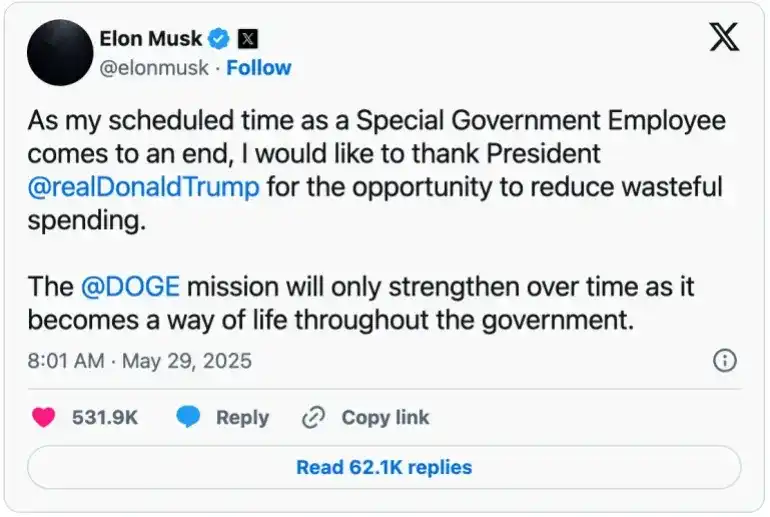
After Musk's departure, DOGE tried to prove it could continue. The White House signaled that the "DOGE spirit" would be integrated into the government's daily operations, becoming part of the "government lifestyle." Some former DOGE employees were embedded in various federal agencies to continue pushing layoffs and cost cuts. Ramaswamy was still nominally leading the agency, trying to maintain the reform momentum.

But DOGE without Musk was like a rocket without an engine; inertia could only last so long. Without the star founder's halo, the agency's attention rapidly declined. Without Musk's direct communication channel with Trump, DOGE's influence within the government was greatly diminished. More importantly, the limitations of the reform became increasingly apparent—those large expenditure items that truly required Congressional legislation to change were utterly beyond DOGE's reach.

During this period, DOGE's achievements became harder to define. Although some layoff actions continued, spending data kept rising. Reports of service disruptions began to increase. Social Security applications were delayed, regulatory gaps appeared, and key positions were left unfilled due to over-cutting. Criticism grew louder: in the name of optimizing efficiency, DOGE was undermining the government's basic operational capacity. Legal challenges also accumulated, questioning whether many of DOGE's actions exceeded executive authority.

By November, several authoritative media outlets began reporting a fact: DOGE had quietly disbanded. Reuters, TIME, CNN, Newsweek, and others used terms like "disbanded," "quietly shut down," and "no longer exists" to describe the agency's fate. There was no formal dissolution announcement, no press conference; DOGE simply vanished from public view. Its charter, originally meant to last until July 2026, was terminated early, with many functions transferred to the Office of Personnel Management or other常规 agencies.

This silent end perhaps speaks volumes more than any failure. Not even a decent farewell, because admitting failure itself was an embarrassment. DOGE went from a revolutionary agency promising to change the government to a brief interlude everyone wanted to forget as quickly as possible.

III. The Underlying Logic of "Reducing Staff Without Saving Money"

1. The Impenetrable Wall of Mandatory Spending
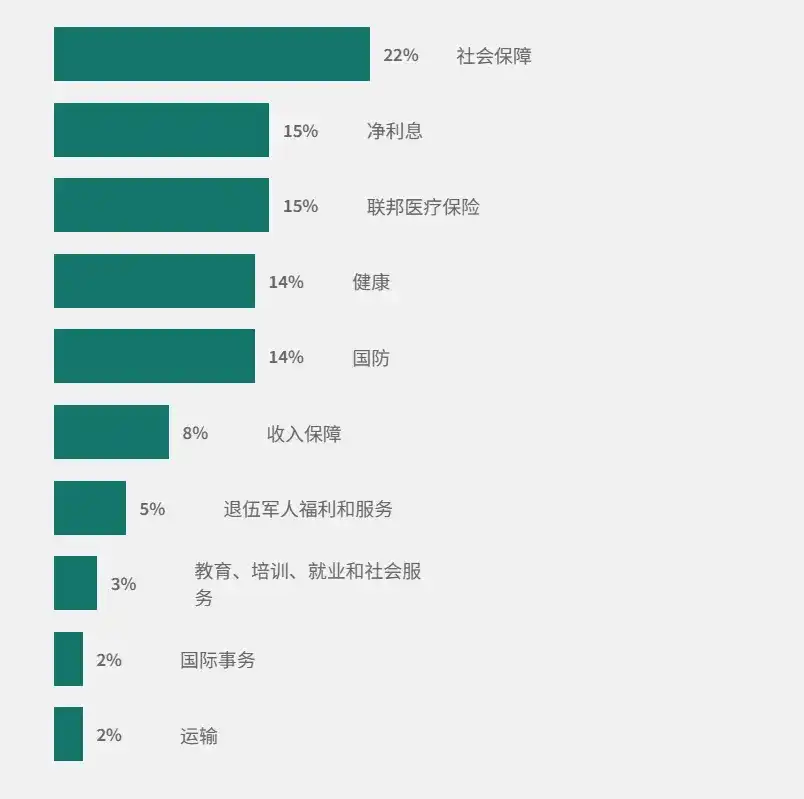
The most fundamental difference between the government fiscal system and a corporation is that over 70% of federal spending is on mandatory programs. These expenditures grow automatically as mandated by law, influenced by demographics, economic cycles, and interest rate fluctuations, completely unaffected by administrative layoffs. The 2025 data clearly shows this rigidity: benefit spending like Social Security and Medicare increased by about $168 billion, driven mainly by an aging population and inflation adjustments; national debt interest costs soared by $71 billion, with the debt scale already expanded to $36-38.3 trillion, making interest expenditure even exceed the defense budget, becoming the federal government's largest single expense.

These rigid expenditures directly offset all of DOGE's savings efforts. No matter how many administrative staff were cut, Social Security payments still had to be made according to statutory formulas, Medicare subsidies still had to be paid based on enrollment, and national debt interest had to be paid on time to maintain national credit. As an executive agency, DOGE could not unilaterally modify benefit programs authorized by Congress, meaning the effort was confined to the "periphery" from the start, unable to touch the "core" of expenditures.

At a deeper level, this rigidity stems from constitutional and legislative frameworks. The government is not a profit-seeking enterprise but a public institution承担ing the function of a social safety net. When a 65-year-old applies for Social Security, the government cannot refuse payment for "cost optimization." This is the essential difference between government and business, and the fundamental reason corporate thinking hit a wall here.

2. The "Offsetting" of Inter-Departmental Spending

DOGE did achieve some results in the discretionary spending area. They terminated 5,200 projects and hundreds of billions of dollars in contracts in departments like Health and Human Services, Education, and the Agency for International Development, saving about $37 billion. But these savings were quickly吞噬ed by growth in other departments. Defense spending increased due to geopolitical tensions, infrastructure investment膨胀ed due to the Trump administration's priorities, and the spillover effects of mandatory spending further pushed up the overall budget.

The result was "local slimming, global expansion." This is similar to the "savings transfer" phenomenon common in corporate mergers and acquisitions—costs cut in one department often reappear in another form elsewhere. But the government lacks the flexible adjustment mechanisms of a company and cannot reconfigure resources as quickly. The 2025 spending growth also included emergency response (increased natural disaster funds) and inflation adjustments (CPI rose about 3%-4%), these external factors further amplified the "offsetting" effect.

Specific data shows that DOGE's savings accounted for only 0.3%-0.5% of total spending, far insufficient to reverse the overall trend. In 2025, mandatory spending increased by $221 billion, discretionary spending increased by $80 billion, and net interest costs increased by $71 billion. When you save a few billion in one pocket but pull out hundreds of billions from three others, the so-called "efficiency improvement" becomes a numbers game.

3. The Cost Inertia and Transition Friction of Agency Operations

Layoffs are never a zero-cost operation, especially in the government system. Implementing the DOGE reform itself generated huge expenses: severance pay, paid leave, rehiring costs after wrongful termination, totaling an estimated $135 billion. This figure already far exceeds many of the "savings" projects claimed by DOGE. More hidden costs came from productivity losses and service disruptions.

The operation of government agencies highly relies on institutional memory and human networks. When large numbers of experienced employees left, Social Security applications began to delay, regulatory gaps appeared, and policy implementation efficiency actually decreased. Although AI and automation were held in high hopes, these tools are far from mature enough to completely replace human judgment. Algorithmic governance might be efficient, but it also brings new problems like data privacy leaks and algorithmic bias. In the process of transitioning from a "public service apparatus" to a "data-driven terminal," the government is losing something difficult to quantify but crucial—legitimacy, social cohesion, and public trust.

A more practical problem is the increase in overtime pay for remaining employees and rising contract outsourcing costs. The government outsourced work previously done internally to private contractors, often at a higher price. In the long run, large-scale brain drain could create a "knowledge gap," affecting policy continuity and professional capacity accumulation.

Conclusion: Who Lost? Reflecting on the Cost and Boundaries of Reform

In this collision of ideals and reality, who ultimately lost? Perhaps first the idealistic reformers, who underestimated the complexity of government operations and mistakenly thought business logic could be directly transplanted into the public sector. Taxpayers might benefit from partial savings in the short term, but face the risk of service cuts and quality decline in the long run. Beneficiaries of public services, especially groups relying on Social Security and Medicare, might suffer from service disruptions and reduced efficiency.

The deeper loser might be the entire system's sustainability and democratic legitimacy. When the government is "optimized" like a business, those values that cannot be measured by numbers—fairness, stability, social cohesion—are quietly being eroded. Opinion polls showed DOGE's approval rating hovering around 40%, reflecting public recognition of efficiency gains coexisting with concerns about service disruptions.

But this collision was not entirely meaningless. If DOGE can push Congress to take action and truly touch core issues like welfare reform and debt control, it could still become a historical turning point. The key is to recognize that the government is not a business; efficiency needs to be balanced with fairness, sustainability, and democratic principles. A business can sacrifice everything for profit, but the government must保留 the last line of defense for society's most vulnerable groups. This is the most important lesson corporate thinking needs to learn, and the most profound insight left to us by this激烈 collision.

Data for this report was compiled and edited by WolfDAO. Please contact us if you have any questions for updates;

Author: Nikka / WolfDAO ( X : @10xWolfdao )

Preguntas relacionadas

QWhat was the main contradiction in the DOGE reform efforts as described in the article?

AThe main contradiction was that while the DOGE successfully reduced the federal workforce by 271,000 employees (a 9% cut), the total federal spending actually increased by $248-480 billion, from $6.75-7.135 trillion to $7.01-7.6 trillion. This 'slimming down but gaining weight' phenomenon highlighted the core failure of the reform.

QWhy did Elon Musk leave the DOGE after only 130 days?

AElon Musk left due to multiple converging pressures: a deteriorating relationship with Trump, mounting legal challenges questioning DOGE's authority, the need to return to his business empire (Tesla) to address stock volatility and production issues, and the realization that the $2 trillion savings goal was an impossible task that could damage his personal brand.

QWhat happened to the DOGE after Elon Musk's departure?

AAfter Musk left, the DOGE attempted to continue but quickly lost influence and momentum. It was described as losing its engine. It was eventually quietly disbanded in November, about 10 months after its start and 8 months before its original end date, with many of its functions transferred to other agencies like the Office of Personnel Management.

QAccording to the article, what are the fundamental reasons why corporate logic failed within the government?

ACorporate logic failed due to three fundamental reasons: 1) The 'impregnable wall' of mandatory spending (over 70% of the budget) on programs like Social Security and Medicare, which is required by law and unaffected by administrative cuts. 2) The 'see-saw effect' of spending, where savings in one department were swallowed by increases in others like defense and infrastructure. 3) The high cost inertia and transition friction of the reforms themselves, including severance pay, productivity loss, and the inability of AI to fully replace human judgment.

QWhat were some of the hidden costs and negative consequences of the DOGE's workforce reductions?

AHidden costs included an estimated $135 billion in implementation costs (severance, paid leave, rehiring after wrongful termination). Negative consequences included service disruptions (delays in Social Security applications), regulatory vacuums, loss of institutional memory, increased overtime pay for remaining staff, higher costs from outsourcing to contractors, and a long-term 'knowledge gap' affecting policy continuity.

Lecturas Relacionadas

How Many Tokens Away Is Yang Zhilin from the 'Moon Chasing the Light'?

The article explores the intense competition between two leading Chinese AI companies, DeepSeek and Kimi (Moon Dark Side), and the mounting pressure on Yang Zhilin, the founder of Kimi. While DeepSeek re-emerged after 15 months of silence with its powerful V4 model—boasting 1.6 trillion parameters and low-cost, long-context capabilities—Kimi has been focusing on long-context processing and multi-agent systems with its K2.6 model. Yang faces a threefold challenge: technological rivalry, commercialization pressure, and investor expectations. Despite Kimi’s high valuation (reaching $18 billion), its revenue heavily relies on a single product with low paid conversion rates, while DeepSeek’s strategic silence and open-source influence have strengthened its market position and valuation prospects, now targeting over $20 billion. Both companies reflect broader trends in China’s AI ecosystem: Kimi aims for global influence through open-source contributions and agent-based advancements, while DeepSeek prioritizes foundational innovation and hardware independence, notably shifting to Huawei’s chips. Their competition is seen as vital for China’s AI progress, with the gap between top Chinese and U.S. models narrowing to just 2.7% on the Elo rating scale. Ultimately, the article argues that this rivalry, though anxiety-inducing for leaders like Zhilin, is essential for driving innovation and solidifying China’s role in the global AI landscape.

marsbitHace 3 hora(s)

How Many Tokens Away Is Yang Zhilin from the 'Moon Chasing the Light'?

marsbitHace 3 hora(s)

TechFlow Intelligence Bureau: ChatGPT Helps Amateur Mathematician Crack 60-Year-Old Problem, CFTC Sues New York Regulator Over Coinbase and Gemini

An amateur mathematician, with the assistance of ChatGPT, has solved a combinatorial mathematics puzzle originally proposed by Hungarian mathematician Paul Erdős in the 1960s. This marks another milestone in AI-aided mathematical research, demonstrating the evolving capabilities of large language models in formal reasoning. In other AI developments, OpenAI introduced a new privacy filter tool for enterprise API usage, automatically screening sensitive data. Meanwhile, the Qwen3.6-27B model achieved 100 tokens per second on a single RTX 5090 GPU using quantization, significantly lowering the cost barrier for local AI deployment. In crypto and Web3, the U.S. CFTC sued New York’s financial regulator, challenging its oversight of Coinbase and Gemini—a first-of-its-kind federal-state regulatory clash. Following a vulnerability, KelpDAO and major DeFi protocols established a recovery fund. Tether froze $344 million in assets linked to Iran’s central bank upon U.S. Treasury request, highlighting the centralized control risks in stablecoins. Separately, Litecoin underwent a 3-hour chain reorganization to undo a privacy-layer exploit. In the U.S., former President Trump invoked the Defense Production Act to address power grid bottlenecks affecting AI data centers and dismissed the entire National Science Board, raising concerns over research independence. A retail trader gained 250% on a $600k Intel options bet amid AI-related speculation. Xiaomi announced its first performance electric vehicle, targeting rivals like Tesla. Meanwhile, iPhone users reported devices automatically reinstalling a hidden app daily, suspected to be MDM-related. A Chinese securities report noted that A-share institutional crowding has reached its second-longest streak since 2007, signaling high valuations and potential style rotation. The day’s developments reflect a dual narrative: AI is enabling unprecedented individual breakthroughs, while centralized power structures—whether governmental or corporate—are becoming more assertive, underscoring that decentralization is as much a political-economic challenge as a technical one.

marsbitHace 3 hora(s)

TechFlow Intelligence Bureau: ChatGPT Helps Amateur Mathematician Crack 60-Year-Old Problem, CFTC Sues New York Regulator Over Coinbase and Gemini

marsbitHace 3 hora(s)

Trading

Spot
Futuros

Artículos destacados

Qué es POO DOGE

Poo Doge: Un Jugador Innovador en el Espacio Cripto Introducción En el paisaje en rápida evolución de las criptomonedas y la tecnología blockchain, nuevos proyectos emergen continuamente para captar la atención tanto de inversionistas como de entusiastas tecnológicos. Uno de estos proyectos es Poo Doge ($POO DOGE), lanzado en 2022 como una oferta única dentro del ecosistema Web3. Operando en la plataforma Dogechain, Poo Doge ha encontrado un nicho como una herramienta descentralizada que busca mejorar la forma en que los usuarios gestionan sus activos digitales. Este artículo aborda los aspectos centrales de Poo Doge, explorando sus objetivos, funcionalidad, creadores y las características únicas que lo distinguen en un mercado abarrotado. ¿Qué es Poo Doge? Poo Doge es una criptomoneda descentralizada diseñada específicamente para el ecosistema Dogechain. Utilizando la Máquina Virtual de Ethereum (EVM), funciona como un rastreador de portafolios versátil y fácil de usar. El objetivo principal de este proyecto es proporcionar a los usuarios la capacidad de monitorear y gestionar múltiples tokens de manera efectiva dentro del marco de Dogechain. Como una moneda descentralizada, Poo Doge se distingue por su enfoque en la seguridad y la simplicidad en la gestión de activos. Los usuarios pueden rastrear sus inversiones y gestionar portafolios de tokens sin las complejidades que a menudo se asocian con las plataformas cripto tradicionales. Este enfoque centrado en el usuario para la gestión de activos es inigualable, particularmente dentro del contexto único de Dogechain, que proporciona un entorno ligero y dirigido por la comunidad. ¿Quién es el Creador de Poo Doge? La información relacionada con los individuos específicos o el equipo responsable de la creación de Poo Doge no se ha divulgado. En una industria donde la transparencia a menudo se considera un valor fundamental, la falta de detalles públicos sobre el creador puede generar preguntas entre usuarios y posibles inversionistas. Sin embargo, esta anonimidad no resta valor a los objetivos del proyecto y su impacto previsto dentro del espacio Web3. ¿Quiénes son los Inversionistas de Poo Doge? Actualmente, no hay información públicamente disponible sobre inversionistas específicos u organizaciones de inversión que respalden el proyecto Poo Doge. Esta ausencia puede sugerir que el proyecto es autfinanciado o que aún no ha captado la atención de entidades de inversión más grandes que típicamente se asocian con iniciativas cripto más amplias. Aunque la falta de respaldo identificable podría ser vista con escepticismo, no es raro que los proyectos emergentes, especialmente aquellos enfocados en la tecnología descentralizada, operen inicialmente sin un notable apoyo institucional. A medida que Poo Doge continúa desarrollándose y ampliando su base de usuarios, podría ocurrir una mayor integración con posibles inversionistas. ¿Cómo Funciona Poo Doge? Poo Doge opera sobre los principios de descentralización, aprovechando Dogechain (EVM) para ofrecer una solución definitiva de rastreo de portafolios. Aquí están los aspectos clave de cómo funciona el proyecto: Plataforma Descentralizada Estar construido sobre un marco descentralizado significa que Poo Doge está diseñado para eliminar puntos centrales de falla, que a menudo son un riesgo en los sistemas bancarios y financieros tradicionales. Esta descentralización no solo mejora la seguridad, sino que también promueve la transparencia, ya que todas las transacciones son verificables en la blockchain. Rastreo de Portafolio La característica destacada de Poo Doge es su papel como rastreador de portafolios, el primero de su tipo en la blockchain original de moneda meme de Dogechain. Este enfoque innovador permite a los usuarios gestionar eficientemente sus inversiones a través de varios tokens. Los usuarios pueden obtener información sobre sus tenencias, volatilidad y rendimiento histórico, lo que les permite tomar decisiones de inversión más informadas. Compatibilidad con EVM Poo Doge aprovecha la Máquina Virtual de Ethereum, lo que permite una integración fluida y la interoperabilidad con otras blockchains compatibles con EVM. Esta capacidad técnica es crucial en el ecosistema cripto interconectado, lo que permite a Poo Doge proporcionar funcionalidades mejoradas, facilitar transacciones entre cadenas y atraer una base de usuarios más amplia. Línea de Tiempo de Poo Doge Para entender mejor la evolución de Poo Doge dentro del paisaje de criptomonedas, aquí hay una breve línea de tiempo que destaca hitos significativos en su historia: 2022: Poo Doge ($POO DOGE) fue lanzado oficialmente, haciendo su entrada en el mercado de criptomonedas. Desarrollo en 2022: El proyecto se concentró en construir y optimizar sus operaciones dentro del entorno de Dogechain, enfocándose en su función principal como rastreador de portafolios. Oferta de Tokens: Se estableció un suministro total de 1,000,000,000,000 tokens, aunque se señala que no hay tokens en circulación en este momento, lo que sugiere que el proyecto aún puede estar en su fase inicial de desarrollo. Características Únicas Poo Doge se distingue de otros proyectos de varias maneras importantes: Ventaja del Primer Movimiento: Como el primer rastreador de portafolios en Dogechain, Poo Doge ocupa un espacio único que podría atraer a los primeros adoptantes y mejorar su posición en el mercado. Centrado en el Usuario: El proyecto enfatiza la simplicidad y facilidad de uso, asegurando que incluso aquellos que pueden carecer de un extenso conocimiento sobre blockchain puedan gestionar efectivamente sus activos digitales. Descentralizado y Seguro: Al trabajar dentro de un marco descentralizado, los usuarios pueden disfrutar de una mayor seguridad y confianza en que sus portafolios están protegidos de posibles hackeos que pueden afectar a plataformas centralizadas. Enfoque Impulsado por la Comunidad: La dependencia de Poo Doge en la participación y retroalimentación de la comunidad es fundamental para su desarrollo, lo que puede resultar en un producto que se alinee más estrechamente con las necesidades de los usuarios. Conclusión Poo Doge ($POO DOGE) representa un desarrollo fascinante en el paisaje Web3 y de criptomonedas. Si bien existen notables lagunas en la información públicamente disponible sobre sus creadores e inversionistas, el enfoque innovador del proyecto hacia las finanzas descentralizadas y la gestión de activos tiene un considerable potencial. Con su enfoque en la experiencia del usuario y el concepto pionero de un rastreador de portafolios en Dogechain, Poo Doge está preparado para atraer atención a medida que continúa evolucionando. A medida que el paisaje de las criptomonedas crece y madura, iniciativas como Poo Doge subrayan el cambio continuo hacia la descentralización y el empoderamiento del usuario en las finanzas, allanando el camino para una nueva era de gestión de activos digitales.

327 Vistas totalesPublicado en 2024.04.05Actualizado en 2024.12.03

Qué es POO DOGE

Cómo comprar DOGE

¡Bienvenido a HTX.com! Hemos hecho que comprar Dogecoin (DOGE) sea simple y conveniente. Sigue nuestra guía paso a paso para iniciar tu viaje de criptos.Paso 1: crea tu cuenta HTXUtiliza tu correo electrónico o número de teléfono para registrarte y obtener una cuenta gratuita en HTX. Experimenta un proceso de registro sin complicaciones y desbloquea todas las funciones.Obtener mi cuentaPaso 2: ve a Comprar cripto y elige tu método de pagoTarjeta de crédito/débito: usa tu Visa o Mastercard para comprar Dogecoin (DOGE) al instante.Saldo: utiliza fondos del saldo de tu cuenta HTX para tradear sin problemas.Terceros: hemos agregado métodos de pago populares como Google Pay y Apple Pay para mejorar la comodidad.P2P: tradear directamente con otros usuarios en HTX.Over-the-Counter (OTC): ofrecemos servicios personalizados y tipos de cambio competitivos para los traders.Paso 3: guarda tu Dogecoin (DOGE)Después de comprar tu Dogecoin (DOGE), guárdalo en tu cuenta HTX. Alternativamente, puedes enviarlo a otro lugar mediante transferencia blockchain o utilizarlo para tradear otras criptomonedas.Paso 4: tradear Dogecoin (DOGE)Tradear fácilmente con Dogecoin (DOGE) en HTX's mercado spot. Simplemente accede a tu cuenta, selecciona tu par de trading, ejecuta tus trades y monitorea en tiempo real. Ofrecemos una experiencia fácil de usar tanto para principiantes como para traders experimentados.

1.7k Vistas totalesPublicado en 2024.12.11Actualizado en 2025.03.21

Cómo comprar DOGE

Qué es DOGE M

Doge Matrix ($doge m): La Nueva Raza de Criptomonedas Impulsadas por la Comunidad Introducción En el paisaje en constante evolución de las criptomonedas, nuevos proyectos emergen constantemente, cada uno con el objetivo de captar el interés de inversores y entusiastas por igual. Uno de los últimos en entrar en este dominio es Doge Matrix, representado por el símbolo de ticker $doge m. Este proyecto ha atraído atención gracias a sus raíces en la popular cultura de memes que rodea a Dogecoin, estableciendo su lugar dentro del espacio web3. Este artículo tiene como objetivo proporcionar un análisis integral de Doge Matrix, cubriendo su visión general, creador, inversores, funcionalidad, cronología y aspectos notables. ¿Qué es Doge Matrix ($doge m)? Doge Matrix es un proyecto de criptomoneda impulsado por la comunidad que aparentemente se basa en el atractivo generalizado de Dogecoin, una moneda digital conocida por su mascota Shiba Inu y sus orígenes en memes. Si bien los objetivos generales de Doge Matrix no están ampliamente definidos, se caracteriza por un compromiso con la participación y el apoyo de la comunidad. A diferencia de las criptomonedas tradicionales que a menudo enfatizan la utilidad o el valor intrínseco a través de tecnologías subyacentes, Doge Matrix se posiciona dentro de un espacio que abraza el fenómeno cultural de las criptomonedas, apelando particularmente a aquellos que resuenan con la ética de los activos basados en memes. Aprovechando las fortalezas de la comunidad de Dogecoin, Doge Matrix opera como parte de un ecosistema más amplio, invitando a la participación y el compromiso de usuarios que comparten un interés en la criptomoneda y el paisaje digital. ¿Quién es el Creador de Doge Matrix ($doge m)? La identidad del creador de Doge Matrix sigue siendo desconocida. Esta falta de transparencia no es un acontecimiento poco común en el espacio de las criptomonedas, donde algunos proyectos se lanzan sin revelar las identidades de sus fundadores. La ausencia de información sobre el equipo fundador puede generar preguntas entre los posibles inversores sobre la responsabilidad y dirección del proyecto. ¿Quiénes son los Inversores de Doge Matrix ($doge m)? Hasta el momento, no hay información disponible públicamente que detalle los inversores o fundaciones de inversión que respaldan a Doge Matrix. El proyecto parece depender principalmente del apoyo de la comunidad en lugar de inversiones institucionales. Este modelo se alinea con la naturaleza impulsada por la comunidad de la iniciativa, fomentando un entorno donde la dirección del proyecto es moldeada por sus participantes en lugar de ser dictada por unos pocos patrocinadores financieros seleccionados. ¿Cómo Funciona Doge Matrix ($doge m)? Los detalles sobre los mecanismos operativos de Doge Matrix son algo vagos, reflejando una tendencia más amplia de proyectos en el espacio de las monedas meme donde las funcionalidades innovadoras no siempre están claramente articuladas. No obstante, Doge Matrix parece estar diseñado para aprovechar el ecosistema existente de criptomonedas alentar la participación de los usuarios mientras se conecta con las referencias culturales familiares asociadas a Dogecoin. Sus características potencialmente únicas derivan de las interacciones comunitarias en lugar de avances tecnológicos, enfatizando experiencias compartidas y colaboración entre los poseedores de tokens. Si bien las innovaciones exactas no se han delineado explícitamente, el proyecto parece crear un espacio donde los miembros de la comunidad pueden interactuar, compartir ideas y propulsar el potencial del proyecto hacia adelante. Cronología de Doge Matrix ($doge m) Reflexionar sobre la cronología del proyecto revela eventos notables que han definido su trayectoria hasta ahora: 25 de noviembre de 2024: Doge Matrix alcanzó su valor máximo histórico, marcando un hito significativo en su historia temprana. 1 de enero de 2025: Por el contrario, Doge Matrix alcanzó su valor mínimo histórico, ilustrando la volatilidad a menudo asociada con las criptomonedas, especialmente en las primeras etapas del ciclo de vida de un proyecto. En curso: El proyecto continúa siendo activamente negociado y respaldado por su comunidad, aunque aún no se han divulgado hitos u objetivos futuros específicos. Puntos Clave Sobre Doge Matrix ($doge m) Enfoque Comunitario En el corazón de Doge Matrix hay un compromiso con la participación de la comunidad. El proyecto prospera sobre la premisa de colaboración y objetivos compartidos entre sus miembros, enfatizando la importancia del esfuerzo colectivo. A diferencia de los proyectos centralizados que a menudo tienen una estructura de liderazgo definida, Doge Matrix actualmente muestra un enfoque más fluido hacia la gobernanza, donde la voz de cada miembro de la comunidad importa. Volatilidad El mercado de criptomonedas es notorio por su volatilidad, y Doge Matrix no es una excepción. Su historial de precios refleja fluctuaciones significativas entre valores altos y bajos, lo cual es típico de muchas nuevas criptomonedas, pero subraya los riesgos asociados con la inversión en tokens emergentes. Falta de Información Detallada Una de las características más llamativas de Doge Matrix es la escasez de información detallada sobre sus fundamentos tecnológicos y mecanismos operativos. Esta ambigüedad requiere que los posibles inversores realicen una diligencia debida exhaustiva antes de involucrarse con el proyecto. Conclusión En resumen, Doge Matrix ($doge m) ilustra una nueva ola de proyectos de criptomonedas que se apoyan en gran medida en la participación de la comunidad y la relevancia cultural. Si bien carece de ciertos detalles, como liderazgo claro, objetivos definidos y funcionalidad detallada, el proyecto ha logrado generar interés dentro de la comunidad cripto, aprovechando el atractivo establecido de la cultura de memes. Al igual que con cualquier inversión en el espacio de las criptomonedas, comprender los riesgos inherentes y realizar una investigación exhaustiva es esencial para los participantes potenciales. Doge Matrix se erige como un recordatorio de la naturaleza dinámica y, a veces, impredecible de la industria cripto, marcada por una evolución constante y entusiasmo por iniciativas impulsadas por la comunidad.

324 Vistas totalesPublicado en 2025.02.03Actualizado en 2025.02.03

Qué es DOGE M

Discusiones

Bienvenido a la comunidad de HTX. Aquí puedes mantenerte informado sobre los últimos desarrollos de la plataforma y acceder a análisis profesionales del mercado. A continuación se presentan las opiniones de los usuarios sobre el precio de DOGE (DOGE).

活动图片