Did Coinbase Refuse To List XRP On Purpose? Ripple Exec’s Old Tweets Resurface

bitcoinistPublicado a 2026-03-31Actualizado a 2026-03-31

Resumen

The XRP community has resurfaced old tweets from Ripple's CTO Emeritus David Schwartz, suggesting Coinbase may have deliberately refused to list XRP. In posts from May and June 2023, Schwartz described a "hypothetical" scenario where an exchange, believed to be Coinbase, refused to list XRP despite it being beneficial, instead asking Ripple for millions in payment. He noted that after an agreement, XRP's listing generated 20% of the exchange's revenue. Schwartz indicated that an adversary in litigation (likely the SEC) used this payment to imply Ripple was unfairly boosting XRP adoption. Coinbase initially listed XRP but delisted it in 2021 following the SEC's lawsuit alleging XRP was a security. It relisted the token in July 2023 after a court ruling declared XRP not a security. XRP price was negatively impacted during the lawsuit and is currently trading around $1.32, down over 2% in 24 hours.

The XRP community has drawn attention to old X posts by Ripple’s CTO Emeritus, David Schwartz, suggesting that Coinbase may have refused to list XRP on purpose. Schwartz had also suggested that the exchange asked Ripple for money before it could list the altcoin.

Ripple’s CTO Emeritus X Posts Reveal Coinbase XRP Listing Saga

Crypto pundit Digital Asset Investor drew attention to old X posts from the Ripple executive in which he discussed the Coinbase XRP listing story and a hypothetical scenario in which Ripple was asked to pay listing fees for XRP. In the first X post, which was made back in May 2023, Schwartz said, “The story of Coinbase listing XRP is the only story I most wish I could tell that I can’t.”

The Ripple CTO Emeritus’ statement was in response to a question by another X user who asked how much the firm likely paid Coinbase to list XRP. This has raised speculations that the exchange may have initially refused to list XRP. In June 2023, Schwartz made another X post in which he described a “hypothetical” scenario in which an exchange refused to list XRP despite it being in its interest.

Instead, the exchange asked Ripple to pay millions before it could list XRP and told Ripple it would have listed XRP a while ago if the crypto firm hadn’t existed. The CTO Emeritus said they finally reached an agreement with the exchange, and then the exchange listed XRP. Upon XRP’s listing, Schwartz said the altcoin accounted for 20% of the exchange’s revenue.

Schwartz’s prior post in May 2023, in which he mentioned Coinbase, has led members of the XRP community to conclude that the Ripple CTO Emeritus was likely referring to Coinbase in the hypothetical scenario he painted.

The Impact Of The SEC Lawsuit

It is worth noting that Coinbase had listed XRP before the SEC lawsuit against Ripple in December 2020, but moved to delist the token in 2021 as the lawsuit took shape. This was based on the SEC’s claim that XRP was a security. The crypto exchange then relisted XRP in July 2023 after Judge Analisa Torres declared that XRP wasn’t a security.

In his hypothetical scenario, Schwartz said that a litigation adversary used the fact that they paid money for XRP’s listing to imply that the crypto firm was using money to unfairly boost XRP’s adoption or liquidity. However, the CTO Emeritus said they simply paid the money to avoid their existence hurting the XRP ecosystem. The XRP price was negatively impacted during the lawsuit, which lasted for five years.

At the time of writing, the XRP price is trading at around $1.32, down over 2% in the last 24 hours, according to data from CoinMarketCap.

XRP trading at $1.32 on the 1D chart | Source: XRPUSDT on Tradingview.com

Criptos en tendencia

Preguntas relacionadas

QWhat did Ripple's CTO Emeritus David Schwartz suggest about Coinbase's XRP listing process?

ADavid Schwartz suggested that Coinbase may have refused to list XRP on purpose and asked Ripple for money before listing the altcoin.

QWhen did David Schwartz first hint at the Coinbase XRP listing story on social media?

AHe first hinted at it in May 2023 with an X post stating: 'The story of Coinbase listing XRP is the only story I most wish I could tell that I can’t.'

QWhat hypothetical scenario did Schwartz describe regarding an exchange's refusal to list XRP?

AHe described a scenario where an exchange refused to list XRP despite it being in its interest, instead asking Ripple to pay millions, and claiming it would have listed XRP earlier if Ripple didn't exist.

QHow did the SEC lawsuit against Ripple impact Coinbase's listing of XRP?

ACoinbase delisted XRP in 2021 following the SEC's lawsuit claiming XRP was a security, but relisted it in July 2023 after a judge declared XRP was not a security.

QWhat was the significance of the payment Ripple made to the exchange according to Schwartz?

ASchwartz stated they paid the money to avoid their existence hurting the XRP ecosystem, not to unfairly boost adoption or liquidity, though litigation adversaries used it to imply otherwise.

Lecturas Relacionadas

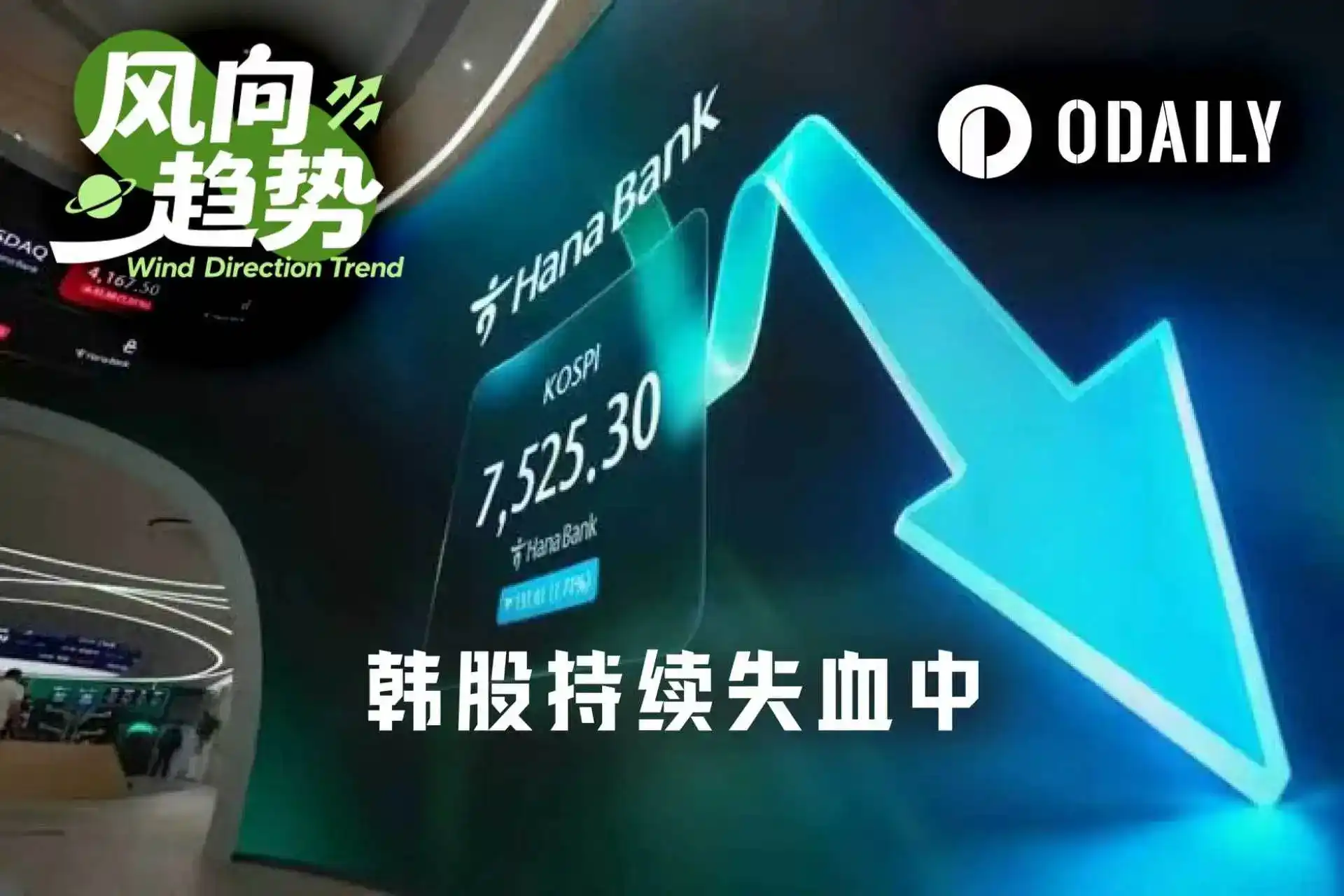
Soaring 20% Then Dropping 5%: When Will the Bottom of the Korean Stock Market Be?

"South Korean stocks face a turbulent period as the KOSPI index, after a 20% surge, fell 5% to 6257 points. The market is grappling with severe issues: over 500,000 leveraged retail accounts have been liquidated, and more than 24 trillion won has flowed from stocks into bank deposits for safety. This reflects a significant loss of market liquidity and shaken investor confidence. In response, Korean financial regulators are taking action. They have tripled the minimum保证金 (margin) requirement for single-stock leveraged ETF trades to 30 million won and are considering granting themselves "emergency intervention" powers. These could include capping leverage ratios and setting investment limits on these ETFs, seen by many as amplifying market volatility. Initial results show a 75% drop in these products' trading volume post-regulation. The market downturn has political repercussions, pushing President Yoon Suk-yeol's approval rating to a new low. Meanwhile, foreign investors made a record net purchase of 7.18 trillion won during a recent rebound, while domestic retail investors sold off massively. Morgan Stanley has upgraded South Korean stocks to "overweight," citing the ongoing "leverage unwinding" and potential for a 36% upside, with giants like Samsung Electronics and SK Hynix providing valuation support. However, analysts caution that the market's structure remains vulnerable to foreign capital flows, and the current low may not be the bottom."

marsbitHace 9 min(s)

Soaring 20% Then Dropping 5%: When Will the Bottom of the Korean Stock Market Be?

marsbitHace 9 min(s)

Goldman Sachs Stakes a Clear Position: This Is the Largest Capital Demand Cycle in Human History, and the Fed Is Just an Observer

Goldman Sachs argues that the world is entering the most capital-intensive investment cycle in history, driven by concurrent massive demands from AI infrastructure, reindustrialization, defense reinvestment, power grid rebuilding, supply chain realignment, and sovereign debt financing. This structural competition for capital is pushing its cost higher, fundamentally altering investment paradigms. Goldman's Mark Wilson states that the Federal Reserve is merely a "passenger, not the driver" in this shift, with rising yields rooted in these real economy demands rather than just monetary policy. While major indices appeared calm in July, underlying market movements were historic, featuring extreme stock dispersion and a severe momentum factor crash, leading to significant de-risking by fund managers. Wilson cautions against expecting a quick reversal in August, citing ongoing digestion of higher rates, disrupted risk models, and typically muted market performance ahead of US midterm elections. Corporate fundamentals remain robust with strong earnings, though growth rates are peaking in the US while accelerating in Europe. Notably, hyperscale cloud companies like Amazon and Microsoft are announcing staggering capital expenditure projections for 2027-2028, justified by explosive AI-related revenue growth and high returns. Amazon revealed its AI revenue run-rate exceeds $25 billion, growing triple-digits annually, and expressed confidence that AWS could become a trillion-dollar revenue business. The report concludes that a transitional period is underway, marked by a growing tension between aggressively investing private tech giants and increasingly capital-constrained sovereign governments. The AI super-cycle continues, with August likely being a consolidation phase.

marsbitHace 14 min(s)

Goldman Sachs Stakes a Clear Position: This Is the Largest Capital Demand Cycle in Human History, and the Fed Is Just an Observer

marsbitHace 14 min(s)

Outflow of Stablecoins from South Korea Continues for 18 Consecutive Months, Exceeding $360 Million in June

In June 2026, South Korea experienced a net outflow of stablecoins to overseas crypto exchanges, amounting to 560.3 billion won ($367 million). This represents approximately 78% of the net value of foreign stocks purchased by Korean investors in the same period. According to the Financial Supervisory Service (FSS), this marks the 18th consecutive month of net outflows, a trend ongoing since January 2025. The FSS reported that 2.76 trillion won ($1.8+ billion) in stablecoins were withdrawn from the country's five major exchanges to foreign platforms in June, while 2.2 trillion won ($1.4 billion) flowed back in. The second quarter of 2026 saw a significant net outflow of 1.69 trillion won (~$1.1 billion), surpassing net sales of foreign stocks in the same period. Analysts cite access to unavailable domestic financial instruments as a primary driver. Foreign platforms offer crypto derivatives, spot and futures products tied to major Korean stocks like Samsung and Hyundai, along with RWA tokenization, DeFi, staking, and leveraged products. Lawmaker Lee Jong-wook warned that the stablecoin outflows constitute capital flight, exposing investors to risks on unregulated foreign platforms. He called for accelerated regulatory reform and enhanced investor protection measures. The government is reportedly working on a digital assets law to foster the blockchain sector.

cryptonews.ruHace 19 min(s)

Outflow of Stablecoins from South Korea Continues for 18 Consecutive Months, Exceeding $360 Million in June

cryptonews.ruHace 19 min(s)

Trading

Spot

Artículos destacados

Qué es XRP 2.0

XRP 2.0: Una Nueva Frontera en el Panorama de las Criptomonedas Introducción a XRP 2.0 En el siempre cambiante ámbito de las criptomonedas, nuevos proyectos surgen continuamente, compitiendo por atención y adopción. Una de estas iniciativas prometedoras es XRP 2.0, un nuevo proyecto de criptomoneda diseñado para aprovechar la tecnología blockchain avanzada y metodologías de encriptación robustas. Aunque el nombre establece paralelismos con el XRP de Ripple, es crucial señalar que XRP 2.0 opera de manera independiente, enfocándose en mejorar la seguridad de las transacciones, la privacidad y la escalabilidad. A medida que el panorama financiero digital abraza cada vez más soluciones descentralizadas, XRP 2.0 busca contribuir de manera significativa a web3 y a la expansión general de los proyectos de criptomonedas. ¿Qué es XRP 2.0? En esencia, XRP 2.0 es un proyecto de criptomoneda que busca crear un ecosistema de moneda digital seguro y descentralizado. Su tecnología fundamental integra principios avanzados de blockchain con técnicas de encriptación de vanguardia. El objetivo principal de XRP 2.0 es establecerse como una plataforma confiable y eficiente que permita la ejecución rápida de transacciones mientras prioriza la protección de la privacidad de sus usuarios. El proyecto se promociona como una solución a muchas limitaciones enfrentadas por las criptomonedas existentes, proponiendo un sistema que puede manejar un mayor volumen de transacciones con mejor velocidad y privacidad. Esta versatilidad posiciona a XRP 2.0 como un competidor significativo en un mercado plagado de diversas monedas digitales. ¿Quién es el Creador de XRP 2.0? La identidad del creador detrás de XRP 2.0 ha sido señalada como 'Wilbur.' Sin embargo, los detalles completos sobre Wilbur o su entidad asociada siguen siendo elusivos. La anonimidad de muchos creadores de criptomonedas no es un fenómeno poco común en la industria, a menudo diseñado para mantener un grado de privacidad y seguridad. ¿Quiénes son los Inversores de XRP 2.0? Hasta ahora, la información específica relacionada con las fundaciones o organizaciones de inversión que apoyan a XRP 2.0 no está disponible públicamente. En el sector de las criptomonedas, el respaldo de inversores respetables puede influir significativamente en la credibilidad y el éxito de un proyecto, sin embargo, la transparencia sobre los patrocinadores financieros de XRP 2.0 no se ha establecido. ¿Cómo Funciona XRP 2.0? XRP 2.0 se destaca al emplear una combinación de tecnología blockchain y algoritmos de encriptación avanzados que aseguran transacciones seguras y descentralizadas. Su estructura innovadora incluye características únicas diseñadas para fomentar el compromiso del usuario y ampliar las funcionalidades más allá de las transacciones convencionales de criptomonedas. Entre estas características, XRP 2.0 incorpora capacidades impulsadas por IA, como funcionalidades de texto a imagen y de texto a voz. Estas adiciones están diseñadas para mejorar la experiencia interactiva de los usuarios, promoviendo una mayor aplicabilidad en diversos sectores. Al unir avances tecnológicos con un diseño centrado en el usuario, XRP 2.0 busca captar la atención de una amplia gama de individuos y empresas que buscan integrar soluciones de criptomonedas en sus marcos operativos. Cronología de XRP 2.0 Entender XRP 2.0 requiere examinar los hitos que han definido su viaje hasta ahora: 23 de julio de 2023: Se presenta XRP 2.0 como un nuevo proyecto de criptomonedas, con el objetivo de revolucionar las capacidades de transacciones seguras y descentralizadas en el ámbito de blockchain. 8 de septiembre de 2023: Se lanza otro proyecto, XRP20, marcando la aparición de un token ERC-20 en la blockchain de Ethereum que no guarda relación con XRP 2.0. 13 de noviembre de 2023: El Libro Mayor de XRP experimenta una actualización significativa con el lanzamiento de la versión 2.0.0 del software del servidor rippled. Es esencial señalar que este desarrollo está desconectado del proyecto de criptomonedas XRP 2.0. Puntos Clave sobre XRP 2.0 Para destilar la esencia de XRP 2.0, surgen varios factores críticos: Características Únicas: La inclusión de características como texto a imagen y texto a voz impulsadas por IA diversifica aún más las aplicaciones potenciales de XRP 2.0. Tecnología Blockchain: El marco utiliza mecanismos avanzados de blockchain y protocolos de encriptación, asegurando un entorno seguro y descentralizado para las transacciones. Escalabilidad y Privacidad: XRP 2.0 prioriza la protección mejorada de la privacidad en los procesos de transacción y la escalabilidad necesaria para acomodar una base de usuarios creciente. No Afiliación con Ripple: Es importante destacar que, a pesar de su nombre, XRP 2.0 no tiene ninguna lealtad ni colaboración con el XRP de Ripple, diferenciando su marco operativo y objetivos dentro del ecosistema de criptomonedas. Conclusión XRP 2.0 representa una ambiciosa aventura en la esfera de las criptomonedas, buscando ofrecer una combinación de seguridad, privacidad y eficiencia en las transacciones digitales. Al integrar tecnologías sofisticadas y características amigables para el usuario, el proyecto se propone ampliar los horizontes de lo que la criptomoneda puede lograr en la economía digital de hoy. Si bien la anonimidad de su creador y la falta de inversores revelados pueden generar cuestionamientos para algunos, el enfoque de XRP 2.0 en funcionalidades avanzadas y descentralización realza su atractivo en un mercado de criptomonedas cada vez más abarrotado. A medida que el paisaje de las criptomonedas sigue evolucionando, XRP 2.0 podría emerger como un jugador crucial en la expansión de soluciones blockchain seguras y escalables.

253 Vistas totalesPublicado en 2024.04.05Actualizado en 2024.12.03

Qué es XRP 2.0

Cómo comprar XRP

¡Bienvenido a HTX.com! Hemos hecho que comprar XRP (XRP) sea simple y conveniente. Sigue nuestra guía paso a paso para iniciar tu viaje de criptos.Paso 1: crea tu cuenta HTXUtiliza tu correo electrónico o número de teléfono para registrarte y obtener una cuenta gratuita en HTX. Experimenta un proceso de registro sin complicaciones y desbloquea todas las funciones.Obtener mi cuentaPaso 2: ve a Comprar cripto y elige tu método de pagoTarjeta de crédito/débito: usa tu Visa o Mastercard para comprar XRP (XRP) al instante.Saldo: utiliza fondos del saldo de tu cuenta HTX para tradear sin problemas.Terceros: hemos agregado métodos de pago populares como Google Pay y Apple Pay para mejorar la comodidad.P2P: tradear directamente con otros usuarios en HTX.Over-the-Counter (OTC): ofrecemos servicios personalizados y tipos de cambio competitivos para los traders.Paso 3: guarda tu XRP (XRP)Después de comprar tu XRP (XRP), guárdalo en tu cuenta HTX. Alternativamente, puedes enviarlo a otro lugar mediante transferencia blockchain o utilizarlo para tradear otras criptomonedas.Paso 4: tradear XRP (XRP)Tradear fácilmente con XRP (XRP) en HTX's mercado spot. Simplemente accede a tu cuenta, selecciona tu par de trading, ejecuta tus trades y monitorea en tiempo real. Ofrecemos una experiencia fácil de usar tanto para principiantes como para traders experimentados.

1.5k Vistas totalesPublicado en 2024.12.10Actualizado en 2026.06.02

Cómo comprar XRP

Discusiones

Bienvenido a la comunidad de HTX. Aquí puedes mantenerte informado sobre los últimos desarrollos de la plataforma y acceder a análisis profesionales del mercado. A continuación se presentan las opiniones de los usuarios sobre el precio de XRP (XRP).

活动图片