Democratic senators intend to prevent the closure of debate on the 'Clarity Act'. The reason appears to be a lack of visible progress from the White House on a bipartisan ethics agreement, which Democrats had set as a condition for their votes on the digital assets bill.
The senators have already sent the text of the bipartisan ethics agreement to the White House, but, since no response has been received, the procedural vote is apparently set to fail. Senator Ruben Gallego (Democrat from Arizona), who helped draft the compromise ethics agreement alongside Senator Tom Tillis (Republican from North Carolina), did not hide his disappointment, adding:
"We are clearly here trying to engage in constructive dialogue. At this stage, if they are not making contact, it tells me they don't want this to happen."
The ethics dispute has been plaguing the bill for several weeks, with Democrats wanting to impose mandatory restrictions on federal officials profiting from digital assets while in office (this language is directly aimed at the cryptocurrency businesses of President Trump's family). As a result, they rejected the provision in the current 616-page text as insufficient.
Thune Digs In as Time Runs Out
Senate Majority Leader John Thune (Republican from South Dakota) continues to insist on holding a procedural vote before senators leave Washington, but time is running out. Fox Business correspondent Eleanor Terrett reported that on Tuesday evening, Thune did not file a cloture motion to end debate on the motion to proceed, citing procedural issues related to the interim budget (though she noted that a lack of the necessary votes "likely also played a role").
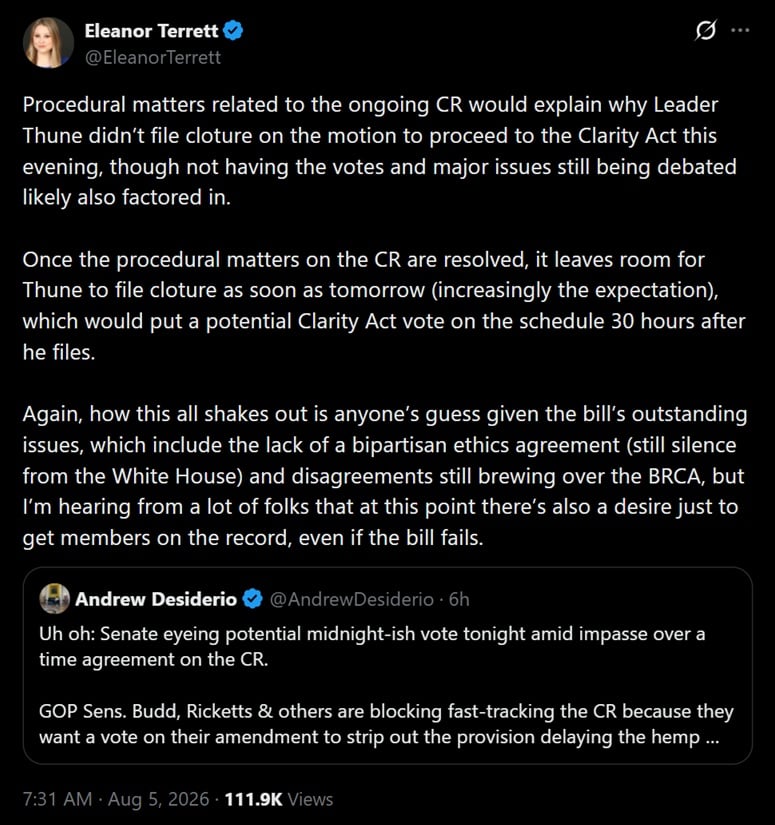
Since Senate rules require one day between filing a cloture motion and the initial vote, each day without filing the motion brings the bill closer to Friday's recess without a chance of passage. Republicans have 53 seats, meaning roughly seven Democratic votes are needed to reach the 60-vote threshold, which the bill currently lacks.
The pressure campaign from the bill's supporters continues unabated. Senator Cynthia Lummis (Republican from Wyoming) this week called on Democratic senators not to block the bill, calling it legislation that protects consumers and keeps the cryptocurrency industry in the US. Industry supporters have flooded Congress with over 1 million constituent calls in support of the bill.
Markets Lower Odds
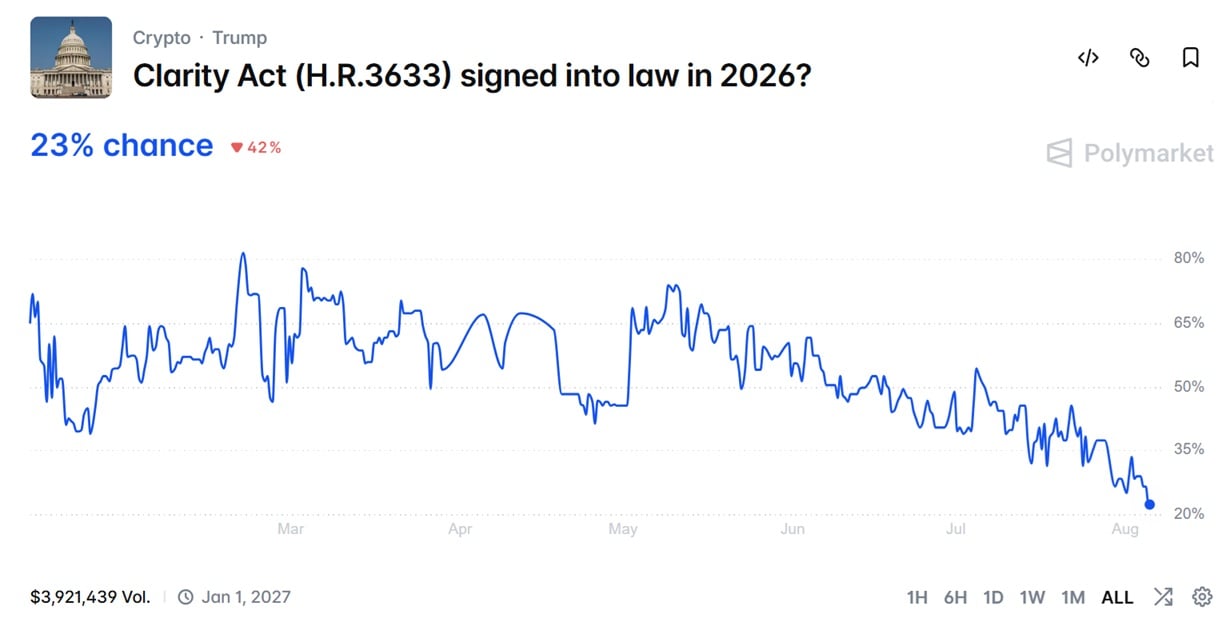
Cryptocurrency markets are already pricing in this setback: this week, Polymarket odds for the Clarity Act being signed in 2026 fell from 27% to just 23%, especially after the Senate removed the bill from its schedule on Monday. Bitcoin, which bulls had hoped would return above its highs thanks to a regulatory breakthrough, has instead hovered around the $64,000 mark all week.