DeFi loses $169M in Q1 as Circle pushes for quantum security – Details

ambcryptoPublicado a 2026-04-07Actualizado a 2026-04-07

Resumen

DeFi security in Q1 saw $169 million lost across 34 protocols, primarily to operational weaknesses rather than cryptographic failures. Key compromises and permission errors accounted for a majority of attacks, with 63% linked to access control issues. While immediate threats remain execution-based, long-term quantum risks are gaining attention. Circle is proactively adopting Post-Quantum Cryptography (PQC), and new chains like Arc are building quantum-resistant features natively to avoid future upgrade challenges. Legacy chains, however, face slow adoption due to scalability and coordination hurdles, with significant value still locked in incumbent systems. The market currently prioritizes liquidity and usability, delaying broader PQC transition despite rising future threats.

Crypto security in 2026 is shifting, yet the threat pattern still reflects practical weaknesses rather than cryptographic failure. Attacks now target how systems operate, as access control gaps and key management errors remain easier to exploit. This shift occurs because attackers follow the simplest path, where operational flaws offer faster returns than breaking encryption.

DeFiLlama data shows $169 million lost across 34 protocols in Q1, reinforcing this pattern. Incidents such as a $40 million key compromise and Resolv’s $24.5 million breach show how control layers are becoming primary targets. At the same time, SlowMist reports that permission failures are responsible for 63% of DeFi-related attacks.

This dynamic reshapes risk perception, as users face execution-layer threats today, while firms like Circle prepare for future cryptographic risks, balancing immediate defense with long-term resilience.

Circle moves early on Quantum security risk

Notably, Circle is moving early on Post-Quantum Cryptography (PQC), and that shift reflects how security priorities are changing across the market. Arc L1 is building PQC into its base layer, which avoids the need for complex upgrades later. This matters because existing networks already carry exposure, with about 6.7 million Bitcoin [BTC], nearly one-third of the supply, sitting in vulnerable addresses.

Source: Quantumai Whitepaper

This risk persists because address reuse remains common, while upgrades require long coordination cycles. Past changes like SegWit and the Merge took years, showing how slow adaptation can be.

This explains why Circle is acting now to reduce future disruption. For current users, however, the risk is being felt gradually, which means adoption may be slow until mounting pressure drives broader change.

Arc embeds PQC as legacy chains face upgrade challenges

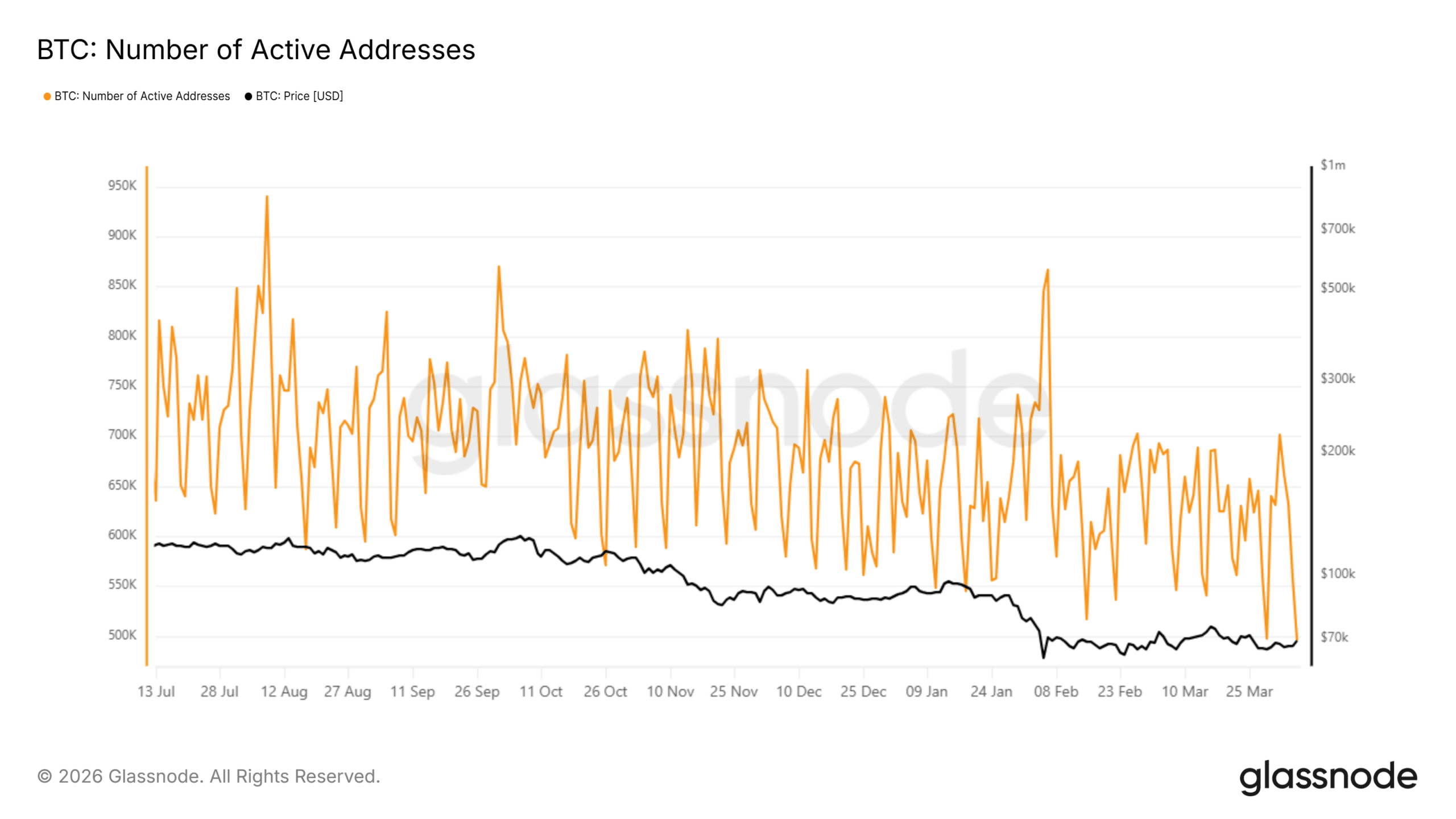
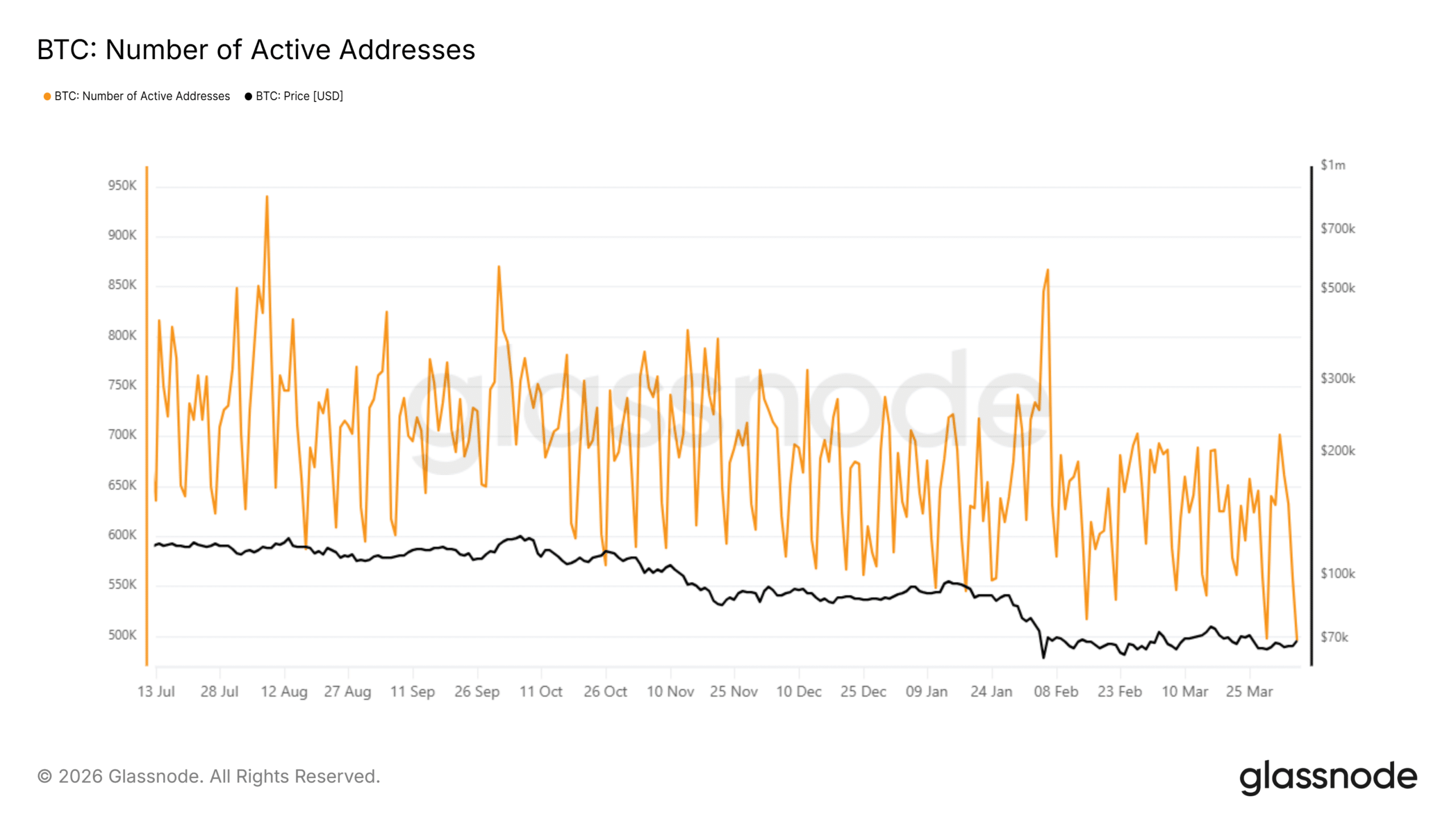
Such a shift exposes a deeper divide in how networks handle future risk, as design choices begin to matter more than upgrades. Arc embeds PQC from the start, which removes the need for large-scale coordination later. This approach emerges because legacy systems already operate at scale, with Bitcoin handling 550,000–590,000 daily addresses and Ethereum [ETH] near 385,000.

Source: Glassnode

However, that scale creates inertia, since upgrades must align millions of users, wallets, and contracts. Past changes like SegWit and the Merge took years, showing how difficult system-wide shifts become. This means retrofitting PQC could introduce friction and fragmentation.

Arc reduces this risk through design, yet incumbents retain over $94 billion in Locked Value. This balance indicates that users prioritize liquidity in the present, while long-term security may drive gradual structural changes.

That said, Circle’s quantum push strengthens long-term security, yet impact depends on timing, as markets still prioritize liquidity and usability over distant cryptographic threats.


Final Summary

  • Post-Quantum Cryptography (PQC) emerges as a forward security layer, yet current crypto risks remain driven by operational exploits, not cryptographic failure.
  • PQC adoption depends on timing, as markets prioritize liquidity today, delaying transition despite long-term systemic risk.

Preguntas relacionadas

QWhat was the total amount lost in DeFi during Q1 according to DeFiLlama data, and how many protocols were affected?

AAccording to DeFiLlama data, $169 million was lost across 34 protocols in Q1.

QWhat percentage of DeFi-related attacks does SlowMist report are due to permission failures?

ASlowMist reports that permission failures are responsible for 63% of DeFi-related attacks.

QWhy is Circle moving early on Post-Quantum Cryptography (PQC), and what risk does it address?

ACircle is moving early on Post-Quantum Cryptography (PQC) to reduce future disruption from quantum computing threats, which could break current encryption. This addresses the risk that approximately 6.7 million Bitcoin (nearly one-third of the supply) sits in addresses vulnerable to a quantum attack.

QWhat is a key advantage of Arc L1 blockchain embedding PQC into its base layer from the start?

AA key advantage of Arc L1 embedding PQC into its base layer from the start is that it avoids the need for complex, large-scale coordination upgrades later, which are difficult and slow for legacy systems.

QAccording to the article's final summary, what is the primary driver of current crypto risks, and what is prioritized by markets today over long-term security?

AAccording to the final summary, the primary driver of current crypto risks is operational exploits, not cryptographic failure. Markets today prioritize liquidity and usability over distant cryptographic threats, delaying the transition to quantum-resistant security.


Lecturas Relacionadas

Comics Illustration: Helping You Understand China's New Regulations on Outbound Investment

Summary: Understanding China's New Regulations on Overseas Investment The State Council has announced new regulations on overseas investment, effective July 1, 2026. The core message is not a prohibition on international investment, but a call for both companies and individuals to operate with strong regulatory awareness. Here are the key points: 1. **Scope is Broad:** The rules apply not only to companies but also to other organizations and individual residents. 2. **Definition of Investment is Wide:** It encompasses not just capital transfers but also asset contributions, obtaining equity or rights, financing, providing guarantees, and direct or indirect acquisition of rights related to overseas entities or assets. 3. **Companies Must Plan Comprehensively:** Beyond simple ownership charts, firms need clear plans covering the investing entity, required approvals or filings, fund transfer paths, and compliance with technology, data, and security reviews. 4. **Individuals Should Prioritize Compliance:** Before focusing on returns, individuals must first assess their eligibility, understand legal channels for capital outflow, know what they are acquiring, and identify responsible parties in case of issues. 5. **Penalties are Significant:** Violations can result in fines and potentially restrictions on future overseas investment activities. In essence, overseas investment remains possible, but it must be approached with regulatory compliance as a fundamental priority, not solely based on commercial opportunity. *Note: This is a general informational summary and does not constitute legal advice or investment recommendations.*

marsbitHace 1 min(s)

Comics Illustration: Helping You Understand China's New Regulations on Outbound Investment

marsbitHace 1 min(s)

Nvidia Rack Disassembly Reveals New Growth Opportunity, MLCC Value Surges 182%

Supply bottlenecks in AI infrastructure have expanded to fundamental hardware components like multilayer ceramic capacitors (MLCCs), crucial for stabilizing power and filtering noise in AI servers. Both Goldman Sachs and Morgan Stanley highlight MLCCs as entering a historic "volume-price dual increase" supercycle driven by AI. Goldman forecasts the AI server MLCC market to surge over fourfold from ~$1.4B in FY2025 to ~$5.8B in FY2030, a 34% CAGR. The core driver is a structural supply-demand imbalance. While AI server demand is projected to grow ~4.3x by 2030, industry capacity expands at only ~10% annually, constrained by internal production of equipment and materials. This is compounded by strong demand from electric vehicles. The shortage is evident, with lead times for high-end MLCCs exceeding 20 weeks. The price cycle has officially begun. Japanese leaders Murata and Taiyo Yuden have raised prices by 15-35% for AI server and automotive MLCCs since April, citing material costs. Japan's April export data confirms the trend, with MLCC export value up 28% year-over-year. Profit leverage is significant: Goldman estimates a mere 5% price increase could boost Murata's FY2027 operating profit by ~13% and Taiyo Yuden's by up to 37%. Morgan Stanley's teardown of Nvidia's upcoming Vera Rubin AI rack reveals another catalyst: the MLCC value per rack has skyrocketed 182% from the previous generation to ~$4,320, highlighting the component's growing importance. With demand set to massively outstrip constrained supply, and price increases just starting, analysts position MLCCs at the beginning of a major, prolonged upcycle.

marsbitHace 2 min(s)

Nvidia Rack Disassembly Reveals New Growth Opportunity, MLCC Value Surges 182%

marsbitHace 2 min(s)

A 134% Surge, 75 P/E Ratio: Why Is the Market Paying Up for Murata's 'Zero Growth'?

Murata Manufacturing, the world's largest passive components maker, saw its stock price surge 134% over the past year and hit a record high on May 28th, despite reporting nearly zero growth in operating profit for its latest fiscal year. This has pushed its valuation to a P/E ratio of approximately 75x. The disconnect is driven by a fundamental market re-rating. The catalyst was a late-May meeting where management upgraded the AI investment cycle outlook to "lasting until around 2030" and noted that demand for its components is roughly double its supply capacity, with customers prioritizing securing volume over price. While Murata's revenue grew only 5.0% and operating profit stagnated at ¥281.8 billion for the fiscal year ending March 2026, its guidance for the current fiscal year projects a 34.8% jump in operating profit to ¥380 billion. This sharp growth is underpinned by expectations that its AI/data center-related revenue will nearly double from ¥170 billion to ¥325 billion, becoming a key pillar of its business. Analysts highlight that this growth stems not from broad price hikes but from a shift towards higher-value, cutting-edge MLCCs for AI servers, where Murata holds over 70% market share. The market is now pricing Murata not as a cyclical component maker but as a critical "AI pick-and-shovel" supplier with structural pricing power. However, the high valuation also carries risk if future AI demand or quarterly guidance falls short of the elevated expectations.

marsbitHace 25 min(s)

A 134% Surge, 75 P/E Ratio: Why Is the Market Paying Up for Murata's 'Zero Growth'?

marsbitHace 25 min(s)

a16z: Why Do Prediction Markets Matter?

Prediction markets, which allow users to trade on the outcome of future events, have gained significant traction, especially in the U.S. At their core, these markets function like any other market by aggregating information from all participants and translating it into a price signal—in this case, the perceived probability of a specific event occurring. Unlike polls or surveys that offer static snapshots, prediction markets provide dynamic, quantifiable probability estimates that update in real-time as new information and participants enter. A key advantage is the incentive structure: participants risk their own capital, which encourages serious research and trading based on genuine knowledge. This can surface information that traditional methods might miss. Furthermore, prediction markets can be created for a vast array of specialized questions—from geopolitical events to AI model performance—that aren't covered by traditional financial markets. However, several challenges remain. Infrastructure issues include reliably determining event outcomes and resolving disputes. Market design must ensure participation from well-informed individuals while preventing manipulation, such as insider trading or attempts to sway public perception by artificially moving prices. Addressing these concerns around rules, participation, and contract design is crucial. If these hurdles are overcome, prediction markets could evolve into a powerful, widely-used tool for forecasting and navigating uncertainty.

marsbitHace 35 min(s)

a16z: Why Do Prediction Markets Matter?

marsbitHace 35 min(s)

Trading

Spot
Futuros
活动图片