DeepSeek's "Self-Evolution" Blueprint, Revealed

marsbitPublicado a 2026-08-14Actualizado a 2026-08-14

Resumen

DeepSeek, in collaboration with Peking University, has unveiled a new research paper titled "A Programming Paradigm for Spatiotemporal Composability," which outlines the core architecture behind its "Harness" agent platform. The paper introduces **Cordis**, a foundational "Lego-like baseboard" that enables a highly modular and composable system where **everything is a plugin and everything can be reassembled**. The core innovation addresses two major challenges for self-evolving AI agents: **temporal composability** (the ability to dynamically load, unload, and update plugins at runtime without restarting the entire process) and **spatial composability** (managing complex, dynamic dependencies between components). Cordis solves these using two key theoretical concepts adapted for dynamic environments: **revertible effects** (which allow state changes to be cleanly rolled back) and **reactive coeffects** (which enable automatic, declarative dependency resolution). This design is not merely theoretical. It has been validated over four years in the **Koishi** chatbot framework, which is built on Cordis and hosts over 4,000 community plugins. The framework demonstrates live plugin management—enabling, disabling, or updating plugins without disrupting others—and robust handling of dependencies across a decentralized ecosystem. The paper represents DeepSeek's vision for a foundational infrastructure that supports true **self-evolution** in AI agents, allowing them to dynamically...

DeepSeek 's latest collaborative paper with Peking University has lifted the veil on the Harness version of "Whale."

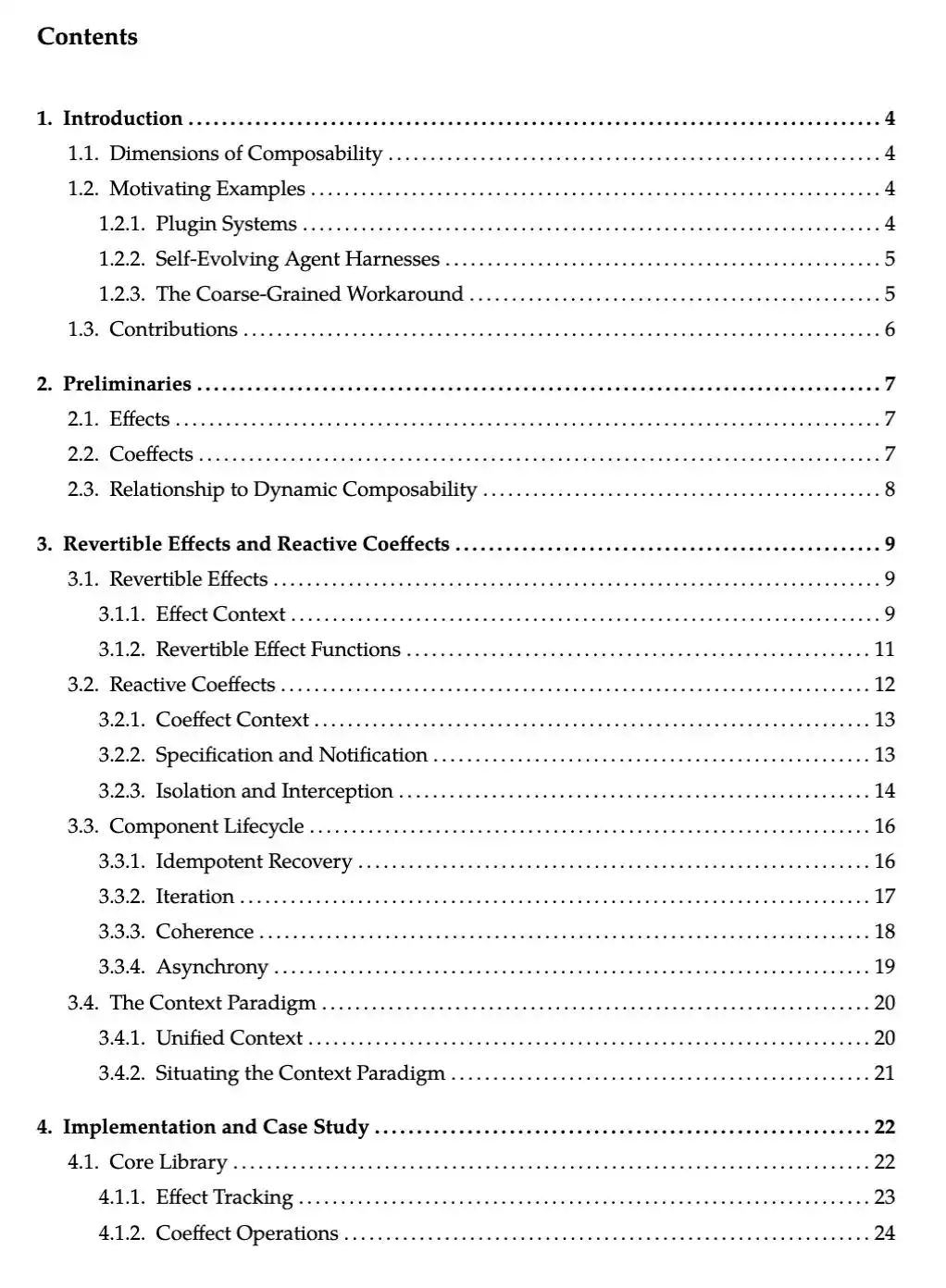
It's titled "A Programming Paradigm for Spatiotemporal Composability," translated into Chinese as "一套处理时空可组合性的编程范式".

It sounds a bit convoluted, but you just need to remember one sentence—

The entire text revolves around Cordis, the core of the black whale, a detachable "Lego baseplate."

Here, everything is a plugin, and everything can be reorganized.

This also explains why "Black Whale" is so open and why the official team actively encourages everyone to develop plugins and customize Harness.

It's a paper packed with information, also the culmination of the DeepSeek Harness team's long-term efforts, ultimately making a spectacular debut in the form of the Great Black Whale.

It's worth noting that this is DeepSeek 's seventh paper this year and the Nth time collaborating with Peking University.
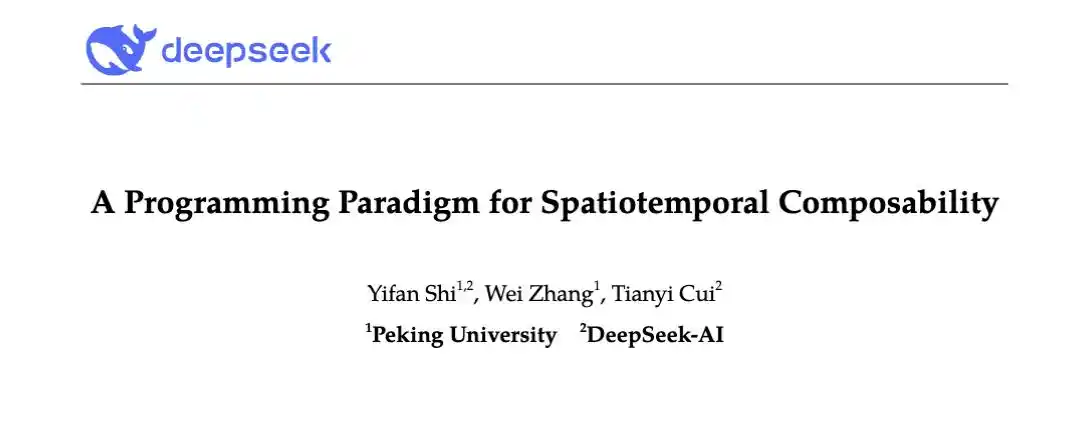
Over eighty pages long, I went through the paper from start to finish and roughly compiled a few takeaways—

1. Cordis provides a set of universal dynamic composition semantics. Components managed through Context can be dynamically loaded, unloaded, and have their managed side effects automatically reclaimed.

2. The mathematical foundation comes from two classical concepts in type theory: effects and coeffects.

3. Not just a lab toy. This design has been running on the Koishi chatbot framework for four years, validated in production environments by over 4,000 community plugins.
And all of this serves the same ambition—

Self-Evolution.

Time and Space: The Two Hurdles for Harness Self-Evolution

There's a counterintuitive reality in the software world: most systems supporting plugins require restarting the entire host process after uninstalling a plugin.

This means that while only one plugin might be deleted, all other loaded plugins have to restart along with it.

Yes, a "plug-in" is actually plugged in and can't be pulled out.

VSCode is a typical case.

The paper states that as of June 9, 2026, among the top 100 extensions in the VSCode Marketplace, 87 contain executable code. Once activated, they cannot be individually unloaded at runtime; disabling or deleting them requires restarting the entire extension host.

This isn't a problem unique to VSCode. The paper points out that almost all plugin architectures have such defects, just to varying degrees.

In ordinary plugin systems, this is troublesome enough, but if the cost is just a restart, it's somewhat acceptable.

But in the context of Agents, it's a completely different problem.

A conventional harness is typically packed with a bunch of things: toolkits, execution environments, permission controls, sandboxes, session states, memory systems... It's an extremely complex engineering system in itself.

And now, it's met with the "Self-Evolving AI"—a mischievous Sun Wukong (Monkey King) who might accidentally modify itself out of existence.

This is also the angle from which DeepSeek 's paper approaches self-evolution:

Future Agents might generate a tool based on a task, install it into the runtime themselves, and if problems are discovered, replace it themselves.

If every time a single line of code is changed, the entire process has to be restarted, the accumulated context, cache—everything could crash.

This is called Temporal Composability.

If dependencies between modules rely on each module patching itself—checking for A today, guessing about B tomorrow... it's easy to inadvertently introduce circular dependencies, which will explode during reloading.

This is called Spatial Composability.

And these two difficulties are precisely the two problems Cordis aims to solve.

DeepSeek's Solution

First, let's supplement two mathematical knowledge points, which are also the two main theoretical pillars of this paper—

Effects and Coeffects.

Simply put, effects characterize "the program's impact on the world"; coeffects characterize "the world's constraints on the program." The two are dual concepts: effect systems enrich types, while coeffect systems enrich contexts.

But there's a problem: in the context of self-evolving AI, frameworks are dynamically loaded.

Classical effect/coeffect systems are static type system tools.

To overcome both the temporal and spatial hurdles simultaneously, the team adapted and upgraded these two concepts for Agent runtimes—"revertible effects" and "reactive coeffects."

Revertible effects target the temporal dimension.

The core definition is just one sentence: every modification to the context must have an explicit inverse function, making side effects reversible.

When loading a plugin, each state modification records the corresponding inverse function, stacking them sequentially into an "undo chain."

When unloading a plugin, this chain is executed in reverse, allowing the system state to be precisely restored to its state before the plugin was loaded.

Think of it like a stack of plates: the last one placed is the first one removed.

This way, the temporal order doesn't get messed up.

Reactive coeffects are responsible for the spatial dimension.

In Cordis, components can declare which dependencies they need, achieving resolvable dependencies.

For example, a chat plugin states it needs a message adapter and a database. It only becomes ACTIVE when both dependencies are satisfied. If one is missing, it stays INACTIVE—not rushing to start, nor running and then throwing a null reference error.

When a provider appears, dependents automatically activate. When a provider is removed, dependents stop first. After they roll back their own effects, the provider completes its unloading.

If a dependency provider unloads, dependents automatically deactivate; if the dependency comes back online, dependents automatically resume. This topological arrangement isn't manually written by developers but automatically derived from declarations.

The combination of the two constitutes the core of Cordis.

The intuitive meaning of "spatiotemporal composability" in the paper's title lies right here.

Koishi

So, has all this just been discussed been validated in practice?

Yes.

And the scale is not small.

The project used for experimental validation in the paper is a chatbot framework called Koishi.

Koishi is built on Cordis. Over four years, it has accumulated over 4,000 community plugins, covering instant messaging adapters, database drivers, admin consoles, and various user functions.

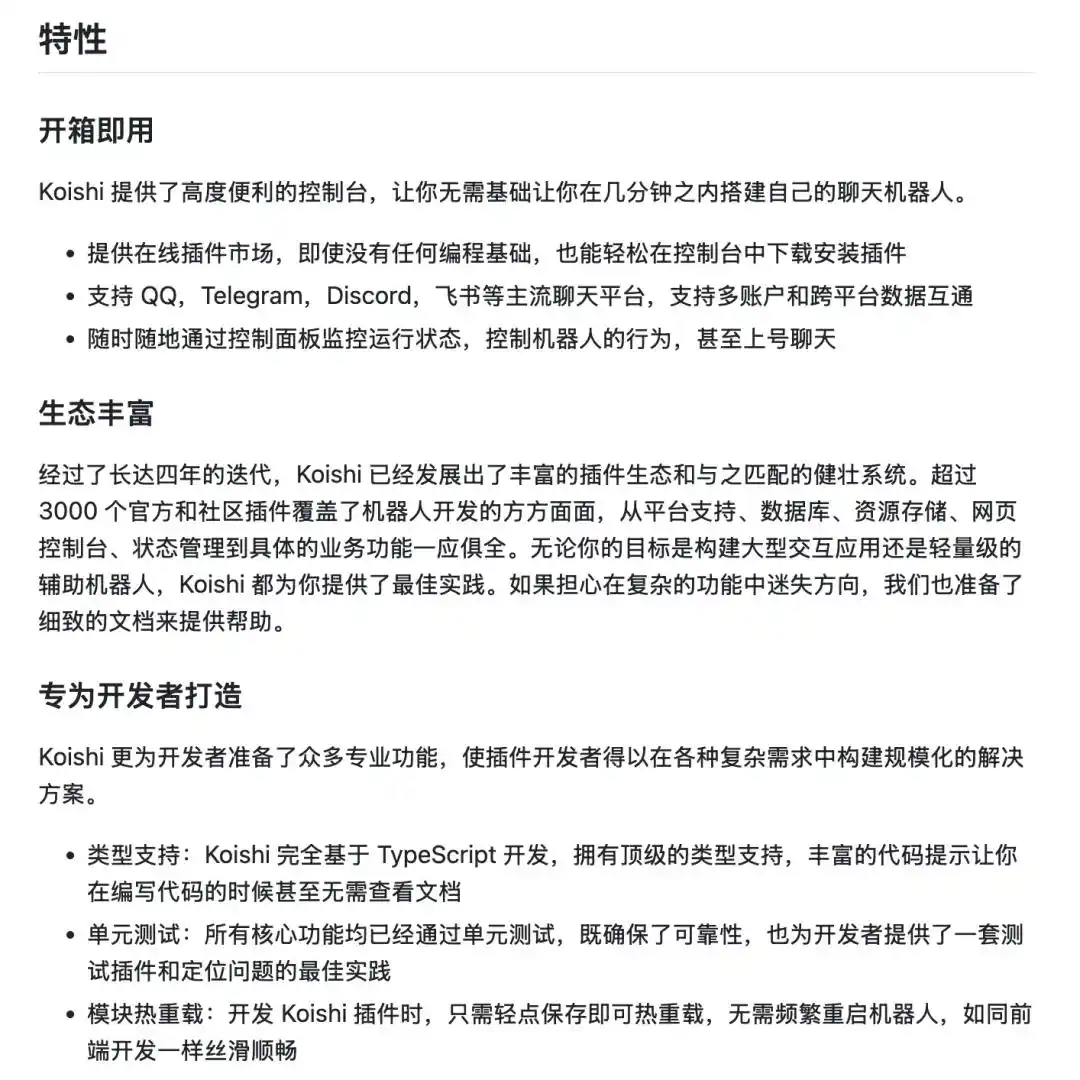
GitHub shows that Koishi is a cross-platform, extensible, high-performance chatbot framework.

Its name and icon design are inspired by the character Komeiji Koishi from Touhou Project.

Komeiji Koishi is a character known for unconscious actions. This name symbolizes the theme of chatbots and also embodies the passion developers poured into it.

A rather interesting README indeed.
So, what is Cordis?

The author of Koishi states that the name Cordis comes from the Latin word for "heart." Everything in Koishi starts from Cordis.

As a meta-framework, Cordis is not coupled to any specific domain or scenario.

The capability it provides is something most frameworks take for granted—a plugin system. But behind this system lies a goal most frameworks haven't achieved: reversibility.

And this sentence was left:

I hope it can become the core of future software (at least the software I develop).

Four years later, DeepSeek 's paper provides the validation.

First, validation of the temporal dimension.

In Koishi, an administrator can disable a plugin from the console. The plugin's impact on the system is rolled back on the spot, while other plugins continue to work.

During development, when a plugin is modified and saved, the modified plugin is reapplied, while caches and connections remain untouched.

Next, validation of the spatial dimension.

In the Koishi ecosystem, IM adapters provide message platform access, database drivers provide persistent storage, and functional plugins declare these as dependencies for direct access.

During actual operation, when switching storage backends or reconnecting adapters, only plugins whose dependencies have actually changed are reactivated. Plugins with unchanged dependencies remain completely still.

It's important to note that these plugins are typically developed independently by different authors. The only coordination between them is the reactive coeffect emphasized by Cordis.

This shows that a set of dynamic composition rules can indeed work in an open plugin ecosystem contributed by different authors.

But the paper doesn't package this case as a perfect demo either.

The team admits that currently, there's only validation data from the single ecosystem of Koishi and the single language of TypeScript, lacking controlled comparisons with alternative architectures...

But the most important thing is pointing out a new direction—a foundational infrastructure for Agent Harness serving self-evolution.

And now the released DeepSeek Harness is precisely the upgraded version of Koishi's Cordis.

Paper Author Introduction

Finally, let's talk about the paper authors as usual.

There are three in total, spanning Peking University and DeepSeek .
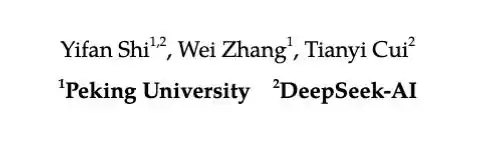
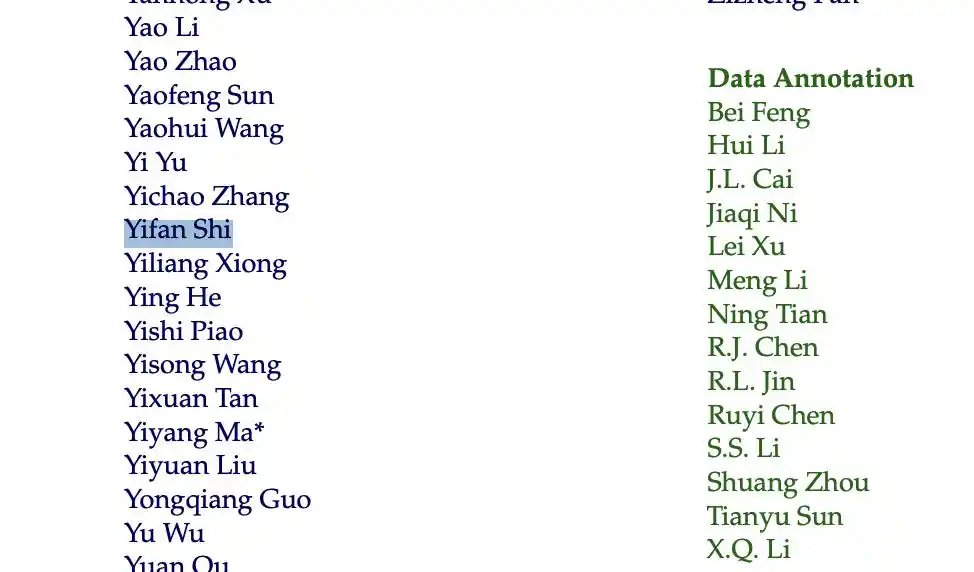
The first author is Yifan Shi, from Peking University and also a member of DeepSeek .

A deeper dive reveals that his name had already appeared in the DeepSeek V3 Technical Report.
The project used for validation in this new paper—Koishi—also originates from him.

Seems to have a strong attachment to "shi": real name Yifan Shi, project named Koishi, GitHub handle Shigma.

(doge)
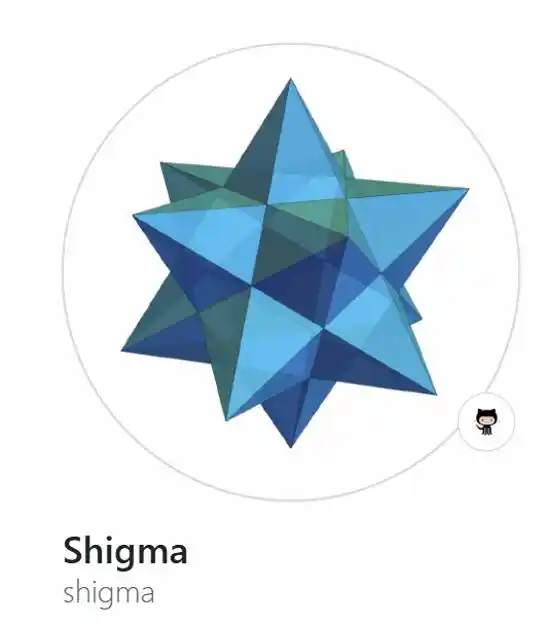
Back on topic.

Koishi is a repository from four years ago, now with 5.7K stars. One could say this is the origin of everything.

Because the concept of Cordis was also proposed within Koishi.

In 2023, Shigma wrote a design article for the Koishi official documentation titled "Reversible Plugin System," almost the ancestor of this new paper.
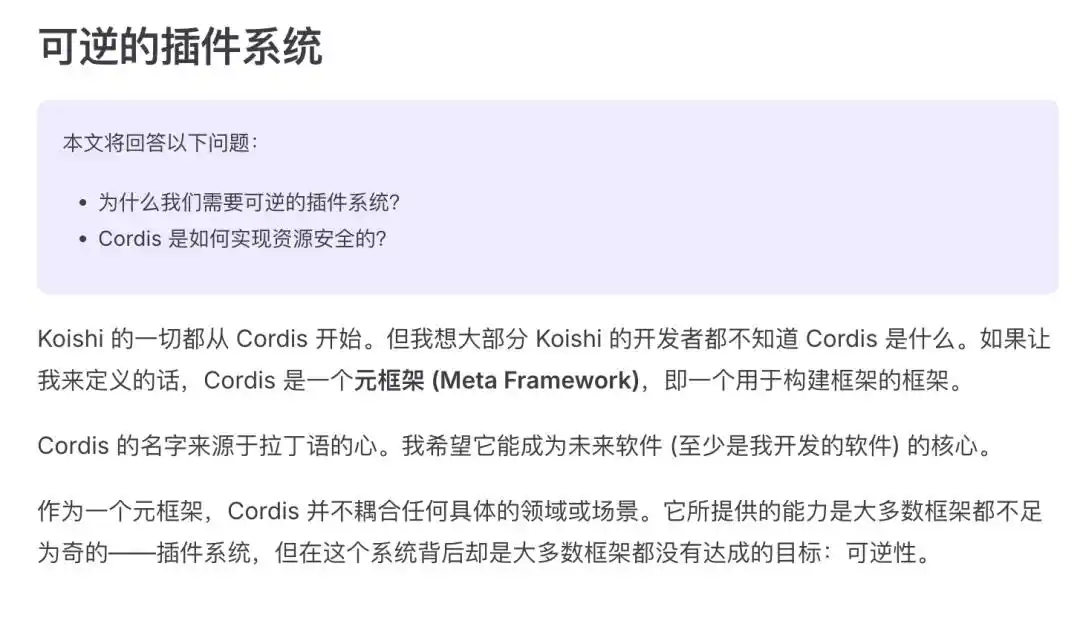
Wei Zhang, also from Peking University, is an Associate Professor at the Software Research Institute, School of Computer Science, Peking University.

The school's website shows that Wei Zhang's research areas mainly cover software engineering and programming languages.

In 1999, he graduated with a bachelor's degree in Engineering Thermophysics from Nanjing University of Aeronautics and Astronautics. Subsequently, he shifted towards computer science, obtaining a Master's degree in Computer Science from Nanjing University of Aeronautics and Astronautics in 2002.

After his master's, Zhang Wei entered Peking University to pursue his Ph.D., earning a Doctorate in Computer Software and Theory in 2006.

After his doctorate, he directly took a position at Peking University and has since been engaged in research and teaching in software engineering, programming languages, and related directions.

Notably, as early as 2021 at ASE, Wei Zhang collaborated with Yifan Shi.
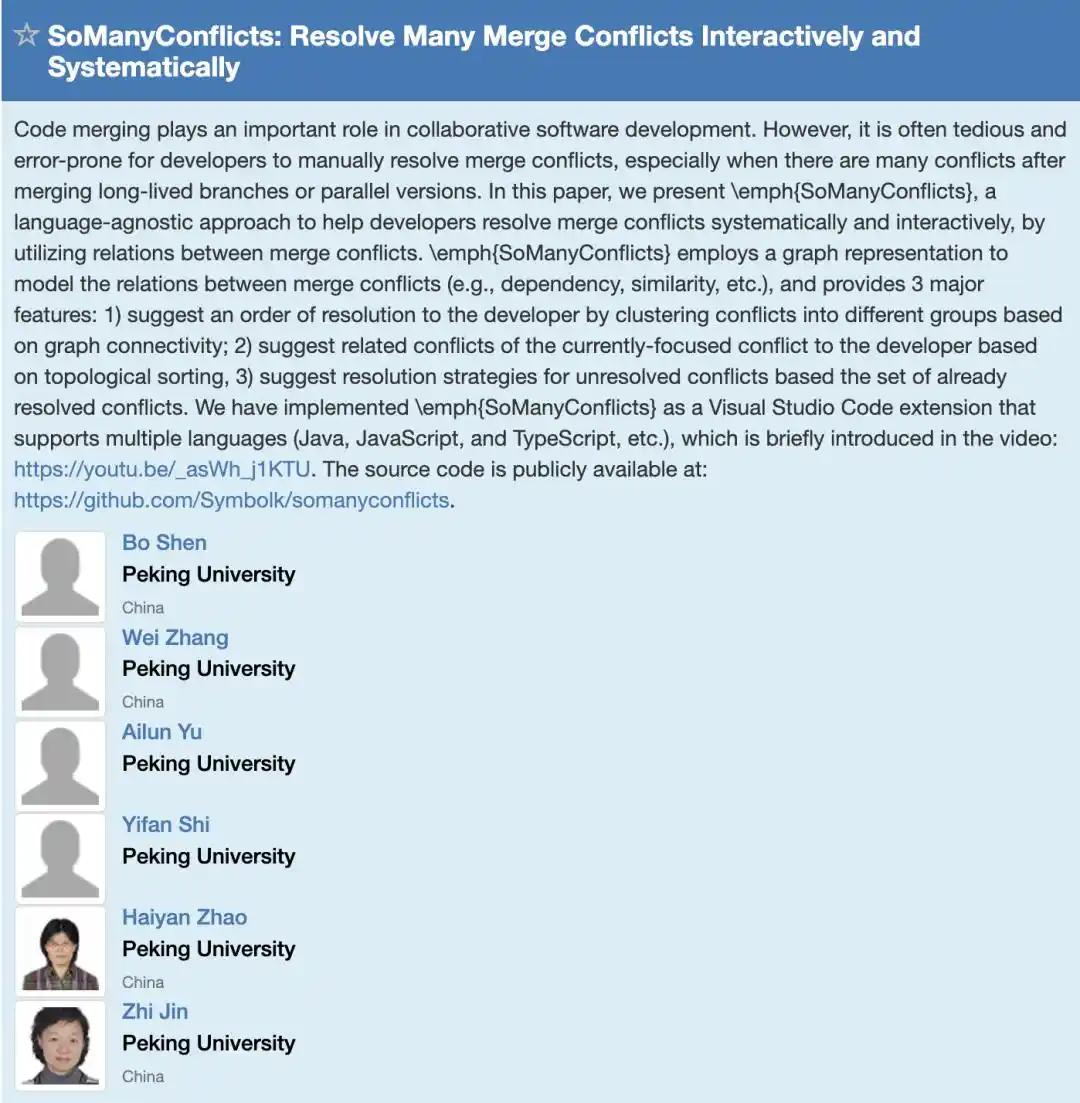
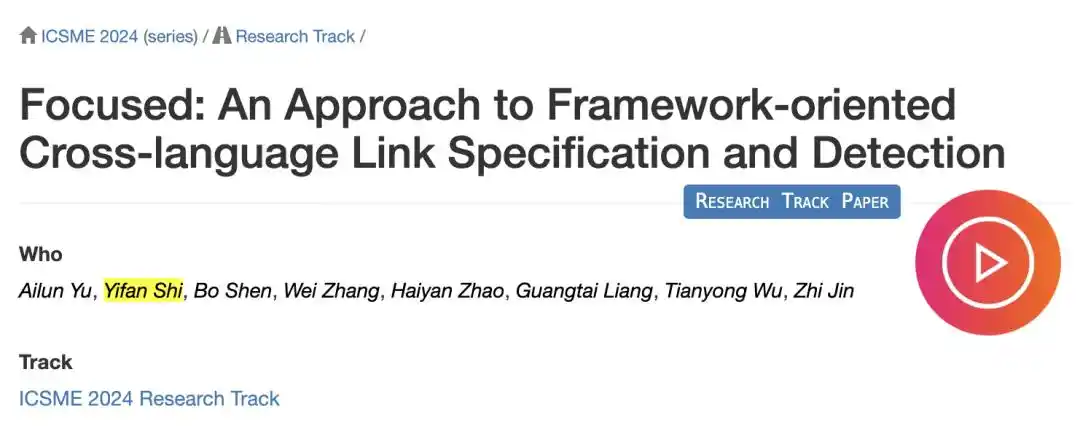
In 2024, the two published another ICSME paper together: "Focused: An Approach to Framework-oriented Cross-language Link Specification and Detection."
Finally, an old acquaintance.

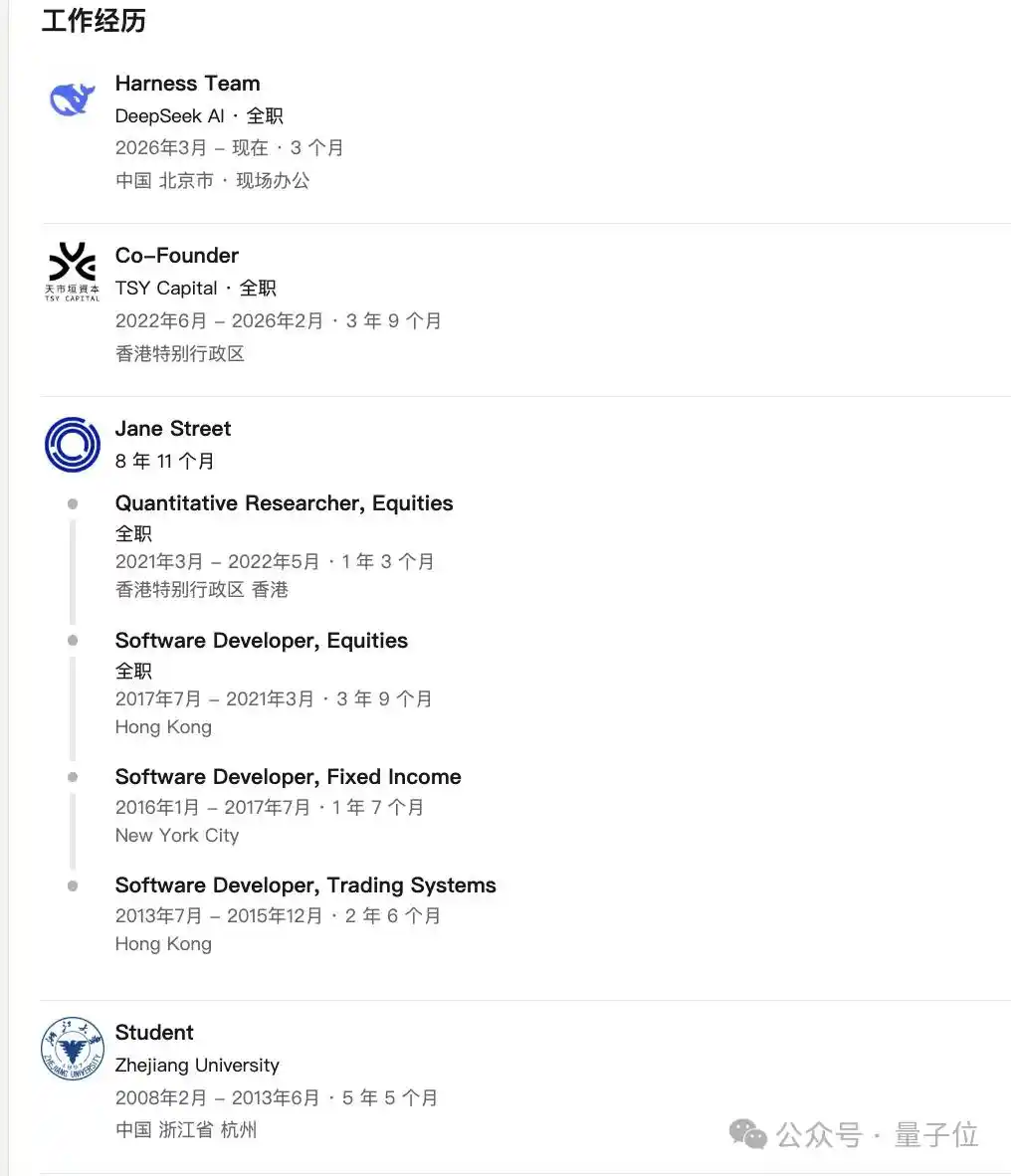
Tianyi Cui, DeepSeek Harness Team Lead. Undergraduate graduate from Zhejiang University's Computer Science Department, junior to Wenfeng Liang.

During his studies, Tianyi Cui was admitted to Zhejiang University via NOIP/informatics competition recommendation and won gold medals in the ACM International Collegiate Programming Contest Asian Regional six times.

After graduation, he worked for nine years at Jane Street's Hong Kong and New York offices.
Paper Link: https://github.com/cordiverse/paperKoishi: https://github.com/koishijs/koishi

This article is from the WeChat public account "Qubit," author: Jay

Criptos en tendencia

Preguntas relacionadas

QWhat is the core concept of the Cordis system introduced in the DeepSeek paper, and what does it enable?

AThe core concept of Cordis is a 'Lego baseplate' programming paradigm for spatiotemporal composability. It enables everything to be a plugin and everything to be recombinable. Its central design allows for dynamic loading and unloading of plugins and the automatic reclamation of their side effects, serving as the foundation for agent self-evolution.

QWhat two key challenges for agent self-evolution does the paper identify, and what does Cordis propose to solve them?

AThe paper identifies two key challenges: Temporal Composability and Spatial Composability. Temporal composability refers to the inability to dynamically change code (e.g., update a tool) without restarting the entire process and losing context. Spatial composability refers to the complexity of managing dependencies between modules without creating conflicts. Cordis solves these with 'revertible effects' (for time) and 'reactive coeffects' (for space), providing a framework for safe, dynamic composition.

QWhat is 'Koishi' and what role does it play in validating the Cordis system?

AKoishi is a cross-platform, extensible, high-performance chatbot framework built on Cordis. It serves as the practical validation system for the Cordis concepts. With over 4000 community plugins developed independently over four years, it demonstrates that Cordis's dynamic composition rules for temporal and spatial dependencies work effectively in a large-scale, open-source production environment.

QAccording to the article, what is a major limitation of current plugin systems like VSCode's that Cordis aims to overcome?

AA major limitation is the lack of true runtime uninstallability. In systems like VSCode, once a plugin with executable code is activated, it cannot be individually unloaded at runtime. Disabling or removing it requires a full restart of the extension host process, which impacts all other loaded plugins and loses state. Cordis's revertible effects allow precise, on-the-fly unloading and state reversion.

QWho are the main authors of the paper, and what is their background connection to the project?

AThe three main authors are Yifan Shi (first author, Peking University & DeepSeek), Wei Zhang (Peking University professor), and Tianyi Cui (DeepSeek Harness team lead). Yifan Shi is the original creator of the Koishi framework, which is the practical foundation for Cordis. He and Wei Zhang have collaborated on previous research. Tianyi Cui brings industry experience from Jane Street to lead the Harness team applying these concepts.

Lecturas Relacionadas

Podcast Notes | U.S. Stocks Hit Another Record High: Senior Fund Manager Nancy Tengler's Portfolio Picks for the Second Half of the Year

Podcast Summary: Veteran fund manager Nancy Tengler (CEO/CIO of Laffer Tengler Investments) discusses her investment outlook for the second half of the year, amidst the S&P 500 reaching new highs. She is bullish on the market, citing strong, productivity-driven earnings growth and the current economic transformation. Tengler emphasizes that this rally differs from the 1990s bubble, as fundamentals (earnings) and price appreciation have been aligned. She outlines four key investment themes: 1. **AI Infrastructure:** Companies like Quanta Services (PWR), GE Vernova (GEV), Williams (WMB), and Deere (DE) to benefit from massive capital expenditures ($7.5 trillion over five years) in data centers and electrification. 2. **Growth Stocks at Value Prices:** Names like Nvidia (NVDA) and Amazon (AMZN), which she views as undervalued based on forward earnings and growth rates (e.g., NVDA's PEG ratio of 0.25). 3. **Cybersecurity:** Prefers CrowdStrike (CRWD) over Palo Alto Networks (PANW) while acknowledging growing competition. 4. **Financials & Consumer Discretionary:** Sees catch-up potential in Goldman Sachs (GS), JPMorgan (JPM), Brookfield Asset Management (BAM), Starbucks (SBUX), and Home Depot (HD). She avoids sectors like consumer staples, utilities, and most REITs in this strong growth environment. Key risks are a potential credit market breakdown or a resurgence of inflation. Tengler believes market leadership will broaden beyond mega-cap tech and advises long-term investors to stay invested.

marsbitHace 36 min(s)

Podcast Notes | U.S. Stocks Hit Another Record High: Senior Fund Manager Nancy Tengler's Portfolio Picks for the Second Half of the Year

marsbitHace 36 min(s)

Selling Block Space Is No Longer Profitable, Arbitrum and MegaETH Venture into Applications

Selling block space is no longer a sustainable core business for blockchains, as it is easily commoditized and generates insufficient revenue to support their valuations, especially when compared to the high fees generated by applications built on them. This report, following up on the "Verticalization" thesis, examines how chains like Arbitrum, Polygon, MegaETH, and Sophon are adapting. It categorizes their strategies into two main paths: **Ecosystem Expansion** and **Product Expansion**. **Ecosystem Expansion** involves chains extending their reach by offering their technology stack to others. Examples include Arbitrum, which earns revenue from chains like Robinhood's L2 built on Arbitrum Stack, and Polygon, which is positioning itself as a payment chain for fintech. However, this model faces challenges, as seen with Optimism's revenue drop after Base left its Superchain, and often fails to translate chain success into sustained token value due to ongoing emissions. **Product Expansion** sees chains vertically integrating by building their own applications to capture more value internally. MegaETH shifted focus to developing first-party consumer apps and launched a native stablecoin, USDm, to capture yield. Similarly, Sophon pivoted from being an independent chain to becoming an application builder on Base. The goal is to directly own the lucrative application fee streams that typically don't flow back to the underlying chain. The conclusion is that with hundreds of chains offering similar block space, differentiation through liquidity alone is not enough. To justify high valuations and ensure sustainability, chains are moving beyond their foundational role. They are evolving into broader ecosystems or application builders themselves, actively working to internalize the value generated within their networks. This represents a pragmatic shift towards utility, where chains are becoming more than just infrastructure providers in a highly competitive landscape.

marsbitHace 55 min(s)

Selling Block Space Is No Longer Profitable, Arbitrum and MegaETH Venture into Applications

marsbitHace 55 min(s)

A Glimpse into Crypto Miners in Q2: Rushing into AI Data Centers – Are They Profiting?

Mining companies presented mixed Q2 results as they navigate the shift towards AI data centers alongside their core Bitcoin mining operations. While mining output increased for some, declining Bitcoin prices and rising network difficulty pressured revenues. For instance, MARA mined more Bitcoin year-over-year but saw a 27% revenue drop and a significant net loss, partly due to unrealized losses on Bitcoin holdings. The standout trend is the growing contribution of AI/high-performance computing (HPC) hosting revenue. Core Scientific now derives over 80% of its revenue from high-density hosting, while TeraWulf generates about 71% from HPC leasing. However, the transition is at varying stages. Companies like Riot Platforms and Cipher Digital are in earlier phases, with AI-related revenue still a smaller portion of their total income. The article cautions against conflating massive, long-term AI hosting contracts (often valued in billions) with current quarterly revenue, as income recognition depends on capacity delivery and lease commencement. Financially, net losses were common but driven by different factors: some by Bitcoin price revaluations or warrant fair value changes, others by operational costs exceeding revenue. The sector is diverging into three paths: pure-play miners focusing on efficiency, companies successfully transitioning to AI hosting, and those in a challenging transitional phase where legacy mining income is declining before new AI revenue scales up. The key to future performance lies in reliable power access, timely data center delivery, and converting long-term contracts into consistent quarterly income.

marsbitHace 58 min(s)

A Glimpse into Crypto Miners in Q2: Rushing into AI Data Centers – Are They Profiting?

marsbitHace 58 min(s)

Trading

Spot

Artículos destacados

Qué es $S$

Entendiendo SPERO: Una Visión General Completa Introducción a SPERO A medida que el panorama de la innovación continúa evolucionando, la aparición de tecnologías web3 y proyectos de criptomonedas juega un papel fundamental en la configuración del futuro digital. Un proyecto que ha atraído la atención en este campo dinámico es SPERO, denotado como SPERO,$$s$. Este artículo tiene como objetivo reunir y presentar información detallada sobre SPERO, para ayudar a entusiastas e inversores a comprender sus fundamentos, objetivos e innovaciones dentro de los dominios web3 y cripto. ¿Qué es SPERO,$$s$? SPERO,$$s$ es un proyecto único dentro del espacio cripto que busca aprovechar los principios de descentralización y tecnología blockchain para crear un ecosistema que promueva la participación, la utilidad y la inclusión financiera. El proyecto está diseñado para facilitar interacciones de igual a igual de nuevas maneras, proporcionando a los usuarios soluciones y servicios financieros innovadores. En su esencia, SPERO,$$s$ tiene como objetivo empoderar a los individuos al proporcionar herramientas y plataformas que mejoren la experiencia del usuario en el espacio de las criptomonedas. Esto incluye habilitar métodos de transacción más flexibles, fomentar iniciativas impulsadas por la comunidad y crear caminos para oportunidades financieras a través de aplicaciones descentralizadas (dApps). La visión subyacente de SPERO,$$s$ gira en torno a la inclusividad, buscando cerrar brechas dentro de las finanzas tradicionales mientras aprovecha los beneficios de la tecnología blockchain. ¿Quién es el Creador de SPERO,$$s$? La identidad del creador de SPERO,$$s$ sigue siendo algo oscura, ya que hay recursos públicos limitados que proporcionan información de fondo detallada sobre su(s) fundador(es). Esta falta de transparencia puede derivarse del compromiso del proyecto con la descentralización, una ética que muchos proyectos web3 comparten, priorizando las contribuciones colectivas sobre el reconocimiento individual. Al centrar las discusiones en torno a la comunidad y sus objetivos colectivos, SPERO,$$s$ encarna la esencia del empoderamiento sin señalar a individuos específicos. Como tal, comprender la ética y la misión de SPERO sigue siendo más importante que identificar a un creador singular. ¿Quiénes son los Inversores de SPERO,$$s$? SPERO,$$s$ cuenta con el apoyo de una diversa gama de inversores que van desde capitalistas de riesgo hasta inversores ángeles dedicados a fomentar la innovación en el sector cripto. El enfoque de estos inversores generalmente se alinea con la misión de SPERO, priorizando proyectos que prometen avances tecnológicos sociales, inclusión financiera y gobernanza descentralizada. Estas fundaciones de inversores suelen estar interesadas en proyectos que no solo ofrecen productos innovadores, sino que también contribuyen positivamente a la comunidad blockchain y sus ecosistemas. El respaldo de estos inversores refuerza a SPERO,$$s$ como un contendiente notable en el dominio de proyectos cripto que evoluciona rápidamente. ¿Cómo Funciona SPERO,$$s$? SPERO,$$s$ emplea un marco multifacético que lo distingue de los proyectos de criptomonedas convencionales. Aquí hay algunas de las características clave que subrayan su singularidad e innovación: Gobernanza Descentralizada: SPERO,$$s$ integra modelos de gobernanza descentralizada, empoderando a los usuarios para participar activamente en los procesos de toma de decisiones sobre el futuro del proyecto. Este enfoque fomenta un sentido de propiedad y responsabilidad entre los miembros de la comunidad. Utilidad del Token: SPERO,$$s$ utiliza su propio token de criptomoneda, diseñado para servir diversas funciones dentro del ecosistema. Estos tokens permiten transacciones, recompensas y la facilitación de servicios ofrecidos en la plataforma, mejorando la participación y la utilidad general. Arquitectura en Capas: La arquitectura técnica de SPERO,$$s$ apoya la modularidad y escalabilidad, permitiendo la integración fluida de características y aplicaciones adicionales a medida que el proyecto evoluciona. Esta adaptabilidad es fundamental para mantener la relevancia en el cambiante paisaje cripto. Participación de la Comunidad: El proyecto enfatiza iniciativas impulsadas por la comunidad, empleando mecanismos que incentivan la colaboración y la retroalimentación. Al nutrir una comunidad sólida, SPERO,$$s$ puede abordar mejor las necesidades de los usuarios y adaptarse a las tendencias del mercado. Enfoque en la Inclusión: Al ofrecer tarifas de transacción bajas e interfaces amigables para el usuario, SPERO,$$s$ busca atraer a una base de usuarios diversa, incluyendo a individuos que anteriormente pueden no haber participado en el espacio cripto. Este compromiso con la inclusión se alinea con su misión general de empoderamiento a través de la accesibilidad. Cronología de SPERO,$$s$ Entender la historia de un proyecto proporciona información crucial sobre su trayectoria de desarrollo y hitos. A continuación se presenta una cronología sugerida que mapea eventos significativos en la evolución de SPERO,$$s$: Fase de Conceptualización e Ideación: Las ideas iniciales que forman la base de SPERO,$$s$ fueron concebidas, alineándose estrechamente con los principios de descentralización y enfoque comunitario dentro de la industria blockchain. Lanzamiento del Whitepaper del Proyecto: Tras la fase conceptual, se lanzó un whitepaper completo que detalla la visión, los objetivos y la infraestructura tecnológica de SPERO,$$s$ para generar interés y retroalimentación de la comunidad. Construcción de Comunidad y Primeras Interacciones: Se realizaron esfuerzos de divulgación activa para construir una comunidad de primeros adoptantes y posibles inversores, facilitando discusiones en torno a los objetivos del proyecto y obteniendo apoyo. Evento de Generación de Tokens: SPERO,$$s$ llevó a cabo un evento de generación de tokens (TGE) para distribuir sus tokens nativos a los primeros seguidores y establecer liquidez inicial dentro del ecosistema. Lanzamiento de la dApp Inicial: La primera aplicación descentralizada (dApp) asociada con SPERO,$$s$ se puso en marcha, permitiendo a los usuarios interactuar con las funcionalidades centrales de la plataforma. Desarrollo Continuo y Alianzas: Actualizaciones y mejoras continuas a las ofertas del proyecto, incluyendo alianzas estratégicas con otros actores en el espacio blockchain, han moldeado a SPERO,$$s$ en un jugador competitivo y en evolución en el mercado cripto. Conclusión SPERO,$$s$ se erige como un testimonio del potencial de web3 y las criptomonedas para revolucionar los sistemas financieros y empoderar a los individuos. Con un compromiso con la gobernanza descentralizada, la participación comunitaria y funcionalidades diseñadas de manera innovadora, allana el camino hacia un paisaje financiero más inclusivo. Como con cualquier inversión en el espacio cripto que evoluciona rápidamente, se anima a los posibles inversores y usuarios a investigar a fondo y participar de manera reflexiva con los desarrollos en curso dentro de SPERO,$$s$. El proyecto muestra el espíritu innovador de la industria cripto, invitando a una mayor exploración de sus innumerables posibilidades. Mientras el viaje de SPERO,$$s$ aún se desarrolla, sus principios fundamentales pueden, de hecho, influir en el futuro de cómo interactuamos con la tecnología, las finanzas y entre nosotros en ecosistemas digitales interconectados.

383 Vistas totalesPublicado en 2024.12.17Actualizado en 2024.12.17

Qué es $S$

Qué es AGENT S

Agent S: El Futuro de la Interacción Autónoma en Web3 Introducción En el paisaje en constante evolución de Web3 y las criptomonedas, las innovaciones están redefiniendo constantemente cómo los individuos interactúan con las plataformas digitales. Uno de estos proyectos pioneros, Agent S, promete revolucionar la interacción humano-computadora a través de su marco agente abierto. Al allanar el camino para interacciones autónomas, Agent S busca simplificar tareas complejas, ofreciendo aplicaciones transformadoras en inteligencia artificial (IA). Esta exploración detallada profundizará en las complejidades del proyecto, sus características únicas y las implicaciones para el dominio de las criptomonedas. ¿Qué es Agent S? Agent S se presenta como un marco agente abierto innovador, diseñado específicamente para abordar tres desafíos fundamentales en la automatización de tareas informáticas: Adquisición de Conocimiento Específico del Dominio: El marco aprende inteligentemente de diversas fuentes de conocimiento externas y experiencias internas. Este enfoque dual le permite construir un rico repositorio de conocimiento específico del dominio, mejorando su rendimiento en la ejecución de tareas. Planificación a Largo Plazo de Tareas: Agent S emplea planificación jerárquica aumentada por la experiencia, un enfoque estratégico que facilita la descomposición y ejecución eficiente de tareas complejas. Esta característica mejora significativamente su capacidad para gestionar múltiples subtareas de manera eficiente y efectiva. Manejo de Interfaces Dinámicas y No Uniformes: El proyecto introduce la Interfaz Agente-Computadora (ACI), una solución innovadora que mejora la interacción entre agentes y usuarios. Utilizando Modelos de Lenguaje Multimodal de Gran Escala (MLLMs), Agent S puede navegar y manipular diversas interfaces gráficas de usuario sin problemas. A través de estas características pioneras, Agent S proporciona un marco robusto que aborda las complejidades involucradas en la automatización de la interacción humana con las máquinas, preparando el terreno para una multitud de aplicaciones en IA y más allá. ¿Quién es el Creador de Agent S? Si bien el concepto de Agent S es fundamentalmente innovador, la información específica sobre su creador sigue siendo elusiva. El creador es actualmente desconocido, lo que resalta ya sea la etapa incipiente del proyecto o la elección estratégica de mantener a los miembros fundadores en el anonimato. Independientemente de la anonimidad, el enfoque sigue siendo en las capacidades y el potencial del marco. ¿Quiénes son los Inversores de Agent S? Dado que Agent S es relativamente nuevo en el ecosistema criptográfico, la información detallada sobre sus inversores y patrocinadores financieros no está documentada explícitamente. La falta de información disponible públicamente sobre las bases de inversión u organizaciones que apoyan el proyecto plantea preguntas sobre su estructura de financiamiento y hoja de ruta de desarrollo. Comprender el respaldo es crucial para evaluar la sostenibilidad del proyecto y su posible impacto en el mercado. ¿Cómo Funciona Agent S? En el núcleo de Agent S se encuentra una tecnología de vanguardia que le permite funcionar de manera efectiva en diversos entornos. Su modelo operativo se basa en varias características clave: Interacción Humano-Computadora Similar a la Humana: El marco ofrece planificación avanzada de IA, esforzándose por hacer que las interacciones con las computadoras sean más intuitivas. Al imitar el comportamiento humano en la ejecución de tareas, promete elevar las experiencias de los usuarios. Memoria Narrativa: Empleada para aprovechar experiencias de alto nivel, Agent S utiliza memoria narrativa para hacer un seguimiento de las historias de tareas, mejorando así sus procesos de toma de decisiones. Memoria Episódica: Esta característica proporciona a los usuarios una guía paso a paso, permitiendo que el marco ofrezca apoyo contextual a medida que se desarrollan las tareas. Soporte para OpenACI: Con la capacidad de ejecutarse localmente, Agent S permite a los usuarios mantener el control sobre sus interacciones y flujos de trabajo, alineándose con la ética descentralizada de Web3. Fácil Integración con APIs Externas: Su versatilidad y compatibilidad con varias plataformas de IA aseguran que Agent S pueda encajar sin problemas en ecosistemas tecnológicos existentes, convirtiéndolo en una opción atractiva para desarrolladores y organizaciones. Estas funcionalidades contribuyen colectivamente a la posición única de Agent S dentro del espacio cripto, ya que automatiza tareas complejas y de múltiples pasos con una intervención humana mínima. A medida que el proyecto evoluciona, sus posibles aplicaciones en Web3 podrían redefinir cómo se desarrollan las interacciones digitales. Cronología de Agent S El desarrollo y los hitos de Agent S pueden encapsularse en una cronología que resalta sus eventos significativos: 27 de septiembre de 2024: El concepto de Agent S fue lanzado en un documento de investigación integral titulado “Un Marco Agente Abierto que Usa Computadoras Como un Humano”, mostrando las bases del proyecto. 10 de octubre de 2024: El documento de investigación fue puesto a disposición del público en arXiv, ofreciendo una exploración profunda del marco y su evaluación de rendimiento basada en el benchmark OSWorld. 12 de octubre de 2024: Se lanzó una presentación en video, proporcionando una visión visual de las capacidades y características de Agent S, involucrando aún más a posibles usuarios e inversores. Estos marcadores en la cronología no solo ilustran el progreso de Agent S, sino que también indican su compromiso con la transparencia y la participación comunitaria. Puntos Clave Sobre Agent S A medida que el marco Agent S continúa evolucionando, varios atributos clave destacan, subrayando su naturaleza innovadora y potencial: Marco Innovador: Diseñado para proporcionar un uso intuitivo de las computadoras similar a la interacción humana, Agent S aporta un enfoque novedoso a la automatización de tareas. Interacción Autónoma: La capacidad de interactuar de manera autónoma con las computadoras a través de GUI significa un salto hacia soluciones informáticas más inteligentes y eficientes. Automatización de Tareas Complejas: Con su metodología robusta, puede automatizar tareas complejas y de múltiples pasos, haciendo que los procesos sean más rápidos y menos propensos a errores. Mejora Continua: Los mecanismos de aprendizaje permiten a Agent S mejorar a partir de experiencias pasadas, mejorando continuamente su rendimiento y eficacia. Versatilidad: Su adaptabilidad en diferentes entornos operativos como OSWorld y WindowsAgentArena asegura que pueda servir a una amplia gama de aplicaciones. A medida que Agent S se posiciona en el paisaje de Web3 y criptomonedas, su potencial para mejorar las capacidades de interacción y automatizar procesos significa un avance significativo en las tecnologías de IA. A través de su marco innovador, Agent S ejemplifica el futuro de las interacciones digitales, prometiendo una experiencia más fluida y eficiente para los usuarios en diversas industrias. Conclusión Agent S representa un audaz avance en la unión de la IA y Web3, con la capacidad de redefinir cómo interactuamos con la tecnología. Aunque aún se encuentra en sus primeras etapas, las posibilidades para su aplicación son vastas y atractivas. A través de su marco integral que aborda desafíos críticos, Agent S busca llevar las interacciones autónomas al primer plano de la experiencia digital. A medida que nos adentramos más en los reinos de las criptomonedas y la descentralización, proyectos como Agent S sin duda desempeñarán un papel crucial en la configuración del futuro de la tecnología y la colaboración humano-computadora.

767 Vistas totalesPublicado en 2025.01.14Actualizado en 2025.01.14

Qué es AGENT S

Cómo comprar S

¡Bienvenido a HTX.com! Hemos hecho que comprar Sonic (S) sea simple y conveniente. Sigue nuestra guía paso a paso para iniciar tu viaje de criptos.Paso 1: crea tu cuenta HTXUtiliza tu correo electrónico o número de teléfono para registrarte y obtener una cuenta gratuita en HTX. Experimenta un proceso de registro sin complicaciones y desbloquea todas las funciones.Obtener mi cuentaPaso 2: ve a Comprar cripto y elige tu método de pagoTarjeta de crédito/débito: usa tu Visa o Mastercard para comprar Sonic (S) al instante.Saldo: utiliza fondos del saldo de tu cuenta HTX para tradear sin problemas.Terceros: hemos agregado métodos de pago populares como Google Pay y Apple Pay para mejorar la comodidad.P2P: tradear directamente con otros usuarios en HTX.Over-the-Counter (OTC): ofrecemos servicios personalizados y tipos de cambio competitivos para los traders.Paso 3: guarda tu Sonic (S)Después de comprar tu Sonic (S), guárdalo en tu cuenta HTX. Alternativamente, puedes enviarlo a otro lugar mediante transferencia blockchain o utilizarlo para tradear otras criptomonedas.Paso 4: tradear Sonic (S)Tradear fácilmente con Sonic (S) en HTX's mercado spot. Simplemente accede a tu cuenta, selecciona tu par de trading, ejecuta tus trades y monitorea en tiempo real. Ofrecemos una experiencia fácil de usar tanto para principiantes como para traders experimentados.

1.5k Vistas totalesPublicado en 2025.01.15Actualizado en 2026.06.02

Cómo comprar S

Discusiones

Bienvenido a la comunidad de HTX. Aquí puedes mantenerte informado sobre los últimos desarrollos de la plataforma y acceder a análisis profesionales del mercado. A continuación se presentan las opiniones de los usuarios sobre el precio de S (S).

活动图片