DeepSeek Secretly Builds AI Chip, Specializing in Inference, Project Started a Year Ago with No Public Recruitments

marsbitPublicado a 2026-07-08Actualizado a 2026-07-08

Resumen

DeepSeek, the Chinese AI company known for its algorithmic models, is secretly developing its own AI chip to reduce dependence on Nvidia, according to a Reuters report. The chip is designed specifically for AI inference, not training, and the project began approximately a year ago. Currently in early stages, DeepSeek is reportedly in discussions with chip design firms, foundries, and memory suppliers. The company, historically focused on algorithmic efficiency, has been discreetly hiring chip design engineers without public job postings. This move aligns with a global trend where major AI model companies like OpenAI and Anthropic are also pursuing custom chip development. DeepSeek founder Liang Wenfeng previously highlighted chip shortages as a challenge. While the company initially trained models on Nvidia H800s and later adapted to Huawei's Ascend chips, it now seeks greater control over its hardware foundation. Designing a competitive AI chip is a significant challenge, requiring years and substantial investment with no guarantee of success. However, DeepSeek's efforts are backed by a recent major funding round of approximately 51 billion RMB (about $7.4 billion) raised in June 2026. The funds are designated for expanding data centers based on domestic chips, developing proprietary AI chips, and recruiting top global talent. Infrastructure plans are also advancing, with job postings for data center design engineers, including projects in locations like Ulanqab, Inner Mon...

DeepSeek is building its own chip!

Goal: Reduce reliance on NVIDIA.

According to Reuters, this Chinese AI company, which has shaken Silicon Valley with its model algorithms, is secretly developing a self-developed AI chip.

The chip is positioned for inference rather than training, and the project is estimated to have started about a year ago.

Currently, the project is still in its early stages. Sources reveal that DeepSeek has already engaged with chip design companies, wafer foundries, and memory suppliers.

From Algorithm Company to Hardware Player

DeepSeek has always been labeled as a company focused on extreme optimization of algorithms.

From the R1 inference model that ignited the world in January 2025 to the later V4 series adapted for Huawei's Ascend, this company has consistently demonstrated the ability to do more with less computing power.

But now, it is stepping onto the hardware field itself.

Informed sources reveal that DeepSeek has been recruiting chip design engineers in recent months, but the recruitment method has been extremely low-key, with no job postings on any public recruitment platforms.

It's not an isolated case for model companies to develop their own chips.

Globally, it has become a trend for AI model companies to develop their own chips. Last month, OpenAI just announced its first custom inference chip Jalapeño developed in cooperation with Broadcom, and Anthropic was also reported in April this year to be considering developing its own AI chip.

In a rare media interview in 2024, DeepSeek founder Liang Wenfeng revealed that chip shortages posed a challenge to the company.

The foundation of the R1 model was trained on NVIDIA H800s. Subsequently, DeepSeek shifted to Huawei's Ascend. The V4 model released this April has already been adapted for Ascend chips, and Huawei also confirmed that its processors participated in part of the training of V4-Flash.

But putting eggs in two baskets is still not enough for DeepSeek.

DeepSeek's self-developed chip is specifically designed for inference.

As AI applications are deployed on a large scale, the focus of industry computing power demand is rapidly shifting from training to inference. Training is a one-time investment, while inference is an ongoing consumption. Every query from every user requires inference computing power to respond.

Dedicated chips customized for inference scenarios can achieve lower power consumption and lower unit costs compared to general-purpose GPUs, which is crucial for an AI company moving towards commercialization.

DeepSeek has already laid the groundwork for hardware-software co-design at the model architecture level.

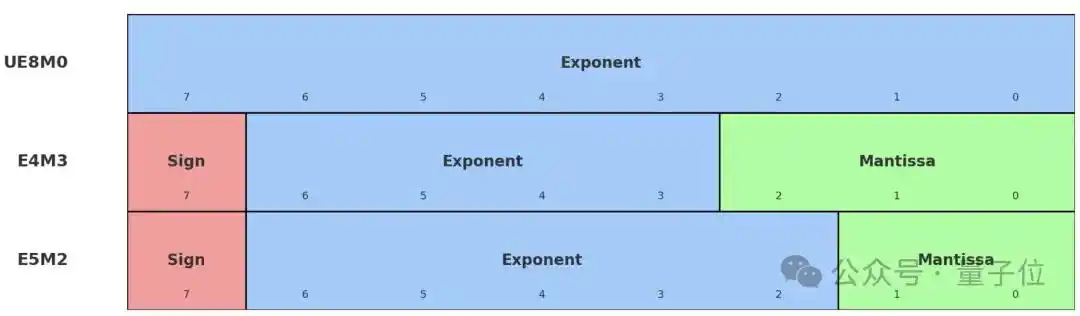
The UE8M0 FP8 data format introduced in DeepSeek-V3.1 is believed to be specifically designed for the hardware characteristics of next-generation domestic chips. The algorithm team was thinking about chips while writing the model.
However, the challenges are equally immense. Designing a competitive AI chip typically requires several years and massive capital investment, and success cannot be guaranteed at this stage.

51 Billion Yuan Funding Secured, Computing Infrastructure Simultaneously Deployed

This plan is backed by real money.

In June 2026, DeepSeek completed its first external financing round since its founding, raising approximately 51 billion yuan (about $7.4 billion), with a post-investment valuation between $52 billion and $59 billion. The company, which had refused external investment for many years, opening up to financing itself represents a major strategic shift.

The use of funds is already clear: expanding computing centers primarily based on domestic chips, developing self-developed AI chips, and expanding the team of global top talent.

Infrastructure-level actions are also advancing. DeepSeek has released job postings for IDC design and planning engineers, planning to participate in the planning and construction of data centers ranging from megawatt to gigawatt scale. The recruitment information explicitly mentions construction locations such as Ulanqab in Inner Mongolia.

DeepSeek itself maintains its characteristic low profile. Three informed sources all requested anonymity, and the company has not made any public response.

Nevertheless, this company, which has changed the pace of global AI competition, is now aiming to change the hardware foundation beneath its feet.

Reference Links:

[1]https://www.reuters.com/world/china/chinas-deepseek-developing-its-own-ai-chip-sources-say-2026-07-07/

This article is from the WeChat public account "QbitAI", author: Meng Chen

Criptos en tendencia

Preguntas relacionadas

QWhat is the main purpose of DeepSeek's secret in-house AI chip development project?

AThe main purpose is to reduce DeepSeek's dependence on NVIDIA and lower the cost and power consumption specifically for AI inference tasks, as the industry's computing demand shifts from training to large-scale, continuous inference.

QWhen did DeepSeek reportedly start its AI chip project, and what is its current stage?

AThe project started approximately one year ago from the article's publication date and is currently in its early stages, with DeepSeek already engaging with chip design firms, foundries, and memory suppliers.

QHow did DeepSeek conduct recruitment for its chip project according to the article?

AThe recruitment was conducted with extreme discretion; DeepSeek did not post any job openings on public recruitment platforms but has been quietly hiring chip design engineers in recent months.

QWhat recent financial development supports DeepSeek's chip and infrastructure plans?

AIn June 2026, DeepSeek completed its first external funding round, raising about 51 billion RMB (approximately $7.4 billion), which will be used for building data centers based on domestic chips, developing its own AI chip, and expanding its global talent team.

QWhich other major AI companies are mentioned as also pursuing in-house AI chip development?

AThe article mentions that OpenAI recently announced its first custom inference chip, 'Jalapeño,' developed in collaboration with Broadcom, and that Anthropic was reported in April of the same year to be considering developing its own AI chips.

Lecturas Relacionadas

HKEX Welcomes Its Largest IPO of the Day

Today (July 8th), Momenta successfully listed on the Hong Kong Stock Exchange, becoming the "first Physical AI stock." The company, founded in 2016 by Tsinghua University alumnus Cao Xudong, focuses on autonomous driving as an entry point into Physical AI research. Momenta's IPO price was HK$295.6 per share. With a market cap exceeding HK$70 billion post-listing, it was the largest among the five companies debuting that day. The offering raised approximately HK$6.8 billion and attracted a "star-studded" lineup of 14 cornerstone investors, including top-tier international funds, leading strategic industrial investors like Mercedes-Benz and BYD, and major Chinese financial institutions. The company has pioneered a "flywheel" strategy, integrating mass-produced advanced driver-assistance systems (ADAS) with its full-self-driving (L4) development. Data from over 1 million vehicles equipped with its systems fuels its AI models, enabling continuous improvement. This massive real-world data scale is a core competitive advantage. In April, Momenta launched its self-developed R7 World Model for mass production, a foundational model designed to understand and predict physical world dynamics. The company positions itself not just as an automotive tech supplier, but as a platform-level Physical AI company. Its technology platform has the potential to expand beyond autonomous vehicles into areas like logistics and embodied AI. Financially, Momenta's revenue grew from RMB 743 million in 2023 to RMB 2.413 billion in 2025, with licensing income surging 42-fold during this period. While still reporting adjusted losses, it is nearing breakeven. The company boasts partnerships with 24 global automakers, including 9 of the world's top 10, and holds a 65% market share in China's third-party urban NOA segment. The listing marks a significant moment for Physical AI in global capital markets, reflecting strong investor confidence in Momenta's unique technology path and commercial execution.

marsbitHace 2 min(s)

HKEX Welcomes Its Largest IPO of the Day

marsbitHace 2 min(s)

Not Betting on Goals but on 'Tears': Polymarket Users Argue Over Ronaldo's Final World Cup Match

Title: Beyond Goals, Betting on Tears: Polymarket Users Clash Over Ronaldo's Emotional World Cup Exit On July 6, Portugal's 0-1 loss to Spain in the World Cup round of 16 marked the final tournament for Cristiano Ronaldo. The 41-year-old star's emotional reaction—red eyes, wiping his face, fighting back tears—was captured globally. Concurrently, a fierce debate erupted on the crypto prediction platform Polymarket over a specific market: "Will Ronaldo cry during the 2026 FIFA World Cup?" The market, with over $23 million in volume, saw its "YES" probability surge to 99% after the match, but the result was disputed and entered a final review phase. The core conflict centered on the market's precise rules: it required "clearly visible tears streaming down [Ronaldo's] face" in photos/videos taken on the field or bench area during Portugal's matches. While major media outlets described Ronaldo as "in tears" and footage showed him emotional, "NO" bettors argued visible tear tracks were not conclusively evident, only red eyes and dampness. Polymarket's official clarification on July 8 stated that eligible evidence existed showing Ronaldo crying with visible tears on his face post-match. The dispute now goes to a UMA oracle community vote for resolution. This incident highlights a recurring challenge for prediction markets: they excel with quantifiable events but can spark major controversies over subjective, visual, or emotional interpretations. It also serves as a reminder for participants to scrutinize rule wording meticulously, not rely on general perception. Ultimately, such high-profile disputes drive significant trading volume and attention for the platform.

Foresight NewsHace 1 hora(s)

Not Betting on Goals but on 'Tears': Polymarket Users Argue Over Ronaldo's Final World Cup Match

Foresight NewsHace 1 hora(s)

Trading

Spot

Artículos destacados

Cómo comprar CHIP

¡Bienvenido a HTX.com! Hemos hecho que comprar USD.AI (CHIP) sea simple y conveniente. Sigue nuestra guía paso a paso para iniciar tu viaje de criptos.Paso 1: crea tu cuenta HTXUtiliza tu correo electrónico o número de teléfono para registrarte y obtener una cuenta gratuita en HTX. Experimenta un proceso de registro sin complicaciones y desbloquea todas las funciones.Obtener mi cuentaPaso 2: ve a Comprar cripto y elige tu método de pagoTarjeta de crédito/débito: usa tu Visa o Mastercard para comprar USD.AI (CHIP) al instante.Saldo: utiliza fondos del saldo de tu cuenta HTX para tradear sin problemas.Terceros: hemos agregado métodos de pago populares como Google Pay y Apple Pay para mejorar la comodidad.P2P: tradear directamente con otros usuarios en HTX.Over-the-Counter (OTC): ofrecemos servicios personalizados y tipos de cambio competitivos para los traders.Paso 3: guarda tu USD.AI (CHIP)Después de comprar tu USD.AI (CHIP), guárdalo en tu cuenta HTX. Alternativamente, puedes enviarlo a otro lugar mediante transferencia blockchain o utilizarlo para tradear otras criptomonedas.Paso 4: tradear USD.AI (CHIP)Tradear fácilmente con USD.AI (CHIP) en HTX's mercado spot. Simplemente accede a tu cuenta, selecciona tu par de trading, ejecuta tus trades y monitorea en tiempo real. Ofrecemos una experiencia fácil de usar tanto para principiantes como para traders experimentados.

434 Vistas totalesPublicado en 2026.04.21Actualizado en 2026.06.02

Cómo comprar CHIP

Discusiones

Bienvenido a la comunidad de HTX. Aquí puedes mantenerte informado sobre los últimos desarrollos de la plataforma y acceder a análisis profesionales del mercado. A continuación se presentan las opiniones de los usuarios sobre el precio de CHIP (CHIP).

活动图片