Deconstructing the Capital Game of Public Chain Pharos: A $950 Million Valuation Propped Up by Photovoltaic and Other Assets, A Shell Transaction Under Layers of Betting?

marsbitPublicado a 2026-03-15Actualizado a 2026-03-15

Resumen

The article investigates the recent $247.3 million investment by Hong Kong-listed GCL New Energy into the Layer 1 blockchain project Pharos at a $950 million valuation. It reveals the deal is not a straightforward investment but a complex, multi-stage transaction bound by stringent performance milestones. The core of the agreement is a set of mutual, conditional investments. Pharos must first purchase up to $1.5 billion HKD worth of GCL shares. However, GCL's reciprocal investment in Pharos tokens is contingent upon a series of strict, performance-based vesting conditions. The entire deal is split into five tranches, each unlocking only if the Pharos token lists on an exchange without falling below its issue price and maintains a high fully diluted valuation (FDV) over successive three-month periods. If any condition fails, the entire agreement can be terminated. The article questions the legitimacy of the $950 million valuation, which was calculated based on a purported $250 million in Total Value Locked (TVL). Notably, over half of this TVL is claimed to be from real-world assets (RWA), specifically photovoltaic and power station assets linked to GCL—a highly unconventional method for valuing a Layer 1 blockchain. Furthermore, the mainnet is not yet live, and the TVL figure is unverified by independent data platforms. The author suggests the deal is a "capital game" designed to boost GCL's stock price, which saw suspicious pre-announcement surges, and to create hype for ...

Author: Gu Yu, ChainCatcher

After several months, the Layer1 public chain sector has recently seen another financing round at the billion-dollar valuation level. Pharos, which claims to be a high-performance parallel Layer 1 public chain, announced an upgrade in its capital cooperation with the Hong Kong Stock Exchange-listed company GCL New Energy. GCL New Energy completed an investment subscription in Pharos at a valuation of $950 million, with an amount of $24.73 million.

GCL New Energy is a well-known domestic private photovoltaic power generation enterprise, mainly engaged in the development, construction, operation, and management of solar power stations. This aligns very well with Pharos's key RWA development direction, making it seem like a transaction of positive strategic significance for both parties.

However, this transaction has also raised many questions in the market. Given the current dismal secondary market, can projects in the Layer1 and RWA sectors really achieve billion-dollar valuations in the primary market? Would a listed company easily invest in such high-risk assets?

A Mutually Binding Betting Transaction

Many details hidden in the complex announcements show that this is not a conventional direct financing transaction, but a bundled deal involving mutual investment, phased settlements, and market value betting. Moreover, all core settlement conditions are firmly in the hands of GCL New Energy. If any condition is not met, this transaction will be nothing more than an empty document without any substantive binding force.

Among them, Pharos's share subscription in GCL New Energy is a preconditioned investment. It will subscribe for a maximum of 183,480,000 new shares in the company at a price of HK$1.05, worth approximately HK$150 million. This price represents a 15% discount compared to GCL New Energy's current price (HK$1.23).

This transaction seems to favor Pharos, but GCL New Energy is clearly well-versed in financial operations and has set five stringent settlement thresholds for this share subscription. If any batch of settlement conditions is not met, all subsequent settlements will be terminated, and the entire agreement is valid for only 18 months. Specifically, this investment is divided into five batches of settlements, with unlocking conditions all tied to the listing performance of the Pharos Token:

The first batch, accounting for 50%, will only proceed if the Pharos Token is successfully approved for listing on relevant Web3 exchanges and the opening price is not lower than the company's agreed investment price (calculated based on a $950 million valuation). If the listing fails or the opening price falls below the issue price, the company has the right not to proceed with the settlement.

The second batch, accounting for 12.5%, will only proceed if the daily average FDV (Fully Diluted Valuation) of the Pharos Token in the first three months after listing is not less than $760 million.

The unlocking conditions for the subsequent three batches are roughly similar, with the main difference being the calculation periods for the average FDV: the fourth to sixth months, the seventh to ninth months, and the ninth to twelfth months, respectively.

Once the Pharos Token meets the settlement conditions, Pharos's share subscription in GCL New Energy will take effect accordingly, and GCL New Energy's subscription for the Pharos Token will also take effect simultaneously, with the same unlocking ratio.

In other words, after the successful listing of the Pharos Token, Pharos will immediately settle a HK$75 million share subscription with GCL New Energy, while GCL New Energy will acquire Pharos Tokens worth approximately HK$96.73 million at a valuation of $950 million.

For GCL New Energy, this is an almost risk-free transaction. On one hand, it can obtain HK$75 million in share subscription funds, and on the other hand, if the Pharos Token performs well, it can acquire tokens worth nearly HK$100 million at the initial listing valuation, offering considerable profit margin.

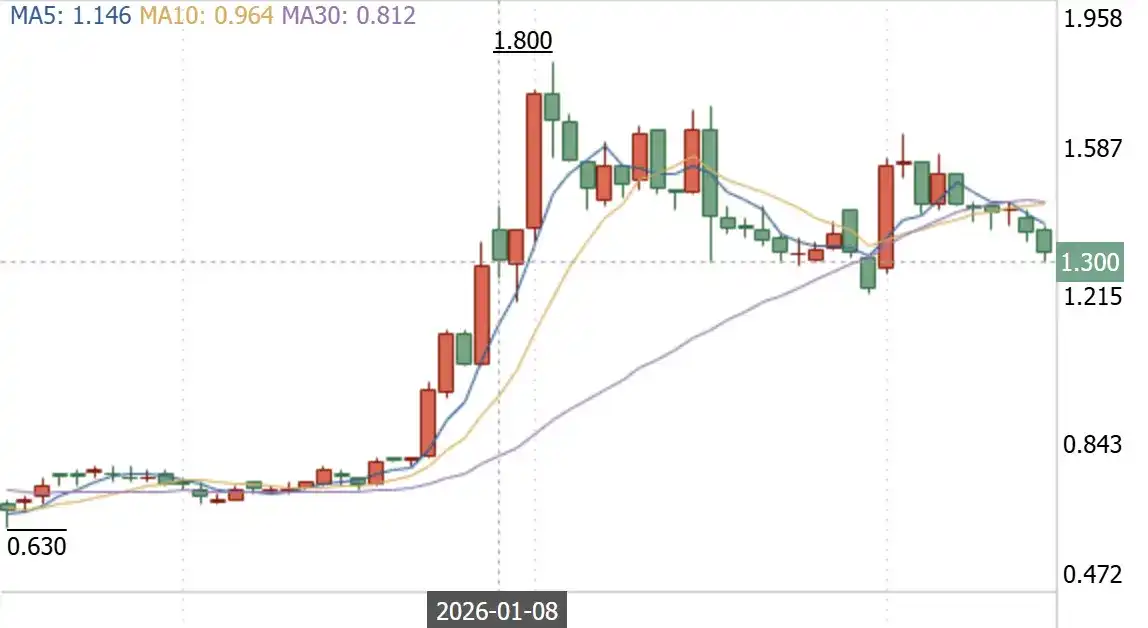
The positive news has already been reflected in the stock price. Although GCL New Energy first disclosed its cooperation with Pharos on January 8, its stock price had already risen significantly a week earlier, climbing from HK$0.8 to HK$1.3 on the announcement day, and later reaching a peak of HK$1.8. Since then, it has been on a downward trend. In the trading market, this is a typical "rat trading" pattern.
Another potential issue is that Pharos has previously disclosed a cumulative financing of only $8 million, equivalent to HK$62.61 million. Therefore, even if the pre-investment conditions are met, this funding gap may pose a challenge for Pharos.
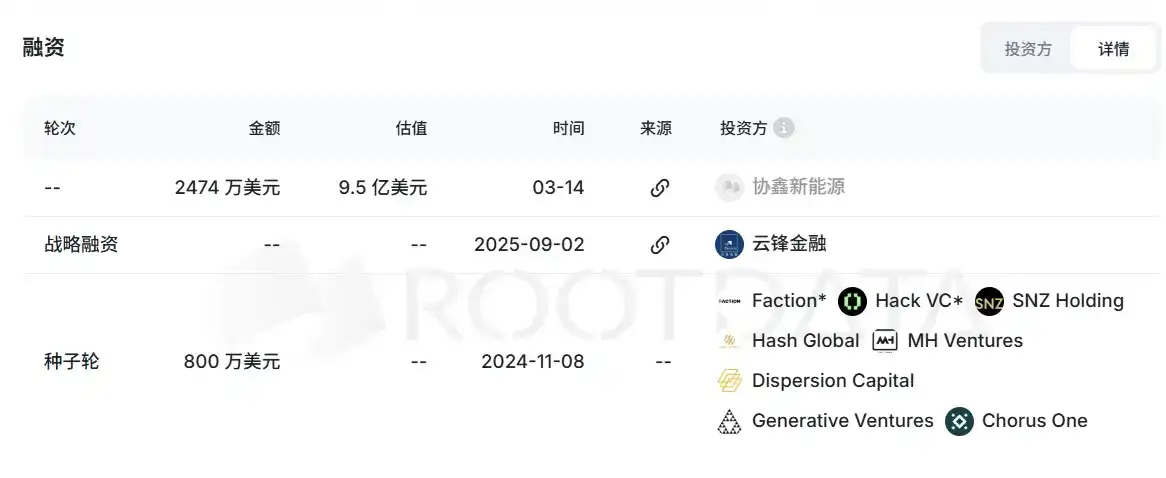
Source: RootData

How Was the $950 Million Valuation Derived?

Another interesting piece of information is that GCL New Energy also detailed in the agreement why it valued Pharos at $950 million. According to the agreement, this investment valuation is primarily based on the on-chain total value locked (TVL). In the Layer1 sector, the average ratio of fully diluted valuation (FDV) to total value locked (TVL) for Ethereum, BSC, Hyperliquid, Tron, and Avalanche is 10x, with a median of 6x. Monad, which has a similar technical route, has a ratio of 10x.
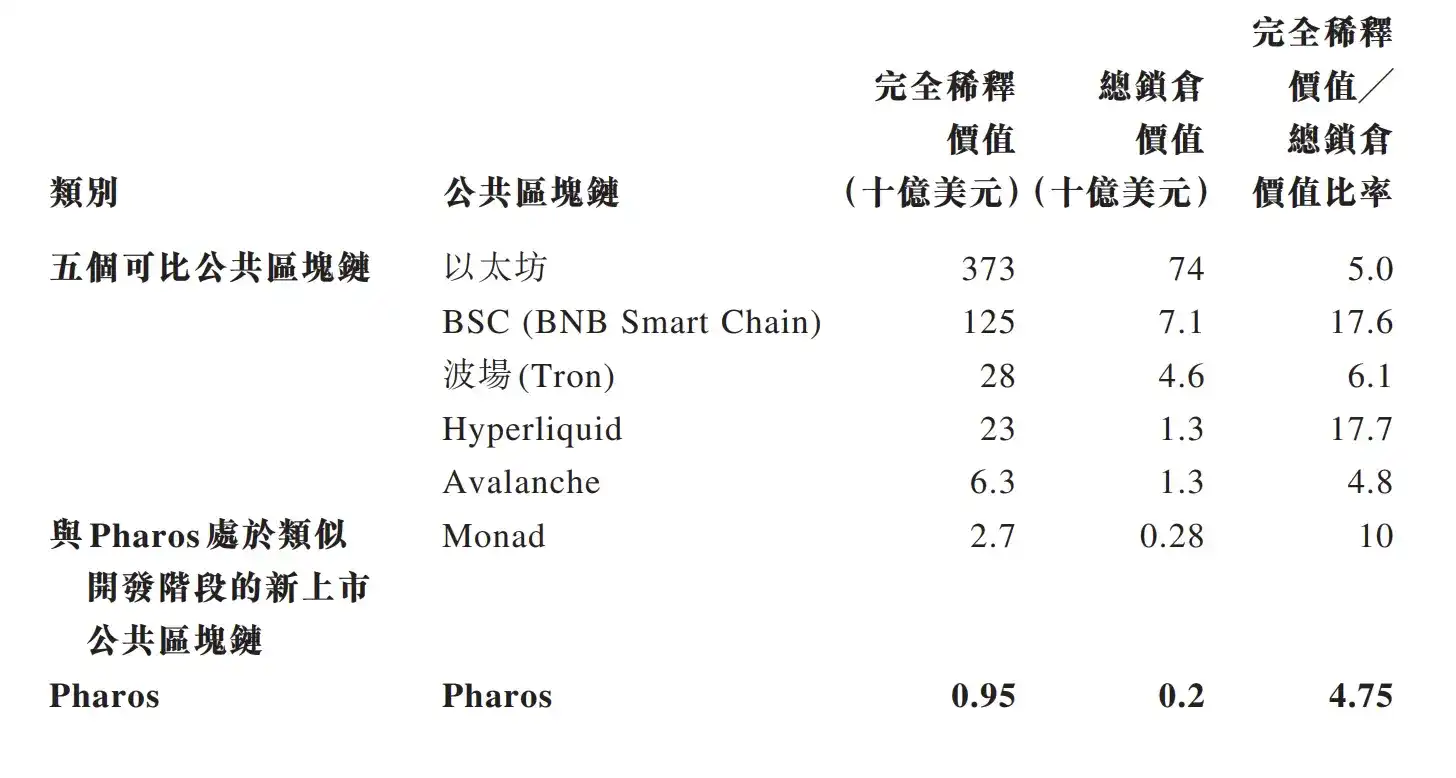
Therefore, both parties decided to set the calculation coefficient for Pharos at 4.75x. Since Pharos's current total value locked is $250 million, and calculated with a 20% discount, the initial valuation should be $950 million.

Regarding the types of on-chain locked assets, the agreement disclosed that currently, among all locked assets in Pharos, 51% come from new energy assets of distributed photovoltaic operators and centralized power station operators, and 49% come from financial assets of fund management companies and credit asset issuers.

In other words, Pharos's total value locked includes physical assets in its calculation, specifically power station and photovoltaic assets closely related to the parties involved in this transaction. This calculation method sets a precedent in the Layer1 industry.

In fact, Pharos's mainnet has not yet been officially announced as launched. Professional on-chain data statistics platforms like DeFiLlama do not include Pharos's locked data, and the $250 million figure is entirely a unilateral disclosure from the project team.

The premature stock price movement, combined with the layers of betting conditions in the agreement and the inflated valuation calculation, makes it easy to see the true purpose of this transaction: For GCL New Energy, this may be a financial operation to hype the stock price and boost the company's market value by leveraging crypto concepts. For Pharos, it is an attempt to rely on the listed company's physical assets to create a high-valuation buzz and build momentum for the subsequent token listing. Both parties get what they need, but leave the risks to the market and subsequent investors.

When a实体产业 company injects physical assets into a Layer1 project and then calculates a valuation several times the value of those physical assets to easily create a $950 million valuation, isn't this capital game too outrageous? Does the crypto market really need such RWA?


Preguntas relacionadas

QWhat is the nature of the capital cooperation between Pharos and GCL New Energy, and what is the announced valuation?

AThe capital cooperation involves GCL New Energy investing in the Layer 1 blockchain Pharos at a valuation of $950 million. The investment amount is $24.73 million. The deal is structured as a mutual investment with staged closings and market cap-based performance warrants, not a straightforward equity purchase.

QWhat are the specific conditions (warrants) that GCL New Energy set for the investment to be executed?

AThe investment is split into five tranches with strict unlocking conditions tied to the performance of the Pharos Token post-listing. The first tranche (50%) requires the token to be listed on an exchange at or above the initial offering price. Subsequent tranches require the token's fully diluted valuation (FDV) to maintain specific averages over 3-month periods (e.g., $760 million for the second tranche) for the 12 months following listing.

QHow was the $950 million valuation for Pharos calculated, and what is controversial about it?

AThe valuation was calculated by applying a multiple of 4.75 to a reported Total Value Locked (TVL) of $250 million, with a 20% discount. The TVL figure controversially includes real-world assets (RWA) like photovoltaic power stations and financial assets, not just crypto assets. This method is unprecedented in the Layer 1 sector, and the $250M TVL is a self-reported figure as the mainnet is not yet live on major tracking sites.

QWhat potential market manipulation is suggested by the article regarding GCL New Energy's stock price?

AThe article suggests potential 'rat trading' (insider trading or market manipulation), as GCL New Energy's stock price experienced a significant rise from HK$0.8 to HK$1.3 in the week *before* the official announcement of the deal with Pharos was made public on January 8th.

QWhat is the article's overall conclusion about the strategic purpose of this deal for both companies?

AThe article concludes the deal is a capital game where GCL New Energy aims to boost its stock price by leveraging crypto hype, while Pharos aims to create a high-valuation narrative backed by real-world assets to generate momentum for its upcoming token listing. The complex warrant structure transfers all risk to the market and future investors, making the $950M valuation appear inflated and the transaction potentially hollow.

Lecturas Relacionadas

The AI Agent Era Accelerates Its Arrival: Questflow Defines a New Paradigm of Financial Intelligence with On-Chain AI Brokerage

The AI Agent era is accelerating, with the CB Insights AI 100 list highlighting global investment confidence. The focus has shifted from whether AI works to its speed of deployment and ability to manage complex workflows, with autonomous AI Agents driving this transformation. At the forefront is Questflow, a Singapore-based startup redefining financial intelligence through its on-chain AI brokerage. Unlike tools that merely provide data dashboards, Questflow deploys AI Agents that proactively scan markets, form judgments, and execute trades via a conversational interface—operating 24/7 without requiring manual confirmation for each decision. This embodies the new AI paradigm of agents capable of executing multi-step workflows autonomously. Questflow's mission is to democratize institutional-grade trading intelligence. Historically reserved for the ultra-wealthy, this capability is now accessible starting from just $1 through Questflow's "AI Clone + Copy Trade" model. The platform charges only a 1% execution fee, aligning its incentives directly with users and eliminating traditional management or performance fees. The timing is opportune, aligning with key trends identified by CB Insights: the scalable deployment of AI Agents, accelerated AI adoption in financial services, and the maturation of on-chain infrastructure. With robust liquidity on platforms like Hyperliquid and Polymarket, alongside advancements in AI reasoning and non-custodial wallet security, Questflow is positioned to merge the roles of broker, fund, and exchange into a single, accessible platform for millions.

链捕手Hace 15 min(s)

The AI Agent Era Accelerates Its Arrival: Questflow Defines a New Paradigm of Financial Intelligence with On-Chain AI Brokerage

链捕手Hace 15 min(s)

Why Pricing Social Interactions is Doomed to Fail?

Titled "Why Putting a Price on Social Interaction Is Doomed to Fail," this article critiques attempts to monetize social networks directly through SocialFi models, arguing their inevitable failure stems from a fundamental misunderstanding of media dynamics. Using Marshall McLuhan's theory of "hot" and "cold" media, the author posits that social networks are inherently "cold" media. Their value isn't contained in individual posts but is co-created through user participation, interpretation, and fragmented, ongoing interaction (e.g., replies, shares). This ambiguity and need for user involvement are core to their function. The article asserts that SocialFi projects like Friend.tech failed because introducing real-time, tradable financial pricing (a definitive "hot" signal) into this "cold" environment doesn't add a layer—it replaces the medium's essence. The unambiguous price signal overshadows and nullifies the nuanced, participatory social signal. Users become traders, not participants, and when speculative profits vanish, the underlying social ecosystem—never genuinely cultivated—collapses entirely. This principle extends beyond crypto. The author argues platforms like Twitter have gradually "heated up" through metrics (likes, retweets counts, algorithmically defined value), shifting users from participants to performers and eroding organic engagement. The solution isn't to abandon capital but to manage its entry point. Successful models like Substack, Patreon, or Bandcamp allow capital to "condense" at specific, isolated nodes (e.g., subscriptions, one-time payments) without permeating and "heating" every social interaction. They preserve the core "cold," participatory medium while enabling monetization at designated boundaries. The NFT boom and bust serves as a stark parallel: the ancient "cold" medium of collecting (valued for story, community, gradual accumulation) was rapidly destroyed by platforms that introduced real-time floor prices, rarity scores, and trading dashboards, transforming collectors into speculators and vaporizing cultural value when prices fell. The core lesson: "Liquidity equals heat." Injecting high liquidity and definitive pricing into a "cold" participatory medium doesn't optimize it; it fundamentally alters and destroys its value-creating mechanism. The future lies not in pricing every social gesture but in finding precise, non-invasive points for capital to condense without overheating the entire ecosystem.

marsbitHace 23 min(s)

Why Pricing Social Interactions is Doomed to Fail?

marsbitHace 23 min(s)

Jensen Huang's CMU Speech: In the AI Era, Don't Just Watch, Build

Jensen Huang, CEO of NVIDIA and a first-generation immigrant, delivered the commencement address to Carnegie Mellon University's class of 2026. He shared his personal journey from a humble background to founding NVIDIA, emphasizing resilience, learning from failure, and the responsibility that comes with leadership. Huang framed the present moment as the dawn of the AI revolution, a shift he believes is more profound than previous computing waves. He described AI as fundamentally resetting computing—moving from human-written software to machines that understand, reason, and use tools. This will create a new industry for generating intelligence and transform every sector. While acknowledging AI's potential to automate tasks and displace some jobs, Huang distinguished between the *tasks* of a job and its core *purpose*. He argued AI will augment human capability, not replace humans. The real risk, he stated, is not AI itself, but people being left behind by those who effectively use AI. He presented AI as a generational opportunity for massive infrastructure investment—in chip factories, data centers, energy grids, and advanced manufacturing—that could re-industrialize nations like the U.S. and bridge the digital divide by making computing and intelligent tools accessible to all. Huang called for a balanced approach: advancing AI safely and responsibly, establishing prudent policies, ensuring broad access, and encouraging universal participation. He urged the graduates not to fear the future but to engage with optimism and ambition, reminding them of CMU's motto, "My heart is in the work." His core message was clear: this is their moment to actively build and shape the AI-powered future, not merely observe it.

marsbitHace 1 hora(s)

Jensen Huang's CMU Speech: In the AI Era, Don't Just Watch, Build

marsbitHace 1 hora(s)

Trading

Spot
Futuros

Artículos destacados

Cómo comprar SHELL

¡Bienvenido a HTX.com! Hemos hecho que comprar MyShell (SHELL) sea simple y conveniente. Sigue nuestra guía paso a paso para iniciar tu viaje de criptos.Paso 1: crea tu cuenta HTXUtiliza tu correo electrónico o número de teléfono para registrarte y obtener una cuenta gratuita en HTX. Experimenta un proceso de registro sin complicaciones y desbloquea todas las funciones.Obtener mi cuentaPaso 2: ve a Comprar cripto y elige tu método de pagoTarjeta de crédito/débito: usa tu Visa o Mastercard para comprar MyShell (SHELL) al instante.Saldo: utiliza fondos del saldo de tu cuenta HTX para tradear sin problemas.Terceros: hemos agregado métodos de pago populares como Google Pay y Apple Pay para mejorar la comodidad.P2P: tradear directamente con otros usuarios en HTX.Over-the-Counter (OTC): ofrecemos servicios personalizados y tipos de cambio competitivos para los traders.Paso 3: guarda tu MyShell (SHELL)Después de comprar tu MyShell (SHELL), guárdalo en tu cuenta HTX. Alternativamente, puedes enviarlo a otro lugar mediante transferencia blockchain o utilizarlo para tradear otras criptomonedas.Paso 4: tradear MyShell (SHELL)Tradear fácilmente con MyShell (SHELL) en HTX's mercado spot. Simplemente accede a tu cuenta, selecciona tu par de trading, ejecuta tus trades y monitorea en tiempo real. Ofrecemos una experiencia fácil de usar tanto para principiantes como para traders experimentados.

144 Vistas totalesPublicado en 2025.02.28Actualizado en 2025.03.21

Cómo comprar SHELL

Discusiones

Bienvenido a la comunidad de HTX. Aquí puedes mantenerte informado sobre los últimos desarrollos de la plataforma y acceder a análisis profesionales del mercado. A continuación se presentan las opiniones de los usuarios sobre el precio de SHELL (SHELL).

活动图片












