Decentralization at risk as 100 wallets hold 80% of DeFi supply: Report

ambcryptoPublicado a 2026-03-29Actualizado a 2026-03-29

Resumen

DeFi's decentralization is under threat as new data reveals extreme concentration of governance power. A report from the ECB shows the top 100 wallets control over 80% of the token supply across major protocols, while just 10-20 voters hold up to 96% of delegated voting power in some cases. With participation rates as low as 4-12%, decision-making is effectively controlled by a small group of entities, including founders, treasuries, and centralized exchanges. This makes regulators' jobs easier, as they can now identify clear control points, increasing DeFi's regulatory exposure under frameworks like MiCA. Consequently, markets are repricing DAO tokens, with a growing premium placed on protocols that demonstrate broader participation and transparency, while those with concentrated control face valuation pressures.

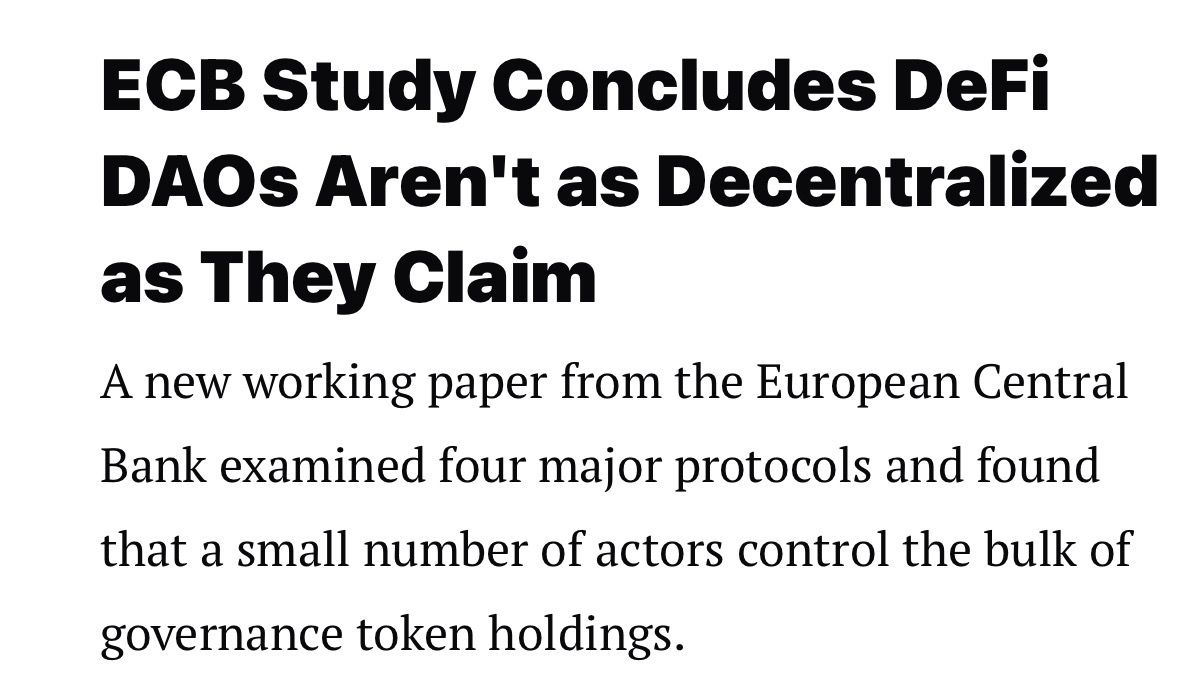
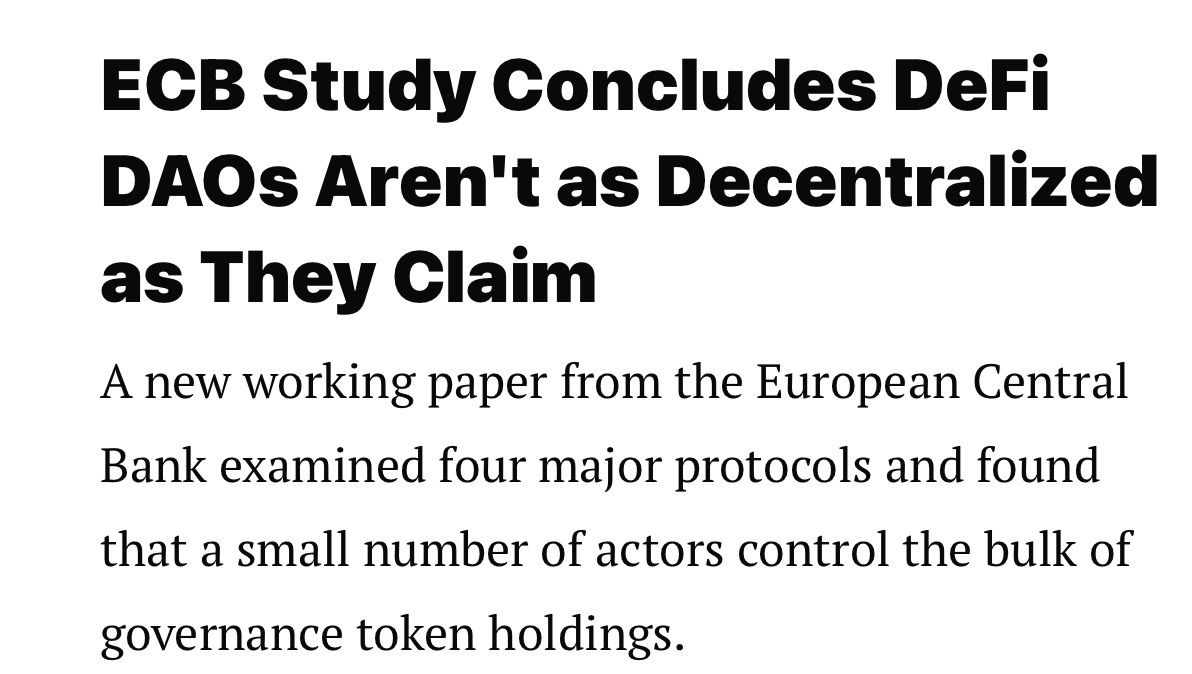
DeFi’s decentralization narrative is now being tested, as governance data reveals power is not widely distributed. The ECB’s March 2026 paper shows the top 100 holders control over 80% of tokens across major protocols, forming a clear concentration.

As this structure persists, decision-making shifts toward a small group, often including treasuries, founders, and centralized exchanges. Delegation intensifies this effect, as just 10–20 voters control up to 96% of delegated power.
Source: X

Participation remains low at 5–12%, which means most holders do not influence outcomes, leaving control in fewer hands. This imbalance matters because regulators can now identify who shapes protocol decisions.

As frameworks like MiCA tighten, these visible control points increase regulatory exposure. This shift suggests DeFi may face oversight similar to traditional finance structures.

DeFi governance narrows, but who is in control?

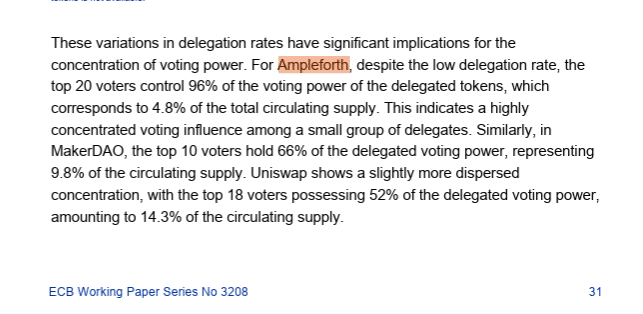
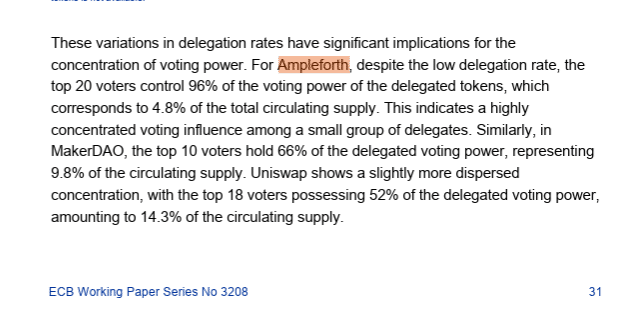
DeFi governance is shifting from broad ownership to concentrated control, as delegation hands decision power to a small group. The ECB’s March 2026 paper shows the trend clearly, with the top 20 voters in Ampleforth controlling 96.04% of delegated votes.
Source: ECB.Europa.eu

As this structure develops, the results rely more on a small number of active delegates than on the larger holder base. Influence clusters quickly, as seen by the fact that Uniswap’s top 18 hold 52% and MakerDAO’s top 10 control 66%.

Nevertheless, since one-third to almost 50% of the top voters cannot be identified, this focus does not translate into obvious accountability. Delegation separates traceable ownership from influence, which is why this occurs.

This creates a market where control is concentrated but partially hidden. As a result, DeFi’s decentralization weakens, while regulatory pressure rises without fully resolving enforceability.

DAO tokens reprice as decentralization weakens

Such a concentration of delegated voting power is now affecting DAO token prices, as markets reassess how decentralized these systems really are. Decision-making remains limited to a small group, with participation staying at 4–12%.

Due to the lack of widespread control, the decentralization premium decreases as the trend continues. Investors start to doubt the true worth of governance tokens, which makes this trend significant.

Perceived risk rises when regulators highlight distinct control groups, which puts further pressure on tokens with lax governance. At the same time, protocols that are more transparent and involve more people are becoming more popular.

This shift suggests DAO tokens will be priced based on governance quality, where broader participation supports value, while concentrated control leads to weaker performance.


Final Summary

  • DeFi governance shows concentrated control, weakening decentralization and increasing regulatory exposure.
  • DeFi governance concentration pressures DAO token valuations, as markets favor stronger transparency and broader participation.

Preguntas relacionadas

QWhat percentage of tokens across major DeFi protocols are controlled by the top 100 holders, according to the ECB's report?

AThe top 100 holders control over 80% of tokens across major DeFi protocols.

QHow does delegation intensify the concentration of power in DeFi governance?

ADelegation intensifies this effect, as just 10–20 voters control up to 96% of delegated power.

QWhat is the typical participation rate in DeFi governance, and what does this imply for decision-making?

AParticipation remains low at 5–12%, which means most holders do not influence outcomes, leaving control in fewer hands.

QHow is the market reassessing the value of DAO tokens in light of governance concentration?

AMarkets are reassessing how decentralized these systems really are, and the decentralization premium decreases. DAO tokens are being priced based on governance quality, where broader participation supports value, while concentrated control leads to weaker performance.

QWhat regulatory risk arises from the visible concentration of control in DeFi protocols?

AAs regulatory frameworks like MiCA tighten, these visible control points increase regulatory exposure, suggesting DeFi may face oversight similar to traditional finance structures.

Lecturas Relacionadas

Interview with Robinhood Executive: Meme + Tokenized US Stocks as "Barbell" Customer Acquisition Strategy, All Business Lines Achieve Hundreds of Millions in Revenue

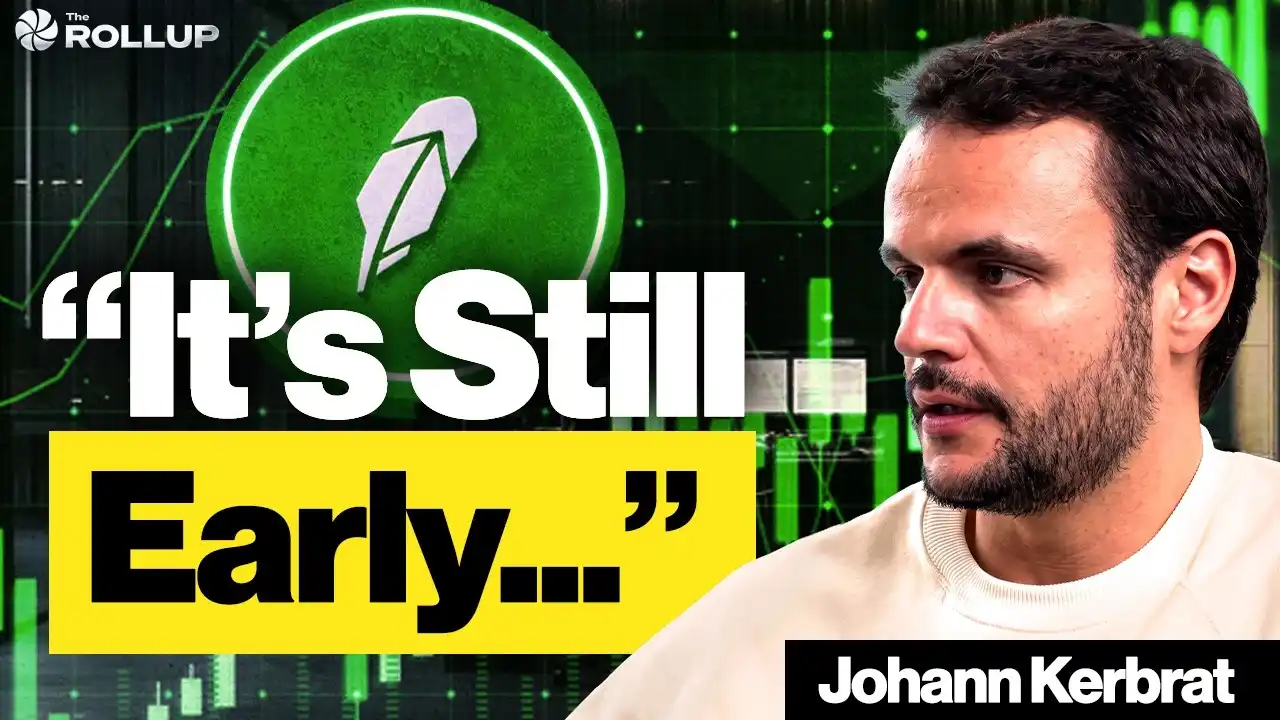
Interview with Robinhood executive Johann Kerbrat reveals the company's "barbell" customer acquisition strategy for its new Robinhood Chain, combining meme tokens with tokenized stocks. Three weeks after mainnet launch, the chain has seen over $3B in weekly DEX volume and 105M transactions. Kerbrat explains the logic behind the permissionless chain: meme tokens attract DeFi users, while tokenized real-world assets (RWA), currently over 90 US stocks and ETFs accessible in 120+ countries, serve global users. The goal is to bring Robinhood's 27 million funded accounts on-chain by simplifying DeFi with a user-friendly interface, exemplified by features like Robinhood Earn which offers yield without requiring wallet management. Built on Arbitrum's technology stack for its speed, low cost, and Ethereum's security, the chain focuses on financial products like Earn, spot trading, and perpetuals. Kerbrat downplays direct competition with platforms like Base, emphasizing the goal of expanding the overall market for on-chain assets. He details selective partnerships (e.g., Morpho, Lighter) based on compliance, unique UX, and differentiation. While regulatory clarity is pending for US perpetuals, the expansion continues via Bitstamp in Europe. Finally, Kerbrat positions Robinhood as a "super app" integrating stocks, options, crypto, banking, and AI trading, with all major business lines generating hundreds of millions in revenue. For the chain, current priority is driving adoption over maximizing gas fee revenue.

marsbitHace 1 hora(s)

Interview with Robinhood Executive: Meme + Tokenized US Stocks as "Barbell" Customer Acquisition Strategy, All Business Lines Achieve Hundreds of Millions in Revenue

marsbitHace 1 hora(s)

Fidelity Q3 Report: BTC, ETH, and SOL Continue to Build Bottoms; How Much Further Will This Crypto Bear Market Go?

Fidelity's Q3 Crypto Signal Report analyzes the current bear market, noting Bitcoin (BTC), Ethereum (ETH), and Solana (SOL) are in a prolonged bottoming phase. Key indicators like the weighted Net Unrealized Profit/Loss (NUPL) have turned negative (-0.01), signaling the market is slightly below its aggregate cost basis, with BTC acting as the primary stabilizing asset. BTC's dominance has risen to 68%, indicating a lack of capital rotation to other digital assets. Performance has been weak across the board, with BTC, ETH, and SOL down significantly year-to-date. Market sentiment is depressed, exacerbated by substantial outflows from spot ETPs and a challenging macro environment. The report compares the current ~203-day downtrend to historical ~300-day bottoming cycles, suggesting the process may be two-thirds complete, with late 2026 as a potential timeframe to monitor. For Bitcoin, NUPL at 0.09 indicates cautious sentiment, while momentum signals remain negative. The Yardstick metric points to potential undervaluation relative to network security (hashrate). Ethereum's NUPL is deep in the "capitulation" zone at -0.43, a historically positive signal for future returns, though its momentum and network fee revenue are negative. Solana shows the deepest NUPL at -0.72 but demonstrates relative resilience in on-chain activity and stablecoin transfer volume. The report concludes that while several metrics are near historical capitulation levels, a definitive market bottom has not yet been established. The path forward likely involves continued consolidation, with BTC's relative strength and fundamental on-chain usage for ETH and SOL providing key areas for investor observation.

marsbitHace 1 hora(s)

Fidelity Q3 Report: BTC, ETH, and SOL Continue to Build Bottoms; How Much Further Will This Crypto Bear Market Go?

marsbitHace 1 hora(s)

Trading

Spot
活动图片