Decentraland joins GameFi rebound – MANA’s move to $0.20 depends on…

ambcryptoPublicado a 2026-01-19Actualizado a 2026-01-19

Resumen

Decentraland (MANA) broke past the $0.15 resistance on January 17th, riding a GameFi rebound led by assets like Axie Infinity. However, Bitcoin’s recent pullback triggered a market-wide selloff, causing MANA to retreat. On-chain metrics suggest weak bullish conviction: a spike in dormant coin circulation and falling mean coin age indicate distribution and selling by long-term holders. While exchange outflows are a positive sign, the sharp drop in Open Interest and negative MVRV show short-term traders are taking profits. Although not overheated, MANA faces strong selling pressure. A rally toward $0.20 is possible, but traders should take profits near resistance levels like $0.17 and $0.19.

Decentraland [MANA] made strong gains on Saturday, the 17th of January.

Over the past ten days, the local resistance zone at $0.15 had been contested, but bulls made a clean breakout past this level on Saturday.

The GameFi sector made strong gains in recent days, with Axie Infinity [AXS] leading the charge. This momentum has stalled over the past 48 hours, but it could rekindle later this week.

The Bitcoin [BTC] pullback in recent hours of trading has dragged MANA prices lower. The move triggered $864 million in liquidations across the market within the past 24 hours.

If it were solely a liquidity hunt, the chances of a recovery would be better. This could set up MANA and select altcoins up for a good bounce.

Assessing the strength of Decentraland bulls

Coinalyze data showed that the Open Interest, which had increased by nearly 50% over the weekend, had suffered a 10% drop in the past few hours.

The Dormant Circulation saw a sizeable spike on Sunday, the 18th of January. It was accompanied by a rapid price drop. Generally, increased Dormant Circulation implies older coins were being moved onchain for selling.

Additionally, the 30-day MVRV, which had reached 10.3% on the 13th of January, was at -4.7% at the time of writing. This suggested short-term holders were, on average, facing losses once again.

The Mean Coin Age has also fallen over the past week. The lack of accumulation, flurry of dormant token movement, and short-term holders taking profits were indicative of a lack of long-term market conviction.

The Spot Volume Bubble Map indicated that the market wasn’t overheated. Previously, the end of 2024 and the 2021 cycle top had marked overheated conditions, which led to a long-term downtrend.

The Exchange Netflow metric showed sizeable MANA outflows in the past two days. It was a slightly encouraging sign, but investors would want to see sustained outflows in the coming weeks.

Overall, Decentraland onchain metrics showed that the threat from profit-taking was considerable.

A rally toward $0.20 and $0.25 were possible, but traders and investors should keep their expectations reasonable.

Traders, especially, should be focused on taking profits when the altcoin challenges nearby resistance zones, such as $0.17 and $0.19.


Final Thoughts

  • The spike in dormant circulation the previous day, combined with the falling mean coin age over the past week, indicated MANA distribution.
  • MANA was not overheated, showed the spot volume map, and there was space for further gains, but bullish market conviction was lacking.


Preguntas relacionadas

QWhat was the key resistance level that Decentraland (MANA) broke through on Saturday, January 17th?

AThe key resistance level that MANA broke through was $0.15.

QWhich GameFi project was highlighted as leading the sector's recent strong gains?

AAxie Infinity (AXS) was highlighted as leading the GameFi sector's recent strong gains.

QWhat on-chain metric saw a sizeable spike on January 18th, indicating older coins were likely being sold?

AThe Dormant Circulation metric saw a sizeable spike, indicating older coins were being moved on-chain for selling.

QAccording to the article, what is the significance of the Exchange Netflow metric showing outflows for MANA?

AIt is a slightly encouraging sign, as outflows can suggest investors are moving tokens off exchanges, potentially for holding, but sustained outflows are needed for greater confidence.

QWhat two price levels does the article suggest traders should focus on for taking profits?

AThe article suggests traders should focus on taking profits at the nearby resistance zones of $0.17 and $0.19.

Lecturas Relacionadas

Wintermute Market Weekly: Iran War Ends, Inflation Meets Expectations, BTC Rebounds to Lower 60ks But Don’t Rush to Buy the Dip

**Wintermute Market Weekly: BTC Rebounds to $60K Lows, But Caution Advised** This week saw a broad market rebound, primarily driven by two converging factors: a US CPI inflation reading that met expectations (4.2% YoY) and former President Trump's announcement of a deal to end the Iran conflict. The latter triggered a sharp drop in oil prices, reducing geopolitical risk premiums and easing inflation fears. Consequently, risk assets like equities and cryptocurrencies rallied, with Bitcoin recovering from lows around $60,000 to close the week up 1.9%, while altcoins gained 3.1%. Despite the price bounce, the underlying liquidity picture for crypto remains weak. Key funding channels—stablecoin flows, ETF inflows, and Digital Asset Treasury (DAT) activity—show no signs of structural improvement. ETF outflows recently hit a record streak, and DAT assets have declined significantly. The rally from $60K to $83K earlier is now viewed as a bear-market rally that has failed. The current environment is characterized by low directional conviction and choppy, range-bound trading, likely persisting into summer. The report advises caution against aggressively buying the dip. While the $60K area offers attractive long-term risk/reward, a sustained bull run requires a visible turnaround in capital inflows, which hasn't materialized. The upcoming FOMC meeting and Powell's commentary, alongside the formal Iran deal signing, are noted as near-term catalysts. The core takeaway is to watch fund flows rather than price action and avoid being whipsawed by volatility before clear signs of institutional or retail capital returning emerge.

marsbitHace 13 min(s)

Wintermute Market Weekly: Iran War Ends, Inflation Meets Expectations, BTC Rebounds to Lower 60ks But Don’t Rush to Buy the Dip

marsbitHace 13 min(s)

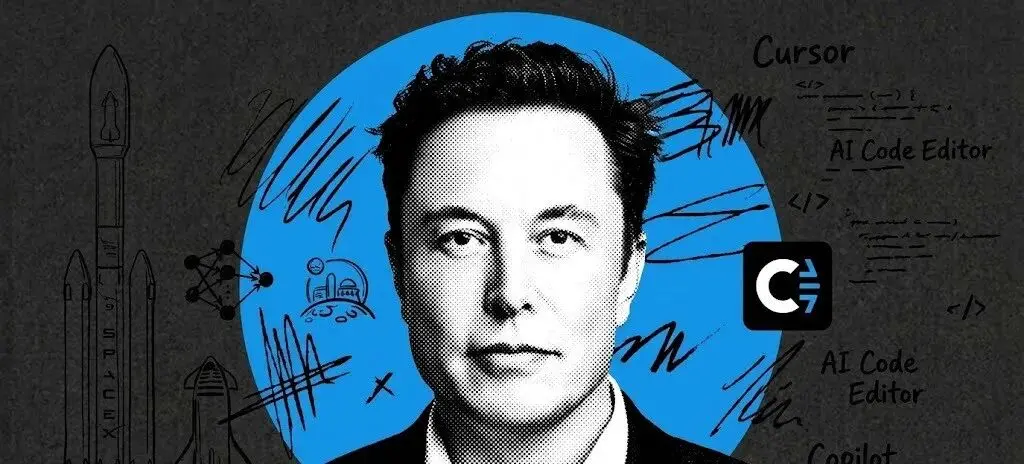
Cursor, Why Boarded Musk's Starship?

SpaceX announced its acquisition of AI programming startup Cursor's parent company, Anysphere, for $60 billion in an all-stock deal, just days after its record-breaking IPO. The move sent SpaceX's stock soaring, briefly making it the most valuable U.S. company. Cursor, founded in 2022 by MIT graduate Michael Truell and his classmates, is a popular AI coding assistant that allows developers to switch between models from OpenAI, Anthropic, and others. It saw explosive revenue growth, reaching a $4 billion annualized run rate in early 2026. However, its market share was eroded by the launch of competitor Claude Code from its key AI supplier, Anthropic. This dependence prompted Cursor to develop its own AI model, Composer, in early 2026. To scale Composer, Cursor needed immense computing power. In April 2026, it struck a deal with SpaceX, granting the latter an option to acquire it post-IPO. SpaceX exercised this option, offering Cursor access to its Colossus supercomputer, powered by hundreds of thousands of top-tier Nvidia AI chips. For SpaceX, the acquisition is a strategic move to bolster its AI capabilities, particularly for its xAI division, and advance its broader ambition of building orbital, solar-powered data centers. While the deal surprised some employees and investors given Truell's earlier stance on independence, it represents a high-stakes partnership. SpaceX CEO Elon Musk has projected the company could reach $1 trillion in revenue by 2030. For Truell, joining forces with SpaceX is a monumental gamble on an unprecedented scale in the race for AI dominance.

链捕手Hace 15 min(s)

Cursor, Why Boarded Musk's Starship?

链捕手Hace 15 min(s)

The More It Rises, the More Dangerous? The Systemic Risks Behind SpaceX's Soaring Valuation

Summary: The article raises concerns about the systemic risks posed by SpaceX's skyrocketing valuation, arguing that modern market mechanics, rather than fundamentals, are driving its price discovery. Following SpaceX's market capitalization surpassing $3 trillion in after-hours trading, the author contends that the market is no longer functioning properly. The core issue is not SpaceX's business prospects but the unhealthy market structure surrounding it. With limited float and the imminent launch of options trading, the stage is set for a potential "gamma squeeze"—a feedback loop where market makers hedging call options are forced to buy shares, pushing the price higher and attracting more speculative momentum traders. This mechanism, seen previously with Tesla and meme stocks, can decouple valuation from financial reality. The danger escalates as extreme valuations force passive funds, ETFs, pensions, and major indices to hold the stock. If SpaceX grows large enough—hypothetically reaching $5 or even $10 trillion—its performance would increasingly dictate broader market indices, embedding systemic risk. The author warns that when price appreciation itself becomes the primary bullish thesis, the market transforms from a capital allocation mechanism into a self-reinforcing speculative machine, endangering the retirement savings of ordinary investors tied to passive strategies. The piece questions whether such a system can still perform its fundamental role of price discovery.

marsbitHace 20 min(s)

The More It Rises, the More Dangerous? The Systemic Risks Behind SpaceX's Soaring Valuation

marsbitHace 20 min(s)

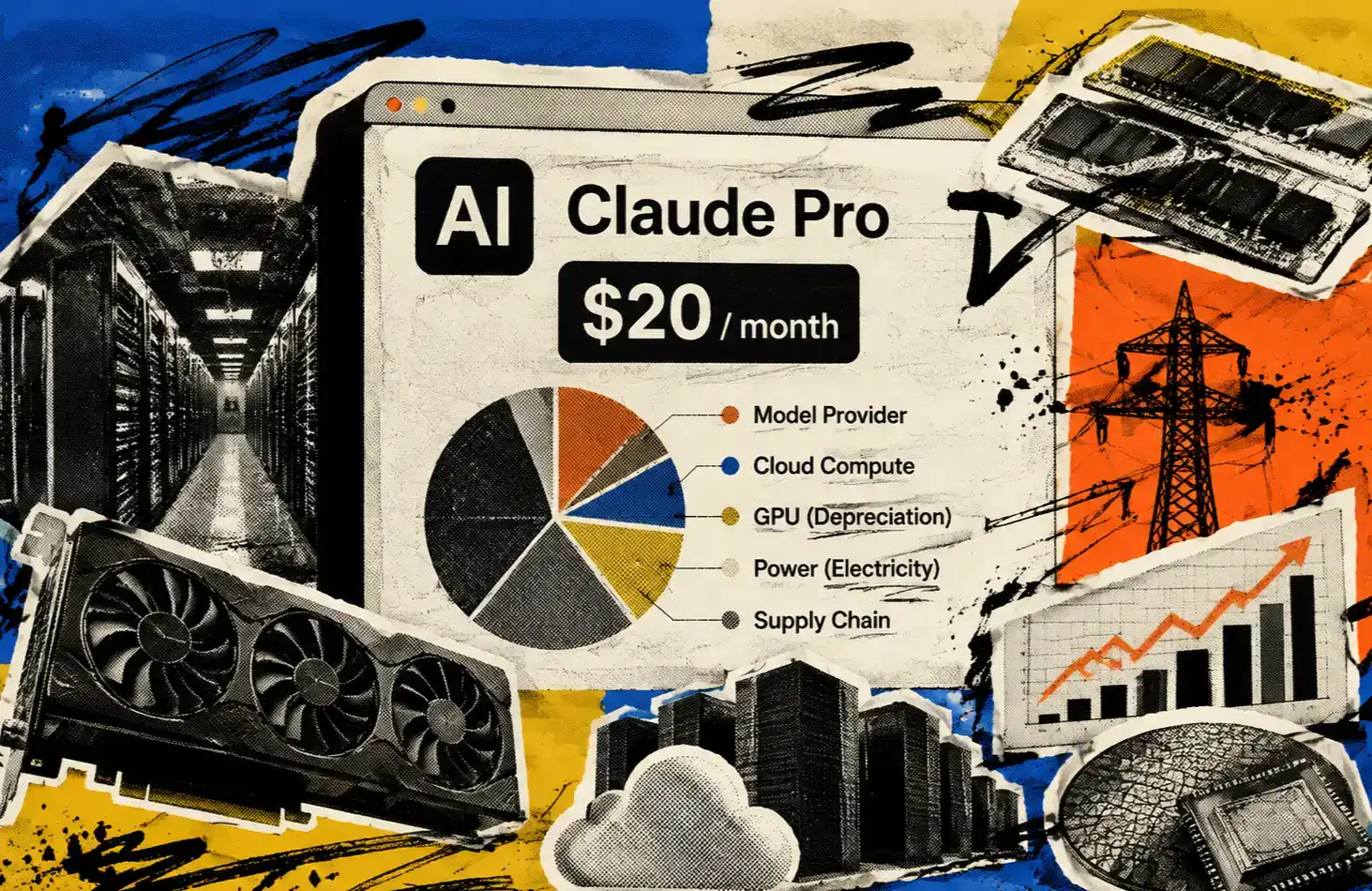
How Much of the Subscription Fee You Pay to Claude Can Optical Module Companies Get?

How much of your $20 Claude Pro subscription actually goes to AI model companies like Anthropic? A viral breakdown image highlights the fundamental valuation challenge for AI applications versus traditional SaaS. Unlike SaaS with high software margins, AI subscriptions face variable "inference costs": every user query consumes GPU time, power, and cloud resources. This creates a tension between fixed subscription fees and usage-driven expenses. While the specific dollar splits are illustrative, the core question is whether AI revenue can achieve SaaS-like margins as usage scales. Currently, infrastructure providers (cloud platforms, GPU makers like Nvidia, HBM suppliers, power/data centers) capture more certain revenue from growing AI usage. Their financials reflect pricing power and faster earnings validation. The bullish case hinges on efficiency improvements: model optimization, caching, smaller models, and custom chips could lower per-token costs over time. The key debate is whether cost declines can outpace increases in user workload complexity and volume. Ultimately, for AI companies to command high SaaS-like valuations, they must demonstrate not just user growth but also improving gross margins after accounting for inference costs. Investors will scrutinize not just subscriber numbers, but usage patterns, enterprise pricing tiers, and real efficiency gains.

marsbitHace 30 min(s)

How Much of the Subscription Fee You Pay to Claude Can Optical Module Companies Get?

marsbitHace 30 min(s)

Trading

Spot
Futuros

Artículos destacados

Cómo comprar MANA

¡Bienvenido a HTX.com! Hemos hecho que comprar Decentraland (MANA) sea simple y conveniente. Sigue nuestra guía paso a paso para iniciar tu viaje de criptos.Paso 1: crea tu cuenta HTXUtiliza tu correo electrónico o número de teléfono para registrarte y obtener una cuenta gratuita en HTX. Experimenta un proceso de registro sin complicaciones y desbloquea todas las funciones.Obtener mi cuentaPaso 2: ve a Comprar cripto y elige tu método de pagoTarjeta de crédito/débito: usa tu Visa o Mastercard para comprar Decentraland (MANA) al instante.Saldo: utiliza fondos del saldo de tu cuenta HTX para tradear sin problemas.Terceros: hemos agregado métodos de pago populares como Google Pay y Apple Pay para mejorar la comodidad.P2P: tradear directamente con otros usuarios en HTX.Over-the-Counter (OTC): ofrecemos servicios personalizados y tipos de cambio competitivos para los traders.Paso 3: guarda tu Decentraland (MANA)Después de comprar tu Decentraland (MANA), guárdalo en tu cuenta HTX. Alternativamente, puedes enviarlo a otro lugar mediante transferencia blockchain o utilizarlo para tradear otras criptomonedas.Paso 4: tradear Decentraland (MANA)Tradear fácilmente con Decentraland (MANA) en HTX's mercado spot. Simplemente accede a tu cuenta, selecciona tu par de trading, ejecuta tus trades y monitorea en tiempo real. Ofrecemos una experiencia fácil de usar tanto para principiantes como para traders experimentados.

199 Vistas totalesPublicado en 2024.12.12Actualizado en 2026.06.02

Cómo comprar MANA

Discusiones

Bienvenido a la comunidad de HTX. Aquí puedes mantenerte informado sobre los últimos desarrollos de la plataforma y acceder a análisis profesionales del mercado. A continuación se presentan las opiniones de los usuarios sobre el precio de MANA (MANA).

活动图片