Data of 54,000 wallet users leaked, Clarity odds just 10%: Hodler’s Digest, Aug. 16

cointelegraphPublished on 2026-08-17Last updated on 2026-08-17

Abstract

Galaxy Digital has slashed the odds of the CLARITY Act passing in 2026 from 75% to just 10%, citing limited Senate session days. If it fails, the SEC and CFTC plan to issue their own crypto rules, though an SEC meeting was abruptly cancelled. High-profile meetings at the White House are planned to discuss the bill. Amid growing hack fears, crypto companies are urging AI labs to grant developers early access to advanced AI models for cybersecurity, following a $116M Coldcard wallet theft. Data breaches at Trezor and SafePal have exposed over 54,000 users' personal information. The CFTC is clashing with states over regulating prediction markets like Kalshi, ordering it to ignore a New York restraining order to maintain a national market, while a Washington state judge ruled against it. The Ethereum Foundation is revising its post-quantum plan, moving away from the Poseidon hash function, and scoping its next major upgrade, Hegotá, for next year. Tether received its first full clean audit opinion from KPMG, showing reserves exceeding liabilities by $6.814 billion. Marketwise, major cryptos saw weekly declines. Predictions include a possible Bitcoin bottom in October, while analysts dispute the feasibility of BTC reaching $1M by 2030. Glassnode notes Bitcoin is in its longest capitulation phase since FTX's collapse. Three men were charged for an alleged Bitcoin kidnapping plot in Missouri.

Galaxy Digital has lowered its estimate of the CLARITY Act’s chances of passing in 2026 to just 10%. In May it had estimated the chance of passage at 75%.

Multiple political issues remain unresolved and the Senate only has 14 days in session to pass the bill after it reconvenes on Sept. 14.

Unless an initial motion to proceed vote occurs immediately upon lawmakers’ return to Washington, there would only be enough time for the CLARITY Act to pass if it “dominates basically the entire working session,” wrote Galaxy head of research, Alex Thorn.

If the bill doesn’t pass, the SEC and CFTC plan to step into the breach by issuing their own rules for crypto markets. The SEC scheduled an open meeting on Friday to unveil its “clear rules of the road” but then cancelled it due to an “an unforeseen scheduling issue.” The White House was reportedly unhappy that the SEC going rogue on crypto rules could anger Democrats and scuttle the delicate negotiations underway to pass CLARITY.

SEC chair Paul Atkins, President Donald Trump and a series of big wigs from Coinbase, a16z, Ripple, Chainlink, NYSE and Nasdaq will meet at the White House on Wednesday to discuss crypto regulation and explore ways to get the bill over the line.

The following day the US Commodity Futures Trading Commission’s new Innovation Advisory Committee will meet to discuss regulation of crypto, AI and prediction markets.


Crypto companies seek access to frontier AI cybersecurity capabilities as fears of more hacks grow

Cryptocurrency companies including Anchorage Digital, BitGo, Bitwise, Blockstream, Ledger and Trezor have urged frontier artificial intelligence (AI) labs to give Bitcoin developers early access to their most capable models.

An open letter, published by the Bitcoin Policy Institute said Bitcoin Core devs and other crypto developers are being blocked by guardrails on publicly available frontier systems, leaving them to rely on less capable open-weight models.

“Without dedicated access programs, defenders may lack the tools needed to keep pace with evolving threats to the infrastructure they maintain.”

The threat from AI identified exploits has become a key focus after $116 million was stolen from Coldcard hardware wallets. The Bitcoin Red Team subsequently used AI to identify thousands of potential cybersecurity issues using open source Chinese models.

New threats to hardware wallet owners have continued to emerge over the past few days, with the personal details of more than 50,000 users leaked in two separate incidents. Trezor reported a breach of personal data affecting about 14,000 users through its shipping provider, ShipMonk. Users who received its products from the US, UK, Sweden, Colombia, Brazil, Italy, and Portugal between May 10 and Aug. 8 are now at high risk from potential phishing attacks using their personal information.

Cryptocurrency wallet provider SafePal has also just disclosed its own data breach that saw unauthorized access to almost 40,000 customers’ order information, including names, addresses and purchasing data. It has since identified and taken down more than 30 fraudulent websites and phishing links tied to the breach.

CFTC and states battle over who gets to regulate prediction markets like Kalshi and Polymarket

The US Commodity Futures Trading Commission (CFTC) has ordered prediction market Kalshi to ignore New York’s restraining order and continue operating normally.

The CFTC said that New York’s enforcement action against Kalshi for operating an illegal gambling business constituted a market emergency as it would bar Kalshi from operating prediction markets nation-wide. It believes the Commodity Exchange Act requires the CFTC to provide a uniform national derivatives market. CFTC Chair Michael Selig said that Congress did not intend derivatives exchanges to face a “patchwork of state gaming laws.”

A few days later a Washington state judge ordered prediction market platform Kalshi to stop operating in the state and rejected its argument that federal commodities law preempts Washington gambling law. Kalshi has been ordered to implement IP-address and residency-based geofencing by Aug. 19 and a GeoComply multi-source geofencing system by Sept. 2.

Even the New York City Council wants to regulated prediction markets and it has launched an investigation into prediction market firms to examine if they are using “false and deceptive marketing” through influencers to target young adults.

Ethereum Foundation revamps post-quantum plan and decides on scope for Hegota hard fork

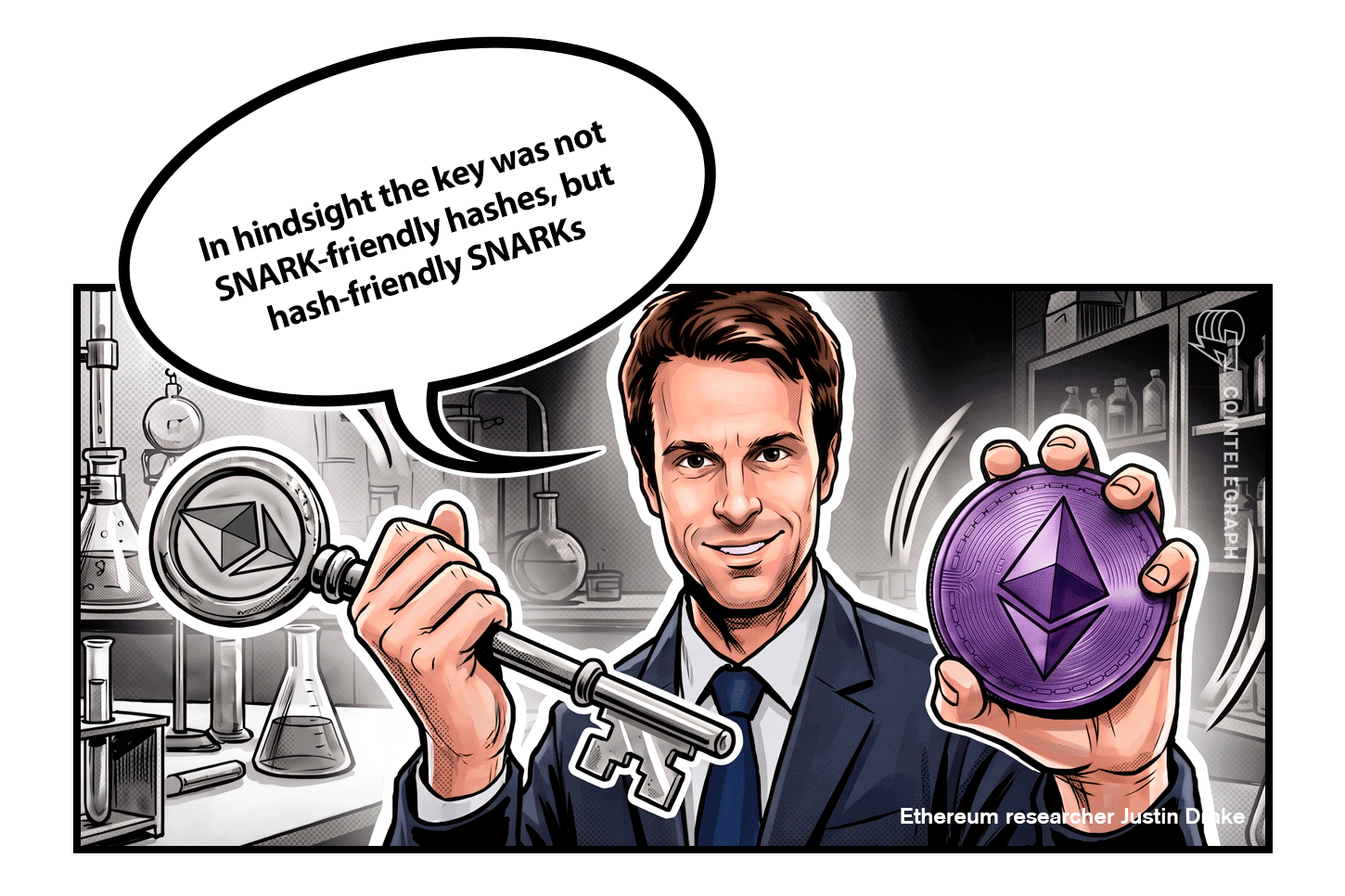
The Ethereum Foundation is moving away from the Poseidon hash function in its planned post-quantum architecture, according to researcher Justin Drake.

On Thursday, Drake said the foundation would instead rely on established alternatives such as SHA or BLAKE.

Poseidon is a relatively new hash function tailored to work better with zero knowledge proofs in order to compress signatures sizes. However, Drake said new developments mean that SNARKS can be tailored to work better with existing hash functions.

A production-ready leanVM is targeted for 2027, followed by deployments across Ethereum’s consensus, data and execution layers in 2028.

Ethereum developers are currently reviewing 66 proposals to narrow them down as part of scoping the next major Ethereum upgrade to follow Glamsterdam called Hegotá

Censorship resistance proposal FOCIL is currently the only Ethereum Improvement Proposal (EIP) scheduled for inclusion. A number of other EIPs are focused on privacy.

Core developers aim to ship the Hegotá upgrade next year, with Glamsterdam expected in the coming months.
Tether completes first full financial audit, receives clean KPMG opinion

Tether completed the first full independent audit of its annual financial statements, with KPMG US issuing a clean opinion on the stablecoin issuer’s 2025 accounts.

The audit covered Tether’s balance sheet, income statement and cash flows for the year ended Dec. 31, 2025, including the assets backing its issued tokens and the liabilities they represent. Tether said the audited statements showed reserves exceeding liabilities by $6.814 billion.

Unlike Tether’s quarterly reserve attestations, which it has published for years, the full audit subjected the company’s broader financial statements and underlying evidence to independent examination, including transactions, systems, ownership records, valuations and counterparties.


Winners and Losers

At the end of the week, Bitcoin (BTC) is down 3.3% to trade at $62,842, Ethereum (ETH) is down 2.3% to trade at $1,872 and XRP (XRP) is down 4.2% to 99 cents. The total market cap is at $2.16 trillion according to CoinMarketCap.

Among the biggest 100 cryptocurrencies, the top three altcoin winners of the week are Velvet (VELVET) with a 131% gain, Ether.fi (ETHFI) on 31%, and Chainlink (LINK) on 14%.

The top three altcoin losers of the week are Uniswap (UNI) which was down 18%, Aptos (APT) down 12% and Pepe (PEPE) down 11%.


Top Prediction of the Week


Bitcoin could bottom in October, altcoins are ‘basically dead,’ Swan CEO says

Bitcoin could bottom in October before recovering to around $130,000 ahead of the 2028 halving, according to Swan Bitcoin CEO Cory Klippsten.

He argued that Bitcoin has so far bottomed about 12 months after each previous bull market peak, and the previous peak was in October last year.

He told Cointelegraph that Bitcoin could fall to $57,000, or even $53,000, before a quick recovery, and could reach around $130,000 ahead of the 2028 halving.


Top FUD of the Week


Bitcoin to $1M by 2030 is ‘mathematically impossible’ says Markus Thielen

The numbers behind the oft-cited prediction that Bitcoin will reach $1 million by 2030 simply don’t add up, according to Markus Thielen, head of research at 10x Research.

“It’s mathematically impossible,” Thielen told Trade Secrets, arguing that Bitcoin would need to attract another $15 trillion in capital to reach a per Bitcoin price of $1 million. This is equivalent to roughly 25% of the US stock market’s total value flowing into Bitcoin over the next four years.

“We have seen $1 trillion US dollars of inflow to bring the market cap really to $1 trillion. To $1 million [per] Bitcoin. It’s 15x, I think, from here.”


Bitcoin price-metric basket sees longest capitulation since FTX blow-up: Glassnode

Bitcoin is seeing its longest capitulation since the end of the 2022 bear market, onchain analytics platform Glassnode reported on Monday.

The firm said that forty-five Bitcoin (BTC) price metrics it tracks under the Bitcoin Cycle Position Heatmap show the longest “capitulation” phase since the collapse of FTX in late 2022. But it warned that aggregate readings will have to get even worse to match areas that marked previous bear-market bottoms, says creator Rafael Schultze-Kraft.

“Today it sits in its coldest stretch since FTX: late in the bear, but not yet the unanimous deep blue that previously marked a floor,” he commented.


Missouri trio charged over alleged Bitcoin kidnapping plot

Three Missouri men were charged over an alleged August 2024 plot to kidnap a Bitcoin holder and steal his holdings.

Sedric Louis, John Davis and Martel Williams were allegedly hired to kidnap and force a Bitcoin holder to transfer cryptocurrency to accounts controlled by organizers, according to a Tuesday press release by the US Attorney’s Office. They traveled from St. Louis to Connecticut, where they rented vehicles and obtained air rifles to stake out the victim.

After staking out the intended target for two days, they abandoned the plan for fear of being caught on home security cameras. Shortly afterward, another crew from Florida arrived to carry out the plan.


Top Magazine Features of the Week

El Salvador’s Bitcoin experiment turns 5: ‘It was for us, not them’

Five years after El Salvador made Bitcoin legal tender, the experiment has fallen short of its original promises for locals, but it’s been great for Bitcoin’s global profile.


Inside the fake crypto startup that fooled North Korean IT workers

Suspected North Korean IT workers joined a fake crypto startup — without realizing their every move was being tracked to extract valuable intel.


Solana’s fee overhaul increases burn and makes resource hogs pay

Solana’s proposed fee overhaul would make resource-heavy transactions more expensive while cutting costs for simpler activity, and it increases the amount of SOL burned.

Trending Cryptos

Related Questions

QWhy did Galaxy Digital lower the odds of the CLARITY Act passing to 10%?

AGalaxy Digital lowered the odds due to multiple unresolved political issues and the limited time available. The Senate only has 14 days in session after reconvening on September 14 to pass the bill, making passage unlikely unless it dominates the entire working session.

QWhat data breaches affecting crypto wallet users are reported in the article?

ATwo separate data breaches are reported. Trezor reported a breach of personal data affecting about 14,000 users through its shipping provider, ShipMonk. Additionally, SafePal disclosed unauthorized access to almost 40,000 customers' order information, including names, addresses, and purchasing data.

QWhat regulatory conflict is discussed regarding prediction markets like Kalshi?

AThe CFTC and state authorities are in conflict. The CFTC ordered Kalshi to ignore a New York restraining order to maintain a uniform national derivatives market. Conversely, a Washington state judge ordered Kalshi to stop operating in the state, rejecting the argument that federal law preempts state gambling laws.

QWhat significant change did the Ethereum Foundation make to its post-quantum plan?

AThe Ethereum Foundation is moving away from the Poseidon hash function in its planned post-quantum architecture. Instead, it will rely on established alternatives such as SHA or BLAKE, as new developments allow SNARKs to work better with existing hash functions.

QWhat was the outcome of Tether's first full independent financial audit?

AKPMG US issued a clean opinion on Tether's 2025 financial statements. The audit confirmed that Tether's reserves exceeded its liabilities by $6.814 billion, covering its balance sheet, income statement, cash flows, and the assets backing its issued tokens.

Related Reads

How Many Anthropic Shares Could Be Sold on the First Day of Trading?

Anthropic plans to publicly offer 825 million shares at $70–78 each. Beyond the IPO shares, up to 316 million shares held by directors, executives, current and former employees, and consultants could become eligible for sale from the first trading day. At $74 per share, that block is worth about $23.4 billion, adding nearly 40% more potential supply on top of the base offering. Combined, first-day potential supply could reach about 1.141 billion shares, roughly 1.38 times the base offering. The IPO portion includes about 801 million newly issued shares plus roughly 23.65 million shares sold by seven co-founders. The underwriters also hold a 30-day option to purchase up to 123.75 million additional Class A shares, which would add new supply if exercised, while open-market purchases would add demand instead. A separate $26 billion strategic placement involving Google, Nvidia, AMD, Broadcom, Micron, Microsoft, and TSMC would allot about 351 million Class N shares at the IPO price, subject to resale restrictions and excluded from the first-day supply estimate. After the first day, four fixed lockup releases would fall on December 15, January 5, January 19, and February 2 (assuming a November 18 final prospectus date), each covering up to 299 million or 349 million shares. Together with the first-day tranche, the first five releases total up to 1.612 billion shares, about 1.95 times the base offering. Later, larger releases tied to financial results could add up to 1.7 billion shares after fiscal 2026 results and up to 3 billion shares after the first-quarter 2027 report or 180 days after the prospectus date, whichever is earlier. First-day supply therefore mainly comes from the IPO and the first tranche of employee and other holder shares, while much larger unlock waves loom around earnings announcements, when both performance and increased sellable supply will shape pricing.

marsbit5m ago

How Many Anthropic Shares Could Be Sold on the First Day of Trading?

marsbit5m ago

How Various Assets Have Performed So Far This Year: Bitcoin at -22% Return, Dead Last

As of November 13, 2026, Bitcoin has posted a -22.0% year-to-date return, ranking last among major asset classes. In contrast, the Philadelphia Semiconductor Index gained 43.2% despite a sharp pullback from its mid-year peak of 106.6%, while the S&P 500 and Nasdaq Composite held steady gains of roughly 8% to 10%. Even the CSI 300 (-13.3%) and gold GLD (-10.3%) outperformed Bitcoin. The article argues the key difference lies in the presence of real buying support. Semiconductors are backed by massive capital expenditure and order backlogs from major tech companies, giving them an earnings floor even after steep corrections. Bitcoin, by contrast, lacks such support. After spot ETFs helped Wall Street finish building core positions in 2024–2025, 2026 brought neither broad macro liquidity nor a new narrative capable of drawing fresh capital. ETF inflows slowed from a flood to a seasonal trickle. Without sustained new buyers, Bitcoin's high beta works only to the downside: in a stock-picking, zero-sum market it becomes the asset everyone wants to sell into strength. The article further notes that Bitcoin's positioning is losing focus. It has failed to act as either a "digital gold" hedge or a high-beta proxy for tech stocks. It lagged the Nasdaq and S&P 500 during the tech rally, and fell harder than gold when global assets contracted in November. The conclusion: Wall Street treats Bitcoin not as a safe haven but as a highly liquid, 24/7 liquidation tool—the first asset sold when institutions need to meet margin calls or lock in yearly profits. Crypto has been admitted to the table, but often as the one picked to pay the bill.

marsbit44m ago

How Various Assets Have Performed So Far This Year: Bitcoin at -22% Return, Dead Last

marsbit44m ago

From QR Codes to Physical Goods: How Consumer RWA Verifies Products and Rights

A single QR code can be printed on two bottles and scanned twice to open the same page, so verifying a physical item requires confirming the binding between the bottle in hand and its listed number. Consumer RWA verification has two parts: whether the goods or services are real, and whether the rights recorded in the digital credential are valid. For rights provenance, take a co-branded gift box: authorization documents define the term and scope in which a brand may use the co-branded mark, production and warehousing records show whether the box was stocked by batch, and rights registration states what holders can redeem and who delivers it. Linking all three lets consumers check authorization scope, supply, and their own eligibility. Identifiers, events, and evidence must work together. High-value items can use unique serial numbers, uniform-spec goods can use batch numbers, and courses or events can use session numbers. Events such as warehousing, sampling, outbound shipment, receipt, and redemption should be tied to the corresponding object, with operation time and responsible party retained. Test reports correspond to submitted samples; linking results to specific goods also requires checking the sample, batch, and inbound/outbound records. Ordinary batch goods can combine serialized QR codes with abnormal-scan records, while high-value items may add tamper-evident labels or independent authentication. Trusted records must also reflect current status. If a coffee batch has 500 bags at warehousing, 10 used for sampling, and 100 reserved for other channels, then absent other changes, 390 bags remain available for new rights. The warehousing record shows historical quantity; current redeemable quantity must be updated based on actual occupancy. A query page should at minimum state the goods or service, evidence source, last update time, and whether the credential is currently usable.

marsbit1h ago

From QR Codes to Physical Goods: How Consumer RWA Verifies Products and Rights

marsbit1h ago

10 Years Is Too Slow: Gu Quanquan's Team Challenges Dario, Compressing Cancer Cure to 4 Years

A UCLA professor, Quanquan Gu, has founded Geodesic Intelligence, a 15-person startup that after only five months has released NovaAtom-Lite, an all-atom structure prediction model that outperforms DeepMind's Isomorphic Labs flagship IsoDDE on FoldBench, the toughest biomolecular benchmark. The model predicts the 3D coordinates of every heavy atom in protein, DNA, RNA, and ligand complexes with near-experimental precision. NovaAtom-Lite posted top scores on two core pharma tests: antibody-antigen binding (79.07% success, 31 points above AlphaFold 3 and 3.5 above IsoDDE, with 2.2x AlphaFold 3's accuracy at high-precision thresholds) and protein-ligand binding (top 1 on both RMSD and contact metrics). On the Runs N' Poses benchmark, which separates memorization from genuine physics understanding, NovaAtom-Lite's lead grows on the most novel, out-of-distribution ligands (47.6% vs AlphaFold 3's 24%), showing it learns transferable physical rules rather than memorizing structures. The model also supports test-time scaling—raising sampling from 1 to 100 seeds lifts antibody success from 74.3% to 83.1%—and condition constraints, where a single contact-pair hint boosts success to 91.28% and full pocket hints lift hard-case ligand accuracy by nearly 16 points. It solved two nightmare cases: a wildly flexible 22-residue MERS nanobody loop (0.56 Å error, all 25 samples correct) and the KRAS G13D hidden switch-II pocket (0.98 Å ligand RMSD vs OpenDDE's 17.74 Å). Gu previously led ByteDance's SeedFold, the first model to beat AlphaFold 3 on FoldBench, forcing Isomorphic Labs to respond with IsoDDE. A stronger NovaAtom-Pro is coming. Days after launch, a16z cited NovaAtom-Lite in a report arguing pharma is entering its "GPT-3 moment," naming Geodesic as the sole company highlighted in its industry map. Geodesic's closed loop spans structure prediction, scientific reasoning, and wet-lab validation—aiming to compress drug discovery from a decade to four years.

marsbit1h ago

10 Years Is Too Slow: Gu Quanquan's Team Challenges Dario, Compressing Cancer Cure to 4 Years

marsbit1h ago

Trading

Spot

Hot Articles

Discussions

Welcome to the HTX Community. Here, you can stay informed about the latest platform developments and gain access to professional market insights. Users' opinions on the price of S (S) are presented below.

活动图片