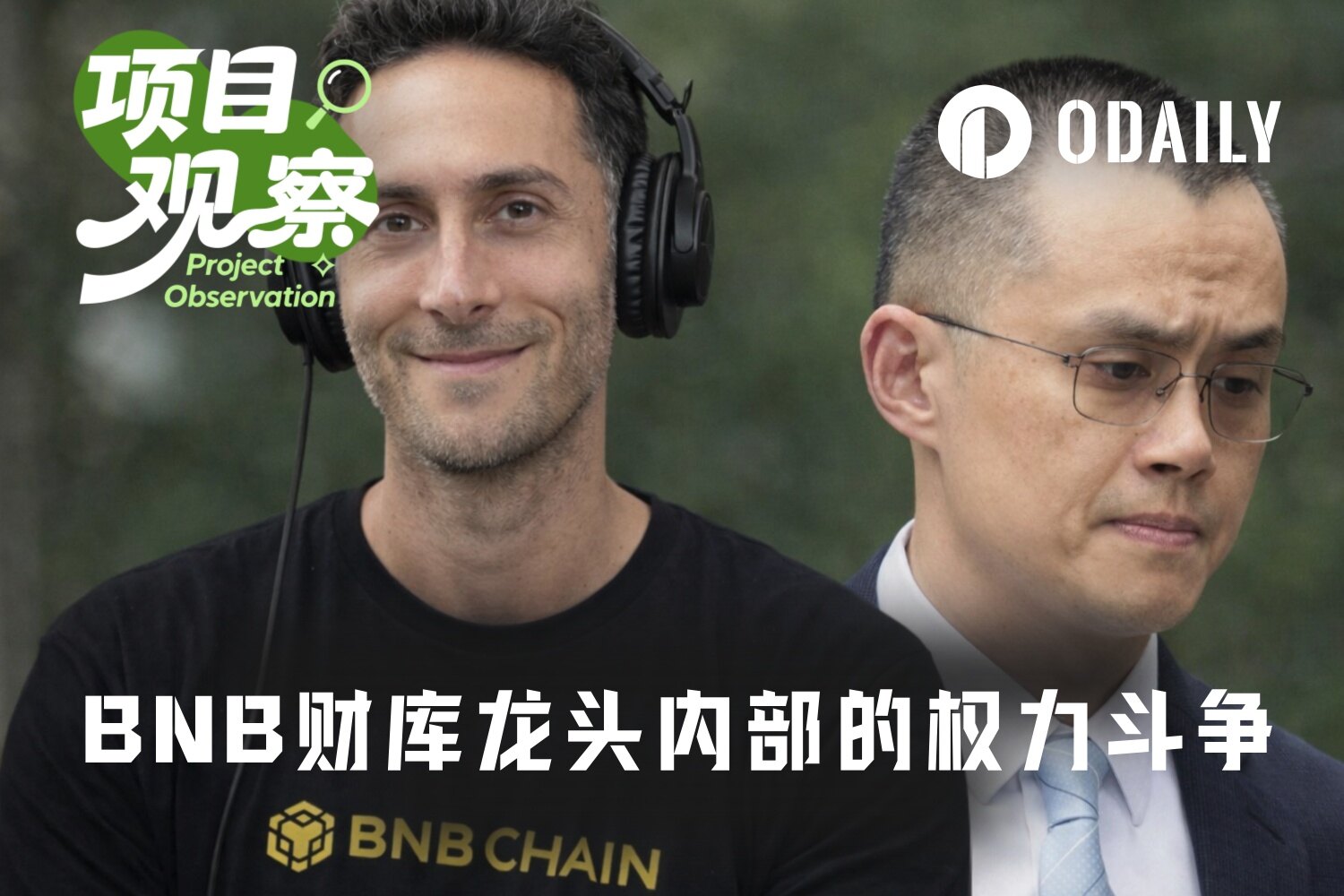
CZ Got Rugged Too? Bloody Battle for Control of BNB Treasury CEA Industries

Odaily星球日报Publicado a 2026-03-25Actualizado a 2026-03-25

Resumen

CZ, the founder of Binance, appears to have fallen victim to a major financial scheme involving CEA Industries (NASDAQ: BNC), a company he selected to manage a BNB treasury initiative. Despite CZ’s trust in David Namdar, founder of Galaxy Digital and CEO of 10X Capital, the company has been accused of acting as a "private ATM" for insiders. In 2025, CEA Industries raised $500 million in private funding led by YZi Labs to implement a BNB reserve plan. However, by late 2025, conflicts erupted between YZi Labs and CEA’s board, chaired by Namdar. YZi Labs, a major shareholder with 9.4% stake, accused the board of financial misconduct, including millions in questionable payments to 10X Capital and a $1.98 million exit package for Namdar upon his March 2026 resignation. Despite YZi Labs' efforts to gain control by expanding the board—including proposing CZ as a director—Namdar’s board resisted fiercely. They delayed the annual meeting and implemented a "poison pill" strategy, making a takeover prohibitively expensive and difficult. YZi Labs now claims the company is an empty shell with no active management. The battle for control continues, with YZi Labs vowing to pursue action, but Namdar has largely succeeded in stripping the company of value before exiting.

Original | Odaily Planet Daily (@OdailyChina)

Author | Golem (@web3_golem)
The winds in the crypto world come fast and go fast.

DAT once stirred up huge waves in 2025, with a large number of speculators teaming up with shell companies listed on the US stock market to fabricate a false prosperity of "crypto assets invading US stocks." By the time FOMO investors came to their senses, their accounts had already been cleaned out. If you were one of them, the following news might make you feel a bit better: Even CZ fell into the hands of the same group.

At that time, more than 30 listed companies were competing to deploy BNB treasuries, and CZ stated he would "carefully select." He ultimately chose CEA Industries, founded by Galaxy Digital co-founder David Namdar. In July 2025, CEA Industries (NASDAQ: BNC) completed a $500 million private financing round led by YZi Labs and officially began implementing the BNB reserve plan.

CZ's choice of David Namdar seemed impeccable—a stellar resume, close personal ties, someone he considered within his "circle of trust." Unfortunately, CZ's investment acumen has always been "questionable," and this time, he misjudged again.

In November 2025, the conflict between YZi Labs and CEA Industries erupted completely. YZi Labs accused BNC of issues like continuously declining stock prices and board inaction, and also demanded the election of new directors. At the time, Odaily Planet Daily analyzed that YZi Labs would most likely take over BNC, David Namdar would be ousted, and the matter would end there. (Related reading:BNB Treasury Leader Heavily Criticized, "CZ's Confidant" May Be Ousted?)

No one expected that the real show had just begun.

The Person Who Rugged CZ Has Fled

On March 24, YZi Labs published an article condemning CEA Industries for paying nearly $1.98 million in severance compensation to the departing CEO to ensure a soft landing, demanding the board publicly justify the reasonableness of the severance payment.

Simultaneously, YZi Labs accused the CEA Industries board of having funneled millions of dollars to related parties, having paid a total of $3.8 million to 10X Capital since June 7, 2025; and previously, the CEO and CFO roles were held by the same person (Odaily Note: CEA Industries appointed a new CFO on March 9), with the company lacking adequate verification controls in key areas such as revenue, taxation, and equity compensation.

YZi Labs investment partner Alex Odagiu finally stated what should have been realized a year ago—"CEA Industries' board has turned a Nasdaq-listed company into a private ATM."

Who is this departing CEO? And who is 10X Capital?

This CEO is still David Namdar. That's right, he wasn't kicked out by YZi Labs last November; instead, he has now hollowed out CEA Industries before leisurely resigning. Furthermore, he is also the CEO of 10X Capital. 10X Capital is the asset manager for CEA Industries and was the biggest promoter behind turning CEA Industries into a BNB treasury company last year.

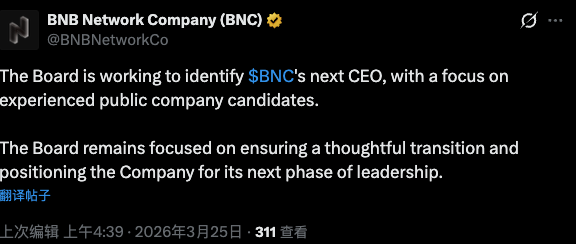
According to the information in the 8-K form filed with the SEC by CEA Industries on March 16, David Namdar, from his appointment as CEO on August 5, 2025, until signing the transition agreement on March 16, 2026, did not receive any cash or equity compensation, so it is being paid now; legally, it seems fine. David Namdar has successfully executed a golden cicada shedding its shell. On March 25, the pinned post on the official CEA Industries X account was changed to indicate they are looking for a new CEO.
According to external media reports, in early March this year, a BNC investor visited the CEA Industries office in Nevada, USA, and found that CEA Industries was an empty shell, with no management or operations. On the business front, official information shows that CEA Industries currently holds 515,544 BNB with a cost basis of $855, but its last public purchase of BNB was in November 2025.

After being criticized by YZi Labs, CEA Industries immediately recruited a new director as demanded by YZi Labs—Annemarie Tierney, founder of Liquid Advisors. Tierney also has an excellent resume, but she is not from the YZi Labs camp. CEA Industries responds to every demand from YZi Labs, but nothing ever gets properly resolved.

Speaking of which, why wasn't David Namdar ousted by YZi Labs last November? Did CZ protect him? The answer is certainly not. YZi Labs had the intention but lacked the capability.

The Battle Between David Namdar's Camp and YZi Labs' Camp

In fact, since last November, David Namdar's camp and YZi Labs' camp have been engaged in an ongoing battle for control of CEA Industries.

David Namdar's camp includes his established 10X Capital and the entire board of CEA Industries, and these two organizations have a high degree of personnel overlap. They effectively control CEA Industries.

YZi Labs is a major shareholder of CEA Industries. According to a filing YZi Labs submitted to the US SEC on January 8, YZi Labs collectively holds 4,255,043 shares of CEA Industries common stock, representing approximately 9.4% of the issued common shares.

The core purpose of YZi Labs' struggle is to expand the CEA Industries board from 6 members to 13 members, with all 7 new members coming from YZi Labs. CZ is also among the candidates. If successful, YZi Labs would control the majority of the new board.

Although YZi Labs is already a major shareholder of CEA Industries, it still doesn't have enough votes to directly place people on the board. Therefore, YZi Labs must unite with other shareholders to initiate a written consent solicitation to implement the overhaul it has wanted since November. This is also why YZi Labs is so keen on publicizing that David Namdar's actions are an infringement on all shareholders' rights.

But David Namdar's board, of course, would not let YZi Labs' plan succeed easily. First, David Namdar postponed the CEA Industries 2025 Annual General Meeting by 16 months, cutting off a crucial opportunity for shareholders to vote on board members. Second, and most ruthlessly, David Namdar launched a "poison pill" plan and amended the company's bylaws on December 26.

The formal name of this plan is an amended Stockholder Rights Plan. CEA Industries stated plainly in its filing with the US SEC that because YZi Labs had formed a shareholder group (YZi Labs Group) intending to control the company, the board decided to amend the Stockholder Rights Plan and the company's bylaws—the last time these bylaws were amended was in 2018.

At this point in the story, David Namdar has completely stopped pretending. "Easy to invite the god, hard to send him away." He set a dead end for CZ: If you want to replace me, not only will it be costly, but you also need my approval first.First, the new Stockholder Rights Plan stipulates that if any group or individual beneficially owns 15% or more of the shares without board approval, the rights held by other shareholders will activate, allowing them to purchase additional shares at a 50% discount. This means if YZi Labs continues to increase its shareholding percentage, other shareholders may get the chance to "buy in cheaply," diluting YZi Labs' ownership and drastically increasing the cost of its fight for control of CEA Industries; Furthermore, warrants are also counted towards beneficial ownership, and if these are included, YZi Labs' ownership percentage actually exceeds 19.99%.

Second, the new company bylaws stipulate that any shareholder seeking to take action via written consent must first request the company to set a record date, and also impose more stringent disclosure requirements. This means YZi Labs' consent solicitation to add new company directors first needs approval from the board led by David Namdar, procedurally obstructing and delaying YZi Labs' actions.

On March 24, after YZi Labs condemned David Namdar and his board for lining their own pockets, the CEA Industries board counterattacked. It stated that the consent solicitation application letter YZi Labs proposed in January for adding new company directors did not comply with the company's bylaws and would not be registered. The specific reason given by CEA Industries was that YZi Labs did not disclose the amount of BNB held by its related parties and their agents, nor did it disclose the financial relationships between YZi Labs and its agents; if YZi Labs controlled the board, it could cause harm to other shareholders' interests.

The ginger is still spicier when old. From the current perspective, in this battle for control, David Namdar had already won long ago. All YZi Labs, which invested heavily, can do now is condemn, condemn, and condemn again.

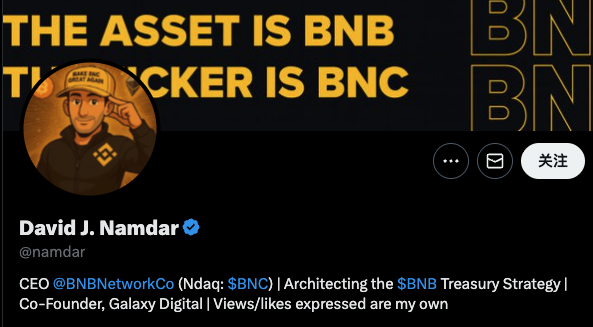
Although David Namdar has already squeezed CEA Industries dry, if you click on his X account, you'll find his avatar wearing a shirt with the Binance logo and a hat that says "MAKE BNC GREAT AGAIN." His pinned post is still congratulating CZ on being pardoned by the US government. Perhaps from the very beginning, David Namdar saw CZ as nothing more than an ATM.
On March 20, David Namdar's important partner, 10X Capital co-founder Hans Thomas, also resigned from the CEA Industries board. But YZi Labs is not willing to just let them get away with it scot-free. YZi Labs investment partner Alex Odagiu posted on X platform, "Hans Thomas is out, but we are not done yet"......

Preguntas relacionadas

QWhat is the main reason for the conflict between YZi Labs and CEA Industries?

AThe conflict arises from YZi Labs' accusations that CEA Industries' board, led by David Namdar, has been using the company as a 'private ATM', misappropriating funds, and engaging in poor governance, while YZi Labs seeks to gain control of the board to protect its investment.

QWho is David Namdar and what role did he play in the CEA Industries controversy?

ADavid Namdar is the former CEO of CEA Industries and founder of 10X Capital. He is accused of orchestrating a scheme to drain CEA Industries' assets, including receiving a $1.98 million severance payment and funneling millions to related parties, before resigning and leaving the company as an empty shell.

QWhat measures did David Namdar's board implement to prevent YZi Labs from taking control?

ADavid Namdar's board implemented a 'poison pill' strategy, including a revised Stockholder Rights Plan that dilutes shares if any entity acquires over 15% ownership without board approval, and amended bylaws to require board consent for written consent solicitations, effectively blocking YZi Labs' attempts to gain control.

QHow much BNB does CEA Industries currently hold, and what is its average cost?

ACEA Industries currently holds 515,544 BNB with an average cost basis of $855 per BNB.

QWhat was YZi Labs' primary goal in its battle for control of CEA Industries?

AYZi Labs aimed to expand CEA Industries' board from 6 to 13 members, with 7 new directors from its own camp including CZ, to secure a majority and overturn the existing management led by David Namdar.

Lecturas Relacionadas

Has Hook Summer Really Arrived? sato, Lo0p, FLOOD Ignite the New Narrative of Uniswap v4

"Hook Summer" Arrives? Sato, Lo0p, FLOOD Ignite Uniswap v4 Narrative Amidst a slight market recovery, attention within the Ethereum ecosystem has shifted to Meme coins built on Uniswap v4's Hook protocol. Following ASTEROID, tokens like sato, sat1, Lo0p, and FLOOD have become market focal points, with market caps ranging from millions to tens of millions, bringing concentrated liquidity to a narrative-dry market. Uniswap v4 Hooks are "plugin smart contracts" that allow developers to inject custom logic at key points in a liquidity pool's lifecycle (initialization, adding/removing liquidity, swaps, etc.), making the AMM programmable. Recent representative projects include: * **sato**: Market cap peaked over $38M; uses a v4 curve mechanism for minting/burning, locking ETH as reserve. * **sat1**: Market cap briefly exceeded $10M, positioning as an "optimized sato," but later declined significantly. * **Lo0p**: Market cap neared $6.6M; a "lending AMM protocol" allowing users to borrow ETH against deposited LO0P tokens without immediate selling pressure. * **FLOOD**: Market cap approached $6M; channels trading reserves into Aave v3 to generate yield, which is retained in the pool. The emergence of these Hook-based tokens could drive long-term growth for the Uniswap ecosystem by attracting users and liquidity to v4 pools. Combined with Uniswap's activated fee switch (partially used to burn UNI), the long-term outlook for UNI appears positive. However, short-term UNI price appreciation is not directly guaranteed. Factors include the sustainability and lifecycle of these new tokens, their price volatility, overall market conditions, and regulatory pressures. Currently, Uniswap v4's TVL ($595M) lags behind v3 and v2, indicating Hook adoption still requires time to mature. In summary, the Hook ecosystem serves as "long-term nourishment" for UNI, but acts more as a "catalyst" than a direct "booster" in the short term. Note: These are early-stage experimental tokens and may carry unknown risks.

marsbitHace 3 min(s)

Has Hook Summer Really Arrived? sato, Lo0p, FLOOD Ignite the New Narrative of Uniswap v4

marsbitHace 3 min(s)

Has Hook Summer Truly Arrived? sato, Lo0p, FLOOD Ignite the New Uniswap v4 Narrative

With the broader market showing signs of recovery, a new wave of interest has emerged around Ethereum-based meme coins. Following ASTEROID, tokens like sato, sat1, Lo0p, and FLOOD, built upon the Uniswap v4 Hook protocol, are capturing market attention. Their market capitalizations range from millions to tens of millions of dollars, injecting much-needed focused liquidity into a market lacking narratives. This article explores whether this trend signifies an incoming "Hook Summer" and its potential impact on UNI's price. Hooks are essentially plug-in smart contracts for Uniswap v4 liquidity pools, allowing developers to inject custom logic at key points in a pool's lifecycle (like initialization, adding/removing liquidity, swaps). This transforms the AMM into programmable building blocks. Key highlighted projects include: * **sato**: Peaked over $38M market cap. It utilizes a v4 curve for minting/burning; buying locks ETH as reserve to mint new tokens, while selling redeems ETH from the reserve and burns tokens. * **sat1**: Market cap briefly exceeded $10M, promoted as an "optimized sato," but later declined significantly. * **Lo0p**: Reached nearly $6.6M. It's a lending AMM protocol where buying LO0P tokens locks them as collateral, allowing users to borrow ETH from the pool reserve at 40% LTV, aiming to improve capital efficiency for idle ETH in LPs. * **FLOOD**: Peaked near $6M. Its mechanism directs asset reserves from buys into Aave v3 to generate yield, with fees and interest retained in the pool to potentially influence the token's price long-term. In the long term, the development of the Hook ecosystem can attract users and liquidity to Uniswap v4, benefiting UNI's fundamentals—especially combined with the recent activation of the protocol fee switch, where a portion of fees is used to burn UNI. However, in the short term, these Hook-based tokens are unlikely to directly drive significant UNI price appreciation. Their impact is moderated by factors like token sustainability, price volatility, and broader market and regulatory conditions. Currently, Uniswap v4's TVL ($595M) still trails behind v2 and v3, indicating adoption and growth will take time. The article concludes that while the Hook ecosystem provides long-term "nourishment" for UNI, its short-term role is more of a "catalyst" than a "booster." Readers are cautioned that these are early-stage experimental tokens and may carry unknown risks.

Odaily星球日报Hace 16 min(s)

Has Hook Summer Truly Arrived? sato, Lo0p, FLOOD Ignite the New Uniswap v4 Narrative

Odaily星球日报Hace 16 min(s)

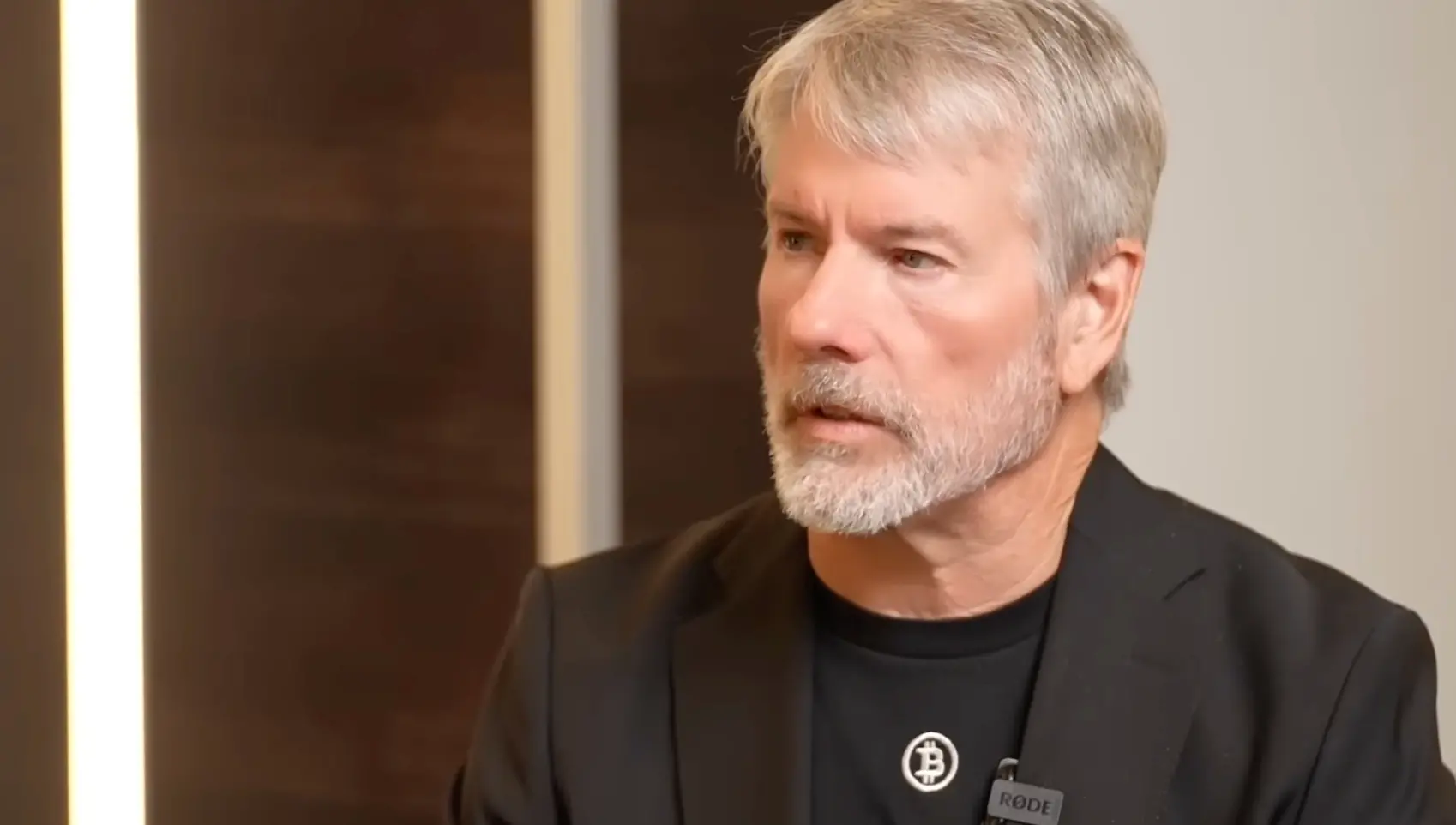
Interview with Michael Saylor: I Did Say I Would Sell Bitcoin, But Never a Net Sale

Interview with Michael Saylor: I Said We'd Sell Bitcoin, But Never Be a Net Seller In a recent podcast, MicroStrategy Executive Chairman Michael Saylor clarified the company's stance on potentially selling Bitcoin. Following MicroStrategy's earnings call statement about being prepared to sell BTC to fund dividends for its STRC (Strategic) credit product, Saylor emphasized the distinction between selling and being a "net seller." Saylor explained the core business model: MicroStrategy sells credit instruments like STRC and uses the proceeds to buy Bitcoin, which is viewed as "digital capital" expected to appreciate around 30-40% annually. A portion of these capital gains can then be used to pay the dividends on the credit products. He stressed that even if the company sells some Bitcoin for dividends, it simultaneously buys much more with new credit issuance. For example, after raising $3.2 billion from STRC sales in April, the dividend obligation was only $80-90 million, making the company a net buyer. The clarification aims to counter market narratives questioning the value of Bitcoin on MicroStrategy's balance sheet if it were never sold, and to dismiss claims of a "Ponzi scheme." Saylor reiterated his personal philosophy for investors: "Don't be a net seller of bitcoin" and ensure your Bitcoin holdings increase each year. Saylor also discussed Bitcoin's role as the foundation for "digital credit," noting that STRC has become the largest and most liquid preferred stock issue in the U.S., offering high risk-adjusted returns (Sharpe ratio). He highlighted Bitcoin's deep liquidity, stating that even large purchases by MicroStrategy do not move the market significantly, which is driven by macro factors, geopolitical tensions, and capital flows from ETFs and credit products. Finally, Saylor reflected on his early inspiration from sci-fi books, which motivated his path to MIT, and maintained his fundamental thesis on Bitcoin remains unchanged: it is superior digital capital enabling superior digital credit.

链捕手Hace 20 min(s)

Interview with Michael Saylor: I Did Say I Would Sell Bitcoin, But Never a Net Sale

链捕手Hace 20 min(s)

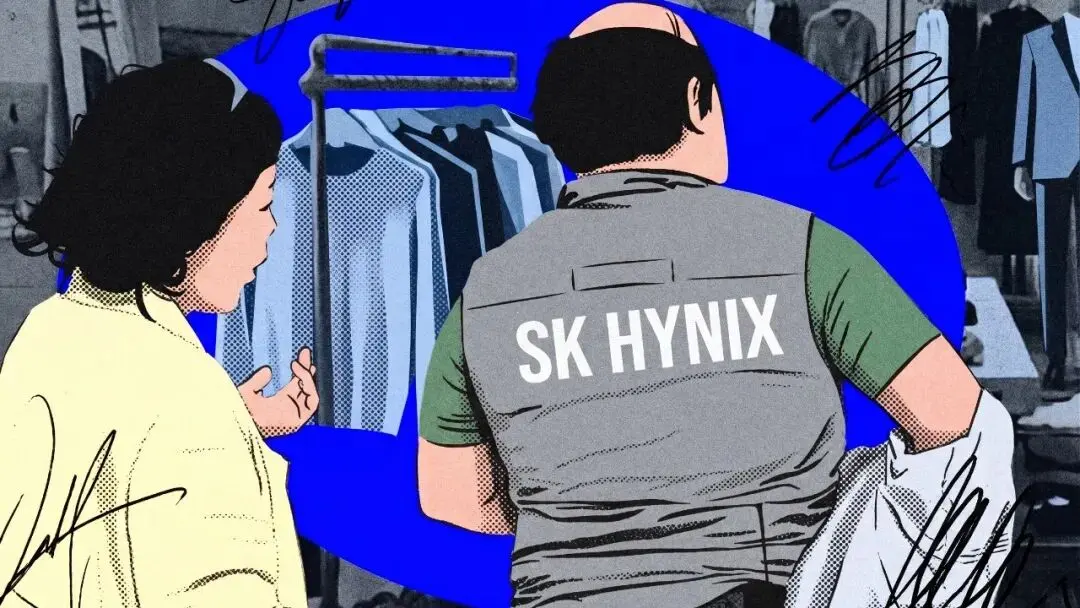
Beaten SK Hynix Employees in China: Year-end Bonus Less Than 5% of Korean Staff's

"SK Hynix Chinese Staff Hit Hard: Bonuses Less Than 5% of Korean Counterparts" Driven by the AI boom, South Korea's SK Hynix is experiencing record performance, with media reports predicting massive year-end bonuses for its employees, making them highly desirable in the matchmaking market. However, this prosperity starkly contrasts with the situation for the company's Chinese employees. According to reports, SK Hynix operates under a rule allocating 10% of operating profit for employee bonuses. While projections suggest Korean employees could receive bonuses reaching millions of RMB, a Chinese employee with over a decade of technical experience revealed the disparity: "If they get 3 million, Chinese staff get less than 5% of that." After adjustments based on KPI ratings, this employee's highest bonus was slightly over 100,000 RMB. Bonuses are paid annually in Korea but semi-annually in China. During the industry downturn in 2023-2024, Chinese employees received no bonus at all. The gap extends beyond bonuses. Recruitment posts for SK Hynix's Chinese factories (in Wuxi, Dalian, Chongqing) show engineer monthly salaries ranging from 10,000 to 35,000 RMB, with a 13th-month salary promised. Chinese employees also receive standard benefits like annual leave but lack stock incentives, which are reportedly unavailable to them. Furthermore, management positions in China are predominantly held by Korean personnel, though industry observers note a gradual increase in local middle managers over time. SK Hynix has confirmed the 10% bonus rule but cautioned that specific future bonus amounts remain unpredictable. The company forecasts strong demand for HBM and other high-value enterprise products for the next 2-3 years, driven by AI infrastructure investment. This focus on business-to-business markets may continue to constrain supply for consumer products, potentially prolonging price increases for components like memory.

链捕手Hace 34 min(s)

Beaten SK Hynix Employees in China: Year-end Bonus Less Than 5% of Korean Staff's

链捕手Hace 34 min(s)

Trading

Spot
Futuros
活动图片