Crypto.com says market maker boosts liquidity, denies trading edge on customers

cointelegraphPublicado a 2025-12-23Actualizado a 2025-12-23

Resumen

Crypto.com is establishing an internal market-making team to support its expansion into prediction markets, a move it states is fully compliant with regulations and designed to boost liquidity. The company denies its internal team has any unfair advantage, asserting it does not get a "first look" at customer orders or proprietary data. It emphasized that all market makers operate under the same rules to ensure fairness and that proprietary trading is not a revenue source. The practice is common among competitors like Kalshi and Polymarket, which also use market makers to provide liquidity.

Cryptocurrency exchange Crypto.com is building an internal market-making team as part of its expansion into prediction markets, a move the company says is fully aligned with federal regulations and intended to improve liquidity, even as market-making in outcome-based trading continues to draw scrutiny.

Bloomberg reported Tuesday that the exchange is recruiting for a new role on its market-making desk, citing a job posting for a “quant trader” who would help buy and sell contracts tied to the outcomes of sporting events on Crypto.com’s prediction platform.
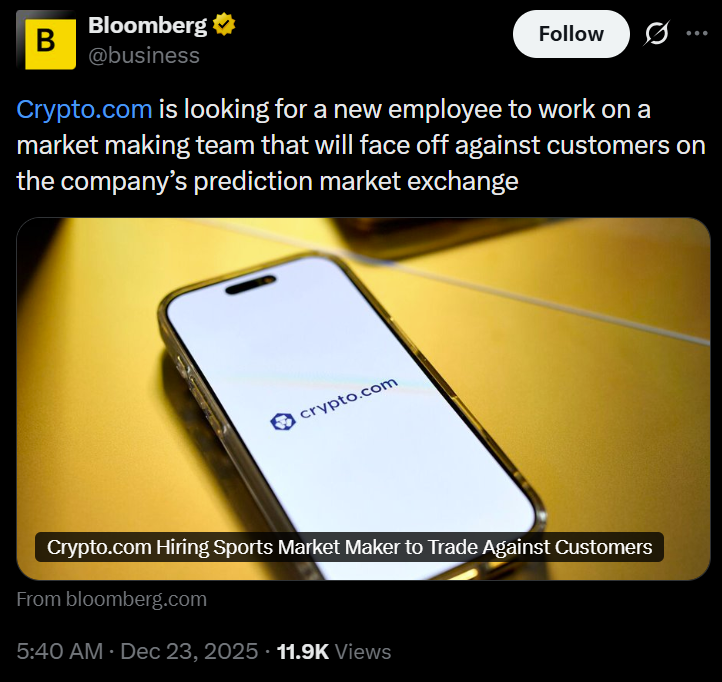
Source: Bloomberg

The report has drawn attention to the practice of exchanges facilitating trading against customer orders, a structure that can raise questions about conflicts of interest as prediction markets gain traction across both crypto and traditional finance.

In a statement to Cointelegraph, a Crypto.com spokesperson said the company’s internal trading team is fully disclosed to the US Commodity Futures Trading Commission and makes markets across its North American derivatives business.

“The bottom line for customers is [that] more competition and liquidity on the platform creates a better overall experience,” the spokesperson said, adding that internal and external market makers operate under the same rules to ensure market fairness and integrity.

“No market maker at Crypto.com gets a ‘first look’, and our internal market maker does not have access to proprietary data or customer order flow before other market makers or market participants,” the spokesperson said.

They added that Crypto.com does not rely on proprietary trading as a revenue source. “We have a simple business model providing our retail customers access to digital assets for a fee, while staying risk neutral," they said.

Related: Phantom taps Kalshi to offer regulated prediction markets in wallet

Market-making isn’t unique to Crypto.com

Crypto.com is not the only prediction-market operator to rely on market makers to support liquidity.

The Bloomberg report noted that competitors such as Kalshi and Polymarket also use professional trading companies or dedicated liquidity providers to facilitate trading on their platforms.

Kalshi, which operates a federally regulated event-contract exchange, relies on designated market makers rather than a purely peer-to-peer order book, and those arrangements have largely been public. It has been reported that quantitative trading company Susquehanna International Group has provided market-making services to Kalshi since 2024, helping supply liquidity as trading volumes surged.

Polymarket, a decentralized prediction market that drew widespread attention during the US presidential election for accurately predicting the outcome, is also building an internal market-making unit, according to Bloomberg.
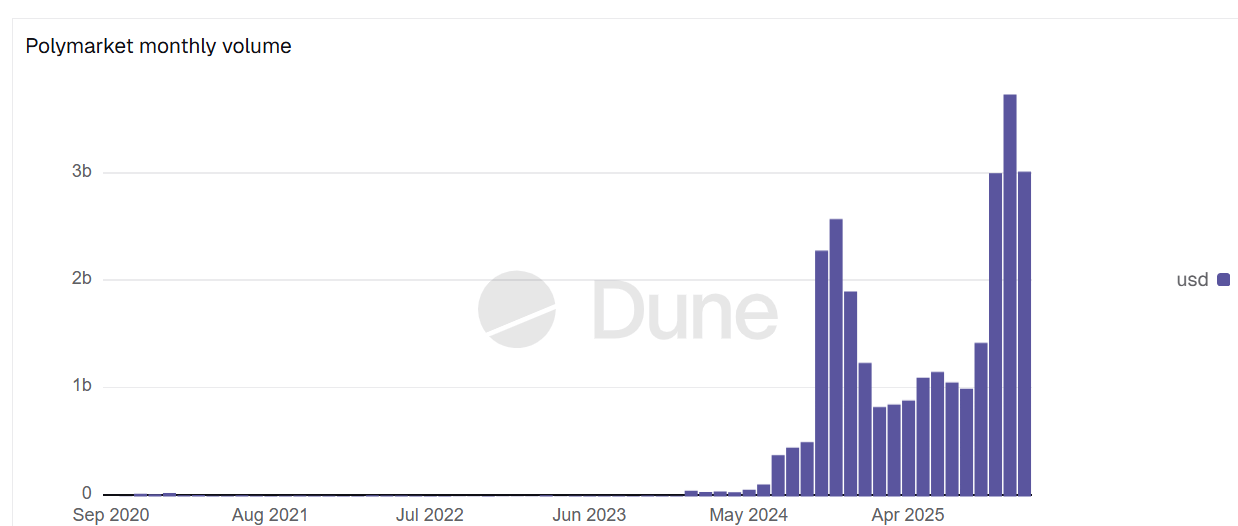
Polymarket’s monthly volumes began to surge in the run-up to the 2024 US presidential election. Source: Dune

Related: DraftKings eyes crypto offerings as it expands into prediction markets

Preguntas relacionadas

QWhat is the primary reason Crypto.com is building an internal market-making team, according to the company?

ACrypto.com states that building an internal market-making team is intended to improve liquidity and create a better overall experience for customers, and it is fully aligned with federal regulations.

QHow does Crypto.com address concerns about conflicts of interest and unfair advantages for its internal market maker?

ACrypto.com states that its internal market maker does not get a 'first look' at proprietary data or customer order flow before other market participants, and all market makers operate under the same rules to ensure fairness and integrity.

QBesides Crypto.com, which other prediction-market operators use market makers to support liquidity, as mentioned in the article?

AThe article mentions that competitors such as Kalshi and Polymarket also use professional trading companies or dedicated liquidity providers to facilitate trading on their platforms.

QWhat is Crypto.com's stated business model regarding proprietary trading and revenue?

ACrypto.com states that it does not rely on proprietary trading as a revenue source and has a simple business model of providing retail customers access to digital assets for a fee while staying risk neutral.

QWhich quantitative trading company has been reported to provide market-making services to Kalshi since 2024?

AQuantitative trading company Susquehanna International Group has been reported to provide market-making services to Kalshi since 2024.

Lecturas Relacionadas

USDC Begins Nested Issuance, Coinbase Launches Custom Stablecoin Branding Service

Coinbase has launched its "Custom Stablecoins" platform, enabling businesses to offer branded stablecoins. The first client is Flipcash, a social payments app, which has introduced USDF. USDF is a Solana-based stablecoin, pegged 1:1 to USDC, and is designed to serve as a stable pricing and settlement unit for Flipcash's user-created community currencies. This move shifts the focus of stablecoins from being standalone assets or investment products to becoming embedded payment and settlement components within broader applications. For businesses like Flipcash, the core need is not to become a stablecoin issuer, but to integrate stable, reliable digital cash functionality—handling pricing, payments, and settlements—without managing the complex underlying infrastructure of issuance, reserves, on-chain contracts, fiat on-ramps, and compliance. Coinbase's platform provides this infrastructure as a service, positioning the exchange as a stablecoin infrastructure provider. While USDC remains the foundational reserve asset, the branded token (e.g., USDF) offers applications a tailored, user-facing financial tool. This development highlights a potential path for stablecoins to become ubiquitous backend utilities in social, gaming, and e-commerce applications, though it also brings significant regulatory and operational complexities associated with handling real user funds.

链捕手Hace 2 hora(s)

USDC Begins Nested Issuance, Coinbase Launches Custom Stablecoin Branding Service

链捕手Hace 2 hora(s)

Detained for 37 Days: The First Wave of People Who Got Rich from 'AI Gateways' Are Starting to Go to Jail

A prominent AI proxy service operator was reportedly detained for 37 days and is now on bail pending trial, highlighting the legal risks in China's booming but unregulated AI intermediary market. These services act as "AI scalpers," providing domestic users with access to restricted overseas models (like OpenAI, Claude) by bundling APIs, handling payments, and bypassing network blocks, all for a fee. Their controversial profitability stems from practices like bulk-registering accounts to resell free credits, exploiting refund policies, overcharging for tokens, substituting cheaper models, and illegally selling user conversation data. Major figures, including cryptocurrency entrepreneurs, are now entering this space. Legally, these operations face severe risks. Their core model often involves unauthorized API access and operating without required telecom licenses, potentially constituting illegal business operations. They fail to meet data security obligations for the vast amounts of user data they process, risking charges for failing to fulfill network security duties. Crucially, the unauthorized collection and sale of user data, which can include personal and commercial secrets, easily meets the threshold for the crime of infringing on personal information. The case underscores a critical juncture for the AI industry. While proxies lower access barriers, they expose user data to unsecured middlemen and undermine the business models of AI developers, forcing them to divert resources to security and distorting market value perceptions. The article argues that the industry's sustainable future depends on building trust, protecting data, and fostering compliant competition, moving away from its current "wild growth" phase.

marsbitHace 2 hora(s)

Detained for 37 Days: The First Wave of People Who Got Rich from 'AI Gateways' Are Starting to Go to Jail

marsbitHace 2 hora(s)

Trading

Spot
Futuros
活动图片