Crypto.com Launches Fully Funded OTC Options for Institutional Traders

TheNewsCryptoPublicado a 2026-06-06Actualizado a 2026-06-06

Resumen

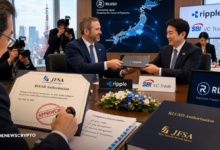
Crypto.com Exchange has launched Fully Funded Over-the-Counter (OTC) Options for institutional clients, including foundations and VIP traders. This new service provides a private, off-orderbook venue to execute custom European-style vanilla options, addressing issues like slippage and information leakage common in public markets. Key features include customizable tenors of up to three months, 100% collateralization by sellers to mitigate liquidation risk, and physical settlement upon expiration. The offering is highlighted by USD options for covered call strategies, instant quoting via dedicated Telegram/Slack channels, a secure Sales Portal for booking, and automated settlement based on exchange index prices.

We are thrilled to provide Fully Funded OTC Options on the Crypto.com Exchange, a sophisticated addition to our institutional services.

In a safe, off-orderbook setting, foundations and VIP customers may now trade vanilla European options directly via our skilled sales traders for the first time.

The OTC Advantage

Large option blocks traded on-chain or in public books have historically led to significant slippage and information leakage. We are offering a private forum via Fully Funded OTC Options where customers may execute custom contracts that fit their horizons and portfolio needs.

Fully Funded OTC Options: What Are They?

These are vanilla contracts in the European manner that are physically settled when they expire.

  • Custom Tenors: Adjust your expiration dates by up to three months to fit your unique approach.
  • 100% Collateralized: To reduce the risk of liquidation, sellers reserve the underlying or striking currency up front.
  • Physical Settlement: When in-the-money (ITM) positions expire, assets are smoothly transferred between accounts.

Highlighted Features:

  • USD Options: Perfect for foundations looking to sell covered calls to generate income on spot holdings.
  • Simple Quoting: Use our exclusive Telegram and Slack trade channels to get quotations immediately.
  • Customized Reservation: Using the protected Sales Portal, our staff manages the manual booking and confirmation.
  • Open Settlement: Automated ITM/OTM calculation based on exchange index prices.

TagsCrypto.comexchange

Preguntas relacionadas

QWhat is the new product that Crypto.com has launched for institutional traders?

ACrypto.com has launched Fully Funded OTC (Over-the-Counter) Options on the Crypto.com Exchange.

QWho are the primary users targeted by the new Fully Funded OTC Options service?

AThe service is primarily targeted at institutional clients, specifically foundations and VIP customers.

QWhat are the main advantages of trading options in an OTC setting according to the article?

AThe main OTC advantages are the avoidance of significant slippage and information leakage that can occur when trading large option blocks on public order books.

QWhat are the three key characteristics of the Fully Funded OTC Options mentioned in the article?

AThe three key characteristics are: Custom Tenors (adjustable expiration dates up to three months), 100% Collateralized (sellers reserve the underlying asset upfront), and Physical Settlement (assets are transferred upon expiry for in-the-money positions).

QHow can institutional clients get price quotes for these OTC options, as mentioned in the 'Highlighted Features' section?

AClients can get immediate quotes through Crypto.com's exclusive Telegram and Slack trade channels.

Lecturas Relacionadas

Tidal Investment: We Remain Bullish on the AI Industry Chain, But for Different Reasons Now

Tidal Investments remains optimistic about the AI industry chain, but the rationale has shifted. The market is concerned about massive concurrent fundraising by tech giants like SpaceX, OpenAI, Alphabet, and Meta, fearing an AI peak. However, the authors argue this signals the next act of AI development, not its end. Capital expenditure (Capex) from major cloud providers (Alphabet, Amazon, Meta, Microsoft, Oracle) continues to surge aggressively into 2026. This investment cycle is more resilient than past hardware cycles due to its scale and complexity. Bottlenecks have shifted from chips to critical physical infrastructure like power grids, transformers, cooling, and data center construction—areas with long lead times and limited capacity for rapid expansion. Supply chain data (e.g., Eaton's orders) confirms substantial, tangible progress. Key market concerns are addressed: 1. **ROI vs. Capex Growth**: While Capex growth outpaces revenue, the authors note cloud giants have historically overcome similar phases through scale. The cycle will only be in danger if Capex guidance is cut, orders are canceled, or AI product demand falters—none of which are currently observed. 2. **Comparison to the 2000 Dot-com Bubble**: Unlike the telecom bubble, where cheap, oversupplied fiber crashed prices, AI infrastructure (especially power) is constrained, customized, and subject to lengthy approvals, making a similar supply glut and crash unlikely. In conclusion, the wave of fundraising reflects the immense, ongoing capital needs for AI's next phase, constrained by slow-moving physical bottlenecks. The AI cycle is not over; the script has simply changed.

链捕手Hace 8 min(s)

Tidal Investment: We Remain Bullish on the AI Industry Chain, But for Different Reasons Now

链捕手Hace 8 min(s)

Grayscale: These 15 Profitable Crypto Protocols Are Severely Undervalued

Grayscale Research identifies 15 top-revenue crypto protocols trading at significant valuation discounts, with many at single-digit or even 1x revenue multiples. Protocols like Pump.fun, PancakeSwap, and Meteora have market capitalizations roughly equal to their annual revenue. The report argues these financially-focused protocols (DEXs, lending, staking) are fundamentally undervalued and could benefit from the potential passage of the CLARITY Act, expected as soon as next month. This legislation aims to clarify digital asset regulation, potentially reducing institutional barriers and driving on-chain activity. The analysis breaks down the protocols into three groups: the "1x Club" (market cap ≈ revenue), mid-tier protocols with 3-9x multiples (e.g., Aave, Lido, Jupiter), and high-multiple protocols like Hyperliquid (15x) and Uniswap (37x), where valuation reflects future potential rather than current cash flows. Grayscale applies a traditional DCF model to Aave, suggesting a one-year price target of ~$175, representing ~130% upside from current levels. The report notes a risk-off macro environment since the Iran conflict has further compressed valuations, creating a potential entry window. The conclusion highlights that while the valuation data presents an intriguing opportunity, the investment thesis is contingent on the CLARITY Act's passage and subsequent institutional capital flows. Investors are cautioned to consider Grayscale's inherent conflict of interest as a crypto asset manager with products tied to these assets.

marsbitHace 36 min(s)

Grayscale: These 15 Profitable Crypto Protocols Are Severely Undervalued

marsbitHace 36 min(s)

Sam Altman's Personal Alchemy of Wealth: Investing in 400 Companies, Over 10 Deeply Tied to OpenAI

The article investigates Sam Altman's personal wealth strategy, centered around his investments in approximately 400 companies while serving as OpenAI's CEO. Despite not holding direct equity in OpenAI, Altman has built a vast portfolio, with at least 10 of his investments having commercial ties or ongoing negotiations with OpenAI. This creates a complex network of potential conflicts of interest, drawing scrutiny from U.S. congressional committees and state attorneys general. Key investments highlighted include the anti-aging startup Retro Biosciences (valued at $258 million for his stake as of late last year) and the chipmaker Cerebras, whose value soared following an OpenAI procurement deal. His most significant financial gain is linked to the nuclear fusion company Helion, where a recent funding round reportedly increased his stake's value to at least $4.1 billion. The article details a decade-long relationship between Altman, Helion, and OpenAI, including a controversial non-binding power purchase agreement and Altman's efforts to secure investments from OpenAI and its backer SoftBank for Helion. Other points include internal investigations at Tools for Humanity (developer of Worldcoin) and OpenAI's massive contracts with tech giants like Nvidia. According to Forbes, Altman's net worth is around $3.4 billion, ranking him 1251st globally—a rise of over 1400 places since 2024. OpenAI's board states that Altman's external dealings are transparent and potential conflicts are carefully managed.

Odaily星球日报Hace 56 min(s)

Sam Altman's Personal Alchemy of Wealth: Investing in 400 Companies, Over 10 Deeply Tied to OpenAI

Odaily星球日报Hace 56 min(s)

Former SpaceX Engineer Reconstructs Financial Execution System Using First Principles

Former SpaceX engineer Lex Li applies "First Principles Thinking" to financial infrastructure with Plan Execution Lab, recently raising angel funding at a $50M post-money valuation. The team argues that the core function of finance is capital allocation, and the critical gap is not in trading but in execution, which remains highly manual and fragmented. While assets, liquidity, and settlement have migrated on-chain, execution workflows (monitoring, risk management, liquidity coordination) are still human-native. In an era of accelerating AI agents, strategy decay is rapid, shifting the competitive edge from having the best strategy to having the most robust execution network. Plan Execution Lab introduces two core components: 1. **PlanX**: A Financial Execution Protocol designed as infrastructure for the migration from CEX to DEX, providing on-chain execution capabilities, liquidity access, risk management, and capital orchestration. 2. **Xgent**: An Autonomous Financial Runtime. Users define investment intents, risk preferences, and constraints; Xgent automatically constructs an execution graph, verifies it, and handles ongoing execution and optimization—streamlining the process from Intent to Autonomous Execution. The long-term vision is to create the "Bloomberg Terminal for Autonomous Finance"—a shared operating environment and execution network built collectively by participants like execution nodes, liquidity providers, and autonomous agents. The future of finance, they contend, belongs not to isolated algorithms but to open, collaborative execution networks.

marsbitHace 1 hora(s)

Former SpaceX Engineer Reconstructs Financial Execution System Using First Principles

marsbitHace 1 hora(s)

Trading

Spot
Futuros
活动图片