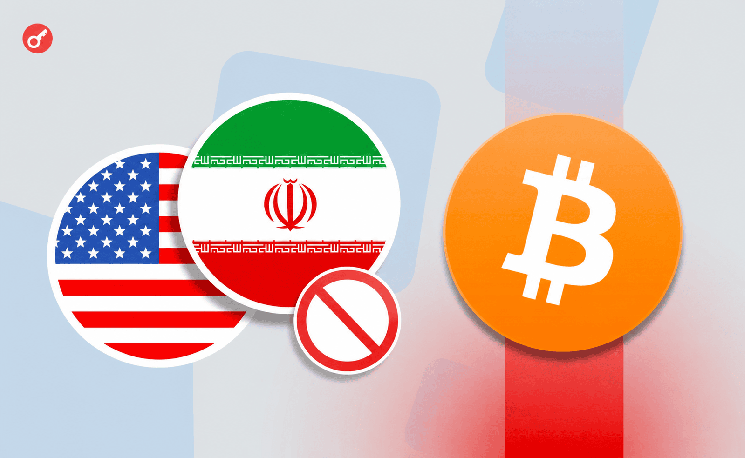
Crypto hit with $1.8B in liquidations – October repeat or healthy reset?

ambcryptoPublicado a 2026-01-30Actualizado a 2026-01-30

Resumen

Crypto markets experienced a sharp $200 billion downturn in late January, triggering $1.8 billion in liquidations—mostly long positions. This sell-off was part of a broader $5 trillion wipeout across U.S. markets, including equities and metals, suggesting a macro-driven risk reset rather than crypto-specific weakness. Despite a bullish backdrop including regulatory progress and political developments, the coordinated decline appears engineered to flush out weak positions and force liquidations, resembling a strategic market shakeout rather than a fundamental shift.

January is wrapping up with a reality check for 2026. After eight weeks of sideways chop, a 7% drawdown abruptly flipped sentiment, wiping billions from TOTAL market cap and snapping conditions back into risk-off.

Breaking it down, in less than 48 hours, the crypto market has shed roughly $200 billion, triggering 2026’s largest liquidation cascade so far, totaling around $1.8 billion, with 95% of liquidations coming from longs.

However, it wasn’t just the crypto market feeling the pain. The entire U.S. market got hit, with over $5 trillion wiped out across metals, crypto, and equities, in what analysts are calling a “once-in-a-decade” shakeup.

According to AMBCrypto, this divergence is important.

Flashback to October: After seven straight weeks of downside, the total crypto market lost $1 trillion in market cap. Over the same period, Gold (XAU) climbed 7%, finishing Q4 up 12%, while crypto dropped 23.8%.

During that cycle, speculation around Strategy’s [MSTR] exclusion from the MSCI index triggered a crypto-led flash crash. Fast forward to today, and it’s not just crypto bleeding. Instead, the entire U.S. market is taking a hit.

Naturally, the question now is: Was this just a “coincidence,” or a “coordinated” dip designed to shake out weak hands? Looking at the macro setup, the market-wide flush doesn’t read like random selling.

Crypto slides despite a bullish macro backdrop

A sudden, coordinated swing hit, aligned with a strong macro setup. Zooming out, the market had been building toward a storm of catalysts. First, the crypto market structure bill was passed, setting a regulatory baseline.

That was followed by the reversal of the government shutdown, removing a major source of uncertainty. However, the spotlight soon shifted to U.S. President Donald Trump’s pick for the next Federal Reserve Chair.

For context, in a video interaction, President Trump timelined the “much-anticipated” event, and the odds of Kevin Warsh being chosen immediately jumped to 83% on Polymarket, keeping traders on edge.

Taken together, these developments created a bullish macro backdrop.

And yet, the crypto market still took a hit. Lately, pullbacks like this, even with solid macro support, have often been seen as market maneuvers, where prices are dumped to shake out weak hands or set up dip buyers.

Now, that’s where the “coordinated” liquidation event comes into play.

With over $5 trillion wiped out across the U.S. market, diverging from the earlier crypto-led breakdown, it’s clear that selling pressure isn’t isolated. Instead, risk sentiment is cracking across multiple asset classes.

That context makes the $200 billion wiped from crypto look less organic and more like an engineered flush, aimed at forcing liquidations and shaking out positioning rather than reflecting a shift in fundamentals.


Final Thoughts

  • The $200 billion crypto drawdown happened alongside a $5 trillion market-wide wipeout, signaling a broader macro-driven risk reset.
  • With a bullish macro backdrop, the move reads more like a forced flush to shake out positioning than a genuine shift in fundamentals.


Preguntas relacionadas

QWhat was the total value of liquidations in the crypto market during the recent sell-off, and what percentage came from long positions?

AThe total value of liquidations was approximately $1.8 billion, with 95% of those liquidations coming from long positions.

QHow does the recent market-wide wipeout compare to the crypto-led flash crash that occurred in October?

AThe October crash was primarily crypto-led, triggered by speculation around a specific stock's exclusion from an index, while the recent event was a broader, coordinated $5 trillion wipeout across the entire U.S. market, including metals, crypto, and equities.

QDespite a bullish macro backdrop, why did the crypto market still experience a significant drawdown according to the article?

AThe article suggests the drawdown was less about a shift in fundamentals and more like an engineered 'forced flush' designed to trigger liquidations and shake out weak hands or positioning in the market.

QWhat two major political or regulatory events contributed to the bullish macro backdrop mentioned in the article?

AThe two events were the passing of the crypto market structure bill, which set a regulatory baseline, and the reversal of the government shutdown, which removed a major source of uncertainty.

QAccording to the final thoughts, what does the simultaneous $200 billion crypto drawdown and $5 trillion market-wide wipeout signal?

AIt signals a broader macro-driven risk reset across multiple asset classes, not an isolated event specific to cryptocurrency.

Lecturas Relacionadas

BIP-110 Controversy Intensifies: Bitcoin May Face Its Most Divisive Hard Fork Battle in Years

Bitcoin is approaching a critical block height of 961,632, which could activate the controversial BIP-110 proposal. This proposal aims to restrict the amount of non-financial data, such as inscriptions and other large data payloads, within Bitcoin transactions. Supporters, including some node operators and Bitcoin purists, argue that BIP-110 is necessary to preserve Bitcoin's core function as a monetary settlement layer by reducing network congestion and node operational burdens caused by non-essential data. They frame it as a correction to keep the network true to its original purpose. However, critics, including prominent figures like Blockstream's Adam Back and developer Jameson Lopp, warn that the proposal's implementation mechanism is dangerously flawed. They highlight that its low 55% miner signaling threshold, coupled with a contentious enforcement mechanism allowing nodes to unilaterally reject non-compliant blocks, significantly increases the risk of a chain split. Opponents argue this sets a dangerous precedent for transaction censorship, undermines Bitcoin's protocol neutrality, and creates excessive uncertainty for developers and businesses, especially since the rule is proposed as a temporary one-year measure. Market analysts, such as those from Bitfinex, suggest a full-scale network split is unlikely due to a lack of broad economic consensus. Major mining pools remain neutral, and adoption of the new rules is minimal. They view the situation more as a governance stress test. The primary risk is operational disruption: if a minority chain persists, major exchanges and custodians may need to temporarily suspend Bitcoin deposits and withdrawals to manage security and liquidity, potentially unsettling newer institutional investors. While BIP-110 is not expected to succeed in overtaking the main chain, its approach has ignited a significant debate about Bitcoin's governance, core values, and resilience.

Foresight NewsHace 7 min(s)

BIP-110 Controversy Intensifies: Bitcoin May Face Its Most Divisive Hard Fork Battle in Years

Foresight NewsHace 7 min(s)

NEAR to Airdrop 330,000 Tokens, Betting on TVL Reaching $70 Million

On June 11th, NEAR Protocol launched the Near@3.33 Milestone Incentive Program, targeting users of its Confidential Intents privacy cross-chain execution feature. The program will distribute 333,333 milestone tokens when the Confidential Intents Total Value Locked (TVL) reaches $70 million. Users must have conducted Confidential transactions on near.com and maintain a Confidential balance above $100 in any asset to qualify, with a single wallet capped at 2% of the current airdrop pool. The milestone tokens will be locked upon receipt and cannot be sold or transferred. They can only be converted 1:1 to NEAR tokens once NEAR's Volume Weighted Average Price (VWAP) maintains $3.33 or higher for three consecutive trading days. As of the report, Confidential Intents TVL exceeds $20.69 million, needing roughly a 3x increase to trigger the airdrop. Confidential Intents, launched in February 2026, is NEAR's privacy execution layer designed to prevent MEV, front-running, and strategy leaks by building confidentiality directly into the execution environment. Its TVL has grown from zero to approximately $15 million in about three months. NEAR token price, which surged from around $1 in April to a peak of $3.08, currently trades near $2. The program aims to boost user activity for Confidential Intents, with future incentive rounds planned as community engagement increases.

Foresight NewsHace 1 hora(s)

NEAR to Airdrop 330,000 Tokens, Betting on TVL Reaching $70 Million

Foresight NewsHace 1 hora(s)

Crypto Market Makers Are Collectively Seeking Change as Money Becomes Harder to Earn

**Summary: Crypto Market Makers Adapt as Margins Shrink** Leading crypto market maker GSR exemplifies a broader industry shift, moving beyond traditional market-making to become a full-service "Web3 investment bank." Its recent strategic acquisitions—including an SEC-registered broker-dealer, rebranded as GSR Securities—and purchases of token advisory firms aim to create an integrated platform covering token design, fundraising, listing, liquidity provision, and asset management. This includes launching an ETF and investing in tokenization platforms like Libeara, backed by a strategic investment from Standard Chartered's SC Ventures. This transformation is not unique to GSR. Other major players like Keyrock, B2C2, Wintermute, and DWF Labs are also expanding geographically, pursuing regulatory licenses (especially under frameworks like MiCA in the EU), and diversifying into over-the-counter (OTC) trading, asset management, and real-world asset tokenization. The driving force behind this collective pivot is a rapidly changing market. Profits from traditional altcoin market-making are declining due to fewer viable projects, reduced client budgets, increased competition, and smarter, more demanding clients. Simultaneously, regulatory pressures are mounting, making compliance a baseline cost. Extreme market events further expose teams lacking robust risk controls. Consequently, the crypto market-making business model is evolving from one reliant on information asymmetry and volatility to a more institutionalized, regulated, and service-diverse industry. Survival now depends on building systemic capabilities beyond mere liquidity provision.

marsbitHace 1 hora(s)

Crypto Market Makers Are Collectively Seeking Change as Money Becomes Harder to Earn

marsbitHace 1 hora(s)

Trading

Spot
Futuros

Artículos destacados

Cómo comprar CHECK

¡Bienvenido a HTX.com! Hemos hecho que comprar Checkmate (CHECK) sea simple y conveniente. Sigue nuestra guía paso a paso para iniciar tu viaje de criptos.Paso 1: crea tu cuenta HTXUtiliza tu correo electrónico o número de teléfono para registrarte y obtener una cuenta gratuita en HTX. Experimenta un proceso de registro sin complicaciones y desbloquea todas las funciones.Obtener mi cuentaPaso 2: ve a Comprar cripto y elige tu método de pagoTarjeta de crédito/débito: usa tu Visa o Mastercard para comprar Checkmate (CHECK) al instante.Saldo: utiliza fondos del saldo de tu cuenta HTX para tradear sin problemas.Terceros: hemos agregado métodos de pago populares como Google Pay y Apple Pay para mejorar la comodidad.P2P: tradear directamente con otros usuarios en HTX.Over-the-Counter (OTC): ofrecemos servicios personalizados y tipos de cambio competitivos para los traders.Paso 3: guarda tu Checkmate (CHECK)Después de comprar tu Checkmate (CHECK), guárdalo en tu cuenta HTX. Alternativamente, puedes enviarlo a otro lugar mediante transferencia blockchain o utilizarlo para tradear otras criptomonedas.Paso 4: tradear Checkmate (CHECK)Tradear fácilmente con Checkmate (CHECK) en HTX's mercado spot. Simplemente accede a tu cuenta, selecciona tu par de trading, ejecuta tus trades y monitorea en tiempo real. Ofrecemos una experiencia fácil de usar tanto para principiantes como para traders experimentados.

620 Vistas totalesPublicado en 2026.01.19Actualizado en 2026.06.02

Cómo comprar CHECK

Discusiones

Bienvenido a la comunidad de HTX. Aquí puedes mantenerte informado sobre los últimos desarrollos de la plataforma y acceder a análisis profesionales del mercado. A continuación se presentan las opiniones de los usuarios sobre el precio de CHECK (CHECK).

活动图片