Crypto Giants Gemini and Crypto.com Pour $21M Into Trump-Aligned MAGA Inc

TheNewsCryptoPublicado a 2026-01-06Actualizado a 2026-01-06

Resumen

Gemini and Crypto.com, through its parent company Foris Dax, have collectively donated $21 million to the pro-Trump Super PAC, MAGA Inc., ahead of the 2026 U.S. midterm elections. Gemini contributed $1.5 million in USDC stablecoins, while Foris Dax provided $20 million. This significant contribution, alongside donations from firms like Shift4 and JPMorgan Chase, positions crypto companies as a major donor group. The surge in political spending follows former President Trump's signing of the GENIUS Act, which established clearer stablecoin regulations, and his campaign's acceptance of crypto donations. MAGA Inc. will use the funds to support Trump-aligned candidates and promote an "America First" agenda, highlighting the crypto industry's active role in shaping future regulations. A strategic partnership between Crypto.com and Trump Media & Technology Group further deepens these political ties.

The two major Companies Gemini and Crypto.com’s Foris Dax, have donated $21 million to a pro-MAGA Inc. and Super PAC that supports Donald Trump ahead of the 2026 U.S. midterm elections. This shows that the Crypto companies are not just for investment or Trading instead, it is actively involved in the U.S Politics.

Gemini Donated $1.5 million using the USDC stablecoins, which were later converted into Cash. The Forix Dax has donated $20 million, which is sent through two large payments of $10 million each. After these donations in late December 2025, MAGA Inc. now reportedly holds nearly $300 million for political campaigning. Other than these two, Shift4 donated $1 million, and JP morgan chase donated more than $4 million. Together, these made the Crypto firms one of the largest Donor Groups in the 2026 Election Cycle.

How Stablecoin Rules and Strategic Partnerships Are Pulling Crypto Into Politics

These donations have increased after Trump signed the GENIUS ACT for the stablecoin regulations and cleared Crypto laws. In 2024, Trump’s Campaign began accepting Crypto Donations. This made Trump more attractive to Crypto firms looking for the Regulatory Act, and many see this as a major win and strengthening support for Trump-aligned Politics.

MAGA Inc. has clearly stated that the funds will be used to support Political candidates aligned with Donald Trump and to promote the “America First” Political Agenda. These midterm elections matter a lot because they will decide who controls Congress, which directly affects Crypto laws and Regulations.

Crypto.com is also partnered with the Trump Media and Technology Group. The deal between them includes the Crypto rewards on Truth Social, the use of the Crypto.com wallets, and the Integration of the Cronos (CRO) Tokens. The new Entity Trump Media Group CRO Strategy Inc., aims to become a Public Digital Asset Company focused on CRO.

This shows that the Crypto is no longer just a tech; it is now deeply involved in U.S. Politics and spending big to shape laws that affect its future. Other than crypto firms, other fast-growing sectors like AI and Cannabis also donate large sums to political groups, but crypto plays a major role.

Highlighted Crypto News:

Bitcoin (BTC) Reloads Its Bullish Streak: How Close Is It to Cracking $95K?

TagsCryptoCrypto.comGemini

Preguntas relacionadas

QWhich two major crypto companies donated a total of $21 million to the pro-Trump Super PAC MAGA Inc.?

AGemini and Crypto.com's Foris Dax donated a total of $21 million to MAGA Inc.

QWhat was the amount donated by Gemini and how was it sent?

AGemini donated $1.5 million using the USDC stablecoins, which were later converted into cash.

QWhat significant legislative action by Donald Trump is cited as a reason for increased crypto donations to his aligned causes?

AThe increase in donations followed after Trump signed the GENIUS ACT for stablecoin regulations and cleared crypto laws.

QWhat is the stated purpose of MAGA Inc. for using the donated funds?

AMAGA Inc. stated the funds will be used to support political candidates aligned with Donald Trump and to promote the 'America First' political agenda.

QBesides the crypto donations, what other business partnership exists between Crypto.com and a Trump-associated entity?

ACrypto.com is partnered with the Trump Media and Technology Group, which includes crypto rewards on Truth Social and the integration of Cronos (CRO) Tokens.

Lecturas Relacionadas

Analyzing the Impact of AI on Economic Growth and Productivity

**Title: Analyzing AI's Impact on Economic Growth and Productivity** This article examines three contrasting views on AI's influence on economic growth and productivity. **The Optimistic View** posits that AI, especially through automating R&D ("recursive self-improvement"), could dramatically accelerate growth, even triggering a technological "singularity" with explosive, potentially infinite, economic expansion. **The Moderate/Mainstream View** acknowledges AI's productivity benefits but emphasizes significant real-world constraints that could limit its impact. These include: limited cost savings per task, structural ceilings on which jobs and industries are "exposed" to AI, adoption bottlenecks (e.g., compute, energy, regulatory hurdles), and the "weak link" effect where non-automatable tasks cap overall gains. Consequently, the realized AI dividend may be far lower than optimistic projections, with estimates typically ranging from 0.1% to 1.3% annual productivity growth. **The Pessimistic View** stems from two strands. The first aligns with the moderate view but applies extremely conservative assumptions about task exposure and efficiency gains, yielding minimal projected impact. The second introduces a demand-side critique: if AI primarily replaces rather than augments labor, it could depress labor's share of income, weaken consumer demand, and create a "demand trap" that ultimately stifles growth, unless offset by redistribution policies. **The authors' assessment** is nuanced: * **Short-term (1-2 years):** AI will support growth primarily through investment spending, not significant productivity gains. * **Medium-term (3-5 years):** Three potential paths emerge based on AI demand and bottleneck severity: 1. **"Optimistic Path":** High demand, few bottlenecks. Rapid productivity gains but risk of major job displacement and social conflict without redistribution. 2. **"Moderate Path" (most likely):** High demand but significant, surmountable bottlenecks. Leads to moderate productivity gains, financial market volatility (K-shaped returns), and sectoral job losses. 3. **"Pessimistic Path":** Low demand or severe bottlenecks. Minimal productivity and growth impact, triggering financial market corrections but allowing a smoother societal transition with less labor disruption. * **Long-term:** AI holds potential for a major productivity revolution and prosperity. The conclusion stresses that no path is smooth. Technologically "optimistic" outcomes could be socially detrimental, while "pessimistic" technological diffusion might be more socially stable. Policymakers must monitor developments and prepare balanced responses to manage economic, financial, and social sustainability.

marsbitHace 5 min(s)

Analyzing the Impact of AI on Economic Growth and Productivity

marsbitHace 5 min(s)

The New Cold War is a Tech Stock War

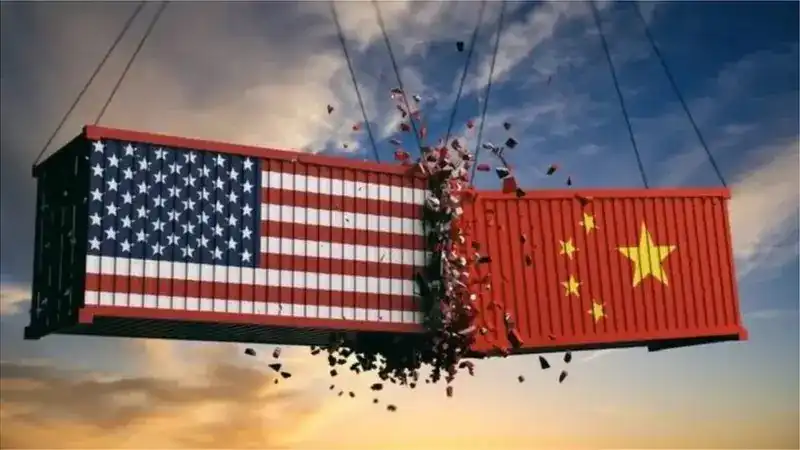
The New Cold War is a Tech Stock War The article argues that the contemporary geopolitical and economic rivalry between the US and China represents a "New Cold War," but one fundamentally fought through technology and financial markets, not physical barriers or conventional trade. Historically, US dominance was secured through financial systems. The Soviet Union, reliant on the rigid "Transferable Ruble," was ultimately undermined by its dependency on the US dollar for oil trade. Later, Japan's semiconductor challenge was countered not just by tariffs (e.g., Plaza Accord, 301 investigations) but by binding it to US Treasury bonds. China presents a more complex, "embedded" challenger. While it holds vast dollar reserves and US debt like Japan, its industrial base is stronger and more diversified than the Soviet Union's. Surviving the initial 2018 trade war phase, the conflict has evolved into a "tech-financial war." The core battlefield is now the stock market. US tech stocks (AI, semiconductors) are treated as sovereign assets, buoyed by bipartisan national will. China is pushing to strengthen its own financial markets to convert industrial strength into financial power and fund its tech ambitions. Companies like ChangXin (semiconductors), Moonshot AI, and DJI compete not just for market share but as financial proxies for their respective systems. The new paradigm is moving from globally efficient monopolies (Apple, Google) towards companies that achieve monopolistic profits within their respective geopolitical spheres. This competition over "pricing power" and financial valuation in segmented markets defines the current era, making the stock market the primary arena for this tech-centric struggle.

marsbitHace 14 min(s)

The New Cold War is a Tech Stock War

marsbitHace 14 min(s)

RWA Weekly: Ten European Financial Institutions Establish Tokenized Asset Cooperative; Ondo Launches New Execution Network Ondo Network

RWA Weekly: European Banks Form Tokenized Asset Cooperative; Ondo Launches New Execution Network Ondo Network Covering July 24-31, 2026, the RWA sector saw a steady on-chain total value locked (TVL) of $36.8 billion, with holder count hitting a record high. However, stablecoin transfer volumes fell sharply (~30%), indicating low on-chain settlement demand. Key regulatory moves include South Korea advancing stablecoin legislation and a push to scrap crypto taxes, Kenya lowering capital requirements for stablecoin issuers, and Zimbabwe approving seven projects for its crypto sandbox. In project developments, BIS-led Project Agorá successfully tested cross-border payments with tokenized funds across six currencies. Ten major European financial institutions formed the RL1 blockchain cooperative to build tokenized asset infrastructure. Other notable updates: Aviva launched a tokenized dollar liquidity fund on XRPL, POSCO International tokenized commercial invoices on Injective, and a Brazilian farmer used tokenized cattle as collateral for a loan. Additional progress includes BNY Mellon migrating its core transfer agent operations to blockchain, Securitize gaining SEC investment advisor registration, and Tether’s compliant stablecoin USA₮ launching on Celo. Ondo Finance introduced Ondo Network, a new execution layer focused on speed and privacy, moving away from its initial chain plans. An analysis highlights that despite the growing scale of on-chain RWAs (~$32B), approximately 90% remain underutilized in DeFi, pointing to a critical challenge in unlocking liquidity and fostering real-world application beyond mere issuance.

marsbitHace 15 min(s)

RWA Weekly: Ten European Financial Institutions Establish Tokenized Asset Cooperative; Ondo Launches New Execution Network Ondo Network

marsbitHace 15 min(s)

South Korean Stock Market Sees Sharp Rebound After Forceful De-leveraging, SK Hynix Rises 30%

On July 31, South Korean stocks staged a historic rebound. The benchmark KOSPI index surged 18.27%, with chipmaker SK Hynix hitting a 30% gain limit. This followed a brutal, near-40% decline in the KOSPI over the previous month, driven largely by a deleveraging spiral involving leveraged ETFs. Analysts attributed the sharp sell-off to structural liquidity issues rather than deteriorating corporate fundamentals. The rally was triggered by a confluence of positive catalysts. Firstly, strong earnings from U.S. cloud giants Microsoft and Amazon alleviated fears of an "AI bubble burst," boosting global tech sentiment. Secondly, SK Group Chairman Chey Tae-won made a rare personal purchase of SK Hynix shares, seen as a strong vote of confidence. Thirdly, the South Korean government announced a 20 trillion won ($139 billion) AI investment fund. In response to the market turmoil, South Korean regulators are tightening controls on leveraged ETFs, admitting oversight shortcomings. Measures include raising minimum cash保证金 requirements for散户 investors and suspending new product launches. While the rebound signals eased liquidity pressure, analysts note deep structural issues remain. The market's future stability is seen as dependent on global tech capital expenditure trends and memory chip price cycles, with some viewing the surge as a technical correction rather than a definitive trend reversal.

marsbitHace 35 min(s)

South Korean Stock Market Sees Sharp Rebound After Forceful De-leveraging, SK Hynix Rises 30%

marsbitHace 35 min(s)

Trading

Spot
活动图片