Crypto Exec Warns Tokenization Is Moving Faster Than Expected

bitcoinistPublicado a 2025-12-22Actualizado a 2025-12-22

According to a post shared on X by Keith Grossman, president of crypto payments firm MoonPay, finance is heading toward an onchain future that could unfold over several years.

The view comes as large banks and asset managers begin product tokenization, a move that once seemed extreme but is now being treated as a practical step by major institutions.

Regulatory Signals Push Institutions Forward

Based on reports cited by Grossman, progress has accelerated because rules are becoming clearer. Legislative efforts, regulatory guidance, bank involvement and accounting standards are starting to line up.

That combination reduces uncertainty, which is often what slows large pools of capital. BlackRock has already launched tokenized funds, while Franklin Templeton is running tokenized money market funds on public blockchains.

Those actions suggest that tokenization is no longer confined to pilot labs or internal trials. It is being used with real assets and real clients.

Tokenization: Big Players Making Their Presence Felt

Banks are also taking part. Citi, Bank of America and JPMorgan Chase have all been linked to onchain settlement tests, tokenized deposits and near real-time asset transfers.

These projects focus on reducing friction in back-end processes that have existed for decades. Settlement that once took days could be shortened to minutes if shared ledgers are used. That change alone alters how risk, liquidity and cost are managed across markets.

Grossman framed the moment as similar to earlier shifts in other industries. He pointed to how legacy media struggled when distribution moved online more than 20 years ago.

At the time, many firms tried to protect old revenue streams instead of adapting. Some survived by changing early. Others lost influence as new platforms took control.

BTCUSD now trading at $89,363. Chart: TradingView

Tokenization: Old Revenue Lines Face Pressure

In finance, the pressure point sits in areas such as reconciliation, clearing, settlement and custody. These roles have long supported steady margins, partly because they depend on complex and slow systems.

Reports have disclosed that software and shared protocols can now handle much of that work. As a result, some services may become cheaper and less profitable over time.
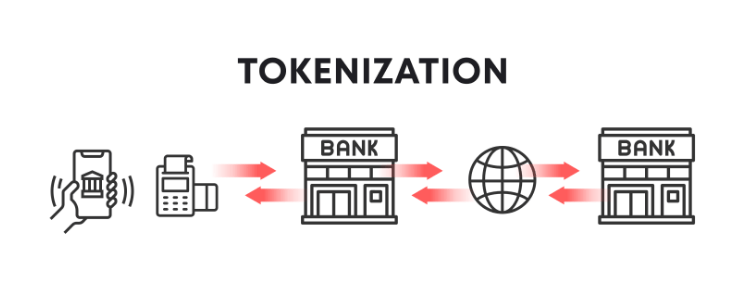
Image: Blaize Tech

That does not mean banks disappear. According to Grossman’s view, they remain central players, much like they did after ATMs reduced teller roles or when voice-over-internet systems cut long-distance call costs for telecom firms.

The institutions stayed, but their shape changed. The same pattern is expected here. Banks may rely more on software, fewer manual steps and new forms of infrastructure control.

Tokenization is moving faster than expected, according to MoonPay president Keith Grossman. Banks and asset managers are testing tokenized funds and onchain settlement, signaling that what was once experimental is now becoming practical.

The lenders and other big players are among the firms pushing the shift, showing the trend is already under way.

Featured image from Unsplash, chart from TradingView

Criptos en tendencia

Preguntas relacionadas

QAccording to Keith Grossman, why is the progress in tokenization accelerating?

AProgress has accelerated because rules are becoming clearer, with legislative efforts, regulatory guidance, bank involvement, and accounting standards starting to line up, which reduces uncertainty.

QWhich major financial institutions are mentioned as actively participating in tokenization efforts?

ABlackRock, Franklin Templeton, Citi, Bank of America, and JPMorgan Chase are mentioned as major institutions participating in tokenization.

QWhat key benefit of using shared ledgers for settlement is highlighted in the article?

AThe key benefit is that settlement, which once took days, could be shortened to minutes, altering how risk, liquidity, and cost are managed across markets.

QHow does Keith Grossman frame the current shift in finance, comparing it to another industry?

AHe frames it as similar to the shift in legacy media over 20 years ago, where distribution moved online and firms that adapted early survived while others lost influence to new platforms.

QWhat specific areas in finance are identified as facing pressure from tokenization and new technology?

AThe pressure points are in areas such as reconciliation, clearing, settlement, and custody, which have long supported steady margins due to complex and slow systems.

Lecturas Relacionadas

Analysis of the Latest Portfolio Adjustment by the "Top Player" in the U.S. Stock Market: $9 Billion Short on NVIDIA, Shifting Focus to Power and Memory Sectors

AI investor Leopold Aschenbrenner has made a significant portfolio shift, taking a $9 billion nominal short position against top AI infrastructure stocks like NVIDIA, ASML, and Oracle. Simultaneously, he is redirecting capital towards what he sees as the next critical bottlenecks in the AI boom: power, memory, and data center networking, alongside private investments in AI model companies like Anthropic. This move is interpreted not as a call that the AI bubble has burst, but as a rotation within the infrastructure stack. The analysis highlights NVIDIA's recent $25 billion bond issuance as a potential signal, questioning why a cash-rich company would seek external debt despite high profits and increased dividends/buybacks. The core investment thesis is that the initial, crowded "picks and shovels" trade in semiconductors is maturing. The next wave of capital is expected to flow into the physical and logistical constraints of AI expansion: electricity supply, memory chip capacity, data center construction, and enabling technologies like optical networking (fiber) for high-bandwidth communication, where copper remains crucial for short distances. Aschenbrenner's substantial (approx. 20% of fund) private stake in Anthropic is noted as a key part of his strategy—investing directly in the "mine" (AI models) rather than just the "shovels." The discussion concludes that while certain segments may be overvalued, the overarching AI infrastructure demand driven by real product usage remains robust. The most promising long-term investments are seen in essential, non-sexy infrastructure—particularly energy and power companies—whose demand is viewed as a global constant irrespective of AI's cyclicality.

marsbitHace 6 min(s)

Analysis of the Latest Portfolio Adjustment by the "Top Player" in the U.S. Stock Market: $9 Billion Short on NVIDIA, Shifting Focus to Power and Memory Sectors

marsbitHace 6 min(s)

BIT Research: Liquidity is Disappearing, Will Bitcoin Replay the Bottoming Pattern of 2022?

The crypto market is currently in an adjustment phase driven by policy expectations and liquidity shifts. Despite a brief rebound fueled by geopolitical easing and SpaceX's strong IPO performance, unexpectedly hawkish signals from new Fed Chair Kevin Warsh have removed anticipated easing support. Concurrently, stablecoin liquidity is shrinking, with insufficient new capital inflows, pushing the market into a typically quiet summer period. Pricing lacks catalysts for a sustained rally. Daily trading volume has significantly contracted, stablecoin growth has slowed markedly, and the supportive effect of Strategy's (formerly MicroStrategy) STRC preferred stock-financed Bitcoin purchases is fading. Amid policy uncertainty, seasonal weakness, and liquidity contraction, Bitcoin faces near-term downward pressure. Warsh's hawkish pivot and refusal to provide a clear policy outlook have increased risk premiums, historically unfavorable for Bitcoin. Technically, the trend remains bearish below $73,700, with $62,446 as critical support. A break below could accelerate declines, though a prolonged consolidation phase, similar to 2022's bottoming process, is possible. Liquidity is a core constraint. Current daily volume is around $500 billion, roughly 25% of the peak during the July-Oct 2025 rally. The 12-month growth rates for USDT and USDC have fallen to ~20%, with 6-month growth near zero, indicating weak new inflows. Bitcoin ETF and Strategy-driven inflows have also weakened, with a 30-day rolling net outflow. With inflation at 4.2% above the Fed's target, combined hawkish policy, seasonal factors, and liquidity shortages challenge Bitcoin's ability to hold above $60,000. However, this adjustment phase may be forming a cyclical low this summer, potentially setting the stage for the next bull cycle.

marsbitHace 34 min(s)

BIT Research: Liquidity is Disappearing, Will Bitcoin Replay the Bottoming Pattern of 2022?

marsbitHace 34 min(s)

Who Makes the Best Use of Claude Code? The Answer Might Not Be Programmers

Claude Code Usage Report Summary (Based on ~400k sessions) Core Finding: In agentic programming with Claude Code, a clear division of labor has emerged: humans primarily decide *what* to build (planning decisions), while Claude decides *how* to build it (execution decisions). Key Insights: 1. **Effectiveness is not limited to programmers.** In code-generation tasks, success rates for users in non-technical fields (law, finance, management, research) are nearing those of software engineers. What matters most is the user's domain expertise and understanding of the problem to be solved. 2. **Domain expertise drives success and efficiency.** Sessions where users exhibited "expert" proficiency in the task's domain saw verified success rates double compared to "novice" sessions. Experts also delegated more work per instruction, with Claude executing more actions and producing more output. 3. **AI is amplifying, not replacing, domain knowledge.** Claude Code lowers the *implementation* barrier, not the *judgment* barrier. The value of knowing the "what" and "why" is increasing relative to just knowing the "how" to code. 4. **Usage is evolving.** Over a 7-month period (Oct '25 - Apr '26), the share of sessions for debugging halved, while use for software operations, data analysis, and non-code writing roughly doubled. The estimated economic value of typical tasks increased by ~25%. Conclusion: The data suggests coding agents are making programming background less critical for completing technical tasks. However, they reward and amplify deep domain understanding. The ability to successfully direct an AI agent stems more from mastery of a specific field than from coding skill itself. The primary gains come from being competent in a domain; deep specialization adds only marginal additional advantage. This may signal a shift where software creation becomes integrated into various professions.

marsbitHace 1 hora(s)

Who Makes the Best Use of Claude Code? The Answer Might Not Be Programmers

marsbitHace 1 hora(s)

Trading

Spot
Futuros

Artículos destacados

Qué es XAG

El contrato perpetuo XAGUSDT es el símbolo de negociación para la plata cotizada en dólares estadounidenses, representando 1 onza troy de plata.

8 Vistas totalesPublicado en 2026.06.18Actualizado en 2026.06.18

Qué es XAG

Cómo comprar XAG

¡Bienvenido a HTX.com! Hemos hecho que comprar Silver (XAG) sea simple y conveniente. Sigue nuestra guía paso a paso para iniciar tu viaje de criptos.Paso 1: crea tu cuenta HTXUtiliza tu correo electrónico o número de teléfono para registrarte y obtener una cuenta gratuita en HTX. Experimenta un proceso de registro sin complicaciones y desbloquea todas las funciones.Obtener mi cuentaPaso 2: ve a Comprar cripto y elige tu método de pagoTarjeta de crédito/débito: usa tu Visa o Mastercard para comprar Silver (XAG) al instante.Saldo: utiliza fondos del saldo de tu cuenta HTX para tradear sin problemas.Terceros: hemos agregado métodos de pago populares como Google Pay y Apple Pay para mejorar la comodidad.P2P: tradear directamente con otros usuarios en HTX.Over-the-Counter (OTC): ofrecemos servicios personalizados y tipos de cambio competitivos para los traders.Paso 3: guarda tu Silver (XAG)Después de comprar tu Silver (XAG), guárdalo en tu cuenta HTX. Alternativamente, puedes enviarlo a otro lugar mediante transferencia blockchain o utilizarlo para tradear otras criptomonedas.Paso 4: tradear Silver (XAG)Tradear fácilmente con Silver (XAG) en HTX's mercado spot. Simplemente accede a tu cuenta, selecciona tu par de trading, ejecuta tus trades y monitorea en tiempo real. Ofrecemos una experiencia fácil de usar tanto para principiantes como para traders experimentados.

5 Vistas totalesPublicado en 2026.06.18Actualizado en 2026.06.18

Cómo comprar XAG

Cómo comprar XAU

¡Bienvenido a HTX.com! Hemos hecho que comprar Gold (XAU) sea simple y conveniente. Sigue nuestra guía paso a paso para iniciar tu viaje de criptos.Paso 1: crea tu cuenta HTXUtiliza tu correo electrónico o número de teléfono para registrarte y obtener una cuenta gratuita en HTX. Experimenta un proceso de registro sin complicaciones y desbloquea todas las funciones.Obtener mi cuentaPaso 2: ve a Comprar cripto y elige tu método de pagoTarjeta de crédito/débito: usa tu Visa o Mastercard para comprar Gold (XAU) al instante.Saldo: utiliza fondos del saldo de tu cuenta HTX para tradear sin problemas.Terceros: hemos agregado métodos de pago populares como Google Pay y Apple Pay para mejorar la comodidad.P2P: tradear directamente con otros usuarios en HTX.Over-the-Counter (OTC): ofrecemos servicios personalizados y tipos de cambio competitivos para los traders.Paso 3: guarda tu Gold (XAU)Después de comprar tu Gold (XAU), guárdalo en tu cuenta HTX. Alternativamente, puedes enviarlo a otro lugar mediante transferencia blockchain o utilizarlo para tradear otras criptomonedas.Paso 4: tradear Gold (XAU)Tradear fácilmente con Gold (XAU) en HTX's mercado spot. Simplemente accede a tu cuenta, selecciona tu par de trading, ejecuta tus trades y monitorea en tiempo real. Ofrecemos una experiencia fácil de usar tanto para principiantes como para traders experimentados.

5 Vistas totalesPublicado en 2026.06.18Actualizado en 2026.06.18

Cómo comprar XAU

Discusiones

Bienvenido a la comunidad de HTX. Aquí puedes mantenerte informado sobre los últimos desarrollos de la plataforma y acceder a análisis profesionales del mercado. A continuación se presentan las opiniones de los usuarios sobre el precio de A (A).

活动图片