Crypto Developers Could Get Long-Term Shield Under New Senate Bill

bitcoinistPublicado a 2026-01-14Actualizado a 2026-01-14

Resumen

US Senators Cynthia Lummis and Ron Wyden introduced the Blockchain Regulatory Certainty Act, a standalone bill to protect blockchain developers and non-custodial infrastructure providers from being classified as money transmitters. The legislation creates a safe harbor for those who write code or maintain networks without controlling user funds, meaning liability depends on custody of assets rather than software development. This aims to reduce legal risks for node operators and open-source developers. The move follows industry lobbying and delays in broader crypto market-structure legislation. While welcomed by many, some caution that clear definitions are needed to prevent loopholes and ensure the protection applies only to builders, not asset handlers.

US Senators Cynthia Lummis and Ron Wyden introduced a standalone measure that would protect blockchain developers and other non-custodial infrastructure providers from being treated as money transmitters solely for writing code or maintaining networks. The bill is being filed as the Blockchain Regulatory Certainty Act, a name that also appears in earlier House paperwork filed last year.

Crypto: Bill Aims To Protect Non-Custodial Developers

The draft would create a safe harbor for developers who do not control user funds, making liability turn on actual custody or control of assets rather than on the act of creating software. That change would mean node operators, protocol maintainers, and many open-source coders could avoid money-transmitter rules so long as they do not hold or direct users’ tokens.

Industry Pressure And A History Of Concern

Reports have disclosed months of lobbying from exchanges, developer groups, and advocacy coalitions that urged lawmakers to clarify this point. Those groups warned that without clear language, developers could face licensing and enforcement risks that would chill US-based development. The House version of the measure first appeared in May last year and set out similar safe-harbor text.

Total crypto market cap currently at $3.1 trillion. Chart: TradingView

Senate Markup Delayed As Negotiations Continue

Lawmakers have paused a larger Senate market-structure push while they work through a range of open issues, including stablecoin policy and yield rules. With that broader package pushed later into the month, sponsors moved the developer protections into a standalone bill to give that issue its own spotlight. Reports suggests the pause means Congress may act on the developer language sooner than the full market bill.
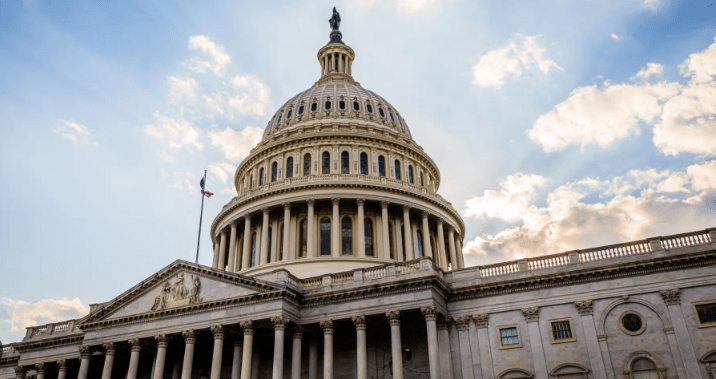
The US Senate. Image: Omar Chatriwala/Getty Images

What Developers And Advocates Are Saying

Some protocol teams and industry lawyers welcomed the step as a much-needed clarification, saying it would reduce legal uncertainty for projects that do not custody funds.

Others urged care, noting that clear definitions will be crucial to prevent loopholes and to make sure bad actors cannot hide behind the safe harbor. Coverage indicates sponsors emphasized the bill’s goal is narrow: protect those who build and maintain, not those who handle other people’s assets.

The proposal for a separate law is being introduced while there are still many uncertainties surrounding how cryptocurrencies will be regulated in the US. In the latter part of 2025 and into 2026, the crypto sector has demonstrated that it has a great deal of clout within political circles in Washington D.C.

There has been a significant increase in lobbying by large crypto-related businesses as legislators review various options for regulating this industry. Several reports have linked the current political environment to the legislative actions taken to regulate crypto in Congress, as well as how interest in legislative action has increased due to Trump’s administration.

Featured image from Unsplash, chart from TradingView

Preguntas relacionadas

QWhat is the main purpose of the Blockchain Regulatory Certainty Act introduced by Senators Lummis and Wyden?

AThe main purpose is to protect blockchain developers and non-custodial infrastructure providers from being treated as money transmitters solely for writing code or maintaining networks, by creating a safe harbor for those who do not control user funds.

QAccording to the bill, what determines liability for developers under the proposed safe harbor?

ALiability turns on actual custody or control of assets rather than on the act of creating software, meaning developers are protected as long as they do not hold or direct users' tokens.

QWhy did the developer protection measure become a standalone bill instead of part of a larger package?

AThe larger Senate market-structure push was paused to work on open issues like stablecoin policy, so sponsors moved the developer protections into a standalone bill to give it separate attention and potentially faster action.

QWhat concern do some industry lawyers have about the safe harbor provision?

ASome lawyers urge care, noting that clear definitions are crucial to prevent loopholes and ensure bad actors cannot hide behind the safe harbor to evade regulation.

QHow has the crypto industry demonstrated political influence in Washington D.C. according to the article?

AThe crypto sector has shown significant clout through increased lobbying by large crypto-related businesses and heightened legislative activity, with reports linking this to the current political environment and Trump's administration.

Lecturas Relacionadas

Full Debut Q&A! Fed Chair Wash: Firmly Adhering to 2% Inflation Target, Establishing Five Special Task Forces, Personally Did Not Submit Dot Plot

Federal Reserve Chair Kevin Warsh delivered his first FOMC press conference, maintaining the federal funds rate at 3.5%-3.75% and emphasizing the Committee's unanimous and explicit commitment to achieving its 2% inflation target. Key announcements included significant changes to Fed communication and operations. The policy statement was significantly shortened and, notably, forward guidance was removed. Chair Warsh broke from precedent by declining to submit his own economic forecasts and "dot plot." He announced the immediate formation of five special working groups focusing on: Fed communication, the balance sheet, data sources, productivity and employment (including AI's impact), and the inflation framework. These groups, which will include external experts, are tasked with recommending improvements by year-end. One key group will review the Fed's $6.7 trillion balance sheet to assess the roles of interest rates versus balance sheet tools in monetary policy. Warsh characterized the current restrictive stance of policy as "uneven," noting its effect on housing but questioning its impact on financial markets where conditions appear less restrictive. He expressed a desire to move away from a "Fed-speak" driven market, arguing that markets should react to economic data rather than Fed commentary to provide better informational signals. On inflation, he stated there is no need to reconsider the 2% target until the Fed re-establishes its commitment and capability to achieve it. Economic projections (SEP) from other officials showed a split on the rate outlook for 2024, with half expecting at least one hike and half forecasting unchanged or lower rates. The median projection saw the federal funds rate at 3.8% by year-end 2024. Following the announcements, risk assets sold off sharply, Treasury yields rose, and the dollar strengthened.

marsbitHace 17 min(s)

Full Debut Q&A! Fed Chair Wash: Firmly Adhering to 2% Inflation Target, Establishing Five Special Task Forces, Personally Did Not Submit Dot Plot

marsbitHace 17 min(s)

Full First Q&A! Fed Chair Warsh: Sticks to 2% Inflation Target, Establishes Five Special Working Groups, Personally Did Not Submit Dot Plot

The Federal Reserve, under new Chair Kevin Warsh, held its first FOMC meeting, maintaining the federal funds rate target range at 3.5% to 3.75%. The central bank issued a significantly shortened policy statement, explicitly removing forward guidance. Chair Warsh delivered a strong, unified commitment to achieving the 2% inflation target, stating the FOMC has the "capability and the commitment" to restore price stability and sees no need to review the target itself at this time. Warsh announced the immediate formation of five special working groups to examine and propose improvements in key areas by year-end: Fed communication, the balance sheet (including a review of the $6.7 trillion portfolio and its role in policy), data sources and methodology, productivity and employment (including AI's impact), and the inflation framework. In a break from tradition, Chair Warsh did not submit his own economic projections or "dot plot." The submitted Summary of Economic Projections (SEP) showed a split among other officials: half anticipate at least one rate hike this year, while half expect rates to remain steady or fall. The median projection sees the federal funds rate at 3.8% by year-end 2026. Warsh characterized the current policy stance as "uneven," noting restrictive effects in sectors like housing but less so in financial markets. He emphasized a desire to move away from a market dynamic overly focused on Fed signaling, advocating for markets to react more to economic data. On AI, he called it potentially the most significant economic change in his adult life, driving clear demand but with uncertain timing and scale on the supply side, creating a "race" between the two.

链捕手Hace 19 min(s)

Full First Q&A! Fed Chair Warsh: Sticks to 2% Inflation Target, Establishes Five Special Working Groups, Personally Did Not Submit Dot Plot

链捕手Hace 19 min(s)

The DeepSeek Financing Story

DeepSeek's financing round, totaling approximately 3 billion USD, concluded recently, revealing details about the process and key investors. The round was initiated around April with strict initial terms: a minimum commitment of 5 billion RMB, no syndication, and a pure RMB structure. These were later relaxed, with the minimum ticket size reduced to 1.5 billion RMB. A pivotal four-hour online investor meeting in mid-May served as the primary interaction for many backers with DeepSeek's founder, Liang Wenfeng. Despite not being a naturally eloquent speaker, Liang's philosophy deeply resonated. He consistently emphasized the company's singular focus on AGI (Artificial General Intelligence), the principle of "less is more," extreme caution in spending, and the paramount importance of team stability. His notable quotes included describing the team as "ordinary people doing extraordinary things" and stating that "AGI is a big enough thing; everything else is just process." The final investor list featured 10 entities, but underlying fund structures indicate participation from nearly 100 institutions and individuals. Notable lead investors include Monolith Capital (increasing its commitment from 1.5 to 3 billion RMB), Zhenxingu Capital, IDG Capital, and state-affiliated investors like Guozhitou. Conspicuously absent were major firms like Sequoia China and Hillhouse Capital, despite earlier speculation about their involvement. A core condition set by Liang Wenfeng for all investors, whether corporate or venture capital, was a strict prohibition against poaching DeepSeek employees or encouraging them to leave to start ventures. The financing process highlighted DeepSeek's unexpected openness to external capital, surprising many in the investment community. The company's low-profile nature, combined with its ambitious AGI vision and principled approach, fostered a sense of reverence among participating investors, many of whom were reluctant to discuss the deal publicly, preferring to maintain its discreet and purposeful ethos.

链捕手Hace 26 min(s)

The DeepSeek Financing Story

链捕手Hace 26 min(s)

The DeepSeek Fundraising Story

"The DeepSeek Funding Story: Insights from the $2.15 Billion Round" This article details behind-the-scenes narratives from DeepSeek's recent massive funding round. Key highlights include the legendary four-hour online investor meeting where CEO Liang Wenfeng, despite not being a charismatic speaker, impressed attendees with his focus on AGI and team stability. He emphasized the philosophy of "ordinary people doing extraordinary things" and a steadfast commitment to solely advancing intelligence. The fundraising process, initiated in April, saw initial demands for a minimum investment of 5 billion RMB, no syndication, and a pure RMB structure. These terms were later adjusted to a 1.5 billion RMB minimum to accommodate more investors. A notable absence was the lack of participation from major VC firms Sequoia China and Hillhouse Capital, despite early rumors, making IDG the only established VC in the final lineup. The investor list, while showing 10 entities, actually involved nearly 100 underlying institutions and individuals upon closer examination. Significant participants included Monolith Capital, which doubled its commitment to 3 billion RMB, and Zhenxingu Capital, an unexpected entrant. Liang Wenfeng's paramount condition for all investors was a strict agreement not to poach DeepSeek employees. The article reflects on DeepSeek's unexpected openness to funding and the mix of strategies—synergy, insight, brand alignment, and persistence—that secured investors a stake. The overarching sentiment among participants is one of pride and a shared belief in DeepSeek's potential to become a landmark Chinese company, driven by a profound sense of purpose in the AGI race.

marsbitHace 29 min(s)

The DeepSeek Fundraising Story

marsbitHace 29 min(s)

DAT Companies Take on Side Businesses

The article details the strategic shifts of Digital Asset Treasury (DAT) companies amid a prolonged market downturn. Initially popularized by firms like MicroStrategy, the DAT model—where companies hold cryptocurrencies on their balance sheets—has faced significant pressure as crypto ETFs eroded their investment thesis and bear markets strained finances. Key players are adapting in several ways. Some, like ETHzilla, have abandoned the model entirely. Others are pivoting towards becoming active, revenue-generating participants in the crypto ecosystem rather than passive holders. This evolution is taking two main paths: 1. **Transformation into Institutional Crypto Asset Managers:** Companies like SharpLink Gaming and GameSquare are leveraging their holdings to generate yield, moving beyond simple storage. They employ strategies like 100% ETH staking or using machine learning to optimize DeFi yields, positioning themselves as platforms offering institutional-grade crypto yield products. 2. **Becoming Blockchain Infrastructure Operators:** This is prominent in the Solana ecosystem. Firms like DeFi Development and SOL Strategies are acquiring validator businesses, issuing liquid staking tokens (e.g., dfdvSOL, fwdSOL), and integrating them into DeFi protocols. They generate fee-based revenue from these operations, building network effects. The article notes that successful转型 hinges on building operational expertise and defensible business models around crypto assets, such as technical advantages or deep ecosystem integration. However, these new paths carry risks like smart contract vulnerabilities or ecosystem dependence. Ultimately, this collective shift signals a maturation phase for the DAT movement. It highlights that in crypto, sustainable value is increasingly tied to active participation, cash flow generation, and providing real utility, rather than speculative capital allocation alone.

Foresight NewsHace 31 min(s)

DAT Companies Take on Side Businesses

Foresight NewsHace 31 min(s)

Trading

Spot
Futuros
活动图片