Crypto Crime Hit Hard: $700 Million Frozen By DOJ Strike Force

bitcoinistPublicado a 2026-04-25Actualizado a 2026-04-25

Resumen

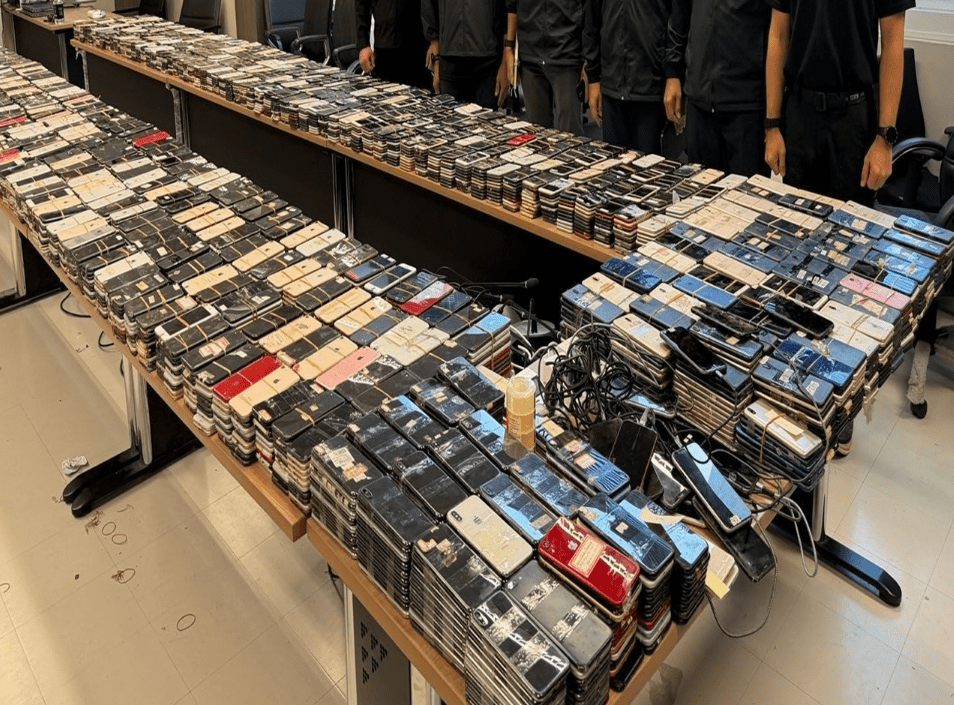
A US law enforcement task force has frozen over $700 million in cryptocurrency linked to investment scams targeting Americans. The operation, which involved cooperation from crypto exchanges and legal processes, also took down more than 500 fraudulent websites and a Telegram channel used to recruit victims. Two Chinese nationals were named in arrest warrants for operating a scam compound in Burma. In a related move, the US State Department announced a $10 million reward for information disrupting scam centers in Burma. Singaporean authorities, alongside major crypto exchanges and analytics firms, also prevented nearly $3 million in losses through a parallel operation. The scale of cybercrime remains vast, with the FBI reporting over $20 billion in losses in 2025.

A US law enforcement task force seized hundreds of fake investment websites and unsealed warrants against two suspects tied to a Burmese crypto scam compound.

US Reward For Scam Center Tips

The US State Department is offering $10 million to anyone who helps disrupt the Tai Chang scam centers in Burma — a bounty that signals just how seriously Washington is taking the problem of industrialized fraud in Southeast Asia.

That announcement came alongside a sweeping action Thursday by the US Scam Center Strike Force, which said it had frozen more than $700 million in crypto connected to investment scams targeting American victims.

The funds were restrained through a combination of voluntary cooperation from crypto exchanges and formal legal processes.

Fake Sites, A Seized Telegram Channel, And Two Arrest Warrants

The operation’s reach went beyond asset freezes. Authorities pulled down over 500 fraudulent investment websites that had been used to lure victims into depositing cryptocurrency. Visitors who try to access those domains now see a government seizure notice.

A Telegram channel was also seized. Reports say it had been used to recruit unsuspecting job seekers into a crypto scam center operating in Cambodia — a common tactic in Southeast Asia, where traffickers pose as employers to lure workers into forced labor at fraud compounds.
Source: US DOJ

Two Chinese nationals, Huang Xingshan and Jiang Wen Jie, were named in criminal complaints and arrest warrants unsealed as part of the operation. The pair is accused of running a crypto investment fraud scheme at the Shunda compound in Burma. That facility was seized by the Karen National Liberation Army in November 2025.

Exchanges And Blockchain Firms Join The Fight

The US was not alone in acting Thursday. Singapore’s police force ran a parallel month-long operation from mid-March through mid-April, working alongside Coinbase, Gemini, Coinhako, Independent Reserve, and blockchain analytics companies TRM Labs and Chainalysis.

BTCUSD currently trading at $78,076. Chart: TradingView

That effort stopped more than $2.86 million in potential losses and included over 90 direct interventions with scam victims — some by phone, others in person.

The willingness of major crypto platforms to cooperate with law enforcement marks a shift in how these cases are being handled. Blockchain transactions are traceable, and that transparency is increasingly being used against the very criminals who rely on crypto for speed and anonymity.

Losses Running Into The Billions

The scale of the problem is hard to overstate. The FBI received more than a million cybercrime complaints in 2025 alone, with total reported losses hitting more than $20 billion.

The $701 million frozen Thursday, while a significant number, represents a fraction of what has already been lost.

Featured image from Meta, chart from TradingView

Preguntas relacionadas

QWhat was the total amount of cryptocurrency frozen by the US Scam Center Strike Force?

AThe US Scam Center Strike Force froze more than $700 million in cryptocurrency connected to investment scams.

QWhat reward is the US State Department offering for information on the Tai Chang scam centers in Burma?

AThe US State Department is offering a $10 million reward for information that helps disrupt the Tai Chang scam centers in Burma.

QHow many fraudulent investment websites were taken down as part of the operation?

AAuthorities pulled down over 500 fraudulent investment websites used to lure victims.

QWho were the two individuals named in the criminal complaints and arrest warrants?

AThe two individuals named were Chinese nationals Huang Xingshan and Jiang Wen Jie, accused of running a crypto investment fraud scheme.

QWhich organizations did Singapore's police force collaborate with in their parallel operation?

ASingapore's police force worked with Coinbase, Gemini, Coinhako, Independent Reserve, and blockchain analytics companies TRM Labs and Chainalysis.

Lecturas Relacionadas

Qualcomm: AI Hype Subsides, When Will Smartphones Emerge from the Gloom?

Qualcomm reported its Q3 FY2026 results (ending June 2026), with revenue of $9.95B, down 4% YoY but above expectations. Gross margin declined to 53.1%, pressured by rising costs across manufacturing and memory. Key business segments showed mixed performance: Handset revenue fell 19.6% YoY to $5.09B, dragged by an 11% decline in non-Apple Android shipments and weaker high-end mix. Conversely, Automotive revenue surged 61% to $1.59B, and IoT grew 9% to $1.83B. Core operating profit dropped 41% YoY due to margin compression and higher expenses. Management's Q4 FY2026 guidance projects revenue of $9.7B-$10.5B, in line with consensus, but Non-GAAP EPS guidance of $2.05-$2.25 fell short of expectations. Amidst persistent weakness in its core handset market, Qualcomm is pursuing growth in AI, focusing on Edge AI (smartphones, PCs, automotive) and Data Center AI. Its data center strategy includes four pillars: AI accelerators (e.g., AI200), commercial CPUs (Dragonfly C1000), custom silicon, and connectivity solutions. While these initiatives initially boosted its stock, concerns over AI capital expenditure sustainability have since erased those gains. The company targets $5B in data center revenue for FY2027 and $15B for FY2029. The report concludes that with the traditional handset business still under pressure, the data center opportunity is currently viewed as a longer-term option, and a more conservative valuation based on core operations may be warranted until AI contributions materialize.

marsbitHace 4 min(s)

Qualcomm: AI Hype Subsides, When Will Smartphones Emerge from the Gloom?

marsbitHace 4 min(s)

From TPU to Self-Evolving Agents: How Jeff Dean Predicts the Next Step in AI

At the 2026 YC Startup School, Jeff Dean outlined his vision for AI's next phase, shifting focus from simply scaling models to building intelligent, autonomous systems. He believes AI's progress is no longer just about creating smarter models, but about integrating them into systems capable of long-term, iterative work, automated experimentation, and continuous learning. This evolution moves the competition from "who has the bigger model" to "who can best organize intelligence." Dean suggests AI capabilities are now comparable to a junior engineer, enabling the automation of complex workflows. However, the true challenge and opportunity lie in managing these AI "workers" at scale. He emphasizes the importance of **context engineering**—structuring tools, memory, and feedback loops—over raw model power. For startups, this means building deep expertise in niche domains where general models currently fail (near 0-1% success rates), leveraging proprietary data, specialized tools, and domain-specific evaluators. A recurring theme is re-examining fundamental constraints. Dean's past work, like moving Google's search index to memory or creating the TPU, stemmed from questioning outdated assumptions about hardware and cost. He sees similar inflection points today, particularly in **specialized inference hardware** to drastically reduce latency and energy consumption for real-time Agent operation. Notably, he points out that in modern AI systems, the dominant cost is often not computation but **data movement**. Reliable, long-running Agents require robust system design, borrowing concepts from distributed computing like checkpointing, state management, and parallel exploration to handle failures and maintain progress over days or weeks. As AI automates execution, the scarcest human skills will shift to **defining clear specifications**, **judging what problems are worth solving** (taste), and designing effective feedback loops. Ultimately, Dean's framework prioritizes understanding the problem deeply, identifying the true bottlenecks, and systematically building closed-loop systems where AI can not only perform tasks but also improve AI itself.

marsbitHace 4 min(s)

From TPU to Self-Evolving Agents: How Jeff Dean Predicts the Next Step in AI

marsbitHace 4 min(s)

Trading

Spot
活动图片





