Crypto Crime Crackdown Escalates As Myanmar Targets Scammers With Execution

bitcoinistPublicado a 2026-05-16Actualizado a 2026-05-16

Resumen

Myanmar's military government has proposed a harsh new law, the Anti-Online Fraud Bill, which mandates prison sentences of 10 years to life for digital currency fraud, with the death penalty for operators of scam centers whose coerced or trafficked workers die. The bill responds to online fraud threatening national stability. This crackdown is part of a broader regional effort; China executed 11 people in January linked to Myanmar-based scams, and U.S. authorities have collaborated internationally to arrest hundreds and shut down centers. Southeast Asian scam compounds, often using cryptocurrency, pose a global law enforcement challenge. The move comes as the FBI reports Americans lost over $11 billion to crypto fraud in 2024. Myanmar's parliament, reconvening after a 2021 coup and controversial 2026 elections, may consider the bill in June.

Americans lost more than $11 billion to crypto-related fraud last year, according to an FBI report released in April — and the pressure on governments across Southeast Asia to crack down has only grown since then.

A Deadly Business

Myanmar’s military government has now responded with one of the harshest proposed laws of its kind anywhere in the world.

The Anti-Online Fraud Bill, made public Thursday, would send anyone convicted of digital currency fraud to prison for anywhere between ten years and life.

In the most serious cases, offenders could face the death penalty.

The law specifically targets operators of scam centers who cause the death of workers coerced or trafficked into committing fraud on their behalf — those individuals would be sentenced to death under the proposed legislation.

Myanmar’s parliament, the Pyidaungsu Hluttaw, said it drafted the bill in response to online fraud that threatened the country’s sovereignty and stability.
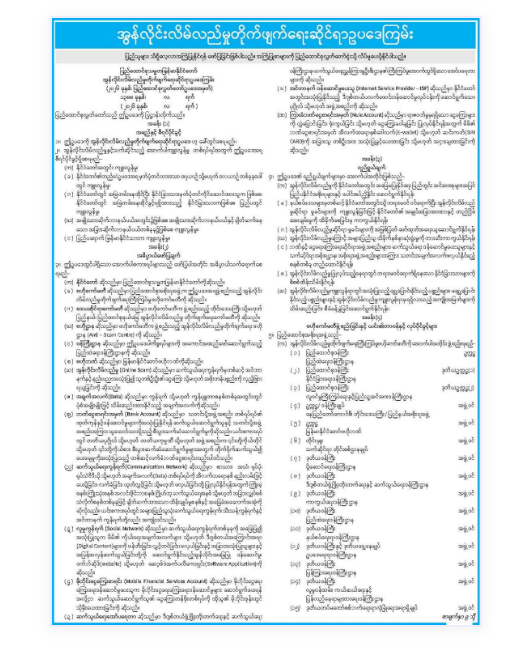
Source: Myanmar National Portal

Not The First Execution In The Region

Myanmar is not alone in taking a hard line. China executed 11 people in January tied to Myanmar-based scam operations, according to reports. Those operations had been responsible for trafficking Chinese nationals into forced labor inside the compounds.

The US has also stepped up its response. In April, American authorities worked alongside officials in China and Dubai to arrest more than 200 people and shut down nine scam centers.

US President Donald Trump signed an executive order in March directing officials to go after scam compounds and cybercrime.

BTCUSD now trading at $78,336. Chart: TradingView

The FBI’s Scam Center Strike Force has since focused its investigations on senior figures running compounds in Cambodia, Laos, and Burma, including affiliates of Chinese organized crime networks.

Online scam centers across Southeast Asia have become a growing problem for law enforcement worldwide. Schemes range from pig butchering and romance scams to fake investment platforms — many of them relying on crypto to move money.

A Government With A Complicated Record

Myanmar’s military took power in a coup in 2021. The country’s parliament did not meet again until March 2026, following elections that independent observers said were neither free nor fair. The government is scheduled to convene during the first week of June, when lawmakers may take up the bill.

Beyond crypto fraud, Americans lost more than $20 billion in total to online scams in 2025, FBI data shows. The agency’s task force has been working to identify and prosecute leaders of the most dangerous scam operations in the region.

Featured image from Unsplash, chart from TradingView

Preguntas relacionadas

QWhat is the maximum penalty for digital currency fraud under Myanmar's proposed Anti-Online Fraud Bill?

AUnder the proposed Anti-Online Fraud Bill, the maximum penalty for digital currency fraud in Myanmar is the death penalty, applicable in the most serious cases, such as when scam center operators cause the death of coerced or trafficked workers.

QAccording to the article, how much did Americans lose to crypto-related fraud last year based on the FBI report?

AAccording to an FBI report released in April, Americans lost more than $11 billion to crypto-related fraud last year.

QWhich other country has executed people connected to Myanmar-based scam operations, as mentioned in the article?

AChina executed 11 people in January who were tied to Myanmar-based scam operations, according to reports cited in the article.

QWhat is the name of the FBI task force investigating senior figures running scam compounds in Southeast Asia?

AThe FBI task force investigating senior figures running scam compounds in Southeast Asia is called the Scam Center Strike Force.

QWhen is Myanmar's parliament, the Pyidaungsu Hluttaw, scheduled to convene, potentially to take up the Anti-Online Fraud Bill?

AMyanmar's parliament, the Pyidaungsu Hluttaw, is scheduled to convene during the first week of June, when lawmakers may take up the Anti-Online Fraud Bill.

Lecturas Relacionadas

Within Strategy's Framework, STRC's Dividend Yield Remains at 12% as Share Price Stays Below Par Value

Michael Saylor, Executive Chairman of Strategy (MSTR), confirmed that the dividend rate for its STRC perpetual preferred shares will remain at 12.00% through August 2026. The rate has increased from 9% at its July 2025 launch to the current high via a "ratchet" mechanism, which permanently raises the rate by 0.5% whenever the share price falls below $95. This mechanism is intended to push the price back toward its $100 par value and support Strategy's "at-the-market" (ATM) program for issuing new shares to fund Bitcoin purchases. However, the mechanism has not worked as intended. STRC shares closed at $89.46 on July 31, remaining about 10-11% below par value despite the record-high dividend. Competition from rival Strive's higher-yielding SATA securities has pressured demand. The persistent discount has forced Strategy to suspend new STRC issuances via its ATM program, limiting this funding channel for Bitcoin acquisitions. STRC's struggles reflect Bitcoin's own volatility, as the preferred shares historically move in tandem. Analysts have warned the ratchet structure carries long-term, one-way risk. A law firm is investigating Strategy's ability to maintain dividend payments if Bitcoin's price stays low. Retail investors own roughly 83% of outstanding STRC shares, a group seen as prone to panic selling during downturns. In response, Strategy has established financial reserves, including a liquidity cushion covering about 26 months of dividend/interest obligations, and a $2 billion share buyback program alongside a Bitcoin monetization framework, though the company emphasized it is not obligated to sell any Bitcoin.

cryptonews.ruHace 13 min(s)

Within Strategy's Framework, STRC's Dividend Yield Remains at 12% as Share Price Stays Below Par Value

cryptonews.ruHace 13 min(s)

Analyst: Bitcoin's Price Will Drop to $60k in August, Then Rebound to $70k

Financial analyst Andrey Poroshin has provided a new forecast for Bitcoin's price dynamics in August. Poroshin, an analyst at the Bitbanker exchange, expects the cryptocurrency market to experience a downturn this month, with prices retesting the $60,000 level due to a lack of supportive macroeconomic catalysts. He noted that the recent US Federal Reserve decision to hold interest rates did not significantly impact the market, while inflation remains above the 2% target. Poroshin stated that Bitcoin is ending July under pressure from moderate volatility and a lack of new macroeconomic stimuli, leading to continued market caution. According to his base scenario, Bitcoin will drop to a range of $60,000 to $62,000 before recovering to $70,000. He pointed out that even $70,000 remains below the cost of mining in the US, which has prompted some miners to shift towards AI data center operations. Poroshin cited the winding down of BitMEX's operations as a potential catalyst for a price rebound, suggesting the exit of weaker players often coincides with market reversals and reduced short-term selling pressure. He believes Bitcoin is currently less susceptible to geopolitical shocks, such as the Iran-US conflict, and does not expect significant market changes in August related to the pending CLARITY Act. Looking ahead, Poroshin forecasts that September will bring more active price fluctuations driven by potential Fed rate decisions and possible discussions or approval of the CLARITY Act.

cryptonews.ruHace 14 min(s)

Analyst: Bitcoin's Price Will Drop to $60k in August, Then Rebound to $70k

cryptonews.ruHace 14 min(s)

Trading

Spot
活动图片





