Conversation with Strategist Mark Moss: Bitcoin to Reach $45 Million by 2050, Must Build the Ability to Hold Wealth

marsbitPublicado a 2026-04-13Actualizado a 2026-04-13

Resumen

Cryptocurrency strategist Mark Moss predicts Bitcoin could reach $45 million by 2050, and even $500 million if it becomes the global reserve currency. In a podcast interview, Moss argues that the current fiat system encourages gambling and theft as wealth-building strategies, but true wealth comes from entrepreneurship and long-term investing. He emphasizes that Bitcoin’s annualized returns have significantly outperformed traditional assets like stocks and real estate, with 85% over the past five years. Moss acknowledges that his predictions sound extreme but bases them on Bitcoin’s potential to capture a growing share of the global store-of-value market, geopolitical shifts away from the U.S. dollar, and its fixed supply, which protects holders from inflation. He also explains that holding Bitcoin changes one’s mindset by encouraging long-term thinking and disciplined spending, as opposed to fiat systems that devalue savings at roughly 8-10% annually. Moss advises allocating only a small portion of one’s portfolio to high-risk investments while focusing on assets like Bitcoin and tech stocks that outpace inflation.

Source: "When Shift Happens" Podcast

Compiled by: Felix, PANews

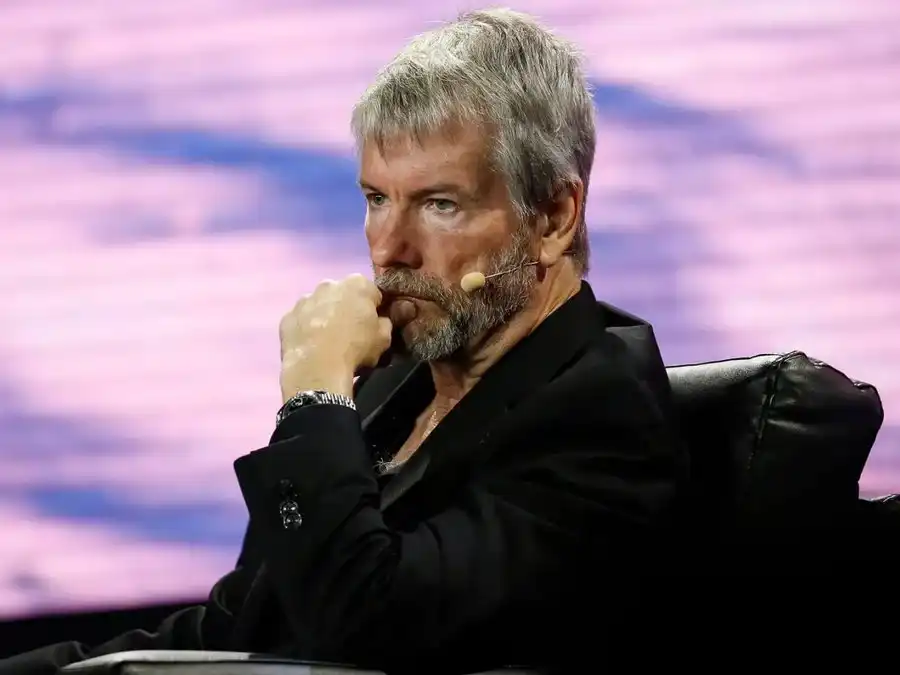
Cryptocurrency strategist Mark Moss recently appeared on the "When Shift Happens" podcast, using perspectives such as the 50-year technological revolution cycle, the value storage basket, and geopolitics of de-dollarization to point out that Bitcoin will reach $45 million by 2050. If it replaces the US dollar as the globally accepted unit of account and becomes a neutral reserve asset, its value could even reach $500 million.

This prediction sounds crazy, but Moss also provided his analytical basis. PANews has compiled the highlights of the conversation.

Host: Every newcomer to Bitcoin asks themselves a question: How can I get rich through Bitcoin without relying on luck or falling into various scams? People always have a mentality of wanting to "get rich overnight."

Mark Moss: I think this is a flaw of the fiat currency system. The debt system continuously steals your wealth, while real wage growth cannot keep up with rising costs. Therefore, people are forced to adopt more extreme methods, take further risks, and try to offset these losses. Lenin once said to Keynes, the father of Keynesian economics, that the best way to destroy capitalism is to devalue the currency. Through a series of inflation, they can arbitrarily steal wealth and continue to do so until all wealth is gone. The best way to get rich would then be gambling and theft. This is where we are now. Look at our current situation; the best way to get rich today is considered to be gambling. For example, "YOLO (You Only Live Once)," putting all your money into meme coins, or going to Las Vegas for a gamble. This is what people today perceive as the best way to get rich. Or theft, unfortunately, whether it's fraud on Wall Street or robbery on the streets, theft is rampant.

Although we are in such an environment, I don't think this is the best path to wealth. It might sometimes make you lucky, but the fact is, 75% of lottery winners go bankrupt in less than 5 years. This proves that relying on luck, making a big bet, and profiting is not the path to wealth. Musicians and professional athletes who earned thirty or forty million, or even hundreds of millions of dollars, ultimately ended up bankrupt. So, you might indeed make money by chance on some meme stock or crypto token, but the chances of you holding onto that wealth are minimal. In many cases, this even ruins their lives because we must build the ability to hold wealth. Although no one wants to hear it, an inevitable part of the experience is that you must earn money and then lose it 100%. You need to go through gains and losses repeatedly. Only then will you cherish it. Only when you lose it will you learn to cherish it. Then you will tell yourself that you must never make the same mistake again. If you just get lucky and make money once, you will eventually lose it and not know how to make it back.

Host: This is underestimated; there is actually no such thing as a "get rich quick" shortcut. The cryptocurrency or Bitcoin space is only a slow path to wealth, or even a strategy for quick bankruptcy.

Mark Moss: I want to slightly refute this point. If you're willing to say so, you can think of it as a strategy to get rich slowly. The best way to accumulate wealth in the world has always been the stock market. Of course, the best way to accumulate wealth is to start a business. As a creator, solve problems and provide value to the world. The richest people in the world, like Musk, Bezos, Bill Gates, they all built businesses that solved difficult problems; this is the best way to get rich. After that, we reinvest the money we make into real estate or the stock market to double our wealth. The real estate market and the S&P 500 index have created most of the world's wealthy. If you look at their 30-year return rates, it's about 7% to 8% per year. The richest people in the world, like Buffett and Ray Dalio, became wealthy in these markets with 7% to 8% returns.

Host: And now Bitcoin is growing every year. Buffett had about $1 million when he was 31 or 32, which shows that even then, after 60 years you can still become a billionaire.

Mark Moss: But I must point out something about Buffett and Dalio. I see many people entering this field, wanting to quit their jobs and become full-time investors, thinking this is how they can get rich like them. But I want to remind everyone, Buffett didn't just get rich by investing; he built a company called Berkshire Hathaway, and he used to go to work there every day. Ray Dalio too, he built a company called Bridgewater Associates and went to work every day. So they are not just investors; they are entrepreneurs, and we need to balance both.

Returning to the previous point, they accumulated wealth in real estate and the S&P 500 markets with annual returns of 7%-8%. In the past five years, Bitcoin's annualized return has been 85%. Over the past three years, an average of 60% per year. So when we say this is a "slow way to get rich," other markets only have 8% returns, while Bitcoin has 65%, how can that be slow? People are just in an extremely狂热 gambler mentality, hoping to get everything in 3 weeks or 3 days. Everyone really needs to calm down. They have lost a proper perspective on life and have no foundational concept of what wealth is. I often hear people complain that Bitcoin is too slow; they need something that can triple their money in 30 days.

Host: As you said, not wanting stable returns of 3 to 5 times, they often end up losing 99%. This excessive speculative gambling mentality is really sad. Some call it a "financial suicide tendency."

Mark Moss: Yes, Michael Saylor said that in everyone's investment portfolio, there is usually a space left for some risk. This goes back to the hierarchy of needs: first lay the foundation, ensure the safety of capital; if you want to take a portion of money to gamble, that's fine too, but you need to separate it and use only a small portion of funds. Professional investors all understand that we always think from the perspective of risk-adjusted returns. The higher the risk of something, the higher the potential return, so we invest less money. For things with lower risk, we invest more money. We don't allocate money equally. So if you want to chase those hundred-fold returns for excitement, no problem, but be sure to only use a small portion of your portfolio to do it.

Host: Why do people think Bitcoin's price will stop at 1 million?

Mark Moss: It's just the next big round number, but there's no reason for it to stop there. The Congressional Budget Office (CBO) made predictions that the size of the global value storage basket will reach $1600 trillion by 2030, $3800 trillion by 2040, and about $8000 trillion by 2050. And I think the actual number might be higher. Judging by Bitcoin's current growth rate, the compound annual growth rate over the next decade might average around 30%. By 2040, Bitcoin will occupy about 8% of this value basket. In comparison, Uber and Airbnb gained 10% market share within 10 years. Once it occupies 8%, Bitcoin's price will reach $14 million. By 2050, it might occupy about 20% of this basket, which would bring Bitcoin's price to an astonishing $45 million.

Host: It sounds crazy. But I interviewed David Bailey the other day, and he said it is entirely possible for Bitcoin to reach $50 million to $100 million someday in the future.

Mark Moss: This is entirely possible. I've done a lot of cycle research, including 4-year, 8-year, 50-year cycles, etc. A technological revolution happens every 50 years, and we are now in the sixth one. Bitcoin and AI正好 belong to this technological revolution cycle. This includes four different stages. We can look at the diffusion of this innovation cycle through the S-curve. We are currently in the parabolic phase and should achieve full adoption around 2050. Furthermore, for thousands of years, money usually started as a "collectible." If people believe in it, it becomes a store of value. Only when it possesses attributes like portability, durability, etc., can it become "money." If enough people use it, it becomes a unit of account, which is the final stage. Superimposing these four stages onto the 50-year cycle chart, I believe that by 2050, Bitcoin could become the world's unit of account.

From a geopolitical perspective, the US dollar has depreciated by 99% over the past 110 years. What really pushed the world to the edge was NATO's decision a few years ago to freeze Russia's bank accounts. As a superpower with nuclear weapons having its funds confiscated, this was equivalent to a warning to the world. Therefore, the BRICS countries are trying to issue their own currency, China is cooperating to advance its central bank digital currency (CBDC). Everyone is looking for solutions to escape the US dollar. In a new world of tariff wars and lack of mutual trust, countries are finding ways to脱离 the fiat currency system. The only way for the world to continue functioning is to find a neutral reserve asset, like the gold standard of the past. And Bitcoin perfectly fits this requirement.

Combining the technology curve and the geopolitical landscape, I believe that between 2050-2060, Bitcoin will become the global unit of account. This means that the value storage basket originally worth $85 quadrillion will no longer be denominated in US dollars, but in Bitcoin. If we divide this $8600 trillion by 21 million Bitcoins, each Bitcoin will be worth $4 to $5 billion.

Host: Hearing this, even the camera crew's expression is like, "Oh no, I have to go buy some Bitcoin quickly."

Mark Moss: I know it sounds crazy, but Bitcoin is programmed to rise forever. This is because the real wealth of human society (goods and services) is always growing; we are always inventing new things and solving new problems. Fiat currency dilutes your share of the world's wealth by printing money, but Bitcoin's total supply is fixed; you are never diluted. As long as I own 1 Bitcoin, I will forever own 1/21 millionth of the world's wealth, and as the total world wealth rises forever, Bitcoin's purchasing power will never be diluted.

Host: You once said that once you buy Bitcoin, your life will change. Why?

Mark Moss: Bitcoin changes your life for many reasons, but ultimately it begins to change your entire mindset, pulling your time horizon for viewing problems further out. The purpose of the fiat currency system is to turn us into consumers, encouraging us to constantly spend. One of the reasons governments create inflation is to stimulate people to spend money to boost the economy, when in fact people should be incentivized to save. For example, during the pandemic, people started staying home and saving money, which hit the economy hard, so the government injected trillions of dollars in stimulus to get people spending again. Our money depreciates too quickly, which also prompts us to keep spending because if we wait, things will become more expensive. However, once we own Bitcoin, we realize that our money can actually buy more goods and services in the future. Under the Bitcoin system, you feel that buying things will be cheaper in the future. When Bitcoin is rising by 50% or 60% every year, this changes your cost of capital. You start to think: Do I really need that vacation? Do I really need that new house or new car? Because I could just put this money into Bitcoin. A few tens of thousands of dollars worth of Bitcoin today, if it becomes $1 million in 5 years, and $15 million in 15 years, am I willing to spend this $100,000 today and sacrifice the future $15 million? Of course, if it's to buy a beach house for the kids, I absolutely am willing; I would trade all the money in the world for a great experience with my children. But this adds an extra layer of scrutiny to all your decisions: "Do I really need this?" This changes our value system; Bitcoin makes you more prudent and discerning, which is a good thing.

Host: You mentioned "my money depreciates very quickly." So how fast is the money in the bank account actually depreciating?

Mark Moss: Much faster than people imagine. The government reports the Consumer Price Index (CPI) to us, which tracks the rate at which a basket of goods' prices rise, with an official target usually around 2%. Fed Chairman Powell even hinted that they might abandon this absolute target and let inflation run moderately higher. But CPI is just the result. What truly represents the depreciation rate of the funds in your bank account is the increase rate of the money supply. Inflation is like inflating a balloon, increasing the volume of money in circulation. Over the past 5 years, the global M2 money supply has grown by about 8% per year, and in the US this rate has been even faster. So, you are probably suffering a loss of purchasing power of about 8% to 10% per year. If you add, say, a 2% risk premium, then your loss is probably around 10% to 12%. This means any investment I make must yield a return of over 10% per year. Once you realize you must beat this 10% inflation hurdle, all your business and investment decisions become extremely clear. If you have 17 assets you can invest in, you will find that 15 of them cannot beat this 10%. So you naturally only focus on the two things that can beat it: Nasdaq tech stocks and Bitcoin.

Host: Even if the government's target is to steal only 2% of our wealth every year, it doesn't sound like much, but this 2% compounded over several years is a large amount; if it's 10% to 15% compound interest, your money shrinks by 40% to 50% in a few years, which is very surprising.

Mark Moss: Exactly, this is the effect of the rule of compound interest. We often think linearly and ignore the power of compounding. If we make a slight change in our financial观念, even just saving an additional 10% of our income and letting it invest for 20 years, that is absolutely wealth足以改变人生轨迹. People often look down on the few thousand dollars saved now, thinking it's not worth the time to consider, because they ignore the huge power that this money can爆发 after being well preserved and generating compound interest.

Related reading: Conversation with Arthur Hayes: AI Causes Deflation, Oil Prices Indicate War, 90% of Assets Are Still BTC

Preguntas relacionadas

QWhat is Mark Moss's prediction for the price of Bitcoin by 2050, and what is the primary reason for this forecast?

AMark Moss predicts Bitcoin will reach $45 million by 2050. The primary reason is his analysis of the global store-of-value basket, which he estimates will grow to around $8,000 trillion by 2050. He projects Bitcoin could capture 20% of this basket, leading to its $45 million valuation.

QAccording to the discussion, what is the fundamental problem with the current fiat currency system that drives people towards speculative gambling?

AThe fundamental problem is that the debt-based fiat system constantly devalues currency through inflation, eroding people's wealth and purchasing power. This forces individuals to take extreme risks and gamble in an attempt to offset these losses, as steady wage growth cannot keep up with rising costs.

QWhat key concept does Mark Moss emphasize as crucial for building and maintaining wealth, which is often overlooked by those seeking quick riches?

AHe emphasizes the necessity of 'building the capacity to hold wealth.' This involves the discipline of not just acquiring money but also being able to keep it, often learned through the experience of gaining and losing it, which fosters a greater appreciation and understanding of prudent financial management.

QHow does owning Bitcoin fundamentally change an individual's perspective on spending and saving, according to the conversation?

AOwning Bitcoin extends an individual's time horizon and changes their capital cost perspective. Since Bitcoin's value is designed to appreciate over the long term, it encourages more deliberate and scrutinized spending. People begin to weigh the opportunity cost of spending money today against its potential future value, making them more selective and prudent with their financial decisions.

QWhat is the estimated real annual rate at which money in a bank account loses purchasing power, and what are the only two asset classes mentioned that can consistently outperform this rate?

AThe real annual rate of purchasing power loss for money in a bank account is estimated to be between 8% and 10%, based on the growth rate of the global M2 money supply. The only two asset classes mentioned that can consistently outperform this rate are Nasdaq tech stocks and Bitcoin.

Lecturas Relacionadas

Trading

Spot
Futuros

Artículos destacados

Qué es BITCOIN

Entendiendo HarryPotterObamaSonic10Inu (ERC-20) y Su Posición en el Espacio Cripto En los últimos años, el mercado de criptomonedas ha sido testigo de un aumento en la popularidad de las monedas meme, capturando el interés no solo de los comerciantes, sino también de aquellos que buscan compromiso comunitario y valor de entretenimiento. Entre estos tokens únicos se encuentra HarryPotterObamaSonic10Inu (ERC-20), un proyecto intrigante que mezcla referencias culturales en el tejido de las criptomonedas. Este artículo profundiza en los aspectos clave de HarryPotterObamaSonic10Inu, explorando sus mecanismos, ethos impulsado por la comunidad y su relación con el paisaje cripto más amplio. ¿Qué es HarryPotterObamaSonic10Inu (ERC-20)? Como su nombre sugiere, HarryPotterObamaSonic10Inu es una moneda meme construida sobre la blockchain de Ethereum, clasificada bajo el estándar ERC-20. A diferencia de las criptomonedas tradicionales que pueden enfatizar la utilidad práctica o el potencial de inversión, este token prospera en el valor de entretenimiento y la fuerza de su comunidad. El proyecto tiene como objetivo fomentar un entorno donde los usuarios comprometidos puedan reunirse, compartir ideas y participar en actividades inspiradas por diversos fenómenos culturales. Una característica notable de HarryPotterObamaSonic10Inu es su cero impuestos en las transacciones. Este atractivo elemento tiene como objetivo incentivar el comercio y la participación comunitaria, sin cargos adicionales que puedan disuadir a los comerciantes de pequeña escala. El suministro total de la moneda está establecido en mil millones de tokens, una cifra que marca su intención de mantener una circulación sustancial dentro de la comunidad. Creador de HarryPotterObamaSonic10Inu (ERC-20) Los orígenes de HarryPotterObamaSonic10Inu están algo envueltos en misterio; los detalles sobre el creador siguen siendo desconocidos. El desarrollo de este token carece de un equipo identificable o de un plan explícito, lo cual no es inusual dentro del sector de monedas meme. En cambio, el proyecto ha surgido de manera orgánica, con su progreso muy dependiente del entusiasmo y la participación de su comunidad. Inversores de HarryPotterObamaSonic10Inu (ERC-20) En cuanto a inversiones externas y respaldo, HarryPotterObamaSonic10Inu también sigue siendo ambiguo. El token no lista ninguna fundación de inversión conocida o apoyo organizacional significativo. En cambio, la savia del proyecto es su comunidad de base, que informa su crecimiento y sostenibilidad a través de la acción colectiva y el compromiso en el espacio cripto. ¿Cómo Funciona HarryPotterObamaSonic10Inu (ERC-20)? Como una moneda meme, HarryPotterObamaSonic10Inu opera principalmente fuera de los marcos tradicionales que a menudo rigen el valor de los activos. Hay varios aspectos distintivos que definen cómo funciona el proyecto: Transacciones Sin Impuestos: Sin tarifas impositivas en las transacciones, los usuarios pueden comprar y vender el token libremente sin preocuparse por costos ocultos. Compromiso Comunitario: El proyecto prospera en la interacción comunitaria, aprovechando plataformas de redes sociales para crear entusiasmo y facilitar la participación. Las discusiones, el intercambio de contenido y el compromiso son elementos cruciales que ayudan a expandir su alcance y fomentar la lealtad entre los seguidores. Sin Utilidad Práctica: Cabe señalar que HarryPotterObamaSonic10Inu no ofrece utilidad concreta dentro del ecosistema financiero. Más bien, se clasifica como un token principalmente para actividades de entretenimiento y comunitarias. Referencia Cultural: El token incorpora astutamente elementos de la cultura popular para atraer interés, conectando con entusiastas de los memes y seguidores de las criptomonedas por igual. HarryPotterObamaSonic10Inu ejemplifica cómo las monedas meme operan de manera diferente a los proyectos de criptomonedas más tradicionales, ingresando al mercado como construcciones sociales innovadoras en lugar de activos utilitarios. Cronología de HarryPotterObamaSonic10Inu (ERC-20) La historia de HarryPotterObamaSonic10Inu está marcada por varios hitos notables: Creación: El token surgió de un meme viral, capturando la imaginación de muchos entusiastas de las criptomonedas. Las fechas específicas de creación no están disponibles, subrayando su ascenso orgánico. Listado en Exchanges: HarryPotterObamaSonic10Inu ha llegado a varios exchanges, permitiendo un acceso y comercio más fácil por parte de la comunidad. Iniciativas de Compromiso Comunitario: Actividades continuas destinadas a mejorar la interacción comunitaria, incluyendo concursos, campañas en redes sociales y generación de contenido por parte de fanáticos y defensores. Planes de Expansión Futuros: La hoja de ruta del proyecto incluye el lanzamiento de una colección de NFT, mercancía y un sitio de comercio electrónico relacionado con sus temas culturales, involucrando aún más a la comunidad e intentando añadir más dimensiones a su ecosistema. Puntos Clave Sobre HarryPotterObamaSonic10Inu (ERC-20) Naturaleza Impulsada por la Comunidad: El proyecto prioriza la participación colectiva y la creatividad, asegurando que la involucración de los usuarios esté a la vanguardia de su desarrollo. Clasificación como Moneda Meme: Representa la epítome de las criptomonedas basadas en el entretenimiento, diferenciándose de los vehículos de inversión tradicionales. Sin Afiliación Directa con Bitcoin: A pesar de la similitud en el nombre del ticker, HarryPotterObamaSonic10Inu es distinto y no tiene relación con Bitcoin u otras criptomonedas establecidas. Enfoque en la Colaboración: HarryPotterObamaSonic10Inu está diseñado para crear un espacio para la colaboración y el intercambio de historias entre sus poseedores, proporcionando una vía para la creatividad y el vínculo comunitario. Perspectivas Futuras: La ambición de expandirse más allá de su premisa inicial hacia NFTs y mercancías describe un camino para que el proyecto potencialmente ingrese a avenidas más tradicionales dentro de la cultura digital. A medida que las monedas meme continúan capturando la imaginación de la comunidad de criptomonedas, HarryPotterObamaSonic10Inu (ERC-20) se destaca debido a sus lazos culturales y su enfoque centrado en la comunidad. Si bien puede no encajar en el molde típico de un token impulsado por la utilidad, su esencia radica en la alegría y la camaradería fomentadas entre sus seguidores, destacando la naturaleza en evolución de las criptomonedas en una era cada vez más digital. A medida que el proyecto continúa desarrollándose, será importante observar cómo las dinámicas comunitarias influyen en su trayectoria en el cambiante paisaje de la tecnología blockchain.

1.3k Vistas totalesPublicado en 2024.04.01Actualizado en 2024.12.03

Qué es BITCOIN

Cómo comprar BTC

¡Bienvenido a HTX.com! Hemos hecho que comprar Bitcoin (BTC) sea simple y conveniente. Sigue nuestra guía paso a paso para iniciar tu viaje de criptos.Paso 1: crea tu cuenta HTXUtiliza tu correo electrónico o número de teléfono para registrarte y obtener una cuenta gratuita en HTX. Experimenta un proceso de registro sin complicaciones y desbloquea todas las funciones.Obtener mi cuentaPaso 2: ve a Comprar cripto y elige tu método de pagoTarjeta de crédito/débito: usa tu Visa o Mastercard para comprar Bitcoin (BTC) al instante.Saldo: utiliza fondos del saldo de tu cuenta HTX para tradear sin problemas.Terceros: hemos agregado métodos de pago populares como Google Pay y Apple Pay para mejorar la comodidad.P2P: tradear directamente con otros usuarios en HTX.Over-the-Counter (OTC): ofrecemos servicios personalizados y tipos de cambio competitivos para los traders.Paso 3: guarda tu Bitcoin (BTC)Después de comprar tu Bitcoin (BTC), guárdalo en tu cuenta HTX. Alternativamente, puedes enviarlo a otro lugar mediante transferencia blockchain o utilizarlo para tradear otras criptomonedas.Paso 4: tradear Bitcoin (BTC)Tradear fácilmente con Bitcoin (BTC) en HTX's mercado spot. Simplemente accede a tu cuenta, selecciona tu par de trading, ejecuta tus trades y monitorea en tiempo real. Ofrecemos una experiencia fácil de usar tanto para principiantes como para traders experimentados.

4.7k Vistas totalesPublicado en 2024.12.12Actualizado en 2025.03.21

Cómo comprar BTC

Qué es $BITCOIN

ORO DIGITAL ($BITCOIN): Un Análisis Integral Introducción al ORO DIGITAL ($BITCOIN) ORO DIGITAL ($BITCOIN) es un proyecto basado en blockchain que opera en la red Solana, cuyo objetivo es combinar las características de los metales preciosos tradicionales con la innovación de las tecnologías descentralizadas. Aunque comparte un nombre con Bitcoin, a menudo referido como “oro digital” debido a su percepción como un refugio de valor, ORO DIGITAL es un token separado diseñado para crear un ecosistema único dentro del paisaje Web3. Su meta es posicionarse como un activo digital alternativo viable, aunque los detalles sobre sus aplicaciones y funcionalidades aún están en desarrollo. ¿Qué es ORO DIGITAL ($BITCOIN)? ORO DIGITAL ($BITCOIN) es un token de criptomoneda diseñado explícitamente para su uso en la blockchain de Solana. A diferencia de Bitcoin, que proporciona un papel de almacenamiento de valor ampliamente reconocido, este token parece centrarse en aplicaciones y características más amplias. Aspectos notables incluyen: Infraestructura Blockchain: El token está construido sobre la blockchain de Solana, conocida por su capacidad para manejar transacciones de alta velocidad y bajo costo. Dinámicas de Suministro: ORO DIGITAL tiene un suministro máximo limitado a 100 cuatrillones de tokens (100P $BITCOIN), aunque los detalles sobre su suministro circulante no se han divulgado actualmente. Utilidad: Si bien las funcionalidades precisas no están delineadas explícitamente, hay indicios de que el token podría ser utilizado para diversas aplicaciones, potencialmente involucrando aplicaciones descentralizadas (dApps) o estrategias de tokenización de activos. ¿Quién es el Creador de ORO DIGITAL ($BITCOIN)? En la actualidad, la identidad de los creadores y el equipo de desarrollo detrás de ORO DIGITAL ($BITCOIN) sigue siendo desconocida. Esta situación es típica entre muchos proyectos innovadores dentro del espacio blockchain, particularmente aquellos alineados con las finanzas descentralizadas y fenómenos de monedas meme. Si bien tal anonimato puede fomentar una cultura impulsada por la comunidad, intensifica las preocupaciones sobre la gobernanza y la responsabilidad. ¿Quiénes son los Inversores de ORO DIGITAL ($BITCOIN)? La información disponible indica que ORO DIGITAL ($BITCOIN) no tiene patrocinadores institucionales conocidos ni inversiones destacadas de capital de riesgo. El proyecto parece operar en un modelo de peer-to-peer centrado en el apoyo y la adopción de la comunidad en lugar de rutas de financiamiento tradicionales. Su actividad y liquidez se sitúan principalmente en intercambios descentralizados (DEX), como PumpSwap, en lugar de plataformas de trading centralizadas establecidas, lo que resalta aún más su enfoque de base. Cómo Funciona ORO DIGITAL ($BITCOIN) Los mecanismos operativos de ORO DIGITAL ($BITCOIN) pueden elaborarse en función de su diseño blockchain y atributos de red: Mecanismo de Consenso: Al aprovechar el único proof-of-history (PoH) de Solana combinado con un modelo de proof-of-stake (PoS), el proyecto asegura una validación de transacciones eficiente que contribuye al alto rendimiento de la red. Tokenómica: Si bien los mecanismos deflacionarios específicos no se han detallado extensamente, el vasto suministro máximo de tokens implica que podría atender microtransacciones o casos de uso nicho que aún están por definirse. Interoperabilidad: Existe el potencial de integración con el ecosistema más amplio de Solana, incluyendo varias plataformas de finanzas descentralizadas (DeFi). Sin embargo, los detalles sobre integraciones específicas permanecen no especificados. Cronología de Eventos Clave Aquí hay una cronología que destaca hitos significativos relacionados con ORO DIGITAL ($BITCOIN): 2023: El despliegue inicial del token ocurre en la blockchain de Solana, marcado por su dirección de contrato. 2024: ORO DIGITAL gana visibilidad al estar disponible para trading en intercambios descentralizados como PumpSwap, permitiendo a los usuarios comerciar contra SOL. 2025: El proyecto presencia actividad de trading esporádica y potencial interés en compromisos liderados por la comunidad, aunque no se han documentado asociaciones notables o avances técnicos hasta el momento. Análisis Crítico Fortalezas Escalabilidad: La infraestructura subyacente de Solana soporta altos volúmenes de transacciones, lo que podría mejorar la utilidad de $BITCOIN en varios escenarios de transacción. Accesibilidad: El potencial bajo precio de trading por token podría atraer a inversores minoristas, facilitando una participación más amplia debido a oportunidades de propiedad fraccionada. Riesgos Falta de Transparencia: La ausencia de patrocinadores, desarrolladores o un proceso de auditoría conocidos públicamente puede generar escepticismo sobre la sostenibilidad y confiabilidad del proyecto. Volatilidad del Mercado: La actividad de trading depende en gran medida del comportamiento especulativo, lo que puede resultar en una volatilidad de precios significativa y en incertidumbre para los inversores. Conclusión ORO DIGITAL ($BITCOIN) surge como un proyecto intrigante pero ambiguo dentro del ecosistema de Solana en rápida evolución. Si bien intenta aprovechar la narrativa del “oro digital”, su alejamiento del papel establecido de Bitcoin como refugio de valor subraya la necesidad de una diferenciación más clara de su utilidad y estructura de gobernanza previstas. La aceptación y adopción futura dependerán probablemente de abordar la actual opacidad y de definir sus estrategias operativas y económicas de manera más explícita. Nota: Este informe abarca información sintetizada disponible hasta octubre de 2023, y pueden haber ocurrido desarrollos más allá del período de investigación.

83 Vistas totalesPublicado en 2025.05.13Actualizado en 2025.05.13

Qué es $BITCOIN

Discusiones

Bienvenido a la comunidad de HTX. Aquí puedes mantenerte informado sobre los últimos desarrollos de la plataforma y acceder a análisis profesionales del mercado. A continuación se presentan las opiniones de los usuarios sobre el precio de BTC (BTC).

活动图片