Coinbase's Walled Garden

marsbitPublicado a 2025-12-23Actualizado a 2025-12-23

Resumen

Coinbase is strategically shifting from being a simple crypto on-ramp to building a comprehensive "everything exchange" to combat fee compression and cyclical trading volumes. This mirrors a common industry pattern where initial specialization gives way to integrated platforms that win through convenience, not perfection. The company is aggregating diverse assets—cryptocurrencies, stocks, perpetual futures, and prediction markets—into a single app. The thesis is that users, after a single KYC and bank link, prefer a unified platform over managing multiple specialized apps. This strategy aims to boost engagement; for instance, prediction markets keep users active during calm crypto periods. While the core business remains monetizing users through various fees and subscriptions, the real long-term differentiation is its control over the Base blockchain. This infrastructure could enable truly on-chain, 24/7 trading with instant settlement, something traditional brokers like Robinhood can't easily replicate. However, this move towards a centralized super-app conflicts with crypto purists who value decentralization. Coinbase's bet is that convenience and a seamless user experience will create a powerful ecosystem lock-in through low switching costs, not contracts. It aims to serve the mass market that prioritizes ease of use, even if it means sacrificing ideological purity. The challenge is to avoid becoming a bloated app while executing this Amazon-like strategy of bein...

Author: Thejaswini M A

Compiled by: Block unicorn

There is a pattern that repeats itself across industries, eras, and markets. It starts with explosive growth. Countless products spring up, each claiming to be better at something than any other. Specialized tools emerge, niche tools proliferate. Consumers are told that choice is freedom, customization is power, and the future belongs to those who break the old monopolies.

Then, quietly but inevitably, the pendulum begins to swing back.

It's not that the experts were wrong, nor is it that the overall system is necessarily better, but the cost of fragmentation accumulates silently. Each additional tool means another password to remember, another interface to learn, another point of failure in a system you are responsible for maintaining. Sovereignty begins to feel like a burden, freedom like overhead.

In the integration phase, the ultimate winners are not those who do everything perfectly, but those who do enough things well enough that the friction of leaving (and rebuilding the entire system elsewhere) becomes too great. They don't bind you with contracts or lock-in clauses; they capture you with convenience. A convenience born from countless tiny integrations and efficiencies that, on their own, might not be worth switching for, but together form a formidable moat.

We've seen this happen in e-commerce, cloud computing, and streaming. Now, we are witnessing it happen in finance.

Coinbase just made a bet on which side of the cycle we are about to enter.

Let me flashback first.

For most of its history, Coinbase was straightforward. It was the go-to platform for Americans to buy Bitcoin without feeling like they were doing anything shady. It had regulatory licenses, a clean interface, and customer service that, while often terrible, at least existed in theory. The company went public in 2021 with a valuation of $65 billion, with the core idea of being the on-ramp to cryptocurrency, and for a while, it worked.

But by 2025, the "crypto on-ramp" positioning began to look shaky. Spot trading fees were compressing. Retail trading volume was highly cyclical, surging in bull markets and plummeting in bear markets. Bitcoin whales increasingly preferred self-custody wallets. Regulators were still suing the company. And Robinhood, which started as a stock trading app and later ventured into crypto, saw its market cap suddenly soar to $105 billion, nearly double that of Coinbase. In 2021, over 90% of Coinbase's revenue came from trading. By Q2 2025, that proportion had fallen below 55%.
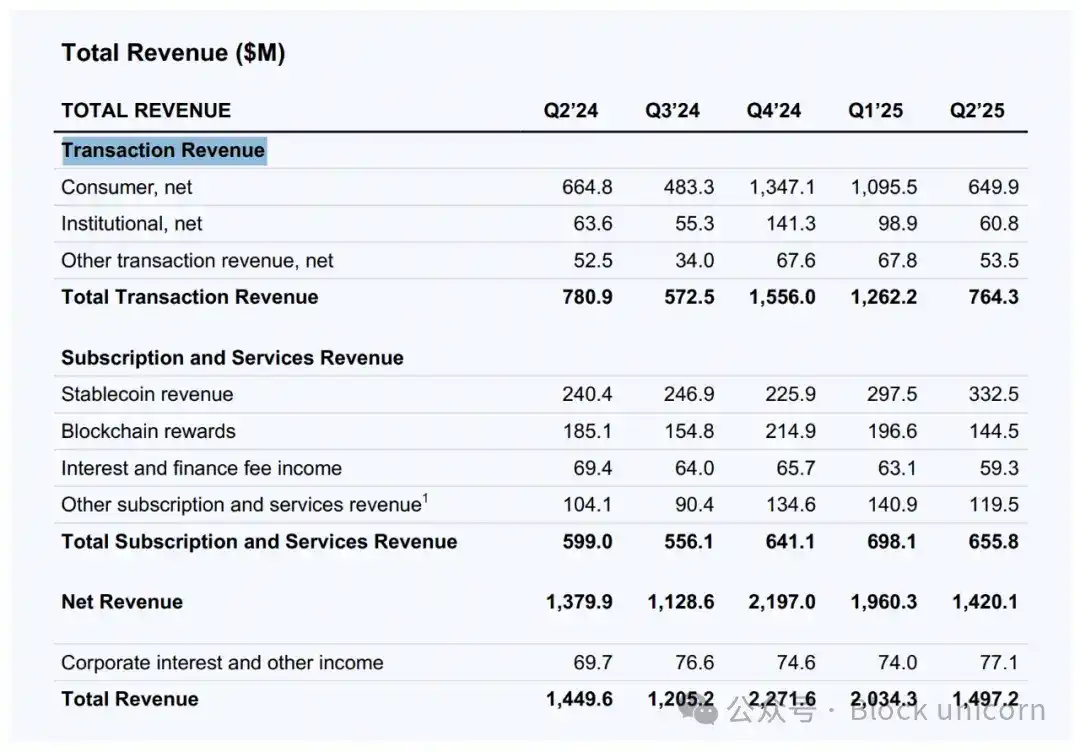
So, when the core product came under pressure, Coinbase did what you would do: it tried to become everything else.

They call it the "Exchange for Everything" theory, which posits that aggregation will beat specialization.

Stock trading means users can now react to Apple's earnings at midnight using USDC without leaving the app. Prediction markets mean they can check the price of "Will the Fed cut rates?" during lunch. Perpetual futures mean they can leverage a Tesla position 50x on a Sunday. Every new market is a reason to open the app, an opportunity to capture spreads, fees, or interest on idle stablecoin balances.

Is the strategy "Let's be Robinhood" or "Let's ensure users never need Robinhood"?

There has always been a view in fintech that users need specialized apps. One for investing, one for banking, one for payments, one for crypto trading. Coinbase is betting against that: they believe that once a user completes one KYC and links one bank account, they shouldn't have to do it nine more times elsewhere.

This is the "aggregation beats specialization" argument. In a world where the underlying assets are increasingly just tokens on a blockchain, it makes sense. If stocks are tokens, prediction market contracts are tokens, meme coins are tokens, why can't they all trade in the same venue?

The mechanism is: you deposit dollars (or USDC), trade all assets, and withdraw dollars (or USDC). No need to transfer funds between platforms. No minimum deposit requirements for multiple accounts. Just one pool of capital flowing between all asset classes.

The more Coinbase resembles a traditional broker, the more it must compete on traditional broker terms. Robinhood has 27 million funded accounts, while Coinbase has about 9 million monthly active users. So, Coinbase's differentiation can't just be "we offer stock trading now," it has to be the trading platform itself.

The offer is 24/7 liquidity for all trade types. No trading hours, no settlement delays, no waiting for your broker to approve your margin application while the trade moves against you.

Does this matter to most users? Probably not yet. Most people don't need to trade Apple stock at 3 a.m. on a Saturday. But some do. If you provide the platform where they can do it, you get their order flow. Once you get their order flow, you get their data. Once you get their data, you build better products. Once you have better products, you get more order flow.

It's a flywheel, provided the flywheel can start spinning.

The Prediction Market Gambit

Prediction markets are the most unusual part of this bundle, and perhaps the most important. They are not "trading" in the traditional sense, but structured bets on binary outcomes. For example: Will Trump win? Will the Fed hike rates? Will the Lakers make the playoffs?

These contracts disappear after settlement, so there is no long-term holder base. Liquidity is event-driven, meaning it is volatile and unpredictable. Yet, platforms like Kalshi and Polymarket saw their trading volume surge to over $7 billion in November.
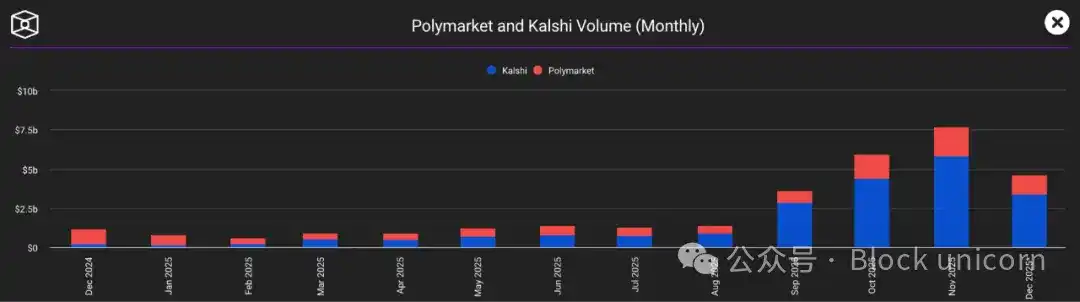
Why? Because prediction markets are a social tool. They allow people to express an opinion and put risk behind it. They give people a reason to check their phone during the fourth quarter of a game or on election night.

For Coinbase, prediction markets solve a specific problem: user engagement. When crypto prices are flat, users might get bored. When your stock portfolio is stagnant, stock trading can be dull. But there is always some event capturing attention. Integrating Kalshi gives users a reason to stay in the app even if Bitcoin isn't moving.

The bet is that users who come for election markets will stay for stock trading, and vice versa. The bet is that the broader the coverage, the higher the user retention.

The Business Model is Margin Stacking

Strip away the innovation narrative, and this is a company trying to make more money from the same user in more ways. Stock trading fees, DEX swap spreads, interest on stablecoin balances, crypto staking fees, Coinbase One subscription revenue, and infrastructure fees from developers using the Base blockchain.

I'm not criticizing. This is how exchanges work. The best exchange isn't the one with the lowest fees; it's the one users are reluctant to leave because leaving means rebuilding the whole system elsewhere.

Coinbase is building a walled garden, but the walls are not to lock users in; they are to provide convenience. You can still withdraw your crypto, you can still transfer your stocks to Fidelity. You probably won't, though, because why would you?

Coinbase's advantage is its on-chain tech, which can offer tokenized stocks, instant settlement, and programmable money. But for now, its stock trading looks very much like Robinhood's stock trading, just with longer hours. Its prediction markets look very much like Kalshi's, just embedded in a different app.

The real differentiation is the Base layer-2 blockchain that Coinbase built and controls. If stock trading truly happens on-chain, payments truly use stablecoins, and AI agents truly start trading autonomously using protocols like x402, then Coinbase has built something Robinhood can't easily replicate.

But that's the long game. In the short term, the competition is about who has the stickiest app. And adding more features doesn't automatically make an app stickier. It can also make the interface more cluttered, more complex, and more overwhelming for a new user who just wants to buy Bitcoin.

A segment of the crypto user base will be unhappy about this. They are the true believers. They wanted Coinbase to be the on-ramp to decentralized finance, not a centralized super-app with some DeFi features buried in a submenu.

Coinbase has clearly chosen scale over purity. It wants a billion users, not a million purists. It wants to be the default financial platform for the masses, not the preferred exchange for those running their own nodes.

This might be the right business decision. The mass market doesn't care about decentralization. They care about convenience, speed, and not losing money. If Coinbase can deliver on those, the philosophy behind it doesn't matter.

But it does create a peculiar tension. Coinbase is trying to be both the infrastructure for the on-chain world and the centralized exchange competing with Charles Schwab. It is trying to be both a champion of crypto and a company that makes crypto invisible. It is trying to be both rebellious and regulated.

Maybe it can be. Maybe the future is a regulated, on-chain exchange that feels as easy to use as Venmo. Or perhaps, trying to be everything to everyone makes you nothing to anyone.

This is the Amazon playbook. Amazon is not the best at anything. It's not the best bookstore, not the best grocer, not the best streaming service. But it is good enough at enough things that most people can't be bothered to go elsewhere.

However, many companies have tried to build an app for everything, and most have ended up with a bloated app for nothing.

If Coinbase can own the full loop from earning, trading, hedging, borrowing, to paying, then it might not matter if specific features are slightly inferior to specialized competitors. The switching costs and the hassle of managing multiple accounts will keep users in its ecosystem.

That's all about the Coinbase Exchange for Everything.

Recommended reading:

Why Isn't Asia's Largest Bitcoin Treasury Company, Metaplanet, Buying the Dip?

Multicoin Capital: The Era of Fintech 4.0 Has Arrived

a16z's Heavily Backed Web3 Unicorn Farcaster Forced to Pivot, Is Web3 Social a False Proposition?


Criptos en tendencia

Preguntas relacionadas

QWhat is the core argument of the 'everything exchange' theory that Coinbase is adopting?

AThe core argument is that aggregation will beat specialization. It posits that users, after completing KYC and linking a bank account once, prefer a single platform that does many things well enough, rather than using multiple specialized apps. The convenience and reduced friction of an integrated system create a powerful moat.

QHow do prediction markets, like the integration with Kalshi, specifically benefit Coinbase's strategy?

APrediction markets solve a user engagement problem. They provide a reason for users to stay within the Coinbase app even when cryptocurrency or stock prices are stagnant, as there is always some event to follow and bet on. This increased engagement can lead to more activity in other areas of the app, like stock trading.

QWhat is the fundamental contradiction in Coinbase's current business approach as described in the article?

ACoinbase is trying to be two things at once: the infrastructure for the on-chain, decentralized world and a centralized exchange competing with traditional brokers like Charles Schwab. It aims to be both a champion of crypto and a company that makes crypto invisible, embracing both a rebellious spirit and regulation.

QWhat is the primary role of Coinbase's Base blockchain in its long-term differentiation strategy?

AThe Base blockchain is the foundation for true long-term differentiation. If stock trading occurs on-chain, payments use stablecoins, and AI agents trade autonomously, Coinbase will have built a product that competitors like Robinhood cannot easily replicate, as it controls this core infrastructure.

QAccording to the article, why might a user choose to stay on Coinbase even if specific features are better on competing platforms?

AUsers might stay because the switching cost and the hassle of managing multiple accounts become a significant barrier. The convenience of having a single platform for earning, trading, hedging, borrowing, and paying creates a powerful ecosystem lock-in, even if individual features are slightly inferior to specialists.

Lecturas Relacionadas

US Treasury Secretary Bement Claims: The US Will Soon Control 80% of Global Computing Power

U.S. Treasury Secretary Ben Sent proclaimed that America is poised to control 80% of the world's computing power, positioning compute dominance as a core pillar of U.S. economic strategy. Speaking on the Mike Rowe show, he stated the U.S. currently holds 50-60% of global compute share, with expectations to reach 80% soon. He framed this as a strategic competition the U.S. "cannot afford to lose," warning that a rival's lead would grant "unacceptable" strategic leverage, while asserting a current one-year AI lead. This high-level policy endorsement is seen as a direct boost for AI infrastructure investment, benefiting chipmakers like NVIDIA and cloud providers' capex cycles. Sent positioned AI compute, semiconductors, and quantum computing as three pillars of national economic strength and security. He defended AI's societal impact, citing historical tech shifts, and argued AI empowers small businesses without causing net job loss so far. He highlighted government efforts to deepen public-private AI cybersecurity cooperation. For investors, the statement signals sustained U.S. policy support for AI infrastructure. However, analysts urge caution, noting "compute share" lacks a standard public metric; the 80% figure is a forecast, not audited data. They recommend focusing on tangible indicators like physical capacity expansion and power infrastructure, with future semiconductor and cloud reports providing key verification data.

marsbitHace 8 min(s)

US Treasury Secretary Bement Claims: The US Will Soon Control 80% of Global Computing Power

marsbitHace 8 min(s)

France Cracks Down Hard on Polymarket, 30 Countries Follow, Forcing EU to Redefine Prediction Markets

French gambling regulator ANJ has ordered nationwide ISP blocking of Polymarket, a crypto-based prediction market platform, escalating a four-year regulatory battle. ANJ classified it as illegal gambling rather than an unlicensed crypto exchange, focusing on consumer harm instead of financial market risks. This distinction carries significant legal implications and may influence other EU regulators. Despite a 2024 ban on financial transactions, Similarweb data showed over 205,000 unique French visitors in June 2026, prompting the site-blocking order. Investigations cite alleged weather data manipulation affecting contracts and a trader ("Fredi9999") suspected of manipulating odds for the 2024 US election. ANJ justifies the ban by highlighting the platform's lack of mandatory consumer protection features like betting limits and self-exclusion tools. Over 30 countries have restricted Polymarket. As the largest EU economy, France's move sets a potential precedent. Its classification conflicts with the EU's MiCA framework, which treats such markets as crypto assets. If adopted EU-wide, this could lead to blanket bans under gambling laws, diverging from the financial regulatory path taken by compliant platforms like US-based Kalshi. The effectiveness of France's block and the outcome of related legal cases will be closely watched by other EU members.

Foresight NewsHace 27 min(s)

France Cracks Down Hard on Polymarket, 30 Countries Follow, Forcing EU to Redefine Prediction Markets

Foresight NewsHace 27 min(s)

Trading

Spot

Artículos destacados

Qué es $S$

Entendiendo SPERO: Una Visión General Completa Introducción a SPERO A medida que el panorama de la innovación continúa evolucionando, la aparición de tecnologías web3 y proyectos de criptomonedas juega un papel fundamental en la configuración del futuro digital. Un proyecto que ha atraído la atención en este campo dinámico es SPERO, denotado como SPERO,$$s$. Este artículo tiene como objetivo reunir y presentar información detallada sobre SPERO, para ayudar a entusiastas e inversores a comprender sus fundamentos, objetivos e innovaciones dentro de los dominios web3 y cripto. ¿Qué es SPERO,$$s$? SPERO,$$s$ es un proyecto único dentro del espacio cripto que busca aprovechar los principios de descentralización y tecnología blockchain para crear un ecosistema que promueva la participación, la utilidad y la inclusión financiera. El proyecto está diseñado para facilitar interacciones de igual a igual de nuevas maneras, proporcionando a los usuarios soluciones y servicios financieros innovadores. En su esencia, SPERO,$$s$ tiene como objetivo empoderar a los individuos al proporcionar herramientas y plataformas que mejoren la experiencia del usuario en el espacio de las criptomonedas. Esto incluye habilitar métodos de transacción más flexibles, fomentar iniciativas impulsadas por la comunidad y crear caminos para oportunidades financieras a través de aplicaciones descentralizadas (dApps). La visión subyacente de SPERO,$$s$ gira en torno a la inclusividad, buscando cerrar brechas dentro de las finanzas tradicionales mientras aprovecha los beneficios de la tecnología blockchain. ¿Quién es el Creador de SPERO,$$s$? La identidad del creador de SPERO,$$s$ sigue siendo algo oscura, ya que hay recursos públicos limitados que proporcionan información de fondo detallada sobre su(s) fundador(es). Esta falta de transparencia puede derivarse del compromiso del proyecto con la descentralización, una ética que muchos proyectos web3 comparten, priorizando las contribuciones colectivas sobre el reconocimiento individual. Al centrar las discusiones en torno a la comunidad y sus objetivos colectivos, SPERO,$$s$ encarna la esencia del empoderamiento sin señalar a individuos específicos. Como tal, comprender la ética y la misión de SPERO sigue siendo más importante que identificar a un creador singular. ¿Quiénes son los Inversores de SPERO,$$s$? SPERO,$$s$ cuenta con el apoyo de una diversa gama de inversores que van desde capitalistas de riesgo hasta inversores ángeles dedicados a fomentar la innovación en el sector cripto. El enfoque de estos inversores generalmente se alinea con la misión de SPERO, priorizando proyectos que prometen avances tecnológicos sociales, inclusión financiera y gobernanza descentralizada. Estas fundaciones de inversores suelen estar interesadas en proyectos que no solo ofrecen productos innovadores, sino que también contribuyen positivamente a la comunidad blockchain y sus ecosistemas. El respaldo de estos inversores refuerza a SPERO,$$s$ como un contendiente notable en el dominio de proyectos cripto que evoluciona rápidamente. ¿Cómo Funciona SPERO,$$s$? SPERO,$$s$ emplea un marco multifacético que lo distingue de los proyectos de criptomonedas convencionales. Aquí hay algunas de las características clave que subrayan su singularidad e innovación: Gobernanza Descentralizada: SPERO,$$s$ integra modelos de gobernanza descentralizada, empoderando a los usuarios para participar activamente en los procesos de toma de decisiones sobre el futuro del proyecto. Este enfoque fomenta un sentido de propiedad y responsabilidad entre los miembros de la comunidad. Utilidad del Token: SPERO,$$s$ utiliza su propio token de criptomoneda, diseñado para servir diversas funciones dentro del ecosistema. Estos tokens permiten transacciones, recompensas y la facilitación de servicios ofrecidos en la plataforma, mejorando la participación y la utilidad general. Arquitectura en Capas: La arquitectura técnica de SPERO,$$s$ apoya la modularidad y escalabilidad, permitiendo la integración fluida de características y aplicaciones adicionales a medida que el proyecto evoluciona. Esta adaptabilidad es fundamental para mantener la relevancia en el cambiante paisaje cripto. Participación de la Comunidad: El proyecto enfatiza iniciativas impulsadas por la comunidad, empleando mecanismos que incentivan la colaboración y la retroalimentación. Al nutrir una comunidad sólida, SPERO,$$s$ puede abordar mejor las necesidades de los usuarios y adaptarse a las tendencias del mercado. Enfoque en la Inclusión: Al ofrecer tarifas de transacción bajas e interfaces amigables para el usuario, SPERO,$$s$ busca atraer a una base de usuarios diversa, incluyendo a individuos que anteriormente pueden no haber participado en el espacio cripto. Este compromiso con la inclusión se alinea con su misión general de empoderamiento a través de la accesibilidad. Cronología de SPERO,$$s$ Entender la historia de un proyecto proporciona información crucial sobre su trayectoria de desarrollo y hitos. A continuación se presenta una cronología sugerida que mapea eventos significativos en la evolución de SPERO,$$s$: Fase de Conceptualización e Ideación: Las ideas iniciales que forman la base de SPERO,$$s$ fueron concebidas, alineándose estrechamente con los principios de descentralización y enfoque comunitario dentro de la industria blockchain. Lanzamiento del Whitepaper del Proyecto: Tras la fase conceptual, se lanzó un whitepaper completo que detalla la visión, los objetivos y la infraestructura tecnológica de SPERO,$$s$ para generar interés y retroalimentación de la comunidad. Construcción de Comunidad y Primeras Interacciones: Se realizaron esfuerzos de divulgación activa para construir una comunidad de primeros adoptantes y posibles inversores, facilitando discusiones en torno a los objetivos del proyecto y obteniendo apoyo. Evento de Generación de Tokens: SPERO,$$s$ llevó a cabo un evento de generación de tokens (TGE) para distribuir sus tokens nativos a los primeros seguidores y establecer liquidez inicial dentro del ecosistema. Lanzamiento de la dApp Inicial: La primera aplicación descentralizada (dApp) asociada con SPERO,$$s$ se puso en marcha, permitiendo a los usuarios interactuar con las funcionalidades centrales de la plataforma. Desarrollo Continuo y Alianzas: Actualizaciones y mejoras continuas a las ofertas del proyecto, incluyendo alianzas estratégicas con otros actores en el espacio blockchain, han moldeado a SPERO,$$s$ en un jugador competitivo y en evolución en el mercado cripto. Conclusión SPERO,$$s$ se erige como un testimonio del potencial de web3 y las criptomonedas para revolucionar los sistemas financieros y empoderar a los individuos. Con un compromiso con la gobernanza descentralizada, la participación comunitaria y funcionalidades diseñadas de manera innovadora, allana el camino hacia un paisaje financiero más inclusivo. Como con cualquier inversión en el espacio cripto que evoluciona rápidamente, se anima a los posibles inversores y usuarios a investigar a fondo y participar de manera reflexiva con los desarrollos en curso dentro de SPERO,$$s$. El proyecto muestra el espíritu innovador de la industria cripto, invitando a una mayor exploración de sus innumerables posibilidades. Mientras el viaje de SPERO,$$s$ aún se desarrolla, sus principios fundamentales pueden, de hecho, influir en el futuro de cómo interactuamos con la tecnología, las finanzas y entre nosotros en ecosistemas digitales interconectados.

150 Vistas totalesPublicado en 2024.12.17Actualizado en 2024.12.17

Qué es $S$

Qué es AGENT S

Agent S: El Futuro de la Interacción Autónoma en Web3 Introducción En el paisaje en constante evolución de Web3 y las criptomonedas, las innovaciones están redefiniendo constantemente cómo los individuos interactúan con las plataformas digitales. Uno de estos proyectos pioneros, Agent S, promete revolucionar la interacción humano-computadora a través de su marco agente abierto. Al allanar el camino para interacciones autónomas, Agent S busca simplificar tareas complejas, ofreciendo aplicaciones transformadoras en inteligencia artificial (IA). Esta exploración detallada profundizará en las complejidades del proyecto, sus características únicas y las implicaciones para el dominio de las criptomonedas. ¿Qué es Agent S? Agent S se presenta como un marco agente abierto innovador, diseñado específicamente para abordar tres desafíos fundamentales en la automatización de tareas informáticas: Adquisición de Conocimiento Específico del Dominio: El marco aprende inteligentemente de diversas fuentes de conocimiento externas y experiencias internas. Este enfoque dual le permite construir un rico repositorio de conocimiento específico del dominio, mejorando su rendimiento en la ejecución de tareas. Planificación a Largo Plazo de Tareas: Agent S emplea planificación jerárquica aumentada por la experiencia, un enfoque estratégico que facilita la descomposición y ejecución eficiente de tareas complejas. Esta característica mejora significativamente su capacidad para gestionar múltiples subtareas de manera eficiente y efectiva. Manejo de Interfaces Dinámicas y No Uniformes: El proyecto introduce la Interfaz Agente-Computadora (ACI), una solución innovadora que mejora la interacción entre agentes y usuarios. Utilizando Modelos de Lenguaje Multimodal de Gran Escala (MLLMs), Agent S puede navegar y manipular diversas interfaces gráficas de usuario sin problemas. A través de estas características pioneras, Agent S proporciona un marco robusto que aborda las complejidades involucradas en la automatización de la interacción humana con las máquinas, preparando el terreno para una multitud de aplicaciones en IA y más allá. ¿Quién es el Creador de Agent S? Si bien el concepto de Agent S es fundamentalmente innovador, la información específica sobre su creador sigue siendo elusiva. El creador es actualmente desconocido, lo que resalta ya sea la etapa incipiente del proyecto o la elección estratégica de mantener a los miembros fundadores en el anonimato. Independientemente de la anonimidad, el enfoque sigue siendo en las capacidades y el potencial del marco. ¿Quiénes son los Inversores de Agent S? Dado que Agent S es relativamente nuevo en el ecosistema criptográfico, la información detallada sobre sus inversores y patrocinadores financieros no está documentada explícitamente. La falta de información disponible públicamente sobre las bases de inversión u organizaciones que apoyan el proyecto plantea preguntas sobre su estructura de financiamiento y hoja de ruta de desarrollo. Comprender el respaldo es crucial para evaluar la sostenibilidad del proyecto y su posible impacto en el mercado. ¿Cómo Funciona Agent S? En el núcleo de Agent S se encuentra una tecnología de vanguardia que le permite funcionar de manera efectiva en diversos entornos. Su modelo operativo se basa en varias características clave: Interacción Humano-Computadora Similar a la Humana: El marco ofrece planificación avanzada de IA, esforzándose por hacer que las interacciones con las computadoras sean más intuitivas. Al imitar el comportamiento humano en la ejecución de tareas, promete elevar las experiencias de los usuarios. Memoria Narrativa: Empleada para aprovechar experiencias de alto nivel, Agent S utiliza memoria narrativa para hacer un seguimiento de las historias de tareas, mejorando así sus procesos de toma de decisiones. Memoria Episódica: Esta característica proporciona a los usuarios una guía paso a paso, permitiendo que el marco ofrezca apoyo contextual a medida que se desarrollan las tareas. Soporte para OpenACI: Con la capacidad de ejecutarse localmente, Agent S permite a los usuarios mantener el control sobre sus interacciones y flujos de trabajo, alineándose con la ética descentralizada de Web3. Fácil Integración con APIs Externas: Su versatilidad y compatibilidad con varias plataformas de IA aseguran que Agent S pueda encajar sin problemas en ecosistemas tecnológicos existentes, convirtiéndolo en una opción atractiva para desarrolladores y organizaciones. Estas funcionalidades contribuyen colectivamente a la posición única de Agent S dentro del espacio cripto, ya que automatiza tareas complejas y de múltiples pasos con una intervención humana mínima. A medida que el proyecto evoluciona, sus posibles aplicaciones en Web3 podrían redefinir cómo se desarrollan las interacciones digitales. Cronología de Agent S El desarrollo y los hitos de Agent S pueden encapsularse en una cronología que resalta sus eventos significativos: 27 de septiembre de 2024: El concepto de Agent S fue lanzado en un documento de investigación integral titulado “Un Marco Agente Abierto que Usa Computadoras Como un Humano”, mostrando las bases del proyecto. 10 de octubre de 2024: El documento de investigación fue puesto a disposición del público en arXiv, ofreciendo una exploración profunda del marco y su evaluación de rendimiento basada en el benchmark OSWorld. 12 de octubre de 2024: Se lanzó una presentación en video, proporcionando una visión visual de las capacidades y características de Agent S, involucrando aún más a posibles usuarios e inversores. Estos marcadores en la cronología no solo ilustran el progreso de Agent S, sino que también indican su compromiso con la transparencia y la participación comunitaria. Puntos Clave Sobre Agent S A medida que el marco Agent S continúa evolucionando, varios atributos clave destacan, subrayando su naturaleza innovadora y potencial: Marco Innovador: Diseñado para proporcionar un uso intuitivo de las computadoras similar a la interacción humana, Agent S aporta un enfoque novedoso a la automatización de tareas. Interacción Autónoma: La capacidad de interactuar de manera autónoma con las computadoras a través de GUI significa un salto hacia soluciones informáticas más inteligentes y eficientes. Automatización de Tareas Complejas: Con su metodología robusta, puede automatizar tareas complejas y de múltiples pasos, haciendo que los procesos sean más rápidos y menos propensos a errores. Mejora Continua: Los mecanismos de aprendizaje permiten a Agent S mejorar a partir de experiencias pasadas, mejorando continuamente su rendimiento y eficacia. Versatilidad: Su adaptabilidad en diferentes entornos operativos como OSWorld y WindowsAgentArena asegura que pueda servir a una amplia gama de aplicaciones. A medida que Agent S se posiciona en el paisaje de Web3 y criptomonedas, su potencial para mejorar las capacidades de interacción y automatizar procesos significa un avance significativo en las tecnologías de IA. A través de su marco innovador, Agent S ejemplifica el futuro de las interacciones digitales, prometiendo una experiencia más fluida y eficiente para los usuarios en diversas industrias. Conclusión Agent S representa un audaz avance en la unión de la IA y Web3, con la capacidad de redefinir cómo interactuamos con la tecnología. Aunque aún se encuentra en sus primeras etapas, las posibilidades para su aplicación son vastas y atractivas. A través de su marco integral que aborda desafíos críticos, Agent S busca llevar las interacciones autónomas al primer plano de la experiencia digital. A medida que nos adentramos más en los reinos de las criptomonedas y la descentralización, proyectos como Agent S sin duda desempeñarán un papel crucial en la configuración del futuro de la tecnología y la colaboración humano-computadora.

561 Vistas totalesPublicado en 2025.01.14Actualizado en 2025.01.14

Qué es AGENT S

Cómo comprar S

¡Bienvenido a HTX.com! Hemos hecho que comprar Sonic (S) sea simple y conveniente. Sigue nuestra guía paso a paso para iniciar tu viaje de criptos.Paso 1: crea tu cuenta HTXUtiliza tu correo electrónico o número de teléfono para registrarte y obtener una cuenta gratuita en HTX. Experimenta un proceso de registro sin complicaciones y desbloquea todas las funciones.Obtener mi cuentaPaso 2: ve a Comprar cripto y elige tu método de pagoTarjeta de crédito/débito: usa tu Visa o Mastercard para comprar Sonic (S) al instante.Saldo: utiliza fondos del saldo de tu cuenta HTX para tradear sin problemas.Terceros: hemos agregado métodos de pago populares como Google Pay y Apple Pay para mejorar la comodidad.P2P: tradear directamente con otros usuarios en HTX.Over-the-Counter (OTC): ofrecemos servicios personalizados y tipos de cambio competitivos para los traders.Paso 3: guarda tu Sonic (S)Después de comprar tu Sonic (S), guárdalo en tu cuenta HTX. Alternativamente, puedes enviarlo a otro lugar mediante transferencia blockchain o utilizarlo para tradear otras criptomonedas.Paso 4: tradear Sonic (S)Tradear fácilmente con Sonic (S) en HTX's mercado spot. Simplemente accede a tu cuenta, selecciona tu par de trading, ejecuta tus trades y monitorea en tiempo real. Ofrecemos una experiencia fácil de usar tanto para principiantes como para traders experimentados.

1.1k Vistas totalesPublicado en 2025.01.15Actualizado en 2026.06.02

Cómo comprar S

Discusiones

Bienvenido a la comunidad de HTX. Aquí puedes mantenerte informado sobre los últimos desarrollos de la plataforma y acceder a análisis profesionales del mercado. A continuación se presentan las opiniones de los usuarios sobre el precio de S (S).

活动图片