CLARITY Act: Senate Banking Committee Sets Mark-Up Date – Details

bitcoinistPublicado a 2026-01-10Actualizado a 2026-01-10

Resumen

The US Senate Committee on Banking, Housing, and Urban Affairs has scheduled a markup session for the CLARITY Act on January 15, 2026. This bill, passed by the House in July 2025, aims to establish a federal regulatory framework for cryptocurrencies by defining roles for the SEC and CFTC, clarifying asset classifications, and creating compliance pathways. Committee Chairman Tim Scott emphasized the legislation's potential to make the US a global crypto hub, foster innovation, and protect against financial crimes. Reporter Eleanor Terrett predicts the act could be fully approved by March 2026 after further committee merges and congressional votes.

In an exciting development, the US Senate Committee on Banking, Housing, and Urban Affairs has set a markup date for the CLARITY Act, representing a significant advancement in the creation of a federal regulatory framework for cryptocurrency use and operations in the United States.

Time To Move Crypto Legislation Forward – Sen. Banking Committee Chair

The CLARITY Act was introduced in May 2025 and passed by the House of Representatives in July. It is a landmark US crypto market-structure bill designed to define regulatory responsibilities between the SEC and CFTC, clarify asset classifications, and establish compliance pathways for digital asset markets. The bill has since been moved to the US Senate for consideration, commencing with a revision by the relevant Senate Committee.

In an X post on January 10, Fox Reporter Eleanor Terrett stated the US Senate Committee on Banking, Housing, and Urban Affairs, led by Republican Chairman Tim Scott, has set the markup session for the CLARITY Act at 10 am EST on Thursday, 15 January, 2026. For context, the markup represents a key legislative process whereby the lawmakers in relevant committees review, debate, amend, and rewrite a proposed bill before it is presented to the full chamber.

Commenting on this development, Chairman Tim Scott explained the potential importance of the CLARITY Act, emphasizing its role in transforming the US into the crypto capital of the world.

The Republican said:

This legislation is about making America the crypto capital of the world – so the next generation of jobs and innovation is built here, not overseas. When we set clear rules, we give entrepreneurs the confidence to start companies, hire workers, and grow right here in the United States. We also make it harder for criminals and foreign adversaries to use new technology to rip off Americans or undermine our financial system. After months of serious, bipartisan work, it’s time to move this forward and deliver real results for the American people.

Notably, the Banking Committee’s announcement has received many positive reactions from crypto enthusiasts. This is because the CLARITY Act is expected to bring regulatory clarity and also introduce the needed guardrails that would encourage more mainstream digital asset adoption among individuals and institutions alike.

CLARITY Act To Pass Into Law By March

In other developments, Eleanor Terrett predicts the CLARITY Act could be ratified in the next two months on a conservative basis. The Fox reporter explains the bill will likely be advanced next week, following the slated markup to be merged with the portion of the Agricultural Committee before being read to the Senate floor for voting. Upon approval, it is sent back to the House of Representatives and finally to President Donald Trump’s desk for ascent.

Considering these processes and their respective length, Terrett expects the CLARITY Act to gain full approval by March at the earliest.

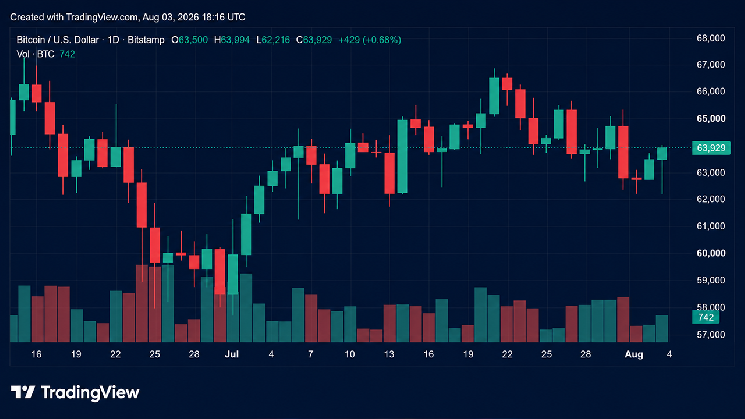
Total crypto market cap valued at $3.06 trillion on the daily chart | Source: TOTAL chart on Tradingview.com

Preguntas relacionadas

QWhat is the CLARITY Act and what are its main objectives?

AThe CLARITY Act is a landmark US crypto market-structure bill introduced in May 2025. Its main objectives are to define regulatory responsibilities between the SEC and CFTC, clarify asset classifications, and establish compliance pathways for digital asset markets.

QWhen is the markup session for the CLARITY Act scheduled by the Senate Banking Committee?

AThe markup session for the CLARITY Act is scheduled for 10 am EST on Thursday, January 15, 2026, by the US Senate Committee on Banking, Housing, and Urban Affairs.

QAccording to Chairman Tim Scott, why is the CLARITY Act important for the United States?

AChairman Tim Scott stated that the CLARITY Act is about making America the crypto capital of the world, fostering the next generation of jobs and innovation domestically. It aims to provide clear rules to give entrepreneurs confidence to start companies and hire workers in the US, while also making it harder for criminals and foreign adversaries to exploit the technology.

QWhat is the predicted timeline for the CLARITY Act to become law, as reported by Eleanor Terrett?

AFox Reporter Eleanor Terrett predicts that the CLARITY Act could be ratified and gain full approval by March at the earliest, following a markup, merging with the Agricultural Committee's portion, Senate voting, and final approval from the House of Representatives and the President.

QWhat positive impact is the CLARITY Act expected to have on the crypto market?

AThe CLARITY Act is expected to bring regulatory clarity and introduce necessary guardrails that would encourage more mainstream digital asset adoption among both individuals and institutions, which has been positively received by crypto enthusiasts.

Lecturas Relacionadas

No Sales Team, $20 Million in Revenue: How Did AI Employee Viktor Win Over 30,000 Companies?

The AI employee Viktor, developed by a team with DeepMind background, has achieved $20 million in annual revenue without a traditional sales team, serving over 30,000 companies. Its core innovation lies in positioning itself as a "Tier 3 AI Coworker" capable of "end-to-end execution and delivery of results," moving beyond the "draft and wait for human completion" model of typical AI assistants. Users can simply mention Viktor in Slack or Microsoft Teams using natural language commands, and it autonomously performs tasks like pulling sales data from a CRM, generating reports, or even cross-tool operations like creating board meeting PPTs by aggregating data from six different sources. Key to its growth is a pure Product-Led Growth (PLG) model, eliminating complex implementation cycles and per-seat licensing. Instead, it charges based on task credits or consumption, lowering the trial barrier with a $100 free credit offer and no credit card required. This enabled viral, bottom-up adoption within organizations. Viktor's interaction paradigm removes the barrier of prompt engineering, allowing non-technical employees to delegate complex workflows seamlessly. It also features proactive, automated task execution (e.g., overnight bookkeeping, scheduled reports) based on triggers, effectively embedding AI as an automated "process layer" within business operations. However, its expansion into Microsoft Teams—a platform with 320 million users—highlights challenges. Large enterprises require stringent IT compliance, security reviews (e.g., SOC 2), and governance, potentially hindering the frictionless, user-driven adoption that succeeded in Slack. Additionally, the "black box" nature of its autonomous decision-making raises concerns about operational risks, data integrity, and the need for robust audit logs and permission controls. Balancing efficiency gains with security and trust remains a critical hurdle for Viktor and similar AI agents aiming to become core enterprise infrastructure.

marsbitHace 2 hora(s)

No Sales Team, $20 Million in Revenue: How Did AI Employee Viktor Win Over 30,000 Companies?

marsbitHace 2 hora(s)

Trading

Spot
Futuros
活动图片