Circle moves toward privacy-focused stablecoin with USDCx project

cointelegraphPublicado a 2025-12-09Actualizado a 2025-12-09

Resumen

Circle is developing a privacy-enhanced version of its USDC stablecoin, called USDCx, in partnership with blockchain firm Aleo. Aimed at banking and enterprise users, USDCx will offer "banking-level privacy" by concealing transaction details onchain, while still allowing compliance with regulatory requests. This addresses a key hurdle for institutional adoption, as many financial firms hesitate to use public blockchains due to transparency concerns. The move comes amid growing corporate interest in stablecoins following the US GENIUS Act, with major players like Citigroup, JPMorgan, and Visa expanding their stablecoin initiatives. USDC and USDT currently dominate the dollar-pegged stablecoin market.

Stablecoin issuer Circle is developing a privacy-enhanced version of its US dollar-pegged USDC token, aiming to spur institutional adoption by offering greater confidentiality than traditional public blockchains allow.

The new stablecoin, called USDCx and targeting banking and enterprise users, is being built in partnership with the privacy-focused blockchain company Aleo, Fortune reported on Tuesday, citing Aleo co-founder Howard Wu.

Unlike most existing stablecoins, which have wallet addresses and transaction details fully visible onchain, USDCx is designed to provide “banking-level privacy.” Circle would still be able to provide a compliance record if law enforcement or regulators request information on specific transactions, according to the report.

The initiative aims to address a key hurdle for major financial institutions, many of which have been hesitant to utilize blockchain-based payment rails because their transaction flows would be publicly visible.
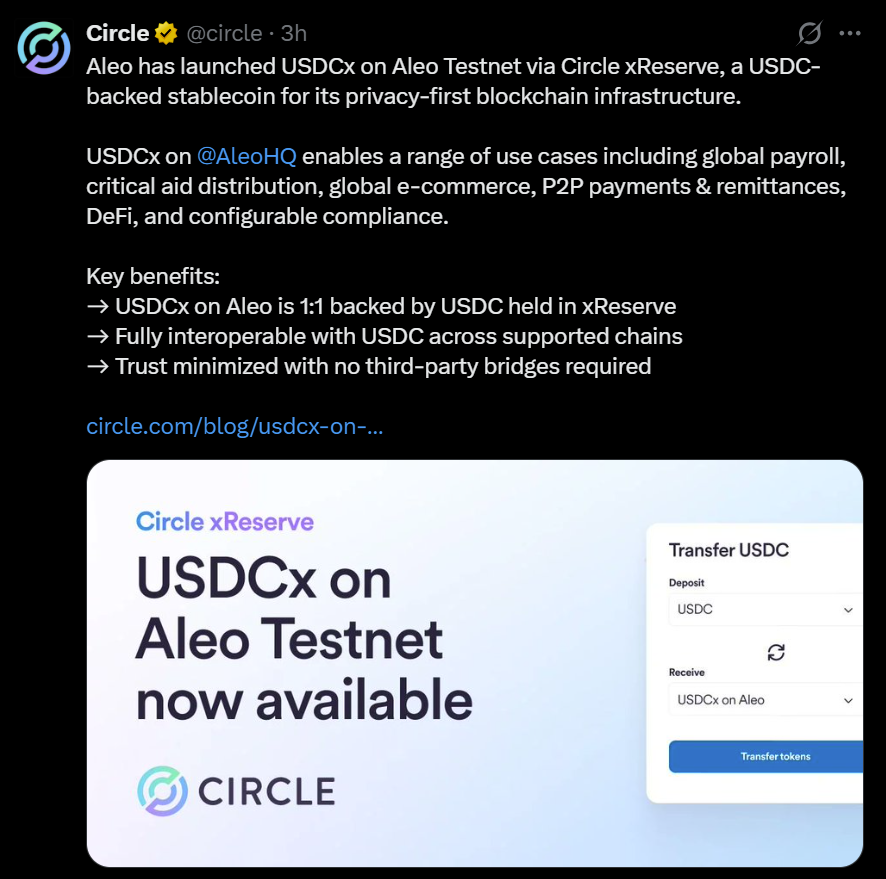
Source: Circle

Aleo has long argued that privacy is essential for the next phase of stablecoin adoption. In a May post, the company wrote that while transparency is often promoted as a core blockchain advantage, “it becomes a liability when dealing with sensitive, confidential payment data.”

Aleo isn’t the only company pushing for privacy in stablecoins. As Cointelegraph reported, digital asset infrastructure provider Taurus has developed a private smart-contract system for stablecoins, designed to enable anonymous transactions. This approach aims to boost the use of stable assets for intracompany payments and employee payrolls.

Related: Bank lobby is ‘panicking’ about yield-bearing stablecoins

Stablecoins take center stage in corporate America

Circle’s move into privacy-focused stable assets comes as more major institutions begin exploring stablecoins in the wake of the US GENIUS Act, the new regulatory framework governing US dollar–pegged tokens.

As Cointelegraph reported, a corporate stablecoin race is emerging in the wake of GENIUS. Citigroup has partnered with Coinbase to test stablecoin-based payment rails for its clients, while other Wall Street companies, including JPMorgan and Bank of America, are reportedly in the early stages of experimenting with similar technologies.

Global remittance provider Western Union is also building a digital asset settlement system on Solana, with plans to introduce a US Dollar Payment Token as part of its infrastructure overhaul. Meanwhile, global payments giant Visa has expanded its stablecoin offerings amid growing competition in the space.
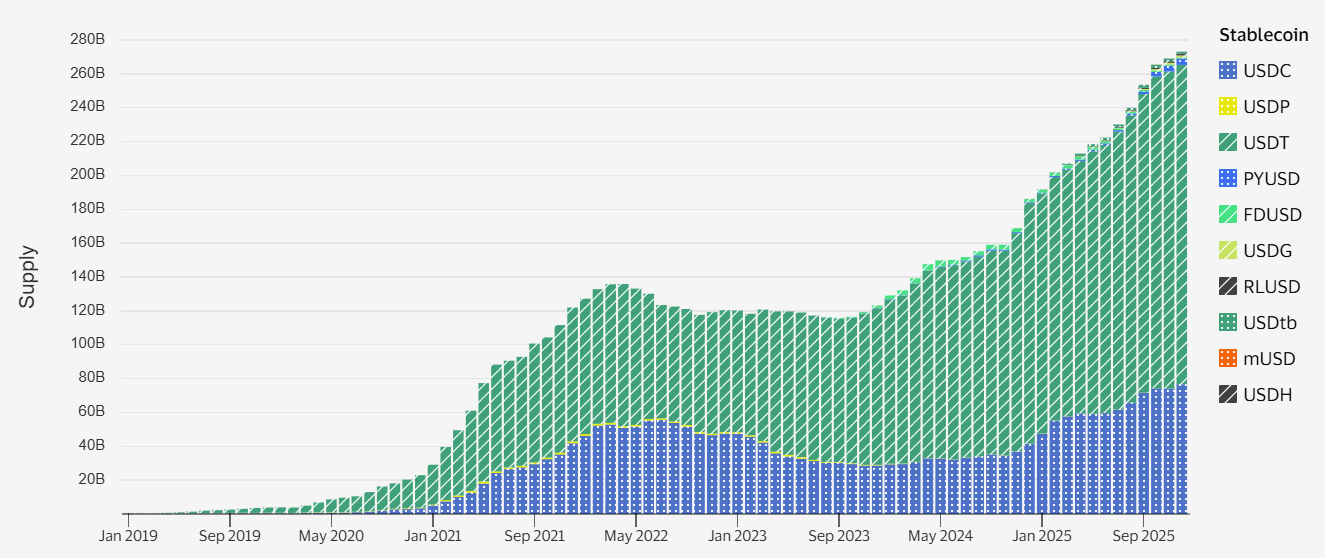
Average stablecoin supply by issuer. Source: Visa Onchain Analytics

The US dollar underpins the vast majority of global stablecoin activity. USDC (USDC) and Tether’s USDt (USDT) together account for roughly 85% of the market, while other dollar-linked tokens, including synthetic dollars and PayPal USD (PYUSD), also rank among the largest.

Related: Crypto Biz: Wall Street giants bet on stablecoins
Lecturas Relacionadas

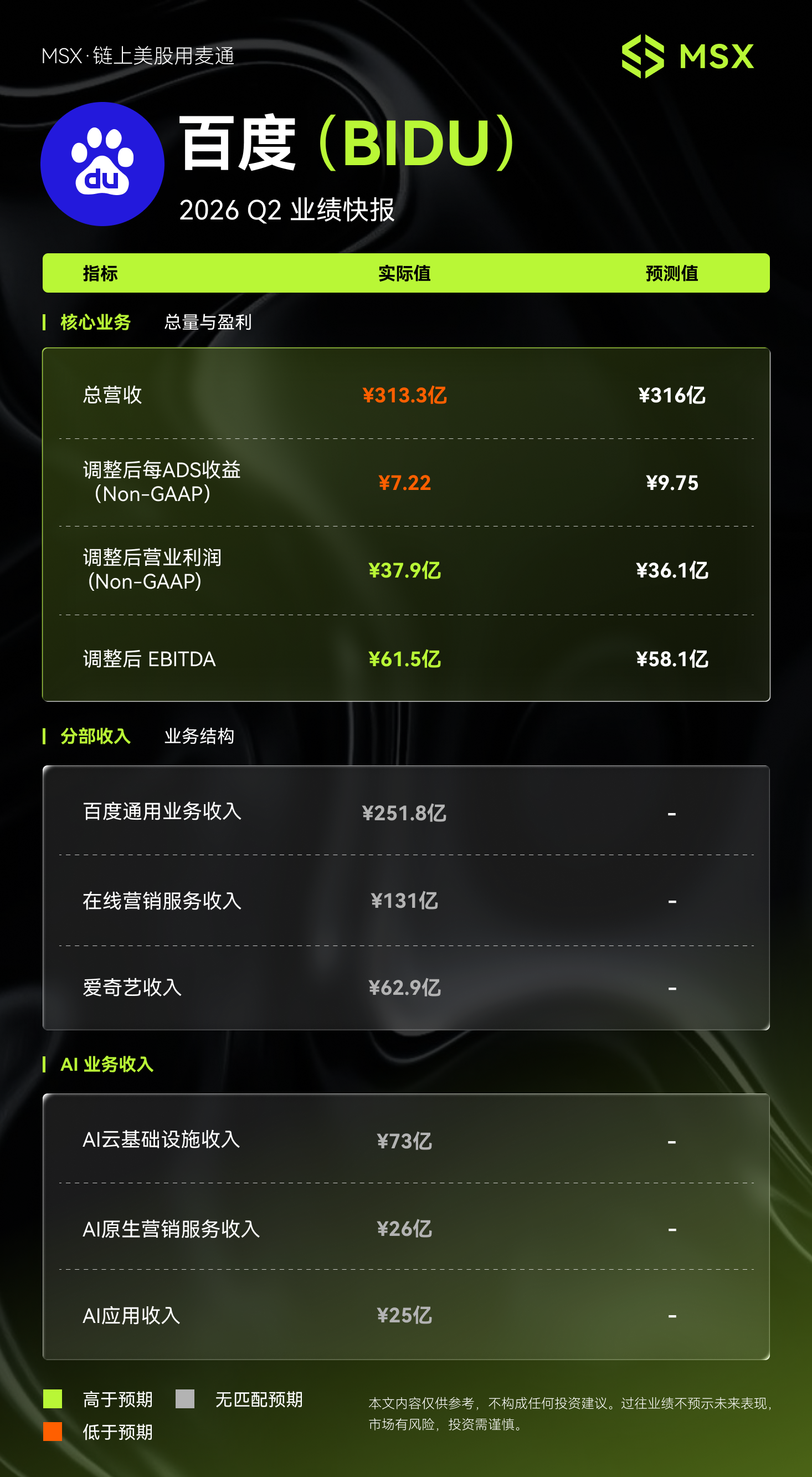
MSX US Stock Daily Observation: Baidu 2026 Q2 Earnings: AI Revenue Accounts for Half of Core Business for Two Consecutive Quarters, 283% GPU Cloud Growth Boosts Business Transformation

**MSX Daily US Stock Observation: Baidu 2026 Q2 Earnings Report** Baidu's Q2 2026 earnings present a clear picture of a company in transition. Total revenue declined slightly to RMB 313.25 billion, missing market expectations. This was driven by a continued double-digit contraction (-19%) in its core online marketing (advertising) business. The key highlight is the structural shift within the company's operations. AI-related revenue reached RMB 125 billion, accounting for approximately half of Baidu's core business income for the second consecutive quarter. Within AI, growth is heavily skewed towards infrastructure: AI cloud infrastructure revenue grew 50% year-over-year to RMB 73 billion, with GPU cloud revenue surging 283%. In contrast, AI application and AI-native marketing services revenue grew only 3% and remained flat, respectively, indicating slower commercialization on the application side. Profitability metrics were mixed. While adjusted operating profit and EBITDA exceeded expectations, demonstrating cost control, adjusted earnings per ADS of RMB 7.22 fell short by about 26%. This gap is largely attributed to depreciation and amortization costs linked to significant AI infrastructure investments, which continue to pressure bottom-line profit realization. The company holds a substantial cash position of RMB 2831 billion, providing runway for continued investment. The critical challenge ahead is translating the explosive growth in AI infrastructure (like GPU cloud) into stronger monetization from AI applications to bridge the gap between operational profit and per-share earnings.

Odaily星球日报Hace 4 min(s)

MSX US Stock Daily Observation: Baidu 2026 Q2 Earnings: AI Revenue Accounts for Half of Core Business for Two Consecutive Quarters, 283% GPU Cloud Growth Boosts Business Transformation

Odaily星球日报Hace 4 min(s)

Bitwise CIO: Three Major Cognitive Errors Common Among Crypto Investors Today

Bitwise CIO Matt Hougan highlights three key misconceptions he believes many crypto investors currently hold, presenting them as opportunities for those who see beyond them. First, investors significantly underestimate the total addressable market for crypto applications. While many view platforms like Uniswap only as tools for trading crypto assets (a ~$2 trillion market), their true potential lies in tokenizing and trading *all* asset classes—such as stocks and bonds—which represent markets hundreds of trillions of dollars in size. Second, there's a persistent overestimation of traditional financial institutions' ability to dominate crypto-native sectors. Examples like PayPal's stable币 (with ~1% market share vs. Tether/Circle's 88%) and Fidelity's custody business (trailing Coinbase) show that crypto-native firms often win due to faster iteration, focused expertise, and established user trust within the crypto ecosystem. Third, investors linearly extrapolate future on-chain transaction volumes from today's data, severely underestimating potential growth. The shift to 24/7 trading for tokenized assets could multiply trading hours by 5x. When combined with AI agents that may execute trades far more frequently than humans, transaction volumes could grow by 10x to 100x, massively boosting revenue for underlying blockchains and applications. Hougan concludes that the gap between the rapid pace of industry change and slower mainstream perception updates creates significant investment opportunities.

marsbitHace 7 min(s)

Bitwise CIO: Three Major Cognitive Errors Common Among Crypto Investors Today

marsbitHace 7 min(s)

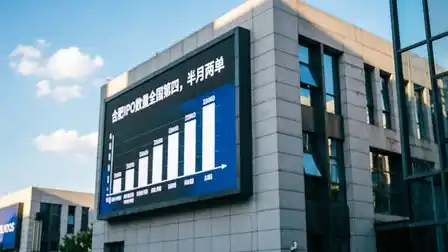
Two IPOs in Half a Month: Hefei Becomes China's Fourth City

Hefei, China's "Capital of Venture Capital," Ascends to Fourth Place in A-P-Share Market Value with Two Recent IPOs Within two weeks, two major IPOs propelled Hefei's A-share market capitalization from 1.27 trillion yuan to over 4.55 trillion yuan, ranking the city fourth nationwide, behind only Beijing, Shenzhen, and Shanghai. This surge is led by Changxin's massive listing, creating over 1 trillion yuan in paper gains for state-owned investors. Simultaneously, Hefei's GDP growth leads among Chinese cities exceeding 1 trillion yuan GDP. This success stems not from gambling on single companies, but from a decades-long, systematic "industrial investment" strategy. Hefei targets critical gaps in its industrial chain, providing patient capital. It invested in BOE in 2008 to secure display panels for its appliance hub, in Changxin in 2016 for semiconductors, and in NIO in 2020 to anchor a new energy vehicle cluster. Each investment was calculated based on long-term industrial necessity. Another IPO, Guoyi Quantum, originates from Hefei's ecosystem. Founded by a prodigy inspired by his professor's experience with overpriced foreign instruments, it symbolizes high-end scientific instrument localization. Behind the trillion-yuan paper gains is remarkable political continuity and a self-reinforcing cycle. Proceeds from earlier successful exits (e.g., BOE, NIO) were reinvested into newer projects like Changxin. The strategy withstands individual project failures and transcends typical government terms, focusing on decade-long industrial cultivation. Hefei's system integrates the University of Science and Technology of China for tech talent, state capital for long-term funding, and an unwavering focus on building complete industrial chains. While risks remain—market volatility, intense EV competition, quantum's commercialization timeline—Hefei demonstrates that when a government calculates returns over decades, the outcome differs fundamentally from short-term bets.

marsbitHace 11 min(s)

Two IPOs in Half a Month: Hefei Becomes China's Fourth City

marsbitHace 11 min(s)

Trading

Spot
活动图片