Chain Abstraction Drives Stablecoin Efficiency Upgrade: River Secures $8 Million Strategic Investment from TRON

marsbitPublicado a 2026-01-22Actualizado a 2026-01-22

Resumen

TRON, one of the most active networks for stablecoin usage, has made a strategic $8 million investment in River, a chain abstraction stablecoin protocol. This funding will support River’s deployment of cross-chain stablecoin infrastructure, focusing on multi-chain asset minting, yield products, and deeper integration with TRON's DeFi ecosystem. TRON currently hosts over $83.4 billion in USDT liquidity, with TRC20-USDT issuance exceeding 83.4 billion tokens and over 3.09 billion cumulative transfers. River’s satUSD will serve as a cross-ecosystem liquidity gateway, allowing users to deposit assets like wBTC and ETH from Ethereum, BNB Chain, and Arbitrum to mint satUSD on TRON. Users can also mint satUSD 1:1 using USDT, USDD, or USD1. The integration includes liquidity provisioning on SUN.io, future lending markets on JustLend DAO, and the launch of Smart Vaults and Prime Vaults for user and institutional yield strategies. TRX will also be supported as collateral for minting satUSD, enhancing its utility. The rollout will occur in phases: initial deployment for cross-chain minting and staking, followed by vault products and deeper DeFi integrations, aiming to strengthen TRON’s position as a global stablecoin hub and improve cross-chain capital efficiency.

As stablecoins become the core vehicle for global on-chain settlement and value circulation today, public chain competition is shifting from "single-chain scale" to "cross-ecosystem capital efficiency." As one of the networks with the most active usage of mainstream stablecoins globally, TRON is continuously expanding the connectivity of its stablecoin financial network through more open and efficient infrastructure collaboration.

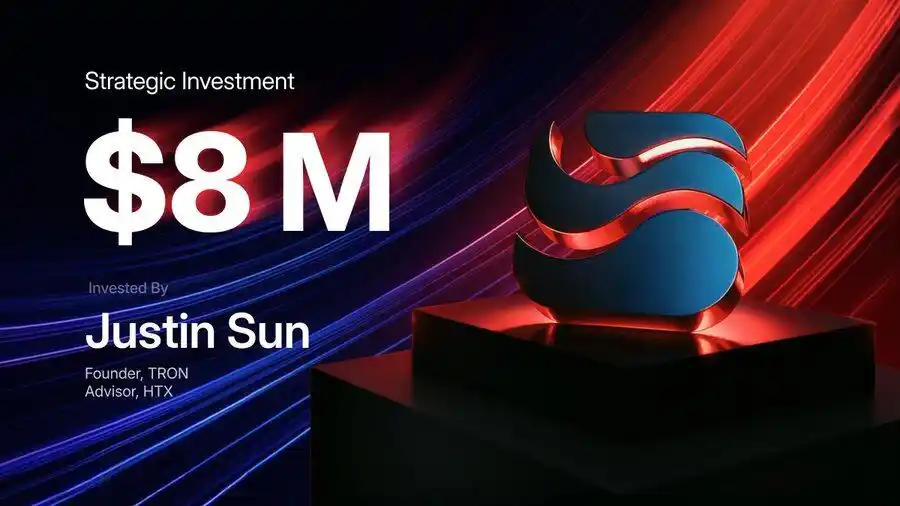
Recently, the chain abstraction stablecoin protocol River announced that it has secured an $8 million strategic investment from TRON. This round of funding will be used to support River's deployment of chain abstraction stablecoin infrastructure, focusing on cross-ecosystem asset minting, stablecoin yield product development, and accelerating deep integration with DeFi protocols on TRON. This will further enhance TRON's stablecoin liquidity capacity and cross-chain capital introduction efficiency. This strategic financing is also seen as a significant milestone in advancing ecosystem synergy between River and TRON.

TRON Hosts Over $83.4 Billion in USDT Liquidity, Stablecoin Network Effects Continue to Strengthen

As a core component of the stablecoin ecosystem, USDT has long dominated on-chain payment, trading, and capital turnover scenarios. According to the latest Tether transparency report, the TRON ecosystem currently hosts over $83.4 billion in USDT liquidity, making it one of the largest and most active stablecoin networks globally.

This scale advantage is further validated by on-chain data. TRONSCAN data shows that the issuance of TRC20-USDT has exceeded 83.4 billion tokens, reaching a historical high. Since the beginning of this year alone, the TRON network has cumulatively issued an additional 2 billion USDT tokens, indicating that stablecoin demand continues to grow driven by multi-scenario applications. Meanwhile, the number of TRC20-USDT holding accounts has reached 70.69 million, with cumulative transfer transactions exceeding 3.09 billion. From these on-chain metrics, it is evident that TRC20-USDT is evolving from a cryptocurrency trading medium into a value circulation tool for a broader user base, increasingly integrating into cross-border payments, daily transfers, and on-chain financial application scenarios.

On this liquidity foundation, TRON has formed a stablecoin market with scale effects, providing a gateway for more external ecosystem assets and users to enter the mainstream on-chain financial network. River's decision to accelerate integration with TRON at this time is precisely to seize the infrastructure window during a period of significant growth in stablecoin and cross-chain financial demand.

satUSD Connects Cross-Ecosystem Assets and Yield Scenarios, Building TRON's Cross-Chain Yield Network

Addressing the issues of capital fragmentation and yield isolation in the multi-chain era, TRON's strategy is to use its super liquidity in stablecoins as a foundation, continuously lowering the barriers to cross-ecosystem participation through infrastructure and protocol layer integration.

River uses satUSD as a cross-ecosystem liquidity entry point, providing a smoother channel for multi-chain assets to access TRON: users can deposit assets like wBTC, ETH, and BNB in EVM ecosystems such as Ethereum, BNB Chain, and Arbitrum, and receive satUSD on the TRON network, thereby directly participating in TRON's native lending, trading, and yield opportunities.

Additionally, users can use USDD, USDJ, or USDT to mint satUSD at a 1:1 equivalent value, converging cross-ecosystem stablecoin liquidity into a unified entry point, reducing friction and losses caused by repeated token swaps and migrations during cross-chain processes. For the TRON ecosystem, this design of "cross-ecosystem minting + unified entry" will more efficiently attract external assets into the ecosystem, generating on-chain usage demand and further enhancing the accessibility and turnover efficiency of stablecoin capital.

At the ecosystem cooperation level, the SUN.io platform also supports forming liquidity pools (LPs) with satUSD and various stablecoins like USDD and USDT, providing more liquidity for the TRON ecosystem. To allow users to participate in stablecoin swaps, TRON's leading lending platform, JustLend DAO, may support the satUSD market in the future, improving the utilization rate and yield承接 capacity of stablecoin capital within the ecosystem. Ultimately, this will create a "lending—swapping"联动 efficiency, enabling capital to circulate between different modules and continuously release liquidity depth.

Addressing broader yield and liquidity allocation needs, River also plans to launch Smart Vault for individual users and Prime Vault for institutions on TRON: Smart Vault will accept deposits of stablecoins like USDD, USDJ, and USDT, providing a more standardized and sustainable yield configuration method; Prime Vault aims to introduce native crypto assets like BTC and ETH into the TRON ecosystem, expanding the combination strategies for stablecoins and mainstream assets, and providing larger-scale capital with accessible, retainable, and scalable yield and liquidity solutions.

Furthermore, River will support TRX as collateral for minting satUSD, further enhancing TRX's financial utility and forming a tighter capital supply and demand闭环 for the TRON ecosystem.

In terms of implementation节奏, both parties will accelerate progress following a "deploy first, then expand" path.

The first phase will focus on正式 deployment on TRON, completing the basic capabilities for cross-ecosystem asset minting of satUSD and 1:1 stablecoin minting, and providing staking yield scenarios for satUSD holders. This will ensure that cross-ecosystem capital can form stable yield承接 and user retention after entry. The second phase will expand the yield product system, including Smart Vault and Prime Vault, prioritizing the establishment of liquidity and trading foundations for satUSD on SUN.io. With the support of WinkLink oracles to ensure price accuracy and risk control, cooperation with JustLend DAO will be deepened to expand lending and yield scenarios. This will make satUSD a key asset component贯穿 trading, lending, and yield products, forming a stronger stablecoin capital flywheel within TRON, and providing TRX holders with more yield options and configuration space.

By continuously enhancing cross-ecosystem connectivity, TRON will further solidify its position as a key infrastructure for the global stablecoin financial network, driving the cross-chain financial network towards higher efficiency, stronger composability, and broader application落地.


Criptos en tendencia

Preguntas relacionadas

QWhat is the strategic investment amount that River received from TRON, and what is its primary purpose?

ARiver received an $8 million strategic investment from TRON. The funds will be used to support the deployment of River's chain-abstracted stablecoin infrastructure, focusing on cross-ecosystem asset minting, building stablecoin yield products, and accelerating deep integration with DeFi protocols on the TRON network.

QHow much USDT liquidity does the TRON network currently carry, and what on-chain metrics demonstrate its scale?

AThe TRON network carries over $83.4 billion in USDT liquidity. Key on-chain metrics from TRONSCAN show that TRC20-USDT issuance has exceeded 83.4 billion tokens, with 70.69 million holding accounts and over 3.09 billion cumulative transfer transactions.

QWhat is satUSD and how does it function as a cross-ecosystem liquidity entry point for the TRON network?

AsatUSD is a stablecoin protocol by River. It acts as a cross-ecosystem liquidity entry point by allowing users to deposit assets like wBTC, ETH, and BNB from other EVM ecosystems (e.g., Ethereum, BNB Chain, Arbitrum) and mint satUSD on the TRON network. This enables them to directly access TRON's native lending, trading, and yield opportunities.

QWhich TRON-based DeFi protocols are mentioned as partners for integrating with River's satUSD?

AThe article mentions SUN.io and JustLend DAO as key TRON-based DeFi protocols for integration. SUN.io will support satUSD in liquidity pools with other stablecoins, and JustLend DAO is expected to support a satUSD market to enhance stablecoin utilization and yield capacity within the ecosystem.

QWhat are the two types of Vaults that River plans to launch on the TRON network, and what assets do they target?

ARiver plans to launch Smart Vault and Prime Vault on TRON. The Smart Vault will accept deposits of stablecoins like USDD, USDJ, and USDT to provide standardized yield. The Prime Vault aims to introduce native crypto assets like BTC and ETH to the TRON ecosystem, offering more complex yield and liquidity strategies for larger institutional funds.

Lecturas Relacionadas

Claude's Major New Feature: Screen Recording + Voice, Distilling Your Skills into AI Tasks in One Click

Claude has introduced a major new feature called "Record a Skill," available for Pro, Max, and Team users. This function, found in the Claude desktop app's CoWork menu, allows users to create reusable AI skills simply by recording their screen and providing voice narration while performing a task. Claude then automatically analyzes the recording and generates a functional Skill. A hands-on test confirmed the feature works seamlessly. Users start recording via the Skills manager, perform their workflow while verbally explaining the steps and logic, and avoid including sensitive information. After recording, Claude processes the content and creates the Skill, which can be saved and later invoked with a slash command (/). This eliminates the need for manual adjustments or writing complex instruction files. The innovation goes beyond mere efficiency. Previously, creating a Skill required writing a detailed SKILL.md file in Markdown—a significant barrier for non-technical users. "Record a Skill" bypasses this by directly capturing both actions and the implicit reasoning shared in the narration. This lowers the barrier to knowledge transfer and automation, addressing a core challenge in corporate knowledge management: the difficulty of getting experts to write and maintain documentation. However, the feature also highlights a shift in the nature of work. A case study from March 2026 showed a freelancer whose five-year client relationship was effectively replaced by a hand-coded Claude Skill automating their content workflow. With the even lower barrier of screen recording, the ability to distill personal expertise into automatable skills accelerates this trend. The "moat" for work is moving from simply knowing how to do a task to mastering tasks that are difficult or impossible to automate.

marsbitHace 5 min(s)

Claude's Major New Feature: Screen Recording + Voice, Distilling Your Skills into AI Tasks in One Click

marsbitHace 5 min(s)

Feeding AI "Noise" Can Also Boost Scores, This Work Enables Positive Transfer with Noise

Feeding "Noise" to AI Can Improve Performance: A Method Enables Positive Transfer from Noise This work, Semi-Supervised Noise Adaptation (SSNA), introduces a Noise Adaptation Framework (NAF) that challenges traditional transfer learning. Instead of requiring a labeled source domain of real data (e.g., images, text), NAF uses randomly generated Gaussian noise as the source. For a target task with C classes, it constructs C noise clusters by sampling from Gaussian distributions. Although this synthetic noise contains no semantic meaning, NAF trains it to form a discriminative class structure in a shared representation space—clustering same-class noise and separating different classes. The key is aligning this learned structure from the noise domain to the real, sparsely labeled target domain. A small number of target labels are still essential to establish the correspondence between noise clusters and actual classes. The training objective combines: 1) supervised loss on the few labeled target samples, 2) classification loss for the noise to build its structure, and 3) a distribution alignment loss (using Negative Domain Similarity) to minimize the gap between the noise and target domains in the shared space. Experiments show significant gains in few-label settings. With just 4 labels per class, NAF with a ResNet-18 backbone improves accuracy over a standard supervised baseline (ERM) by +12.35% on CIFAR-10, +7.61% on CIFAR-100, +4.38% on DTD-47, and +2.74% on Caltech-101. It also benefits fine-grained datasets and scales to ImageNet-1K (with 100 labels/class) and text classification (AG News). NAF can be integrated into existing semi-supervised methods like FixMatch for further gains. Ablation studies confirm the transferred benefit comes from the discriminative structure of the noise, not randomness itself. Collapsing all noise into a single point causes negative transfer, while increasing separation between noise cluster centers improves performance. The amount of noise per class is less critical once a basic structure forms. In conclusion, this work demonstrates that for positive transfer, the semantic content of source data may not be necessary. What can be effectively transferred is the *organizational structure* of categories within a representation space. This offers a promising alternative for scenarios where real source data is unavailable due to privacy, copyright, or procurement constraints.

marsbitHace 6 min(s)

Feeding AI "Noise" Can Also Boost Scores, This Work Enables Positive Transfer with Noise

marsbitHace 6 min(s)

Trading

Spot

Artículos destacados

Cómo comprar TRX

¡Bienvenido a HTX.com! Hemos hecho que comprar TRON (TRX) sea simple y conveniente. Sigue nuestra guía paso a paso para iniciar tu viaje de criptos.Paso 1: crea tu cuenta HTXUtiliza tu correo electrónico o número de teléfono para registrarte y obtener una cuenta gratuita en HTX. Experimenta un proceso de registro sin complicaciones y desbloquea todas las funciones.Obtener mi cuentaPaso 2: ve a Comprar cripto y elige tu método de pagoTarjeta de crédito/débito: usa tu Visa o Mastercard para comprar TRON (TRX) al instante.Saldo: utiliza fondos del saldo de tu cuenta HTX para tradear sin problemas.Terceros: hemos agregado métodos de pago populares como Google Pay y Apple Pay para mejorar la comodidad.P2P: tradear directamente con otros usuarios en HTX.Over-the-Counter (OTC): ofrecemos servicios personalizados y tipos de cambio competitivos para los traders.Paso 3: guarda tu TRON (TRX)Después de comprar tu TRON (TRX), guárdalo en tu cuenta HTX. Alternativamente, puedes enviarlo a otro lugar mediante transferencia blockchain o utilizarlo para tradear otras criptomonedas.Paso 4: tradear TRON (TRX)Tradear fácilmente con TRON (TRX) en HTX's mercado spot. Simplemente accede a tu cuenta, selecciona tu par de trading, ejecuta tus trades y monitorea en tiempo real. Ofrecemos una experiencia fácil de usar tanto para principiantes como para traders experimentados.

1.8k Vistas totalesPublicado en 2024.12.10Actualizado en 2026.06.02

Cómo comprar TRX

Discusiones

Bienvenido a la comunidad de HTX. Aquí puedes mantenerte informado sobre los últimos desarrollos de la plataforma y acceder a análisis profesionales del mercado. A continuación se presentan las opiniones de los usuarios sobre el precio de TRX (TRX).

活动图片