CFTC Proposes New Rules for Prediction Markets, Redefining Which Events Can Be Listed and Who Can Participate

marsbitPublicado a 2026-06-11Actualizado a 2026-06-11

Resumen

The U.S. Commodity Futures Trading Commission (CFTC) has proposed new rules to establish a clearer regulatory framework for prediction markets. The proposal aims to modify how "event contracts" are reviewed, creating a structured process to determine if contracts involving terrorism, assassination, war, or illegal activities violate the public interest. This moves away from a blanket ban toward a case-by-case assessment of whether a contract's subject matter is acceptable for financial trading. A key focus is distinguishing between predicting the impact of risks and predicting the occurrence of harm. The proposal suggests that many sports-based prediction markets—such as those on game outcomes, scores, or season standings—may be permissible as they can provide price discovery and meaningful information. However, markets on easily manipulated events like specific player injuries, referee calls, or outcomes of youth sports would face stricter scrutiny. The rules directly target insider trading and manipulation risks, highlighting cases where individuals with non-public information or the ability to influence an event's outcome could unfairly profit. This underscores a shift toward ensuring market fairness. The proposal does not end the regulatory debate, particularly with state gambling regulators who argue that sports prediction markets are essentially sports betting and should fall under state jurisdiction. Nonetheless, the CFTC's action signals a move toward formalizing p...

Author | Asher(@Asher_ 0210)
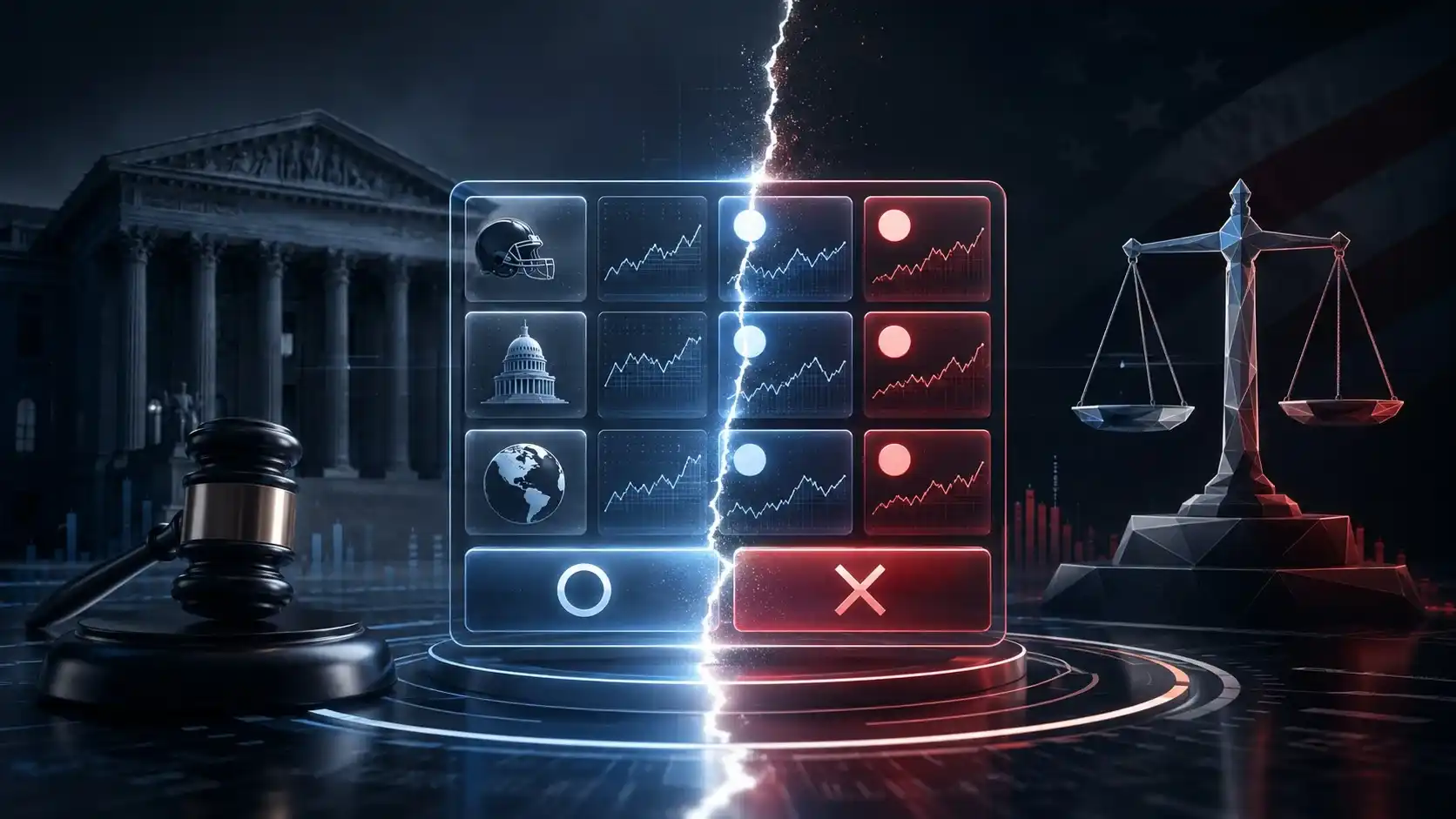
Prediction markets are facing more clear-cut regulations.

On June 10th, the U.S. Commodity Futures Trading Commission (CFTC) issued a proposed rulemaking, planning to adjust the review method for event contracts. According to the CFTC announcement, the proposal would modify Regulation 40.11 and add a new Appendix F for evaluating whether event contracts in prediction markets involve terrorism, assassination, war, or illegal activities, and whether such contracts are contrary to the public interest. Through this proposed rule, the CFTC attempts to establish a judgment framework—which events can be financialized, and which events should be kept out of the market.

For rapidly expanding prediction markets, perhaps the proposed rules issued by the CFTC this time represent a critical turning point.

In recent years, prediction market leaders Kalshi and Polymarket have continuously turned real-world events into tradable contracts, ranging from presidential elections and macroeconomic data to sports events, entertainment shows, and geopolitical events. Almost anything with a verifiable outcome has the potential to be packaged into a "yes" or "no" trading market.

However, as the scale grows, problems are beginning to concentrate. Who can participate in trading? Which markets are susceptible to manipulation? If someone knows the outcome in advance, or can even influence the outcome, is a prediction market still a fair market?

The CFTC's move this time is precisely aimed at answering these questions.

Not a Blanket Ban, but Contract-by-Contract Review

What the CFTC released this time is not a simple statement, but a lengthy 267-page proposed rulemaking document titled "Prediction Markets; Public Interest Determinations." Judging by its nature, it is a rulemaking proposal currently in the comment stage, not a formal, effective rule. In this document, the CFTC attempts to further clarify which event contracts may be deemed contrary to the public interest and thus cannot be listed for trading or accepted for clearing on entities registered with the CFTC.

From the rule design perspective, the CFTC did not directly provide a comprehensive list of prohibitions but opted for reviewing specific contracts. According to the document content, this proposal aims to establish a structured framework for determining whether an event contract falls into sensitive categories enumerated in the Commodity Exchange Act, including terrorism, assassination, war, and activities that violate federal or state law. If involving these categories, the CFTC would further determine whether the contract is contrary to the public interest.

Therefore, prediction markets are not necessarily directly prohibited simply for touching on sensitive events. Regulatory focus is on what the event actually predicts and whether it would incentivize manipulation, harm, or illegal acts. For example, a market directly predicting whether a terrorist attack will occur in a certain location will likely face intense scrutiny or even be banned. However, a market focusing on crude oil shipment volumes through the Strait of Hormuz over a certain period, even if this data may be affected by military situations, essentially measures commercial shipping activity rather than directly predicting war or terrorist acts.

The CFTC is not simply rejecting prediction markets but attempting to distinguish between "predicting the impact of risk" and "predicting the occurrence of harm." The former may still have informational value, while the latter is more likely to cross the public interest bottom line.

Sports Prediction Events Likely to Be Retained, with Clearer Boundaries

What the outside world is most concerned about is perhaps whether sports prediction markets will be completely banned. Based on the current proposal, the signal released by the CFTC is relatively positive—most prediction events centered on the overall outcomes of sports games may still gain clearer compliance space. The CFTC preliminarily believes that sports prediction events designed based on game scores, point spreads, win/loss outcomes, advancement results, overall team or player statistics, and seasonal performance may possess price discovery functions and also provide meaningful information.

Sporting events like the World Cup, NBA, NFL, and MLB naturally have high attention, high-frequency trading, and clear settlement conditions, serving as the main source of trading volume for prediction markets. If the relevant rules are finalized and confirm that markets for sports outcomes, advancement, scores, etc., have compliance space, sports-related prediction events will remain the main battleground for platforms competing for users and liquidity.

However, this does not mean all sports-related markets will be allowed. The CFTC also emphasizes that certain more granular markets, more easily influenced by a small number of individuals, may not conform to the public interest. For example, whether a player gets injured, whether a conflict occurs during a game, whether a referee makes a particular call, outcomes of minor events, and any market that might encourage cheating or harm to athletes may face stricter scrutiny.

The Real Target: 'Those Who Know the Answer'

Compared to sports markets themselves, insider trading and manipulation risks are the real issues this round of regulation aims to address. Different from traditional financial markets, many event outcomes in prediction markets are not generated externally by the market but may be determined by an individual, an institution, or a small group. Once these individuals participate in trading, the market is no longer just "predicting the future" but may become "cashing in on insider information in advance."

Recently, similar issues have appeared multiple times. There have been several cases in prediction markets involving alleged insider trading, including U.S. military personnel accused of using information related to operations involving Venezuela, a former U.S. congressman predicting "he would not attend Trump's State of the Union address," and Google engineers using internal company tools to view data related to the most searched person in 2025.

These incidents expose the core risk of prediction markets: some traders are not better at judgment but are inherently closer to the answer. This directly undermines market credibility, turning prediction markets from information aggregation tools into insider arbitrage tools.

A Clearer Regulatory Framework Does Not Mean the End of Controversy

However, the CFTC's proposal does not mean the controversy over prediction markets has ended. Currently, multiple state regulatory agencies in the U.S. still oppose the CFTC's stance on sports prediction events, arguing that such prediction events are essentially sports betting, and platforms should not circumvent state gambling regulatory systems. Bill Miller, head of the American Gaming Association, also criticized the CFTC's proposal as redefining sports betting.

Behind this lies a power struggle between federal regulation and state gambling regulation. If sports prediction events are recognized as financial derivatives under CFTC supervision, platforms may be able to offer trading services to a broader user base through the federal framework. But if they are recognized as sports betting, they must face complex state-level licensing, taxation, and consumer protection requirements.

Therefore, even if the relevant rules are finalized, legal disputes surrounding prediction markets will not disappear but will instead become more concentrated on one question: Can prediction markets regulated by the CFTC bypass state-level gambling regulation to provide nationwide sports prediction trading?

Prediction Markets Are Becoming More Like Financial Markets

Returning to the proposal itself, the CFTC's attitude is already quite clear. Prediction markets will not be simply negated, but their gray areas are being redrawn.

Prediction events with objective settlement standards, capable of providing informational value, and with relatively controllable manipulation risks may still gain clearer compliance space; while those markets more easily influenced by a few, inducing harm, or involving non-public information will become the focus of regulation.

This also means the next phase for prediction markets is not more freedom, but more institutionalization.

Before this, the expansion of prediction markets relied more on hot topics, traffic, and the number of markets; hereafter, whether platforms can continue to grow will increasingly depend on their ability to prove market fairness, transparent settlement, and controllable risks. The CFTC's proposal this time may not be a brake for prediction markets; instead, it is more like a dividing line—the industry is beginning to move from gray-area expansion toward more rule-based competition resembling financial markets.


Preguntas relacionadas

QWhat is the main purpose of the CFTC's proposed new rule for prediction markets?

AThe main purpose of the CFTC's proposed rule is to establish a clearer regulatory framework to determine which event contracts can be offered on CFTC-regulated platforms. It aims to assess whether a contract involves terrorism, assassination, war, or illegal activity and whether it is contrary to the public interest, thereby defining which events can be financialized and which should be excluded.

QHow does the CFTC propose to handle event contracts that involve sensitive topics like war or terrorism?

AThe CFTC proposes to handle such contracts through a structured, case-by-case review framework under a new Appendix F. It will evaluate if a contract falls into a sensitive category (e.g., terrorism, assassination) and then further determine if it is contrary to the public interest, focusing on what the event is predicting and whether it could incentivize manipulation, harm, or illegal acts.

QAccording to the article, what is the CFTC's general stance on sports-based prediction markets?

AThe CFTC's stance is generally positive towards sports-based markets that predict overall game outcomes like scores, win/loss results, team/player season statistics, and playoff advancement. It preliminarily views these as having price discovery function and providing meaningful information. However, markets on easily manipulable granular events (e.g., a specific player injury, a referee's call) or those encouraging harm/cheating would face stricter scrutiny.

QWhat core risk in prediction markets does the article highlight as a key target of the new regulatory focus?

AThe article highlights insider trading and market manipulation as the core risks targeted by the new regulations. It points out that in prediction markets, some participants (like government officials or corporate insiders) may have non-public information or even the ability to influence an event's outcome, turning the market from a tool for aggregating information into a platform for insider profiteering.

QWhat ongoing legal controversy surrounds prediction markets, particularly those based on sports, despite the CFTC's proposed rules?

AThe ongoing controversy is a jurisdictional conflict between federal and state regulators. State regulators and groups like the American Gaming Association argue that sports-based prediction markets are essentially sports betting and should fall under state gambling laws, requiring licenses and adhering to state-level consumer protections. The central question is whether CFTC-regulated prediction markets can operate nationally while bypassing these state-level gambling regulations.

Lecturas Relacionadas

Must-Watch Events Next Week|CLARITY Act Could Face Senate Vote; SpaceX, Circle to Report Earnings (8.3-8.9)

**Summary: Key Events and Developments to Watch (August 3-9)** The upcoming week is marked by significant financial disclosures, key legislative deadlines, and notable product updates. **Major Financial Events:** Several companies are scheduled to release their Q2 2026 earnings. American Bitcoin (ABTC) will report on August 3, followed by SpaceX and Hut 8 Mining Corp. on August 4, and Circle on August 5. Notably, a significant portion of SpaceX shares (up to 12% of total shares) will be unlocked on August 6 following their earnings release. **Key Legislative Deadline:** The U.S. Senate faces an August 7 deadline to secure 60 votes for the CLARITY Act, a bipartisan bill aiming to establish a federal regulatory framework for cryptocurrencies. The Senate may hold a full vote on the bill during the week. **Economic Data:** The U.S. July Non-Farm Payrolls report will be released on August 7, providing crucial labor market data. **Technology & Product Updates:** * **Shutdowns:** DeFi portfolio tracker Zapper and wallet app Ctrl Wallet will cease operations on August 3. * **Upgrades:** LayerZero will deprecate its v1 relayers on August 3. XRP Ledger's new version 3.3.0, featuring five new functions, is expected next week. * **AI:** Elon Musk announced that the advanced Grok 4.6 AI model is set for release around August 7. * **Bitcoin:** The BIP-110 forced signaling for a potential Bitcoin network change is scheduled to begin around August 8. **Other Notable Events:** Chinese robotics firm Unitree Tech has set its preliminary price inquiry for its IPO for August 5. South Korean exchange Upbit will delist AQT and AERGO tokens on August 3.

marsbitHace 1 hora(s)

Must-Watch Events Next Week|CLARITY Act Could Face Senate Vote; SpaceX, Circle to Report Earnings (8.3-8.9)

marsbitHace 1 hora(s)

Stocks Are Plummeting More Sharply Than Cryptocurrencies. Where Has the Money Gone?

Stock Markets Plunge Deeper Than Cryptocurrencies: Where Did the Money Go? In late July, Seoul's Kospi index triggered circuit breakers for two consecutive days, plummeting over 40% from its June high. The collapse was led by heavyweight stocks like SK Hynix, whose record profits still disappointed investors, and devastating leveraged ETFs, with one major product losing over 83% of its value. This signaled a global, forced deleveraging targeting the most crowded trades. Interestingly, while stocks exhibited extreme volatility akin to crypto markets, Bitcoin rose nearly 15% in July after a prior steep drop. Analysis shows the money fleeing equities did not flow into Bitcoin. Instead, Bitcoin had already absorbed its sell-off in May-June, when U.S. spot Bitcoin ETFs saw historic outflows. The true safe-haven beneficiary was gold, whose price rose over 20% year-on-year, highlighting a decoupling between Bitcoin and gold as "digital gold." The sell-off was a targeted unwinding of leveraged positions in tech and semiconductors, accelerated by broker-dealer risk management and shifts in the AI narrative, including new competition from Chinese memory chipmakers. The retreat path was clear: from high-valuation tech stocks to cash and U.S. Treasuries, then to gold. For Bitcoin to attract sustained institutional inflows, conditions like eased global liquidity pressure, a "soft-landing" Fed rate cut, and U.S. regulatory clarity via legislation like the stalled CLARITY Act are needed. Currently, Bitcoin is not a safe haven but an already-cleared asset. Its low correlation with tech stocks, however, makes it a potential diversification play for institutional portfolios once the storm passes. The money isn't here yet, but the positioning is underway.

marsbitHace 1 hora(s)

Stocks Are Plummeting More Sharply Than Cryptocurrencies. Where Has the Money Gone?

marsbitHace 1 hora(s)

In Conversation with Ray Dalio: We Are Currently in an AI Bubble, with 1% of My Portfolio in Bitcoin

Ray Dalio, founder of Bridgewater Associates, warns in an interview that the current AI boom shows classic bubble characteristics, which could lead to significant economic downturns as seen in past cycles like 1929 or 2000. He explains that speculative enthusiasm, fueled by debt and overvaluation, often precedes a crash when rising rates or taxation force asset sales, causing widespread losses and recession. Dalio also outlines his "Big Cycle" theory, describing an approximate 80-year pattern where widening wealth gaps, massive government deficits, and shifting geopolitical power (like China's rise) create internal conflict and global instability. He emphasizes that we are in a late-cycle, transitional phase where traditional powers like the US and UK face decline. For personal wealth protection, Dalio advises diversification beyond cash into assets like stocks, bonds, real estate, and particularly gold, which he prefers over Bitcoin. While he holds about 1% of his portfolio in Bitcoin as a non-printable hard asset, he views gold as more secure from technological or governmental threats. Regarding AI's impact, Dalio believes it will disproportionately benefit capital owners, worsening inequality by replacing both physical and cognitive labor. He suggests that human intuition and emotional intelligence, combined with AI, will be key for future workers. On taxation, Dalio argues that wealth taxes are impractical and risk triggering asset sell-offs, reducing productive investment. He points to the UK as a cautionary example of debt, low productivity, and political strife. Geopolitically, Dalio foresees a more regionalized world, with the US showing weakness in prolonged conflicts like with Iran, akin to past imperial declines. The ideal outcome, he suggests, is coexisting powerful blocs (e.g., Americas, China-Asia Pacific) without major war.

marsbitHace 5 hora(s)

In Conversation with Ray Dalio: We Are Currently in an AI Bubble, with 1% of My Portfolio in Bitcoin

marsbitHace 5 hora(s)

Trading

Spot
活动图片




