CFTC Expands Advisory Team With Top Coinbase, Ripple Figures

bitcoinistPublicado a 2026-02-13Actualizado a 2026-02-13

Resumen

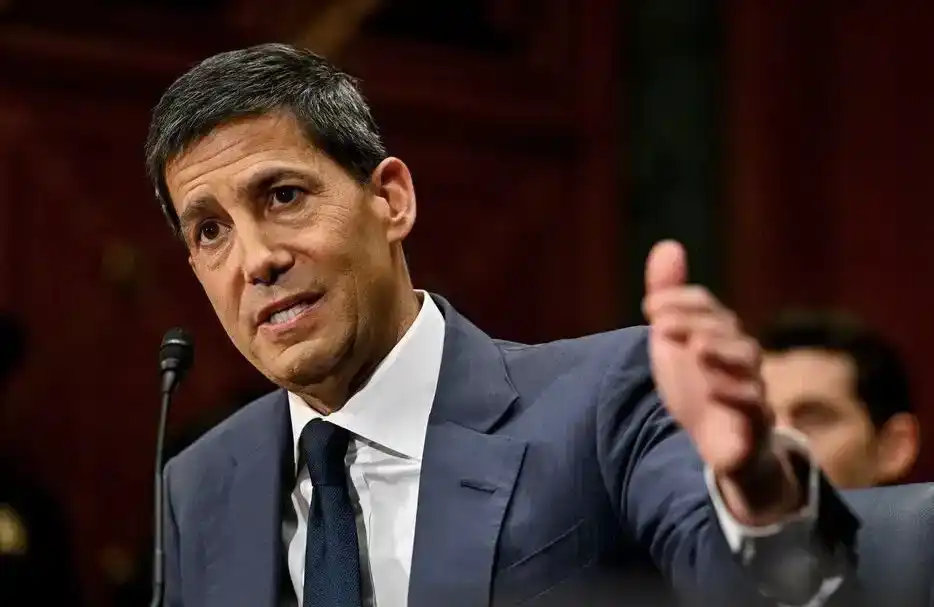
The U.S. Commodity Futures Trading Commission (CFTC) has formed a 35-member Innovation Advisory Committee, including prominent crypto industry leaders such as Coinbase CEO Brian Armstrong and Ripple CEO Brad Garlinghouse. The committee aims to provide the CFTC with up-to-date industry perspectives on derivatives, market structure, and token classification. CFTC Chair Mike Selig stated that the group will help align the agency’s decisions with real market conditions and support the development of clear regulatory guidelines. The committee comprises a diverse mix of crypto executives, DeFi founders, and traditional finance representatives. While the move is seen as a way to improve policy feedback and create workable regulations, some observers caution about potential conflicts of interest. The committee will soon begin meetings focusing on custody, tokenization, derivatives oversight, and market data.

The Commodity Futures Trading Commission (CFTC) moved this week to build a new bridge with the crypto industry, naming a 35-member Innovation Advisory Committee that includes top exchange and blockchain leaders.

Reports say the roster gives industry executives a formal line into policy talks, and it lists a mix of crypto founders, exchange bosses and traditional market players.

CFTC Execs Granted A Seat At The Table

Among those tapped are Coinbase chief executive Brian Armstrong and Ripple chief executive Brad Garlinghouse, whose firms have been central to recent debates over how digital assets should be regulated in the US.

The committee’s purpose is to give the regulator up-to-date industry perspective as it considers rules for derivatives, market structure, token classification and other technical issues.

CFTC Chair Mike Selig said Thursday that the committee’s 35 members will help “align the CFTC’s decisions with real market conditions” and allow the commission to “establish clear guidelines for what he called the Golden Age of American Financial Markets.”

What The Roster Looks Like

The membership list reads like a cross-section of the market: centralized exchanges, DeFi founders, trading-venue operators and a handful of established financial firms.

Some reporting highlights that around 20 members have direct ties to crypto firms, while others represent legacy market infrastructure, which creates a mix of viewpoints the commission can tap when drafting guidance or vetting ideas.

Why Industry Leaders Joined

Reports note executives accepted the roles for different reasons. For some, it is an opportunity to press for clearer rules. For others, it may be a way to protect business models as regulators decide which activities fall under commodity rules and which fall under securities laws.

The move follows a period of public lobbying and high-profile disputes over jurisdiction that have left firms searching for predictability.

BTCUSD trading at $66,906 on the 24-hour chart: TradingView

Voices And Risks

Giving industry a formal advisory channel can shorten feedback loops. But it also raises questions about how the regulator will manage conflicts and preserve impartiality.

Some observers say close engagement may help craft workable policy that recognizes market realities.

Others warn that heavy industry presence could shape rules in ways that favor incumbents over smaller innovators or the public interest.

Reports say the commission will have to balance open input with careful governance.

What Comes Next

The committee will begin meeting in the coming weeks, and the public will be watching for the topics it raises and the recommendations it produces.

Meetings are likely to focus on custody rules, how tokenized assets are classified, oversight of derivatives, and the handling of market data.

Whether those talks lead to concrete rule proposals will show if this new advisory setup truly shifts how digital asset policy is shaped in the US.

Featured image from V-graphix | Istock | Getty Images, chart from TradingView

Preguntas relacionadas

QWhat is the purpose of the CFTC's newly formed Innovation Advisory Committee?

AThe committee's purpose is to give the CFTC up-to-date industry perspective as it considers rules for derivatives, market structure, token classification, and other technical issues, helping to align the regulator's decisions with real market conditions.

QWhich two prominent crypto industry CEOs were named to the committee?

ACoinbase chief executive Brian Armstrong and Ripple chief executive Brad Garlinghouse were named to the committee.

QAccording to the article, what are some of the potential risks of giving the industry a formal advisory role?

AThe risks include potential conflicts of interest and questions about how the regulator will preserve impartiality, with concerns that heavy industry presence could shape rules in ways that favor incumbents over smaller innovators or the public interest.

QWhat are some of the topics the new committee is likely to focus on in its meetings?

AMeetings are likely to focus on custody rules, how tokenized assets are classified, oversight of derivatives, and the handling of market data.

QHow many members are on the new advisory committee, and what is the composition of its membership?

AThe committee has 35 members, which includes a mix of crypto founders, exchange bosses, and traditional market players. Reports highlight that around 20 members have direct ties to crypto firms, while others represent legacy market infrastructure.

Lecturas Relacionadas

Lowering Expectations for BTC's Next Bull Market

The author, Alex Xu, explains his decision to significantly reduce his Bitcoin holdings (from full to ~30% of his portfolio) during the current bull cycle, citing a lowered long-term outlook for BTC's price appreciation in the next cycle. He outlines six key reasons for this reduced expectation: 1. **Diminished Growth Drivers:** The narrative of exponential user adoption has largely played out with institutional ETF adoption. The next major growth phase—adoption by sovereign national reserves or central banks—seems unlikely in the near future. 2. **Personal Opportunity Cost:** More attractive investment opportunities have emerged in other assets, such as undervalued companies. 3. **Industry-Wide Contraction:** The broader crypto industry is struggling, with most Web3 business models (SocialFi, GameFi, DePIN) failing. This overall萧条 (depression) reduces the fundamental demand and consensus for Bitcoin. 4. **Strain on Major Buyer:** MicroStrategy, a major corporate buyer of BTC, faces rising financing expenses for its debt, which could slow its purchasing rate and create significant marginal pressure on the market. 5. **Increased Competition from Gold:** The emergence of "tokenized gold" has closed the functional gap (portability, divisibility) between physical gold and Bitcoin, offering a strong competitor in the non-sovereign store-of-value space. 6. **Security Budget Concerns:** The block reward halving continues to exacerbate the long-standing issue of funding Bitcoin's network security, with new fee source explorations like Ordinals and L2s largely failing. The author's decision to hold a significant (though reduced) position reflects a cautious, not bearish, outlook. He remains open to increasing his exposure if the fundamental reasons for his skepticism change or if new positive catalysts emerge.

marsbitHace 30 min(s)

Lowering Expectations for BTC's Next Bull Market

marsbitHace 30 min(s)

Can Iran 'Control' the Strait of Hormuz?

Iran has announced a comprehensive plan to assert control over the strategic Strait of Hormuz, a critical global oil shipping chokepoint. The proposed measures include requiring all vessels to obtain Iranian permission for passage, imposing fees for security, environmental protection, and navigation management—preferably paid in Iranian rials—and absolutely banning Israeli ships. Vessels from countries deemed hostile by Iran’s top security bodies may also be barred. Analysts suggest Iran’s motives are multifaceted: increasing pressure on the U.S. and Israel by leveraging control over oil transit to influence global prices and inflation; creating a new revenue stream, potentially exceeding $7.7 billion annually, to counter Western sanctions and support postwar reconstruction; and using transit permissions as bargaining chips in future negotiations, notably with the U.S. However, the plan faces significant practical and diplomatic challenges. Enforcing comprehensive interception and fee collection in the busy waterway, patrolled by international military forces, would be difficult. The U.S. has already countering with a blockade of Iranian ports and threats to intercept any ship paying fees, potentially strangling Iran’s oil exports and fee revenue. Broad international opposition, led by European and Gulf states, and legal controversies further complicate implementation. The proposal may ultimately serve more as a negotiating tactic than a feasible policy, with its execution remaining highly uncertain.

marsbitHace 1 hora(s)

Can Iran 'Control' the Strait of Hormuz?

marsbitHace 1 hora(s)

Trading

Spot
Futuros
活动图片