Celebrity Meme Coins Are Being Turned into VC-Type Assets Again

marsbitPublicado a 2026-06-30Actualizado a 2026-06-30

Resumen

The article discusses the recent surge of "celebrity meme coins" on Solana, exemplified by $ANSEM and the newly emerged $TJR. $ANSEM, associated with crypto influencer Ansem, saw massive gains, sparking a broader trend where developers create tokens tied to online personalities and airdrop large portions to them, hoping for promotional support. KOL TJR initially hesitated but later engaged, causing his namesake token $TJR to skyrocket. The analysis identifies key drivers: a prolonged meme coin slump creating pent-up demand and fear of missing out (FOMO), and the "VC-ification" of meme coins. Here, influencers, holding large token shares, act like traditional venture capitalists—providing visibility and perceived legitimacy. Their involvement is now seen as a bullish signal rather than a red flag, offering a high-risk, high-reward opportunity for early entrants. While this model has attracted seasoned traders back to the market, the article cautions that the sustainability of this trend heavily depends on flagship tokens like $ANSEM maintaining momentum. The cycle risks being short-lived if leading coins fail to reach new highs.

Yesterday, we introduced the hottest new Solana meme coin, $ANSEM, asking '24-Hour 600x Surge, How Long Can This Solana Meme Last?'

Then, this morning, another token surged over 20x, further heating up the meme frenzy on Solana. Let's first look at the new hot targets, then analyze the reasons behind this sudden market surge.

The 'Celebrity Coin' Spawned a Strong Second

TJR (@_TJRTrades) is also a well-known KOL. His regular content focuses on trading analysis, so on-chain meme players might not be very familiar with him. He has only 250k followers on X, but boasts over 1.5 million followers each on Instagram, TikTok, and YouTube.

Starting yesterday, TJR posted several tweets, publicly stating he would help Ansem create content for TikTok, expanding his influence beyond X to bring in more new users unfamiliar with cryptocurrency. He also purchased $100k worth of $ANSEM and continued to promote it.
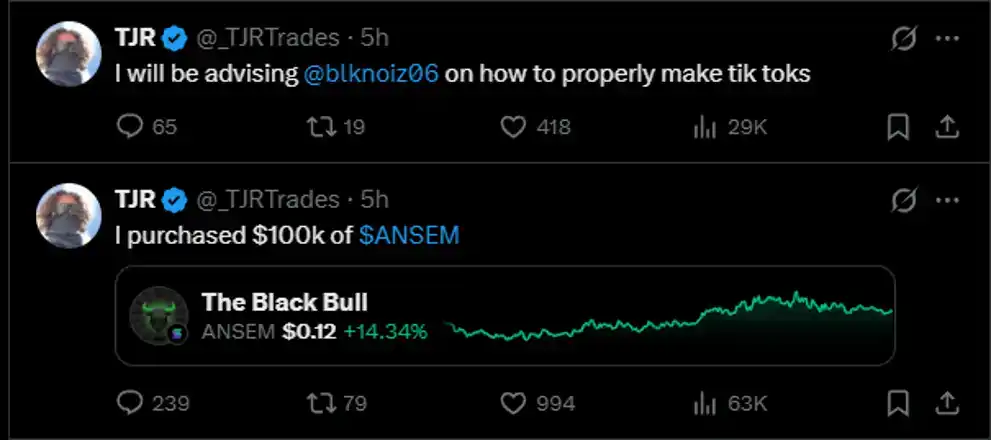
Originally, he indicated he would not participate in the typical behaviors of 'leaving a wallet address,' 'devs sending tokens,' or copying the $ANSEM success path:
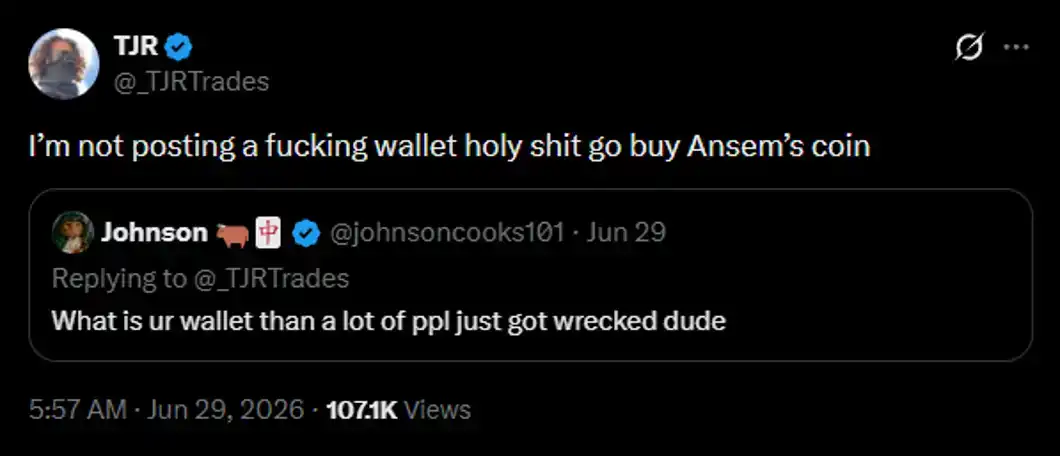
However, things changed at 6 AM this morning. He posted 'Should I hop in?', signaling a shift in stance:

A few hours later, he replied to a tweet asking if he would airdrop his held $TJR with, 'Ofc.' This was seen by the market as a signal of endorsement. $TJR began to be FOMOed, surging from a market cap of around $1.6 million to a peak of $28 million. Just yesterday, $TJR had a market cap of only $400k at one point.
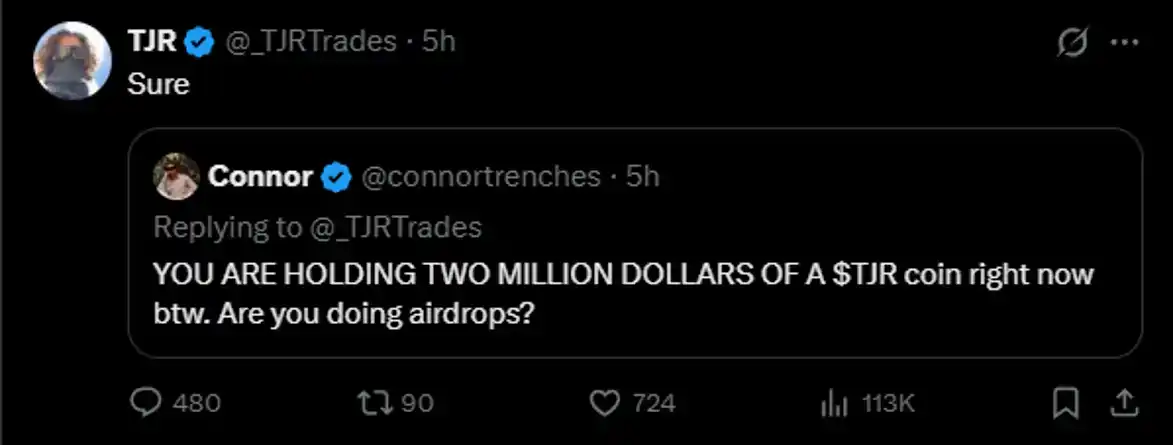
Furthermore, the dev who deployed $TJR is also the dev behind $ANSEM. This time, he sent 79% of the $TJR supply to TJR's address.

According to GMGN monitoring, since creating this token 13 days ago, this dev initially sold for a net profit of $5,500, then, over the past 7 days, began batch-minting tokens, frequently replicating various 'celebrity coins' and building his own positions while being highly active on X social media, frequently interacting to generate hype.

Within these 7 days, this address has created as many as 101 different meme coins (mostly various celebrity coins with some fan base). Among them, 12 reached highs exceeding a million-dollar market cap, and 3 broke through the ten-million-dollar mark.

As of now, the deployer's paper profit over the past seven days has reached 82,000 SOL, approximately $6.08 million. Just the deployer fees from several of these high-market-cap meme coins alone contributed $193k, with a 30-day profit of $8.77 million.

Beyond pure 'celebrity coins' like $TJR with KOLs personally promoting them, some variants have also performed well.

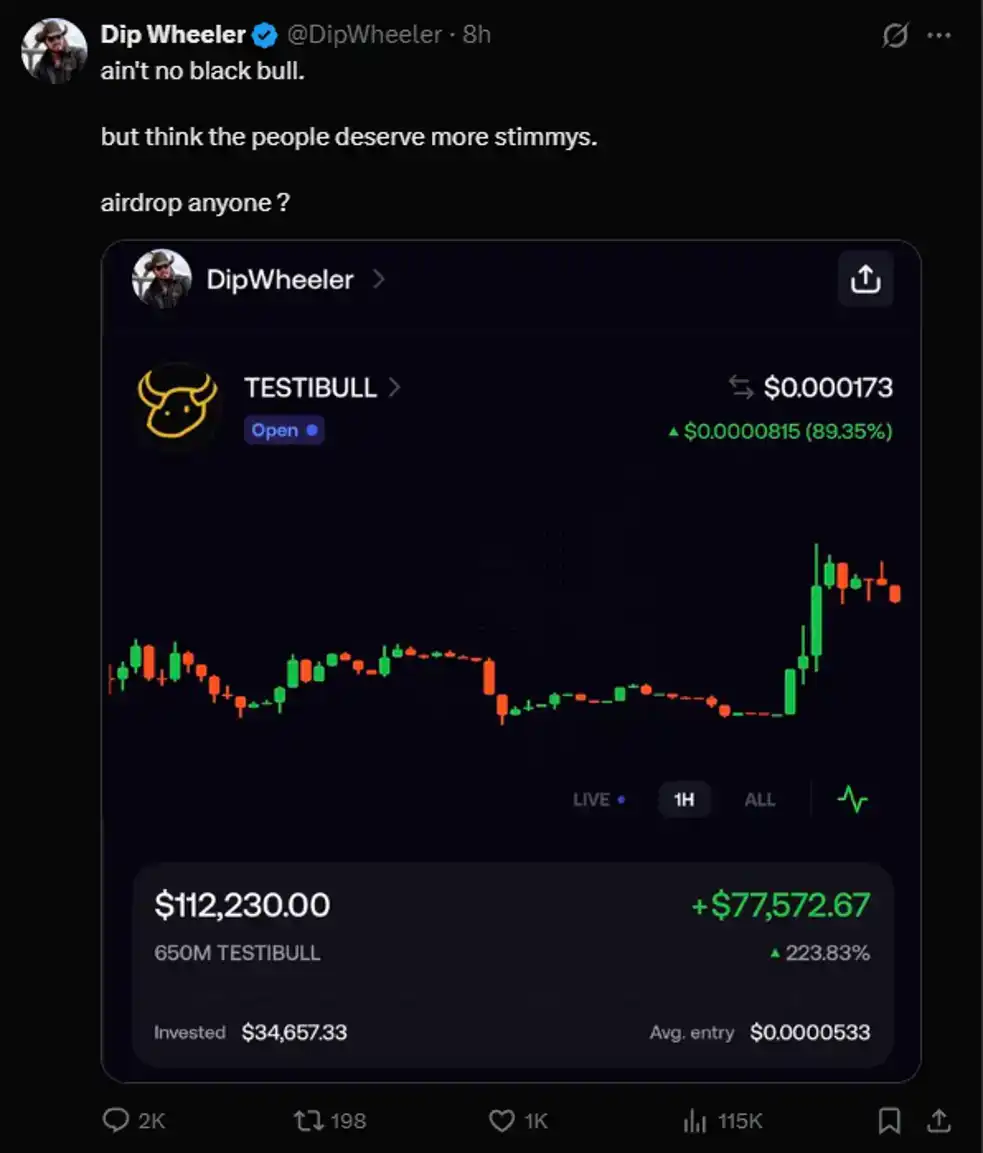
$TESTIBULL, a variant derived from the testicle-themed meme $TESTICLE, imitating the $ANSEM 'The Black Bull' theme. $TESTICLE was previously promoted mainly by KOL Dip Wheeler(@DipWheeler), known for achieving substantial gains on Fartcoin. He announced plans to airdrop $TESTIBULL, causing the coin's market cap to skyrocket from a low of $40k yesterday to nearly $5 million at its peak today.
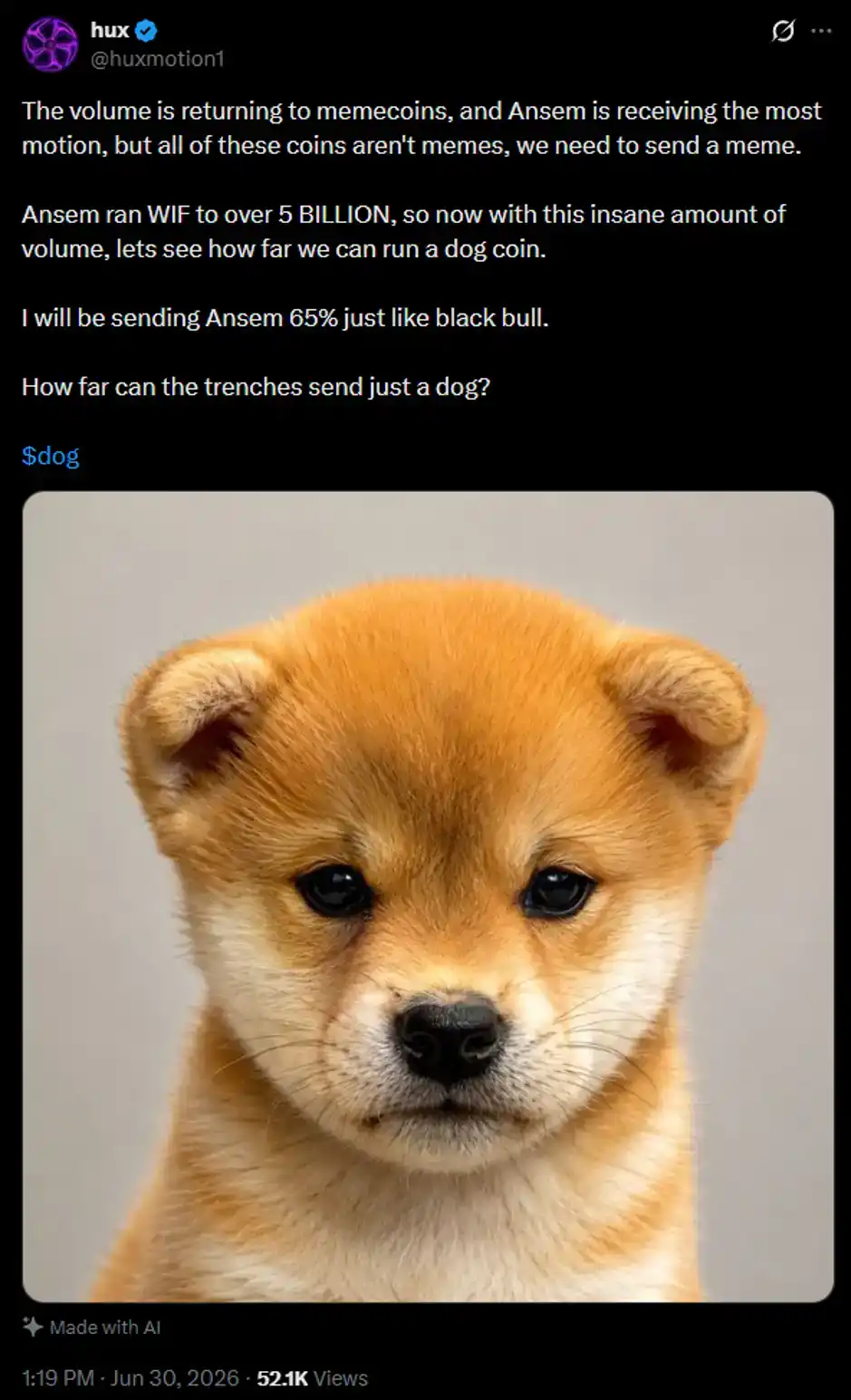
$dog, originally intended to reference Ansem's past success in pushing $WIF to tens of billions in market cap. With the market recovering, sending tokens to Ansem could supposedly create a new dog coin like $WIF.
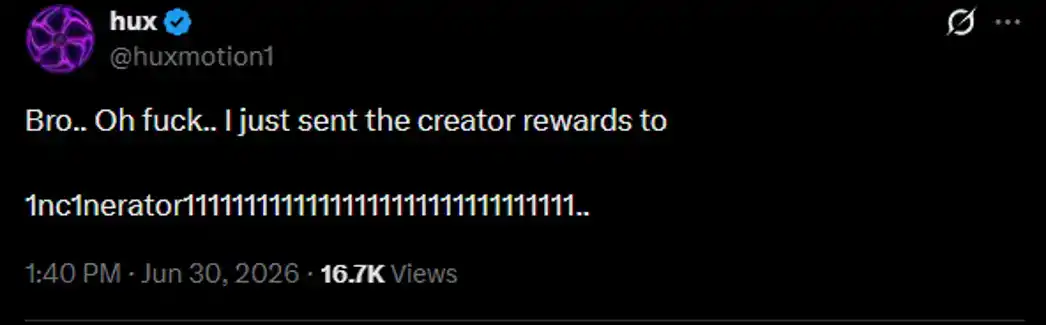
However, the dev made a mistake and sent the tokens to a burn address instead. This twist added a dramatic effect reminiscent of the $SLERF incident, combining the 'celebrity coin' airdrop play with unexpected drama, driving the coin's market cap to exceed $8 million at one point.
Market Analysis

This intraday surge arrived abruptly. While $ANSEM didn't experience a significant drop today, it also didn't continue its upward momentum from the previous two days.

'Celebrity coins' are not a novel concept. Some players who dislike this approach even viewed the rise of $TJR as a potential peak signal for this rally, calling it the 'MELANIA moment.'

While 'celebrity coin' frenzies appear repeatedly, it's not accurate to dismiss them all as the 'same old story.' Each occurrence, at different times and under different circumstances, has specific reasons for analysis. This time:

- On-chain players have been starved for too long. The meme market has been sluggish for a while; Solana hasn't seen a new meme coin break the $100 million market cap mark in a long time (though a large portion of $ANSEM is still controlled by Ansem).

- Severe FOMO from missing out, creating a tinderbox. Due to the prolonged market slump, most players didn't anticipate $ANSEM reaching a market cap exceeding $100 million. Many sold early or completely missed out. This FOMO sentiment transferred to $TJR.

- The VC-ization of Meme coins. On-chain players have persisted diligently, but reality shows it's become quite difficult for meme coins to reach even a ten-million-dollar market cap, with exchanges largely closing listing channels for new meme coins and market makers not providing significant pumps. For players, the 'fairness' of a meme coin is no longer about who holds more or less, but about 'whether I have a chance to get in at a low market cap for high-risk, high-reward odds.' In this context, even if a large portion is controlled by KOLs like Ansem or TJR, people might feel reassured by the celebrity endorsement or think 'they have to pump it to a certain level to exit.'

The VC-ization of meme coins was already evident when Trump launched his token. As long as there's a narrative and potential profits, few complain about large token concentrations; instead, they see a small float and high upside potential. Influencers are effectively playing the role VCs did in the VC coin era—traffic, recognition, and consensus become liquidity.

Based on current observations, this 'celebrity coin' rally has attracted the return of many previously active 'first-level' meme coin hunters. Encouraged by the success of $ANSEM and $TJR, they've begun accumulating tokens associated with potential figures who might step forward to endorse them, such as crypto KOLs like bonkguy, him, etc. However, whether the rally sustains depends on whether $ANSEM can set new highs; otherwise, the hype could dissipate quickly.


Criptos en tendencia

Preguntas relacionadas

QWhat is the main argument about the trend of 'celebrity meme coins' discussed in the article?

AThe article argues that the recent trend of 'celebrity meme coins' on Solana, exemplified by $ANSEM and $TJR, represents a 'VC-ization' of meme coins. This means influence and consensus from KOLs have replaced traditional venture capital, as investors now see large token holdings by these celebrities as a sign of potential for high returns rather than unfair distribution.

QAccording to the article, what is one reason for the recent surge in popularity of celebrity-themed meme coins like $TJR?

AOne reason is the severe FOMO (Fear Of Missing Out) sentiment among traders. The market had been sluggish for a long time, and many missed out on the massive gains of $ANSEM. When KOL TJR signaled he might endorse a token named after him, this pent-up FOMO led to rapid price speculation on $TJR.

QWhat role did the developer (dev) behind $TJR and $ANSEM play in this trend, according to the on-chain data cited?

AThe dev behind these coins played a highly active and profitable role in driving the trend. They deployed 101 different meme coins in seven days, many targeting celebrities/KOLs. They used strategies like airdropping a large portion of tokens to the KOLs' addresses and actively promoted these coins on social media, netting millions of dollars in profit.

QWhat is the 'MELANIA moment' reference in the article, and how does it relate to the $TJR price action?

AThe 'MELANIA moment' is a reference to a past meme coin event seen as a market peak/sign of euphoria and impending downturn. Some traders viewed the explosive rise of $TJR, a classic 'celebrity coin' after the initial success of $ANSEM, as a similar signal that the current meme coin frenzy might be nearing its top.

QBesides pure 'celebrity coins' like $TJR, what other variations of this trend performed well, according to the article?

ATwo other variations performed well: 1) $TESTIBULL, a derivative of an existing meme ($TESTICLE) that gained traction after a different KOL, Dip Wheeler, promised an airdrop. 2) $dog, a coin created with the intent to airdrop to Ansem but accidentally sent to a burn address, which created a dramatic narrative similar to the $SLERF incident, driving its value up.

Lecturas Relacionadas

IPO Imminent, OpenAI Faces Major Personnel Upheaval

OpenAI, preparing for a potential IPO, is experiencing significant leadership turmoil. In mid-August 2026, longtime "GPU geek" Scott Gray quietly left, and within three days, Chief Operating Officer Brad Lightcap (8-year veteran) and Chief Revenue Officer Denise Dresser (8-month tenure) departed. This follows a broader exodus of at least 10 senior executives in 2026, including heads of product, safety, and ethics. Analysts view this as a strategic "surgery" to transform from a research lab into a sales-driven enterprise company before going public. Revenue now tilts toward enterprise clients, surpassing consumer income sooner than expected, with annualized revenue reaching $40 billion. The new CRO, Dali Rajic, is a veteran enterprise sales leader. Concurrently, OpenAI has disbanded independent safety teams like "Preparedness," which assessed catastrophic risks, integrating their functions into core research. Critics warn this removes dedicated "brakes" on AI development. The leadership vacuum raises questions about who is the clear second-in-command after former apps CEO Fidji Simo moved to an advisory role. Co-founder Greg Brockman appears to be consolidating power. As OpenAI races against rival Anthropic ($47B annualized revenue), it faces the dual challenge of commercial execution while managing the departure of foundational technical talent and ensuring responsible AI development remains a priority.

marsbitHace 8 min(s)

IPO Imminent, OpenAI Faces Major Personnel Upheaval

marsbitHace 8 min(s)

AI Can 'Have Moods Too'! New Research from USTC: Confusion and Anxiety Make AI Work Better

The article discusses research from the University of Science and Technology of China and Oxford, revealing that allowing AI to recognize and act upon simulated "internal emotions" can significantly improve its performance. The study demonstrates a coherent pairing between specific emotional states in AI agents and their subsequent skill choices. For instance, an agent feeling curious and desirous will search for products, while one feeling confused and tense will rephrase queries. This mirrors human decision-making influenced by emotions. Statistical validation showed a 76.5% semantic consistency in these pairings. Crucially, the research challenges the traditional view of AI errors as flaws to be eliminated. It found that "bad" emotions like confusion, tension, or frustration serve as useful metacognitive signals, indicating a mismatch between the current strategy and the environment. By responding to these signals, AI can proactively adjust before a failure occurs. This is particularly effective in complex tasks prone to failure. For example, in tasks like "heating an item" and "picking up two items," success rates surged from 9.6% to 56.9% and 4.4% to 31.3%, respectively, when using the emotion-driven skill selection method (EMOTION2SKILL). The AI's "nervous" state about a closed microwave, for instance, prompted it to check and open it first, preventing failure. The article also mentions related work from Tianjin University, which embeds emotional prediction into world models (Large Emotional World Model, LEWM), significantly improving prediction accuracy in human-centric environments. Removing emotional data was found to degrade performance even in unrelated logical reasoning tasks. These studies build on earlier findings, like those from Anthropic, that identifiable emotional representations exist within large language models (LLMs). The focus is shifting from philosophical debate about AI emotion to practically harnessing these internal states as functional signals to enhance AI robustness and capability.

marsbitHace 44 min(s)

AI Can 'Have Moods Too'! New Research from USTC: Confusion and Anxiety Make AI Work Better

marsbitHace 44 min(s)

Trading

Spot

Artículos destacados

Qué es MEME 2.0

Memecoin 2.0: El Ascenso de $MEME 2.0 en el Mundo de las Criptomonedas Introducción En el panorama siempre cambiante de las criptomonedas, ha surgido un nuevo contendiente. Memecoin 2.0, simbolizada como $MEME 2.0, lleva el concepto de las monedas meme a un emocionante nuevo nivel. Como un subproducto del Memecoin original, este proyecto ha capturado la atención de la comunidad cripto al cambiar el enfoque de los incentivos financieros típicos a una experiencia comprometida y entretenida. Operando en la blockchain de Ethereum, Memecoin 2.0 redefine audazmente la participación de la comunidad en la esfera cripto. ¿Qué es Memecoin 2.0, $MEME 2.0? En su núcleo, Memecoin 2.0 es un proyecto de criptomoneda que prioriza el espíritu comunitario y la diversión asociada con la cultura meme. A diferencia de las criptomonedas convencionales, que se concentran en casos de uso prácticos y beneficios tangibles, Memecoin 2.0 se distingue al abrazar el lado más liviano de la moneda digital. El proyecto existe sin promesas de utilidad, un mapa estructurado o retornos financieros, enfocándose en cambio en fomentar una comunidad vibrante centrada en memes y en el disfrute compartido. Al hacerlo, aprovecha la creciente tendencia de la cultura meme en el espacio en línea, convirtiéndose en un jugador único en el mundo de los activos digitales. Creador de Memecoin 2.0, $MEME 2.0 A pesar de la extensa investigación sobre los orígenes de Memecoin 2.0, la identidad explícita de su creador sigue siendo desconocida. Esta anonimidad no es inusual en la comunidad cripto, donde muchos proyectos son liderados por individuos o grupos que prefieren permanecer en las sombras. La falta de información disponible públicamente sobre el creador podría verse como un movimiento estratégico, poniendo el foco en la participación comunitaria en lugar de la notoriedad individual dentro del espacio. Inversores de Memecoin 2.0, $MEME 2.0 La información sobre los inversores o el respaldo financiero de Memecoin 2.0 es escasa. Esta ausencia de detalles puede sugerir que el proyecto es autofinanciado o que su enfoque en la comunidad en lugar de las estructuras de inversión tradicionales ha atraído a un tipo diferente de apoyo. Dado que el mundo de las monedas meme generalmente involucra una participación más de base en lugar de inversión institucional, este enfoque está alineado con la ética de los proyectos impulsados por la comunidad. ¿Cómo Funciona Memecoin 2.0, $MEME 2.0? Memecoin 2.0 opera completamente en la blockchain de Ethereum, capitalizando sus robustas características de seguridad y escalabilidad. Al aprovechar las fortalezas de Ethereum, Memecoin 2.0 puede ofrecer un entorno seguro para las interacciones de los usuarios, asegurando que las transacciones sean tanto eficientes como rentables. Uno de los atributos únicos de Memecoin 2.0 radica en su estructura impulsada por la comunidad. El valor y la popularidad del token $MEME 2.0 derivan de la participación activa de sus usuarios, en vez de de una utilidad inherente. Este diseño refuerza el enfoque del proyecto en el aspecto de entretenimiento de las criptomonedas, lo que implica que la risa y la participación comunitaria son las verdaderas monedas que impulsan su éxito. Además, el proyecto encaja dentro del ecosistema más amplio de las monedas meme, donde el valor de cada moneda meme oscila basado en la cultura, tendencias y la participación de la comunidad, en lugar de principios económicos tradicionales. Cronología de Memecoin 2.0, $MEME 2.0 Para entender mejor la evolución y los hitos de Memecoin 2.0, aquí hay una cronología que destaca eventos significativos en su historia: 2024: Se reconoce la creación de Memecoin 2.0 como una ramificación del Memecoin original, estableciéndose dentro del contexto próspero de las monedas meme mientras opera en la blockchain de Ethereum. 13 de julio de 2024: Memecoin 2.0 se posiciona oficialmente como una moneda meme centrada en la comunidad en la red de Ethereum, enfatizando su enfoque centrado en el entretenimiento que invita a los usuarios a participar y crecer. Puntos Clave Sobre Memecoin 2.0, $MEME 2.0 Varios rasgos críticos definen a Memecoin 2.0: Enfoque Centrado en la Comunidad: La misión principal de Memecoin 2.0 es crear una experiencia comunitaria divertida y atractiva, capitalizando en el disfrute colectivo derivado de la cultura memética. Construido sobre Ethereum: Operar en la blockchain de Ethereum proporciona al proyecto una infraestructura esencial que garantiza seguridad y escalabilidad. Falta de Utilidad o Hoja de Ruta: En un notable desvío de las criptomonedas tradicionales, Memecoin 2.0 no promete características utilitarias ni retornos financieros, reafirmando su compromiso con la participación comunitaria y el compromiso social. Enfoque en la Cultura Memética: Al abrazar los aspectos humorísticos y culturales del fenómeno meme, Memecoin 2.0 proporciona una plataforma para que los usuarios interactúen con cripto tanto fuera de línea como en línea. Contexto Adicional: La Importancia de las Monedas Meme Las monedas meme han surgido como una clase distinta de criptomonedas, a menudo impulsadas por el humor y un enfoque desenfadado para el comercio. Estas monedas generalmente carecen de una utilidad significativa o hojas de ruta de desarrollo, atrayendo a los usuarios con la promesa de diversión, interacción comunitaria y relevancia cultural. En el panorama del ecosistema cripto más amplio, las monedas meme reviven la importancia de la participación comunitaria, revirtiendo enfoques únicamente motivados por el lucro. Proyectos como Memecoin 2.0 inauguran una era donde el entretenimiento puede armonizar con las aspiraciones financieras, convirtiendo la blockchain en un parque de diversiones para la creatividad y la interacción social. Conclusión Memecoin 2.0, o $MEME 2.0, encarna una nueva ola de criptomonedas que prioriza la participación comunitaria sobre estructuras financieras rígidas. Con un enfoque en el humor y la interacción social, capitaliza sobre la fascinación que rodea la cultura meme. Al operar en la blockchain de Ethereum, Memecoin 2.0 aprovecha las capacidades de la tecnología mientras se mantiene firme en su compromiso con el valor de entretenimiento de la moneda digital. A medida que el espacio alrededor de las criptomonedas continúa evolucionando, Memecoin 2.0 sirve como un testimonio de la noción de que el futuro de los activos digitales podría depender, en gran medida, de experiencias compartidas, risas y sólidas conexiones comunitarias. En el mundo impredecible de las criptomonedas, quizás la alegría pueda ser tan valiosa como la ganancia financiera tradicional.

206 Vistas totalesPublicado en 2024.04.04Actualizado en 2024.12.03

Qué es MEME 2.0

Cómo comprar MEME

¡Bienvenido a HTX.com! Hemos hecho que comprar Memeland (MEME) sea simple y conveniente. Sigue nuestra guía paso a paso para iniciar tu viaje de criptos.Paso 1: crea tu cuenta HTXUtiliza tu correo electrónico o número de teléfono para registrarte y obtener una cuenta gratuita en HTX. Experimenta un proceso de registro sin complicaciones y desbloquea todas las funciones.Obtener mi cuentaPaso 2: ve a Comprar cripto y elige tu método de pagoTarjeta de crédito/débito: usa tu Visa o Mastercard para comprar Memeland (MEME) al instante.Saldo: utiliza fondos del saldo de tu cuenta HTX para tradear sin problemas.Terceros: hemos agregado métodos de pago populares como Google Pay y Apple Pay para mejorar la comodidad.P2P: tradear directamente con otros usuarios en HTX.Over-the-Counter (OTC): ofrecemos servicios personalizados y tipos de cambio competitivos para los traders.Paso 3: guarda tu Memeland (MEME)Después de comprar tu Memeland (MEME), guárdalo en tu cuenta HTX. Alternativamente, puedes enviarlo a otro lugar mediante transferencia blockchain o utilizarlo para tradear otras criptomonedas.Paso 4: tradear Memeland (MEME)Tradear fácilmente con Memeland (MEME) en HTX's mercado spot. Simplemente accede a tu cuenta, selecciona tu par de trading, ejecuta tus trades y monitorea en tiempo real. Ofrecemos una experiencia fácil de usar tanto para principiantes como para traders experimentados.

331 Vistas totalesPublicado en 2024.12.12Actualizado en 2026.06.02

Cómo comprar MEME

Discusiones

Bienvenido a la comunidad de HTX. Aquí puedes mantenerte informado sobre los últimos desarrollos de la plataforma y acceder a análisis profesionales del mercado. A continuación se presentan las opiniones de los usuarios sobre el precio de MEME (MEME).

活动图片