Cardano Isn’t ‘Fading,’ Hoskinson Says: ‘I’ve Lost Over $3B’ And Still Building

bitcoinistPublicado a 2026-02-06Actualizado a 2026-02-06

Resumen

Charles Hoskinson, during a livestream from Tokyo, refuted claims that Cardano is "fading" or "dead," emphasizing that the project is transitioning into a phase of commercialization after years of infrastructure development. Despite the bear market, he highlighted that key building blocks like decentralization and governance are complete, and efforts are now focused on developing real-world use cases such as Hydra for scaling and the privacy-focused sidechain Midnight. Hoskinson argued that global economic shifts and institutional mistrust make blockchain-based systems essential for a neutral global settlement layer. Addressing critics who attribute his optimism to wealth, he revealed he has lost over $3 billion but remains committed to Cardano, stating he is "here for life" regardless of financial outcomes. At the time of reporting, ADA was trading at $0.2521.

Charles Hoskinson used a Feb. 6 livestream from Tokyo to push back on a familiar narrative he says he’s hearing on the ground in Japan: that Cardano is “fading” or “dead,” and that the bear market has drained the ecosystem’s momentum.

Speaking midway through a multi-city tour tied to Cardano’s third cohort of ambassadors, Hoskinson said long-time community members and newcomers alike have been approaching him with relief that the project is still active. He framed the trip as a signal that Cardano, after years of protocol work, is shifting into what he called a commercialization phase, building products that feel less like infrastructure demos and more like mainstream use cases.

Hoskinson Rallies Cardano Through The Downturn

“We’ve been on tour all throughout Japan,” Hoskinson said, describing meetings with “a lot of investors, a lot of developers,” including people who have followed Cardano “for more than 10 years.” The message he said he’s delivering is that major building blocks are in place: “The infrastructure is strong. We’re fully decentralized. Governance has been done. So now it’s the time to go build some fun, exciting, real use cases and get them into the ecosystem.”

Hoskinson name-checked Hydra, Cardano’s scaling effort, and pointed to projects he characterized as the “vanguard” of the next phase, including Midnight — the privacy-focused sidechain he has promoted as a cornerstone of Cardano’s broader roadmap. He also referenced “Starstream,” a WASM-based zero-knowledge virtual machine (zkVM) designed for the Cardano blockchain to enable private, scalable smart contracts.

The backdrop, he acknowledged, is a market environment that “is red, red, red,” with sentiment weak enough that some attendees told him they had assumed Cardano’s best days were behind it. Hoskinson’s response was less a price defense than a thesis about why crypto persists through cycles and why he believes the longer-term direction of global finance makes open networks unavoidable.

“Globalism has finally reached its peak, accelerated by AI and accelerated by demographic changes,” he said. “The human race is starting to think in terms of we instead of nation by nation... And the old guard and the old way of doing things is fading. And they’re kicking and screaming as they’re being dragged off the stage.”

He argued that a more integrated global economy ultimately needs a neutral settlement layer: an “economic franca,” in his words and that blockchain-based systems are the practical option. “The only way to run a world like this is through cryptocurrency. Full stop,” Hoskinson said. “Otherwise, you have to build an empire and no one’s strong enough to conquer the world right now... We need an economic franca. And you tell me how we’re going to do that without a blockchain.”

The livestream veered into broader institutional mistrust, with Hoskinson citing political instability, corruption, and high-profile scandals as evidence that “deep down inside, we all know this can’t last.” He cast crypto as a mechanism to constrain human behavior through “rules” and “regulating functions,” rather than relying on institutional goodwill.

But the most pointed moment came when he anticipated a common critique that his optimism is easy because he’s wealthy and responded with a personal financial claim and a commitment to keep building regardless of market outcomes:

“Every now and then you hear something like this, you say, ‘Yes, but it’s easy for you to say, Charles, you’re rich. You can ride it out.’ I’ve lost more money than anyone listening to this. Over $3 billion now. It would have been real easy to cash out. Just walk away. And do you think I honestly care if I lose it all? Do you think I’m doing this for money? You’re pretty mistaken if you do.”

Hoskinson also portrayed his distance from past industry blowups as a matter of personal discipline rather than luck. “There’s a reason I didn’t get rolled up in FTX,” he said, adding that his “default answer is no” when it comes to the kinds of deals that later become liabilities.

In closing, Hoskinson urged builders and community members to treat the drawdown as an endurance test rather than a verdict, tying Cardano’s ambassador programs, including a call to become a Midnight ambassador and engage via Intersect.

His core message was simple: the market may get “more red” but he isn’t leaving. “I’m here for life,” Hoskinson said. “As long as I’m alive, I’m just going to keep going.”

At press time, ADA traded at $0.2521.
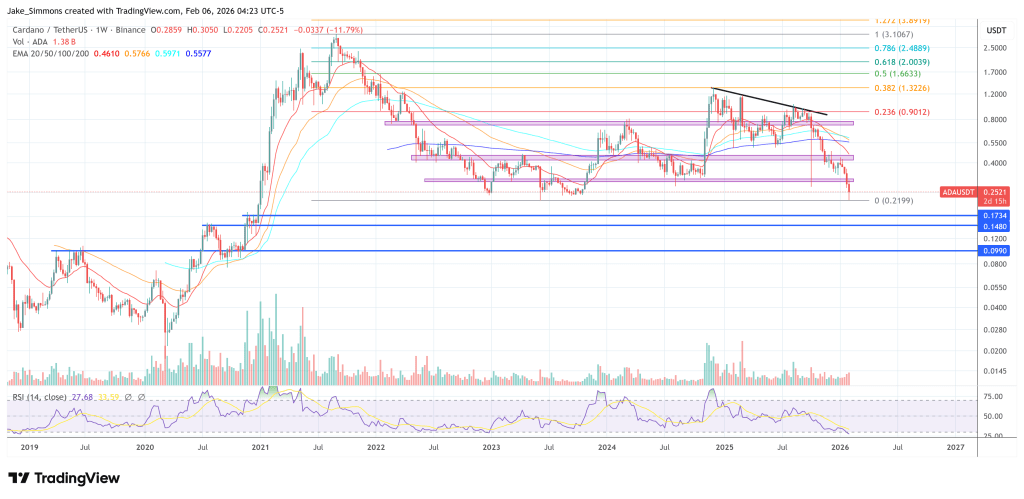
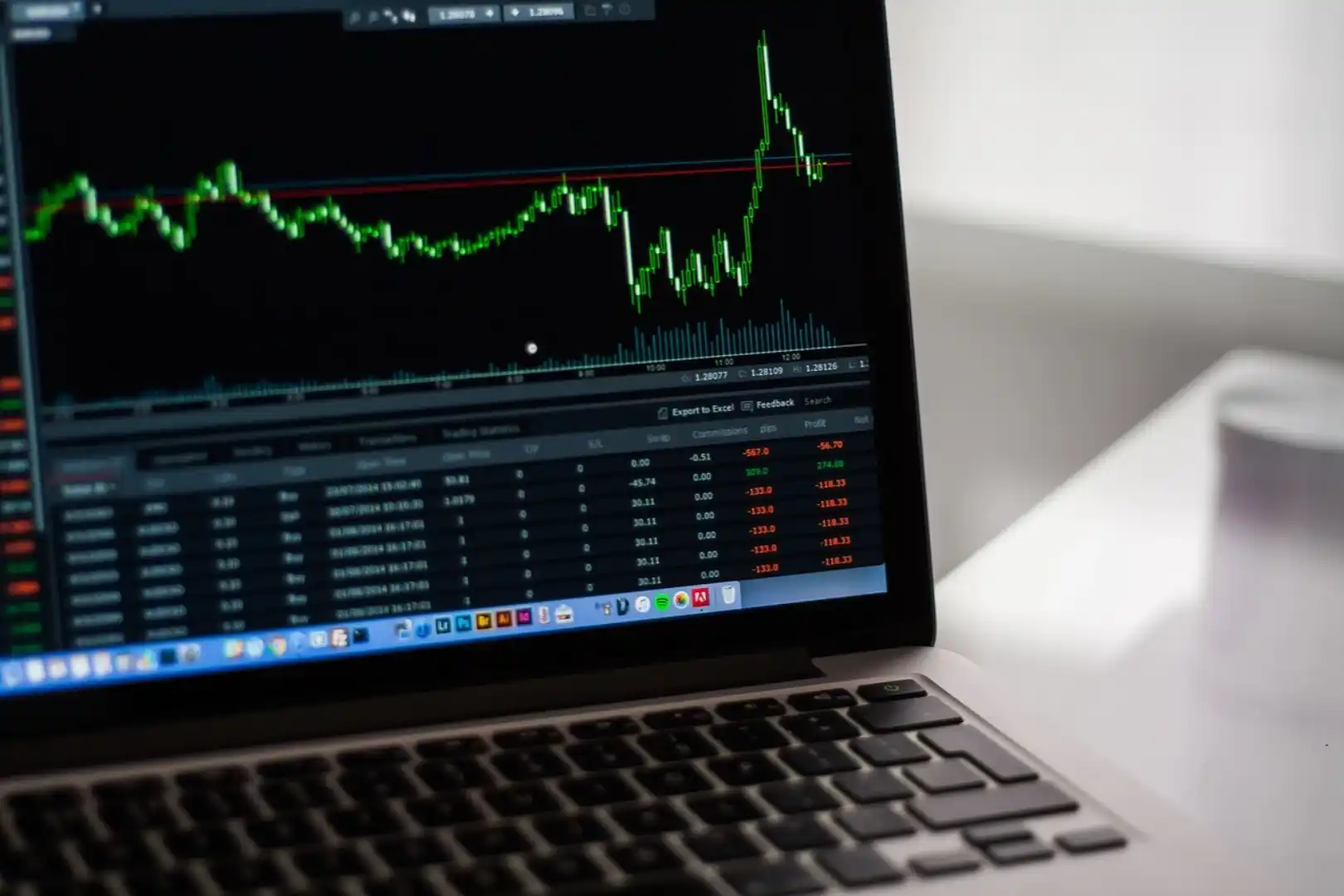
ADA fell to the June 2023 low again, 1-week chart | Source: ADAUSDT on TradingView.com

Preguntas relacionadas

QWhat is the main narrative that Charles Hoskinson is pushing back against during his livestream from Tokyo?

AHoskinson is pushing back against the narrative that Cardano is 'fading' or 'dead,' and that the bear market has drained the ecosystem's momentum.

QAccording to Hoskinson, what phase is Cardano now entering after years of protocol work?

AHoskinson stated that Cardano is shifting into a 'commercialization phase,' building products that feel more like mainstream use cases rather than infrastructure demos.

QWhat was Hoskinson's personal financial claim to counter the critique that his optimism is due to his wealth?

AHoskinson claimed that he has lost over $3 billion and stated that he is not doing this for money, emphasizing that he would continue building even if he lost it all.

QWhat did Hoskinson argue is the only practical way to run a more integrated global economy?

AHoskinson argued that the only way to run a more integrated global economy is through cryptocurrency, which he called an 'economic franca,' as a neutral settlement layer.

QWhat two specific Cardano projects did Hoskinson name-check as part of the 'vanguard' of its next phase?

AHoskinson name-checked Hydra, Cardano's scaling effort, and Midnight, a privacy-focused sidechain.

Lecturas Relacionadas

SpaceX, OpenAI, Anthropic: The Three AI Giants Racing for IPO, Which One Is Worth Betting On?

SpaceX, OpenAI, and Anthropic are poised for historic IPOs within weeks, potentially raising a combined $180 billion—a sum exceeding the entire internet bubble's fundraising. The hosts of the Limitless Podcast argue this isn't just individual company financing but an unprecedented capital concentration for AI infrastructure, driven by an insatiable need for compute, data centers, power, and chips. SpaceX's IPO is notable for reportedly changing market index rules to allow faster inclusion, potentially funneling trillions in passive retirement funds into its stock, despite its unproven space-based data center business model. In contrast, Anthropic demonstrates explosive growth, with ARR reportedly hitting $45 billion and approaching profitability, fueled by strong enterprise adoption of products like Claude Code. Google's separate $80 billion raise highlights the immense capital pressure, even for giants. The discussion acknowledges bubble risks but leans optimistic. The hosts contend the massive spending is building essential physical infrastructure for the next technological era. A key bottleneck isn't capital but the real-world limits of chip manufacturing and construction speed. As long as demand for AI compute outstrips supply, this investment cycle represents a foundational build-out rather than a purely financial bubble. All three companies are seen as foundational bets on the future, with Anthropic often cited as the most immediately compelling due to its proven revenue trajectory.

marsbitHace 1 hora(s)

SpaceX, OpenAI, Anthropic: The Three AI Giants Racing for IPO, Which One Is Worth Betting On?

marsbitHace 1 hora(s)

From 'Old Guys' to 'New Favorites': How AI Is Revaluing Old Infrastructure from Dell to Nokia?

From "Vintage Tech" to "New AI Darlings": How AI Revalues Old Infrastructure One year ago, tech giants like Dell, Nokia, Cisco, and Western Data were seen as slow-growth, low-valuation stories, far from the AI spotlight dominated by players like Nvidia. Now, these legacy tech stocks are gaining market attention, sparking debate on whether this is genuine industry revaluation or a temporary narrative. As AI moves from model parameters to real-world data centers, the market is recognizing companies with proven delivery and infrastructure capabilities. This shift marks a change in the AI investment thesis: from pure model and GPU focus to the complex systems engineering required for deployment. Companies like Dell, HPE, and Corning are being revalued not for being "sexy" AI innovators, but for their decades of accumulated expertise in supply chains, enterprise delivery, and infrastructure—assets that have become critical in the AI buildout phase. The revaluation is unfolding across three key infrastructure lines: 1. **Servers & System Integration:** Dell and HPE are emerging as crucial system integrators or "general contractors" for AI data centers, translating GPU orders into complete, deployable server racks integrated with power, cooling, and networking. 2. **Networking & Connectivity:** AI's scale demands robust high-speed connections. Corning (fiber optics), Nokia (AI-RAN, 6G), and Cisco (data center switches) are gaining importance for enabling efficient data transfer within and between AI clusters. 3. **Storage:** Beyond high-speed memory (HBM/DRAM), the AI data explosion is driving demand for high-capacity hard drives (HDDs) from companies like Western Digital and Seagate to handle training data, logs, and cold storage cost-effectively. For this revaluation to be substantive and not just a narrative, three criteria are key: 1) Concrete AI-related order and revenue growth (e.g., Dell's AI server sales), 2) Upward revisions to company financial guidance, and 3) Sustainable improvements in profit quality, not just top-line revenue spikes. In essence, AI's transition to a real construction phase is re-pricing "old assets" against "new demand." The opportunity, however, is selective. Only those legacy firms that are demonstrably integrated into the capital expenditure chains of data center and enterprise AI deployment are likely to experience a true "logic re-rating" rather than just a temporary valuation bounce.

marsbitHace 1 hora(s)

From 'Old Guys' to 'New Favorites': How AI Is Revaluing Old Infrastructure from Dell to Nokia?

marsbitHace 1 hora(s)

The Merger of Codex and ChatGPT Marks the Beginning of a Major Reshuffle in Programming Tools

OpenAI is shifting its strategic focus from ChatGPT to Codex, merging them along with the browser tool Atlas into a unified desktop super-app. This move signals an internal belief that Codex, originally a programming tool, represents the next evolution of AI more than conversational models like ChatGPT. Over the past year, Codex's weekly active users have surged past 5 million. The key distinction is that while ChatGPT answers questions, Codex executes tasks. Enterprises increasingly value this ability to get work done over simply receiving advice. Consequently, Codex is attracting professionals beyond developers, including analysts, bankers, marketers, and product managers. OpenAI's reorganization and increased investment in Codex stem from recognizing that the future of AI competition lies in execution capabilities, not just conversation. The company is launching role-specific plugins (e.g., for data analysis, sales, design) to transform Codex into a broad knowledge work platform that automates and redefines white-collar workflows. Beyond being a tool, Codex reflects OpenAI's ambition to redefine software. New features like "Sites"—which generates interactive websites from documents—and collaborative "Annotations" aim to create a paradigm where the AI understands the goal and handles the tools and steps, functioning more like a digital colleague than traditional software. The ultimate goal is a unified experience where the user cares only about the completed task.

marsbitHace 1 hora(s)

The Merger of Codex and ChatGPT Marks the Beginning of a Major Reshuffle in Programming Tools

marsbitHace 1 hora(s)

Interpreting Investment Opportunities in the Age of Great Navigation, Invesco Great Wall Fund Releases '2026 Report on Chinese Enterprises Going Global'

Invesco Great Wall Fund has released its "2026 China Corporate Globalization Report," titled "The 'Great Navigation Era' of Chinese Enterprises." The report analyzes the new trends and investment opportunities as Chinese companies expand globally, moving from simple product exports to comprehensive overseas operations involving services, branding, and local production. Driven by factors like trade friction, the pursuit of higher profit margins abroad, and policy support, globalization is becoming essential for Chinese companies. The report outlines an evolution: from early product export ("Globalization 1.0") to the current "Globalization 2.0," characterized by overseas capacity, capital goods investment, consumer brand expansion, and service exports. Chinese firms' competitive advantages are highlighted, including a vast engineer talent pool, low-cost and robust infrastructure, and complete industrial clusters. Specific sectors with significant出海 potential are identified: * **Capital Goods** (e.g., engineering machinery, power equipment): Benefiting from global demand, especially in Belt & Road markets and the AI-driven power grid upgrade cycle. * **Consumer Brands**: Transitioning from cost to brand advantage, leveraging供应链 efficiency. * **Technology & Innovation**: Including AI applications, optical modules within global tech supply chains, and new energy vehicles focusing on local production. * **Pharmaceuticals**: Chinese biotech firms are becoming preferred partners for global pharma, with potential for breakthrough drugs in areas like oncology and weight loss. The report concludes that corporate globalization represents a sustained, core theme for China's capital markets, though companies must navigate challenges like geopolitics and localization.

marsbitHace 1 hora(s)

Interpreting Investment Opportunities in the Age of Great Navigation, Invesco Great Wall Fund Releases '2026 Report on Chinese Enterprises Going Global'

marsbitHace 1 hora(s)

Trading

Spot
Futuros

Artículos destacados

Cómo comprar T

¡Bienvenido a HTX.com! Hemos hecho que comprar Threshold Network Token (T) sea simple y conveniente. Sigue nuestra guía paso a paso para iniciar tu viaje de criptos.Paso 1: crea tu cuenta HTXUtiliza tu correo electrónico o número de teléfono para registrarte y obtener una cuenta gratuita en HTX. Experimenta un proceso de registro sin complicaciones y desbloquea todas las funciones.Obtener mi cuentaPaso 2: ve a Comprar cripto y elige tu método de pagoTarjeta de crédito/débito: usa tu Visa o Mastercard para comprar Threshold Network Token (T) al instante.Saldo: utiliza fondos del saldo de tu cuenta HTX para tradear sin problemas.Terceros: hemos agregado métodos de pago populares como Google Pay y Apple Pay para mejorar la comodidad.P2P: tradear directamente con otros usuarios en HTX.Over-the-Counter (OTC): ofrecemos servicios personalizados y tipos de cambio competitivos para los traders.Paso 3: guarda tu Threshold Network Token (T)Después de comprar tu Threshold Network Token (T), guárdalo en tu cuenta HTX. Alternativamente, puedes enviarlo a otro lugar mediante transferencia blockchain o utilizarlo para tradear otras criptomonedas.Paso 4: tradear Threshold Network Token (T)Tradear fácilmente con Threshold Network Token (T) en HTX's mercado spot. Simplemente accede a tu cuenta, selecciona tu par de trading, ejecuta tus trades y monitorea en tiempo real. Ofrecemos una experiencia fácil de usar tanto para principiantes como para traders experimentados.

599 Vistas totalesPublicado en 2024.12.10Actualizado en 2026.06.02

Cómo comprar T

Discusiones

Bienvenido a la comunidad de HTX. Aquí puedes mantenerte informado sobre los últimos desarrollos de la plataforma y acceder a análisis profesionales del mercado. A continuación se presentan las opiniones de los usuarios sobre el precio de T (T).

活动图片