BTC Halved, DAT Companies Face Billions in Paper Losses: Who is 'Selling to Stop the Bleeding'?

Odaily星球日报Publicado a 2026-02-11Actualizado a 2026-02-11

Resumen

BTC's sharp decline from its $120,000 peak in late 2025 to around $60,000 has triggered significant unrealized losses for several Digital Asset Treasury (DAT) companies, forcing some to sell off crypto holdings to manage financial strain. Cango Inc. sold 4,451 BTC (nearly half its holdings) to repay a BTC-collateralized loan, as mining costs exceeded Bitcoin's current price. Empery Digital, which bought BTC near the peak at around $117,000, sold portions of its holdings to fund share buybacks and debt repayment amid a 57% unrealized loss. Bitdeer shifted from a “HODL” strategy to regularly selling mined BTC to prioritize cash flow. Sequans Communications became the first DAT company to sell Bitcoin (970 BTC) to redeem convertible bonds, highlighting debt-driven sell-offs. ETHZilla, an Ethereum-focused DAT, sold over 32,000 ETH to manage leverage and transition toward real-world asset (RWA) tokenization. These moves underscore the vulnerability of highly leveraged DAT firms in a bear market. While large players may hold on, mid-tier and smaller companies face pressure to deleverage, signaling a market shift from narrative-driven expansion to financial survival and operational sustainability.

Original | Odaily Planet Daily (@OdailyChina)

Author | Ding Dang (@XiaMiPP)
The beginning of 2026 delivered a heavy blow to DAT (Digital Asset Treasury) companies.

BTC retreated from the阶段性高点 (stage high) of $120,000 in December 2025 to around $60,000, a drop of nearly 50%. ETH was not spared either, falling below the $2,000 mark, almost erasing all gains since May 2025. That was precisely the time when a group of DAT companies, represented by SharpLink and Bitmine,高调宣布 (loudly announced) their strategic transformations and made large-scale allocations to加密资产 (crypto assets).

What does this mean? It means that those listed companies or institutions that once regarded BTC and ETH as "corporate strategic reserves" are now collectively mired in浮亏 (paper losses), with账面亏损 (book losses) ranging from hundreds of millions to billions of dollars. Top players like Strategy and Bitmine are still gritting their teeth and increasing their holdings, trying to maintain the narrative stability of "long-term believers"; but more small and medium-sized or highly leveraged DAT companies have already begun substantial reductions or even阶段性清仓 (phased liquidation).

Crypto is never short of stories. If 2025 was the year of "writing faith into financial reports," then 2026 is the test of "how faith survives a bear market." When prices retreat, leverage tightens, and the financing environment reverses, can these DAT companies still支撑住 (hold up) their balance sheets?

Odaily Planet Daily will拆解 (break down) several representative cases that have already started "selling to stop the bleeding," looking at how much they sold, why they sold, and what they will do next.

Cango Inc. (NYSE: CANG): The Leverage Limit of the Mining Model

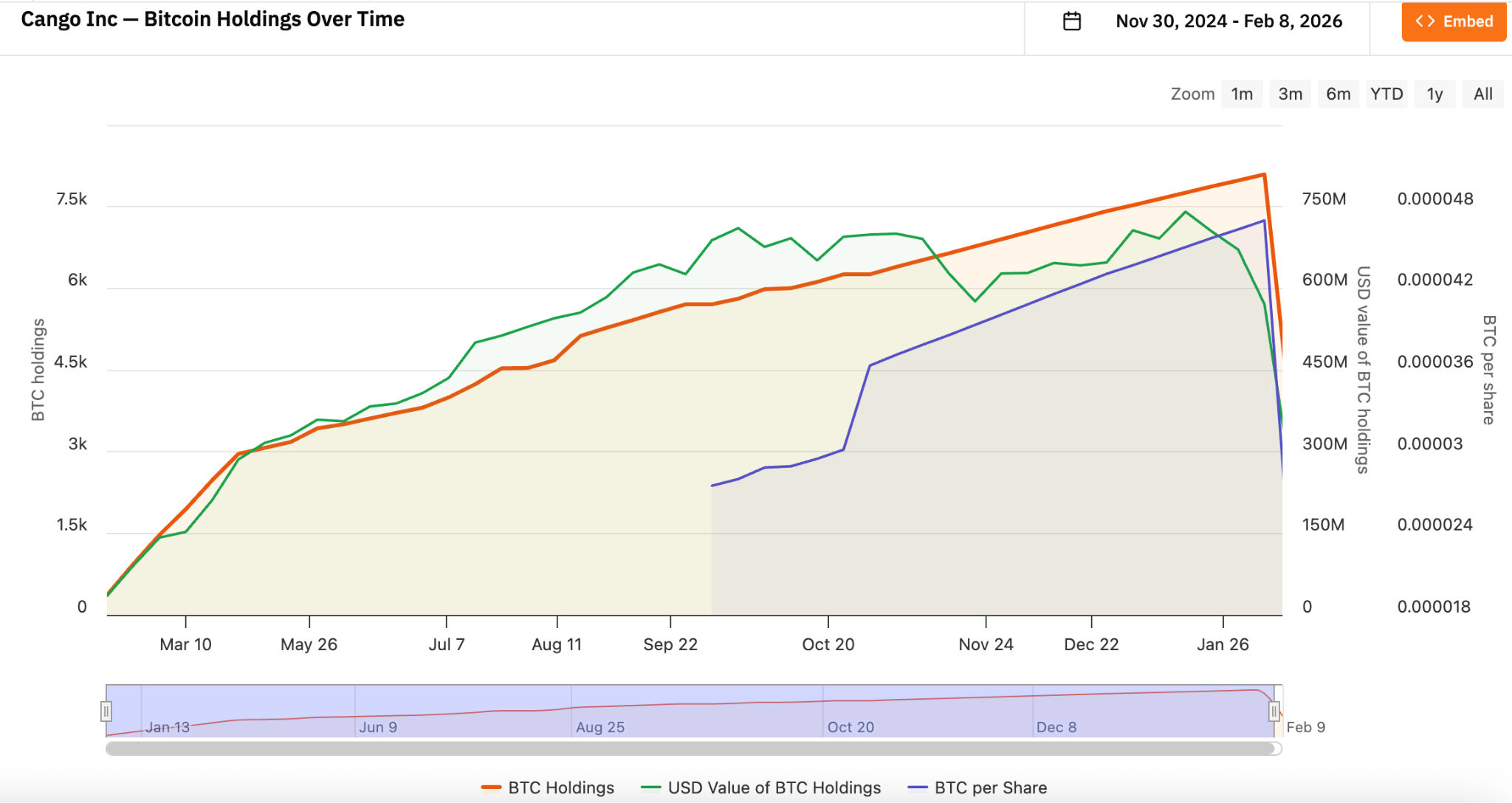
On February 9th, Cango disclosed that it had sold 4,451 bitcoins on the open market, with net proceeds of approximately $305 million, and used all the funds to repay a loan collateralized by BTC. This transaction size was close to half of its previous holdings, leaving only 3,645 BTC on its books after the sale.

Cango was founded in 2010 and is headquartered in China. It was initially a well-known automotive transaction service platform. Starting from November 2024, Cango officially entered the digital asset field, transforming into a Bitcoin mining enterprise through business restructuring and strategic pivoting, and regarding BTC as the core reserve asset of the enterprise. Cango's Bitcoin strategy initially leaned towards HODL + mining accumulation, meaning not selling coins and relying on hash rate to continuously accumulate. This model can be self-reinforcing in a rising price cycle: rising coin prices increase net asset value, increased net asset value enhances financing capability, and financing capability in turn supports hash rate expansion.

Cango began continuously accumulating Bitcoin starting November 2024, and its Bitcoin holdings once ranked as the world's second-largest mining enterprise after MARA Holdings.

Related reading: 《寻找潜力加密美股:灿谷如何从车企一跃成全球第二大比特币矿企?》 (Looking for Potential Crypto Stocks: How Did Cango Leap from an Auto Company to the World's Second Largest Bitcoin Miner?)

But mining is inherently a leveraged industry. Miner purchases, mining farm construction, and power contracts all require upfront capital expenditure, and mining companies often use self-held BTC as collateral to obtain equipment from miner manufacturers with delayed payment, or borrow USD/stablecoins from institutions/platforms to expand mining farms, purchase equipment, and maintain operations. The drawback of this model is that when the BTC price大幅回调 (significantly corrects), the collateral ratio deteriorates rapidly, leverage risk is amplified, and fixed costs like electricity, maintenance, and equipment depreciation do not decrease accordingly, putting extreme pressure on cash flow.

According to Q3 2025 data released in December 2025, Cango's average all-in mining cost (including depreciation) was approximately $99,000 per coin, and the cash cost excluding depreciation was about $81,000 per coin. The Bitcoin price is now far below its shutdown price, forcing it to reduce BTC holdings to "stop the bleeding," improve the balance sheet, and reduce financial leverage.

It is worth noting that Cango has announced it will shift部分资源 (some resources) to artificial intelligence computing infrastructure, seeking business diversification to reduce reliance on a single asset price.
Empery Digital Inc.(NASDAQ: EMPD): The Reverse Pressure of Bull Market Financing Logic

Empery Digital was founded in February 2020 (originally named Frog ePowersports Inc., later renamed Volcon Inc.), headquartered in Texas, USA. It was originally a company focused on all-electric off-road powersports vehicles.

In July 2025, the company announced a Bitcoin treasury strategy. Looking back, this timing恰是 (was exactly) near the high point of this Bitcoin price cycle. The company raised approximately $450-500 million through private placements and credit financing, and陆续增持 (progressively increased holdings of) about 4,000 bitcoins between July and August 2025, with an average cost of approximately $117,000 per coin. Calculated at the current price, the paper loss is close to 57%.

On February 6th, Empery Digital announced the sale of 357.7 BTC at an average price of about $68,000 per coin, obtaining about $24 million, to fund share repurchases and repay部分债务 (part of the debt). It has repurchased over 15.4 million shares so far, at an average price of $6.71, aiming to narrow the NAV discount. Empery now holds approximately 3,724 bitcoins remaining.

The case of Empery Digital actually reflects the typical dilemma of small and medium-sized DATs. They transformed aggressively, their financing relied on the bull market, but when prices corrected, they were forced to "sell coins for buybacks + deleverage." Compared to Cango's mining background, Empery is more like a "pure financial play." Its original main business was unsustainable, so it borrowed heavily to buy BTC at bull market highs, trying to replicate Strategy's path, but the significant correction in BTC exposed its leverage risk and it lacked the space for long-term issuance and capital market operations. If prices continue to fall,持续减持 (continuous reduction) becomes almost inevitable.

Bitdeer Technologies Group(NASDAQ: BTDR): From Price Betting to Cash Flow Priority

Bitdeer was founded in December 2021 by crypto OG Jihan Wu (co-founder of Bitmain), and is one of the world's major Bitcoin mining enterprises alongside MARA and Riot.

Bitdeer provides a full-chain solution through a vertical integration model, from equipment procurement, logistics, data center design/construction, equipment management to daily operations, while expanding into cloud hash rate, hosting services, and proprietary ASIC miner R&D. This has shifted Bitdeer's business from pure mining to diversified high-performance computing, buffering the impact of Bitcoin price fluctuations to some extent.

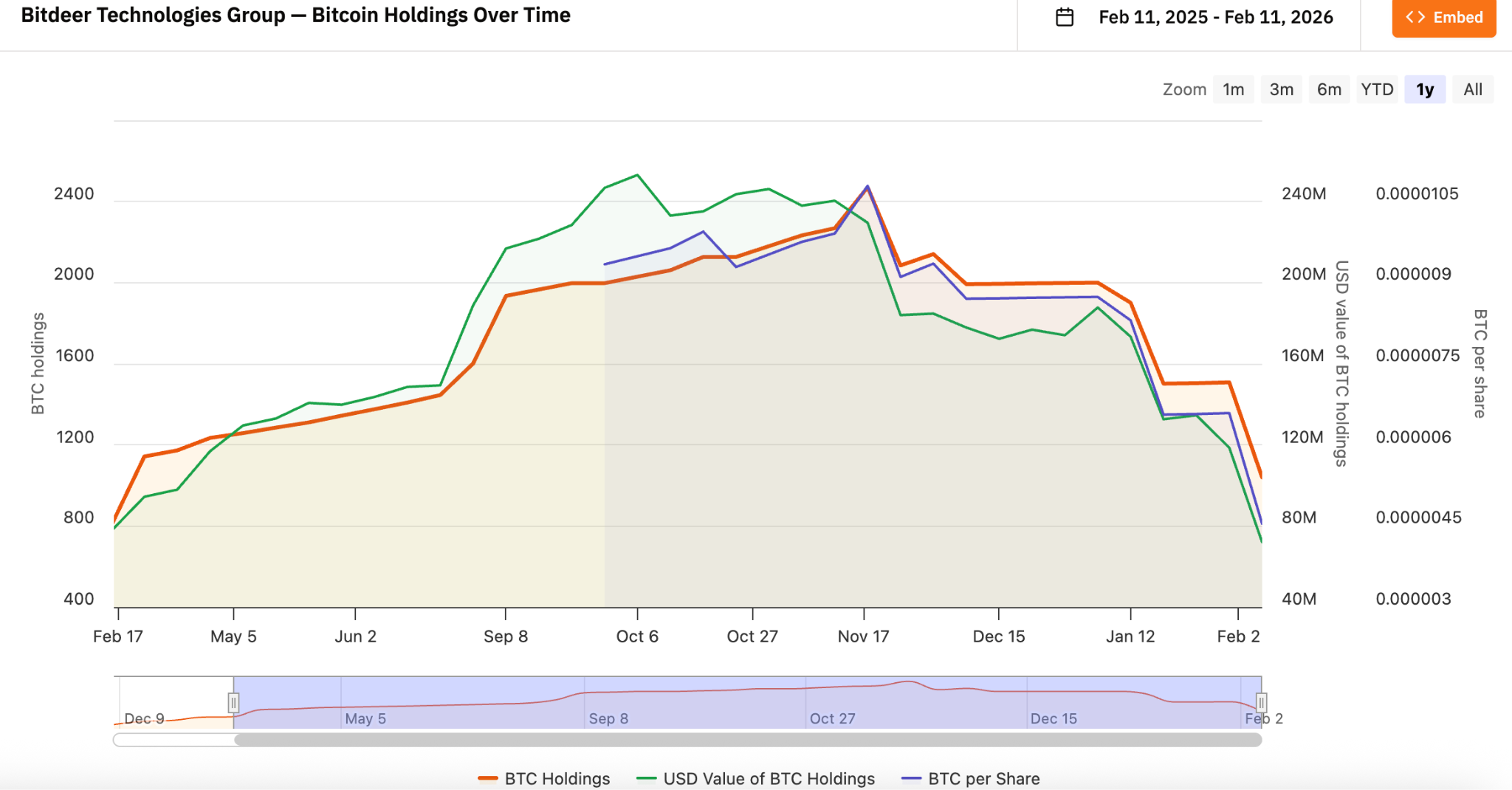
Data from bitcointreasuries.net shows that since November 2025, Bitdeer's BTC strategy has shifted to "mine and sell simultaneously", no longer holding fully (HODL), but maintaining cash flow and operational stability by partially realizing gains. Preserving cash flow takes priority over long-term holding. Is this the industry sensitivity of an OG who has experienced multiple bull and bear cycles?
Sequans Communications S.A.(NYSE: SQNS): Selling Coins to Repay Debt Becomes an Industry Turning Point

Sequans was founded in October 2003 and was originally a semiconductor company focused on wireless cellular technology chips and modules. In June 2025, the company raised approximately $380 million through private equity and convertible bonds to accumulate Bitcoin, transforming itself from a pure IoT chipmaker into an "IoT + BTC DAT" hybrid.

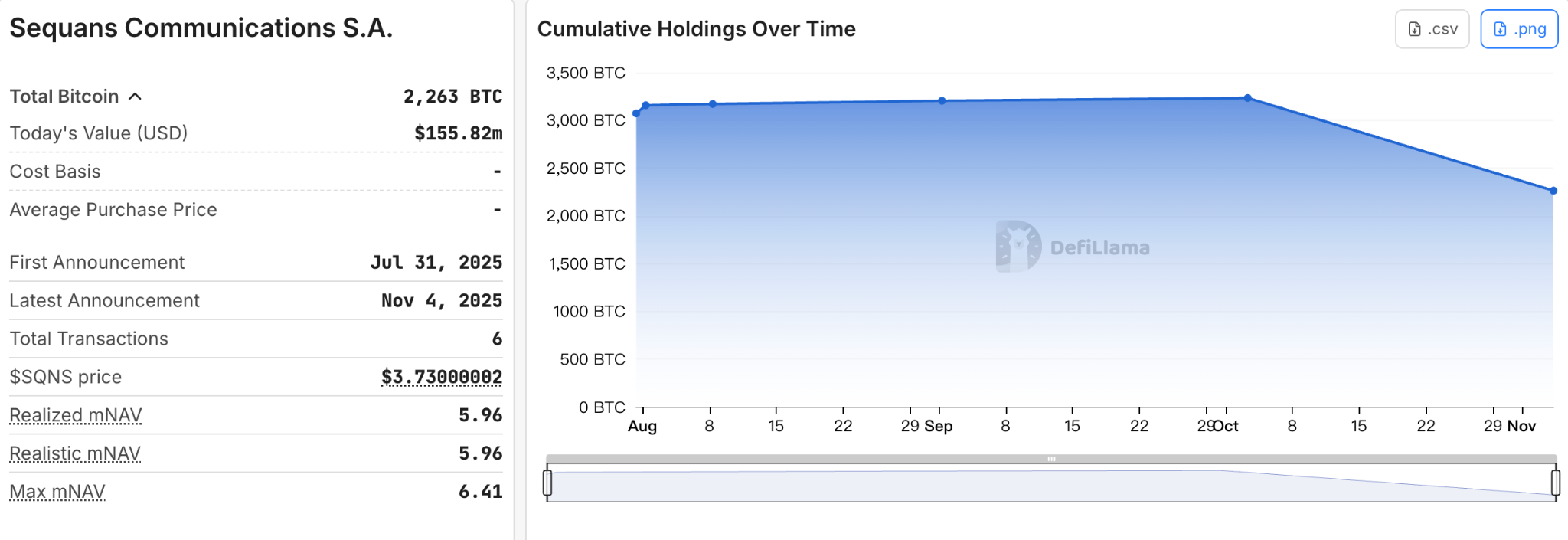
Between July and October 2025, Sequans累计增持 (cumulatively increased holdings of) 3,233 bitcoins. Roughly estimated, the average cost was around $116,000.

In November 2025, it executed its first large-scale reduction of 970 BTC, used to redeem about 50% of its convertible bonds, reducing the company's total debt from $189 million to $94.5 million. The company called this a "strategic asset reallocation," not an abandonment of the strategy. But in the market's view, Sequans was the starting point of the "bubble burst" for BTC treasuries—the first DAT company to publicly admit the need to sell coins to repay debt.
ETHZilla Corporation(NASDAQ: ETHZ): A Deleveraging Sample of an ETH Treasury

ETHZilla Corporation was originally a clinical-stage biotech company focused on drug research and treatment development in areas like chronic pain, inflammation, and fibrosis. The company faced issues like cash shortages, poor liquidity, and slow R&D progress, with its stock price remaining low for a long time.

In August 2025, it raised $425-565 million through a private placement, with investors including加密机构 (crypto institutions) like Electric Capital, Polychain Capital, GSR, and Peter Thiel-related entities holding about 7.5%. These funds were directly used to purchase ETH and establish an Ethereum treasury. At its peak, ETHZilla had增持 (increased holdings to) about 102,000 ETH, worth approximately $210 million, with a per-coin entry cost of $3,841.

On November 13, 2025, ETHZilla began its first reduction of 8,293 ETH; on December 25, ETHZilla disclosed it had sold 24,291 ETH, generating proceeds of about $74.5 million. This transaction was part of redeeming outstanding senior secured convertible notes, making it the first sample of ETH treasury reduction. Currently, ETHZilla's ETH holdings are approximately 65,700 coins.
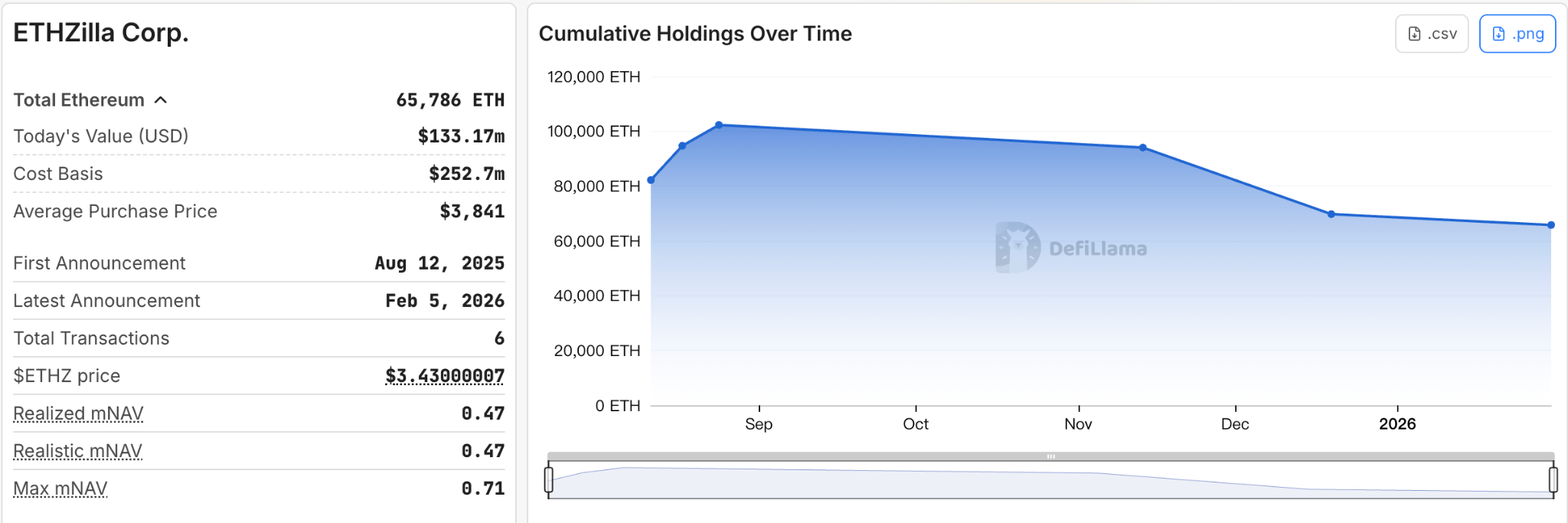
Similar to Empery, ETHZilla also embarked on the path of被迫卖币去杠杆 (forced coin selling for deleveraging). But the company is accelerating its转型 (transformation) towards RWA (Real World Asset tokenization), focusing on auto loans, home loans, land/commercial real estate, etc., with its first RWA token product expected to launch in early 2026, attempting to重塑价值 (reshape value) through business innovation.

Conclusion

The above are just a few representative samples, most of which are in the middle tier of the industry. They neither have the capital market pricing power of a company like Strategy, nor can they exit the stage悄无声息地 (silently) like the smallest companies. Beyond them, some smaller, structurally weaker DAT companies have already悄然消失 (quietly disappeared) in this round of correction;还有一些 (there are also) some companies that originally planned to transform but hadn't真正落地 (truly implemented) a treasury strategy, and have chosen to press the pause button after the financing environment suddenly tightened, even announcing termination before the project even started.

The 2026 correction acts like a mirror, reflecting the fragility and resilience of the DAT model. Those companies that relied purely on "storytelling + leverage" to rise are now paying the price for their aggressive expansion. Crypto faith may still exist, but it must ultimately coexist with the reality of cash flow, leverage management, and business sustainability.

The gap between top players and small and medium-sized companies is being持续拉大 (continuously widened) in this process. Rather than saying this is the end of the DAT model, it is more like the starting point of its stratification phase.


Preguntas relacionadas

QWhat is the main reason why some DAT companies are selling their Bitcoin holdings in 2026?

AThe main reason is that the price of Bitcoin has plummeted by nearly 50% from its 2025 high, causing these companies to face massive paper losses. Many, especially smaller or highly leveraged ones, are being forced to sell their crypto assets to repay debt, reduce financial leverage, and alleviate cash flow pressure.

QWhich company was the first DAT company to publicly admit to selling Bitcoin to repay debt, according to the article?

ASequans Communications S.A. (NYSE: SQNS) was the first DAT company to publicly acknowledge selling Bitcoin (970 BTC) to redeem a portion of its convertible bonds, marking a turning point for the industry.

QHow did Cango Inc. use the proceeds from its sale of 4,451 Bitcoin?

ACango Inc. used the approximately $305 million in net proceeds from the sale entirely to repay a loan that was collateralized by Bitcoin.

QWhat new business direction is ETHZilla Corporation pursuing after selling part of its ETH holdings?

AFollowing the sale of some of its ETH holdings, ETHZilla Corporation is accelerating its transition into the RWA (Real World Asset tokenization) sector, focusing on areas like auto loans, home loans, and land/commercial real estate.

QHow has Bitdeer Technologies Group's Bitcoin strategy changed in response to market conditions?

ABitdeer Technologies Group has shifted its strategy from a pure 'HODL' approach to 'mine and sell,' opting to partially liquidate its mined Bitcoin to prioritize maintaining cash flow and operational stability over long-term holding.

Lecturas Relacionadas

Trading

Spot
Futuros

Artículos destacados

Qué es BITCOIN

Entendiendo HarryPotterObamaSonic10Inu (ERC-20) y Su Posición en el Espacio Cripto En los últimos años, el mercado de criptomonedas ha sido testigo de un aumento en la popularidad de las monedas meme, capturando el interés no solo de los comerciantes, sino también de aquellos que buscan compromiso comunitario y valor de entretenimiento. Entre estos tokens únicos se encuentra HarryPotterObamaSonic10Inu (ERC-20), un proyecto intrigante que mezcla referencias culturales en el tejido de las criptomonedas. Este artículo profundiza en los aspectos clave de HarryPotterObamaSonic10Inu, explorando sus mecanismos, ethos impulsado por la comunidad y su relación con el paisaje cripto más amplio. ¿Qué es HarryPotterObamaSonic10Inu (ERC-20)? Como su nombre sugiere, HarryPotterObamaSonic10Inu es una moneda meme construida sobre la blockchain de Ethereum, clasificada bajo el estándar ERC-20. A diferencia de las criptomonedas tradicionales que pueden enfatizar la utilidad práctica o el potencial de inversión, este token prospera en el valor de entretenimiento y la fuerza de su comunidad. El proyecto tiene como objetivo fomentar un entorno donde los usuarios comprometidos puedan reunirse, compartir ideas y participar en actividades inspiradas por diversos fenómenos culturales. Una característica notable de HarryPotterObamaSonic10Inu es su cero impuestos en las transacciones. Este atractivo elemento tiene como objetivo incentivar el comercio y la participación comunitaria, sin cargos adicionales que puedan disuadir a los comerciantes de pequeña escala. El suministro total de la moneda está establecido en mil millones de tokens, una cifra que marca su intención de mantener una circulación sustancial dentro de la comunidad. Creador de HarryPotterObamaSonic10Inu (ERC-20) Los orígenes de HarryPotterObamaSonic10Inu están algo envueltos en misterio; los detalles sobre el creador siguen siendo desconocidos. El desarrollo de este token carece de un equipo identificable o de un plan explícito, lo cual no es inusual dentro del sector de monedas meme. En cambio, el proyecto ha surgido de manera orgánica, con su progreso muy dependiente del entusiasmo y la participación de su comunidad. Inversores de HarryPotterObamaSonic10Inu (ERC-20) En cuanto a inversiones externas y respaldo, HarryPotterObamaSonic10Inu también sigue siendo ambiguo. El token no lista ninguna fundación de inversión conocida o apoyo organizacional significativo. En cambio, la savia del proyecto es su comunidad de base, que informa su crecimiento y sostenibilidad a través de la acción colectiva y el compromiso en el espacio cripto. ¿Cómo Funciona HarryPotterObamaSonic10Inu (ERC-20)? Como una moneda meme, HarryPotterObamaSonic10Inu opera principalmente fuera de los marcos tradicionales que a menudo rigen el valor de los activos. Hay varios aspectos distintivos que definen cómo funciona el proyecto: Transacciones Sin Impuestos: Sin tarifas impositivas en las transacciones, los usuarios pueden comprar y vender el token libremente sin preocuparse por costos ocultos. Compromiso Comunitario: El proyecto prospera en la interacción comunitaria, aprovechando plataformas de redes sociales para crear entusiasmo y facilitar la participación. Las discusiones, el intercambio de contenido y el compromiso son elementos cruciales que ayudan a expandir su alcance y fomentar la lealtad entre los seguidores. Sin Utilidad Práctica: Cabe señalar que HarryPotterObamaSonic10Inu no ofrece utilidad concreta dentro del ecosistema financiero. Más bien, se clasifica como un token principalmente para actividades de entretenimiento y comunitarias. Referencia Cultural: El token incorpora astutamente elementos de la cultura popular para atraer interés, conectando con entusiastas de los memes y seguidores de las criptomonedas por igual. HarryPotterObamaSonic10Inu ejemplifica cómo las monedas meme operan de manera diferente a los proyectos de criptomonedas más tradicionales, ingresando al mercado como construcciones sociales innovadoras en lugar de activos utilitarios. Cronología de HarryPotterObamaSonic10Inu (ERC-20) La historia de HarryPotterObamaSonic10Inu está marcada por varios hitos notables: Creación: El token surgió de un meme viral, capturando la imaginación de muchos entusiastas de las criptomonedas. Las fechas específicas de creación no están disponibles, subrayando su ascenso orgánico. Listado en Exchanges: HarryPotterObamaSonic10Inu ha llegado a varios exchanges, permitiendo un acceso y comercio más fácil por parte de la comunidad. Iniciativas de Compromiso Comunitario: Actividades continuas destinadas a mejorar la interacción comunitaria, incluyendo concursos, campañas en redes sociales y generación de contenido por parte de fanáticos y defensores. Planes de Expansión Futuros: La hoja de ruta del proyecto incluye el lanzamiento de una colección de NFT, mercancía y un sitio de comercio electrónico relacionado con sus temas culturales, involucrando aún más a la comunidad e intentando añadir más dimensiones a su ecosistema. Puntos Clave Sobre HarryPotterObamaSonic10Inu (ERC-20) Naturaleza Impulsada por la Comunidad: El proyecto prioriza la participación colectiva y la creatividad, asegurando que la involucración de los usuarios esté a la vanguardia de su desarrollo. Clasificación como Moneda Meme: Representa la epítome de las criptomonedas basadas en el entretenimiento, diferenciándose de los vehículos de inversión tradicionales. Sin Afiliación Directa con Bitcoin: A pesar de la similitud en el nombre del ticker, HarryPotterObamaSonic10Inu es distinto y no tiene relación con Bitcoin u otras criptomonedas establecidas. Enfoque en la Colaboración: HarryPotterObamaSonic10Inu está diseñado para crear un espacio para la colaboración y el intercambio de historias entre sus poseedores, proporcionando una vía para la creatividad y el vínculo comunitario. Perspectivas Futuras: La ambición de expandirse más allá de su premisa inicial hacia NFTs y mercancías describe un camino para que el proyecto potencialmente ingrese a avenidas más tradicionales dentro de la cultura digital. A medida que las monedas meme continúan capturando la imaginación de la comunidad de criptomonedas, HarryPotterObamaSonic10Inu (ERC-20) se destaca debido a sus lazos culturales y su enfoque centrado en la comunidad. Si bien puede no encajar en el molde típico de un token impulsado por la utilidad, su esencia radica en la alegría y la camaradería fomentadas entre sus seguidores, destacando la naturaleza en evolución de las criptomonedas en una era cada vez más digital. A medida que el proyecto continúa desarrollándose, será importante observar cómo las dinámicas comunitarias influyen en su trayectoria en el cambiante paisaje de la tecnología blockchain.

1.4k Vistas totalesPublicado en 2024.04.01Actualizado en 2024.12.03

Qué es BITCOIN

Cómo comprar BTC

¡Bienvenido a HTX.com! Hemos hecho que comprar Bitcoin (BTC) sea simple y conveniente. Sigue nuestra guía paso a paso para iniciar tu viaje de criptos.Paso 1: crea tu cuenta HTXUtiliza tu correo electrónico o número de teléfono para registrarte y obtener una cuenta gratuita en HTX. Experimenta un proceso de registro sin complicaciones y desbloquea todas las funciones.Obtener mi cuentaPaso 2: ve a Comprar cripto y elige tu método de pagoTarjeta de crédito/débito: usa tu Visa o Mastercard para comprar Bitcoin (BTC) al instante.Saldo: utiliza fondos del saldo de tu cuenta HTX para tradear sin problemas.Terceros: hemos agregado métodos de pago populares como Google Pay y Apple Pay para mejorar la comodidad.P2P: tradear directamente con otros usuarios en HTX.Over-the-Counter (OTC): ofrecemos servicios personalizados y tipos de cambio competitivos para los traders.Paso 3: guarda tu Bitcoin (BTC)Después de comprar tu Bitcoin (BTC), guárdalo en tu cuenta HTX. Alternativamente, puedes enviarlo a otro lugar mediante transferencia blockchain o utilizarlo para tradear otras criptomonedas.Paso 4: tradear Bitcoin (BTC)Tradear fácilmente con Bitcoin (BTC) en HTX's mercado spot. Simplemente accede a tu cuenta, selecciona tu par de trading, ejecuta tus trades y monitorea en tiempo real. Ofrecemos una experiencia fácil de usar tanto para principiantes como para traders experimentados.

4.7k Vistas totalesPublicado en 2024.12.12Actualizado en 2025.03.21

Cómo comprar BTC

Qué es $BITCOIN

ORO DIGITAL ($BITCOIN): Un Análisis Integral Introducción al ORO DIGITAL ($BITCOIN) ORO DIGITAL ($BITCOIN) es un proyecto basado en blockchain que opera en la red Solana, cuyo objetivo es combinar las características de los metales preciosos tradicionales con la innovación de las tecnologías descentralizadas. Aunque comparte un nombre con Bitcoin, a menudo referido como “oro digital” debido a su percepción como un refugio de valor, ORO DIGITAL es un token separado diseñado para crear un ecosistema único dentro del paisaje Web3. Su meta es posicionarse como un activo digital alternativo viable, aunque los detalles sobre sus aplicaciones y funcionalidades aún están en desarrollo. ¿Qué es ORO DIGITAL ($BITCOIN)? ORO DIGITAL ($BITCOIN) es un token de criptomoneda diseñado explícitamente para su uso en la blockchain de Solana. A diferencia de Bitcoin, que proporciona un papel de almacenamiento de valor ampliamente reconocido, este token parece centrarse en aplicaciones y características más amplias. Aspectos notables incluyen: Infraestructura Blockchain: El token está construido sobre la blockchain de Solana, conocida por su capacidad para manejar transacciones de alta velocidad y bajo costo. Dinámicas de Suministro: ORO DIGITAL tiene un suministro máximo limitado a 100 cuatrillones de tokens (100P $BITCOIN), aunque los detalles sobre su suministro circulante no se han divulgado actualmente. Utilidad: Si bien las funcionalidades precisas no están delineadas explícitamente, hay indicios de que el token podría ser utilizado para diversas aplicaciones, potencialmente involucrando aplicaciones descentralizadas (dApps) o estrategias de tokenización de activos. ¿Quién es el Creador de ORO DIGITAL ($BITCOIN)? En la actualidad, la identidad de los creadores y el equipo de desarrollo detrás de ORO DIGITAL ($BITCOIN) sigue siendo desconocida. Esta situación es típica entre muchos proyectos innovadores dentro del espacio blockchain, particularmente aquellos alineados con las finanzas descentralizadas y fenómenos de monedas meme. Si bien tal anonimato puede fomentar una cultura impulsada por la comunidad, intensifica las preocupaciones sobre la gobernanza y la responsabilidad. ¿Quiénes son los Inversores de ORO DIGITAL ($BITCOIN)? La información disponible indica que ORO DIGITAL ($BITCOIN) no tiene patrocinadores institucionales conocidos ni inversiones destacadas de capital de riesgo. El proyecto parece operar en un modelo de peer-to-peer centrado en el apoyo y la adopción de la comunidad en lugar de rutas de financiamiento tradicionales. Su actividad y liquidez se sitúan principalmente en intercambios descentralizados (DEX), como PumpSwap, en lugar de plataformas de trading centralizadas establecidas, lo que resalta aún más su enfoque de base. Cómo Funciona ORO DIGITAL ($BITCOIN) Los mecanismos operativos de ORO DIGITAL ($BITCOIN) pueden elaborarse en función de su diseño blockchain y atributos de red: Mecanismo de Consenso: Al aprovechar el único proof-of-history (PoH) de Solana combinado con un modelo de proof-of-stake (PoS), el proyecto asegura una validación de transacciones eficiente que contribuye al alto rendimiento de la red. Tokenómica: Si bien los mecanismos deflacionarios específicos no se han detallado extensamente, el vasto suministro máximo de tokens implica que podría atender microtransacciones o casos de uso nicho que aún están por definirse. Interoperabilidad: Existe el potencial de integración con el ecosistema más amplio de Solana, incluyendo varias plataformas de finanzas descentralizadas (DeFi). Sin embargo, los detalles sobre integraciones específicas permanecen no especificados. Cronología de Eventos Clave Aquí hay una cronología que destaca hitos significativos relacionados con ORO DIGITAL ($BITCOIN): 2023: El despliegue inicial del token ocurre en la blockchain de Solana, marcado por su dirección de contrato. 2024: ORO DIGITAL gana visibilidad al estar disponible para trading en intercambios descentralizados como PumpSwap, permitiendo a los usuarios comerciar contra SOL. 2025: El proyecto presencia actividad de trading esporádica y potencial interés en compromisos liderados por la comunidad, aunque no se han documentado asociaciones notables o avances técnicos hasta el momento. Análisis Crítico Fortalezas Escalabilidad: La infraestructura subyacente de Solana soporta altos volúmenes de transacciones, lo que podría mejorar la utilidad de $BITCOIN en varios escenarios de transacción. Accesibilidad: El potencial bajo precio de trading por token podría atraer a inversores minoristas, facilitando una participación más amplia debido a oportunidades de propiedad fraccionada. Riesgos Falta de Transparencia: La ausencia de patrocinadores, desarrolladores o un proceso de auditoría conocidos públicamente puede generar escepticismo sobre la sostenibilidad y confiabilidad del proyecto. Volatilidad del Mercado: La actividad de trading depende en gran medida del comportamiento especulativo, lo que puede resultar en una volatilidad de precios significativa y en incertidumbre para los inversores. Conclusión ORO DIGITAL ($BITCOIN) surge como un proyecto intrigante pero ambiguo dentro del ecosistema de Solana en rápida evolución. Si bien intenta aprovechar la narrativa del “oro digital”, su alejamiento del papel establecido de Bitcoin como refugio de valor subraya la necesidad de una diferenciación más clara de su utilidad y estructura de gobernanza previstas. La aceptación y adopción futura dependerán probablemente de abordar la actual opacidad y de definir sus estrategias operativas y económicas de manera más explícita. Nota: Este informe abarca información sintetizada disponible hasta octubre de 2023, y pueden haber ocurrido desarrollos más allá del período de investigación.

83 Vistas totalesPublicado en 2025.05.13Actualizado en 2025.05.13

Qué es $BITCOIN

Discusiones

Bienvenido a la comunidad de HTX. Aquí puedes mantenerte informado sobre los últimos desarrollos de la plataforma y acceder a análisis profesionales del mercado. A continuación se presentan las opiniones de los usuarios sobre el precio de BTC (BTC).

活动图片













