BTC Drops Below $90,000: Rate Cut Realized Equals Exhausted Positive News

Odaily星球日报Publicado a 2025-12-11Actualizado a 2025-12-11

Resumen

Fed Chair Powell announced a 25-basis-point rate reduction, bringing the benchmark rate to 3.50%-3.75%, marking the third consecutive cut this year. However, the dot plot revealed significant internal divergence, with seven officials dissenting—six preferring no cut. The median rate projection remained unchanged from September, signaling a likely slowdown in future easing, with only one cut anticipated in 2025 and 2026 each. This mixed, cautious signal failed to boost market confidence. Bitcoin fell below $90,000, Ethereum dropped under $3,200, and Solana declined beneath $130. Most crypto sectors saw losses, with over $468 million in liquidations—$331 million from long positions. Analysts attribute the downturn to year-end liquidity constraints and subdued sentiment. Greeks.live noted that despite the Fed’s dovish move, low holiday liquidity limits bullish momentum. ING expects two 2026 rate cuts if inflation nears 2%, while Goldman Sachs views further easing as contingent on weaker labor data. Short-term, the market is expected to remain defensive amid thin liquidity. Longer-term, the focus shifts to labor market performance—should data weaken, more aggressive rate cuts may follow. Until macro conditions clear and liquidity returns, cautious positioning is advised.

Original | Odaily Planet Daily (@OdailyChina)

Author | Ethan (@ethanzhang_web3)
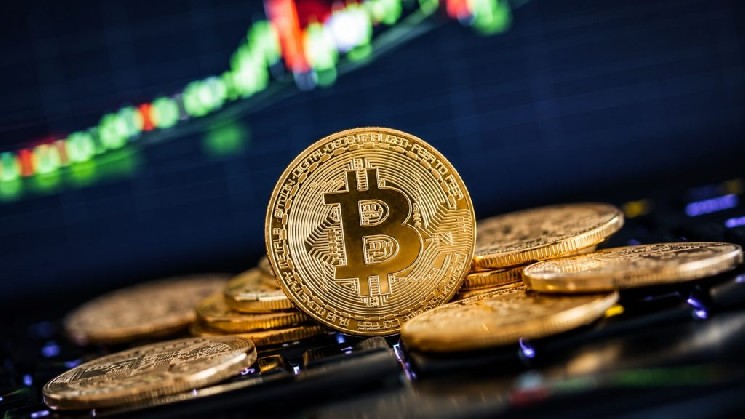
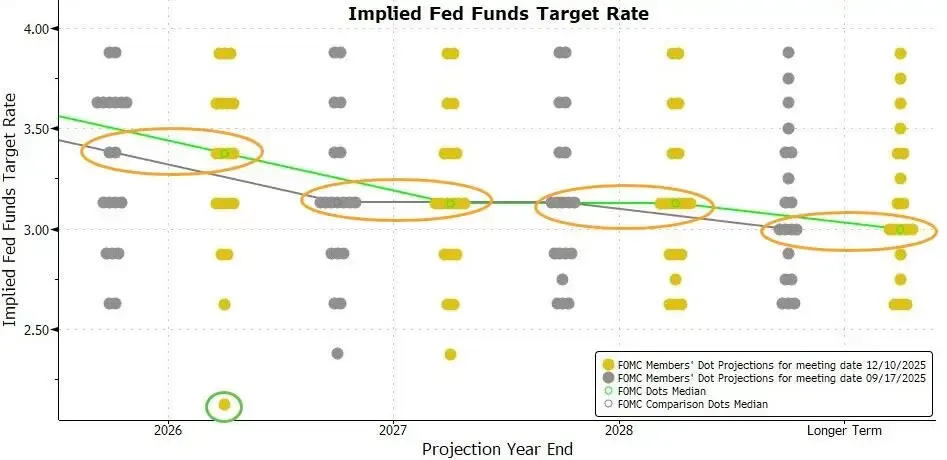
Early this morning, Powell announced as scheduled a 25 basis point cut in the benchmark interest rate to 3.50%-3.75%. This marks the third consecutive rate cut this year, concluding the year with a cumulative reduction of 75 basis points. However, the signals from the dot plot are not entirely optimistic, reflecting intense internal debate within the Fed. Although the overall expectations are slightly more dovish compared to the last meeting, the internal consensus is loosening: this time, as many as 7 officials dissented from the decision, with 6 even favoring no change (maintaining the current rate). Additionally, the median interest rate forecast remains exactly the same as in September, suggesting that after this year's aggressive cuts, the pace of easing in the next two years will slow significantly (likely only one cut each year). This complex, "hawkish-dovish" mixed signal and the extremely cautious expectations do not seem to have provided the market with sufficient confidence to go long. Consequently, the crypto market, dominated by risk speculation, is shrouded in fear, experiencing a continuous decline.
OKX real-time data shows that around 11:40 today (all subsequent times refer to this point), BTC fell to a low below $90,000, temporarily reported at $89,790.5, a 2.45% drop in 24 hours, breaking below the $90,000 mark; ETH fell below $3,200, currently at $3,181.24, down 4.47% in 24 hours; SOL dropped below $130, currently at $129.5, down 4.88% in 24 hours.

According to SoSoValue, various sectors of the crypto market generally pulled back, with the DePIN sector leading the decline, down 4.28% in 24 hours, where Filecoin (FIL) fell 7.50% and Render (RENDER) dropped 5.52%. In other sectors, the CeFi sector fell 1.00% in 24 hours, with Cronos (CRO) down 3.39%; the Layer2 sector declined 2.15%, but Mantle (MNT) held relatively firm, up 1.12%; the DeFi sector fell 2.35%, while Hyperliquid (HYPE) bucked the trend, rising 2.95%; the Layer1 sector dropped 2.54%, with previously strong performer Zcash (ZEC) falling 10.78%.

In the U.S. stock market, according to msx.com data, as of the close, the Dow rose 1.05%, the S&P 500 gained 0.67%, and the Nasdaq increased by 0.33%. Crypto-related stocks mostly fell, with ETHZ down over 8.1%, HODL down over 6.39%, and ABTC down over 5.37%.

In derivatives trading, Coinglass data shows that over the past 24 hours, there was $468 million in liquidations across the network, with long positions accounting for $331 million and short positions $136 million. By cryptocurrency, BTC saw $165 million in liquidations, and ETH $148 million.
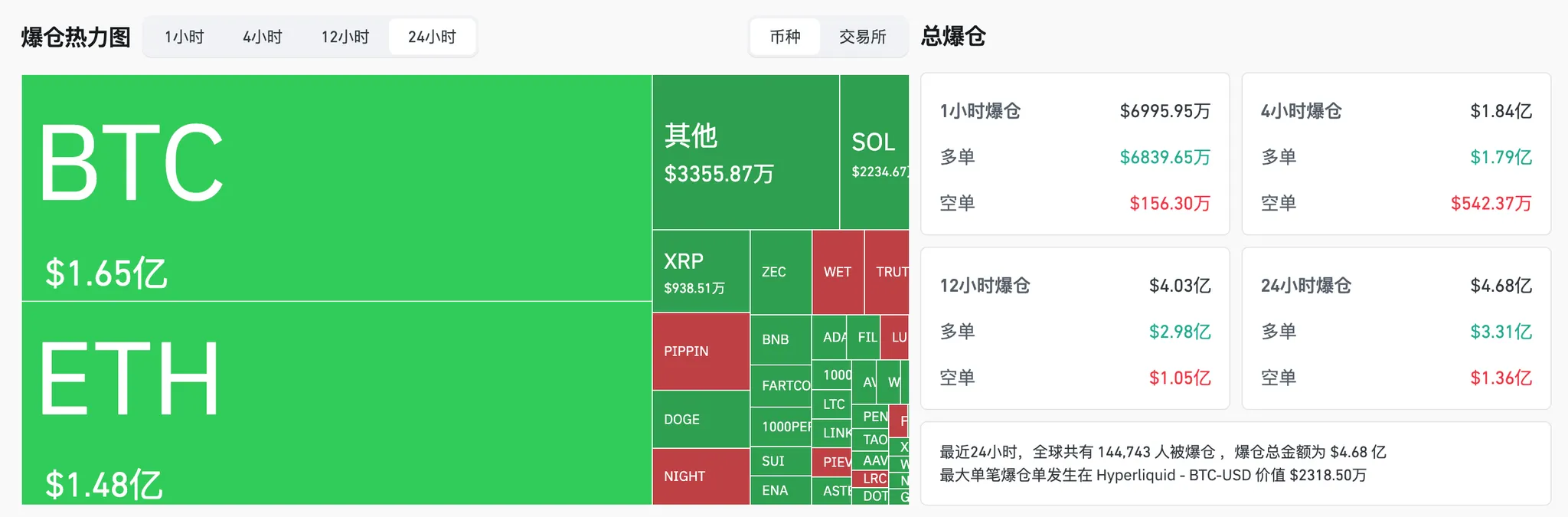
Market sentiment is being released, and the downturn continues. Discussions about whether "expectations are exhausted and the market is weak" are heating up.

Below, Odaily Planet Daily will summarize the views and arguments of institutions and analysts regarding the future market trend.

What will be the subsequent trend of Bitcoin?

Greeks.live: Year-end liquidity drying up, limited momentum for restarting the bull market

Adam, a researcher at Greeks.Live, posted on social media, stating that the Fed's interest rate meeting cut rates by 25 basis points as expected and announced the restart of a $40 billion short-term U.S. Treasury bill (T-bills) purchase plan; its dovish stance will effectively supplement the financial system's liquidity, constituting a clear positive for the market.

However, it is still too early to talk about "restarting quantitative easing (QE) to drive a bull market restart": with Christmas and year-end settlements approaching, this period has historically been the worst for crypto market liquidity, with low market activity and very limited momentum for a bull market restart.

Looking at cryptocurrency options data, over 50% of option positions are accumulated by the end of December, with BTC's max pain point at the $100,000 integer mark and ETH's at $3,200; the implied volatility (IV) for major tenors has declined across the board this month, indicating a continued decrease in market expectations for volatility this month.

In summary, the current crypto market performance is weak, pressured by year-end liquidity and low market sentiment; "slow decline" is the mainstream expectation in the options market. However, one must also be wary of potential sudden positive news that could trigger a market reversal.

ING: Improved inflation environment, maintaining forecast for two rate cuts in 2026

ING Bank stated that the market currently expects the Fed to cut rates by another 50 basis points in 2026.

However, considering the current situation—the economy continues to grow, unemployment is low, the stock market is near historical highs, and inflation is closer to 3% than the Fed's 2% target—there is insufficient justification for the Fed to further ease policy. Nevertheless, the bank suspects that the inflation environment in the coming months will be more conducive to rate cuts, providing support for further dovish action: although tariff threats remain, their impact is slower and weaker than expected, buying more time for factors easing inflation such as falling energy prices, slowing rental growth, and weakening wage increases; the bank believes this will push inflation closer to 2% faster than the Fed expects.

Coupled with rising uncertainty in the "employment" dimension of the Fed's dual mandate—Powell mentioned that the Fed believes recent employment growth data has been overestimated by about 60,000 people—ING Bank maintains its original forecast that the Fed will cut rates twice in 2026, by 25 basis points each in March and June.

Goldman Sachs: Pacifying the hawkish camp, the threshold for future easing is significantly raised

Goldman Sachs analyst Kay Haigh stated that the Fed has completed this round of "preemptive rate cuts." She noted: "To justify additional near-term easing, the core prerequisite is that labor market data must weaken further."

The "hard dissent" among voting members and the "soft dissent" in the "dot plot" both highlight the hawkish camp within the Fed; the reintroduction of wording about the "extent and timing" of future policy decisions in the statement was likely to pacify this camp. This adjustment, while preserving the possibility of future rate cuts, means that a relatively high degree of labor market weakness would be required to trigger a new round of easing.

Analyst: Policy statement "dovish on the surface, hawkish underneath," expects 100 basis points of cuts next year

Analyst Anna Wong stated: "My assessment is that this policy statement and the updated forecasts are overall dovish in tone, though with some hawkish signals隐含. On the dovish side, the Committee significantly upgraded the economic growth path, lowered the inflation outlook, and kept the 'dot plot' forecast unchanged; the FOMC also announced the start of reserve management purchase operations."

"On the other hand, one signal in the policy statement indicates the Committee's inclination towards a prolonged pause in the rate-cutting cycle." She added: "Although the 'dot plot' shows only one rate cut in 2026—differing from the market's expectation of two—we believe the Fed will ultimately cut rates by a cumulative 100 basis points next year. The core basis is that we expect wage growth to remain weak and currently see no clear signs of inflation reigniting in the first half of 2026."

Summary

Although the Fed cut rates as expected this morning, the internal divisions and slowed easing expectations revealed by the "dot plot" have subjected the market to a complex "hawkish-dovish" mixed signal. BTC breaking below the $90,000 mark and over $300 million in long liquidations indicate that, in the absence of incremental funds, the "realization of the rate cut" alone can no longer掩盖 the reality of year-end liquidity drying up.

Institutions generally believe that in the short term, constrained by the Christmas holiday and year-end settlements, market activity will decline significantly. "Slow decline" and "defense" are likely to be the main themes year-end, with very limited momentum to restart the bull market. However, looking further ahead, the focus of contention has shifted from单纯 inflation data to the performance of the labor market. Although institutions like Goldman Sachs提示 that the threshold for future easing has been raised, if wage growth weakens or employment data deteriorates further next year, the market could still迎来 a more aggressive rate-cutting path than expected. For investors,盲目 bottom-fishing is not the optimal strategy before liquidity returns and macro signals become clearer.


Preguntas relacionadas

QWhat was the immediate market reaction to the Fed's 25 basis point rate cut announcement?

AThe market reacted negatively with a 'hawkish-dovish' mixed signal. Bitcoin fell below $90,000, dropping 2.45% in 24 hours, and over $331 million in long positions were liquidated across the market.

QAccording to Greeks.live, what are the main factors limiting a bull market restart in crypto despite the rate cut?

AGreeks.live cited year-end liquidity drying up due to the Christmas holiday and annual settlements, which are historically periods of the lowest liquidity and market activity in crypto, severely limiting the momentum for a bull run restart.

QWhat is the new condition set by Goldman Sachs for the Fed to justify further near-term easing policies?

AGoldman Sachs analyst stated that the core prerequisite for justifying additional near-term easing policies is that labor market data must show further signs of weakening.

QWhat does the 'dot plot' from the Fed meeting reveal about internal consensus and future rate expectations?

AThe 'dot plot' revealed significant internal divergence within the Fed, with 7 officials dissenting from the decision. It also signaled that the pace of easing will slow significantly after this year's aggressive cuts, with expectations for only one rate cut each in the following two years.

QWhich analyst maintains a prediction of 100 basis points of rate cuts in 2026, and what is their reasoning?

AAnalyst Anna Wong maintains a prediction of 100 basis points of cuts in 2026. The core rationale is the expectation of continued weak wage growth and a lack of clear signs that inflation will reignite in the first half of 2026.

Lecturas Relacionadas

Fu Peng's First Public Speech in 2026: What Exactly Are Crypto Assets? Why Did I Join the Crypto Asset Industry?

Fu Peng, a renowned macroeconomist and now Chief Economist at New火 Group, delivered his first public speech of 2026 at the Hong Kong Web3 Festival. He explained his perspective on crypto assets and why he joined the industry, framing it within the context of macroeconomic trends and financial evolution. Fu emphasized that crypto assets are transitioning from an early, belief-driven phase to a mature, institutionally integrated asset class. He drew parallels to the 1970s-80s, when technological advances (like computing) revolutionized traditional finance, leading to the rise of FICC (Fixed Income, Currencies, and Commodities). Similarly, current advancements in AI, data, and blockchain are reshaping finance, with crypto assets becoming part of a new "FICC + C" (C for Crypto) framework. He noted that institutional capital, including traditional hedge funds, avoided early crypto due to its speculative nature but are now engaging as regulatory clarity emerges (e.g., stablecoin laws, CFTC classifying crypto as a commodity). Fu predicted that 2025-2026 marks a turning point where crypto becomes a standardized, financially viable asset for diversified portfolios, akin to commodities or derivatives in traditional finance. Fu defined Bitcoin not as "digital gold" in a simplistic sense but as a value-preserving, financially tradable asset. He highlighted that crypto's future lies in regulated, institutional adoption, moving away from retail-dominated trading. His entry into crypto signals this maturation, where traditional finance integrates crypto into mainstream asset management.

marsbitHace 26 min(s)

Fu Peng's First Public Speech in 2026: What Exactly Are Crypto Assets? Why Did I Join the Crypto Asset Industry?

marsbitHace 26 min(s)

Justin Sun Sues Trump Family: What $75 Million Bought Was Only a Blacklist

Justin Sun, founder of Tron, has filed a lawsuit in federal court against World Liberty Financial (WLF), alleging he was made the "primary target of a fraudulent scheme" after investing $75 million. Sun claims the investment secured him an advisor title and WLFI tokens, which were later frozen by WLF, causing "hundreds of millions in losses." The dispute began in late 2024 when Sun's investment helped revive WLF's struggling token sale, which ultimately raised $550 million. Shortly after, the SEC dropped its lawsuit against Sun following Donald Trump's inauguration. However, relations soured when Sun refused WLF's demands for additional funding. In August 2025, WLF added a "blacklist" function to its smart contract, allowing it to unilaterally freeze tokens. Sun's holdings, worth approximately $107 million, were frozen, and he was threatened with token destruction. The lawsuit highlights WLF's structure, which directs 75% of token sale profits to the Trump family, who had earned $1 billion by December 2025. WLF's CEO is Zach Witkoff, son of U.S. Middle East envoy Steve Witkoff. The project faces scrutiny for opaque operations, including a controversial loan arrangement on the Dolomite platform, co-founded by a WLF advisor. Despite Sun's history with the SEC, the case underscores centralization risks within DeFi, as WLF controls governance and holds powers to freeze assets arbitrarily. Sun's tokens remain frozen as legal proceedings begin.

marsbitHace 34 min(s)

Justin Sun Sues Trump Family: What $75 Million Bought Was Only a Blacklist

marsbitHace 34 min(s)

$500 to Buy OpenAI Stock: Silicon Valley's Most Respectable Liquidity Invitation

Silicon Valley's largest venture capital platform, AngelList, has launched a new fund called USVC, allowing U.S. retail investors to buy into high-profile AI companies like OpenAI, Anthropic, and xAI with a minimum investment of $500—no accredited investor status required. Promoted by AngelList co-founder Naval Ravikant, the fund is framed as an opportunity for ordinary people to access high-growth private tech investments traditionally reserved for VCs. However, critics argue it functions more like an exit vehicle for early insiders. USVC acquires shares not through primary rounds but largely via secondary transactions—purchasing stakes from early investors, VC funds, and employees looking to cash out at peak valuations. With companies like xAI heavily weighted in the portfolio, the fund effectively channels retail money into providing liquidity for insiders who entered at much lower valuations. The fund’s structure raises concerns: shares are illiquid, with no secondary market, and buybacks are limited and discretionary. The actual annual fee reaches 3.61%, far above the advertised 1% management fee. This model parallels the "low float, high fully diluted valuation" strategy seen in crypto, where early investors profit by selling to latecomers at inflated prices. The timing—alongside similar moves by platforms like Robinhood—suggests that Silicon Valley’s sudden interest in retail inclusion may be less about democratizing access and more about securing exits for insiders.

marsbitHace 1 hora(s)

$500 to Buy OpenAI Stock: Silicon Valley's Most Respectable Liquidity Invitation

marsbitHace 1 hora(s)

Trading

Spot
Futuros

Artículos destacados

Qué es BITCOIN

Entendiendo HarryPotterObamaSonic10Inu (ERC-20) y Su Posición en el Espacio Cripto En los últimos años, el mercado de criptomonedas ha sido testigo de un aumento en la popularidad de las monedas meme, capturando el interés no solo de los comerciantes, sino también de aquellos que buscan compromiso comunitario y valor de entretenimiento. Entre estos tokens únicos se encuentra HarryPotterObamaSonic10Inu (ERC-20), un proyecto intrigante que mezcla referencias culturales en el tejido de las criptomonedas. Este artículo profundiza en los aspectos clave de HarryPotterObamaSonic10Inu, explorando sus mecanismos, ethos impulsado por la comunidad y su relación con el paisaje cripto más amplio. ¿Qué es HarryPotterObamaSonic10Inu (ERC-20)? Como su nombre sugiere, HarryPotterObamaSonic10Inu es una moneda meme construida sobre la blockchain de Ethereum, clasificada bajo el estándar ERC-20. A diferencia de las criptomonedas tradicionales que pueden enfatizar la utilidad práctica o el potencial de inversión, este token prospera en el valor de entretenimiento y la fuerza de su comunidad. El proyecto tiene como objetivo fomentar un entorno donde los usuarios comprometidos puedan reunirse, compartir ideas y participar en actividades inspiradas por diversos fenómenos culturales. Una característica notable de HarryPotterObamaSonic10Inu es su cero impuestos en las transacciones. Este atractivo elemento tiene como objetivo incentivar el comercio y la participación comunitaria, sin cargos adicionales que puedan disuadir a los comerciantes de pequeña escala. El suministro total de la moneda está establecido en mil millones de tokens, una cifra que marca su intención de mantener una circulación sustancial dentro de la comunidad. Creador de HarryPotterObamaSonic10Inu (ERC-20) Los orígenes de HarryPotterObamaSonic10Inu están algo envueltos en misterio; los detalles sobre el creador siguen siendo desconocidos. El desarrollo de este token carece de un equipo identificable o de un plan explícito, lo cual no es inusual dentro del sector de monedas meme. En cambio, el proyecto ha surgido de manera orgánica, con su progreso muy dependiente del entusiasmo y la participación de su comunidad. Inversores de HarryPotterObamaSonic10Inu (ERC-20) En cuanto a inversiones externas y respaldo, HarryPotterObamaSonic10Inu también sigue siendo ambiguo. El token no lista ninguna fundación de inversión conocida o apoyo organizacional significativo. En cambio, la savia del proyecto es su comunidad de base, que informa su crecimiento y sostenibilidad a través de la acción colectiva y el compromiso en el espacio cripto. ¿Cómo Funciona HarryPotterObamaSonic10Inu (ERC-20)? Como una moneda meme, HarryPotterObamaSonic10Inu opera principalmente fuera de los marcos tradicionales que a menudo rigen el valor de los activos. Hay varios aspectos distintivos que definen cómo funciona el proyecto: Transacciones Sin Impuestos: Sin tarifas impositivas en las transacciones, los usuarios pueden comprar y vender el token libremente sin preocuparse por costos ocultos. Compromiso Comunitario: El proyecto prospera en la interacción comunitaria, aprovechando plataformas de redes sociales para crear entusiasmo y facilitar la participación. Las discusiones, el intercambio de contenido y el compromiso son elementos cruciales que ayudan a expandir su alcance y fomentar la lealtad entre los seguidores. Sin Utilidad Práctica: Cabe señalar que HarryPotterObamaSonic10Inu no ofrece utilidad concreta dentro del ecosistema financiero. Más bien, se clasifica como un token principalmente para actividades de entretenimiento y comunitarias. Referencia Cultural: El token incorpora astutamente elementos de la cultura popular para atraer interés, conectando con entusiastas de los memes y seguidores de las criptomonedas por igual. HarryPotterObamaSonic10Inu ejemplifica cómo las monedas meme operan de manera diferente a los proyectos de criptomonedas más tradicionales, ingresando al mercado como construcciones sociales innovadoras en lugar de activos utilitarios. Cronología de HarryPotterObamaSonic10Inu (ERC-20) La historia de HarryPotterObamaSonic10Inu está marcada por varios hitos notables: Creación: El token surgió de un meme viral, capturando la imaginación de muchos entusiastas de las criptomonedas. Las fechas específicas de creación no están disponibles, subrayando su ascenso orgánico. Listado en Exchanges: HarryPotterObamaSonic10Inu ha llegado a varios exchanges, permitiendo un acceso y comercio más fácil por parte de la comunidad. Iniciativas de Compromiso Comunitario: Actividades continuas destinadas a mejorar la interacción comunitaria, incluyendo concursos, campañas en redes sociales y generación de contenido por parte de fanáticos y defensores. Planes de Expansión Futuros: La hoja de ruta del proyecto incluye el lanzamiento de una colección de NFT, mercancía y un sitio de comercio electrónico relacionado con sus temas culturales, involucrando aún más a la comunidad e intentando añadir más dimensiones a su ecosistema. Puntos Clave Sobre HarryPotterObamaSonic10Inu (ERC-20) Naturaleza Impulsada por la Comunidad: El proyecto prioriza la participación colectiva y la creatividad, asegurando que la involucración de los usuarios esté a la vanguardia de su desarrollo. Clasificación como Moneda Meme: Representa la epítome de las criptomonedas basadas en el entretenimiento, diferenciándose de los vehículos de inversión tradicionales. Sin Afiliación Directa con Bitcoin: A pesar de la similitud en el nombre del ticker, HarryPotterObamaSonic10Inu es distinto y no tiene relación con Bitcoin u otras criptomonedas establecidas. Enfoque en la Colaboración: HarryPotterObamaSonic10Inu está diseñado para crear un espacio para la colaboración y el intercambio de historias entre sus poseedores, proporcionando una vía para la creatividad y el vínculo comunitario. Perspectivas Futuras: La ambición de expandirse más allá de su premisa inicial hacia NFTs y mercancías describe un camino para que el proyecto potencialmente ingrese a avenidas más tradicionales dentro de la cultura digital. A medida que las monedas meme continúan capturando la imaginación de la comunidad de criptomonedas, HarryPotterObamaSonic10Inu (ERC-20) se destaca debido a sus lazos culturales y su enfoque centrado en la comunidad. Si bien puede no encajar en el molde típico de un token impulsado por la utilidad, su esencia radica en la alegría y la camaradería fomentadas entre sus seguidores, destacando la naturaleza en evolución de las criptomonedas en una era cada vez más digital. A medida que el proyecto continúa desarrollándose, será importante observar cómo las dinámicas comunitarias influyen en su trayectoria en el cambiante paisaje de la tecnología blockchain.

1.3k Vistas totalesPublicado en 2024.04.01Actualizado en 2024.12.03

Qué es BITCOIN

Cómo comprar BTC

¡Bienvenido a HTX.com! Hemos hecho que comprar Bitcoin (BTC) sea simple y conveniente. Sigue nuestra guía paso a paso para iniciar tu viaje de criptos.Paso 1: crea tu cuenta HTXUtiliza tu correo electrónico o número de teléfono para registrarte y obtener una cuenta gratuita en HTX. Experimenta un proceso de registro sin complicaciones y desbloquea todas las funciones.Obtener mi cuentaPaso 2: ve a Comprar cripto y elige tu método de pagoTarjeta de crédito/débito: usa tu Visa o Mastercard para comprar Bitcoin (BTC) al instante.Saldo: utiliza fondos del saldo de tu cuenta HTX para tradear sin problemas.Terceros: hemos agregado métodos de pago populares como Google Pay y Apple Pay para mejorar la comodidad.P2P: tradear directamente con otros usuarios en HTX.Over-the-Counter (OTC): ofrecemos servicios personalizados y tipos de cambio competitivos para los traders.Paso 3: guarda tu Bitcoin (BTC)Después de comprar tu Bitcoin (BTC), guárdalo en tu cuenta HTX. Alternativamente, puedes enviarlo a otro lugar mediante transferencia blockchain o utilizarlo para tradear otras criptomonedas.Paso 4: tradear Bitcoin (BTC)Tradear fácilmente con Bitcoin (BTC) en HTX's mercado spot. Simplemente accede a tu cuenta, selecciona tu par de trading, ejecuta tus trades y monitorea en tiempo real. Ofrecemos una experiencia fácil de usar tanto para principiantes como para traders experimentados.

4.7k Vistas totalesPublicado en 2024.12.12Actualizado en 2025.03.21

Cómo comprar BTC

Qué es $BITCOIN

ORO DIGITAL ($BITCOIN): Un Análisis Integral Introducción al ORO DIGITAL ($BITCOIN) ORO DIGITAL ($BITCOIN) es un proyecto basado en blockchain que opera en la red Solana, cuyo objetivo es combinar las características de los metales preciosos tradicionales con la innovación de las tecnologías descentralizadas. Aunque comparte un nombre con Bitcoin, a menudo referido como “oro digital” debido a su percepción como un refugio de valor, ORO DIGITAL es un token separado diseñado para crear un ecosistema único dentro del paisaje Web3. Su meta es posicionarse como un activo digital alternativo viable, aunque los detalles sobre sus aplicaciones y funcionalidades aún están en desarrollo. ¿Qué es ORO DIGITAL ($BITCOIN)? ORO DIGITAL ($BITCOIN) es un token de criptomoneda diseñado explícitamente para su uso en la blockchain de Solana. A diferencia de Bitcoin, que proporciona un papel de almacenamiento de valor ampliamente reconocido, este token parece centrarse en aplicaciones y características más amplias. Aspectos notables incluyen: Infraestructura Blockchain: El token está construido sobre la blockchain de Solana, conocida por su capacidad para manejar transacciones de alta velocidad y bajo costo. Dinámicas de Suministro: ORO DIGITAL tiene un suministro máximo limitado a 100 cuatrillones de tokens (100P $BITCOIN), aunque los detalles sobre su suministro circulante no se han divulgado actualmente. Utilidad: Si bien las funcionalidades precisas no están delineadas explícitamente, hay indicios de que el token podría ser utilizado para diversas aplicaciones, potencialmente involucrando aplicaciones descentralizadas (dApps) o estrategias de tokenización de activos. ¿Quién es el Creador de ORO DIGITAL ($BITCOIN)? En la actualidad, la identidad de los creadores y el equipo de desarrollo detrás de ORO DIGITAL ($BITCOIN) sigue siendo desconocida. Esta situación es típica entre muchos proyectos innovadores dentro del espacio blockchain, particularmente aquellos alineados con las finanzas descentralizadas y fenómenos de monedas meme. Si bien tal anonimato puede fomentar una cultura impulsada por la comunidad, intensifica las preocupaciones sobre la gobernanza y la responsabilidad. ¿Quiénes son los Inversores de ORO DIGITAL ($BITCOIN)? La información disponible indica que ORO DIGITAL ($BITCOIN) no tiene patrocinadores institucionales conocidos ni inversiones destacadas de capital de riesgo. El proyecto parece operar en un modelo de peer-to-peer centrado en el apoyo y la adopción de la comunidad en lugar de rutas de financiamiento tradicionales. Su actividad y liquidez se sitúan principalmente en intercambios descentralizados (DEX), como PumpSwap, en lugar de plataformas de trading centralizadas establecidas, lo que resalta aún más su enfoque de base. Cómo Funciona ORO DIGITAL ($BITCOIN) Los mecanismos operativos de ORO DIGITAL ($BITCOIN) pueden elaborarse en función de su diseño blockchain y atributos de red: Mecanismo de Consenso: Al aprovechar el único proof-of-history (PoH) de Solana combinado con un modelo de proof-of-stake (PoS), el proyecto asegura una validación de transacciones eficiente que contribuye al alto rendimiento de la red. Tokenómica: Si bien los mecanismos deflacionarios específicos no se han detallado extensamente, el vasto suministro máximo de tokens implica que podría atender microtransacciones o casos de uso nicho que aún están por definirse. Interoperabilidad: Existe el potencial de integración con el ecosistema más amplio de Solana, incluyendo varias plataformas de finanzas descentralizadas (DeFi). Sin embargo, los detalles sobre integraciones específicas permanecen no especificados. Cronología de Eventos Clave Aquí hay una cronología que destaca hitos significativos relacionados con ORO DIGITAL ($BITCOIN): 2023: El despliegue inicial del token ocurre en la blockchain de Solana, marcado por su dirección de contrato. 2024: ORO DIGITAL gana visibilidad al estar disponible para trading en intercambios descentralizados como PumpSwap, permitiendo a los usuarios comerciar contra SOL. 2025: El proyecto presencia actividad de trading esporádica y potencial interés en compromisos liderados por la comunidad, aunque no se han documentado asociaciones notables o avances técnicos hasta el momento. Análisis Crítico Fortalezas Escalabilidad: La infraestructura subyacente de Solana soporta altos volúmenes de transacciones, lo que podría mejorar la utilidad de $BITCOIN en varios escenarios de transacción. Accesibilidad: El potencial bajo precio de trading por token podría atraer a inversores minoristas, facilitando una participación más amplia debido a oportunidades de propiedad fraccionada. Riesgos Falta de Transparencia: La ausencia de patrocinadores, desarrolladores o un proceso de auditoría conocidos públicamente puede generar escepticismo sobre la sostenibilidad y confiabilidad del proyecto. Volatilidad del Mercado: La actividad de trading depende en gran medida del comportamiento especulativo, lo que puede resultar en una volatilidad de precios significativa y en incertidumbre para los inversores. Conclusión ORO DIGITAL ($BITCOIN) surge como un proyecto intrigante pero ambiguo dentro del ecosistema de Solana en rápida evolución. Si bien intenta aprovechar la narrativa del “oro digital”, su alejamiento del papel establecido de Bitcoin como refugio de valor subraya la necesidad de una diferenciación más clara de su utilidad y estructura de gobernanza previstas. La aceptación y adopción futura dependerán probablemente de abordar la actual opacidad y de definir sus estrategias operativas y económicas de manera más explícita. Nota: Este informe abarca información sintetizada disponible hasta octubre de 2023, y pueden haber ocurrido desarrollos más allá del período de investigación.

83 Vistas totalesPublicado en 2025.05.13Actualizado en 2025.05.13

Qué es $BITCOIN

Discusiones

Bienvenido a la comunidad de HTX. Aquí puedes mantenerte informado sobre los últimos desarrollos de la plataforma y acceder a análisis profesionales del mercado. A continuación se presentan las opiniones de los usuarios sobre el precio de BTC (BTC).

活动图片