BOJ Governor Says Blockchain, AI Reshaping Finance

TheNewsCryptoPublicado a 2026-03-03Actualizado a 2026-03-03

Resumen

Bank of Japan Governor Ueda Kazuo stated that the rapid integration of blockchain and AI is transforming the financial system, with central banks playing a crucial role in ensuring trust as crypto infrastructure evolves. Speaking at FIN/SUM 2026, he emphasized that blockchain is entering its implementation phase, significantly impacting DeFi, smart contracts, and tokenized assets in settlements, payments, and cross-border finance. Ueda highlighted blockchain's programmability for streamlining complex processes like delivery-versus-payment and international transfers. He also addressed interoperability challenges and systemic risks in fragmented blockchain ecosystems, proposing tokenized central bank money as a unifying solution. The BOJ is advancing several initiatives, including a retail CBDC pilot and Project Agora for cross-border payments using tokenized deposits. Additionally, AI is increasingly used for analyzing blockchain data to enhance risk management and compliance. Ueda concluded that while blockchain-based finance is no longer experimental, its stability depends on central banks embedding trust, liquidity, and settlement finality into digital infrastructure.

The Governor of the Bank of Japan, Ueda Kazuo, mentioned that the quick amalgamation of blockchain and AI is reshaping the financial system, placing central banks to play a pivotal role in anchoring trust as crypto-associated infrastructure matures.

Ueda attended FIN/SUM 2026 in Tokyo and mentioned blockchain as shifting firmly into its “implementation phase”, with decentralised finance (DeFi), smart contracts and tokenised assets strongly influencing settlement, payments and cross-border finance.

He highlighted that the programmability of blockchain, mainly atomic transactions that bundle various actions into a single execution, could smoothen complex processes like delivery-versus-payment (DvP) and cross-border transfers.

For crypto markets, the speech unveiled two prominent themes: interoperability and settlement in central bank money. Ueda alerted us that a fragmented ecosystem of different blockchains and traditional payment rails could make conversion bottlenecks and systemic risks if interoperability is not ensured.

He advised central bank money, possibly in tokenized form, could function as a bridge over networks, keeping the singleness of money while permitting innovation. The BOJ is progressing various initiatives with direct implications for virtual assets.

The Testing Goes On

The retail central bank digital currency (CBDC) pilot carries on technical testing, while Project Agora, a joint move with other central banks and prominent financial institutions, is exploring tokenized central bank deposits on blockchain networks for cross-border payments.

A different BOJ sandbox is testing how recent account deposits at the central bank could be leveraged to settle transactions carried out on distributed ledgers. Ueda also mentioned the surging role of AI in analysing blockchain transaction data for risk management and AML/CFT compliance, indicating closer investigation of crypto-associated activity even as innovation widens.

The markets got its clear message that blockchain-based finance is not experimental anymore. However, its long-term stability, Ueda mentioned, will hinge on central banks embedding trust, liquidity and settlement finality into the upcoming generation of digital infrastructure.

Highlighted Crypto News Today:

PI Eyes a Recovery: Can Bulls Take Control, or Will Bears Strike Back?

TagsAIBlockchainBOJ

Preguntas relacionadas

QWhat are the two main themes for crypto markets highlighted by BOJ Governor Ueda Kazuo in his speech?

AThe two main themes are interoperability and settlement in central bank money.

QAccording to the Governor, what phase is blockchain technology shifting into?

ABlockchain is shifting firmly into its 'implementation phase'.

QWhat specific blockchain feature did Ueda mention could smoothen complex processes like delivery-versus-payment (DvP)?

AHe highlighted the programmability of blockchain, mainly atomic transactions that bundle various actions into a single execution.

QWhat is the name of the joint project exploring tokenized central bank deposits for cross-border payments?

AThe joint project is called Project Agora.

QWhat role did the Governor say central banks must play in the new digital infrastructure to ensure long-term stability?

ACentral banks must embed trust, liquidity, and settlement finality into the upcoming generation of digital infrastructure.

Lecturas Relacionadas

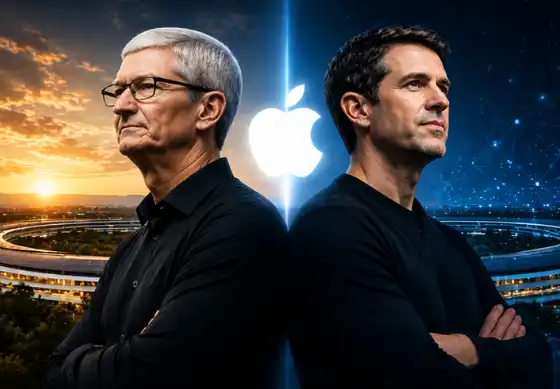
Cook's Curtain Call and Ternus Takes the Helm: The Disruption and Reboot of Apple's 4 Trillion Dollar Empire

Tim Cook has officially announced he will step down as CEO of Apple in September, transitioning to executive chairman after a 15-year tenure during which he grew the company’s market value from around $350 billion to nearly $4 trillion. He will be succeeded by John Ternus, a 50-year-old hardware engineering veteran who has been groomed for the role through increasing public visibility and internal responsibility. Ternus’s appointment signals a strategic shift toward hardware and engineering leadership, with Johny Srouji—head of Apple Silicon—taking on an expanded role as Chief Hardware Officer. This consolidation aims to strengthen Apple’s core technological capabilities. However, Cook’s departure highlights a significant unresolved issue: Apple’s delayed and fragmented approach to artificial intelligence. Despite early efforts, such as hiring John Giannandrea from Google in 2018, Apple’s AI initiatives—particularly around Siri—have struggled with internal restructuring and reliance on external partnerships, including with Google. The transition comes at a critical moment as Apple faces paradigm shifts with the rise of artificial general intelligence (ASI). The company’s closed ecosystem of hardware, software, and services—once a major advantage—now presents challenges in adapting to an AI-centric world where intelligence may matter more than the device itself. Ternus must quickly articulate a clear AI strategy, possibly starting at WWDC, to reassure markets and redefine Apple’s role in a new technological era. His task is not only to maintain Apple’s operational excellence but also to reinvigorate its capacity to innovate and lead in the age of AI.

marsbitHace 1 hora(s)

Cook's Curtain Call and Ternus Takes the Helm: The Disruption and Reboot of Apple's 4 Trillion Dollar Empire

marsbitHace 1 hora(s)

Trading

Spot
Futuros
活动图片