Bloomberg: Assisting Turkey in Freezing $1 Billion in Assets, Tether Is Reshaping Compliance Boundaries

marsbitPublicado a 2026-02-15Actualizado a 2026-02-15

Resumen

On January 30, Turkish authorities froze over $500 million in assets linked to Veysel Sahin, who is accused of operating an illegal gambling platform and money laundering. The operation was executed by an unnamed cryptocurrency company, later revealed to be Tether Holdings SA, the issuer of the $185 billion stablecoin USDT. Tether has been cooperating with global law enforcement agencies to combat crypto-related crimes, including money laundering and sanctions evasion. Tether CEO Paolo Ardoino stated that the company follows legal procedures when assisting authorities, including the U.S. Department of Justice and FBI. The freeze is part of a broader Turkish operation that has seized over $1 billion in assets. A second individual under investigation for similar charges had an additional $500 million in crypto assets frozen, though it is unclear if Tether tokens were involved. According to Elliptic, Tether and its competitor Circle have blacklisted approximately 5,700 wallets holding around $2.5 billion in assets, with three-quarters of them containing USDT. Tether claims to have assisted law enforcement in 62 countries, freezing $3.4 billion in USDT tied to illicit activities. This marks a significant shift from Tether’s earlier conflicts with U.S. regulators, including a 2021 settlement over misrepresenting reserves. The company has recently re-entered the U.S. market with a compliant stablecoin, USAT, and has gained recognition for its cooperation with authorities. Despit...

On January 30, Turkish authorities announced the freezing of assets worth over $500 million in the name of Veysel Sahin, who is accused of operating an illegal gambling platform and suspected of money laundering. The Istanbul Chief Prosecutor revealed that an unnamed cryptocurrency company carried out the freezing operation at the request of the Turkish government.

This company is Tether Holdings SA, the issuer of the stablecoin USDT with a market capitalization of $185 billion. Recently, the company has actively assisted governments worldwide in combating various cryptocurrency-related criminal activities, including money laundering, drug trafficking, and sanctions evasion.

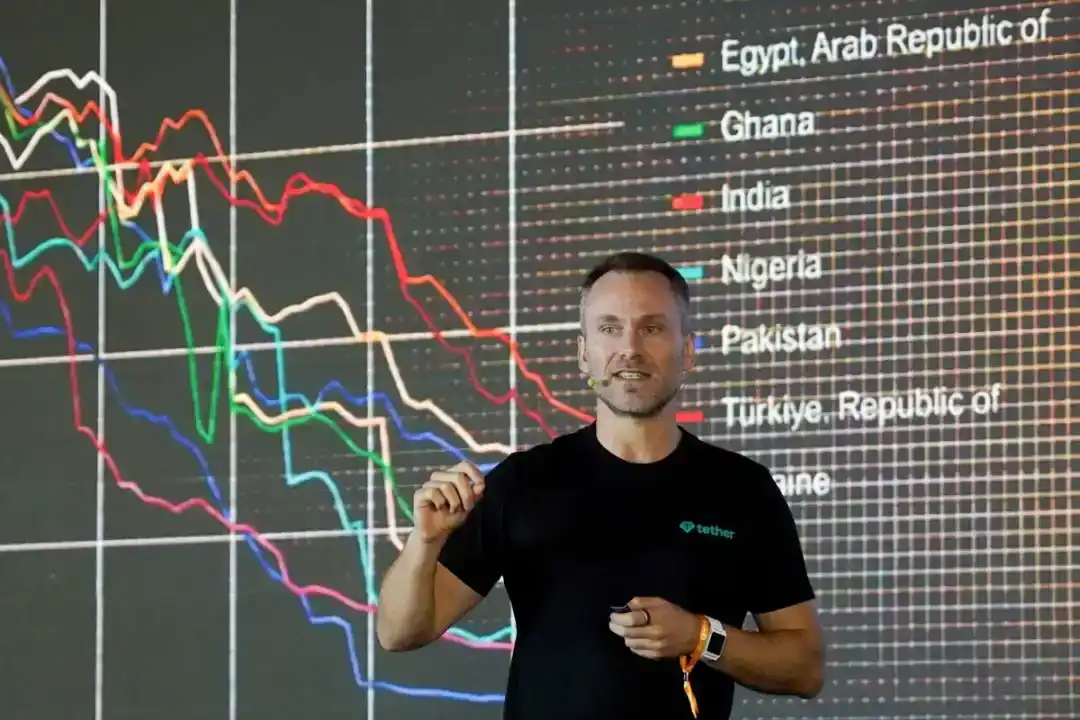
Tether CEO Paolo Ardoino stated in a recent interview with Bloomberg News: "Law enforcement agencies approach us, provide relevant information, we verify the information, and then take action in accordance with the laws of the country. We follow this process when cooperating with agencies such as the U.S. Department of Justice and the FBI."
Tether declined to comment further on the case. Bloomberg was unable to reach Sahin. A Turkish official also refused to disclose the name of the company mentioned in the prosecutor's statement.

The frozen assets of 460 million euros (approximately $544 million) are part of a large-scale law enforcement operation in Turkey, with the total value of frozen assets in the case now exceeding $1 billion. According to Turkish television NTV, a few days after the announcement of Sahin's asset freeze, another individual was investigated for suspected money laundering and illegal gambling, and crypto assets worth $500 million in their name were also frozen. However, it is currently unclear whether this asset freeze involved tokens issued by Tether.

A Turkish official, who spoke anonymously on sensitive legal matters to Bloomberg, revealed that authorities discovered the "financial traces" of these suspected illegal proceeds by tracking fund flows and analyzing crypto assets. The official also stated that similar asset freezes would be implemented in the future against individuals involved in illegal gambling and payment systems.

For Tether, this freezing operation is just one of its increasingly frequent asset freezes, highlighting the growing efforts of this cryptocurrency giant to cooperate with global law enforcement agencies.

A report released by analytics firm Elliptic in January showed that by the end of 2025, Tether and its competitor Circle Internet Group Inc. had blacklisted approximately 5,700 wallets, involving assets of about $2.5 billion, a figure that was negligible two years ago. At the time of freezing, three-quarters of these wallets held USDT.

Arda Akartuna, Head of Crypto Threat Intelligence for Asia-Pacific at Elliptic, said: "As the legitimate application of cryptocurrencies and the integration into global payments accelerate, illegal usage has also increased, prompting stablecoin issuers to intervene more actively."

Tether often publicizes its efforts to combat criminal activities, including in communications aimed at attracting potential investors. The company is seeking funding at a valuation of up to $500 billion. According to its website, Tether has assisted law enforcement agencies in 62 countries in handling over 1,800 cases, freezing $3.4 billion worth of USDT related to suspected illegal activities.

Nathan McCauley, Co-founder and CEO of Tether's partner Anchorage Digital Bank, stated in an interview: "They (Tether) are extremely proactive in their cooperation. Among stablecoin issuers, the company has the 'recognized best reputation' with law enforcement agencies."

Anchorage is the issuer of Tether's compliant dollar stablecoin USAT, which was launched in late January, marking Tether's return to the U.S. market.

This represents a significant shift from the tense relationship between Tether and U.S. regulators a few years ago. After clashing with regulators in 2018, Tether largely exited the U.S. market and paid a $41 million settlement in 2021 to resolve allegations of misrepresenting its reserves.

However, the second Trump administration has shown a welcoming attitude towards the cryptocurrency industry. Last year, Ardoino attended, along with several other executives, the ceremony where President Trump signed the stablecoin regulatory bill.

Even so, Tether's USDT continues to face scrutiny from authorities due to its widespread use by criminals.

On January 9, the U.S. Attorney's Office for the Eastern District of Virginia announced charges against a Venezuelan citizen for laundering $1 billion using USDT. A recent report from Elliptic showed that the Central Bank of Iran purchased over $500 million worth of USDT to alleviate its currency crisis and evade U.S. sanctions.

Fugitive Sahin is accused of leading an organization that laundered money for illegal online gambling platforms. According to local media, Sahin was sentenced to 10 years in prison in 2017, released in 2023, and sentenced to another 21 years in prison one month later. His current whereabouts are unknown, but the state-run Anadolu Agency reported on January 30 that "the relevant authorities are advancing the legal process for his extradition back to Turkey."


Preguntas relacionadas

QWhat was the unmentioned cryptocurrency company that assisted Turkish authorities in freezing assets, and what is its significance in the market?

AThe unmentioned cryptocurrency company was Tether Holdings SA, the issuer of the USDT stablecoin with a market capitalization of $185 billion. It is a major player in the cryptocurrency market, providing a widely used stablecoin.

QAccording to the article, what specific actions has Tether taken to assist global law enforcement agencies?

ATether has been actively assisting global law enforcement by freezing assets linked to crimes such as money laundering, drug trafficking, and sanctions evasion. They verify information provided by authorities and take action in accordance with the laws of the relevant countries.

QHow does the article describe the shift in Tether's relationship with U.S. regulators over the years?

AThe article describes a significant shift. After a 2018 conflict with regulators and a 2021 settlement over misrepresenting reserves, Tether largely exited the U.S. market. However, the current U.S. administration is more welcoming, and Tether CEO recently attended a ceremony for a stablecoin regulatory bill, marking a return to the market.

QWhat statistics does the article cite from Elliptic regarding the scale of frozen assets by stablecoin issuers?

AAn Elliptic report stated that by the end of 2025, Tether and its competitor Circle had blacklisted approximately 5,700 wallets, involving around $2.5 billion in assets. Three-quarters of these wallets held USDT at the time of freezing.

QBeyond the Turkish case, what other examples of alleged criminal use of USDT are mentioned in the article?

AThe article mentions a U.S. case where a Venezuelan citizen was charged with laundering $1 billion using USDT. It also cites an Elliptic report that Iran's central bank purchased over $500 million in USDT to mitigate a currency crisis and circumvent U.S. sanctions.

Lecturas Relacionadas

Has Hook Summer Really Arrived? sato, Lo0p, FLOOD Ignite the New Narrative of Uniswap v4

"Hook Summer" Arrives? Sato, Lo0p, FLOOD Ignite Uniswap v4 Narrative Amidst a slight market recovery, attention within the Ethereum ecosystem has shifted to Meme coins built on Uniswap v4's Hook protocol. Following ASTEROID, tokens like sato, sat1, Lo0p, and FLOOD have become market focal points, with market caps ranging from millions to tens of millions, bringing concentrated liquidity to a narrative-dry market. Uniswap v4 Hooks are "plugin smart contracts" that allow developers to inject custom logic at key points in a liquidity pool's lifecycle (initialization, adding/removing liquidity, swaps, etc.), making the AMM programmable. Recent representative projects include: * **sato**: Market cap peaked over $38M; uses a v4 curve mechanism for minting/burning, locking ETH as reserve. * **sat1**: Market cap briefly exceeded $10M, positioning as an "optimized sato," but later declined significantly. * **Lo0p**: Market cap neared $6.6M; a "lending AMM protocol" allowing users to borrow ETH against deposited LO0P tokens without immediate selling pressure. * **FLOOD**: Market cap approached $6M; channels trading reserves into Aave v3 to generate yield, which is retained in the pool. The emergence of these Hook-based tokens could drive long-term growth for the Uniswap ecosystem by attracting users and liquidity to v4 pools. Combined with Uniswap's activated fee switch (partially used to burn UNI), the long-term outlook for UNI appears positive. However, short-term UNI price appreciation is not directly guaranteed. Factors include the sustainability and lifecycle of these new tokens, their price volatility, overall market conditions, and regulatory pressures. Currently, Uniswap v4's TVL ($595M) lags behind v3 and v2, indicating Hook adoption still requires time to mature. In summary, the Hook ecosystem serves as "long-term nourishment" for UNI, but acts more as a "catalyst" than a direct "booster" in the short term. Note: These are early-stage experimental tokens and may carry unknown risks.

marsbitHace 14 min(s)

Has Hook Summer Really Arrived? sato, Lo0p, FLOOD Ignite the New Narrative of Uniswap v4

marsbitHace 14 min(s)

Has Hook Summer Truly Arrived? sato, Lo0p, FLOOD Ignite the New Uniswap v4 Narrative

With the broader market showing signs of recovery, a new wave of interest has emerged around Ethereum-based meme coins. Following ASTEROID, tokens like sato, sat1, Lo0p, and FLOOD, built upon the Uniswap v4 Hook protocol, are capturing market attention. Their market capitalizations range from millions to tens of millions of dollars, injecting much-needed focused liquidity into a market lacking narratives. This article explores whether this trend signifies an incoming "Hook Summer" and its potential impact on UNI's price. Hooks are essentially plug-in smart contracts for Uniswap v4 liquidity pools, allowing developers to inject custom logic at key points in a pool's lifecycle (like initialization, adding/removing liquidity, swaps). This transforms the AMM into programmable building blocks. Key highlighted projects include: * **sato**: Peaked over $38M market cap. It utilizes a v4 curve for minting/burning; buying locks ETH as reserve to mint new tokens, while selling redeems ETH from the reserve and burns tokens. * **sat1**: Market cap briefly exceeded $10M, promoted as an "optimized sato," but later declined significantly. * **Lo0p**: Reached nearly $6.6M. It's a lending AMM protocol where buying LO0P tokens locks them as collateral, allowing users to borrow ETH from the pool reserve at 40% LTV, aiming to improve capital efficiency for idle ETH in LPs. * **FLOOD**: Peaked near $6M. Its mechanism directs asset reserves from buys into Aave v3 to generate yield, with fees and interest retained in the pool to potentially influence the token's price long-term. In the long term, the development of the Hook ecosystem can attract users and liquidity to Uniswap v4, benefiting UNI's fundamentals—especially combined with the recent activation of the protocol fee switch, where a portion of fees is used to burn UNI. However, in the short term, these Hook-based tokens are unlikely to directly drive significant UNI price appreciation. Their impact is moderated by factors like token sustainability, price volatility, and broader market and regulatory conditions. Currently, Uniswap v4's TVL ($595M) still trails behind v2 and v3, indicating adoption and growth will take time. The article concludes that while the Hook ecosystem provides long-term "nourishment" for UNI, its short-term role is more of a "catalyst" than a "booster." Readers are cautioned that these are early-stage experimental tokens and may carry unknown risks.

Odaily星球日报Hace 27 min(s)

Has Hook Summer Truly Arrived? sato, Lo0p, FLOOD Ignite the New Uniswap v4 Narrative

Odaily星球日报Hace 27 min(s)

Interview with Michael Saylor: I Did Say I Would Sell Bitcoin, But Never a Net Sale

Interview with Michael Saylor: I Said We'd Sell Bitcoin, But Never Be a Net Seller In a recent podcast, MicroStrategy Executive Chairman Michael Saylor clarified the company's stance on potentially selling Bitcoin. Following MicroStrategy's earnings call statement about being prepared to sell BTC to fund dividends for its STRC (Strategic) credit product, Saylor emphasized the distinction between selling and being a "net seller." Saylor explained the core business model: MicroStrategy sells credit instruments like STRC and uses the proceeds to buy Bitcoin, which is viewed as "digital capital" expected to appreciate around 30-40% annually. A portion of these capital gains can then be used to pay the dividends on the credit products. He stressed that even if the company sells some Bitcoin for dividends, it simultaneously buys much more with new credit issuance. For example, after raising $3.2 billion from STRC sales in April, the dividend obligation was only $80-90 million, making the company a net buyer. The clarification aims to counter market narratives questioning the value of Bitcoin on MicroStrategy's balance sheet if it were never sold, and to dismiss claims of a "Ponzi scheme." Saylor reiterated his personal philosophy for investors: "Don't be a net seller of bitcoin" and ensure your Bitcoin holdings increase each year. Saylor also discussed Bitcoin's role as the foundation for "digital credit," noting that STRC has become the largest and most liquid preferred stock issue in the U.S., offering high risk-adjusted returns (Sharpe ratio). He highlighted Bitcoin's deep liquidity, stating that even large purchases by MicroStrategy do not move the market significantly, which is driven by macro factors, geopolitical tensions, and capital flows from ETFs and credit products. Finally, Saylor reflected on his early inspiration from sci-fi books, which motivated his path to MIT, and maintained his fundamental thesis on Bitcoin remains unchanged: it is superior digital capital enabling superior digital credit.

链捕手Hace 31 min(s)

Interview with Michael Saylor: I Did Say I Would Sell Bitcoin, But Never a Net Sale

链捕手Hace 31 min(s)

Beaten SK Hynix Employees in China: Year-end Bonus Less Than 5% of Korean Staff's

"SK Hynix Chinese Staff Hit Hard: Bonuses Less Than 5% of Korean Counterparts" Driven by the AI boom, South Korea's SK Hynix is experiencing record performance, with media reports predicting massive year-end bonuses for its employees, making them highly desirable in the matchmaking market. However, this prosperity starkly contrasts with the situation for the company's Chinese employees. According to reports, SK Hynix operates under a rule allocating 10% of operating profit for employee bonuses. While projections suggest Korean employees could receive bonuses reaching millions of RMB, a Chinese employee with over a decade of technical experience revealed the disparity: "If they get 3 million, Chinese staff get less than 5% of that." After adjustments based on KPI ratings, this employee's highest bonus was slightly over 100,000 RMB. Bonuses are paid annually in Korea but semi-annually in China. During the industry downturn in 2023-2024, Chinese employees received no bonus at all. The gap extends beyond bonuses. Recruitment posts for SK Hynix's Chinese factories (in Wuxi, Dalian, Chongqing) show engineer monthly salaries ranging from 10,000 to 35,000 RMB, with a 13th-month salary promised. Chinese employees also receive standard benefits like annual leave but lack stock incentives, which are reportedly unavailable to them. Furthermore, management positions in China are predominantly held by Korean personnel, though industry observers note a gradual increase in local middle managers over time. SK Hynix has confirmed the 10% bonus rule but cautioned that specific future bonus amounts remain unpredictable. The company forecasts strong demand for HBM and other high-value enterprise products for the next 2-3 years, driven by AI infrastructure investment. This focus on business-to-business markets may continue to constrain supply for consumer products, potentially prolonging price increases for components like memory.

链捕手Hace 44 min(s)

Beaten SK Hynix Employees in China: Year-end Bonus Less Than 5% of Korean Staff's

链捕手Hace 44 min(s)

Trading

Spot
Futuros
活动图片




