Bitcoin treasury adoption slowed sharply in the fourth quarter of 2025, even as the biggest corporate holders continued to quietly add to their stacks while smaller players stepped back.
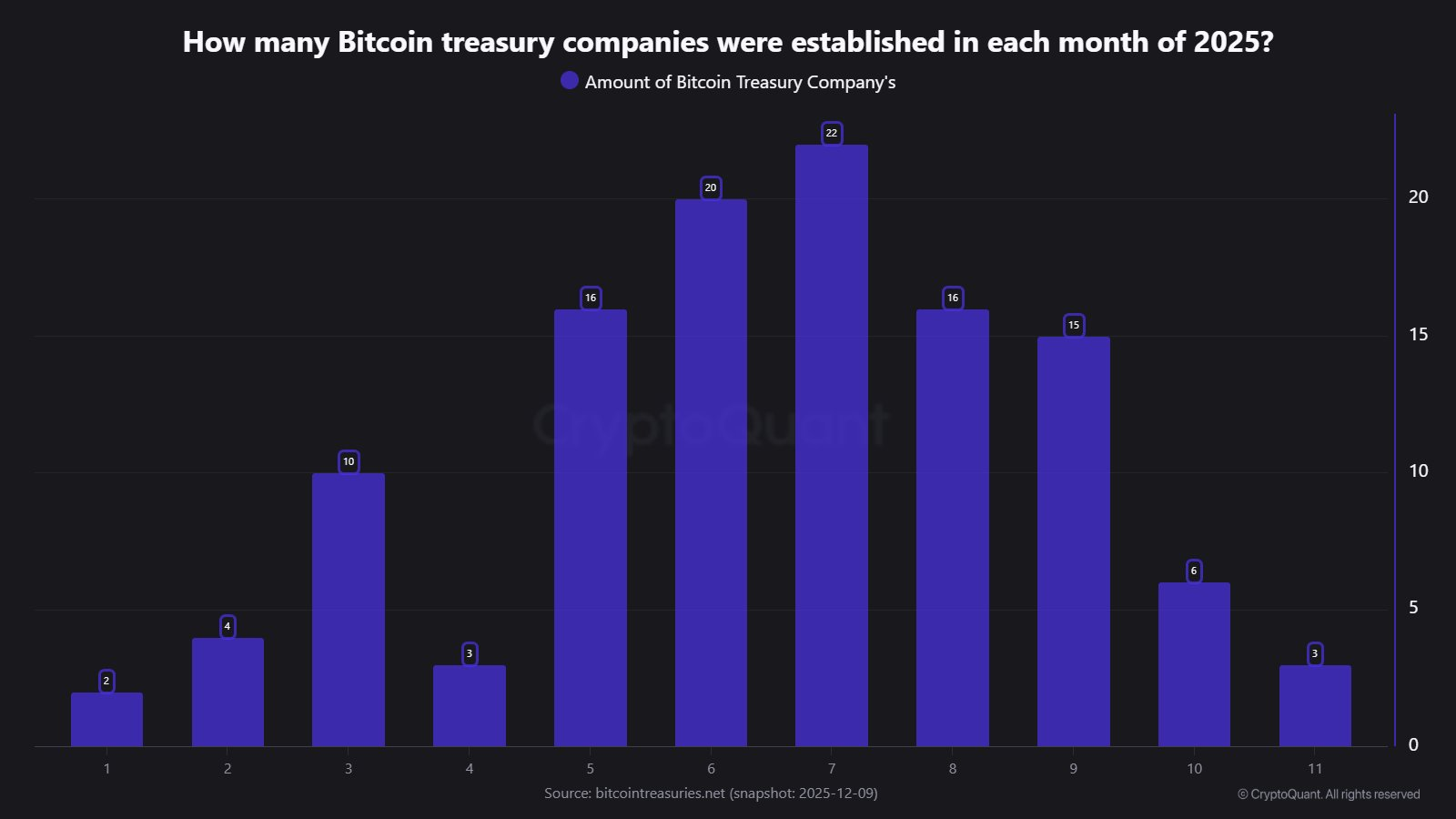
The number of new Bitcoin (BTC) treasury companies declined from its peak of 53 new companies in the third quarter to just nine companies adding Bitcoin to their balance sheet in the fourth quarter of 2025 so far, with a total of 117 new companies adopting Bitcoin this year, according to blockchain data platform CryptoQuant.
“Despite the growth in numbers during 2025, most Bitcoin Treasury companies hold relatively small amounts,” CryptoQuant wrote in a Thursday X post.
Still, the accumulation data shows that the most well-funded corporate treasuries continue to scoop up the Bitcoin supply despite a decline in buying by smaller companies and retail participants.
Some Bitcoin treasury firms have stopped accumulating this quarter. Japanese investment company Metaplanet, for instance, hasn’t purchased any Bitcoin in over two months.
Some companies are even selling their Bitcoin stacks. United Kingdom-based, Bitcoin-focused tech company Satsuma Technology sold 579 Bitcoin for around $53 million, leaving the company with 620 Bitcoin on its balance sheet, according to a Wednesday announcement.
Related: Bitcoin treads water at $90K as whales eat the Ethereum dip: Finance Redefined
Largest corporate holders continue their quiet Bitcoin accumulation
Despite the broader slowdown, some of the largest corporations continue to scoop up more of the Bitcoin supply.
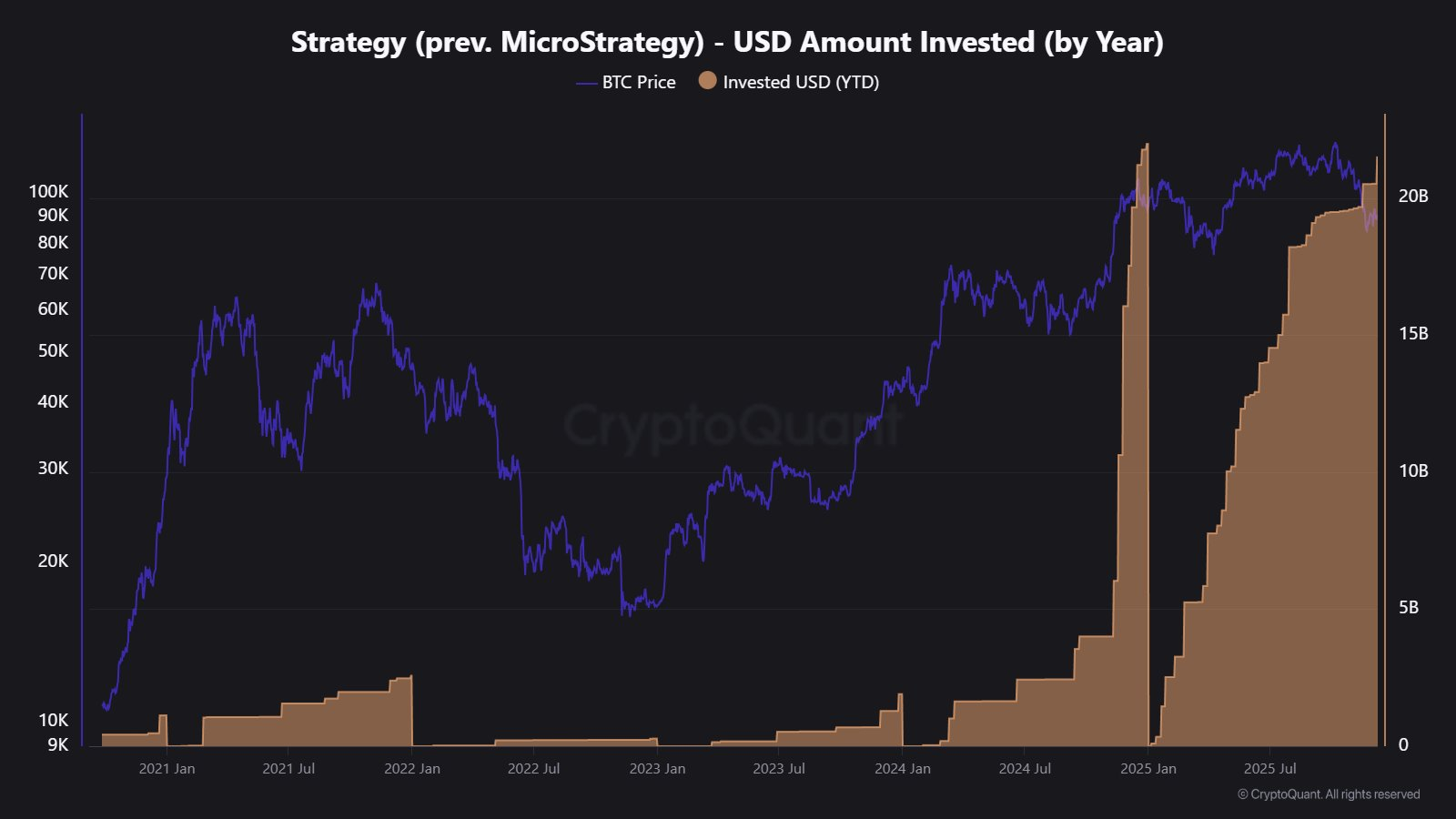
Strategy, the largest corporate Bitcoin holder, purchased $962 million of BTC on Monday, in its biggest purchase since July. The company is now just $500 million shy of matching the $21.97 billion worth of Bitcoin it acquired in 2024, according to CryptoQuant.
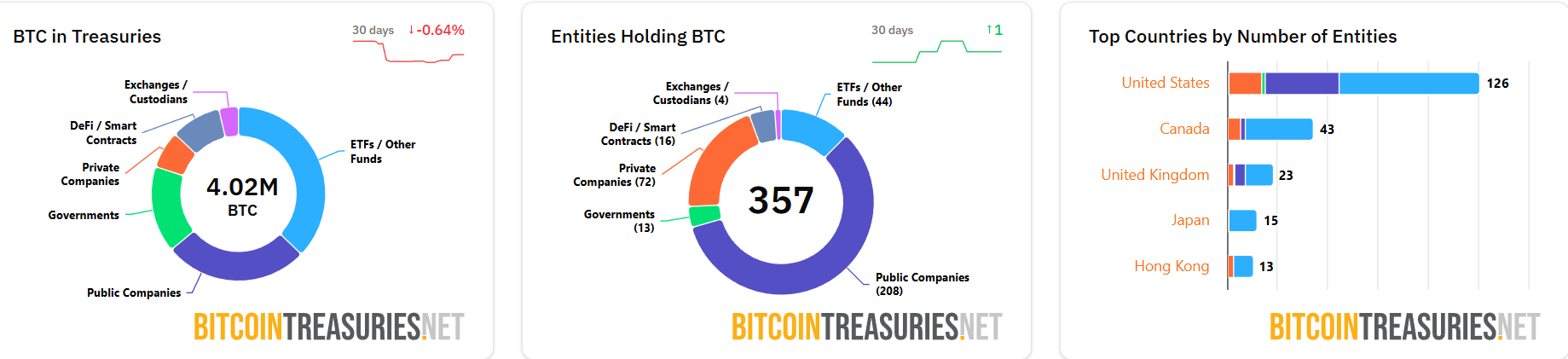
Over 1 million Bitcoin worth $90.2 billion is already held in public company treasuries, representing 4.7% of the total supply, according to data from BitcoinTreasuries.NET.
An additional 1.49 million Bitcoin, or 7% of the supply, is held by spot Bitcoin exchange-traded funds.
Related: Silk Road-linked Bitcoin wallets move $3M to new address
DATs slow crypto purchases as Ether treasury investments fall 81%
Digital asset treasury (DAT) acquisitions are also slowing down. Ripple-backed Evernorth Holdings has been inactive since the end of October, when it acquired $950 million XRP (XRP) tokens.
Evernorth’s XRP holdings were facing nearly $80 million in unrealized losses weeks after the purchases amid the market decline and growing pressure on DATs.
BitMine Immersion Technologies, the largest corporate Ether (ETH) holder, has also slowed its Ether acquisitions in recent months from a peak of $2.6 billion in July to just $296 million of ETH in December.
Cumulative investments from Ether treasury firms fell by 81% in the past three months, from 1.97 million ETH acquired in August to 370,000 ETH in November.
Magazine: Mysterious Mr Nakamoto author — Finding Satoshi would hurt Bitcoin