On Tuesday, Bitcoin barely moved, extending a five-week period of stagnation as persistent demand from exchange-traded funds clashed with selling from miners and corporate holders.
$BTC dropped to around $63,500, falling 0.6% over the last 24 hours. More importantly, the largest cryptocurrency remained stuck in the roughly $62,000-$66,000 range that has contained prices for most of the summer.
"Bitcoin's recent price fluctuations have largely been driven by sustained ETF inflows, offset by over-the-counter sales from miners and Strategy (MSTR)," said Paul Howard, Senior Director at trading firm Wincent.
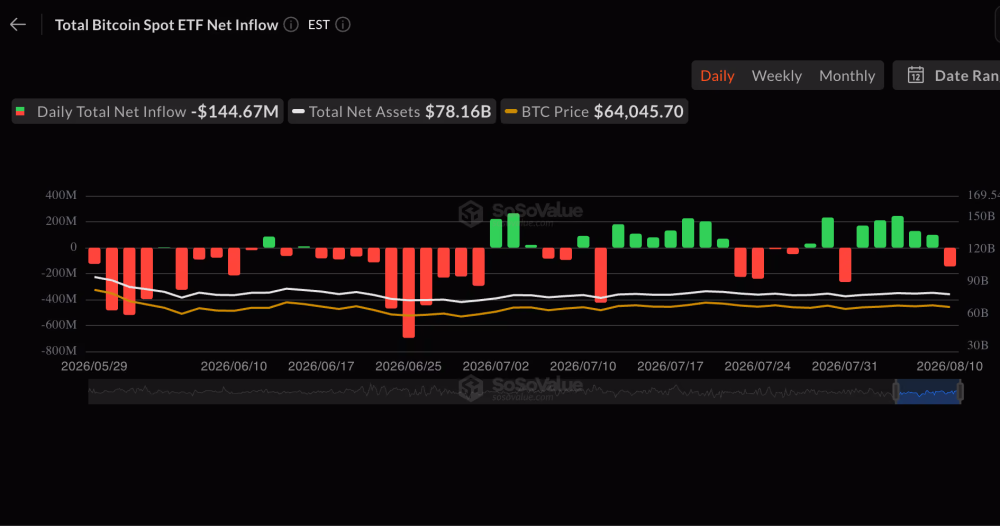
Daily Bitcoin ETF Flows Source: SooValue.
According to Paul Howard, cryptocurrency trading volumes have fallen to their lowest level in three years, leaving little opportunity for decisive movement in $BTC in either direction.
Bitfinex analysts also pointed to competing flows. They stated that ETFs and Bitcoin-treasury companies have been the two main sources of price-insensitive demand, but recent corporate treasury activity has provided offsetting selling pressure. This helps explain why $BTC rose only about 2% last week despite strong ETF inflows and better performance in broader risk markets.
Consumer Price Index (CPI) Could Wake Bitcoin from Its Slumber
Wednesday's US inflation report could finally give traders a reason to break the stalemate.
"Confidence is weak on both sides, with summer liquidity in short supply," said Jeff Anderson, Managing Partner at STS Digital.
He said implied volatility has plummeted as traders await clarity on monetary policy and the fate of the Clarity Act in the digital asset market:
"This sets the market up for a more significant move if Bitcoin breaks out of the range in either direction. Against this backdrop, Wednesday's CPI data—the first major inflation reading after Fed Chair Kevin Warsh's inflation-focused press conference following the July FOMC meeting—will be the next test."
Howard expects consolidation to continue until mid-September without a fundamental catalyst, with progress on the Clarity Act market regulation potentially being the next significant driver. Derivatives positioning also shows investors remain well-hedged, suggesting traders are not making large bets on an imminent breakout.
According to STS Digital's Anderson, the calendar could become less favorable if the stalemate drags on. Historically, September has been Bitcoin's weakest month, falling an average of about 4% since 2013, according to CoinGlass data.
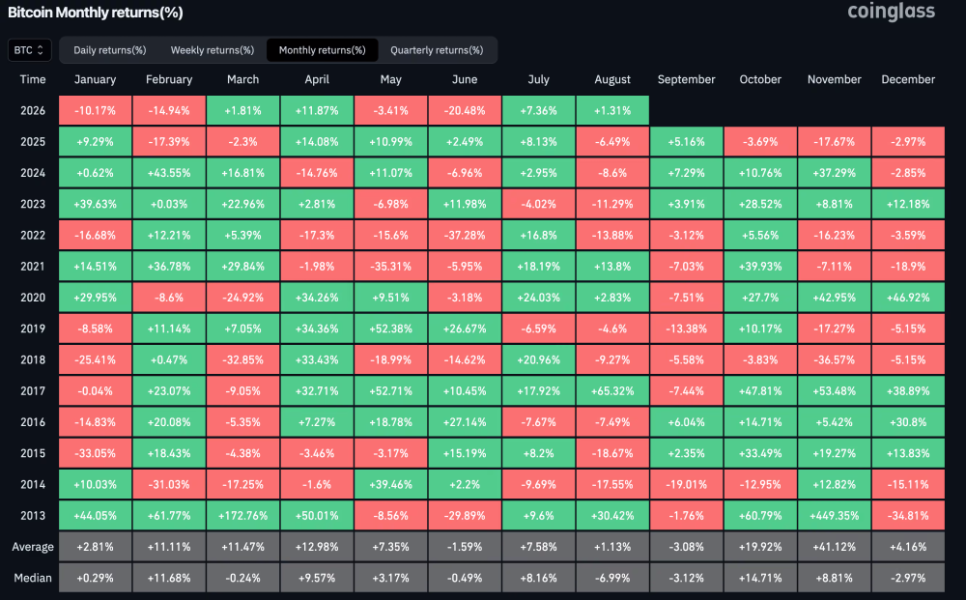
Figure 2. Bitcoin Monthly Returns. Source: CoinGlass.
end-content